Always bracing for the next thing?

Map the emergency loop, see the tarot cards that mirror it, and browse reading insights where this pressure appears.

Survival Mode
What is this really?

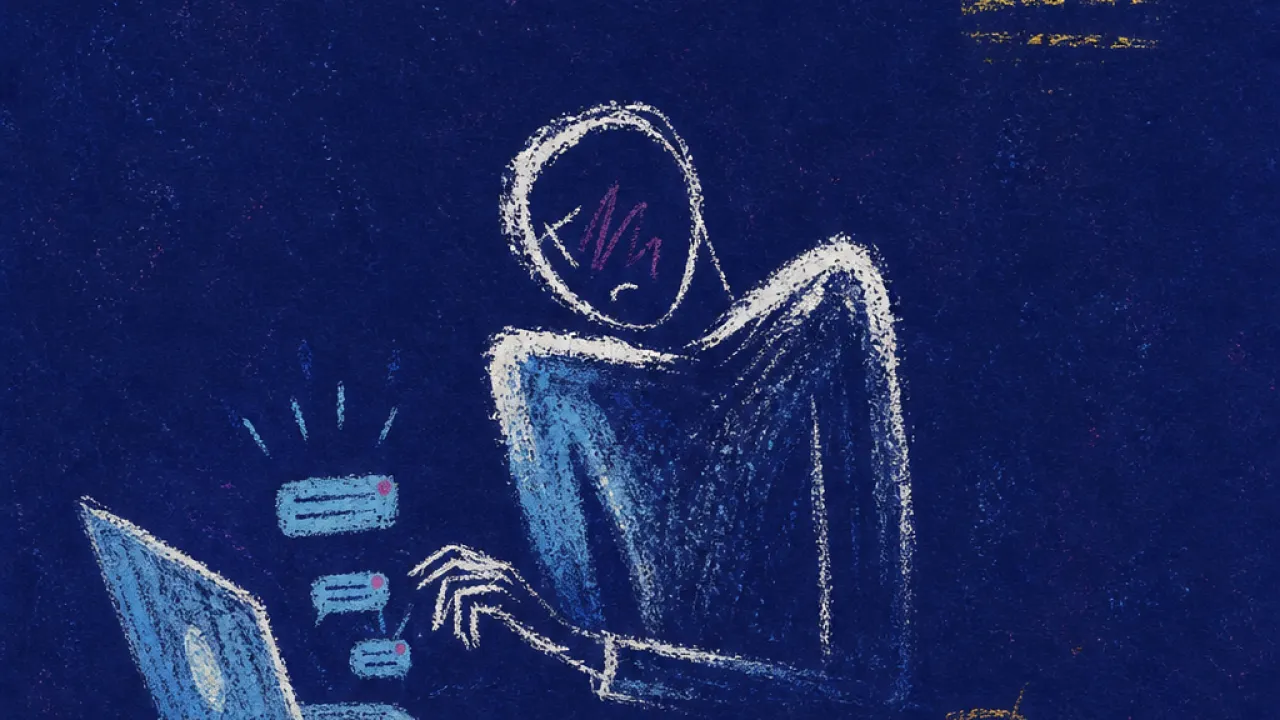
You keep your life moving by treating ordinary needs like emergency tickets: answer the next message, finish the next task, eat when the room starts to tilt, clean only when the mess blocks your path. Underneath that pace is a very understandable wish to stay upright, because slowing down can feel like letting every overdue sensation, bill, feeling, and decision rush the door at once. Yet the more the day narrows to the next step, the more sleep, food, support, and choice feel visible but unreachable, much like the two figures in the Five of Pentacles trudging through snow past the lit window beside them.

Why did it happen?

At some point, keeping your head down and handling only what was directly in front of you may have been the cleanest way to get through days that offered too little room, help, or certainty. Your body learned to save strength by shrinking the view: one reply, one shift, one deadline, one load of laundry, one meal when you could manage it. Now that same subconscious loop can keep running after the weather changes, so quiet moments feel strangely unsafe and your inner pattern spends more effort scanning for the next hit than receiving what is already available.

How does it feel?

  • When a friend asks if you can help on a packed evening, your thumb hovers over the reply box, then types 'I can make it work' before you look at your calendar. In the second after sending it, your shoulders may lift toward your ears and your breath gets thin, as if your body is already budgeting the next few hours. You can let that tight lift be present without forcing an instant fix.
  • You open your laptop before breakfast, blink hard at the unread messages, and start starring the loudest ones while the food beside you goes cold. As you move from tab to tab, your stomach may feel hollow and your eyes may burn, even though your hands keep moving on their own. It is allowed to notice the hollow feeling before choosing the next click.
  • You walk past the same pile of laundry until it blocks the chair, then suddenly clear it at midnight with clipped movements, dropping hangers and wiping the counter with one hand. During the rush, heat can rise into your face and your chest may feel wired but empty, like stopping would make the room too loud. Let the room be unfinished for a moment; unfinished does not have to mean unsafe.
  • On a day off, you lie down with your shoes still near the bed, phone face-up on the blanket, checking the screen after every faint buzz. In the quiet, your neck may stay rigid and the silence can feel too loud, as if rest has edges you keep bumping into. Not settling right away is okay; the pause can stay small.
  • When someone asks what you want next month, you open your calendar, press your lips together, and answer with whatever gets you through this week. Afterward, there may be pressure behind your eyes and a flat feeling in your ribs, like the future has gone blurry at the edges. It is enough to notice the blur without turning it into a verdict.

Survival Mode in Tarot Cards

That moment when an ordinary request turns into another emergency ticket is the shape of Survival Mode. Your shoulders may lift toward your ears before you have even checked the calendar. From a Jungian archetypal theory perspective, this pattern can be read through images of endurance, exposure, and unreachable support. The cards below reflect the unconscious dynamics of getting through the next step first: Tarot Cards that may feel immediately recognizable.

Five of Pentacles Upright
The wrapped foot, crutch, torn clothes, and blizzard force every gesture into immediate preservation. The figures still move, but their movement is narrow, tired, and organized around getting through the next step. This is not laziness; it is a nervous-system economy where long-range evolution loses bandwidth to short-range threat management. In personal growth, Survival Mode makes vision work feel abstract and inaccessible because the inner system is spending its energy on bracing, conserving, and enduring.
Reversed
The crutch carries the injured figure through snow, but it does not change the weather, the exposure, or the direction of movement. In the reversed texture of the card, the body is still functioning, yet its function has narrowed into a strained mechanics of getting through the next step. Survival Mode appears when the system confuses motion with strategy. In career pressure, You may keep answering urgent demands, absorbing unclear expectations, and patching immediate gaps while the larger questions of role design, promotion leverage, and exit options disappear from view. The Five of Pentacles holds the reversed pattern in the exhausted repetition of movement through a hostile field. The issue is not weakness; it is that the nervous system has organized work around threat response, leaving too little space for long-range judgment, value articulation, or deliberate power moves.
Three of Swords Upright
The heart has no body around it, no hands to intervene, and no ground beneath it; it is simply exposed under three converging blades. The card removes every tool of agency from the scene, leaving only impact, weather, and a vital center under pressure. In a high-pressure routine, Survival Mode appears when work, sleep, health, food, home upkeep, and social obligations all strike the same limited bandwidth. You stop building a life architecture and start triaging whatever hurts most today, which keeps the system moving while preventing genuine redesign.
Four of Swords Reversed
The knight still wears armor while lying in a place designed for rest, and the swords remain close enough to keep the body organized around threat. Even in stillness, the scene does not show softness; it shows a protected system trying to recover without taking off its defenses. Survival Mode makes rest feel unsafe because quiet removes the distractions that usually keep hidden pressure contained. You may crave peace and resist it at the same time, not because you are broken, but because your inner system has learned to associate stillness with exposure.
Five of Swords Reversed
The battle appears to be over, yet the body of the central figure still behaves as if the field must be controlled. The swords point in conflicting directions, the sky remains unsettled, and the shoreline offers no true rest after the confrontation. Reversed, this becomes the architecture of Survival Mode. You may keep running daily life through emergency logic: answer the next message, fix the next mess, survive the next deadline, recover just enough to continue. The system stays active, but it never fully returns to restoration. Five of Swords makes the depletion legible because the scene contains motion without repair. In lifestyle terms, the pattern is not simply being busy; it is a nervous system and schedule locked into aftermath, where every small task feels like another defensive move on the same battlefield.
Six of Swords Reversed
The boat is not shown in a storm; the water is relatively calm, yet the vessel still sits heavy because six swords travel inside it. The ferryman keeps working the long oar, but the weight of what is being carried makes even a peaceful crossing feel effortful. This is the anatomy of a system that keeps functioning by spending more energy than it can restore. The visible motion can hide the imbalance: tasks get done, the boat moves, but the mechanism depends on constant pushing rather than genuine replenishment. In a lifestyle reading, Survival Mode describes a daily architecture built around bare continuation. You may be mistaking forward motion for recovery, while the card reveals a deeper pattern of rowing a loaded system through each day with too little margin, too little rest, and too much unprocessed weight.
Seven of Swords Upright
The clustered sword tips concentrate the whole image around immediate handling: what can be carried, where the feet can land, how much time remains before the camp notices. The dusk sky adds pressure because the scene exists in a narrow window between exposure and escape. That compressed focus is the bodily logic of Survival Mode. You are not calmly evaluating the whole family system; you are scanning for the next safe sentence, the safest exit, the least explosive answer, the lowest-risk version of yourself. Attention narrows because the nervous system treats the interaction as something to get through. In family tarot, this card shows how a person can become highly capable while still feeling internally cornered. The strategy works in the short term, but the cost is that family contact becomes a threat map instead of a relational space where your adult self can fully arrive.
Ten of Swords Upright
The fallen figure lies face down with the spine pinned by ten blades, and the sky above him is almost entirely dark except for a thin line of dawn. The body is not negotiating, planning, or reaching; it is conserving the last usable bandwidth inside a scene that has already exceeded its capacity. That physical stillness maps to a nervous system organized around emergency function. In a lifestyle reading, You may be keeping the day alive through minimum viable effort while the larger architecture of sleep, food, movement, home care, and recovery has stopped feeling available. Survival Mode is not laziness in this card. It is the point where the system has taken so many mental hits that it protects itself by shrinking the field of action to whatever gets You through the next hour, even if that protection slowly erases the routines that would restore You.
Reversed
The dark sky takes up the whole upper field while the body is pinned low against the ground. In a career reading, that spatial pressure describes a system organized around threat management: watching the boss, tracking politics, bracing for the next cut, and losing access to broader strategy. Survival Mode is not laziness or weakness; it is energy being routed into immediate protection. The swords show cognition weaponized by the environment, so planning, creativity, and advancement become secondary to getting through the next meeting or review cycle. The horizon is still there, but it is thin. That proportion is the psychological clue: the future has not disappeared, but the present threat field is using so much bandwidth that promotion planning and skill positioning cannot hold the center.
Knight of Swords Reversed
The armor protects the knight, but it also limits softness, pause, and sensory openness. Around him, the wind-driven landscape adds pressure until the whole image feels less like calm strategy and more like a body mobilized for threat. Survival Mode in decision tarot shows up when the system is choosing from urgency rather than from a stable comparison of options. The mind may still produce reasons, but the deeper driver is relief, danger reduction, and the need to regain control. You may feel this when every option seems loaded, time-sensitive, and emotionally unsafe. The card reveals that the first task of the decision may be identifying the pressure state itself, because a nervous system in battle posture will read the board differently from a self that feels resourced.
King of Swords Reversed
The throne protects the king, but it also lifts him away from the living ground. The barren mound, hard stone, and raised sword create a world where stability comes from vigilance rather than renewal. When that structure turns into a lifestyle pattern, the whole day can be organized around staying functional under pressure. You may keep simplifying, scheduling, optimizing, and enforcing rules while the deeper system remains built around depletion. Survival Mode names the point where structure is no longer supporting your life; it is guarding you against collapse. The card's cold authority shows why the system can look impressive from the outside while still leaving the body without real recovery.
Seven of Wands Reversed
The high ground is an advantage, but it is not comfortable ground. The figure's feet are spread across uneven terrain near a visible edge, so the body has to manage two tasks at once: meet the incoming wands and keep from losing its own footing. Reversed, that precarious platform becomes a psychological container under strain. The mind narrows around immediate threat, and the body organizes itself around staying upright rather than growing wisely. The result is activity without enough inner space to reflect on what the pressure is actually teaching. Survival Mode in personal growth can look deceptively productive. You may still be pushing, learning, optimizing, and defending the next level, but the card shows the deeper audit: progress made from constant threat response is unstable because the system is trying to survive the upgrade instead of inhabit it.
Nine of Wands Reversed
The figure has a support staff, a wall, flat ground, and open landscape behind him, yet every muscle remains braced. The gray-blue sky and the guarded stance make the whole field feel like a pause between attacks rather than a place of recovery. That mismatch is the mechanism: the environment may no longer demand full defense, but the nervous system still organizes the body around impact. You can be technically safe and still unable to access the felt sense of safety. In introspection, Survival Mode shows up when rest does not restore you because the inner system is still on watch. The psyche uses tension as proof of readiness, so quiet time becomes another shift on guard duty.
Ten of Wands Reversed
The forward lean has almost no recovery space: the neck is locked, the face is hidden, and the weight pulls the body ahead of its own balance. The open sky does not create freedom because the immediate field is dominated by the bundle. Survival Mode emerges when the system stops asking what is meaningful and focuses only on what must be endured next. You may keep moving because stopping would let sensation, grief, fatigue, or anger catch up. In this reversed texture, the burden is not simply heavy; it has trained the body to treat rest as a loss of control.

Survival Mode in Tarot Card Reading Insights

For anyone whose day keeps narrowing to the next reply, meal, deadline, or load of laundry, other people have brought the same pressure into readings. The shift from cards to readings shows how this pattern can appear when someone sits with a spread rather than pushing past it. Below are Tarot Reading Insights where this pressure shows up.

Psychological patterns related to Survival Mode