Why Does Rest Feel Risky?
Define the output loop, then see the tarot cards and reading insights that mirror Workaholic Tendency.

Workaholic Tendency
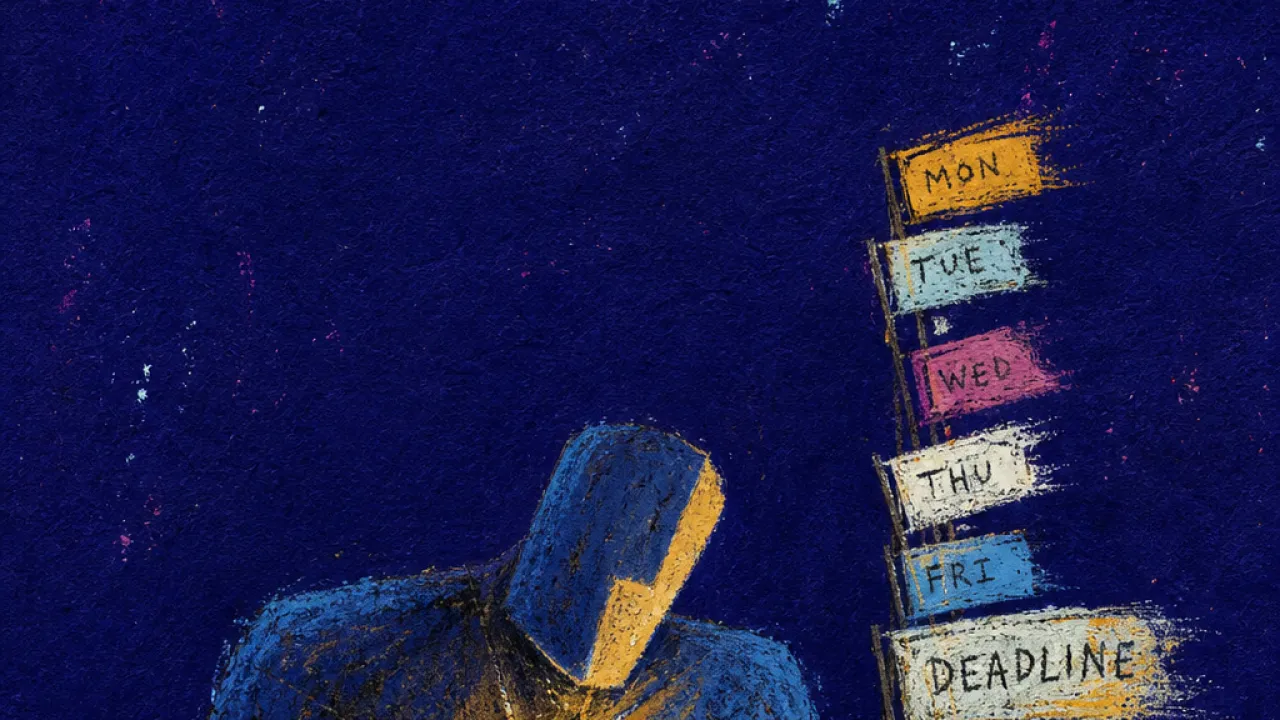
What is this really?
You turn pressure into action: replying after hours, filling quiet weekends with catch-up tasks, and treating rest like something that has to prove its usefulness. Underneath, work has become a self-regulation loop, lowering the cognitive dissonance between feeling depleted and needing to feel secure, useful, or harder to replace. Yet the role that keeps you trusted can start crowding out the person who needs sleep, boredom, pleasure, and blank space, much like the figure in the Ten of Wands, head bent beneath a raised bundle, still moving because setting it down would make the whole load visible.
Why did it happen?
At some earlier point, being the one who delivered, fixed, or stayed ready may have made the room feel steadier: fewer questions, fewer doubts, more proof that you had a place. Now that same subconscious cycle keeps scanning for the next signal of usefulness, so a free evening can feel buzzy in your chest, guilty in your stomach, or mentally overdrawn before you have even sat down.
How does it feel?
- At 9:47 p.m., after you have already closed the laptop, your thumb wakes your phone and taps Slack or Teams before you fully register the motion... that moment, your breath sits high in your chest and your shoulders stay lifted, as if the room is waiting for you to answer. It can be noticed without turning the notice into another performance review.
- On a free Saturday, you stand in the kitchen with one sock half on, wiping the counter, sorting receipts, and adding 'quick admin' to the calendar while the coffee cools... your jaw tightens, a faint heat gathers behind your eyes, and the stillness feels oddly loud. Letting the quiet stay undefined for a minute is a valid pause.
- At dinner with friends, you place your phone face down, then rotate it with two fingers every time it buzzes, keeping your smile in place while your eyes drop for half a second... your stomach dips, attention splits, and the conversation sounds slightly farther away. The split can be allowed to be there before you decide what to do with it.
- When a project is already ready to send, you rename the file 'final_v8,' re-read the same paragraph, and move one comma back and forth with the cursor... your forehead tightens, your vision narrows, and the small relief from improving it fades almost as soon as it arrives. Leaving that last bit of uncertainty untouched for a breath is allowed.
- In bed, with the lights off, you squint into the notes app to type 'quick reminder,' then hold the phone above your chest longer than you meant to... your calves stay tense, your heartbeat keeps tomorrow's pace, and your mind keeps reaching for one more handle. The unfinished thought can sit beside you without being solved tonight.
Workaholic Tendency in Tarot Cards
When stopping feels more threatening than depletion, the pattern often shows up before you can explain it: your breath sits high in your chest, and your thumb is already back on Slack or Teams. Jungian archetypal theory can frame this as the useful role crowding the off-duty self. These cards reflect the unconscious dynamics of that output loop without turning it into advice. Start with these Tarot Cards.
Workaholic Tendency in Tarot Card Reading Insights
For anyone who turns a free evening into one more proof of usefulness, others have brought the same output loop into readings too. After the cards, the lens shifts to how this pattern appears when someone sits with it in a spread. Below are Tarot Reading Insights that speak to this pattern.

Doing Only Your Job, Feeling Guilty: Choosing Deliberate Career Growth
Topic:Career Tarot Reading
Struggle:Performance-Competence Split
Context:Always On Availability