Is Rent Setting Your Relationship Pace?

See how housing costs compress relationship timelines, which Tarot cards reflect the pressure, and what surfaced in related readings.

Rent-driven Cohabitation Pressure
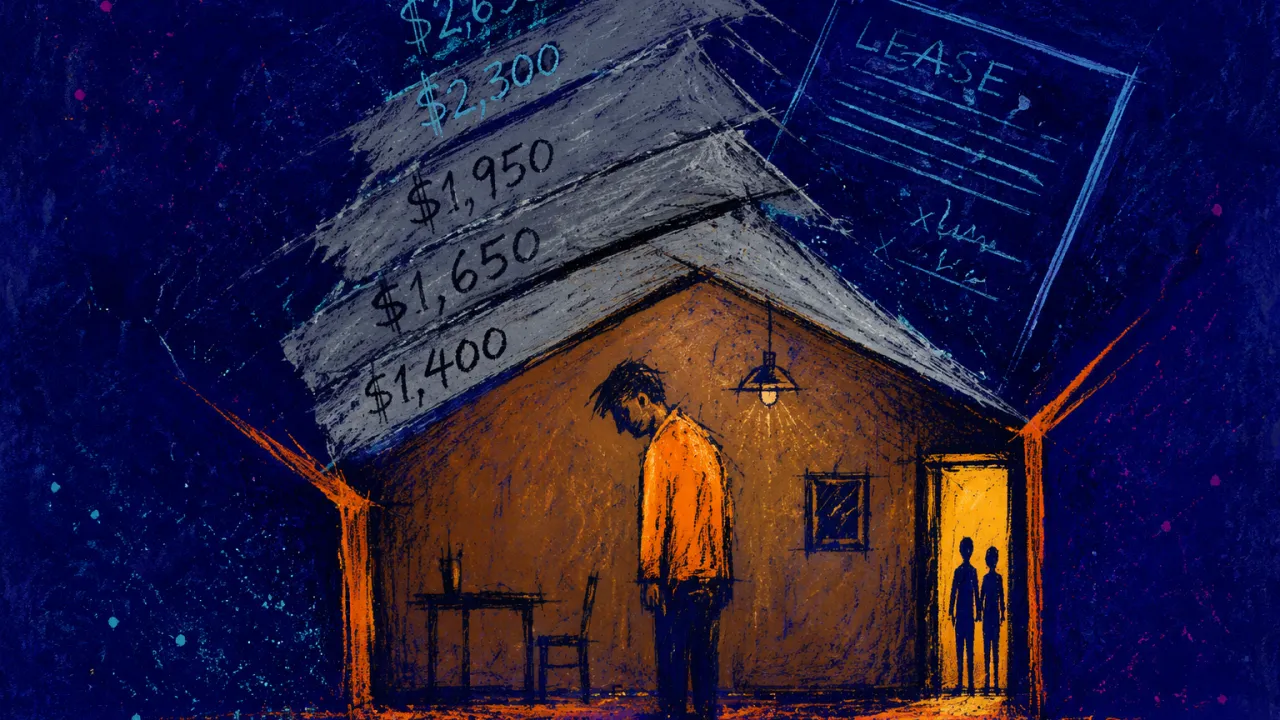
A solitary figure with lowered shoulders as rent figures and lease lines narrow an apartment outline toward a shared doorway

What is this situation?

Rent-Driven Cohabitation Pressure: you open a lease-renewal email at the kitchen table and see that the rent is rising again, turning "Should we live together?" from a relationship question into a deadline with a dollar amount. Maybe your roommate is leaving, your partner's lease ends next month, or every studio within commuting distance costs more than either of you can carry alone; within hours, tabs for apartments, deposits, and moving vans replace the slower conversations you expected to have about readiness. After work, you tour cramped units, compare incomes, and work out whose name will be on the lease, who can cover the larger share, whose furniture fits, and which neighbourhood keeps both commutes possible. The person with the steadier income, existing tenancy, or larger savings buffer gains more room to set the terms, even without openly trying to control the arrangement. Once you share the address, ordinary disagreements about dishes, guests, work calls, sleep, privacy, and spending carry the extra fact that a separate front door may be financially out of reach. You postpone conversations because the next payment is close, lower your shoulders whenever rent or renewal comes up, and check listings late at night only to find the same numbers waiting. Moving in can happen too quickly, while moving out can remain unaffordable, so the home becomes both the place where the relationship unfolds and the condition keeping its current shape in place. By the time another payment is due, daily life can resemble the figure in the Ten of Wands, bent beneath a bundled load while the town ahead is close enough to see but not yet reached.

Why it's not you?

This pressure is created by high rents, scarce affordable listings, lease rules, deposits, and incomes that have not kept pace with housing costs. When a relationship decision is tied to whether either person can afford a separate home, the timetable is being set by the housing market, not by a personal failure to plan or commit.

Rent-driven Cohabitation Pressure in Tarot Cards

When Rent-Driven Cohabitation Pressure turns a shared home into the only affordable option, the relationship timeline begins following the lease calendar. The lowered shoulders that return whenever rent or renewal is mentioned mark where that pressure lands in daily life. It is an environmental pressure, a structural constraint, and a dynamic shaped by who holds the lease, deposit, and stronger financial position. The Tarot Cards below mirror the visible contours of that narrowed choice.

Justice
Reversed
A sword and a set of scales are held by a seated figure between two rigid pillars. In the reversed orientation, the instruments of clarity remain present, but the underlying bargaining positions prevent them from producing a reliably fair arrangement. You may be signing or informally accepting terms when one partner has more savings, stronger credit, an existing tenancy, or somewhere else to go. The sword shows that names on a lease, deposit ownership, liability, and notice periods create concrete consequences beyond the symbolism of moving in together. An agreement can be formally valid while distributing risk and household authority unevenly. The scene reveals the distinction between documented consent and a decision made under housing pressure with limited alternatives.
The Devil
Upright
Two human figures stand chained to a dark pedestal beneath a larger figure, with the links visibly resting around their necks. The image mirrors a couple whose shared address provides necessary shelter while also limiting each person's practical capacity to leave or renegotiate. You may experience the relationship and the housing arrangement as one bond even though they are produced by different needs. The chains are material and visible, making lease liability, deposits, unequal savings, and unaffordable solo rent part of the relational structure rather than background details. Their looseness does not erase those constraints; it shows that the bind can be examined in components instead of treated as fate. The scene reveals where affection, dependency, scarcity, and household power have become fused.
The Tower
Upright
Lightning strikes a tall tower, dislodging its crown as fire breaks through the windows and figures fall from the structure. The image directly mirrors a rent increase, lease loss, or roommate departure that abruptly removes the housing assumptions supporting the current timeline. You may be discussing cohabitation now because the existing residential structure has become unstable, not because readiness suddenly arrived at the same moment. The falling crown represents lost control over timing, while the exposed tower shows how quickly private plans can be reorganised by an external shock. Immediate action may be necessary without allowing urgency to define the full meaning of the relationship. The scene separates the real need to respond to disrupted housing from the larger question of what kind of shared life is being built.
Eight of Cups
Reversed
A traveler leaves eight carefully arranged cups and walks toward a difficult mountain route beneath an eclipsed moon. In the reversed orientation, the body is drawn back toward the existing arrangement because the departure cannot yet be sustained. You may remain under the same roof after recognising that the relationship needs distance, change, or an ending. The standing cups represent the accumulated infrastructure of shared life: rent, utilities, furniture, commuting access, routines, and the reduced cost of combining resources. Returning to or remaining in that structure does not automatically resolve the relational question. The scene makes room to examine whether continued cohabitation reflects chosen reconnection, economic necessity, or a mixture of both.
Two of Pentacles
Reversed
Two pentacles circle through an infinity loop while ships rise and fall on rough water behind the juggler. In the reversed orientation, the loop no longer reads as a sustainable rhythm; the surrounding volatility overtakes the figure's ability to keep every obligation moving. You may be switching continuously between rent, work, chores, travel time, and relationship needs without creating a stable baseline. The coins remain materially important, but their motion shows that affordability is being maintained through constant adjustment rather than genuine security. A shared address can solve the immediate arithmetic while producing a daily system in which one delayed payment, disrupted commute, or unfinished task affects everything else. The reversed scene distinguishes temporary improvisation from a household structure that can reliably protect both people's capacity.
Four of Pentacles
Upright
Four coins are pinned under the figure's feet, held against the chest, and balanced over the head while a city stands at a distance. The closed posture mirrors a household organised around retaining enough money and control to keep the current address. You may find that decisions about groceries, guests, furniture, heating, or personal space are filtered through the need to protect rent and preserve a thin financial buffer. The city remains visible, suggesting that other housing arrangements exist in theory, but the fixed grip prevents easy movement toward them. Conservation can be a rational response to high housing costs while also narrowing the room for experimentation and candid negotiation. The scene separates financial caution from the assumption that either person is simply possessive or unwilling to share.
Six of Pentacles
Reversed
A standing figure holds the scales while coins fall from his other hand toward two people below. In the reversed orientation, the person measuring fairness is also the person controlling access to the resource, creating a built-in power asymmetry. You may find that the partner who pays more or holds the lease gains more influence over space, guests, routines, or whether conflict can safely be raised. The exchange may be genuinely supportive while still producing unequal exit capacity and an obligation to appear grateful. Because rent recurs every month, the hierarchy can be reproduced even without explicit threats or controlling intent. The scene names the financial mechanism inside the relationship so that care and leverage are not collapsed into the same thing.
Nine of Pentacles
Reversed
A self-possessed figure stands alone among pentacles, vines, a manor, and a trained falcon inside a protected estate. In the reversed orientation, that independent material base is no longer securely available, even if the desire for autonomy remains. You may be moving in with a partner partly because the rental market does not support a separate version of adult life. The estate shows that independence is built from resources rather than attitude alone. When one income cannot secure another address, relationship boundaries must operate without the residential backup that would make them easier to enforce. The scene reveals how shared rent can support intimacy and shelter while simultaneously reducing the material independence of either partner.
Two of Swords
Upright
A blindfolded figure holds two crossed swords while rocky water and a distant moon sit behind her. The balanced blades mirror a decision held between cohabiting before the relationship feels ready and facing rent that neither person can comfortably carry alone. You may be asked to choose while crucial information about shared routines, conflict, privacy, and financial power is still unavailable. The blindfold does not imply an unwillingness to see; it reflects how a compressed lease timeline limits what can be known before action. The water shows that the background conditions are already moving even while the decision appears frozen. The scene reveals why this is not a clean relationship preference but a materially constrained choice made under incomplete evidence.
Six of Swords
Reversed
A low boat carries two passengers, six upright swords, and a guide across the water toward another shore. In the reversed orientation, the loaded vessel remains caught in transition, with its destination visible but not reliably reachable. You may be able to imagine a different living arrangement while rent, deposits, transport, and limited listings prevent that direction from becoming actionable. The swords travel inside the boat, showing that practical constraints are carried into every attempt to move forward. Remaining at the shared address can therefore reflect a blocked route rather than a settled decision about the relationship's future. The scene creates space to distinguish emotional direction from residential mobility and to see where the housing system has fused them together.
Eight of Swords
Upright
A blindfolded, bound figure stands on wet ground inside a loose fence of eight swords, with a fortified building visible in the distance. The enclosure mirrors how rent, deposits, lease rules, and scarce listings can restrict movement without becoming literal walls. You may experience relationship conflict differently when a separate front door is financially unavailable. The swords do not fully seal the space, but the uneven ground shows why recognising a possible exit is not the same as having a safe, affordable route to it. Housing security remains visible in the distance while immediate mobility is compromised. The scene validates the structural bind without turning the current arrangement into an unchangeable identity or destiny.
Nine of Swords
Upright
Nine swords line the wall above a figure sitting upright in bed with their face covered, while the rest of the room remains still. The repeated blades mirror rent figures, renewal dates, listings, deposits, and possible exit scenarios continuing to circulate after the practical day has ended. You may keep reopening housing tabs because the underlying constraint remains unresolved, not because another late-night search is likely to produce a different market. The bed places an external affordability problem inside the space meant for recovery. Repetition can make every household disagreement feel connected to the next payment and every renewal email feel like a verdict on relationship freedom. The scene names the mental load while keeping its source visible in the rental structure rather than reducing it to a defect in your coping.
Two of Wands
Reversed
A figure stands on a battlement holding a globe between one fixed wand and another held close, with land and water extending beyond the wall. In the reversed orientation, the wide view does not translate into open movement; the wall and anchored wand become the practical perimeter of the plan. You may be trying to choose a long-term relationship direction while affordable housing restricts which locations and timelines can actually be considered. The globe shows that the question is larger than one apartment, yet the figure remains tied to the existing structure. A lease, deposit, commute, or stronger tenancy position can quietly become the anchor around which both lives must organise. The scene exposes the gap between imagining a shared future and selecting from the materially available versions of that future.
Four of Wands
Reversed
Four decorated wands frame a homecoming scene while raised bouquets and a substantial building signal a recognised milestone. In the reversed orientation, the public shape of arrival remains visible, but the private foundation beneath it has not fully settled. You may look like a couple advancing naturally while rent has accelerated the move beyond the relationship's preferred pace. The threshold marks a real transition: finances, sleep, chores, guests, privacy, and conflict now enter the same physical space. Because separate housing is expensive, early friction may carry more weight than it would in a freely reversible trial. The scene separates the social image of commitment from the practical readiness required to make a shared home feel secure.
Eight of Wands
Upright
Eight wands travel rapidly through open air toward a settled landscape, with no figure present to slow or redirect them. Their momentum mirrors the sequence of renewal emails, viewing appointments, applications, deposit transfers, and move dates that can overtake a couple's preferred pace. You may experience the housing process as already in motion before the relationship conversation has reached the same speed. The clear flight path shows why hesitation can carry a real cost when affordable listings disappear quickly. Speed can provide access to a workable home while also compressing questions about money, privacy, chores, and exit capacity. The scene makes the external timing mechanism visible so that rapid logistics are not mistaken for complete relational certainty.
Ten of Wands
Upright
A bent figure carries ten bundled wands toward a town that is visible but not yet reached. The compressed bundle mirrors how rent, deposits, commuting, furniture, chores, and relationship maintenance become one inseparable load once cohabitation is financially necessary. You may still be moving toward a workable home, but the route asks you to carry several systems at once. The nearby town shows that practical stability is not imaginary; housing can remain within reach through combined resources. Yet the figure cannot see much beyond the load, reflecting how immediate rent demands can crowd out slower conversations about readiness, privacy, and domestic expectations. The pressure becomes clearer when the household workload is separated from the idea that moving in should automatically feel like effortless romantic progress.

Rent-driven Cohabitation Pressure in Tarot Card Reading Insights

Others facing Rent-Driven Cohabitation Pressure have brought the same mix of shared space, lease deadlines, and limited options into readings. The Tarot Reading Insights below collect what surfaced in those sessions.
Psychological Contexts Related to Rent-driven Cohabitation Pressure