Why Is the Draft Still Stuck?

Browse a grounded situation description, relevant Tarot Cards, and related reading insights for a capstone draft stalled by approvals and feedback.

Capstone Drafting Bottleneck
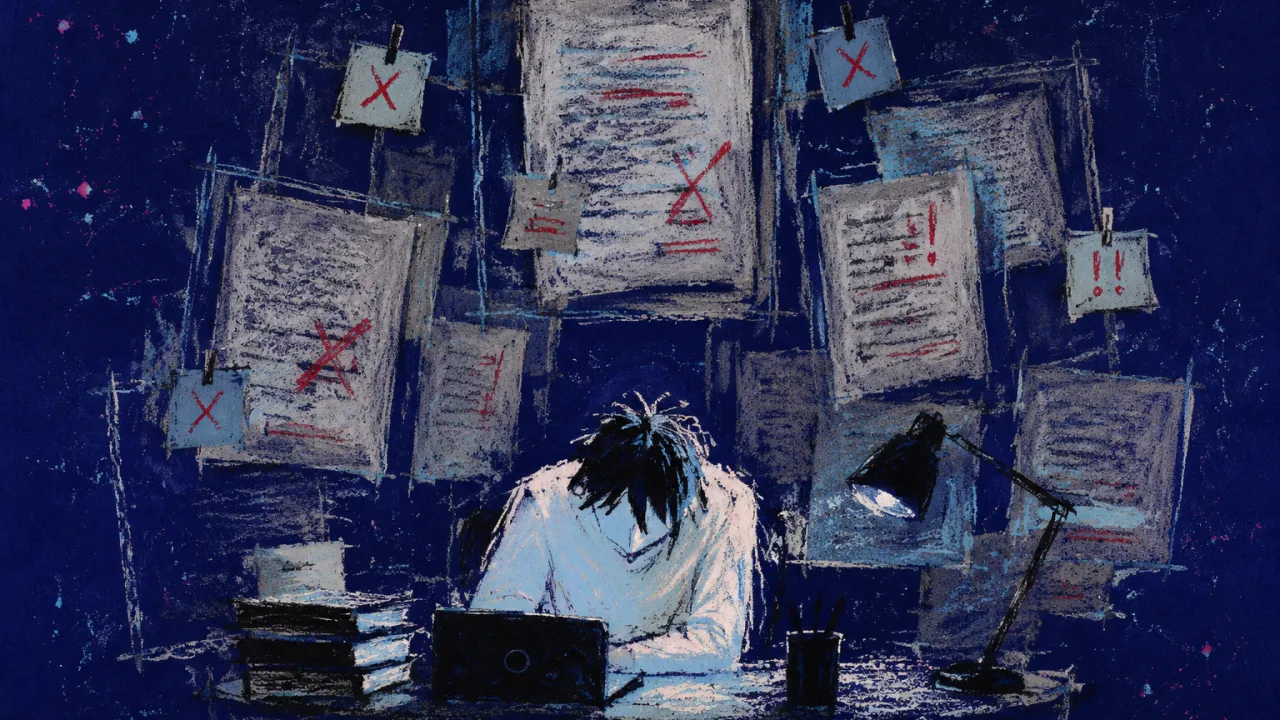
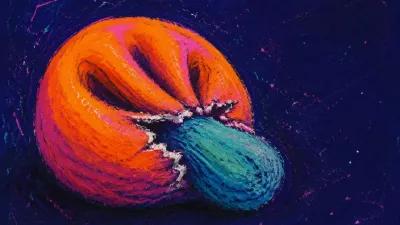
A seated figure with lowered shoulders as marked pages and suspended notes settle around a desk, narrowing the space ahead.

What is this situation?

Capstone Drafting Bottleneck: you enter the final stretch expecting to turn an approved proposal into a finished paper, only to find that every chapter now depends on something outside your control. At the library table or your desk, the outline is open beside source tabs, data files, the rubric, and a calendar that keeps losing days, but the methods section cannot settle until a faculty reviewer answers one question, the analysis cannot close until a shared file is updated, and the introduction keeps changing to match decisions still being made later in the draft. Feedback arrives after long gaps as tracked comments, brief emails, or meeting notes, often asking for a different structure than the previous round. One reviewer wants more context, another wants the same pages cut back, and the course portal may add a format reminder after you have already built the document. Each response releases one paragraph while sending three others back into revision. You spend nominal writing hours comparing versions, moving citations, rebuilding headings, and drafting around highlighted blanks rather than advancing in a straight line. Check-ins still arrive on schedule, and you are expected to show progress even when the authority to approve the next step sits elsewhere. The project starts to feel less like a paper you are writing and more like a queue you are assigned to manage. Your shoulders sink over the keyboard as comment balloons stack along the margin, and closing the laptop does not stop the submission date from moving closer. By the time one section receives sign-off, the pages connected to it no longer line up, creating another pass through the same queue. The draft remains in motion without becoming finishable, much like the figure in the Two of Pentacles, keeping two pentacles moving inside an infinity loop while ships rise and fall behind him.

Why it's not you?

This is not a lack of discipline or ability. A draft cannot move cleanly when approvals arrive late, requirements shift, connected sections change underneath one another, and the deadline keeps advancing. The bottleneck belongs to the drafting setup and its review queue, not to your worth as a student.

Capstone Drafting Bottleneck in Tarot Cards

Capstone Drafting Bottleneck takes shape when delayed approvals, shifting feedback, and dependent sections keep returning finished pages to revision. The shoulders sinking over the keyboard register an environmental, structural dynamic in which the deadline advances while authority to finalize the work remains elsewhere. The Tarot Cards below mirror the visible contours of that stalled drafting cycle.

The Chariot
Reversed
The armoured driver, black and white sphinxes, and vehicle without visible reins are inverted together. You are expected to move the capstone forward while reviewers pull toward different structures and the mechanisms needed to coordinate those directions remain outside your hands. The reversed vehicle makes responsibility without control physically legible. The paper has a destination and active forces around it, but conflicting academic directives prevent those forces from producing one stable line of travel through the draft.
Justice
Reversed
The seated evaluator, raised sword, balanced scales, and two formal pillars are inverted, destabilising the image's shared standard of judgement. You are asked to satisfy a rubric, faculty comments, and portal requirements that may contradict one another or change after the relevant pages are complete. The reversed evaluation scene shows how academic accountability becomes uneven when standards are not applied through one coherent process. The draft remains answerable to every authority while no authority guarantees that one compliant revision will remain accepted in the next round.
The Hanged Man
Reversed
The reversed figure appears ready to stand while remaining attached by one ankle to the wooden frame. You can keep editing, attend check-ins, and circulate updated pages, but the academic project is still tethered to unresolved review questions and unavailable approvals. The apparent uprightness captures the difference between visible activity and released progress. The capstone drafting system requires you to perform forward motion while preserving placeholders and provisional sections that cannot become final until someone else acts.
Temperance
Reversed
The two cups, the stream passing between them, and the figure standing across land and water are inverted, destabilising a scene built around successful transfer and integration. You are repeatedly trying to make the introduction, methods, analysis, evidence, and citations reflect decisions that arrive at different times. The reversed flow exposes a document-level integration failure created by the drafting setup. Individual sections can contain solid work, but shifting inputs prevent those sections from exchanging information cleanly, so the capstone remains active without becoming coherent enough to close.
The World
Reversed
The central figure remains inside an inverted laurel boundary while four witnesses occupy the corners of the scene. You may have every major capstone component present, yet reviewer sign-off and cross-chapter consistency checks keep the document from becoming an institutionally recognised whole. The reversed completion frame locates the problem at integration and closure rather than at the beginning of the work. Each approved section should contribute to a finished paper, but late decisions reopen its neighbours and prevent the final academic boundary from staying closed.
Two of Pentacles
Upright
The two pentacles moving inside one infinity loop, the dancer's unstable footing, and the ships pitching behind him closely reproduce a capstone draft governed by linked dependencies. You revise the introduction to match the analysis, pause the methods section for approval, and reopen citations when one connected decision changes. The upright figure preserves active handling capacity, but the loop shows why effort does not translate into linear completion. The academic task has become a coordination system in which every section remains reachable yet none can be treated as fully independent or permanently finished.
Three of Pentacles
Reversed
The craftsperson, two evaluators, and architectural plan are inverted together, destabilising the shared reference point that should coordinate their work. You are drafting between faculty comments that request different structures, while the rubric or portal may introduce another standard after the document has already been built. The reversed collaboration scene locates the blockage in misaligned review architecture rather than deficient craft. The plan exists and the participants are present, but authority is distributed across people who are not producing one coherent instruction set, leaving you to reconcile the contradictions inside the paper.
Seven of Pentacles
Upright
The worker pauses beside pentacles already developed on the vine, with his tool still in hand and one pentacle separated near his feet. You have produced real academic material, but the draft cannot be harvested into a final paper while reviewers delay decisions about its structure and evidence. The upright image keeps both the work and the capacity to continue visible. It separates a capstone drafting bottleneck from academic disengagement: the problem lies in converting accumulated research and prose into approved output when the review system controls when that conversion can occur.
Eight of Swords
Upright
The blindfolded, bound figure stands among eight swords on wet ground while a distant structure remains visible. You can see that a finished capstone exists beyond the current draft, but reviewer questions, shared-file dependencies, and shifting requirements restrict which academic move is usable next. The upright scene also shows that the swords do not form a sealed wall, keeping the blockage specific rather than absolute. The image names a constrained drafting field: some paragraphs remain workable, but the routes connecting them to approval and whole-document completion are narrowed by external dependencies.
Five of Wands
Upright
Five figures raise intersecting staves in different directions, turning open ground into a visibly uncoordinated contest. You encounter the academic equivalent when one reviewer asks for additional context, another demands cuts, and a later comment changes the structure that earlier feedback produced. The upright conflict is exposed rather than hidden, which makes the competing demands available for objective comparison. The scene identifies the drafting bottleneck as a collision among active standards: your paper becomes the ground on which reviewers' priorities meet, even though you do not control the rules of that encounter.
Eight of Wands
Reversed
Eight parallel wands crossing an otherwise open sky are inverted, disrupting the clean movement of information from one point to another. You may receive tracked comments after revising the relevant pages, a shared file after drafting the analysis, or a format reminder after building the document. The reversed trajectory turns communication volume into coordination failure. Academic inputs are arriving, but their sequence prevents knowledge from being integrated once; each late message creates another drafting pass and increases the distance between active work and a finishable paper.
Ten of Wands
Upright
The figure carries ten separate staves in one obstructive bundle, bending forward while the destination remains ahead. You are carrying the prose alongside tracked comments, version reconciliation, citation repairs, formatting reminders, shared-file checks, and the demand to demonstrate progress. The upright town keeps completion visible, but the overloaded route explains why more effort does not create proportionate academic progress. The capstone has absorbed coordination tasks that the review system does not hold elsewhere, leaving the student to transport the entire workflow through the drafting process.

Capstone Drafting Bottleneck in Tarot Card Reading Insights

When a capstone draft is repeatedly stalled by late approvals, changing requirements, and conflicting comments, others bring that same drafting bind into readings. The articles below gather Tarot Reading Insights from those sessions.
Psychological contexts related to Capstone Drafting Bottleneck