When Waiting to Feel Ready Stalled the Capstone: 150 Rough Words First
The 9:40 p.m. Draft That Wouldn't Move
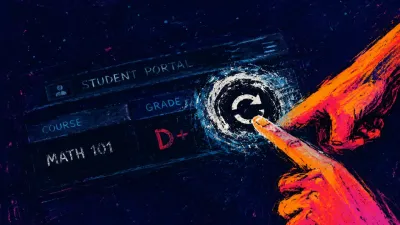
If you are a final-year student in Toronto who can spend two hours "working on" a capstone without adding a paragraph, deadline-driven capstone procrastination may look less like doing nothing and more like perfecting citations after the course portal starts counting down.
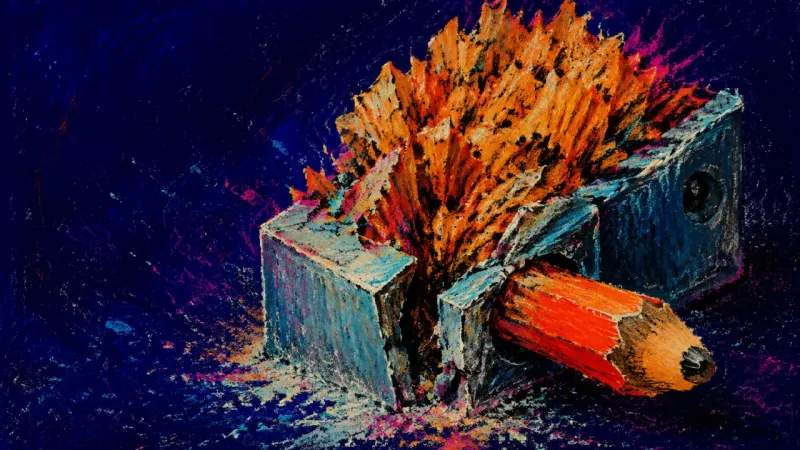
At 9:40 on a Tuesday evening, Casey (name changed for privacy) joined our video session from the kitchen table of their shared Toronto apartment. A radiator hissed through the microphone. Their coffee had gone cold beside the laptop, and the blue-white document light caught two renamed subheadings, a freshly corrected reference list, and an analysis paragraph that had not changed since dinner.
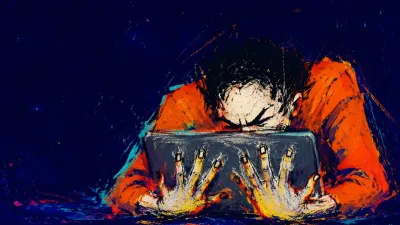
I watched Casey press both palms against the warm edge of the laptop. When the unfinished paragraph returned to the centre of the screen, their shoulders rose as if the sentence had pulled invisible strings through the back of their hoodie.
"I keep doing work around the draft instead of writing the draft," they said. "I know it's supposed to be rough, but I don't want anyone to see how rough it is. Why do I keep avoiding my capstone draft when the deadline is this close?"
The contradiction was painfully precise: Casey wanted the relief of finishing, yet finishing required creating the one thing they were trying not to face, an imperfect piece of writing that another person could assess. Their deadline-linked dread felt like sitting at a workbench whose surface had quietly become a pressure plate; every direct movement toward the real object seemed capable of setting off a verdict.
I did not hear laziness in what Casey described. I heard real effort repeatedly redirected at the moment uncertainty appeared. "You are not avoiding effort," I told them. "You are avoiding the moment effort becomes assessable. That distinction doesn't excuse the loop, but it does show us where the loop can be changed."
I also made one boundary clear. I would not use tarot to predict their grade, guarantee completion, or pronounce judgment on their ability. I would use it as a structured reflection tool: a way to place the behaviour, the fear beneath it, and the available leverage point where we could both see them. "Let's make a map of this fog," I said, "and find one next step small enough to begin before you feel ready."
Choosing a Four-Card Map for the Bottleneck
I invited Casey to take one slower breath and hold the question in plain language: "What keeps this avoidance loop running, and what would interrupt it?" I shuffled while they closed the course portal. The brief ritual was not about summoning certainty; it marked a transition from reacting to the deadline to observing the pattern.
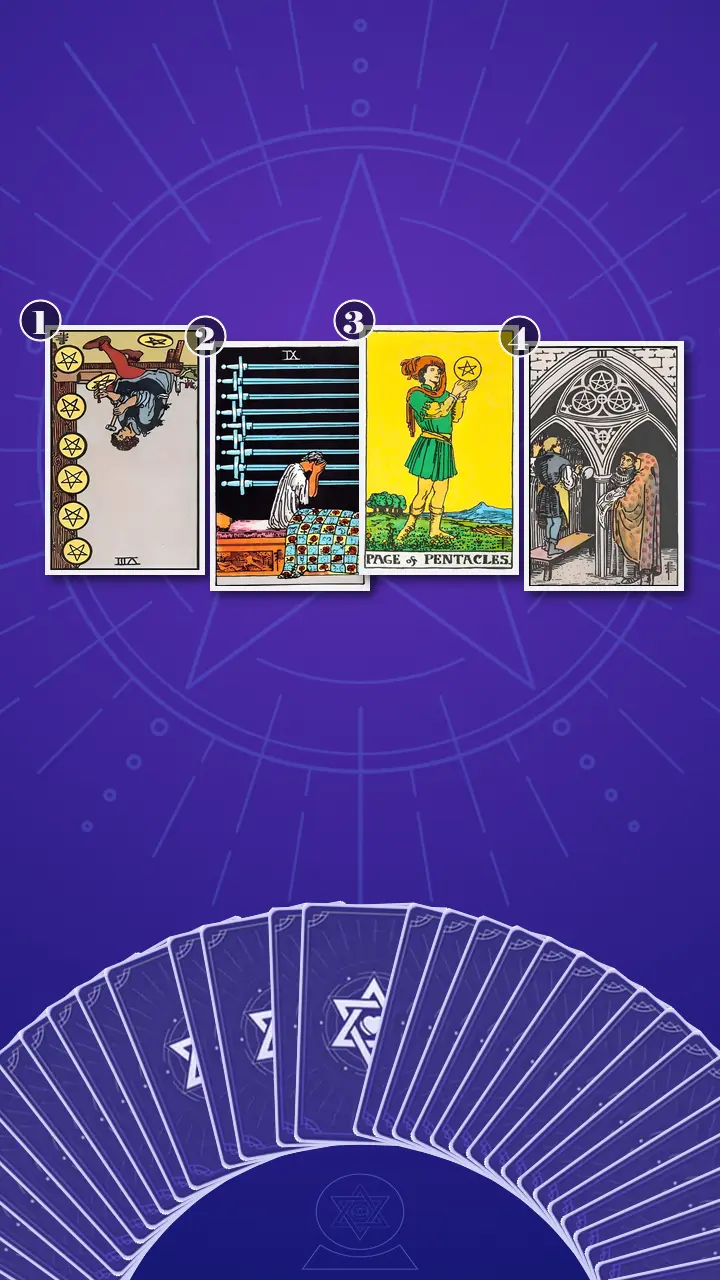
I chose the Problem-Solution Spread · Context Edition, a linear four-card tarot spread for the problem, root cause, advice, and integration. The question contained both a request for inner understanding and a repeating behavioural loop: an uncertain paragraph triggered substitute work, substitute work brought immediate relief, fewer words increased the pressure, and the next session became even harder to enter. Four positions were enough to examine that chain without burying Casey beneath unnecessary information.
This is how tarot works in my practice. The cards do not remove agency or hand down fate. Their images create an external structure in which automatic thoughts can be examined with a little more distance. Card meanings in context become testable reflections: Casey could accept what matched their experience, question what did not, and decide what action, if any, belonged to them.
I placed the cards in one horizontal line, leaving a slightly wider space between the second and third. The first position would show the observable capstone drafting bottleneck. The second would uncover why a visible rough draft felt more threatening than another evening of preparation. Across the central gap, the third would identify the shift from waiting for readiness to making one limited, revisable piece. The fourth would provide a non-predictive integration check: what the process could look like if imperfect work became visible enough for useful feedback.
The Workshop Full of Polished Tools
Position One: Eight of Pentacles, Reversed
"Now I am turning over the card that represents the observable Capstone Drafting Bottleneck: the specific work you substitute for substantive paragraph drafting as the deadline approaches."
The card was the Eight of Pentacles, reversed.
In the traditional image, a craftsperson sits at a bench beneath an orderly row of completed pentacles. Reversed, the production line no longer functions as intended. The tools and accumulated skill are still present, but attention has detached from the craft that matters. I read this as blocked Earth energy: not an absence of diligence, but diligence diverted into tasks with safer, cleaner finish lines.
I brought the image directly back to Casey's evening. At 9:40, they had aligned references, renamed two headings, and reorganized a source folder because each task offered visible completion. Then the uncertain analysis paragraph returned, their shoulders tightened, and Zotero reopened. The session contained real academic labour, but it produced nothing another reader could revise.
"The reversed row of pentacles looks a lot like perfectly formatted citations lined up beside an unchanged paragraph count," I said. "The thought running underneath it is: 'Once I finish this safe academic task, then I can write the uncertain section.' But a clean reference list cannot revise a paragraph that does not exist."
Casey gave a short laugh, but there was no amusement in it. Their mouth tilted for a second, then flattened. "That's so accurate it's almost rude," they said. "I have been working all evening, but somehow none of it is the capstone."
I let the recognition settle without turning it into blame. "The card isn't calling you undisciplined. It is asking whether your current progress metric rewards proximity to the draft instead of contact with it. Your internal productivity algorithm has learned to count citation cleanup, inbox clearing, and heading edits because they produce quick green ticks. It assigns almost no value to the awkward new sentence that actually changes the project."
I asked Casey what they physically did during the five minutes after reaching the least finished paragraph. They named the sequence without hesitation: check a citation, open the class group chat, notice that someone had sent a section to their supervisor, open Notion, build a better plan for tomorrow. The Eight had made the bottleneck observable. It had not yet explained why that sequence felt necessary.
Position Two: Nine of Swords, Upright
"Now I am turning over the card that represents the psychological mechanism beneath the procrastination loop, especially the fear that a visible draft will turn private potential into assessable work."
The card was the Nine of Swords, upright.
The figure in the card sits upright in a dark room, both hands covering their face while nine swords remain fixed across the wall. I saw excess Air energy: analysis continuing long after it had stopped producing information. The mind had become a private review panel, issuing hostile comments before any document had been submitted and before any supervisor had responded.
Casey had described the modern version to me. At 12:14 a.m., after closing the laptop without drafting, they would lie in bed and calculate the remaining word count by the number of days left. Traffic hissed over wet pavement outside. Headlights moved across the bedroom wall while imagined supervisor comments continued in the dark: "This claim is weak. The argument is behind. Everyone else understood how to turn research into a real project."
The mental sequence escalated quickly. If one sentence was weak, perhaps the section was weak. If the section was weak, perhaps the capstone was weak. If the capstone was weak, perhaps Casey had never deserved the competence other people attributed to them. Avoiding the document postponed that imagined verdict for a few minutes, but it also allowed the internal review to continue without evidence.
"What exact criticism are you predicting?" I asked. "Not the whole cloud of it. Just one sentence."
Casey's jaw held still. Their eyes drifted away from the cards as if a recording had begun to play behind them, and their thumb stopped rubbing the rim of the coffee mug. Finally, they said, "That my supervisor will read it and realise I don't actually understand my own project." Their thumb moved again, more slowly. "I thought I was afraid of getting a bad mark. That feels more personal."
"It is more personal," I said, "but it still isn't proof. The Nine shows a feared judgment becoming mentally present before a reader exists. A rough draft and a final verdict have been forced into the same emotional category."
I did not ask Casey to replace the thought with a cheerful statement they did not believe. I asked for a distinction they could verify: "Your supervisor can comment on whether a claim is supported. They cannot discover your human worth inside an awkward transition. Rough is a stage of the work, not a grade on your worth. The draft needs material, not a courtroom."
The first two cards now formed a clear mechanism. Blocked Earth kept Casey from producing tangible material; pressurised Air turned every possible sentence into anticipated evaluation. Preparation relieved the pressure briefly, then the unchanged word count gave the private tribunal more evidence with which to frighten the next session.
When the Page Held One Small Piece
Position Three: Page of Pentacles, Upright
The radiator clicked off. In the sudden quiet, I crossed the wider space in the spread and placed my fingers on the third card, the catalyst of the reading.
"Now I am turning over the card that identifies the key shift from waiting for readiness to creating one deliberately limited and revisable piece of text."
The card was the Page of Pentacles, upright.
The Page holds one pentacle at eye level. The cultivated fields and distant mountains have not disappeared, but the Page does not attempt to carry the entire landscape. I read this as Earth returning in balance: practical curiosity, beginner-minded attention, and direct contact with one manageable object. Casey did not need to feel inspired or calm before beginning. The absence of Wands and Cups in the spread made that point especially clear. Motivation and emotional ease were not prerequisites; one material action could come first.
I let the card rest between us. At 9:40 p.m., the draft had been open, the coffee cold, and the citations cleaner after an hour, while the paragraph count stood still. Casey had been treating every first sentence as a defence of the whole degree.
The Page brought back an old professional image for me. On archaeological digs, I had often watched a site appear chaotic until we separated its layers. A fragment taken as the whole story could mislead us; placed in its proper stratum, it became usable evidence. I call that analytical habit Academic Stratigraphy: structuring fragments so each one carries only the weight that belongs to its layer.
Applied to Casey's capstone, the uncertain paragraph was not a miniature final thesis. It was one exposed layer where a claim, evidence, and an unresolved question had become mixed together. My Research Bottleneck Analysis treated that blockage as information rather than personal failure. The paragraph was showing exactly where the project needed intellectual excavation. Casey's attempt to solve the claim, sources, structure, prose, citations, and future evaluation simultaneously had turned one layer into the weight of an entire monument.
I put the central insight plainly. "A rough section is not a verdict on your worth; it is a learning object that revision can actually reach."
You are not required to produce a monument on the first pass; take the Page's pentacle in both hands and make one small, examinable piece of work.
I stopped speaking. Casey's breath paused first, their fingers suspended a centimetre above the trackpad. Then their pupils widened and their gaze lost focus, as though they were replaying every night they had promised that tomorrow would be a better writing day. Their lips parted, but the first response arrived with a flash of anger rather than relief. "But doesn't that mean I've been doing all this wrong?" they asked. The last word came out sharper than the rest.
I did not rush to soften it. "It means the strategy protected you from exposure and charged you a growing deadline cost. You used the safest tools you had available. Seeing the cost now does not make your past self foolish; it gives your present self another option."
Casey's fingers lowered onto the table. Their fist opened one knuckle at a time, their shoulders dropped, and a breath left their chest with a faint tremor. Relief appeared, but so did the slightly unsteady look that can follow when a heavy explanation is removed and personal agency returns in its place. "So I still have to write the bad paragraph," they said quietly.
"Yes," I said. "But you only have to let it be a bad paragraph, not a verdict."
I invited them to test the new perspective against real life. "Think back to last week. Was there one moment when this distinction could have made the session feel different?"
Casey returned to Sunday evening at Robarts Library. Quercus had displayed the deadline countdown; rain tapped the tall windows, fluorescent lights buzzed overhead, and a classmate's group-chat message announced fresh supervisor feedback. Casey had built a four-hour schedule, missed the first block while choosing sources, and abandoned the night because the schedule was already "ruined." Now they identified the smaller object that had been available: 150 rough words answering why one finding complicated their initial assumption.
I asked them to imagine the Page's method in concrete terms. They would close email, chat, Zotero, the course portal, and research tabs; write one bounded question at the top of a clean subsection; start a 10-minute timer; and move toward 150 deliberately rough words. When certainty ran out, they could leave [SOURCE], [TRANSITION], or [CLARIFY] rather than exiting the page. They could stop when the timer ended, even mid-sentence, and they would retain full control over whether the material was saved, revised, deleted, or shared. On a day when 150 words felt too activating, three unpolished sentences would count.
"What if these 150 words are material to study," Casey said, looking at the Page, "not proof that I already know everything?"
That question marked the breakthrough: a first movement from deadline-linked dread and perfectionistic substitute work to beginner-minded self-trust and grounded, iterative drafting. Nothing had been magically completed. The shift was smaller and more useful. Casey could now imagine unfinished language as material that revealed the next question instead of evidence that condemned its author.
Position Four: Three of Pentacles, Upright
"Now I am turning over the card that provides a non-predictive integration check: what your drafting process could look like when imperfect work becomes visible enough for feedback and revision."
The card was the Three of Pentacles, upright.
In its image, an artisan stands on a workbench while two collaborators consult an architectural plan beneath a partially completed arch. The work has not earned collaboration by becoming flawless. Collaboration is one of the methods through which the structure becomes sound.
I read this as balanced, expanding Earth energy. The Page creates one tangible learning object; the Three places that object within a bounded exchange. In Casey's life, that could mean copying 150 to 300 imperfect words into a separate Google Doc and sending it to their supervisor with two lines: what the section is trying to establish, and the one point where the reasoning becomes uncertain.
"They do not need the whole project in order to judge you," Casey said, then caught the word and corrected themselves. "To answer a question. They need enough material to answer a question."
"Exactly," I said. "Feedback can answer a question that anxiety can only rehearse."
I emphasised that the Three was not predicting a supportive response or requiring Casey to expose the entire capstone. They could choose the recipient, select the section, remove private notes, ask no more than one or two questions, or keep the exercise private until the relationship felt appropriate. The card described an available construction method, not an obligation to surrender boundaries.
Casey looked across the sequence of hands in the four cards: hands diverted into repetitive work, hands covering a face, hands holding one object, and hands gesturing around visible plans. "So the problem isn't that my hands can't do the work," they said. "I keep redirecting them before the work can become real."
I nodded. The spread had moved from blocked Earth through pressurised Air and back into usable Earth. It did not ask Casey to manufacture confidence, pull an all-nighter, or wait for the perfect productivity setup. It asked them to place one revisable object where prediction and comparison had previously been.
The Thesis Stratigraphy Framework
I gathered the four cards into one coherent account. Casey had already completed years of study and collected substantial research, but the late stage of the capstone made each new paragraph feel more assessable. That pressure redirected genuine effort into citation formatting, heading changes, schedules, and lower-stakes tabs. The temporary relief left less material on the page, while the Nine of Swords converted the missing material into harsher deadline calculations and imagined criticism. The available resource was not sudden inspiration. It was the Page's capacity to isolate one piece, followed by the Three's capacity to make that piece discussable.
The cognitive blind spot was the belief that coherence had to exist before drafting or feedback could begin. In practice, coherence was more likely to emerge through visible iterations. Casey had been polishing every tool on the archaeological bench because touching the unfinished object would reveal what still needed to be learned. The transformation direction was therefore clear: move from private perfection to visible, bounded construction, beginning with direct contact with the page before formatting or research.
I translated that direction into The Thesis Stratigraphy Framework, my method for rebuilding an argument without asking every layer to become final at once. The bedrock was one answerable subsection question. The next deposit was rough language responding to it. Placeholders marked where evidence or clarification would later be excavated. Only after that layer existed would citation work, revision, and feedback have something real to support.
- Create the Rough-First 150.At the next library or kitchen-table session, open only the capstone, write "This paragraph is trying to answer..." above one subsection, finish that sentence, and set a 10-minute phone timer. Draft toward 150 rough words before opening notes, Zotero, email, chat, or Quercus. Insert [SOURCE], [TRANSITION], or [CHECK CLAIM] wherever a gap appears.Keep the success metric binary: material exists or it does not. Three unpolished sentences count on a low-energy day, and the timer gives permission to stop.
- Separate the verdict from the question.Before one session this week, divide a sticky note into "Predicted verdict" and "Answerable draft question." Write one feared judgment on the left, then convert it into one question a supervisor could address on the right. For example, "They will realise I do not understand this" can become "Does this evidence support the distinction I make in sentence four?"Stop after one prediction. The goal is not to debate every fear; it is to turn one mental sentence into a question that evidence or feedback can actually answer.
- Request one-section feedback.This week, place 150 to 300 imperfect words in a separate Google Doc and send it to a trusted supervisor or peer with a two-line note: what the section is attempting, and one unresolved question. Alternatively, show one paragraph during office hours without sending the full document.Keep the exchange bounded. Choose the recipient, remove private notes, ask no more than two questions, and delay sharing if the relationship does not feel appropriate.
I asked Casey which action felt small enough to attempt without turning it into a new performance standard. They chose the 10-minute block and reduced the target in advance: three sentences would be the minimum, 150 words the direction, and stopping at the timer a legitimate ending. That choice mattered. The framework belonged to Casey; Casey did not belong to the framework.

A Week Later, the Quiet Proof
Six days later, I received a message from Casey. It contained no dramatic declaration, only a screenshot of a subsection with 183 new words and several unapologetic placeholders. "The timer ended mid-sentence," they wrote. "I wanted to fix everything, but I highlighted one usable claim and stopped. The next day, I knew where to restart."
Casey had then copied 287 imperfect words into a separate document and sent them to their supervisor with one question about the relationship between the evidence and the section's main claim. The response did not solve the capstone. It identified one paragraph to move, one source to revisit, and one claim worth developing. Imagined criticism had become a defined revision task.
Casey also told me they slept through that night. Their first thought the next morning was still, "What if the section is bad?" This time, they smiled, opened the document, and answered, "Then it has somewhere to go next."
I did not credit the cards with writing those sentences. Tarot supplied a map and a vocabulary for the pattern; Casey supplied the decision, the timer, the rough language, and the carefully bounded request for help. Their Journey to Clarity was not a leap from doubt to certainty. It was the quieter move from treating the draft as a verdict to treating it as a structure that could be built, examined, and revised one layer at a time.
If tonight the unfinished section pulls your shoulders toward your ears and Zotero starts looking safer than a sentence, I hope you remember what I watched Casey discover: noticing the private courtroom is already a change in the excavation. You do not have to uncover the whole site at once.
So, if one rough paragraph were allowed to become the Page's single pentacle, a learning object rather than proof, what tiny layer of your argument would you be curious to place on the page tonight?