Vague Rubric Verbs Stalled the Draft, Then One Question Took Shape
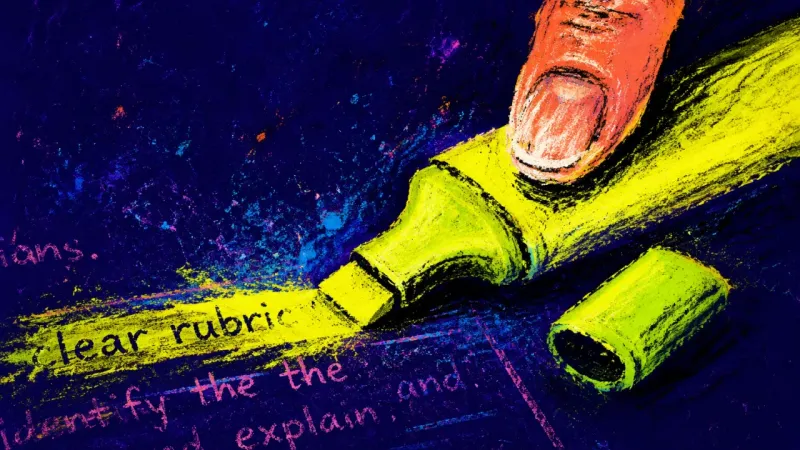
The 11:40 P.M. Fog of Unclear Grading Criteria
At 11:40 p.m., I watched Jordan, a 21-year-old Toronto undergraduate balancing a full course load with occasional shifts, keep the assignment brief, source notes, and Google Docs open at once. She renamed a file and adjusted two citations instead of writing the rough thesis, because academic procrastination felt safer than committing to the wrong interpretation.
Through our video call, I could hear the fluorescent light buzzing above her desk and the laptop fan humming beneath it. Her phone, warm from searching sample essays, rested in one hand. With the other, she highlighted analyze and engage for the third time. I saw her shoulders held close to her ears and the cursor blinking in an otherwise empty document.
“Why do I keep delaying my paper when the grading criteria feel unclear?” she asked. “I can start once I know what they actually want. But if I choose the wrong angle, the whole paper will look careless. I am doing work, so why does the document still look empty?”
When I asked where that feeling lived in her body, she pressed a palm against her stomach. She described it as standing in an airport security line with one unidentified item in her bag, certain that any step forward could expose a mistake. I told her, gently, “An empty document can feel safer than a wrong sentence, but it cannot show you what actually needs clarification. Let us make a map of the fog without pretending the map can choose for you.”

Choosing the Workbench: A Six-Card Transformation Path Grid
I invited Jordan to place both feet on the floor, lower her shoulders as much as they were willing to lower, and take one unforced exhale. I shuffled while she held one practical question in mind: What keeps me preparing instead of drafting, and what is the smallest useful interruption?
This is how tarot works in my practice. The pause is a way to focus attention, not a ritual for summoning a verdict. I use the cards as an external structure for separating observable behaviour, assumptions, protective strategies, and available choices. Card meanings in context can make a loop easier to examine, but they do not read an instructor's mind or predict a grade.
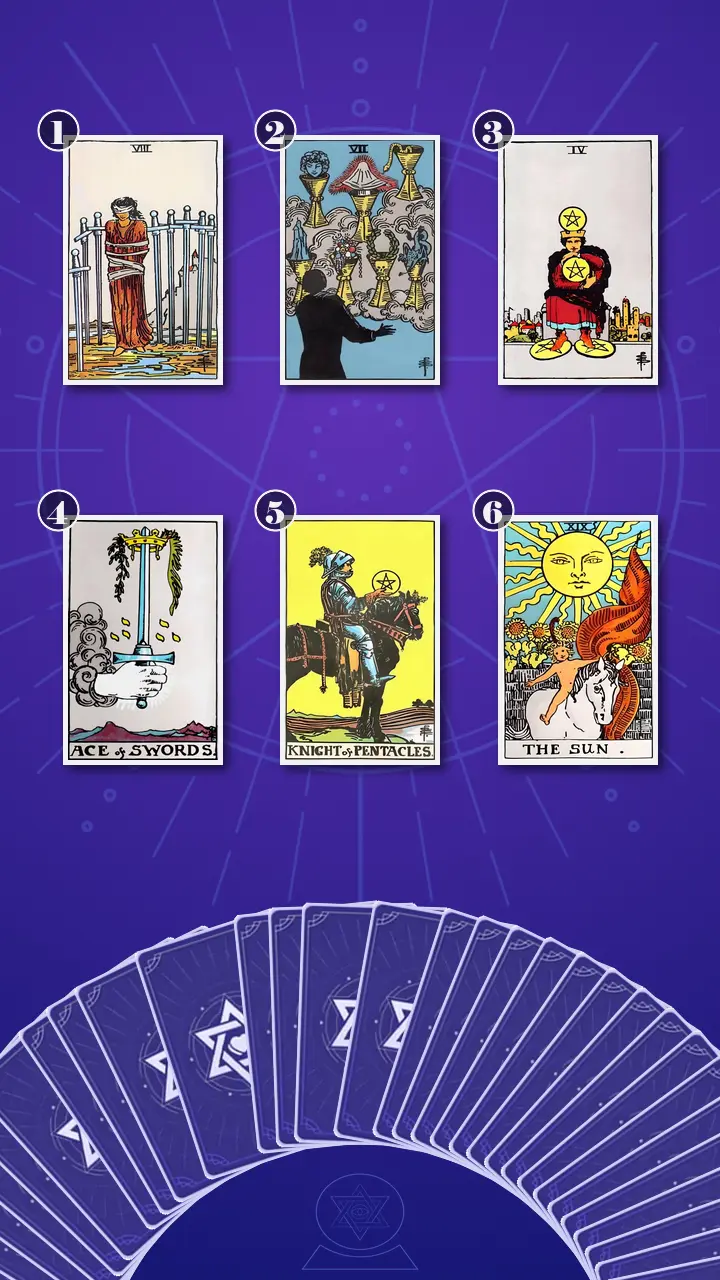
I chose the Transformation Path Grid (6) · Context Edition, a six-card tarot spread arranged like a two-row workbench. I chose it because Jordan was not deciding between two essay topics, and she did not need a broad forecast. She was caught in a feedback loop: vague grading language led to more preparation, preparation briefly reduced the risk of judgment, and the missing draft kept the criteria abstract.
I explained that the upper row would show the visible delay, the competing interpretations blocking movement, and the need for control underneath them. The lower row would identify one clarity-producing intervention, one repeatable drafting action, and the kind of grounded clarity that becomes possible once real work is visible. To me, the layout looked less like a mystical diagram than a cluttered desk being sorted into a usable sequence.
Reading the Tangle Across the Workbench
Position 1: The Cursor Inside the Circle
I turned the card representing the observable delay: the rubric and source notes remain open while the thesis is kept out of view. The card was the Eight of Swords, upright.
I angled it toward the camera. A blindfolded woman stood with bound hands inside a ring of swords. I connected those images to the scene already in front of me: Jordan at her Toronto desk, reading the same broad verbs while the cursor blinked. The eight swords became eight imagined ways the paper might fail: the wrong angle, too little analysis, the wrong source, weak structure, insufficient engagement, an obvious point, a missed theory, or a grader expecting something nobody had stated.
I read the card as a Blockage of Air. Thought was present in abundance, but it was being used to patrol the boundary around action. The assignment brief was technically accessible, just as Jordan's hands were technically free to type, yet the rule that she must understand the entire standard first made one rough sentence feel unavailable.
I asked, “Which sword is actually written in the rubric, and which one has been added by the need to be certain?” Her breath paused. Her fingers hovered above the trackpad. Her eyes moved from the card to the two highlighted verbs, and then she gave a short, bitter laugh. “Okay, that is almost rude. The notes-file thing is exactly what I did tonight.”
I told her the card was not accusing her of laziness. It was showing the difference between a stated constraint and a perceived one. The preparation had a protective purpose: it kept her competence from becoming judgeable for another few minutes. Recognising that purpose allowed us to question the loop without shaming the person who had relied on it.
Position 2: Seven Thesis Tabs and No Working Version
I turned the card representing the immediate obstacle: unclear grading criteria had become a field of competing interpretations that made starting feel unsafe. The card was the Seven of Cups, upright.
The seven cups floated on a cloud, each holding a different possibility. I translated them into Jordan's browser window: seven possible thesis directions, three sample essays, several Reddit explanations of what engage critically might mean, and multiple imagined reactions from the grader. Each option looked plausible. None became a paragraph, because choosing one felt like irresponsibly abandoning every other possibility before proving it wrong.
I heard the internal loop in the way Jordan described her research: “If I choose this angle, they might want that angle, so I need one more example before I decide.” The vague rubric had started behaving like an algorithmic feed, serving an endless stream of what a good paper could look like while never declaring which version was meant for her assignment.
I read this as an Excess of possibility. Imagination was doing more work than discernment. Every interpretation had been assigned equal urgency, so none could become a temporary working choice. I asked, “What happens if one direction gets three sentences before the others get another research tab?”
I watched Jordan press her thumb into the edge of her phone case. Her gaze lost focus for a moment, as if she were scrolling through a mental version history. Then she closed three browser tabs while we sat together. “I keep calling this being thorough,” she said, “but I am mostly trying to eliminate every possible way of being wrong.”
Position 3: The Draft Kept Safe in Private
I turned the card representing the underlying root: the control strategy that protects Jordan from letting a visible draft expose whether she understood an opaque standard. The card was the Four of Pentacles, upright.
The figure gripped one pentacle against the chest, balanced another on the head, and planted both feet over two more. I saw Jordan's private Google Drive folder in that guarded posture. Every idea could remain in the notes, every citation could be polished, and every thesis could stay available. Nothing could contradict her understanding while nothing was concrete enough to test.
I read the card as an Excess of Earth that had become a Blockage. Structure had tightened into containment. Preparation gave Jordan a brief sense of control, but it also withheld the only evidence that could reveal whether the rubric was truly unclear, whether the thesis needed revision, or whether she already understood more than she trusted.
I said, “You are not waiting for information; you may be waiting for permission to be provisionally wrong. As long as the idea stays in your notes, you can still feel capable. Once it enters the draft, someone might respond to it. That does not make the delay irrational. It shows us what the delay has been protecting.”
Jordan's jaw tightened before her face softened. She pulled her hands away from the keyboard and rubbed both palms against her jeans. “A rough paragraph feels like evidence against me,” she said quietly. I heard both recognition and grief in the sentence: recognition that the pattern made sense, and grief for the hours she had spent trying to earn safety through preparation.
When the Ace of Swords Gave the Fog an Address
I reached for the first card in the lower row. At that moment, the laptop fan on Jordan's desk dropped into silence, and the steam from my coffee thinned between us. The room did not become magical. It simply became quiet enough for one distinction to matter.
Position 4: One Phrase, One Claim, One Question
I turned the card representing the smallest clarity-producing intervention: converting one unclear grading phrase into a testable writing question. The card was the Ace of Swords, upright.
A hand emerged from a cloud holding one upright sword beneath a crown and wreath. After the surrounding blades of the Eight of Swords and the floating options of the Seven of Cups, the image offered one defined instrument. I read it as Balance returning to Air through discernment, direct inquiry, provisional thinking, and the courage to make one clear statement before every uncertainty had been resolved.
In Jordan's real life, this card was not an abstract flash of inspiration. It was the moment she stopped searching for a perfect model paper, typed a sentence beginning with This paper argues that..., underlined the grading phrase it addressed, and turned the remaining ambiguity into one focused question for her TA or instructor. The sentence would be a tool for finding information, not a promise that her interpretation was final.
I could see the old rule still running behind her eyes: a serious student should know the correct interpretation before typing. At 11:40 p.m., that rule had converted preparation into cover, because one visible sentence could be judged while ten polished citations could not.
You do not have to wait for the foggy standard to disappear; let the Ace of Swords cut one vague phrase into a testable claim and one precise question.
Jordan's inhale stopped halfway. Her fingers hung over the keyboard, and for one beat her face went still, her eyes slightly wider and glassy as if she were replaying every evening spent making notes look finished. Then her brow tightened. “But doesn't that mean I've been doing it wrong this whole time?” The words came sharper than anything she had said before. I did not rush to soften them. “It means your preparation had a protective job. It lowered the risk of being judged for a few minutes. We are changing the job, not putting you on trial.” Her gaze drifted toward the rubric; her shoulders sank a fraction; then her clasped hands slowly opened. She let out a low “oh” that sounded half relieved, half unsteady. Clarity had removed one burden, but it had also returned choice to her, and I could see the brief blankness that follows when an old excuse is no longer necessary. “So I still have to risk one sentence,” she said, her voice softer.
I asked, “Now, with this new perspective, think back: was there a moment last week when this insight could have made you feel different?” Jordan remembered sending a friend a voice note in which she explained the course topic clearly for almost three minutes. She had known enough to speak. It was the visible, judgeable sentence that had felt dangerous.
This was where I used a method I call Syllabus Deconstruction. I take the emotional weight of a massive deadline and separate it into mechanical parts that can be handled without asking confidence for permission. With the Ace as our blade, I divided one broad instruction into three strips: what the criterion literally states, what one draft sentence will test, and what one answerable question still remains. The aim was not to solve the whole assignment. It was to give the uncertainty an address.
I set a 10-minute timer. I asked Jordan to write one provisional claim in under five minutes, copy the exact rubric phrase beneath it, and place one targeted question beside the pair. If her shoulders locked sharply or the exercise felt too exposing, she had permission to close the document and reduce the task to naming the topic she wanted to explain.
I watched her type This paper argues that... and finish the sentence in her own words. Beneath it, she copied analyze the relationship. Then she wrote: “Does analyze here require comparing two interpretations, or can I develop one interpretation through contrasting evidence?” She did not solve the paper. She had made the missing information narrow enough to ask about.
I named the shift plainly. This was one step from certainty-seeking academic procrastination and fear of opaque evaluation toward grounded clarity through visible provisional drafting. The claim was not a verdict on Jordan's ability. It was a test that could generate evidence.
Position 5: The Knight Who Works One Paragraph at a Time
I turned the card representing the practical response: a bounded, repeatable drafting action that creates evidence instead of waiting for confidence. The card was the Knight of Pentacles, upright.
The knight held one pentacle steadily while the horse stood still beside a cultivated field. I connected that measured posture to a short library session: Jordan would draft one paragraph containing one claim, one source, and one explanation, then compare it with one grading criterion before opening another research tab. Progress would be measured by a usable paragraph, not by how certain she felt before beginning.
I read this as Balanced Earth. The Four of Pentacles had used Earth to hold everything still; the Knight used the same element to build something visible through repetition. No dramatic all-nighter was required. One paragraph could move from not started to drafted to checked against one criterion.
I compared it to taking the TTC one stop at a time instead of refusing to tap a PRESTO card until the entire journey could be seen at once. Jordan smiled and looked back at the sentence she had written. “One stop is annoyingly reasonable,” she said. I asked what one stop would look like tomorrow. She chose a 20-minute block at Robarts Library with one source open and every sample-essay tab closed.
Position 6: A Real Paragraph in Daylight
I turned the card representing integration: using visible evidence and transparent revision to build clarity without predicting a particular grade. The card was The Sun, upright.
I pointed to the radiant sun, the child on the white horse, the red banner, and the sunflowers. In Jordan's modern setting, the scene became an actual draft section open in daylight. She could highlight the sentence that answered the criterion, circle the place where evidence was thin, and write a revision question. She could respond to what was present instead of rehearsing every possible grader reaction in the dark.
I read the Sun as Balanced Fire: visibility restoring energy through direct contact with reality. I made one boundary explicit. The card did not promise a high grade, effortless confidence, or a perfectly transparent rubric. It described the practical relief of having enough visible work to make a deliberate next decision.
For a moment, the red banner took my mind back across twenty years of conversations held over warm coffee, many of them with people who had mistaken visibility for danger. I have learned that putting work in the light does not turn it into a verdict. It gives us something real enough to tidy, question, strengthen, or discard.
I asked Jordan, “Once one paragraph is in front of you, what can you evaluate directly instead of guessing about the grader?” She looked at the sentence on her screen for several quiet seconds. Then she lowered the rubric beside it rather than over it. “I can check whether I made a claim and used evidence,” she said. “I do not have to decide whether the imaginary grader hates the whole paper.”
Two Small Moves on a Cleared Desk
I read the spread as one coherent story. On previous evenings, broad grading language had triggered a ring of imagined restrictions. Those restrictions multiplied into competing thesis directions, and Jordan responded by gripping the parts of the process she could control: sources, filenames, citations, and formatting. That preparation brought short-term relief, but without a draft, the rubric remained a fogged evaluation window. The Ace introduced one precise distinction, the Knight converted it into repeatable work, and the Sun brought the resulting evidence into view.
Jordan's cognitive blind spot was the assumption that uncertainty before drafting meant she did not understand enough to begin. I had already heard evidence against that assumption: she could explain the topic aloud. Her next direction was not to force confidence or decode every hidden standard. It was to write one testable claim, compare it with one stated criterion, and use the mismatch to form one targeted clarification question.
I also used Study Environment Auditing to examine what her webcam showed me. The clutter was not only the mug, loose readings, and phone. It included six open research tabs, the rubric hovering over the document, and citation software occupying the centre of the screen. Each object quietly offered an escape route from the exposed task.
When I proposed clearing the workspace, Jordan caught the risk immediately. “But I can turn cleaning into a whole night too.” I agreed. That was why my Desktop Reset Ritual had a hard 15-minute boundary and a fixed exit: when the timer ended, the cursor had to move into the working claim. The reset was a runway, not a substitute for takeoff.
- The Desktop Reset and Claim-and-Criterion TestOn one weekday at your desk or in the library, set a 15-minute timer. Put the phone out of reach, close sample-essay and formatting tabs, and leave only the assignment brief, a plain Google Doc, and one relevant source visible. When the timer ends, take no more than 10 additional minutes to write one sentence beginning with “This paper argues that...”, copy the exact criterion it addresses beneath it, and write one specific question you could take to a TA, instructor, or office hour.Stop clearing when the first timer rings. Do not send the question until it is narrow enough to answer. The claim can be revised or discarded; it is a test, not a commitment.
- The One-Criterion Paragraph CheckDuring the next 20-minute study block, create a document titled “Working Claim - Not Final.” Draft one paragraph with one claim, one source, and one explanation of how the source supports the claim. Compare only that paragraph with one grading criterion, then mark it “clear,” “uncertain,” or “not yet addressed.”Highlight the sentence that feels most exposed instead of deleting it. Stop after one paragraph. If that is still too much, write three sentences or simply name the topic you are trying to explain.
I told Jordan that these were actionable next steps, not rules she had to obey to be a good student. She could modify the time, keep the document private, or pause if the exercise became too uncomfortable. The cards had made the loop observable. Jordan remained the person with the authority to choose what happened next.

A Week Later: One Paragraph in Daylight
Five days later, I received a message from Jordan just after noon. She had used the Desktop Reset Ritual at Robarts, written one paragraph before opening Zotero, and marked it uncertain against the word analyze. That label had helped her send the focused question we drafted to her TA.
“They have not replied yet,” she wrote, “but I know what I am asking now. Also, the paragraph is not amazing, but it exists, and I can see the part that needs work.”
She had slept through the night, she added, but her first morning thought was still, What if I am wrong? This time, she smiled at the thought and opened the paragraph anyway.
I did not see a life suddenly solved or uncertainty permanently removed. I saw a smaller, more useful proof: a student had moved from trying to predict an invisible judgment to creating evidence she could examine. The tarot had not written her paper or decoded the rubric. It had helped her notice the loop, and she had chosen to interrupt it.
If a foggy rubric has your shoulders locked over an empty document tonight, I hope Jordan's story helps you recognise what the blank page may be protecting. Noticing that a first claim feels like surrendering control already gives you a little more room to choose.
If one provisional sentence could be a test rather than a verdict, which foggy phrase would you place beneath the Ace's single blade, and what small, answerable question could you let that sentence ask next?