One Post Returned to FINAL_v4; the Next Stayed Visible 48 Hours
Why Finished Work Goes Back to Drafts at 11:47 p.m.
If your client work proves you are capable but your personal portfolio still looks inactive because every update returns to drafts, you may know the exact moment when craft turns into exposure. The person on my screen was Riley, a 28-year-old freelance illustrator and content designer in Toronto whose finished work kept disappearing at that threshold.
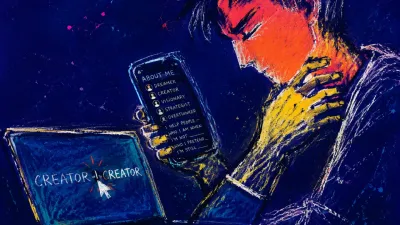
It was 11:47 p.m. on a Tuesday when Riley joined our session from their rented Parkdale apartment. I watched them preview an illustration carousel on a laptop, a tablet, and a phone. The laptop fan hummed through the call, a streetcar bell cut across the closed window, and the phone had grown warm in their palm. The caption had already been rewritten twice. Their cursor rested over Schedule.
Then their shoulders pulled inward. Their breath climbed high into their chest, and heat spread across their face. Riley cancelled the morning slot, dragged the export into a folder called FINAL_v4, and reopened the source file to adjust a background colour that had looked fine five minutes earlier. The moment the scheduling window closed, I saw their shoulders drop.
“It feels finished until the Publish button makes it real,” Riley said. “I can handle making the work. I just struggle with becoming the person publicly attached to it. Why do I keep hiding my work right before I post?”
The work had not suddenly become worse. Being seen had become real. Riley wanted professional visibility, creative connection, and a portfolio that could bring new clients. At the same time, hiding the work was the fastest available way to prevent criticism, silence, or misunderstanding from feeling like evidence about their worth.
The anticipatory shame felt like a heat-sensitive fire door dropping between Riley and the publishing controls. On one side sat the finished illustration. On the other sat the imagined audience, with every like, comment, and quiet response suddenly carrying the weight of a verdict.
I told Riley, “I am not going to tell you to just post, and I am not going to pretend visible work is emotionally neutral. Your retreat is doing a protective job. Our task is to see exactly what it protects, where it takes control, and where you still have a usable choice. Let us make a map of the fog.”
Choosing the Compass: The Six-Card Transformation Path Grid
I asked Riley to place both feet on the floor and take one ordinary breath while holding the question in mind. I shuffled slowly and angled my overhead camera toward the table. The pause was not designed to summon certainty. It simply marked a transition from reacting inside the loop to observing it.
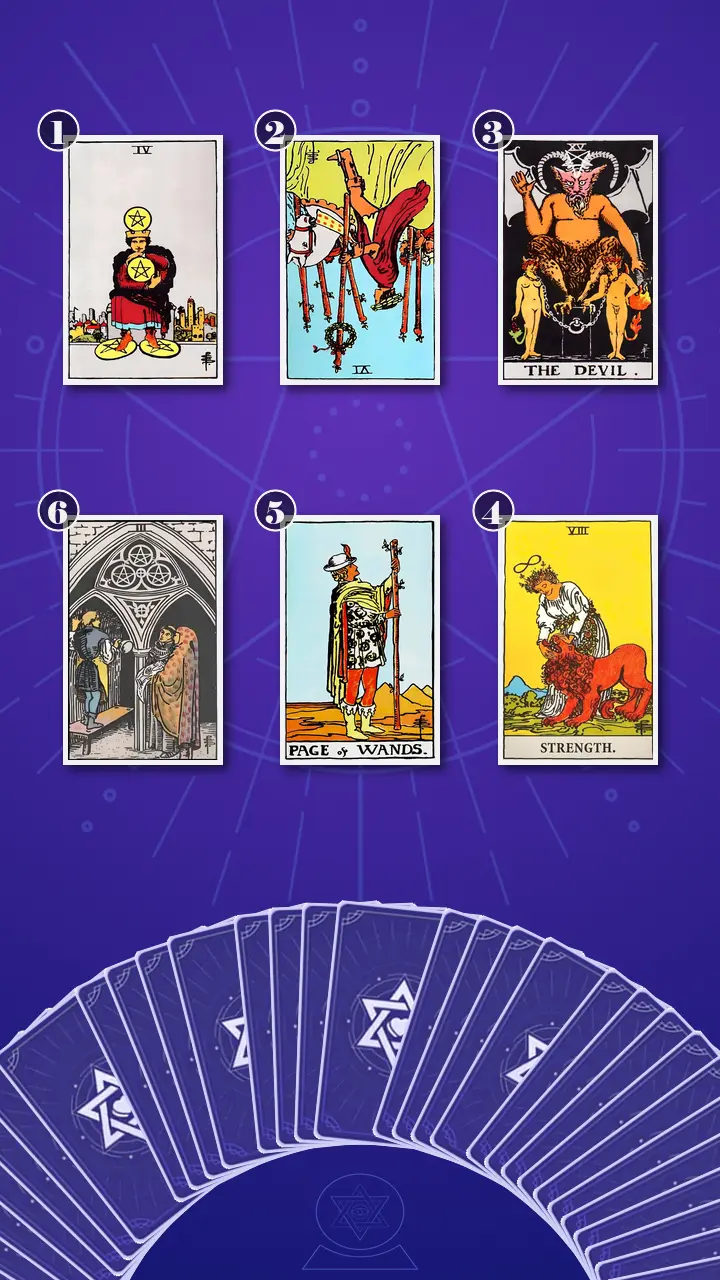
I chose the Transformation Path Grid · Context Edition, a six-card tarot spread for creator visibility paralysis. For anyone wondering how tarot works in a situation like this, I use the cards as a structured cognitive map, not as a machine that predicts whether a post will succeed. The images give us enough distance to examine a pattern that feels automatic when we are trapped inside it.
A Shadow Spread could have explored hidden fear, but Riley needed more than an explanation of the fear. A Celtic Cross would have introduced more layers than this focused question required. The Transformation Path Grid follows one causal sequence: the visible behaviour, the active blockage, the root mechanism, the leverage point, the practical experiment, and the integration practice.
I arranged the cards in a two-row switchback. The first row would show what Riley did at the publication threshold, what stopped the post, and why withdrawal brought so much relief. The second row would identify the interruption point, the next physical action, and the structure that could make visibility repeatable. It was a map of the edit-hide-relief cycle, followed by a route out that did not depend on feeling fearless.
The Locked Studio Door
Position 1: Four of Pentacles and the Safety of FINAL_v4
I turned over the card representing Riley's observable behaviour and contracted emotional state at the publication threshold. It was the Four of Pentacles, upright.
The figure held one pentacle against his chest while two more pinned his feet in place. Behind him, a city remained active and distant. I saw Riley's finished file in that image immediately: held close enough to preserve total control, but kept outside the professional and creative conversation it was meant to enter.
In Riley's life, the card was almost literal. At 11:47 p.m., the illustration sequence had been loaded into Instagram and scheduled for morning. As soon as publication became one click away, Riley cancelled it, moved the export into FINAL_v4, and reopened the source file. The shoulders-dropping relief preserved control, but the same grip kept the portfolio quiet and the wider Toronto creative community at a distance.
This was Earth energy in excess and blockage. Careful standards, ownership, and technical control were real strengths, but they had tightened until nothing could circulate. The internal bargain sounded like this: “If it stays mine, nobody can misunderstand it. If nobody can see it, nothing can happen because of it.”
Riley gave a small, bitter laugh. Their thumb pressed hard against the edge of the phone before loosening. “That is so accurate it is almost rude.”
I let the laugh land. “I hear the sting. The card is not accusing you of being controlling. It is showing that control has become the only form of safety available at the threshold. That made sense at some point. It is also costing you participation now.”
I asked Riley to notice the exact second after the screen had closed. What became easier in their body? They looked toward the apartment window and said, “My chest released. For a minute, I felt responsible again, like I had caught a mistake before anyone else could.”
Position 2: Six of Wands Reversed and the Imagined Public Scorecard
I turned over the card representing the active blockage that converted ordinary visibility into a ranking of Riley's legitimacy and worth. It was the Six of Wands, reversed.
Upright, the card carries public recognition: an elevated rider, a raised wand, and laurel wreaths displayed before a crowd. Reversed, that public Fire had folded inward. Confidence was not merely low; recognition itself had become threatening because every possible response seemed capable of defining the creator.
Riley had described opening Instagram on the Line 2 subway and seeing a peer's project announcement gathering comments. Before the next stop, their own scheduled upload turned into an imagined leaderboard. Criticism meant “not talented.” Silence meant “irrelevant.” Praise meant pressure to perform again. Riley removed the post before any real audience had responded.
I said, “An ordinary portfolio update has been scaled up into an awards stage. Publish becomes a podium, likes become votes, and silence becomes a ranking. It is the social-rating logic of Black Mirror's ‘Nosedive’ applied to one carousel.”
The reversal showed a blockage of healthy Fire, the part that simply sends a signal outward. Projected recognition had replaced observable information. The imagined script was brutally efficient: “If it performs, maybe I belong. If it lands quietly, everyone will know I do not.”
Riley's jaw tightened. Their eyes left the card and fixed on a point beyond the screen, as if they were watching that subway ride again. “I always check what someone else posted before I cancel mine,” they said. “I call it research.”
“That comparison may provide information about a platform,” I replied, “but it cannot provide a fair measure of your worth. The accounts, audiences, timing, and goals are not comparable. A quiet post is an outcome, not a verdict.”
I asked which imagined response carried the most weight. Riley answered without much pause: “Low engagement. Criticism would hurt, but silence would make me feel like I had publicly demonstrated that nobody cares.”
Position 3: The Devil and the Hide-and-Relieve Bargain
I turned over the card representing the belief and reinforcement cycle beneath Riley's repeated withdrawal. It was The Devil, upright.
I told Riley immediately that I did not read this card as doom, punishment, or an external force controlling them. The useful detail was the looseness of the chains around the two figures. The pattern felt compulsory, but a small point of choice remained visible.
The modern sequence had three beats. Riley reached the final upload screen and their chest tightened. They found one tiny adjustment and returned the piece to drafts. Their shoulders dropped immediately. That bodily relief made retreat feel sensible, so the nervous system quietly learned to repeat it the next time.
The hidden logic was, “Taking it down made me feel better, so taking it down must have kept me safe.” That was The Devil's bargain: immediate comfort in exchange for long-term freedom. Each cancellation reduced the discomfort in the room tonight while making tomorrow's Publish button heavier.
During my years on Wall Street, I watched traders mistake the relief of reducing immediate exposure for proof that the underlying strategy was sound. A hedge can quiet today's volatility while locking in a larger cost over time. Riley's last-minute editing worked the same way. The relief was real. It was not reliable evidence that the work had been unready.
I said, “You are calling it quality control, but the body is using it as an exit route. Recropping, caption rewrites, best-time-to-post research, and another Notion content-calendar redesign create activity at the exact moment visibility becomes emotionally expensive.”
Riley went still. Their breathing paused, their gaze dropped to the Devil's loose chain, and then a low “Oh” left their chest as their shoulders softened. “I thought the relief meant I had made the responsible choice,” they said. “I never thought of the relief as the thing training the loop.”
“That distinction matters,” I replied. “The loop was learned because it worked in the short term. Learned patterns can be interrupted without insulting the part that originally tried to protect you. The question is not whether the urge appears. The question is where, between the urge and Cancel, a choice is still recoverable.”
When Strength Put a Hand Beside Cancel
Position 4: Strength as the Transformative Leverage Point
I turned over the card representing the key interruption to the repetition cycle: meeting the protective urge consciously and compassionately before choosing one bounded action. It was Strength, upright, the catalyst and key card of the reading.
The laptop fan on Riley's side dropped to a quieter idle. A streetcar bell sounded once beyond the window and then the room settled. On the card, the woman did not flee from the lion or force its mouth shut. Her hands rested gently at its jaws. Instinct remained powerful, but it was in relationship with conscious guidance.
Strength showed balanced energy. It did not ask Riley to suppress the tight chest, argue with every prediction, or manufacture confidence before posting. It asked for compassionate self-command: recognise the alarm, preserve a small zone of choice, and let a pre-agreed action proceed.
This was where I used a tool I call Potential Actionability Assessment. I apply it when an insight sounds good but has not yet survived contact with a real decision. I ask three questions: What is the next physical action? What boundary prevents the old pattern from renegotiating that action? What legitimate condition permits an exit?
For Riley, the next physical action was leaving one hand beside the trackpad instead of clicking Cancel. The boundary was a written completion threshold and one final check. Legitimate exits included privacy concerns, client confidentiality, harassment, a material error, or genuine overwhelm. Ordinary discomfort and low engagement predictions would be acknowledged, but they would no longer receive publishing authority.
At 11:47 p.m., the illustration was uploaded, the caption was readable, and the post looked right on three screens. Riley was still trapped in the thought, “I must make the correct decision about what this says about me,” while FINAL_v4 waited like a locked room that promised immediate relief.
I said, “The urge to hide is a protection signal, not a quality verdict. You do not need to silence it; you need a boundary that keeps it from making the publishing decision.”
You do not have to defeat the part that fears being seen; guide it with a steady hand and let the lion's courage carry one finished piece across the threshold.
For one beat, Riley stopped breathing. Their fingers remained suspended above the warm phone, neither gripping it nor putting it down. Their pupils widened slightly, and their eyes lost focus as if several cancelled posts were replaying behind them. Then their eyebrows drew together. “But does that mean I was wrong all those times?” they asked. “Did I do this to myself?” Anger arrived first, sharp enough to give their voice an edge, and grief followed it so quickly that their eyes reddened. I said, “No. You used the best protection you could access. We are not putting your past on trial; we are updating who gets to make the next decision.” Riley's fist slowly opened against the desk. Their shoulders descended, and a shaky breath left their chest. The release was not pure relief. I could see the brief blankness that comes when a familiar excuse falls away and choice feels newly real. “That is almost scarier,” they whispered. “Because now I have some responsibility.”
I waited, then asked, “Now, using this new perspective, think back to last week. Was there a moment when this insight could have made the experience feel different?”
Riley remembered a scheduled-post alert that had appeared ten minutes before release. They had opened the source file to change a background colour, even though nothing was inaccurate, unsafe, or unfinished. “I would not have felt fearless,” they said. “But I could have named the prediction and left it scheduled. Cancel could have been an option instead of the default.”
I made the boundary concrete. Riley would set a ten-minute timer, choose one finished non-confidential piece, and write three completion criteria: correct export, readable caption, and no factual or attribution errors. They could check once, then publish or schedule the work with a 48-hour no-edit and no-delete boundary. Notifications would be muted, with no more than two optional engagement check-ins. Low engagement would not justify removal; privacy, safety, confidentiality, harassment, or a material error always could. If public posting felt too exposed, Riley could lower the difficulty by sharing an older piece with a small opt-in creative group or pause the exercise entirely.
This was the central emotional crossing of the reading: from anticipatory shame and publication-threshold contraction toward steadier self-trust through bounded creative visibility. The fear had not vanished. Riley had simply stopped treating its arrival as proof that the work was unready.
Sending a Message Instead of Building a Monument
Position 5: Page of Wands and the Visibility Field Test
I turned over the card representing the practical experiment that would translate Strength into ordinary behaviour. It was the Page of Wands, upright.
The Page studied a sprouting wand in an open landscape. The wand was alive and unfinished in the healthiest sense: capable of going somewhere. I saw a creative message, not a monument expected to prove the creator's permanent mastery.
In context, Riley would select one older finished illustration and post it on the platform where their actual creative peers were active. The caption would contain two plain sentences: “I was exploring ______. The part I kept returning to was ______.” There would be one platform, one technical check, and no elaborate launch campaign.
This was restored Fire in a bounded form. The Six of Wands reversed had demanded a victory ceremony before the work could exist. The Page asked only for curiosity and motion. Posting became closer to a beta release with a defined scope than a product launch expected to represent the company forever.
“Post a message, not a monument,” I said. “This piece does not have to prove your whole career. It can show what you explored in one piece.”
Riley's posture changed almost imperceptibly. They leaned closer to the table, opened the FINAL_v4 folder without editing anything, and smiled at one older sequence. “I could talk about how I tested the transitions,” they said. “That feels like sharing something specific instead of announcing that I am officially worth paying attention to.”
Position 6: Three of Pentacles and the Craft Conversation
I turned over the final card, representing the integration pattern in which visibility could become a sustainable craft-and-feedback practice rather than a verdict on personal worth. It was the Three of Pentacles, upright.
An artisan worked visibly from a raised bench while two other figures held an architectural plan. Unlike the solitary grip of the Four of Pentacles, the work was now present inside a structured exchange. The artisan was not being ranked as a human being. Specific work was being discussed against specific criteria.
For Riley, this meant leaving the post visible for 48 hours and then asking one trusted designer, “Which frame made the sequence easiest to follow?” The answer could become information for the next piece. Vague praise, hostile comments, and broad judgments could be separated from useful craft feedback instead of being absorbed as a single verdict.
Earth energy had returned in balance. At the beginning of the spread, Earth meant possession: hold the work, preserve control, remain still. Here, Earth meant construction: show the work within boundaries, consult a plan, learn something usable, and continue building.
I also pointed out that the spread contained no Swords or Cups. Symbolically, that absence challenged two familiar delays. Riley did not need one more intellectual explanation before acting, and they did not need complete emotional comfort. Strength could guide a bounded action; the Page could send a small signal; the Three of Pentacles could give that signal a practical place to land.
Riley wrote a note on their phone: “I do not need the crowd to certify me. I need information I can actually use.” Their breathing was slower now, but their expression remained thoughtful. Clarity had not removed the risk of being seen. It had reduced the number of jobs Riley was asking one post to perform.
The One-Check Rule and a 30-Day Measure of Change
I gathered the six cards into one story. Riley had developed strong technical standards and dependable client skills, but fluctuating income and comparison with visible peers had made personal work feel unusually consequential. Readiness triggered an imagined public scorecard. The body responded with threat-scanning, technical detours, and withdrawal. Withdrawal produced relief, which taught the same response to return with more authority. The locked studio door had begun as protection, but every unseen project made the next opening feel heavier.
The cards also showed the available resources. The Four of Pentacles' closed grip became The Devil's visible chain. Strength brought a steady hand into contact with the protective instinct. The Page raised one living signal, and the Three of Pentacles placed visible work beside a shared plan. The pattern did not disappear in one dramatic breakthrough. The relationship to control changed one movement at a time.
Riley's cognitive blind spot was specific: they assumed the final edit was improving the work because closing the publishing screen improved their bodily state. Better feelings after withdrawal were being mistaken for better evidence about quality. The transformation direction was equally specific: replace the unbounded final revision session with finished-enough criteria, one low-stakes post, and a defined period during which discomfort could exist without rewriting the decision.
I ran the plan through another method from my practice, Pseudo-Growth Eradication. It is an audit of whether personal-development effort produces behaviour at the actual point of choice. Posting-time research, reassurance loops, creator podcasts, and a beautifully redesigned Notion calendar had generated plenty of activity. Their execution rate at the Publish button was still zero. I was not dismissing reflection. I was removing the forms of reflection that had become camouflage for retreat.
I gave Riley three pieces of actionable advice. Each one was intentionally small, measurable, and open to revision.
- Use the Signal-Not-Verdict Pause.At the same desk where the next post will be published, place both feet on the floor and write one sentence in Notes: “The protective part predicts that ______.” Set a three-minute timer, take three unforced breaths, and notice the tight chest, warm face, or restless hand without trying to remove the sensation. Put a sticky note beside the trackpad that reads, “Signal, not verdict,” then touch the desk once before applying the completion rule.If three minutes becomes another performance, use the 90-second version with one breath and one sentence. The goal is contact, not calm.
- Run the 48-Hour Visibility Field Test.Choose one finished, non-confidential piece from a drafts or FINAL folder. Write the two-sentence process note, check only for correct export, readable caption, and factual or attribution errors, then publish after one check. Mute notifications and set two optional engagement windows, such as 7:00 p.m. that day and noon two days later. Leave the post visible for 48 hours regardless of engagement.Start with older work or a small opt-in creative group if public exposure feels too high. Privacy, safety, confidentiality, harassment, and material errors remain valid reasons to stop or remove the post.
- Use the Evolution KPI Framework for 30 Days.Place two modest publishing windows on the next 30 days of the calendar. The KPI is behavioural: apply the three-item threshold, leave each eligible post visible for 48 hours, check engagement no more than twice, and ask one trusted peer one craft-specific question. Record responses under “Observed / Useful / Not Mine.” Likes, reach, praise, virality, and new clients are not KPIs for this experiment.Keep the standard strict and the scope gentle. If a peer cannot respond, record that as neutral information and continue. Review the process for 20 minutes at the end of the month instead of interpreting metrics in real time.
I told Riley, “These boundaries do not force you to become permanently visible. They protect your right to choose before the old relief loop quietly chooses for you. Tarot has identified the leverage point, but it cannot press Publish. That authority remains yours.”

A Week Later: The Quiet Proof
Six days later, Riley's older illustration sequence was still visible. The post had landed quietly. They slept through the night but woke thinking, “What if it was a mistake?” This time they smiled, made coffee, and left the phone face down.
Riley had checked engagement twice, exactly as planned. After 48 hours, they messaged a trusted designer and asked which frame made the sequence easiest to follow. The reply identified one transition that worked especially well. Riley placed that observation under Useful and put the next publishing window on the calendar before opening Notion.
Nothing about the week proved that future posts would feel easy. Riley still noticed heat in their face when they imagined the next one. The meaningful change was smaller and more durable: discomfort had appeared, and a finished piece had remained visible anyway.
I saw the Journey to Clarity for what it was. The six-card Transformation Path Grid had not predicted applause or guaranteed professional results. It had separated work quality from an imagined identity verdict, exposed the edit-hide-relief loop, and helped Riley build one bounded place where self-trust could become observable behaviour. The cards provided the map. Riley made the crossing.
If finished work is sitting behind your own locked screen, I want you to remember that the sudden drop in your shoulders after clicking Cancel can feel like safety even while another part of you aches to be seen without having your worth put to a vote. Noticing that difference means you are no longer standing at the beginning of the pattern.
I will leave you with the Page's sprouting wand and one question: if your next post could be one small message rather than a Six of Wands podium, which finished piece might you let remain visible for 48 hours while your hand rests beside, rather than on, Cancel?