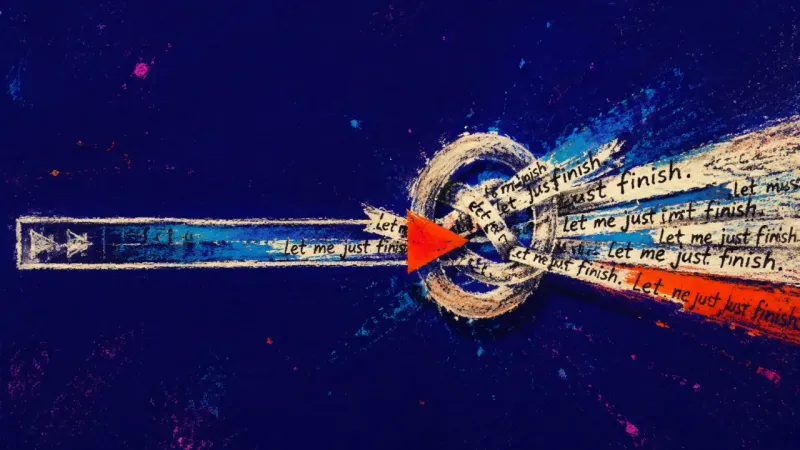
When a Paused Loom Clip Felt Like an Accusation
I asked Maya (name changed for privacy), a 29-year-old digital marketing strategist in London, “You can tell yourself you just have high standards, but why does this particular kind of overexplaining make your whole body brace?”
She answered by taking me back to 9:46 p.m. on a Tuesday in her Hackney flat. She had paused a junior colleague's Loom presentation on an over-rehearsed sentence while the laptop fan hummed beside a mug of cold peppermint tea. Her phone was warm in her palm, her jaw was locked, and an unsent WhatsApp message waited on the screen: “She is painfully performative.”
“Then I remembered giving almost the same presentation at twenty-three,” Maya said. “Same fake confidence. Same need to prove I deserved to be there. I closed the chat, but I still wanted the judgment to prove I'm not that person anymore.”
I watched the defensive irritation move through her like a fire door slamming shut inside her chest: shoulders lifted, teeth met, every soft route back to the memory suddenly sealed. The more urgently she tried to push her former identity away, the closer it seemed to stand.
“Maybe I'm not annoyed by them so much as cornered by the resemblance,” she said.
I told her I would not ask her to approve of every awkward behaviour, lower her professional standards, or manufacture affection for her younger self. Our purpose was more precise: to understand why one familiar behaviour became a total character verdict, then find a response based on the person and evidence in front of her. “Let's draw a map of the fog,” I said. “Not so the cards can decide who you are, but so you can see where your choice returns.”

Choosing the Compass: The Five-Card Shadow Spread
I asked Maya to place both feet on the floor, take one unforced breath, and hold the question without trying to make it sound more spiritual or more reasonable: “Why do I judge people who remind me of who I used to be?” I shuffled slowly, using the movement as a transition from the replay in her head to the evidence on the table.
I chose The Shadow Spread, a focused five-card tarot spread for projection and past-self reintegration. For anyone wondering how tarot works in my practice, I do not use it to predict a fixed outcome or expose a secret moral truth. I use the structure to separate factors that have become emotionally tangled. Card meanings in context can work like labels on a complex map: they help us inspect a pattern, but the querent remains the person who tests the interpretation and chooses what to do.
This was the smallest spread that could answer Maya's question without dragging us into unrelated future scenarios. The centre card would show her visible shadow reaction. The card below it would reveal the hidden rule weighting her judgment, while the card to the left would trace that rule to its origin. Above the centre, a mirror card would show what the triggering person returned to her awareness. The final card on the right would identify an integration practice. Laid out as a cross, the cards resembled a compass being recalibrated from reaction to context and then toward choice.

Reading the Compass from Swords to Cups
Position 1: The Observation That Became a Prosecution
I turned over the card representing the visible shadow reaction: Maya's harsh labels, dismissive comments, and withdrawal when someone resembled her former self. It was the Queen of Swords, reversed.
I pointed to the Queen's raised sword and stern profile. Upright, her perception can be clean and exact. Reversed here, that energy was in Excess: accurate observation had been recruited into prosecution. Maya had correctly noticed that the junior strategist buried a solid recommendation beneath nervous explanations. The distortion began one step later, when her mind moved from “the key point became harder to follow” to “she is painfully performative.”
“The first statement describes work I can address,” I said. “The second claims to know the whole person. Your mind is moving from 'I noticed X' to 'therefore she is Y' so quickly that the added leap feels like part of the evidence.”
I wrote one sentence in my notebook and turned it toward her: The camera captured a behaviour; shame wrote a character verdict.
Maya gave a short laugh with no amusement in it. Her fingers tightened around her mug before loosening again. “That's so accurate it feels a bit brutal,” she said. “I can hear myself building the case from every awkward phrase.”
“Then we will keep the accuracy and remove the brutality,” I replied. “Noticing an impact is valid. Naming a stranger's entire character is the defensive addition. This card is not calling you cruel; it is showing where a useful skill gets bent by an old wound.”
I asked her to think of the last person she had labelled fake, cringe, immature, or desperate within minutes. “What would a camera have recorded, without access to anyone's motive?” I asked. Her answer was smaller than the verdict: “She explained the same point three times and asked whether everyone agreed.”
Position 2: The Scale with a Hidden Multiplier
I turned over the card representing the hidden rule behind Maya's truth-compass split: the biased standard that treated resemblance as evidence and condemnation as proof of growth. It was Justice, reversed.
The scales offered the next diagnostic question. Maya told me that a confident senior colleague could give a long explanation and receive the word “thorough,” while a younger colleague delivering a nearly identical explanation became “attention-seeking.” The conduct, frequency, and impact had not changed enough to explain the gap. Personal resemblance had entered the scoring formula as an invisible multiplier.
Energetically, Justice was in Blockage. Fair evaluation had not vanished, but autobiographical shame was pulling the scales away from proportion. The Justice reversed meaning in this reading was not “your standards are wrong.” It was “your standard changes when the evidence feels personally familiar.”
Resemblance is a trigger, not evidence.
I use a lens I call Gravity Well Identification for moments like this. I look for an obsolete rule or environment whose pull remains strong after the person has outgrown its purpose. Maya's hidden rule sounded like this: “Competence keeps me safe, and I can prove I am competent only by condemning visible uncertainty.” That rule had helped her build distance from a precarious early career, but it was now bending present judgment toward an old centre of shame.
“If a colleague who did not remind you of your past did this once, what would you call it?” I asked.
Maya's shoulders rose and held. Her gaze moved from the scales to the window, as though two campaign reviews were loading side by side. Then she exhaled. “I'd probably call it nerves. Or say they were still learning how to edit themselves.”
I nodded. “That does not mean the behaviour has no impact. It means you can hold the same evidence standard before choosing feedback, distance, or no action.”
Position 3: The Old Post Still Awaiting a Fair Review
I turned over the card representing the origin of the projection: Maya's unresolved verdict against her former self and the belief that she should already have known better. It was Judgement, reversed.
I drew her attention to the trumpet and the figures trying to rise. In the reversed position, the call to review the past had become another guilty verdict. Maya described Instagram resurfacing a 2018 post just after midnight: the blue-white screen in a dark bedroom, rain tapping the window, her thumb hovering over a caption in which she had performed more certainty than she felt. She had deleted it before asking what that earlier version of her knew, lacked, or was trying to secure.
This was another Blockage, but not a demand for self-absolution. Accountable review had stalled in permanent sentencing. The internal charge sheet repeated: “I should have known better. I should not have needed reassurance. I should have been further along.” Missing from the file were three basic questions: What did I realistically know then? What skill or support did I lack? What did I learn afterward?
Deleting the evidence is not the same as completing the review.
Maya's thumb rubbed the rim of her mug. Her eyes lowered, and the quick analytical rhythm of her speech stopped. “I thought deleting it was proof I'd moved on,” she said. After a longer pause, she added, “But I was new. I was trying to sound certain because I thought uncertainty would get me ignored.”
I heard grief under that sentence, but I did not rush to turn it into forgiveness. I told her context was not an acquittal or a celebration of every past choice. It was missing evidence. A completed review could say, “That strategy had consequences, and I understand why I reached for it. I have better options now.”
Position 4: The Memory Offered Across the Table
I turned over the card representing the projection mirror: what the triggering person recalled about Maya's past needs and what she could reclaim without approving every present behaviour. It was the Six of Cups, upright.
The visual language softened. After three reversed cards full of swords, verdicts, and compressed thought, a child offered a flower-filled cup. I framed that cup as an unwanted memory passed across a meeting table. A graduate hire asks Maya twice whether their presentation sounded intelligent. The repeated request may still be tiring and may still need a limit, but it also returns Maya to standing outside a client room at twenty-three, waiting for a manager to confirm that she belonged there.
Here the Cups energy was moving in Balance. Feeling added context without washing away standards. The colleague was not asking Maya to become her old self again. Their behaviour was reminding her that she once needed reassurance, visibility, guidance, or permission to be new.
Understanding the need does not erase the impact.
Maya's mouth softened first. Then her shoulders lowered by a fraction, and she looked directly at the card. “So I can understand why it hits me without mentoring her, constantly reassuring her, or pretending I enjoy it?”
“Exactly,” I said. “Compassion is not compulsory access. You can recognise the memory and still give clear feedback, choose distance, or decline a role that is not yours. The Six of Cups only asks what the present person has unintentionally handed back to you.”
When Temperance Opened the Second Tab
Position 5: A Response Proportionate to the Present
The rain against the window eased from hard taps into a steady run. The room seemed to widen with the sound, and I turned over the final card, representing the integration practice: accountability, self-compassion, present evidence, and proportionate boundaries held together. It was Temperance, upright.
I showed Maya the water circulating between two cups, one foot on land and one in water. This was Balance as an active process, not a bland compromise. In a real interaction, it looked like opening two notes beside the paused presentation. In the first: “She added repeated explanations after the recommendation.” In the second: “This reminds me of when I performed confidence because I was afraid of being dismissed.” Only after both sentences were visible would Maya choose today's response: “Lead with the recommendation and keep one supporting reason.”
I drew a small orbit on my notepad: resemblance, recoil, character label, withdrawal, temporary relief, recurring trigger. I call this Cognitive Spiral Mapping. What feels like being stuck can sometimes be an orbital slingshot phase: the pattern has curved back into view with enough visibility to create a chance for redirection. Temperance supplied that redirection by adding remembered need and present choice to a circuit previously powered by shame.
For a moment, I thought of the orbital charts I had drawn across a decade of work. A body can revisit a coordinate without becoming its earlier version. The return only tells me where the pull is still active; it does not dictate the next trajectory.
I brought Maya back to 9:46 p.m.: the presentation paused, the cutting message waiting unsent, her jaw tight because rehearsed confidence felt irritatingly familiar. Familiarity had begun masquerading as evidence, and she still believed that one perfectly correct verdict could secure her present identity.
I said, “You do not prove your growth by prosecuting who you were; you show it by letting remembered need and present evidence share the same table, then choosing a response that fits the person in front of you.”
“Growth is not cutting the old self out; it is letting truth and compassion move between Temperance's two cups until your response fits the person in front of you.”
I let the sentence remain between us without explaining it away.
Her breath stopped first. One finger remained suspended above the edge of the Temperance card, and for several seconds her eyes lost focus, as if the Loom clip and her first client pitch were playing side by side. Then her brows drew together. “But doesn't that mean I was wrong all those times I thought I was just being discerning?” The anger in her voice arrived before the grief; I heard both. I told her, “It means the strategy gave you quick distance, not that every observation was false. You can keep the observation and retire the prosecution.” Her fist loosened. Her shoulders dropped, then rose once with a shaky breath. Her eyes reddened, and she gave a small, almost disoriented laugh, the kind that follows putting down a weight and realising her hands are now free enough to choose. Relief had made room for responsibility, and that new room felt briefly exposed.
I asked, “Now, with this new perspective, think back over last week. Was there a moment when this insight might have changed how you felt?”
“Monday's campaign review,” she said. “I still would have wanted her to get to the point. But maybe I could have said that, instead of deciding she was desperate.”
I watched the reading turn from defensive irritation and shame-based distancing toward integrated self-compassion and fair present-day discernment. It was not a total transformation, and I did not present it as one. It was the first honest crossing: Maya could recognise continuity with her former self without treating that continuity as proof that her growth was fraudulent.
“Growth does not need contempt as a receipt,” I said. “Your changed response is stronger evidence than your harshest opinion.”
Finding Clarity Without Lowering the Standard
I gathered the spread into one coherent story. Judgement reversed showed the earlier self-review that had become a permanent sentence. Justice reversed revealed the hidden rule that weighted familiar behaviour more harshly. The Queen of Swords reversed showed the present symptom: clear perception turning into character prosecution. The Six of Cups returned the need buried beneath the embarrassment, and Temperance offered the resource Maya had not been using: proportion.
The cognitive blind spot was not that Maya imagined every irritating behaviour. It was that she treated the intensity of her reaction as additional evidence about the other person's character. The border fence around her former identity had been built from real observation, but old shame kept electrifying it. The direction of change was therefore specific: replace the character verdict with one observable behaviour, one remembered need, and one response appropriate to the present situation.
I reminded Maya that the cards could not establish another person's motive, order her to reconcile with her past, or choose a boundary for her. They had helped us form a testable hypothesis. Her next steps would supply the real evidence.
I adapted my Orbit Expansion Strategy into two small exercises. The aim was not to escape every trigger. It was to add just enough context and momentum for Maya to stop orbiting the same automatic verdict.
- The 90-Second Temperance Orbit During one low-stakes trigger this week, before sending a side-chat message or giving feedback, open Notes and write exactly three lines: “What I observed: ___.” “What this reminds me I once needed: ___.” “What the present situation calls for: curiosity, feedback, distance, or no action: ___.” Stop after the third line. Tip: Ban personality adjectives from the first line. If the exercise feels too exposing, close the note. Remembering a need does not require contact, forgiveness, mentorship, or surrendering a boundary.
- The Same-Evidence Standard Swap Before the next campaign review or feedback message, make a 30-second voice note using three prompts: “evidence, verdict, neutral comparison.” Ask what you would call the same behaviour if it came from a colleague who did not resemble your younger self, then remove any claim about motive that the person has not stated. Tip: Test only one comparable example. Fairness does not require equal access or identical consequences; context, frequency, and impact can still justify a clear boundary.
“You are not trying to become endlessly nice,” I told her. “You are making your discernment cleaner. A camera-recordable observation can support useful feedback. A projected biography usually cannot.”
Maya photographed the two exercises, then paused. “I can do ninety seconds,” she said. I noticed that she did not promise to heal her whole relationship with her past. She chose one small experiment, which was enough.

A Week Later, the Verdict Got Shorter
One week later, Maya messaged me after a campaign review. She had written, “Lead with the recommendation and keep one reason,” then closed WhatsApp without convening a jury. She slept through the night; “What if I'm excusing her?” still arrived at breakfast, but it no longer chose her reply.
I did not read that message as proof that every trigger had disappeared. I read it as a small, credible sign of integrated self-respect: Maya had disliked a behaviour, offered clear feedback, and left the other person's character outside the sentence. The five-card Shadow Spread had provided a map, but Maya had made the move.
I have learned that when someone sounds like a version of us we worked hard to outgrow, the jaw can tighten before the mind catches up. Contempt can feel safer than asking whether that former self was still worthy of understanding. Noticing that reflex does not place you back at the beginning; it gives you a place from which to choose.
If you placed one remembered need in Temperance's first cup and one present fact in the second, what proportionate response could you choose next: curiosity, clear feedback, distance, or no action?

Every reading at AceTarot is a journey to connect with inner wisdom and empower the path ahead. This reading shared here is a psychological mirror, not a private record—crafted to reflect universal emotional loops and help restore personal clarity. Please note that these insights do not replace professional psychological, medical, legal, or financial advice, and should not serve as the sole basis for major life decisions.
Learn more about our Journey to Clarity.
How did this insight land for you?
🫂 This Resonates Deeply
🌀 Living This Story
✨ Now I See Clearly
🌱 Seeing New Possibilities
🧰 Useful Framework
🔮 The Confirmation I Needed
💪 Feeling Empowered
🚀 Ready for My Next Step
Author Profile
AI Laila Hoshino
829 readings | 533 reviews
“After a decade of guiding people through the stars, I’ve come to see life much like the orbits of planets: everything has its inevitable cycles. When you feel lost, please don't blame yourself; you might just be in a natural low tide. I’m here to sit under the night sky with you, offering a gentle cosmic perspective to distinguish temporary pain from the beautiful breakthroughs just around the corner.”
In this Personal Growth Tarot Reading :
Core Expertise
- Cognitive Spiral Mapping: Validating that feeling 'stuck' is often just a necessary orbital slingshot phase before a major intellectual breakthrough.
- Gravity Well Identification: Diagnosing the obsolete habits or environments exerting a downward pull on your personal evolution.
Service Features
- The Orbit Expansion Strategy: A macro-perspective exercise to map the precise trajectory and momentum needed to escape your current cognitive gravity well.
Also specializes in :
Explore Related Patterns:
Emotional ReasoningWhen the Loom clip triggers a locked jaw, lifted shoulders, and a fire-door feeling in your chest, the reaction arrives before the careful assessment. The force of the response then begins to feel like proof that the colleague must be especially fake, desperate, or attention-seeking. Emotional Reasoning enters when the intensity of your internal alarm is added to the external evidence. The senior colleague's long explanation can be called thorough, while the junior colleague's similar behavior becomes a character problem, because resemblance has changed how convincing the feeling seems. Your emotion is real information about what the interaction touches in you, but it is not reliable evidence of the other person's motive or identity. You can respect the impact of the behavior without allowing the reaction to set the entire score. Check what was observable, how often it happened, and what response the present situation calls for. That keeps your body signal in the room while preventing it from becoming the deciding witness against someone else.
Self-Judgment LoopAt 9:46 p.m., the paused presentation sets off a recognizable sequence. You notice the resemblance, your body recoils, a character label appears, you withdraw, and the distance brings temporary relief. The relief does not resolve the memory, so the next person who resembles your earlier self can restart the same sequence. The loop is powered by an old rule that competence keeps you safe and that condemning visible uncertainty proves you have moved beyond it. Each harsh opinion briefly separates you from the earlier version of yourself, but it also keeps that version active as the standard you are still trying to defeat. The judgment therefore becomes less about the colleague's full behavior and more about repeating an unfinished internal review. Self-Judgment Loop gives you a sequence you can inspect rather than a verdict about your character. When you can notice the point at which resemblance becomes recoil, you can interrupt the automatic chain with present evidence and a proportionate response. The goal is not to remove discernment, but to stop temporary distance from becoming the only way you regulate the memory.
Shadow ProjectionWhen you paused the junior colleague's Loom clip, the repeated explanation quickly became 'she is painfully performative,' even though you remembered giving nearly the same presentation at twenty-three. The resemblance turned an observation about delivery into a verdict about a person because the colleague was carrying an unwanted image of your earlier self. Your recoil then protects a boundary between who you are now and who you used to be. By pushing that version away, you make the familiar behavior look like proof that the other person belongs on the rejected side of the line. That is why the reaction feels strangely personal: the judgment is aimed outward, but it is also managing a disowned part of your own biography. Shadow Projection here does not mean the colleague's behavior was imaginary. It means the intensity and totality of the judgment contain information about what the behavior returned to your awareness. Naming one camera-recordable behavior and separating it from the other person's whole character gives you back a choice about feedback or distance.
Black-and-White ThinkingWhen the junior colleague explains the same point three times, you can accurately notice that the recommendation became harder to follow. The leap occurs when that observation becomes 'she is painfully performative,' or when labels such as fake, cringe, immature, or desperate are treated as complete descriptions of a person. Black-and-White Thinking gives a familiar behavior only two positions. The person is either competent and acceptable or exposed and fundamentally embarrassing. When the behavior resembles your younger self, the categorical verdict creates quick distance from the identity you fear returning to, but it removes information about learning stage, frequency, impact, and the possibility of specific feedback. You do not have to dilute the standard to make the judgment more precise. You can keep the observation, name the concrete effect, and leave motive and character open until the evidence supports them. That shift lets you respond to what happened without turning one awkward presentation into a prosecution of the whole person.
Shadow AvoidanceWhen Instagram resurfaced your 2018 post, you deleted it before asking what you knew then, what support or skill you lacked, or what you learned afterward. The same impulse appears in the present when a junior colleague shows performed confidence and your first wish is for a harsh judgment to prove that you are no longer that person. Closing the chat, deleting the post, and treating contempt as evidence of growth create distance without completing the review. The rule that you should already have known better keeps the earlier self on trial, so another person's uncertainty can feel like an unwanted return of evidence. The more urgently you exile that identity, the more charged its resemblance becomes. Shadow Avoidance does not require you to celebrate every past choice or give the colleague unlimited access to your time. It asks you to review the earlier strategy with context rather than permanent sentencing. You can keep a professional standard while allowing your former self to be understood well enough that resemblance no longer has to be treated as a threat.
Shadow IntegrationWhen you place the present observation beside the memory it evokes, you create room for both facts to remain true. The colleague may be overexplaining, and the behavior may remind you of the reassurance or permission you once needed. Holding those facts together prevents understanding from turning into automatic approval or a demand that you become the colleague's mentor. Shadow Integration lets you separate the colleague's present identity from your own past without pretending there is no continuity between them. You can understand why performed confidence once protected you, recognise what the current person may be trying to secure, and still choose clear feedback, distance, or no action. Compassion becomes context rather than compulsory access. A week later, you wrote a short behavioral note and left the character judgment outside the sentence. That changed response is more useful evidence of growth than the harshness of your opinion. It answers the question by showing how remembered need and present evidence can share the same table without lowering your professional standard.
Explore Related Struggles:
Identity Verdict LockMaya pauses the junior colleague's Loom clip, writes 'She is painfully performative,' and then recognizes the same rehearsed confidence in her twenty-three-year-old self. The judgment is not only about the presentation; it becomes a way to demonstrate that the uncertain person who once needed to prove she belonged is no longer part of her. When you use condemnation as proof of growth, the present colleague has to carry an old identity verdict. The sharp label briefly creates distance, but it also keeps the former self active as the standard you are trying to defeat. You can preserve the observation that the recommendation was buried while releasing the demand to establish who you are through someone else's awkwardness. A response chosen from the current evidence gives your growth a more stable basis than the harshest verdict.
Projection-Connection SplitWhen Maya watches the junior colleague's over-rehearsed sentence, the person in front of her is joined to the 23-year-old standing outside a client room and asking to be told she belonged. Harsh labels and withdrawal arrive before the colleague can remain a separate person with a specific, limited work issue. When a present interaction becomes a mirror, distance can feel like the cleanest way to stop the past from crossing the table. The withdrawal brings temporary relief, but it also removes the direct evidence that could distinguish today's colleague from Maya's remembered self. You can recognise what has been returned to you without taking responsibility for the other person's development. Clear feedback, chosen distance, or no action can all remain available once the person is no longer carrying the entire meaning of your past.
Truth-Compass SplitMaya calls a senior colleague's long explanation 'thorough,' while a younger colleague's nearly identical explanation becomes 'attention-seeking.' She can identify the concrete issue, that the recommendation was harder to follow, but her language then jumps to a claim about the whole person. You are holding accurate observation and disproportionate judgment on the same set of scales. The split appears when the behavior resembles your earlier self, because the standard for describing impact stays professional while the standard for assigning character becomes autobiographical. Your standard does not need to be lowered to become fair. You can name the repeated explanations, give the same kind of usable feedback, and leave motive and identity out of the sentence unless the person has actually supplied that evidence.
Wound-Compass FusionAt 9:46 p.m., Maya's jaw locks, her shoulders lift, and a warm phone holds an unsent message while a familiar presentation style takes on more weight than the work issue alone explains. She later sees that resemblance entered the scoring formula before she had assessed the colleague's context, frequency, or impact. When you meet a version of your former uncertainty in someone else, old shame can move into the instrument that is supposed to measure conduct. The reaction feels informative because it is intense, yet that intensity is part of the history being activated, not independent evidence about the person's character. You can let the camera-recordable behavior remain valid while removing the extra charge added by familiarity. That keeps discernment available without letting an earlier professional wound set the terms of the present evaluation.
Shadow Integration StrainMaya deletes a 2018 post instead of asking what that earlier version knew, lacked, or was trying to secure. When the junior colleague repeats a familiar form of performed confidence, the old identity returns with enough force to make rejection feel like proof of having moved on. You can end up treating continuity with your past as a threat to your present self. The more completely the earlier version must be excluded, the more any resemblance pulls it back into the room and turns another person's learning curve into a personal boundary marker. Integration here is precise rather than sentimental. You can acknowledge why you once reached for certainty, keep the consequences in view, and still decide what the colleague needs from you now without approving every awkward behavior.
Explore Related Emotions:
Grounded CuriosityInstead of writing 'she is painfully performative,' Maya asked what a camera would have recorded and reduced the claim to repeated explanations and a request for agreement. You can create a small pause between what happened and what you infer, allowing questions about frequency, impact, and context to replace a biography built from one awkward phrase. Curiosity here is not softness for its own sake; it is a cleaner way to keep evidence in charge. When the same behavior from a senior colleague would be called thorough, the comparison gives you a testable fairness check. You can choose feedback, distance, or no action after examining the person in front of you, rather than making the remembered version of yourself decide first.
Mirrored Self-DoubtAt twenty-three, Maya performed certainty because she feared uncertainty would get her ignored, and years later the junior colleague returned that image across the paused Loom clip. You can feel the resemblance as a challenge to the story that your growth is complete and safely separate from that earlier self. The doubt is mirrored through another person, so condemning them briefly seems to confirm who you are now. That is why 'I am cornered by the resemblance' carries more weight than ordinary annoyance. You can let the reflection show continuity without treating continuity as failure, then judge the present behavior on its own evidence.
Protective AngerMaya's jaw locked, her shoulders lifted, and the unsent message calling the colleague 'painfully performative' arrived before any feedback was sent. You are not simply noticing a flaw there; your body is bracing to create distance from a version of yourself you worked hard to leave behind, so irritation becomes a fast protective boundary. The judgment then feels safer than staying near the memory. That is why the reaction can carry more force than the behavior warrants. You can keep the camera-recordable observation while noticing the anger as information about what the resemblance touches, rather than treating its intensity as proof of the other person's character.
Rulebook ShameDuring the comparison, a senior colleague's long explanation could be called thorough while the younger colleague's similar behavior became attention-seeking; resemblance entered the scoring formula as an invisible multiplier. You are carrying a private rule that treats visible uncertainty as a threat to competence, and the resulting shame presses you to condemn it before anyone can associate it with you. The feeling is less about a neutral standard than about keeping distance from an old measure of worth. That rule explains why a character verdict can feel like evidence. You can inspect the same conduct, frequency, and impact without letting autobiographical familiarity decide the score, which turns the emotion into a signal to audit the standard rather than a command to punish the person.
Accountable Self-CompassionMaya could write what she observed, what the behavior reminded her she once needed, and what the present situation called for before choosing feedback, distance, or no action. You can hold the younger need and the colleague's actual impact in the same frame without turning compassion into access or accountability into punishment. That is a form of self-respect that keeps both people distinct. Your response becomes more precise when context is treated as missing evidence rather than an acquittal. You are allowed to understand why the behavior appears, set a clear limit, and still refuse to make contempt the proof of your growth.
Beginner ShameMaya remembered giving the same over-rehearsed presentation at twenty-three and needing reassurance that she deserved to be there. When a junior colleague asks for confirmation or buries a recommendation in nervous explanations, you are brought close to the exposed stage of still learning how to belong professionally. Shame makes that earlier uncertainty feel like something to disown, so the current beginner becomes difficult to tolerate. Recognising the need does not require mentoring, constant reassurance, affection, or approval of the behavior. You can name the impact and offer proportionate feedback while allowing the younger version of yourself to have been unfinished rather than disqualifying.
Explore Related Contexts:
Impact Versus Intent ConflictMaya accurately notices that the junior strategist buries a solid recommendation beneath repeated explanations, but the assessment quickly becomes "painfully performative" and later "desperate." The observable impact concerns clarity; the harsher labels assign motives and a total character without additional evidence. This conflict matters because useful workplace boundaries depend on distinguishing what a behavior caused from why another person supposedly did it. When you keep those layers separate, you can still name the impact, choose distance, or give direct feedback while refusing to let the intensity of recognition function as proof of someone else's intent.
Past Self ReintegrationMaya sees her twenty-three-year-old presentation style in a junior colleague, then encounters the same earlier persona again when Instagram resurfaces a 2018 post. Deleting the post and condemning the colleague both create immediate distance, but neither removes the earlier professional experience from the situations in which it continues to reappear. At twenty-nine, she begins placing remembered need beside present evidence before deciding what the current interaction requires. For you, this reintegration stage does not demand approval of every past choice or unlimited access for anyone who resembles you; it allows an earlier role to become usable context instead of a status threat that must be expelled through contempt.
Projected Mirror LoopMaya pauses a junior colleague's Loom presentation at an over-rehearsed sentence and immediately recognizes the same performed confidence she used at twenty-three. A concrete editing problem then expands into a character verdict, and comparable encounters with reassurance-seeking graduate hires reproduce the same sequence of resemblance, harsh labeling, and withdrawal. The recurring external trigger is another person's familiar behavior inside an ordinary professional exchange. When this happens to you, identifying the mirror loop lets you separate what the person actually did from the earlier social role their behavior has returned to view, preserving your ability to assess the work without treating resemblance as additional evidence against their character.
Junior Role Legitimacy ScrutinyMaya says a confident senior colleague can explain something at length and be called thorough, while a younger colleague displaying nearly identical behavior is labeled attention-seeking. She also remembers performing certainty at twenty-three because she expected visible uncertainty to make others disregard her contribution. That unequal scoring rule places junior workers under heightened legitimacy scrutiny: the same communication habit carries different social consequences depending on rank and perceived confidence. For you, recognizing this hierarchy clarifies why familiar junior behavior can become so charged while leaving room to address repetition, clarity, and impact through standards that do not change with the speaker's status.