Still Living Between Then and Now?
Explore Then-Now Split through grounded descriptions, related tarot cards, and tarot reading insights about feeling divided between past and present.

Then-now Split
What does this feel like?
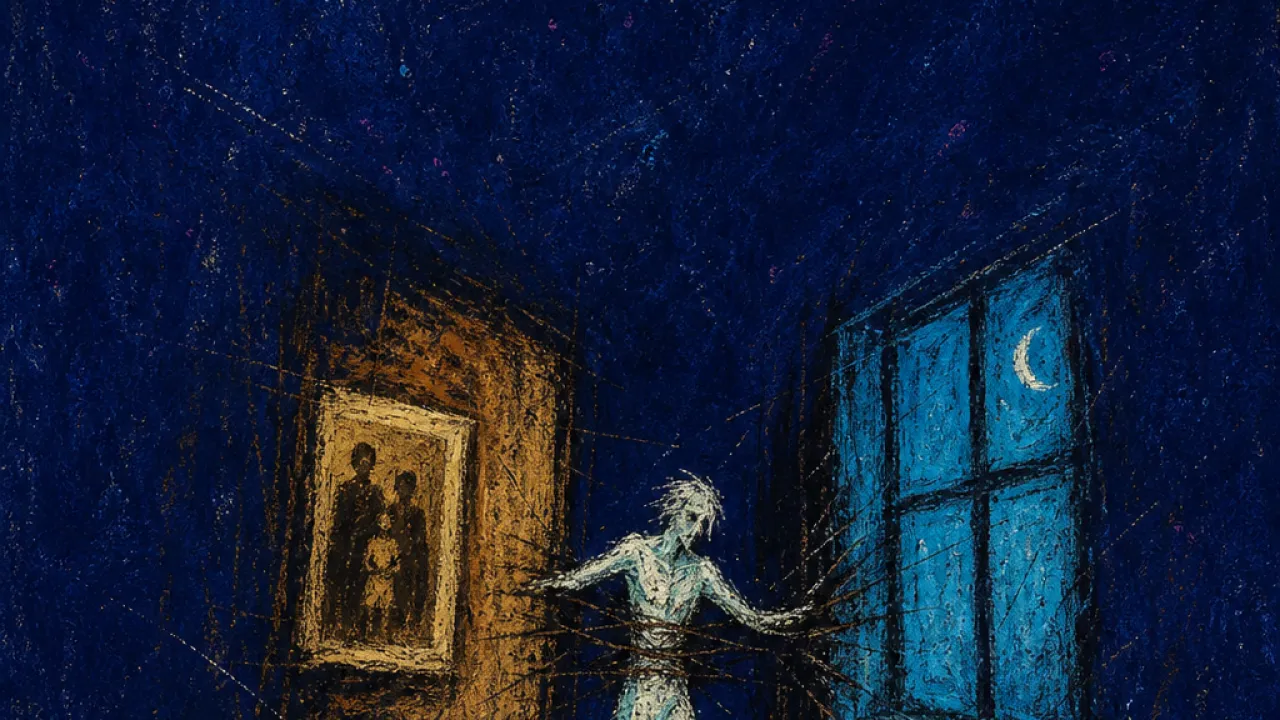
Then-Now Split — you feel it when an old photo catches you off guard and suddenly the room you're in stops feeling fully real. You're sitting on the edge of your bed, phone in one hand, charger cable twisted across the sheets, and the person on the screen looks like you but also doesn't — same face, different light behind the eyes, a version of you who had a rhythm, a set of people, a future that seemed to point in a clearer direction. Your thumb hovers over the screen because scrolling forward feels like leaving them there, but staying with the photo makes your chest tighten in that quiet, specific way, as if the past has placed a hand just under your ribs. You tell yourself everyone changes, this is normal, nothing dramatic is happening, but the sentence doesn't land because the problem isn't change itself — it's that part of you still checks the present against a world that no longer exists. You catch yourself saying 'back then' more than you want to, measuring your current energy, confidence, friendships, body, ambition, even your taste in music against a version of life that has become both evidence and accusation. You don't exactly want to go back, not fully; you know too much now, you've outgrown some rooms, you can see the cracks you couldn't see then. But you also don't know how to stop treating that earlier version of you like the original copy and this one like an edited file with missing pieces. So you move through your day with a private double exposure: answering messages as the person you are now while some inner witness keeps asking whether the old you would have done it better, faster, brighter, with less hesitation. The cost is subtle but constant — you start living as if your own life is divided into before and after, and neither side feels complete without the other, much like Temperance standing with one foot on land and one in water, endlessly pouring between two cups, trying to make one current out of two separate worlds.
What's pulling at you?
You're not stuck because you refuse to move on; you're stuck because two versions of your life still feel equally vivid. One part of you wants to honor what changed, while another keeps using the past as the standard for whether the present counts. That leaves you caught between loyalty to who you were and the unfinished task of letting who you are now become solid.
How It Shows Up?
- You open your camera roll to find one photo, then end up stuck in a folder from two years ago — the haircut, the apartment, the people in the background, the version of you who knew how to stand in that room. Your throat tightens before you even know why, and your thumb slows down like the screen has become heavier. There is a small ache behind your eyes, not quite grief and not quite nostalgia, just the strange pressure of seeing proof that you used to fit somewhere. You can close the app without deciding what any of it means.
- A friend says, 'You've changed,' and they mean it casually, maybe even warmly, but your body hears it like a door clicking shut. Your shoulders lift, your mouth makes a quick little smile, and for a second you're trying to work out whether they miss the old version of you or whether you do. The room keeps moving around you, but inside there is that Two of Swords stillness, a held breath between two answers you don't want to give. You don't have to explain your whole timeline in one conversation.
- You sit down to work or study and realize the task itself isn't the hard part — it's the memory of when this used to be easier. Your hands hover over the keyboard, your chest feels slightly compressed, and a quiet comparison starts running in the background: then you were sharper, then you had momentum, then you knew who you were becoming. The present moment starts to feel like a downgrade you never agreed to. It is allowed to be hard without becoming a verdict on who you are now.
- You're out with people who only know the current version of you, and you keep noticing the parts they can't see. You laugh at the right places, hold your drink, check your phone, but somewhere behind your ribs there is a second room full of old references, old names, old ways you used to move through the world. Your breathing gets shallow when someone asks a simple question like 'So what were you like back then?' You can answer as much or as little as you want; no one gets full access just because they asked.
- Late at night, you catch your reflection in a dark window and for a second it feels like you're looking at a person who arrived after something ended. Your jaw is tight, your face looks familiar but slightly misfiled, and your body has that suspended feeling of standing in a hallway between two rooms. You want a clean line — before and after, old self and new self — but the line keeps moving every time you try to name it. It is enough to notice the split tonight without forcing it to close.
Then-now Split in Tarot Cards
Then-Now Split lives in the moment where your present life keeps getting measured against a version of you that still feels close enough to touch. You might feel it as a tight jaw, shallow breathing, or that chest compression when an old photo or casual question pulls you backward. From an existential perspective, the structural framework here is the difficulty of standing in the present while part of your identity is still organized around then. The Tarot Cards below make that divided shape visible without trying to flatten it into one answer.
Then-now Split in Tarot Card Reading Insights
Then-Now Split often enters readings when someone is trying to understand why the present feels unfinished beside a past version of themselves. These readings move from the cards into the lived details of old photos, changed friendships, and the body remembering a previous life rhythm. Tarot Reading Insights for this pattern are collected below.

Three Rehearsed Stories—And the Three Seconds That Loosened the Script
Topic:Family Tarot Reading
Struggle:Belonging-Authenticity Split
Context:Direct Communication Trial

Waiting for Family Repair Before Letting Go? A Defined Pause
Topic:Family Tarot Reading
Struggle:Inherited Repair Burden
Context:Family Estrangement Threshold

The Pinned Group Chat: From Belonging Test to Measured Choice
Topic:Friendship Tarot Reading
Struggle:All-or-Nothing Belonging
Context:Chosen Family Transition
She Reopened the Chat Until a 24-Hour Pause Changed the Question
Topic:Love Tarot Reading
Struggle:Reciprocity Deficit
Context:Slow Fade
Pausing Two Minutes After Sibling Praise: Loosening the Scoreboard
Topic:Family Tarot Reading
Struggle:Status-Belonging Fusion
Context:Family Script Pressure
Sibling Rivalry Over Parental Approval: From Ranking to Self-Respect
Topic:Family Tarot Reading
Struggle:Internal Authority Collapse
Context:Family Boundary Negotiation

Low-Contact Family Guilt: From Childhood Role to Three-Sentence Reply
Topic:Family Tarot Reading
Struggle:Inherited Role Lock
Context:Low Contact Family Transition
A Family-Photo Caption Reopens the Fight: Four Fields Before Reply
Topic:Family Tarot Reading
Struggle:Inherited Repair Burden
Context:Family Script Pressure
When One Warm Reply Outweighed Two Silent Days: Tracking Reciprocity
Topic:Love Tarot Reading
Struggle:Clarity-Exposure Split
Context:Emotionally Unavailable Partner
From "Whatever Works" to a Present-Tense Preference at Family Dinner
Topic:Family Tarot Reading
Struggle:Belonging-Authenticity Split
Context:Family Infantilization