Finding Clarity in the Tuesday-Night Tab Spiral
If your weeknight routine is opening the document, rereading the same paragraph for fifteen minutes, then suddenly researching certificate programs because the work stopped feeling smooth, you know exactly what Plan B as self-protection looks like. In my experience, that is one of the clearest forms of career pivot anxiety: not quitting out loud, but quitting in tiny private reallocations of energy.
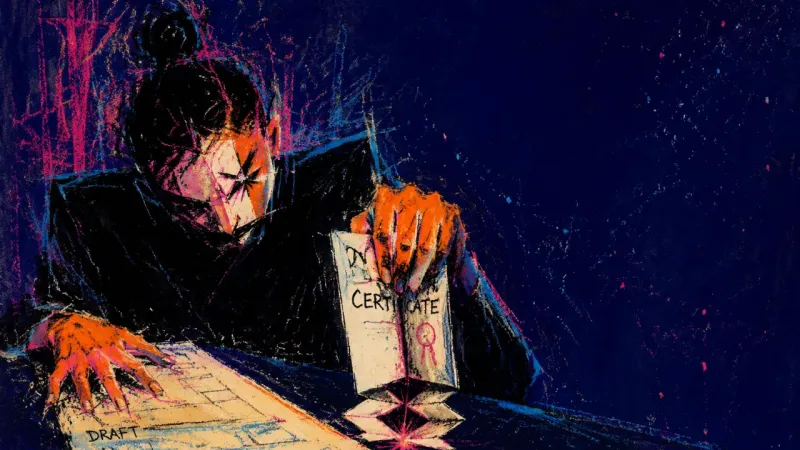
When Jordan came to me, she did not begin with a grand life question. She gave me a scene. It was 9:18 p.m. on a Tuesday in her west-end Toronto rental: Google Docs open on the kitchen table beside a half-finished bowl of noodles, the fridge humming, the radiator clicking, the laptop giving off that faint warm-plastic heat. The cursor kept blinking over the same paragraph while her shoulders climbed toward her ears and her hand left the keyboard for the browser.
'I tell myself I’m just being realistic,' she said. 'But the second it gets hard, I start editing my LinkedIn headline, looking at writing certificates, or building some safer future. Then I feel awful, because I know the page I actually care about is still sitting there.'
I nodded. I have seen this pattern across cities, languages, and very different lives: fear rarely arrives wearing a dramatic costume. More often it comes in a polished blazer and calls itself strategy. Plan B can look like wisdom when fear has good branding. What Jordan was describing was the tension between committing to her real goal and protecting herself with a backup plan the second the work stopped feeling smooth, especially when the possibility of visible struggle made her feel exposed.
The anxiety in her body was not abstract. It sounded like twenty-seven browser tabs opening inside her ribcage at once, until the one document that mattered could barely load. 'That makes sense,' I told her gently. 'You’re not broken, and you’re not lazy. Let’s make a map of this fog together and see where your clarity actually begins.'

Choosing the Map: The Shadow Spread for Plan B as Self-Protection
I asked her to put both feet on the floor and take one unperformed breath. Then I shuffled slowly while she held the question in mind. I treat this part as a threshold, not a magic trick: it helps the nervous system stop sprinting long enough for the real pattern to come into focus.
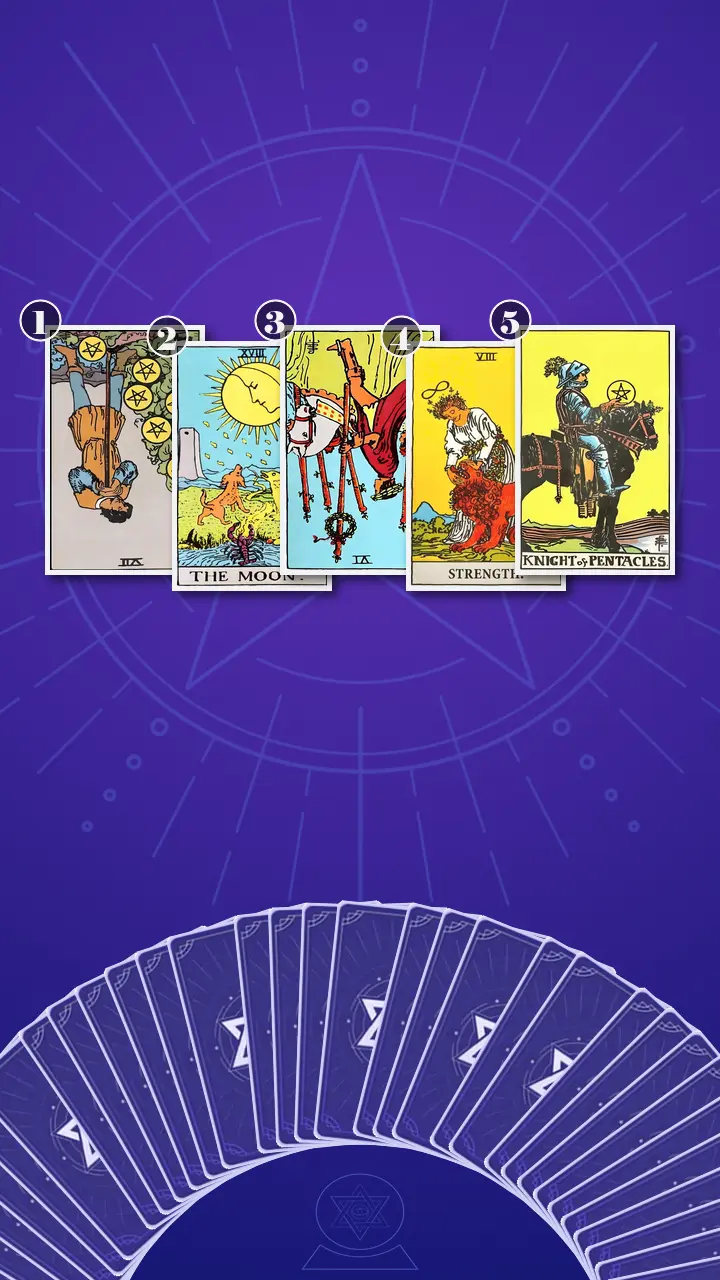
For this reading, I chose a five-card Shadow Spread tarot reading. I use this spread when the question is not whether the dream will work out, but why difficulty immediately activates self-protective retreat. It is especially useful when someone keeps one hand on the exit while trying to build something meaningful, because it moves in a clean line from symptom to trigger to root fear, then turns toward medicine and actionable next steps.
I told Jordan what I was looking for as I laid the cards left to right. The first card would show the visible coping symptom — the exact moment she leaves the draft and starts managing escape routes. The third card would expose the core fear underneath all that realism. The fourth card, the turning point of the spread, would show the inner quality capable of interrupting the reflex. The last card would bring the reading back down to earth, into something she could actually do on an ordinary weeknight.
Reading the Left Side of the Tunnel
The Tabs That Pretend to Be Strategy
Now I turned over the card representing her current coping symptom: the observable moment she shifts energy from the real goal into backup planning. It was the Seven of Pentacles, in reversed position.
'This is so specific it’s almost rude,' I said, and she laughed before I even explained why. The image is about pausing in the garden to judge the crop too early. In Jordan’s life, that looked exactly like opening the writing draft after work, feeling the first wave of friction, and instantly turning into a project manager for alternate futures — job tabs, course pages, a Notion life reset, a cleaner LinkedIn headline. The page stays untouched while the future gets audited.
In energy terms, this is blocked Earth: effort that should be going into cultivation gets diverted into evaluation. Progress tracking becomes a substitute for progress. I asked her, 'When you sat down to write this week, what exact click moved you from the draft into planning mode?' She did not hesitate. 'The moment I think, This shouldn’t be this hard already.'
That was the split-screen of the card. On one side: the cursor blinking, the awkward paragraph, the slow and private work of becoming. On the other: measurable safety, tidy options, the quick dopamine of looking prepared. She winced, gave a small bitter laugh, and said, 'Okay, wow. That’s accurate enough to be annoying.'
The Fog That Dresses Up as Evidence
I turned over the second card, the one representing the triggering uncertainty — what the hard phase activates in her mind when progress becomes unclear. The Moon appeared upright.
This card is emotional fog getting mistaken for objective evidence. A delayed reply to a pitch. A hard edit. A slow week. A peer’s polished launch post on LinkedIn while you are eating desk salad under fluorescent lights and pretending not to spiral. The path still exists, but because you cannot see the whole route, your mind starts filling in the darkness with worst-case meaning. The backup plan begins to feel like oxygen.
When I see The Moon in a spread like this, my Jungian mind always goes to one simple truth: what stays unconscious first feels like fate. In modern life, that often looks less like myth and more like a lunch-break search for best writing certificates Toronto after one unanswered email. The Moon here was not telling me Jordan lacked intuition; it was showing me that fear and intuition had gotten braided together.
'What hits first for you,' I asked her, 'silence, comparison, confusion, or slow progress?' She looked down at the card and rubbed her thumb against the paper cup she was holding. 'Silence,' she said. 'And then comparison. One person posts a book deal or a launch and suddenly my whole draft feels embarrassing.'
That is what this card does when the energy is uncontained: it floods the space between facts with projections. Not balance, not clarity — fog with a microphone.
The Crowd in Her Head
The third card sat in the center of the line like the emotional hinge of the whole reading. This position represents the core fear — the deeper worth-based belief that makes visible struggle feel intolerable. I turned it over: Six of Wands, in reversed position.
I felt the room quiet when I saw it. The usual version of this card is recognition, applause, visible success. Reversed, the victory image turns inside out. The crowd becomes the audience in your head: coworkers, peers, old classmates, internet strangers, even some brutal imagined future self. In Jordan’s life, it looked like getting one lukewarm note on a personal essay, feeling heat rise behind her face in a glass meeting room, then going home to open safer tabs before anyone could watch her still becoming.
'You are not avoiding work,' I told her. 'You are avoiding exposure.' I said it softly, because I wanted precision, not shame. 'The most painful part here isn’t labor. It’s the possibility of being seen in process and deciding that visible struggle means something permanent about your worth.'
She went very still. First her breath paused. Then her gaze unfocused, as if she were replaying a dozen small moments at once — the unread pitch, the low-engagement post, the friend asking how the writing was going and her instantly shrugging it off. Then her shoulders dropped a fraction and she said, almost under her breath, 'I can handle hard work. I just hate feeling exposed while I figure it out.'
There it was. Not a lack of discipline. Not indecision. A performance-based self-worth wound with a Black Mirror edge — every reply, every silence, every metric starting to feel like a public vote. Her competent startup self had become a place to hide inside, almost like her own private episode of Severance: one polished woman in the office, another one at night shrinking the life she actually wanted.
When Strength Put a Hand on the Lion
The Medicine That Interrupts the Exit Reflex
The fourth card in this Shadow Spread is the transformational medicine — the inner quality that interrupts the backup-plan reflex and rebuilds self-trust. When I turned it over and saw Strength upright, the air in the room seemed to settle. Even the soft street noise outside felt farther away, as if the environment itself had stepped back to let the card speak.
Strength is not domination. It is not white-knuckling. It is the calm hand on the lion, the steady nervous system, the adult self that can feel fear roaring and still refuse to hand it the steering wheel. In Jordan’s life, this is the exact second her chest locks, her fingers reach for the browser, and she notices the urge before obeying it.
This was the right moment to use the lens I call Shadow Path Analysis. I traced the hidden logic out loud: her mind was not really asking, Do I want writing? It was asking, How do I avoid being seen unfinished at something I want this much? Then I used what I call Authentic Desire Decoding. Once I stripped away the respectable language of backup plans, the truth underneath was almost embarrassingly simple: she did not want a different dream. She wanted protection from the vulnerability of pursuing the real one.
I named the moment exactly as it tends to happen. Tuesday night. The doc is open. The cursor is blinking. Her chest goes tight. Within minutes she is no longer writing; she is managing the possibility that writing might hurt.
Difficulty is not proof you should abandon the path; place your hand on the lion of fear and take the next steady step instead of building another exit.
She did not relax immediately. First her fingers froze around the cup. Then her eyes lost focus for a second, as if some private montage of midnight tab-switching was running behind them. Then the breath finally left her in a long, shaky exhale — but it came with resistance. 'But if that’s true,' she said, and there was a flicker of anger in it, 'doesn’t that mean I’ve been calling fear realism this whole time?'
'Not the whole time,' I said. 'It means fear found respectable language. That is very different from you being dishonest with yourself. Your system has been trying to protect you from humiliation, not ruin your life. But protection is not the same thing as guidance.'
Her jaw loosened. One shoulder dropped, then the other. The relief was real, but so was the strange little vertigo that follows a clear truth — that brief empty feeling after a heavy explanation falls away and responsibility returns to your own hands. I let the pause stay there. Then I asked, 'Using this new lens, can you think of one moment last week when the fear felt like a command, but was actually just sensation?'
She nodded slowly. 'Thursday. I didn’t hear back on a pitch by lunch. I saw someone’s launch post, panicked, and started googling career pivots.' She gave a half-laugh, this time with less cruelty in it. 'If I’d thought of it as fear instead of evidence, I probably would have just finished the pitch sentence.'
'Exactly,' I told her. 'That is the shift. From panic-driven escape planning to grounded commitment and steadier self-trust. From emotional weather to real evidence. The hard middle is not a verdict.'
The Boring, Faithful Rep
The final card represents the embodied next step — the grounded way to stay in motion without demanding certainty first. It was the Knight of Pentacles upright.
I love this card in readings like this because it is gloriously uncinematic. No dramatic leap. No reinvention montage. Just a still horse, a held pentacle, and the dignity of the next repeatable rep. In Jordan’s life, this looked like protecting one writing hour, deciding the task before the session starts, keeping only one document open, and finishing one paragraph, pitch, or edit pass before she let herself redesign her whole future again.
In energy terms, this is Earth restored to balance. The Seven of Pentacles reversed was Earth stalled by premature judgment; the Knight of Pentacles is Earth made useful again through routine, containment, and repetition. I told her, 'Before you redesign your life, finish one more paragraph.' She smiled for the first time without flinching.
'So the answer isn’t motivation?' she asked.
'No,' I said. 'It’s devotion with less drama. A boring but reliable auto-pay into the life you actually want.' The card was not asking her to stop having a backup plan forever. It was asking her to stop giving the backup plan first access to her energy.
From Insight to Action: Protecting Plan A From Panic Planning
When I looked at the spread as a whole, the story was painfully clean. First, progress slowed and she judged the crop before the season was over. Then uncertainty filled with projection. Then the deeper shame surfaced: not merely fear of choosing wrong, but fear of being seen learning in public and deciding that meant she lacked worth. The blind spot was subtle but powerful — she had been treating a body alarm as career evidence. Her transformation direction was equally clear: stop reading difficulty as proof the goal is wrong, and start treating difficulty as the learning phase of something that matters.
I told her something I believe deeply: I am not anti-Plan B. I am anti letting Plan B steal reps from Plan A. A backup plan can exist without getting first access to your energy. The work now was not to win certainty. It was to build steady self-trust.
When I started translating that into actionable advice, she interrupted me. 'Honestly, after a startup day, I don’t even know if I have ten extra minutes.' I smiled, because resistance often speaks in calendar language. 'Then make it three,' I said. 'We are not testing your worth. We are retraining the reflex.'
- The Lion-Hand PauseFor the next seven days, when the urge to open LinkedIn, course tabs, job boards, or a contingency spreadsheet hits during a writing session, set a timer first — ten minutes if you can, three if you cannot. Put both feet on the floor, keep one hand on your chest or desk, and stay with the current unit of work: one paragraph, one edit pass, or one pitch sentence.Treat the thought I just need to check one thing first as your cue, not your truth. For the first three nights, add my Persona Detox Protocol in two Notes-app lines: what I should want and what I actually want. That keeps borrowed expectations from hijacking the session.
- Protected Boring RepChoose two specific writing blocks this week — for example, Tuesday and Thursday from 8:00 to 8:45 p.m. Decide the exact task before the block starts, turn on Focus Mode, and keep only one document open until the block ends.Track one metric only for seven days: Did I do the rep? Use a paper checklist or a phone note. Do not build a new dashboard; the goal is practice, not prettier avoidance.
- One-Question Visibility AskShare one imperfect paragraph, pitch, or draft excerpt with one trusted person this week and ask one narrow question, such as Where did you lose the thread? or Which sentence felt most alive?Do not ask for a global verdict on your talent. Private visibility still counts. If feedback lands hard, take what is useful, mute metrics for the evening, and leave the rest.

A Week Later: The Quiet Proof
A week later, Jordan sent me a message. She had kept her Tuesday block, used the timer when the urge to pivot hit, and finished the paragraph before opening anything else. She slept through the night afterward, though she admitted her first thought the next morning was still What if I’m wrong? This time, she laughed and opened the document first.
That was her real proof. Not a book deal. Not a perfect identity. Just a small, bright piece of evidence that she could stay. In readings like this, clarity rarely arrives as a giant answer; it arrives as ownership — the moment someone stops treating fear as an oracle and starts treating it as information.
When the work matters and your chest tightens, it can feel safer to shrink the dream than to let anyone, including you, watch you be unfinished inside it. I never hear that as weakness. I hear a nervous system trying very hard to save a tender part of the self.
If this hard stretch were allowed to be part of learning instead of a verdict on you, what would your next small, honest rep look like before you open another exit tab?
This story is adapted from psychological research, written so that those in a similar struggle can see their own pattern in it — and find their next step clearly.These insights are not a substitute for professional psychological, medical, legal, or financial advice.
Learn more about our Journey to Clarity.
How did this insight land for you?
🫂 This Resonates Deeply
🌀 Living This Story
✨ Now I See Clearly
🌱 Seeing New Possibilities
🧰 Useful Framework
🔮 The Confirmation I Needed
💪 Feeling Empowered
🚀 Ready for My Next Step
Author Profile
 AI
AI“Having traveled across cultures... I've learned that what we often lack isn't a simple answer, but a moment of being truly understood. I use a Jungian psychological lens to help you deconstruct your subconscious patterns—not to prove anything, but to be the gentle companion who helps you unravel your knots, free of judgment, so you can reconnect with your inner wisdom.”
In this Direction Tarot Reading :
Core Expertise
- Authentic Desire Decoding: Stripping away inherited societal or parental 'pseudo-expectations' to reveal the true motives behind your macro confusion.
- Shadow Path Analysis: Identifying the fear-based subconscious logic that paralyzes you from stepping into a new, authentic trajectory.
Service Features
- The Persona Detox Protocol: A 3-day journaling experiment to objectively separate 'what I should want' from 'what I actually desire', recalibrating your inner compass.
Also specializes in :
Explore Related Patterns:
Visibility AvoidanceJordan says she can handle hard work, but she hates feeling exposed while she figures it out. The story makes that distinction precise: the painful part is not labor, but being seen in process before the work has become polished enough to feel defensible. Visibility Avoidance names the retreat from the gaze, real or imagined. You can keep moving in private preparation while avoiding the vulnerable act of letting the unfinished goal exist where it might be noticed, questioned, compared, or judged. The internal audience matters here. Coworkers, peers, old classmates, internet strangers, and a future self all crowd into the room with the draft. Backup planning becomes a way to step out of that imagined spotlight before the tender part of the work has to be witnessed.
Conditional Self-WorthJordan's fear sharpens around what visible struggle might say about her. A lukewarm note, a silent pitch inbox, or a low-engagement signal does not stay limited to the work. It starts to feel like a vote on her value. Conditional Self-Worth describes that binding of identity to performance signals. You are not just asking whether the paragraph works. You are unconsciously asking whether the paragraph proves you are talented, legitimate, impressive, or safe from embarrassment. That is why the competent startup self becomes a hiding place. It offers a polished identity she already knows how to defend, while the writing self is still becoming and therefore feels more vulnerable to shame.
Perfectionism-Driven AvoidanceJordan names the exact trigger as the thought, 'This shouldn't be this hard already.' That sentence turns normal creative friction into a competence alarm, as if a difficult paragraph means the whole path may be wrong. Perfectionism-Driven Avoidance appears when the standard is not simply doing the work, but doing it smoothly enough to feel safe. You are not avoiding effort itself. You are avoiding the version of effort that makes you look unfinished, uncertain, or less naturally capable than you hoped. The backup plan then becomes a way to preserve the image of competence. If she pivots into safer options before the writing gets visibly messy, she never has to stay long enough to find out whether the hard middle is just part of learning.
Strategic AvoidanceJordan's hand leaves the keyboard for the browser as soon as the paragraph turns awkward, and the writing session becomes an audit of LinkedIn, certificates, job boards, and safer futures. That move is not random indecision. It is a defensive shift from exposure to management, where planning creates the feeling of control without requiring contact with the vulnerable goal. Strategic Avoidance names the moment strategy stops serving the goal and starts functioning as an exit route. You are not simply making plans. You are using the respectable language of realism to move energy away from the part of the work that could reveal uncertainty, effort, or unfinished competence. The key psychological hinge is timing. A grounded backup plan can be useful, but Jordan's backup plan appears the second friction arrives. That immediacy shows the pattern: difficulty activates self-protection before reality testing has happened, so Plan B gets treated as guidance when it is actually a fear-management ritual.
Emotional ReasoningJordan's chest tightens, a pitch reply is delayed, someone posts a polished launch, and the draft suddenly feels embarrassing. The facts are limited, but the feeling arrives with the force of evidence. Emotional Reasoning fits because the nervous system's alarm gets mistaken for a verdict about the path. You feel fear, so the mind concludes that the goal must be unsafe, unrealistic, or already failing. The cleanest moment of insight comes when she says that if she had treated the panic as fear instead of evidence, she probably would have finished the pitch sentence. That is the pattern audit in one line: the body signal needed regulation, but it was being used as career data.
Explore Related Struggles:
Visibility-Safety SplitJordan names the hinge herself: she can handle hard work, but she hates feeling exposed while she figures it out. A lukewarm note, an unanswered pitch, a friend's casual question, or a peer's polished launch post makes the private draft feel suddenly public, as if the room has filled with people watching her become good in real time. The backup plan offers a way to leave that visibility without admitting she wants to leave. You can feel how the safer tabs reduce the pressure of being seen unfinished, because researching alternatives lets you return to a role where you look competent, prepared, and less vulnerable. This is why the hard phase feels bigger than the task itself. The sentence is not only a sentence; it is a small exposure event. Staying with the work asks you to tolerate being in process before there is enough proof to feel protected.
Certainty-Safety FusionA delayed reply to a pitch, a slow week, a hard edit, or a peer's launch post does not give Jordan a clear verdict, but the lack of clarity becomes hard to sit with. Because she cannot see the whole route, the backup plan starts to feel like oxygen: something to grab before the fog can close in. The fusion happens when certainty becomes the condition for feeling safe enough to continue. You do not merely want more information; you start needing a clean guarantee before you can stay with the messy middle of the goal. That makes ordinary difficulty feel like danger. The work asks for another small step, but the safety system asks for a complete map first, so the browser becomes a shelter from not knowing.
Evidence DisconnectionJordan receives silence after a pitch, sees someone else's launch post, or hits a rough edit, and the event quickly becomes more than an event. The gap between facts fills with meaning: maybe the path is wrong, maybe the draft is embarrassing, maybe the safer future is the realistic one. The struggle is that her alarm system starts speaking in the language of evidence. You are not ignoring reality here; you are trying to read it while fear is holding the highlighter, turning every pause and metric into stronger proof than it actually is. Once that happens, the backup plan feels rational because the body has already made the case. Clarity begins when the signal is separated from the sensation: a hard middle can be real without being a verdict.
Exit Readiness TrapJordan does not throw the dream away in one dramatic decision. She leaves it in smaller, quieter ways: one career-pivot search after an unanswered email, one certificate tab after a hard paragraph, one LinkedIn rewrite before the draft has had time to become anything. The exit is not an emergency door she uses once; it becomes a standing arrangement beside the work. You can still tell yourself you are committed, but part of your attention remains pre-positioned for escape, waiting for the first difficult signal to justify moving away. That is why the backup plan feels so compelling. It lets you avoid the terror of a clean choice by keeping the real goal technically alive while giving the safer option the first claim on your energy.
Performance-Worth FusionThe imagined crowd in Jordan's head is specific: coworkers, peers, old classmates, internet strangers, and a future self with brutal standards. A lukewarm note on an essay or a quiet response to a pitch does not stay contained as feedback; it starts to feel like a public decision about who she is. That is where the backup plan gains emotional force. You can tolerate hard work when it is only work, but it becomes much harder when every silence, metric, and rough draft seems to measure your value. The safer professional self gives her somewhere polished to hide. The writer self is still alive, but it shrinks at night because staying with the draft means risking evidence of being unfinished in a world that rewards looking already formed.
Protection-Progress SplitJordan opens the writing draft after work, meets the first rough paragraph, and her hand moves from the keyboard to the browser. The page she cares about is still there, but the energy that could have gone into one sentence gets transferred into LinkedIn edits, certificate searches, job tabs, and a safer future that feels cleaner than the unfinished present. That is the split: the part of her that wants to build the real goal and the part of her that wants to stay protected are both asking for the same hour. When you build Plan B the second Plan A gets hard, the problem is not lack of desire; it is protection competing with progress for first access to your attention. The struggle becomes visible in the tiny private reallocation of energy. You are still close enough to the dream to feel its pull, but the moment it asks you to stay through friction, the self-protective system starts funding the exit instead of the next rep.
Explore Related Emotions:
Exposure DreadYou are not only facing a hard paragraph. You are facing the possibility of being watched while the paragraph is still unfinished. The lukewarm note, the launch post, the glass meeting room, and the sense that someone could see you mid-process all tighten the same nerve. That is why the browser becomes a hiding place so quickly. The threat is not effort alone; it is visibility, and the gut-level sense that being seen struggling could harden into a verdict about who you are.
Visibility PressureYou can feel the pressure spike the moment a launch post, a silence, or a metric enters the room. What was a private draft suddenly starts to feel scored in public, and the browser offers a quick place to hide from that audience. This label fits because the story keeps turning ordinary progress into something that feels watched, measured, and compared. The heavier the sense of being seen, the easier it is for the mind to choose a cleaner tab over the unfinished page.
Career Pivot AnxietyYou open the draft, reread the same paragraph, and the second the page stops feeling smooth your attention slides toward certificate programs and a cleaner LinkedIn headline. That is not a random detour; it is the mind reaching for a safer route the moment the real goal starts asking for tolerance of friction. In this story, the backup plan is less a separate ambition than a pressure valve. You are not reacting to one bad sentence. You are reacting to the instant work stops feeling smooth and the body starts treating difficulty as a cue to reroute energy.
False Alignment UneaseI'm just being realistic sounds neat, but the story keeps showing how quickly that phrase gets recruited to protect you from discomfort. Fear learns to speak in polished language, and once it does, the line between prudence and self-protection starts to blur. That blur creates a low, persistent unease because the logic feels tidy without feeling fully true. You can see the draft, the tabs, and the safer future all at once, and something in you knows the explanation is cleaner than the actual motive.
Self-Betrayal AcheThe page you actually care about stays open while your hand leaves the keyboard for the browser, and that split carries a sting all its own. One part of you stays loyal to the draft; another quietly hands its energy to safer futures. The ache is not laziness or confusion. It is the feeling of stepping away from something you already named as meaningful and then having to sit with the untouched page that proves the move happened.
Grounded Self-TrustOnce both feet hit the floor and the timer is set, the room changes shape. Keeping one document open and finishing one paragraph before opening anything else gives the body a simpler job and makes the next step feel possible. The later part of the story matters because it shows that staying is learnable. When she opens the document first the next morning, the feeling is not triumph so much as a quiet return to herself, a steadier sense that discomfort does not get to make the final call.
Explore Related Contexts:
Creative Career Legitimacy ScrutinyJordan's startup competence gives her one socially legible identity, while the writing goal keeps meeting softer and more ambiguous tests: a lukewarm note, an unread pitch, a low-engagement post, a friend asking how the writing is going. Each signal lands on a path that is not yet institutionally secured, so the creative role has to keep proving it deserves space. Creative Career Legitimacy Scrutiny captures the pressure of trying to build an off-script creative future while a more conventional professional identity is already available. The external world keeps offering small forms of evaluation without offering a clear pass or fail. That ambiguity makes a safer, more credentialed route feel attractive because it promises legitimacy before the work has had to risk being seen. You are not just asking whether writing is hard. You are asking whether an unfinished creative path can be treated as real before it has public proof, clean credentials, or an obvious market signal. That is why the backup plan arrives so quickly: it offers borrowed legitimacy when the actual goal is still building its own.
Creator Visibility ParalysisJordan names the exposed part directly: she can handle hard work, but she hates being seen while she is still figuring it out. The unread pitch, the lukewarm note, the low-engagement post, and the casual question from a friend all turn the writing process into a semi-public stage before the work feels ready to stand there. Creator Visibility Paralysis fits because the obstacle is not only the draft itself. It is the visibility economy around the draft: feedback, silence, peer announcements, metrics, and imagined audiences all start acting like a crowd around an unfinished creative identity. Under that pressure, backup planning becomes a way to step out of the spotlight before the work can be judged. You are not just choosing between writing and another career option. You are navigating the cost of letting a meaningful creative goal be visible while it is still awkward, partial, and in progress. The path forward needs protected exposure, not total invisibility and not a public verdict on your worth.
Premature Career Pivot PressureJordan opens the writing document after work, reaches the first rough patch, and almost immediately moves into job tabs, course pages, LinkedIn edits, or a contingency spreadsheet. The page she actually cares about stays open, but her energy starts getting reassigned to safer, more measurable futures before the current path has had enough time to produce evidence. That pattern makes Premature Career Pivot Pressure the clearest external stage in the story. The pressure does not come from a fully formed career decision; it comes from the way modern professional tools make escape routes instantly available the second a meaningful goal stops feeling smooth. A certificate search, a cleaner headline, or a new life plan can look practical while functioning as a socially acceptable exit ramp. You are dealing with a structure where difficulty gets translated too quickly into career evidence. The useful audit is not whether every backup plan is wrong, but whether the backup plan keeps receiving first access to your attention before Plan A has received its minimum honest repetition.
LinkedIn Performance LoopA peer's polished launch post appears while Jordan is still eating desk salad under fluorescent lights, waiting on replies, and trying to keep an unfinished draft alive after work. In that moment, LinkedIn is not just a networking site; it becomes a visible scoreboard where other people's finished-looking milestones make her own slow process look less defensible. The loop tightens when she edits her headline or scans safer options instead of staying with the page. Those actions provide fast, professional-looking control, but they also keep relocating her effort from creative production into identity management. The platform gives her a way to look prepared while avoiding the messier evidence-building work that the writing actually needs. You can treat this context as an external scorecard problem. The question is not whether career platforms are useful, but whether their signals are being allowed to interrupt the protected window where your own work needs to accumulate quiet proof.
Protected Boring RepJordan's next step is deliberately small: one protected writing block, one document open, one task chosen before the session starts, and one paragraph, pitch, or edit pass finished before she redesigns the future again. A week later, she keeps the Tuesday block, uses the timer when the pivot urge hits, and finishes the paragraph before opening anything else. Protected Boring Rep is the constructive external container in the story. It converts a vague ambition into a repeatable work environment with fewer exits, fewer scoreboards, and less room for panic planning to pose as strategy. The point is not dramatic reinvention; it is a simple structure that gives the real goal first access to attention. You get agency back by shrinking the stage enough to act. Instead of demanding certainty before beginning, this context asks for a bounded rep that can survive uncertainty: the next paragraph, the next edit pass, the next pitch sentence before another exit tab gets opened.