Promoted Past the Work You Want

Explore the workplace bind, its related tarot cards, and Tarot Reading Insights from people facing the same one-way career route.

Management Track Lock-in

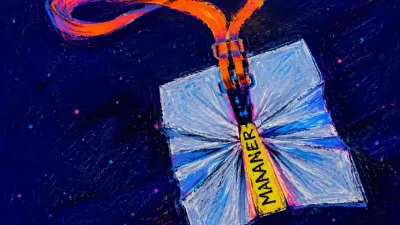
A figure with lowered shoulders stands beneath calendar blocks as org-chart frames narrow around the torso.

What is this situation?

Management Track Lock-In is what happens when a promotion into leadership starts behaving like a one-way door. It may begin with a temporary team lead assignment, a reorganization, or the promise that you can still stay close to the work, but your calendar soon fills with one-on-ones, performance reviews, hiring panels, budget meetings, and escalations while the coding, designing, writing, researching, or building that shaped your career is reassigned to other people. Your manager measures you by headcount and delivery through others; colleagues bring you decisions instead of asking you to make the work; senior leaders discuss the next management tier as though it is the only credible move. When you ask about returning to an individual-contributor role, the answer is vague, deferred until after the next quarter, or framed as stepping backward, and external recruiters keep matching your title to more management posts. Pay bands, resume screening, staffing needs, and the lack of a parallel specialist path all reinforce the same direction. Day after day, you move from video call to video call with your shoulders held tight, watching the hands-on tools of your field remain open on a second screen but untouched. The cost is not one dramatic event; it is the steady narrowing of what the workplace allows you to be, much like the Eight of Swords, where a bound figure stands within a fence of blades while open ground remains visible just beyond it.

Why it's not you?

This is not a failure to adapt or appreciate a promotion. The lock-in is produced by an organization that treats leadership as the only upward route, then uses titles, pay bands, staffing needs, and hiring filters to make movement back to specialist work unusually difficult.

Management Track Lock-in in Tarot Cards

In Management Track Lock-In, your calendar fills with one-on-ones and escalations while hands-on work is steadily moved out of reach. The way your shoulders stay tight through back-to-back meetings is part of an environmental and structural dynamic: titles, staffing needs, pay bands, and hiring filters keep the route running in one direction. The Tarot Cards below reflect the visible contours of this one-way workplace route.

The Magician
Reversed
Four working tools are arranged within reach, yet the reversed figure cannot complete the usual connection between intention and material action. The scene resembles a manager whose technical, creative, writing, or research capacity remains available but is continually intercepted by coordination work. You can imagine and understand specialist output while lacking the authorised time and role conditions to produce it. The complete toolkit makes the development gap concrete rather than abstract. The reversed orientation reveals that professional growth is being blocked at the conversion point between capability and practice, where meetings and managerial accountability claim the available channel. You can preserve a distinction between your resource base and the job structure currently preventing that resource base from becoming active mastery.
The Emperor
Reversed
An armoured ruler occupies a massive stone throne against a hard, barren landscape, with authority concentrated in a single immovable seat. Reversed, the structure reads as leadership architecture that has become too rigid to accommodate another valid form of seniority. You are assigned control, accountability, and people decisions, yet the same hierarchy blocks movement toward expert contribution without formal authority. The armour shows why the system protects continuity: teams require coverage, executives want clear ownership, and established reporting lines resist ambiguity. The reversed orientation exposes the cost when those safeguards harden into professional containment. You can locate the conflict in an inflexible governance model that confuses organisational control with career maturity, rather than interpreting role misfit as an inability to lead.
The Hierophant
Upright
A formal authority sits between institutional pillars while two followers face him and crossed keys mark controlled access. The arrangement resembles a company where promotion rules, title architecture, and senior leadership define management as the orthodox route to credibility. You may ask for specialist progression, yet the gatekeepers continue translating ambition into headcount, larger teams, and the next leadership tier. The upright image shows that institutional recognition is available, but only through a prescribed pathway. Its value lies in making the rule system explicit: this is not merely one manager's preference but an organisational doctrine embedded in bands, performance criteria, and succession planning. You can distinguish genuine professional development from compliance with a ladder that has no parallel language for advanced specialist contribution.
The Hanged Man
Upright
A figure hangs from one bound ankle beneath a living wooden frame, motionless but alert, with a bright halo around his head. The suspension resembles an internal role-change request held until after the next quarter, reorganisation, backfill, or delivery milestone. You remain operationally useful as a manager while the organisation controls when, or whether, the promised specialist move can proceed. The calm face and illuminated head make the pause informative without romanticising indefinite waiting. The upright image reveals a period in which the lack of movement can expose who owns the timetable, what conditions keep changing, and whether the organisation has committed any actual resources to the transfer. You can distinguish a purposeful transition interval from a holding pattern that preserves staffing convenience at the expense of your career direction.
Death
Reversed
An armoured skeleton advances beyond a fallen crowned figure toward a sunlit passage between two towers. Under the reversed orientation, that change of status does not complete: the old management identity continues governing access even after you name a different destination. Requests to return to specialist work are postponed, classified as regression, or absorbed into another quarter of leadership obligations. The light between the towers keeps a different professional form visible, but the blocked passage exposes the institutional work required for an identity transition to become real. You can distinguish wanting hands-on work from having the title, compensation structure, recent portfolio, and staffing release needed to cross into it. The stagnation therefore belongs to an incomplete career transition, not to a lack of seriousness about your craft.
The Devil
Upright
Two workers are chained beneath a dominant figure and elevated platform, turning hierarchy itself into the central spatial fact. The structure resembles an organisation that grants higher pay, status, and legitimacy through management, then treats movement back to specialist work as a loss of rank. You remain attached not because the promotion was secretly desired, but because several real workplace resources have been made conditional on staying within the leadership hierarchy. The loose chains reveal leverage without pretending that disengagement carries no cost. The upright image names how prestige rules become powerful when they are backed by salary bands, recruiter assumptions, and teams that depend on your continued availability. You can expose each dependency separately and assess the management track as a designed incentive system, rather than as an irreversible statement about who you are professionally.
Eight of Cups
Upright
A red-cloaked figure leaves eight carefully stacked cups and walks toward a rough mountain pass under an eclipsed sky. The cups resemble an established management package: salary, title, organisational trust, team scope, and visible advancement are present, yet the arrangement still contains a meaningful absence. You may have achieved the recognised promotion while losing daily contact with the work that made the career feel like your own. The upright figure is already moving, so the image gives physical form to a path beyond the sanctioned ladder without pretending that the path is easy. It reveals that leaving a rewarded structure can be a search for better role fit rather than an impulsive rejection of success. You can evaluate the choice by naming what the existing stack provides, what it excludes, and what kind of hands-on work would make the difficult route coherent.
Four of Pentacles
Upright
One pentacle sits above the crowned figure's head, another is held against his chest, and two more pin his feet outside the distant city. The arrangement resembles a management package in which title shapes identity, compensation is guarded as security, and both materially restrict movement. You may be able to name the preferred specialist role while still facing a pay cut, status reset, or hiring process that discounts your recent experience. The coins remain real resources in the upright image, so their protective value should not be dismissed. The scene instead shows how security can become the architecture of a narrowed choice when every benefit is attached to remaining still. You can account for the financial floor, title value, and career capital separately, making visible which part of the lock-in is essential protection and which part is an organisational definition of progress.
Eight of Pentacles
Reversed
A specialist repeatedly works one pentacle at a time while a visible sequence of completed pieces records the growth produced by sustained practice. Reversed, the chain of repetition is broken: management meetings, performance reviews, and delivery through others no longer generate the direct feedback required for craft development. You may continue advancing in title while your preferred form of mastery receives less practice, evidence, and recognition. The existing pentacles show that prior capability remains part of the foundation. The blocked workshop reveals a widening gap between the kind of professional you want to become and the activities your current role rehearses every day. You can frame growth as an infrastructure question about access to repetition, current feedback, and demonstrable output, rather than as a demand to feel more committed to leadership.
Two of Swords
Upright
A seated figure crosses two swords over her chest while a blindfold blocks the wider shoreline behind her. The posture captures the defended choice between retaining management compensation and status or attempting a return to hands-on work without a guaranteed landing place. You face two recognisable directions, but the employer withholds the concrete transfer criteria, pay implications, and timing information needed to compare them cleanly. The stable seat and balanced blades show that pausing can preserve decision quality when the options have been artificially compressed. The upright image makes the stalemate legible rather than treating indecision as a character flaw. You can examine which facts are genuinely unavailable, which costs are being exaggerated by the organisation, and whether the apparent binary excludes a parallel specialist path, phased transition, or external search.
Six of Swords
Reversed
A boat carries its passengers toward another shore while six swords remain planted inside the vessel. Reversed, the crossing cannot resolve cleanly because the occupational classification causing the difficulty travels with you: an internal transfer remains pending, while external recruiters read the management title and offer another version of the same role. You may attempt to change organisations without actually changing the career channel through which organisations can see you. The far bank remains part of the scene, so the desired specialist direction is not erased. The image reveals that movement alone is insufficient when the resume, compensation expectations, professional network, and recent evidence of work all remain coded as management. You can locate the lock-in in what accompanies the transition, rather than treating repeated redirection as proof that the destination is illegitimate.
Eight of Swords
Upright
A blindfold covers the bound figure's eyes while the surrounding swords remain materially present in the ground. The image holds both sides of the psychological audit: the title system, pay bands, staffing needs, and hiring filters are real constraints, while repeated exposure to them can also install the belief that no route exists at all. You may begin repeating the organisation's language about stepping backward even when it conflicts with your own definition of professional development. The open spaces between the swords allow internalised messaging to be examined without minimising the external structure. The upright scene invites a distinction between barriers currently enforced by institutions and conclusions that have become automatic through repetition. You can recover clarity by naming which limits have documentary evidence, which are anticipated social judgments, and which belong to a ladder that never recognised specialist growth in the first place.
Six of Wands
Upright
A rider wearing a victory wreath moves above a crowd that publicly confirms his elevated position. The image captures a promotion that is materially real and socially celebrated, even as it narrows the type of work the organisation will permit you to perform. You gain title credibility, executive visibility, and market recognition while losing direct access to the craft that generated the promotion. The upright recognition is a usable career asset, not a false achievement. The lock-in emerges because the workplace treats that visible success as proof that the next management tier is the only rational continuation and frames a specialist return as retreat. You can preserve the evidence of leadership value while questioning the institutional assumption that recognition must dictate the permanent form of your work.
Eight of Wands
Reversed
Eight staffs cross an open sky toward the same landscape, forming a concentrated picture of movement that should arrive quickly. Reversed, that momentum fails to land as a completed role change: every conversation produces another dependency, approval step, quarter boundary, or reorganisation. You hear the language of imminent movement while remaining assigned to the same management calendar. The wands still share a direction, which separates this pattern from having no desired outcome. The obstruction lies in converting discussion and intention into an effective date, backfill, revised title, and specialist scope. You can read repeated velocity without arrival as a timing signal about institutional follow-through, rather than allowing each new promise to reset the waiting period.
Ten of Wands
Upright
Ten staffs fill the worker's arms, bend his shoulders, and obscure the destination in front of him. The bundle resembles a leadership role assembled from people management, delivery accountability, hiring, budgets, escalations, and administrative ownership. You may still carry the title successfully while the accumulated responsibilities leave no room to produce the specialist work on which your career identity was built. The upright figure is capable of reaching the town, which recognises competence without converting competence into permanent obligation. The image reveals a career bottleneck created by how responsibilities have been bundled and assigned, not by a failure to work hard enough. You can see where a temporary team-lead duty became durable role scope and where reliable delivery has been used to justify still more management ownership.

Management Track Lock-in in Tarot Card Reading Insights

Beyond the card list, other people have brought Management Track Lock-In into readings when a leadership title started narrowing each next option. The Tarot Reading Insights below collect what surfaced around that same one-way career route.

Psychological Contexts Related to Management Track Lock-in