Carrying Everyone's Missing Work

Explore the daily strain of a short-staffed team, related tarot cards, and tarot reading insights from similar work pressure.

Understaffed Team Pressure
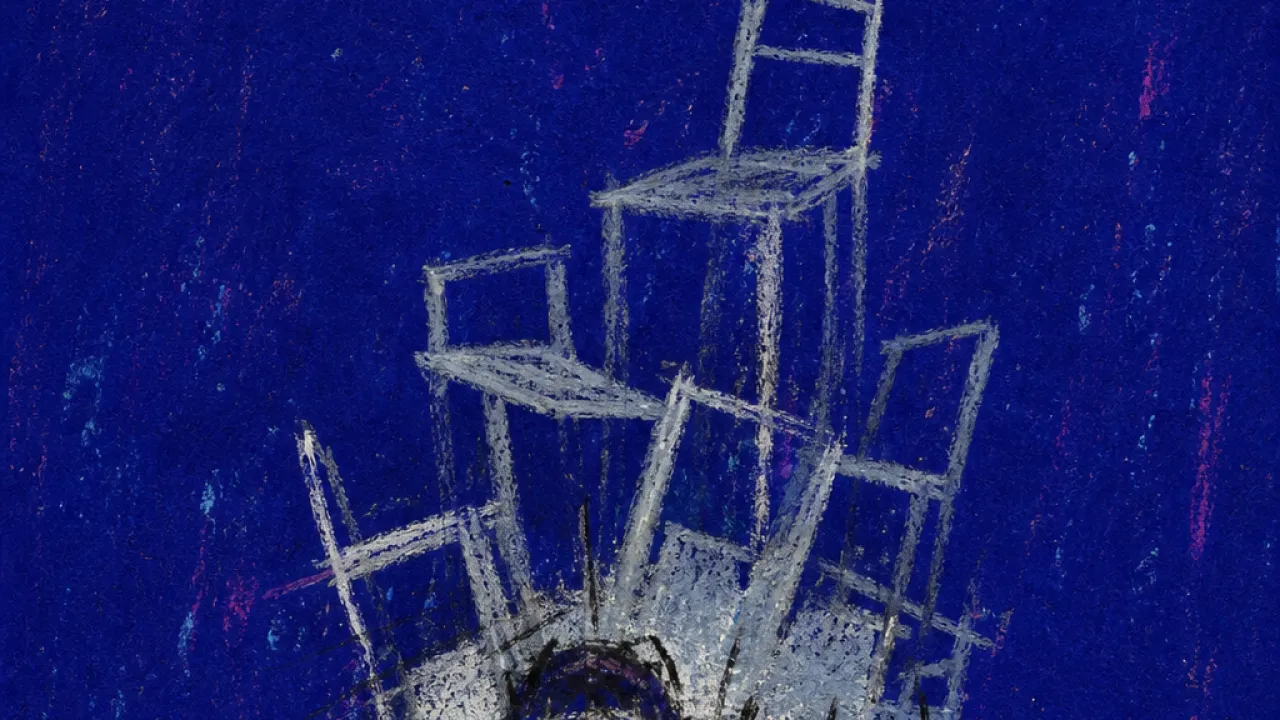
A solitary figure bent under stacked papers, empty chairs casting weight onto braced shoulders in dark blue space

What is this situation?

Understaffed Team Pressure — you start the day before the day officially starts, opening your laptop to messages from people who are also behind, also waiting, also asking for things that should have belonged to someone else. The team used to have enough people to cover the queue, the client calls, the admin, the handoffs, the urgent fixes, and the small problems that turn expensive when no one has time to catch them early; now those names are gone from the org chart, but the deadlines stayed. In meetings, leadership calls it a busy season, a hiring gap, a stretch moment, a chance to be flexible, while the same few people keep absorbing the work in silence because saying no just means watching it fall on someone sitting next to you. You answer one message while another comes in, leave half-finished tasks open in different tabs, skip breaks because the calendar has no clean space, and end the week with a list that somehow grew even after you spent five full days clearing it. The pressure is not only the volume; it is the way the system treats missing capacity as if it can be solved by everyone else moving faster, staying later, and carrying more context in their heads. Over time, your body starts preparing for impact before you even clock in: shoulders braced, jaw set, stomach tight when a new notification appears, because every request feels like it may become one more thing no one else is available to catch. By Friday, you are not just tired from working; you are worn down by being used as the buffer between a broken staffing plan and the people depending on the team, much like the figure on the Ten of Wands, bent forward beneath a bundle so large it blocks the road ahead.

Why it's not you?

The problem is not that you are slow, weak, or failing to keep up; the problem is that the team is being asked to run at full output without full capacity. Unfilled roles, overloaded queues, constant context-switching, and deadlines that never changed are external conditions, not personal shortcomings. This pressure has a shape: missing support being converted into extra weight on the people who remain.

Understaffed Team Pressure in Tarot Cards

Understaffed Team Pressure has a specific signature: the work keeps arriving as if the missing people are still in the room. The tight shoulders, late-night laptop glow, and constant shift from one dropped task to the next are not just personal strain; they are signals of an environmental, structural dynamic. The cards below do not decide whether you should push harder or step back; they reflect the visible shape of a workload built without enough hands. Here are the Tarot Cards that tend to mirror this kind of pressure.

The Devil
Upright
A dominant figure sits above two workers held by visible chains, while the collars around them remain loose enough to show constraint without absolute captivity. The hierarchy mirrors a workplace where leadership retains control over staffing and targets while employees remain attached to the consequences through duty, income, reputation, and concern for one another. You may keep covering the gap because the system has made your reliability the cheapest available substitute for additional headcount. The chains connect the workers to the structure and indirectly to each other, which reflects the social mechanism behind chronic overwork: withdrawing your labor appears to burden the colleague beside you before it reaches the decision-maker above. That mechanism can make excessive availability look voluntary even when the alternatives carry real costs. The card exposes an extraction loop in which flexibility is repeatedly praised because it allows the staffing deficit to remain financially and politically invisible.
Two of Pentacles
Reversed
The juggler keeps two pentacles moving inside an infinity-shaped loop while ships rise and fall behind him. Reversed, the loop captures a role that has expanded beyond manageable coordination: competing workstreams remain active, but there is no stable sequence, backup person, or protected focus block to support them. You may look busy every minute while still being unable to create reliable progress on the work that requires depth. The waves place external volatility behind the juggling rather than inside the worker's control. A staffing gap increases that volatility because every absence, client escalation, or urgent fix forces another reprioritization. The inverted image separates professional capability from system capacity: your skill may keep several functions temporarily airborne, but it cannot turn multiple understaffed roles into one coherent job.
Three of Pentacles
Reversed
Three figures meet beneath an unfinished arch, with plans in hand and specialized work embedded in the surrounding structure. Reversed, the composition loses its stable division of labor: the design still requires several kinds of contribution, but the working arrangement cannot reliably supply or coordinate them. You may inherit incomplete handoffs, perform tasks outside your expertise, or spend extra time reconstructing context that a missing role once carried. The carved arch makes quality dependent on collaboration rather than on one person's speed. When positions stay vacant, the problem moves beyond workload volume into process failure because review, administration, execution, and communication no longer have dependable owners. The reversed card reveals why working harder inside one role cannot fully repair a workflow designed around several staffed positions.
Six of Pentacles
Reversed
A standing figure controls both the scales and the distribution of coins while two people below wait for what he chooses to release. Reversed, the allocation mechanism becomes the point of pressure: those with authority over resources remain separate from those experiencing scarcity. You may be asked to redistribute your own time endlessly even though the decisive missing resource is funded headcount, backfill, or a reduction in scope. The scales show that capacity is being measured, but control of the coins shows that measurement does not guarantee fair provision. Leadership can acknowledge a hiring gap while continuing to ration support and preserve full output targets. The inverted image names the resulting career dynamic as unequal resource allocation, where the remaining team's flexibility subsidizes a staffing decision made above them.
Two of Swords
Upright
A blindfolded figure holds two equal swords across her chest while rocks break the water behind her. The balanced blades capture a repeated work decision in which two legitimate demands cannot both receive the same limited capacity. You may be forced to choose between the client call and the overdue handoff, the urgent fix and the preventative task, or your own boundary and the coworker who will inherit the overflow. The blindfold does not imply a lack of judgment; it shows that the system has withheld a clean basis for choosing. When leadership preserves every deadline after headcount falls, prioritization becomes a transfer of consequences rather than a normal ranking exercise. The upright composition keeps both options visible, but it also exposes why your choice feels stalled: either blade can protect one obligation only by leaving another uncovered.
Four of Swords
Reversed
A resting figure occupies a quiet chamber while three swords hang above and a fourth remains beside the body. Reversed, the protected pause is structurally compromised: unresolved work stays overhead, and the next obligation remains within reach. You may avoid breaks, postpone PTO, or continue monitoring work because the team has no reliable coverage for what arrives while you are unavailable. The chamber distinguishes genuine recovery from simply becoming inactive for a few minutes. An understaffed workplace can leave breaks on the calendar while making them professionally costly to use, especially when every absence enlarges a coworker's queue. The inverted card reveals rest deprivation as an operational design problem, not as a private inability to switch off.
Eight of Swords
Upright
A blindfolded worker-like figure stands bound among eight swords while the fortress controlling the wider landscape remains distant. The enclosure mirrors responsibility without corresponding authority: you are close enough to see each uncovered task but too far from staffing decisions to change the team's actual capacity. Saying no remains technically possible, yet the immediate consequences surrounding you make that option feel professionally dangerous or disloyal. The bindings are loose and the swords leave a gap, which prevents the scene from treating your role as permanently fixed. What the card makes visible is the current constraint map: leadership holds hiring and scope decisions, coworkers hold equally overloaded queues, and you hold the consequences at ground level. The problem is therefore not a lack of initiative; it is a job structure that assigns accountability to the person with the least control over the underlying resource.
Nine of Swords
Upright
Nine swords line the dark wall above a figure sitting upright in bed with their face covered. The repeated blades resemble a mental queue that stays open after the workplace closes, with each unfinished task retaining its own edge and urgency. You may rehearse tomorrow's backlog, anticipate the next notification, or wake already braced because the team has no spare person available to absorb a new problem. The bed places this pressure inside a recovery space, but the source remains connected to visible work conditions rather than to a personal defect. When one person must retain multiple handoffs, deadlines, and contingency plans, the mind becomes an informal storage system for organizational context. The card names that cognitive carryover without treating it as destiny: the crowded wall reflects an external capacity deficit that has been allowed to occupy your private mental buffer.
Seven of Wands
Upright
A single figure stands on raised, uneven ground and holds one staff against six rising from below. The composition turns simultaneous requests into a visible ratio: one available worker is expected to answer many incoming demands while maintaining a position with little stable footing. You may spend more of your role defending priorities, explaining delays, and preventing escalation than doing the work your position was designed to produce. The higher ground provides visibility and some leverage, but it does not provide backup. That distinction fits a team where reliability or seniority makes you the default escalation point without giving you additional capacity or authority. The card frames constant pushback as a predictable function of demand exceeding coverage, not as evidence that you are insufficiently collaborative.
Eight of Wands
Reversed
Eight parallel staffs travel across an open sky toward land, with no person visible to receive, sort, or redirect them. Reversed, their shared momentum becomes a picture of incoming work meeting insufficient processing capacity: messages arrive, dependencies wait, and handoffs slow even though the deadlines attached to them continue moving. You may experience every delay as personal lateness while the actual bottleneck is the missing receiver at the end of the flow. The river and open landscape emphasize movement across a system rather than effort inside one isolated task. Understaffing interrupts that movement at multiple points, so faster individual responses cannot restore the timing of the whole chain. The inverted staffs reveal a mismatch between demand velocity and team throughput, making delay a predictable output of the staffing plan rather than proof that you failed to act at the right moment.
Nine of Wands
Upright
A bandaged figure grips one staff while eight more form a barrier behind him, and his wary glance remains fixed on what may arrive next. The barrier shows accumulated work already handled, while the lone guard shows how little reserve capacity remains to protect it. You may be the person who still knows the client history, the workaround, the queue logic, or the unfinished handoff, making your continued availability part of the team's operating infrastructure. The figure remains standing, so the image preserves real competence and hard-won knowledge rather than reducing the situation to defeat. At the same time, the bandage makes the cost of relying on the same person repeatedly visible. The staffing structure is functioning through endurance at its edge, leaving you to anticipate the next request because there is no deeper bench behind you.
Ten of Wands
Upright
The worker carries ten staffs alone, his arms occupied and his line of sight blocked while the destination remains some distance away. Each staff can stand for a separate role, queue, client, or operational dependency that once belonged to a wider team but has been consolidated onto the people who remain. You can still deliver visible output, yet the card makes the hidden employment condition legible: the organization is relying on disproportionate personal load to preserve normal service. The town ahead shows that tasks can reach completion, which helps explain why leadership may underestimate the problem. Your competence keeps the road technically passable and can therefore conceal how much staffing capacity has been removed. The bent posture exposes the cost behind that apparent continuity, distinguishing successful delivery from a sustainable job design.

Understaffed Team Pressure in Tarot Card Reading Insights

When Understaffed Team Pressure turns every normal workday into triage, other people have brought the same impossible load into readings. The shift here is from the cards themselves to what comes up when this work pressure enters a spread. Tarot Reading Insights from sessions around this situation.