When Everyone Turns At Once

Explore the pressure of a group pile-on, related tarot cards, and reading insights from sessions about friendship fallout.

Friend Group Pile-on
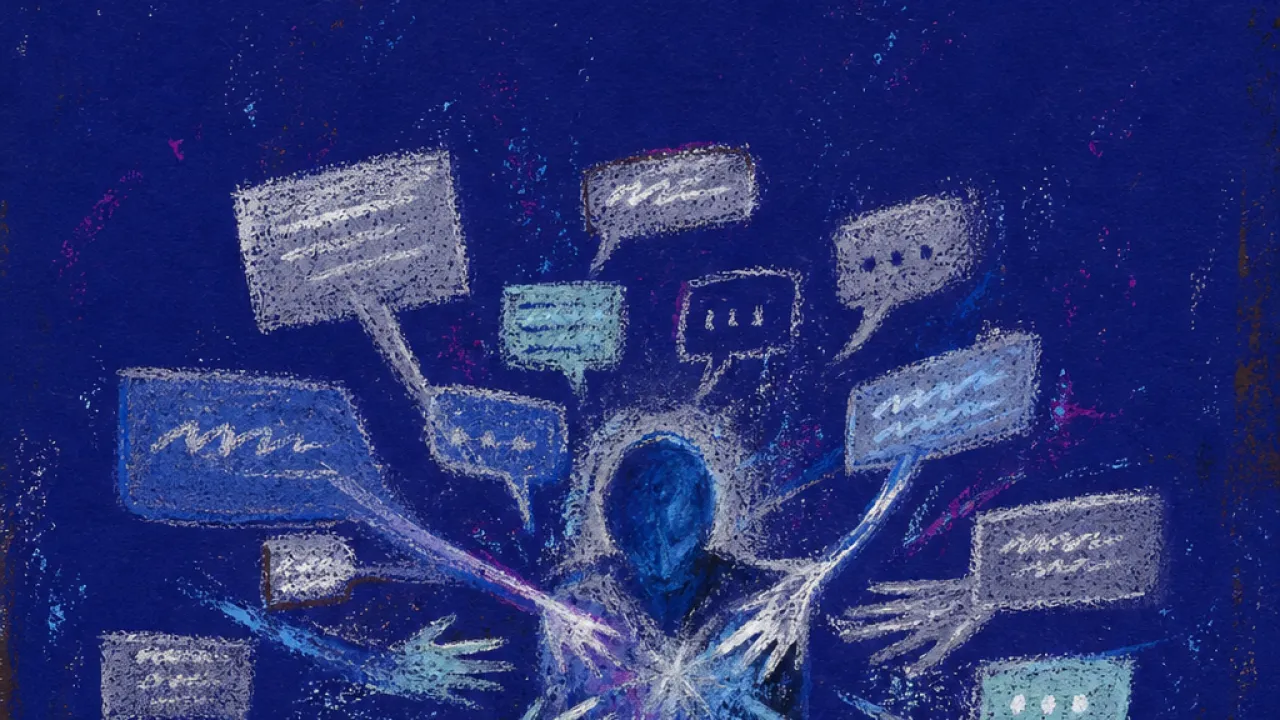
A solitary figure backed into glowing message windows as hands and chat streams press inward from every side

What is this situation?

Friend Group Pile-On — you open the group chat and realize the conversation has already been moving without you, with your name sitting in the middle of it like something everyone has agreed to handle together. It might start with one comment, one screenshot, one joke that is not really a joke, or one person saying they are “just being honest,” and then the reactions stack up: thumbs-up bubbles, laughing emojis, short replies, someone tagging you, someone else saying they have “also noticed” the same thing. What could have been a one-on-one conversation turns into a room where everyone has a turn, and every sentence you type is read as proof of something before you have even finished explaining it. The power shifts because the group has the audience, the pace, and the shared version of events; you are left trying to answer six angles at once while the chat keeps refreshing and side conversations happen where you cannot see them. Even when no one is shouting, the format does the shouting for them: messages arrive while you are on the bus, at work, in bed, in the middle of trying to eat, and your phone becomes the place where the room keeps reforming around you. You start rereading old texts, checking who liked what, wondering which friendships are still direct and which ones have become part of the crowd. By the end, the issue itself can feel smaller than the machinery around it: the timing, the publicness, the way private discomfort gets turned into a group vote, much like the Seven of Wands, where one figure has to brace against several raised staffs coming from every direction at once.

Why it's not you?

The problem is not that you are too sensitive for friendship or unable to handle feedback. A group pile-on changes the conditions: it turns one conflict into a public pressure system where numbers, timing, and visibility do the damage. That format is heavy by design, even when everyone involved insists they are only trying to clear the air.

Friend Group Pile-on in Tarot Cards

In Friend Group Pile-On, the pressure is not only the disagreement; it is the way the group chat, reaction icons, screenshots, and side conversations all turn toward you at once. That tightness in your chest while your phone keeps lighting up is part of an environmental, structural dynamic, not a private overreaction. The Tarot Cards below reflect the shape of that many-sided pressure without telling you who to forgive, confront, or cut off. Here are the Tarot Cards that tend to mirror this kind of social pile-on.

Justice
Reversed
A seated authority holds scales for evaluation and a sword for consequences, combining the roles of assessor and enforcer in one image. Reversed, the friend group reproduces that concentration of power without maintaining balance: the same people define the grievance, endorse one another's testimony, question your response, and decide whether the friendship remains available. The familiar symbols of fairness make it possible to audit the process separately from the accusation. You can acknowledge that a friend may have a legitimate complaint while also recognising that public accumulation, unequal response conditions, and a predetermined social outcome do not create reciprocal accountability.
Three of Cups
Reversed
Three friends lift their cups together, their bodies forming a mutually affirming circle. Reversed, the same closeness can harden into clique alignment, where friendship access is withheld from you while the others confirm one another's interpretation through reactions, private messages, and shared language. The cups show that the original resource was companionship, which is precisely why its withdrawal carries more force than criticism from strangers. You can identify which relationships still permit direct, reciprocal conversation and which have become extensions of the crowd's position.
Two of Swords
Upright
A blindfolded figure holds two swords crossed over their chest while rocks interrupt the water behind them. The defensive posture mirrors a choice being demanded before you can see the whole information environment: reply inside the group's framing, withdraw from the thread, or try to reach individual friends through channels the crowd does not control. The two swords keep the alternatives distinct, and the seated figure still holds both rather than being pinned by them. You can treat the pressure to respond immediately as part of the group's leverage while recognising that incomplete visibility, side chats, and a rapidly fixed narrative make any decision harder to evaluate on its own merits.
Four of Swords
Upright
A recumbent figure lies apart from the action while three swords remain suspended overhead and a fourth rests beneath them. The conflict has not vanished, but the protected stillness interrupts its tempo, creating a visual boundary between the existence of hostile messages and the demand that you answer them while they are still arriving. The enclosed space makes pause a concrete timing resource rather than an admission of defeat. You can recognise that a group chat designed for simultaneous participation is poorly suited to resolving a many-against-one conflict, and that stepping out of its live rhythm changes the conditions under which your words can be formed and assessed.
Five of Swords
Upright
One figure holds the collected swords while two others leave the scene, placing possession of the conflict's symbols above continued relationship. The arrangement reflects friendships in which being publicly right, securing an apology, or controlling the final account has displaced curiosity about whether trust can survive the process. The two departing figures make relational cost visible rather than treating the winner's position as the whole outcome. You can examine which friends are trying to understand the rupture and which are invested in a victory that requires your humiliation or unconditional concession.
Seven of Swords
Upright
A figure removes five swords from the camp while glancing back, keeping the transfer visible to the viewer but hidden from those inside the scene. The image maps onto friends moving screenshots, retellings, and partial disclosures between private chats before confronting you in the shared channel. Two swords remain behind, showing that the available record is incomplete rather than entirely absent. You can distinguish direct friendship knowledge from material that has been selected, circulated, and socially interpreted without your participation.
Eight of Swords
Upright
A blindfolded figure stands bound among eight upright swords, unable to survey the full terrain while the distant route remains difficult to judge. The scene translates the pile-on into an internal response bottleneck: each notification reactivates the sense that any wording could be used against you, even when you are no longer typing in the group chat. The enclosure contains visible gaps, and the bindings are not identical to a locked structure. You can examine which constraints are currently being imposed by active messages and which are being carried forward through anticipation, rereading, and imagined side conversations, without blaming yourself for having adapted to an uneven communication environment.
Nine of Swords
Upright
A figure sits upright in bed with their face in their hands while nine swords line the dark wall behind them. The bedroom setting directly mirrors the group chat continuing internally after the phone is put down: you replay wording, count reactions, inspect who agreed, and wonder which private friendships have shifted outside your view. The swords remain on the wall rather than entering the bed, preserving a distinction between the recorded conflict and the interpretations multiplying around it. You can audit what was actually written, what remains unknown, and what the group's format trained you to anticipate, reducing the thread's ability to occupy every unobserved part of the night.
Ten of Swords
Upright
Ten swords pin one figure to the ground while the surrounding landscape remains empty of anyone sharing the impact. The visual excess mirrors several trusted friends adding comments, endorsements, or private disclosures after the core point has already been made, turning a dispute into cumulative betrayal. The dark sky ends at a bright horizon, making the pile-on a definable rupture in the friendship system rather than an endless measure of your worth. You can assess the aftermath through concrete changes in trust, confidentiality, and direct access instead of treating the group's numerical agreement as the final description of every friendship involved.
Page of Swords
Reversed
A watchful Page holds a raised sword in gusting wind while looking sideways, with birds and moving clouds reinforcing an atmosphere of circulating information. Read reversed, curiosity and alert communication lose their reciprocal function and become monitoring, screenshot culture, reactive commentary, or waiting for your next message to confirm an existing story. The Page's attentiveness remains visible, but access to fair interpretation has been obstructed. You can distinguish friends who are listening for understanding from friends who are collecting material for the group, especially when ordinary wording, response time, or silence is repeatedly treated as evidence.
Five of Wands
Upright
Five figures brandish crossing staves in a crowded field, with no referee, speaking order, or stable line between participation and attack. The visual congestion matches a group thread in which several people add competing claims, jokes, corrections, and recollections until you cannot answer one point without another person entering the exchange. Every participant remains visible and active, so the conflict can still be separated into individual contributions rather than accepted as one unanimous voice. You can recognise that the chaos is being produced by an unstructured group format, even when the group presents the volume of participation as proof that its conclusion is coherent.
Seven of Wands
Upright
A lone figure stands above six incoming staves, holding one position while several challenges converge from below. The image frames the cognitive pressure at the centre of a pile-on: numerical agreement can make you treat consensus as proof, even when the group's shared conclusion was produced through repetition, loyalty cues, screenshots, and an unequal forum. The elevated ground remains available, allowing your perspective to be examined without requiring it to defeat every opposing staff. You can update your model of the conflict by separating valid feedback, crowd amplification, procedural unfairness, and friendship compatibility rather than collapsing all four into a single verdict about who you are.
Eight of Wands
Upright
Eight parallel staves travel through the same open sky, creating the impression of a coordinated volley before any individual sender can be distinguished. The arrangement mirrors how tags, replies, likes, and repeated claims amplify one another across a social network until speed and repetition acquire the appearance of collective certainty. The landscape remains open, which makes the communication pattern observable rather than unknowable. You can identify who initiated the momentum, who added substance, and who merely reacted, instead of allowing the thread's visual density to collapse every participant into one authoritative social bloc.
Ten of Wands
Upright
Bent beneath a bundle of ten staves, the lone carrier moves toward town with their field of vision narrowed by the load. The image converts separate comments, reactions, tags, and implied obligations into one portable burden that the group generates but you are left to carry through the physical day. The road remains visible and the carrier is still moving, so the conflict has not erased your capacity to distinguish the friendship issue from every other demand. You can recognise that the exhaustion comes from workload transfer and constant digital access, not from a personal failure to multitask or remain endlessly available.

Friend Group Pile-on in Tarot Card Reading Insights

When a friend group turns one tense moment into a group-wide pile-on, other people have brought that same social pressure into readings. The shift from cards to readings shows how this situation appears when someone sits with the aftermath, the receipts, and the unanswered messages. Tarot Reading Insights from sessions around this kind of group pressure.

Psychological Contexts Related to Friend Group Pile-on