A shared-home boundary creep breakdown with related tarot cards and session insights for readings about space, noise, guests, and access.
Roommate Boundary Creep
What is this situation?
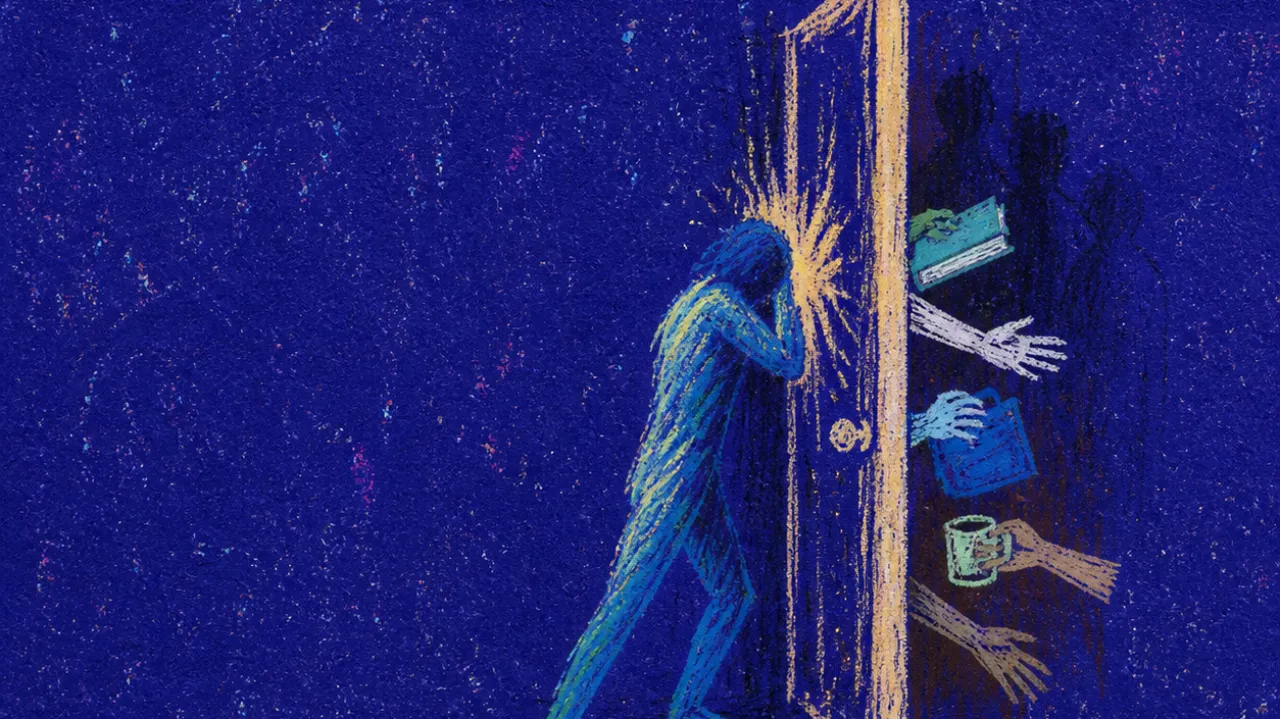
Roommate Boundary Creep - it starts with a tiny exception that is easy to shrug off: they borrow your charger "just for tonight," leave dishes in the sink because they are running late, or text that a friend is crashing on the couch after you have already gone to bed. At first you answer in the group chat like it is no big deal, because the lease is shared, the kitchen is shared, the bathroom is shared, and nobody wants to turn a home into a negotiation table. Then the exceptions become the house rhythm: your food gets used and replaced "later," your clean mug disappears into someone else's room, the front door clicks open to guests you did not know were coming and your shoulders tighten before you even hear their names, the living room becomes unavailable when you planned to decompress, and knocks on your bedroom door come with the energy of access already being assumed. You start keeping your things in your room, wearing headphones to mark a boundary nobody asked about, checking the sink before you cook, checking the hallway before you leave your room, checking your messages because silence can become permission. The power dynamic is subtle because no single incident looks big enough to justify a formal fight, but the shared space keeps expanding in their direction while your privacy, time, and rest keep shrinking into whatever corner is left. What wears you down is not one messy night; it is the daily labor of guarding the line without being cast as uptight, much like the figure on the Seven of Wands, standing alone on uneven ground while multiple wands press up from outside the frame.
Why it's not you?
The issue is not that you are being precious about shared space; it is that repeated small crossings turn a home into a place where you have to keep re-stating what should already be clear. Borrowed items, late guests, dishes, noise, and casual entry into your room are not harmless quirks when they keep landing on you. This has a shape: access expands one exception at a time while your privacy is asked to keep making room.
Roommate Boundary Creep in Tarot Cards
Roommate Boundary Creep is the shared-home pattern where small exceptions keep becoming the house rhythm, and your shoulders tighten when the front door clicks open because access may be assumed again. The pressure is environmental, structural, and dynamic: the layout is shared, the rules stay vague, and the person crossing the line benefits from keeping it casual. The cards below are not here to judge who is easy to live with; they reflect the outline of a boundary that keeps getting pushed. These Tarot Cards mirror the shape of this kind of shared-space pressure.
Scales hang from one hand, a raised sword occupies the other, and two pillars frame a seat of formal authority. Reversed, those instruments remain present but stop producing symmetry, reflecting a shared lease or house agreement whose equal standing is undermined by informal exceptions and uneven enforcement. The blocked pathway is consistent accountability. You and your roommate may nominally have the same rights and responsibilities, yet you carry the burden of noticing, documenting, and restating limits while their silence or convenience keeps becoming precedent. The imbalance lies in how the household rules operate, not in whether your need for privacy is sufficiently persuasive.
The moon lights a narrow path between two towers while a dog and wolf react at its edges and a creature rises from dark water. The nocturnal scene parallels a home where incomplete cues carry practical weight: a late message might announce a guest, a door sound might change who is in the flat, and silence might later be treated as consent. The path remains visible, but it does not provide full certainty about what lies ahead. You are left interpreting partial household signals because the external rules are inconsistent, and that ambiguity fills your internal buffer with forecasts about access, noise, and interruption before the facts are clear.
Three figures raise their cups inside a close celebratory circle, their bodies and shared gesture creating a compact social unit. Reversed, that social energy loses its agreed container and spills into a home through surprise couch guests, late arrivals, occupied living rooms, and gatherings that one tenant has effectively approved for everyone. Connection and hospitality still exist as legitimate resources, but the pathway to mutual hosting is obstructed by assumed access. You are left managing the consequences of someone else's social network inside your recovery space, while objecting risks positioning you as hostile to the group rather than as an equal resident asking for advance consent.
A pentacle is pressed to the figure's chest, another is fixed above the head, and two are pinned beneath the feet while the city sits at a distance. The body becomes a storage system, mirroring the way you move food, chargers, mugs, and other belongings out of circulation when shared access no longer includes dependable consent or replacement. The upright hold preserves a real resource: you retain some control by containing what matters. Yet the rigid posture shows the trade-off clearly. Your possessions may become safer while your ability to inhabit the whole home contracts, turning the bedroom into a private locker rather than one part of a genuinely shared living system.
Coins fall from one person's hand while scales hang above two people positioned to receive them. Reversed, that distribution channel loses credible balance: food, household goods, cleaning effort, and flexibility continue moving, but the scale no longer guarantees that access will be reciprocal or that what was used will return. The blockage is not a total absence of sharing; it is sharing without a stable accountability mechanism. You keep absorbing replacements, delayed promises, and household admin while the roommate retains the practical benefit of each exception, making the flat's resource flow unequal even when every single item looks inexpensive.
A worker leans on a tool and studies a cluster of pentacles embedded in slow-growing vines. Reversed, the waiting posture loses a credible endpoint, mirroring food that will be replaced "later," dishes that will be handled after the next rush, and house expectations that are repeatedly deferred without changing the underlying pattern. The blocked resource is patience that produces a measurable return. You are not dealing with one reasonable delay but with postponed accountability becoming the household's operating rhythm. The timing question emerges when another grace period no longer creates repair and instead gives the latest exception time to become precedent.
A blindfolded figure holds two swords in a balanced cross while rocks interrupt the water behind her and a small moon hangs overhead. The pose sustains a temporary ceasefire by preventing either blade from moving, matching the choice between raising a formal household issue and continuing to absorb incidents that each seem too minor to justify conflict. Both swords remain available, so the options are real rather than erased. Yet holding them in permanent suspension consumes effort and allows the existing house rhythm to keep deciding by default. You are not choosing between being relaxed and being difficult; you are confronting whether silence will continue functioning as permission.
One figure lies beneath three suspended swords inside a protected, chapel-like alcove, with a fourth sword running alongside the body. Reversed, the shelter no longer completes its function: the body may be physically at home, but noise, guests, messages, dishes, and anticipated knocks keep the surrounding space active. The inverted resting chamber shows a blocked recovery route rather than a simple refusal to relax. You may close the bedroom door or put on headphones, yet the shared environment continues sending cues that access could be requested or assumed at any moment, preventing domestic downtime from becoming dependable rest.
Blindfolded and loosely bound, the figure stands inside a partial fence of eight swords while a distant building remains visible beyond wet ground. The enclosure mirrors a flat where you technically retain access to the kitchen, bathroom, and living room, but anticipated guests, mess, noise, or confrontation make that access feel conditional. The gaps between the swords remain physically open, and the bindings are not absolute, so the card does not describe a home with literally no options. It shows how social penalties and repeated uncertainty narrow the options you can use comfortably: you stay in your room, check the hallway, or postpone ordinary routines because moving through shared space now carries friction.
Five bodies push crossed wands into the same crowded space, with no referee, shared formation, or agreed direction. Reversed, the tangle does not become a clean, bounded dispute; it is absorbed into avoidance, side comments, group-chat hedging, and unresolved irritation because no single incident seems worth escalating. The blocked resource is productive conflict, not harmony itself. You keep trying to prevent the flat from becoming a negotiation table, but the absence of an explicit process allows dishes, guests, borrowing, and room access to keep competing for space through precedent rather than agreement.
The figure grips one wand across his body while six others press toward his position from below. The image turns boundary-setting into a visible practice gap: you may intellectually know that notice, consent, replacement, and bedroom privacy are reasonable, yet the fear of appearing uptight can make those standards difficult to hold when challenged in real time. The upright elevation shows that a defensible position can exist without unanimous approval. You do not need to reinterpret every crossing as harmless to preserve an easygoing identity; the growth edge lies in separating generosity from unlimited access and recognising that repeated enforcement labour is evidence about the system, not proof that the limit is excessive.
A bandaged figure looks over his shoulder while gripping one wand in front of a completed barrier. The backward glance captures how repeated household crossings remain active in your psychological buffer: a front-door sound, message notification, or movement in the hallway is evaluated against what happened last time. The upright stance preserves useful pattern recognition, but it also shows attention staying mobilised after the immediate incident has passed. You may be physically alone in your room while part of your focus remains assigned to monitoring guests, belongings, noise, and possible requests, leaving less internal space for ordinary decompression.
No cards available for this filter.
Roommate Boundary Creep in Tarot Card Reading Insights
When Roommate Boundary Creep turns a home into constant renegotiation, other people bring the same shared-space tension into readings. The readings below shift from the card list into moments where borrowed things, late guests, and assumed access entered the spread. Tarot Reading Insights from sessions about this kind of boundary pressure.