Called Back, Boxed In

A grounded look at forced office return pressure, related tarot cards, and tarot reading insights from similar workplace readings.

Rto Mandate Pressure
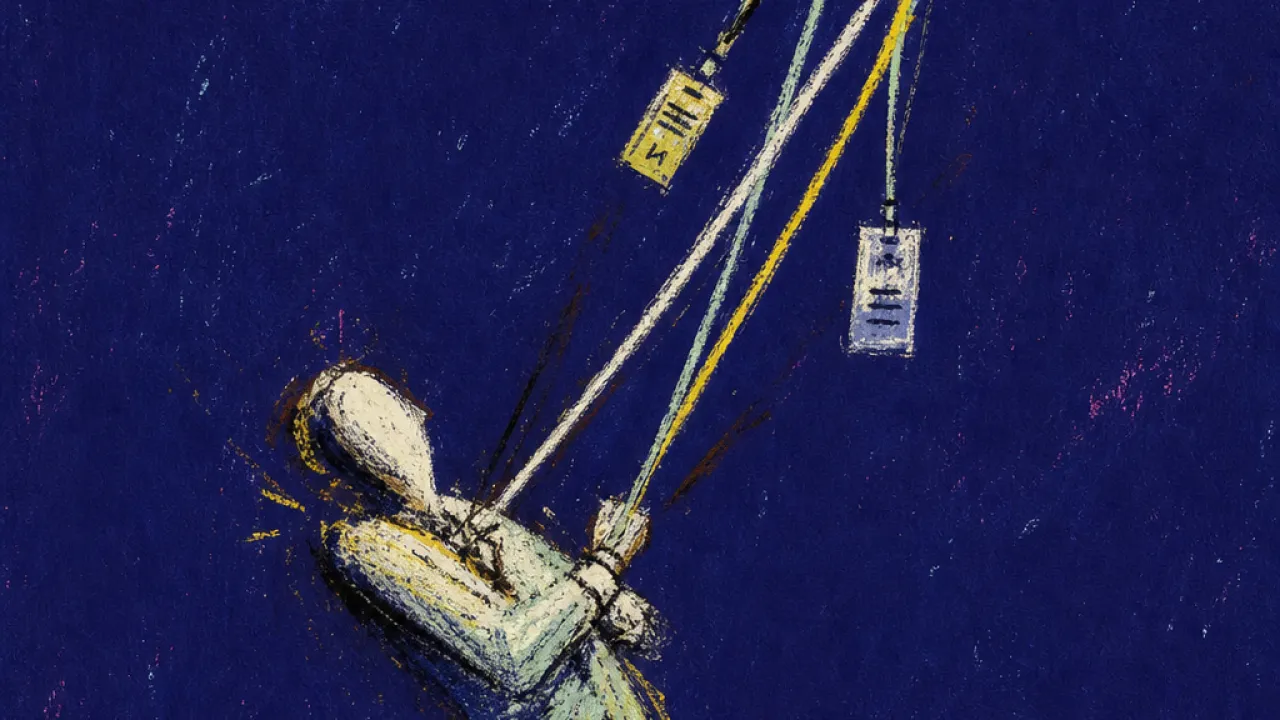
A solitary figure pulled toward an office doorway by taut badge cords, with pressure marks across the wrist and shoulders

What is this situation?

RTO Mandate Pressure — you get the email, the Slack announcement, or the all-hands slide that says everyone is expected back in the office three, four, sometimes five days a week, and the decision lands as if your commute, rent, caregiving schedule, sleep, disability access, focus time, and cost of living are just small details to absorb. Maybe you built your life around remote work because the job was sold that way, or because the last few years proved you could do the work without losing hours to trains, traffic, badge swipes, open-plan noise, and performative desk presence. Now the language is polished: collaboration, culture, visibility, alignment. But underneath it, the daily script changes fast. Your morning starts earlier, your evening ends later, your calendar fills with meetings that could have stayed on Zoom, and the office becomes a place where being seen can matter more than being effective. Managers start tracking attendance, senior leaders praise “face time,” people whisper about who is complying and who is pushing back, and every request for flexibility has to be justified like a personal exception rather than a reasonable work condition. You are not just going back to a building; you are being pulled into a power arrangement where the company controls more of your day, your body, and your attention, while calling that control normal. The pressure builds in ordinary moments: packing lunch because downtown prices are too much, checking transit delays before sunrise, sitting under fluorescent light while your best work still happens in silence, then arriving home with less time for the life that made the job sustainable. It feels less like a commute and more like being moved across water by someone else's oar, much like the cloaked figures in the Six of Swords, carried forward with the weight of upright blades in the boat and no clear say over the crossing.

Why it's not you?

The problem is not that you are difficult for noticing the cost of this mandate. A workplace that changes the terms of daily life while treating commute time, access needs, focus, and flexibility as personal inconveniences is placing the burden on employees. This pressure has a shape: policy from above, cost pushed downward, and compliance measured through presence.

Rto Mandate Pressure in Tarot Cards

RTO Mandate Pressure is not just about going into an office; it is the external reshaping of your commute, schedule, visibility, and access to flexibility. The body-level signal is there in the earlier mornings, later evenings, transit delays, fluorescent light, and the shoulder-level drag of losing hours before the work even starts. This is an environmental and structural dynamic: the building, the policy, and the attendance rules organize power around presence. The Tarot Cards below reflect the contours of that pressure without telling you what choice to make.

The Emperor
Reversed
The stone throne, concealed armour, rigid mountains, and symbols of command become an image of authority hardened against feedback when reversed. The RTO mandate follows that structure when senior leadership standardises attendance from above while remaining insulated from the commute, care, access, and housing consequences borne by employees. You are positioned as a subject of policy rather than a participant in workplace design. The reversed Emperor names the career risk inside that arrangement: managerial control expands into your time and body, while requests for flexibility are treated as challenges to authority instead of evidence about how the work functions best.
The Hierophant
Upright
The formal authority, kneeling acolytes, crossed keys, and repeated ceremonial gestures depict an institution that defines the legitimate way to participate. In career terms, RTO policy can make office presence the approved route to mentorship, recognition, promotion, and leadership trust, regardless of whether physical attendance improves the actual work. You may remain productive while becoming less legible to an organisation that rewards its preferred ritual. The Hierophant exposes the exchange beneath culture language: conformity grants access to institutional validation, while alternative working arrangements are cast as exceptions that must repeatedly prove their legitimacy.
The Chariot
Reversed
The reversed chariot, opposing sphinxes, and distant city turn forward movement into a conflict over direction. The mandate can make your longer career path dependent on whether you accept office-centred visibility, relocate closer to work, seek an exception, or leave, while the organisation frames only one of those directions as committed. You are not merely choosing a transport method. The reversed image reveals that professional direction and personal geography have been fused by policy, making it necessary to distinguish genuine career progress from movement demanded for institutional convenience.
Justice
Reversed
The scales, upright sword, and balanced pillars lose their stable alignment when the image is reversed. That inversion mirrors an employer changing remote or hybrid terms while excluding commute time, access needs, housing choices, and care arrangements from the calculation of what the change costs. You are still held accountable to performance and attendance, but the organisation is not equally accountable for the conditions it has altered. Reversed Justice reveals a one-sided ledger: policy authority remains centralised, employee costs are treated as private, and the language of fairness is replaced by nominal consistency.
The Devil
Upright
The chained figures, elevated pedestal, and looming central authority show a relationship in which material dependence supports control. The chains are visible and not impossibly tight, making the mechanism especially relevant to RTO pressure: salary, benefits, career continuity, and status can keep you compliant even when the new arrangement consumes more of your life. You are not weak for calculating what resistance could cost. The Devil names the employment bargain without disguising it as culture: the organisation controls valuable resources, then uses access to those resources to normalise greater control over your location, time, attention, and public display of commitment.
The Tower
Upright
The lightning strike, dislodged crown, falling figures, and burning tower show an established structure losing stability in a single visible event. An abrupt RTO email or all-hands announcement can function this way, instantly invalidating routines built around housing, caregiving, access, sleep, and remote-work expectations. You may be given an implementation date that treats this disruption as ordinary scheduling. The Tower reveals the true scale of the timing event: a policy announcement can collapse several linked arrangements at once, making the countdown itself part of the pressure while also exposing how dependent the old employment deal was on flexible location.
Two of Pentacles
Upright
The two pentacles looped inside an infinity symbol, the figure's uneven stance, and the ships rising and falling behind him show a routine kept functional through continuous adjustment. Under an RTO mandate, commute timing, office meals, childcare, rent, deadlines, and household work are not separate issues; they become one moving load that you must rebalance every office day. You may appear to be coping because the calendar still works and the tasks still get completed. The card exposes the hidden labour beneath that appearance: the policy stays fixed while you supply the flexibility, absorb each disruption, and keep multiple parts of life from falling at once.
Three of Pentacles
Reversed
The craftsperson, architectural plan, and two institutional figures cease to form a stable working triangle when reversed. The image fits an RTO mandate justified through collaboration while the people doing the work have little role in designing the conditions, and office days reproduce Zoom meetings, fragmented focus, or coordination problems rather than solving them. You may be physically present without being meaningfully consulted or enabled to contribute. The reversed Three of Pentacles separates collaboration from co-location: genuine coordination requires role clarity, usable space, shared design, and respect for expertise, while mandatory presence can supply only the appearance of teamwork.
Five of Pentacles
Upright
The two figures moving through snow outside a brightly lit institutional window make exclusion visible in bodily and material terms. One figure uses crutches while both remain outside the apparent shelter, closely mirroring an office policy that advertises culture and support while treating transport costs, disability access, and physical sustainability as private complications. You are asked to enter the workplace on standardised terms even when those terms carry unequal costs. The illuminated window helps name the contradiction: organisational resources are visibly present, but access to flexibility is filtered through managerial permission, documentation, and the expectation that you personally bridge every gap.
Six of Pentacles
Reversed
The scales, raised coins, and kneeling recipients become unstable when reversed, turning resource distribution into a picture of discretionary power. Under RTO, flexibility may be technically available but dispensed manager by manager, requiring employees to disclose private constraints and prove that they deserve an exception. You are placed below the decision-maker even when the requested arrangement previously supported strong work. The reversed Six of Pentacles reveals why individual accommodation does not correct the wider imbalance: the company retains the resource of flexibility, controls its distribution, and can attach gratitude, silence, or reduced visibility to receiving it.
Two of Swords
Upright
The blindfold, crossed swords, and rocky water behind the seated figure show a decision held in suspension because neither available side is cost-free. Under RTO pressure, complying may preserve income and visibility while damaging time, access, or caregiving stability; resisting may protect those resources while exposing you to managerial scrutiny or career risk. You are not facing a clean preference test between home and office. The crossed blades reveal a policy-created trade-off in which essential resources sit on both sides, while the blindfold reflects incomplete information about enforcement, exceptions, and the real consequences of refusal.
Six of Swords
Upright
The cloaked employees-in-metaphor sit among upright swords while another figure controls the boat and route. In the career ecosystem, the mandate is a forced transition in the employment deal: the work may remain recognisable, but location, visibility rules, daily costs, and access to advancement are being moved to a different shore. You can cooperate with a transition without pretending you designed it. The Six of Swords makes room to examine whether the crossing is temporary, negotiable, or a signal that the organisation's future model no longer fits the conditions under which you can do sustainable work.
Eight of Swords
Upright
The bound figure, blindfold, surrounding swords, and distant stronghold create a field of restriction maintained as much by controlled information as by physical barriers. RTO pressure can produce that structure when income dependence, attendance monitoring, vague disciplinary consequences, and exception-based approval make every alternative appear professionally dangerous. The swords do not form a sealed wall, which matters. The card does not claim that departure or resistance is easy; it reveals that the company's framing may be narrower than the actual option set, especially where policy language, manager discretion, collective response, and employment terms have not yet been separated.
Seven of Wands
Upright
The elevated figure, mismatched shoes, and six wands rising from below depict a position that must be defended against repeated pressure. In an RTO dispute, evidence of productivity, prior remote terms, access needs, and workable team practices can place you on defensible ground, yet each manager conversation or attendance check requires that ground to be argued again. You may look oppositional simply because the default policy has moved around you. The Seven of Wands reveals the labour of maintaining a reasonable work boundary inside a hierarchy that treats uniform compliance as neutral and any alternative as a special case requiring constant defence.
Ten of Wands
Upright
The worker carrying ten wands alone, with his view obstructed and destination still ahead, depicts responsibility accumulating without corresponding authority. RTO creates this career structure when leadership decides the policy but employees carry commuting time, attendance logistics, reduced focus, office expenses, care disruption, and the same performance targets. You may keep delivering, which can make the expanded load invisible to decision-makers. The Ten of Wands exposes that success as a misleading metric: continued output does not prove the policy is sustainable, only that you are currently absorbing costs the organisation has chosen not to count.

Rto Mandate Pressure in Tarot Card Reading Insights

When RTO Mandate Pressure turns work into a fight over time, visibility, and control, many people bring that exact workplace tension into readings. These readings shift from the cards themselves into how others have sat with similar office-return pressure. Tarot Reading Insights from related sessions.
Psychological Contexts Related to Rto Mandate Pressure