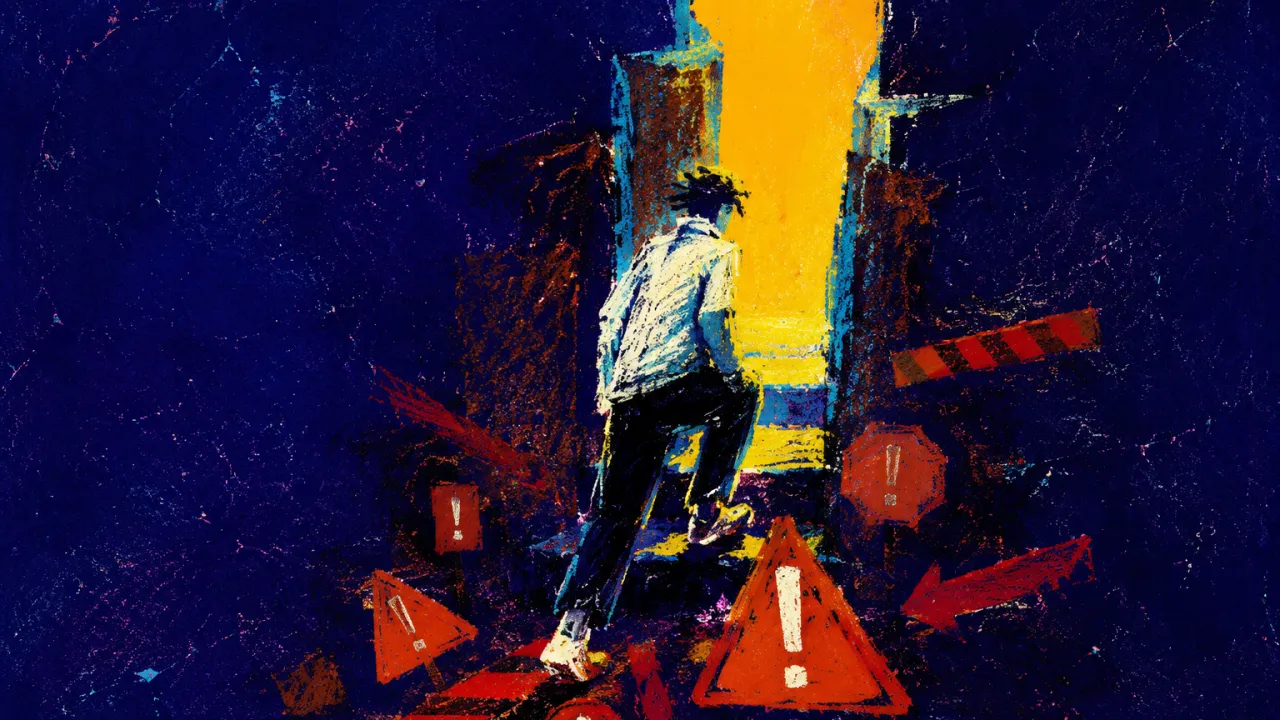
Ignored Red Flags is the kind of situation where the warning signs are already in the room, but the pace of the connection, offer, or decision keeps making them easier to treat as background noise. That tight check in your body when a message, delay, vague answer, or boundary slip repeats is not random; it is your system registering the same external pattern again. This is an environmental, structural dynamic: the situation is organized so momentum, attraction, pressure, or promised payoff keeps outrunning the evidence. The Tarot Cards below reflect the visible shape of that dynamic without telling you what to choose.
The Fool ReversedThe small white dog jumps at the traveler's heel while the foot keeps moving toward the cliff. The warning is part of the scene, close to the body, and still not integrated into the direction of travel. For introspective work, this is the external texture of ignored red flags: feedback exists, but the pace of the situation keeps outrunning the pause it requires. Friends, timing friction, repeated misalignment, or practical warnings may be functioning like the dog at the heel, present enough to notice but not yet strong enough to redirect the step. The card gives the warning a visible body. It asks for a reality audit of what has already been signaled, rather than another search for reassurance after the edge has been crossed.
The Lovers ReversedThe serpent is visible in the image, coiled beside the fruit-bearing tree, yet the human attention does not gather around it. One figure looks across, the other looks upward, and the warning sits in the side channel of the scene. Ignored Red Flags fits when external cues are already present but the social field keeps attention elsewhere: chemistry, approval, potential, or the wish for a cleaner story. The card does not make the warning dramatic; it shows how ordinary misdirection can be enough. For introspection work, this context matters because the blind spot is not purely internal. The situation is supplying mixed signals, and the task is to separate what is actually being shown from what the surrounding narrative encourages you to excuse.
Strength ReversedThe lion's teeth, claws, and disturbed ground are visible, even though the central figure handles them with grace and the flowers soften the frame. The image does not erase risk; it shows risk made aesthetically manageable. In a dating context, that structure matches ignored red flags because the warning signs may be present inside otherwise compelling chemistry. You are being shown how beauty, charm, or tenderness can make a sharp edge look negotiable before the relationship has earned that level of trust.
The Devil ReversedThe downward torch hangs close to the raised tail, and the collars are plainly visible on both necks. Nothing in the image hides the risk markers; the warning signs are built into the surface of the scene. The problem is not invisibility, but normalization under pressure. In a decision reading, this points to the moment when the body of evidence is already present, but chemistry, urgency, status, fear of loss, or a promised reward keeps making the signs look negotiable. The card gives the red flags a concrete location so You can separate the signal from the incentive system asking You to overlook it.
The Tower ReversedSmoke and flame are already coming from the tower's windows before the figures reach the ground. The image makes the warning signs physical: pressure has been escaping through visible openings, but the tower's height and sealed walls keep the occupants cut off from ordinary feedback. In reversed form, this card points to the period before full rupture, when You can still explain away the heat. The red flags may appear as recurring burnout signals, body-level resistance, shame after certain choices, or the same private thought returning every time the public story gets repeated. Ignored Red Flags belongs here because the card shows the cost of delayed recognition. It gives You a structural mirror: the warning signs are not random noise, but data leaking from a system that has been asking for inspection before it has to break open.
The Moon UprightThe dog and wolf stand at the road's entrance with raised bodies and open mouths, while the path still continues into the distance. The warning signal is visible at the exact point where the traveler would be tempted to keep going. That image fits the dating moment when concrete signs are already present but the low light of attraction makes them look negotiable. You can see inconsistency, avoidance, secrecy, or mismatch, yet the uncertain road keeps promising that more context might explain it. The Moon does not turn every warning into a final verdict. It exposes the social cost of treating visible signals as atmosphere instead of data.
The Sun ReversedThe flag is literally red, but it waves inside a scene so bright and celebratory that its warning quality can be swallowed by the larger glow. The horse's forward motion without reins adds momentum before there is visible steering. In a dating context, that combination maps onto clear signals being present while chemistry, optimism, or public excitement makes them easy to minimize. The structure does not shame hope; it shows how a bright atmosphere can reduce your ability to separate aliveness from evidence.
Four of Cups ReversedThe cups are not hidden; they are placed directly before the seated figure. His eyes are closed inside the shade of the tree, creating a pocket of attention where visible evidence can be kept outside conscious engagement. In a relationship, this becomes the pattern of seeing enough to know something matters, then retreating into private explanation, hope, or delay. The red flags are not dramatic shocks; they are repeated cups in the foreground, small pieces of evidence that accumulate while the body refuses to reorient. The Four of Cups links this context to selective non-reception. It asks what has already been shown, what has already repeated, and what part of the relationship depends on not looking directly at the pattern.
Five of Cups UprightThe overturned cups in the foreground are not subtle. They are visible evidence: containers out of position, liquid already spilled, the ground marked by what the relationship event has released. Ignored Red Flags belongs here because the Five of Cups shows warning signs after they have become material consequences. In love, those signs may look like repeated disappointment, broken follow-through, mismatched effort, or a pattern that becomes obvious only once something has already spilled. The card does not shame you for missing the signs. It gives the signs a shape, separating the visible damage from the remaining resources so you can evaluate the relationship field without forcing everything into either total loss or total denial.
Seven of Cups ReversedThe laurel wreath promises victory, yet a skull rests beneath it, and sharper symbols sit among the attractive cups rather than outside the offer. The warning is not separate from the prize; it is embedded inside the thing that looks most rewarding. That visual logic fits the relationship moment when concerning behavior is visible but wrapped in charm, chemistry, or future promise. The card links this context to the work of seeing the whole cup at once, including the cost hidden under the beautiful symbol.
Seven of Swords ReversedThe two upright swords remain in plain view, planted like a checkpoint at the edge of the camp. They are not hidden clues; they are visible structures that the moving figure must pass by. In love, this describes the moment when inconsistency, secrecy, disrespect, mismatched effort, or unclear intentions have already appeared in the open. The relationship may still be moving, but it is moving around signs that have not been integrated into a real decision. The backward glance captures the key tension. You have seen enough to register the pattern, yet the momentum of the connection can keep pulling the story forward. The card helps separate hope from evidence so the warning signs become data, not background noise.
Ten of Swords ReversedThe ten swords form a sequence, not a mess. Their order suggests that the final consequence was built through a chain of signals, each one easier to read after the body has already been stopped. Ignored Red Flags belong to decision work because the problem is often not a lack of signs, but a structure that made the signs inconvenient to accept. You can use the card to reconstruct the sequence without self-attack, locating which warnings were external facts, which were social pressure, and which were costs hidden by the desire for the option to work.
Nine of Wands ReversedThe figure's gaze is already turned toward the side, as if the threat has a familiar direction. The wands are arranged around a weak point, and his body stays stationed on the same flat ground rather than moving into the open landscape behind the fence. In dating, this becomes the moment where warning signs are not invisible; they are being monitored. You may already know the pattern in their inconsistency, defensiveness, secrecy, pacing, or emotional availability, but the relationship keeps placing you back at the same watch post. The Nine of Wands links to ignored red flags because it shows vigilance without exit. The issue is not lack of perception; it is the structural pull of staying close to a dynamic that has already trained you to prepare for impact.
No cards available for this filter.