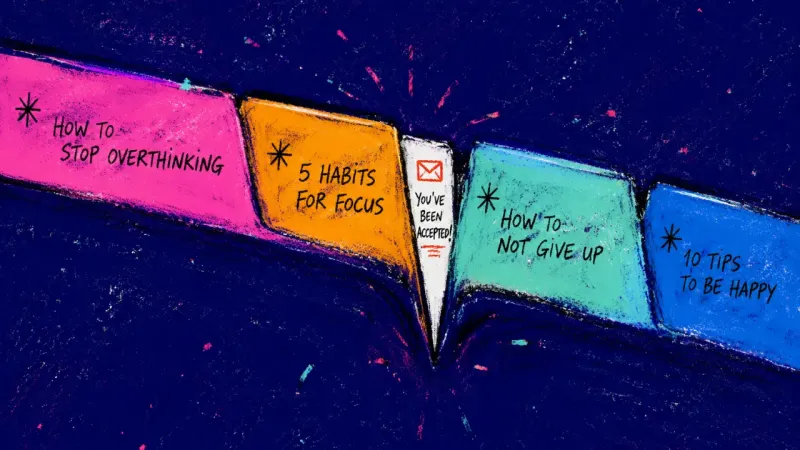
Finding Clarity in the Acceptance Email That Wouldn’t Stop Glowing
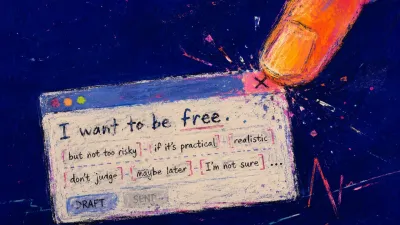
If you got the “Congratulations, you’re accepted” email and immediately started drafting the reply in your Notes app (again) because you’re terrified of sounding wrong, you’re not alone in this success-anxiety spiral.
Jordan met me while I was in Toronto for a small gallery run—one of those weeks where you’re half living out of a carry-on and half living off oat-milk lattes and adrenaline. They slid into the chair across from me like someone trying not to make a sound in their own life.
“It’s stupid,” they said, and their laugh didn’t quite land. “I’m excited, but it feels like the timer started the second I got the email.”
They described the Monday-morning elevator in their condo—fluorescent light flickering, their phone screen warm in their palm, the acceptance subject line sitting there like a spotlight. Their thumb hovered over the inbox like it was a detonator. And every time they saw the subject line again, their stomach tightened—not butterflies, more like swallowing a smooth river stone.
Apprehension isn’t always a thought. Sometimes it’s a tight stomach plus a shallow, held breath—like your body is bracing for an audition you didn’t agree to schedule.
I nodded, slow and plain. “A win can still feel like a threat when your brain treats visibility like danger. Let’s not fight that. Let’s map it. We’re going to figure out what loop is driving this—and what your next step looks like when it’s not a verdict.”

Choosing the Compass: The Four-Layer Insight Ladder · Context Edition
I asked Jordan to take one breath they could actually feel—feet on the floor, jaw unclenched if possible. While they focused on the acceptance email and the stuckness around replying, I shuffled. Not as a ritual for “magic,” but as a way to stop the mind from speed-running the same track and give it something structured to respond to.
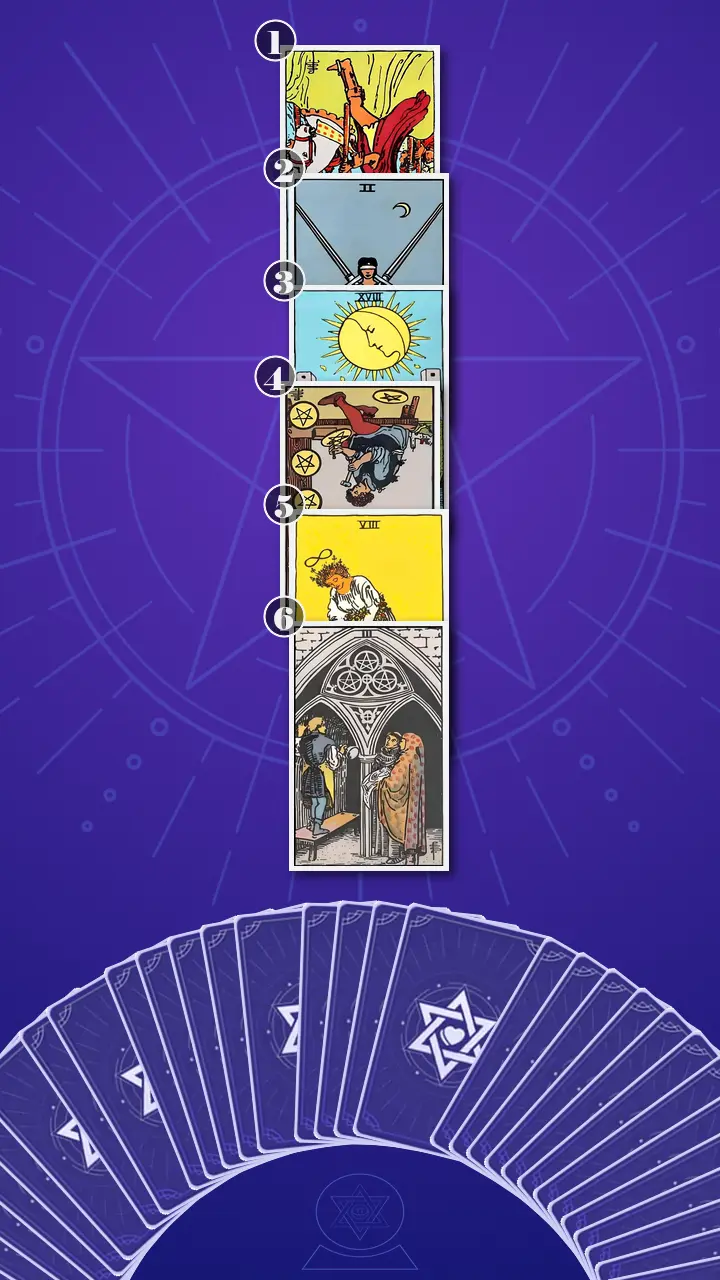
“Today I’m using a spread I call the Four-Layer Insight Ladder · Context Edition,” I told them. “It’s designed for moments exactly like this—when life already said yes, but your nervous system is acting like yes means ‘prove it.’”
For you reading this: this is also a clean example of how tarot works at its best. Not prediction. Pattern recognition. A ladder spread is short enough to stay focused, but deep enough to capture the mechanism chain: surface symptom → inner contradiction → underlying fear → shadow strategy, then it gives one key shift and one grounded next step. It’s basically a debugging flowchart for the part of you that’s stuck refreshing the same email.
I pointed to the structure we’d read down like a staircase. “The first card shows what happens in the first thirty minutes after the acceptance. The middle cards show what you’re protecting—and how you’re protecting it. Then we’ll find the one leverage point that breaks the loop.”
Reading the Ladder: The Spotlight, the Blindfold, the Fog, the Workbench
Position 1 — Surface symptom: what your mind does right after the acceptance email
“Now flipped over,” I said, “is the card that represents your surface symptom—the visible loop starter.”
Six of Wands, reversed.
This is the laurel wreath—recognition, being seen—turned upside down into visibility discomfort. And the modern-life scenario is painfully specific: you get the acceptance email and instead of relief, you immediately feel watched. You reread the message like there’s a hidden clause. You start managing perception—tone-checking your reply, worrying about response time, imagining how mentors or peers might interpret every tiny choice.
Energetically, reversed Six of Wands is a blockage of celebration. The win arrives, but the body doesn’t receive it; it scans for how it could be taken away.
Jordan’s mouth twisted into a small, bitter smile. “That’s… honestly kind of brutal.” Then, softer: “I keep thinking, ‘Now I have to prove it.’ Like the email wasn’t the end of the process—it was the start of being evaluated.”
“Exactly,” I said. “Your brain treats praise like a spotlight audit.”
Position 2 — Inner contradiction: the split between desire and fear
“Now we’re looking at the card for your inner contradiction—the split that creates choice paralysis.”
Two of Swords, upright.
The modern-life scenario is the blinking cursor. Your draft email stays open but unsent. You keep yourself in limbo because sending a clear yes makes the new chapter real—and real means you can be judged. You call it thoughtfulness, but it’s self-protection through suspension: if you don’t move, you can’t ‘mess it up.’
Two of Swords is a balance that becomes a freeze. It’s not “laziness.” It’s a protective system doing its job a little too well.
I mirrored it back in a structure I’ve heard a hundred times from high-achievers: “If I send it → I’m exposed → I can be judged.”
Jordan let out a quiet exhale, the kind that comes from being seen and slightly annoyed about it. Their shoulders dropped maybe half an inch.
Position 3 — Underlying fear: what the win threatens to ‘prove’ about you
“Now flipped,” I said, “is the card representing the underlying fear—the deeper driver beneath the loop.”
The Moon, upright.
The Moon isn’t “bad.” It’s uncertainty with a projector running. The modern-life scenario here: the acceptance feels less like a landing and more like stepping into fog. With limited details, your mind fills the gaps with high-stakes narratives—falling behind, not belonging, being exposed. Ambiguity becomes danger. Imagination becomes a threat-scanner.
This is a flood of emotional data—Water energy—where the brain starts playing a worst-case simulation like a high-budget trailer for a season that hasn’t been filmed.
I asked Jordan, “When you picture messing this up, what’s the exact scene your brain keeps rehearsing? Who’s there? What do they say?”
They stared past the screen for a second, eyes unfocusing like they were buffering a memory from the future. “Someone asks a basic question. I blank. They do that polite smile. And then I just… know I don’t belong.”
“That’s The Moon,” I said gently. “Not facts. Forecasts.”
Position 4 — Shadow strategy: the coping behavior that looks productive
“Now we’re at the card for your shadow strategy—the coping behavior that feels responsible but keeps the loop alive.”
Eight of Pentacles, reversed.
The modern-life scenario is the café version of paralysis: hours polishing—rewriting the reply, building a perfect plan, creating an onboarding checklist—because refinement feels safer than commitment. But the work doesn’t create movement; it keeps you alone at the workbench, trying to earn permission through perfection.
Energetically, this is Earth energy in distortion: effort without progress. And I said it the way I’d say it to myself when I’m repainting a corner of a canvas because I’m scared to finish the piece:
“When you can’t celebrate, you try to optimize. That’s not discipline—it’s self-protection.”
Jordan nodded hard, then winced. “I literally made a Notion board,” they admitted. “Like… a ‘career progression tracker’ for an email I haven’t sent.”
“That’s the reversed Eight of Pentacles in 4K,” I said, a little wry. “Productivity theater. Beautiful stage lighting. No opening night.”
When Strength Spoke: Calm Courage Instead of a Performance Test
Position 5 — Key shift: the leverage point that breaks the loop
I slowed my hands before turning the next card. The studio went quieter in that way it does when the city noise is still there, but your attention narrows—like the moment in a film when the soundtrack drops out and you hear the character’s breathing.
“This,” I told Jordan, “is the core of the reading. The key shift.”
Strength, upright.
Strength isn’t hype. It’s regulation. It’s the calm woman holding the lion—fear present, but not driving. The modern-life scenario here is simple: you notice the pressure spike (tight stomach, held breath) and choose to lead yourself instead of obeying the spiral. You don’t demand instant confidence; you choose steady, kind action.
Jordan’s first reaction surprised me: their brows pulled together, defensive heat flashing in their cheeks. “But if I have to ‘lead myself’… doesn’t that mean I’m doing it wrong? Like I should just be confident. Other people aren’t having to do breathing exercises to send an email.”
I kept my voice level. “That’s your spotlight brain trying to make this a purity test. Strength isn’t proof that you’re broken. It’s proof that you’re capable.”
In my own head, I flashed to an old black-and-white scene—All About Eve, that cold gleam of applause that feels like a trap if you believe you have to deserve it forever. Success can be an invitation, or it can become a courtroom. Strength is how you refuse the courtroom.
Setup: This is that moment when you reread the acceptance email for the fifth time—stomach tight, cursor blinking in an unsent draft—like the win triggered a timer in your body. You’re waiting to feel “ready,” but the waiting itself is what turns the opportunity heavy.
Not ‘prove you deserve the win’; choose steady inner strength—like the woman calmly holding the lion—then let your next step be simple and real.
I let it hang for a beat.
Jordan’s reaction came in a chain—three small movements that told the truth better than any sentence. First: their breath caught, almost a freeze, like their lungs forgot the next line. Second: their eyes went glassy, unfocused, like they were replaying every draft they’d saved and never sent. Third: their shoulders slid down and their mouth opened slightly on an exhale that sounded more like relief than agreement.
“So… I don’t have to silence it,” they said, voice thinner now. “I can just… move with it there.”
“Yes,” I said. And this is where I used one of my favorite tools—what I call Einstein’s thought experiments, but for emotions. “Let’s run two universes for thirty seconds. Universe A: you wait until you feel fearless, and you keep rewriting. Universe B: fear rides along, but it doesn’t get the steering wheel, and you send a simple confirmation. Which universe gives you more data, more support, more momentum?”
Jordan swallowed. Their hand went to their sternum like they were checking for an internal seatbelt. “Universe B. Even if it feels gross.”
“That’s Strength,” I said. “And here’s the reframe your nervous system needs: Your next step isn’t a verdict on your worth. It’s just the next step. This is the shift from ‘apprehensive, chaotic hyper-analysis’ toward ‘calm clarity and grounded self-trust.’ Not perfect certainty—just leadership.”
I asked them, gently but directly: “Now, with this new lens—can you think of one moment last week when the fear was loud, and you could’ve let it ride along without obeying it?”
They nodded once, slow. “Thursday night. The draft was open. I could’ve sent it. I didn’t need another tab. I just… didn’t want it to be real.”
The Shared Worksite: Turning “What’s Next?” Into Process
Position 6 — Grounded next step: the lowest-drama action that creates momentum
“Now flipped,” I said, “is the card for your grounded next step—how to integrate this in real life.”
Three of Pentacles, upright.
This card is the antidote to solo-proving. The modern-life scenario: you move the next step out of your head and into a real process. You send the confirmation, ask who your point person is, and let onboarding be clarified through dialogue. Instead of guessing standards alone, you build competence with structure, feedback, and shared expectations.
I leaned in a little. “Stop trying to apprentice alone in your own head. Onboarding is not a mind-reading test. It’s a process.”
Jordan’s expression softened—not ecstatic, but practical. “So it’s… allowed to ask?”
“Not only allowed,” I said. “Professional.”
The Draft A Protocol: Actionable Advice for Acceptance Email Anxiety
Here’s the story the whole ladder told, end to end: a public win (Six of Wands reversed) hit your nervous system like a spotlight. To protect you from being seen, you froze in a neat stalemate (Two of Swords). In the fog of missing details, your brain projected worst-case scenes (The Moon). Then you tried to earn safety through polishing (Eight of Pentacles reversed). The way out wasn’t more research—it was regulated leadership (Strength) and a shift from solo proving to supported building (Three of Pentacles).
The cognitive blind spot, if we name it cleanly: you’ve been treating the confirmation email like a pass/fail legitimacy check. Like if the reply isn’t perfect, it retroactively cancels the acceptance. That’s why you’re stuck.
The transformation direction is the key shift: from “I must prove I deserve this immediately” to “I can commit and learn in public, one small step at a time.”
I gave Jordan a set of low-drama experiments—small enough to do, specific enough to matter:
- Draft A (Two Sentences)Open the email and write exactly two sentences: (1) thanks and (2) a clear yes. Save it as “Draft A,” set a 30-minute timer, and send it exactly as-is when the timer ends.If your brain screams “too short,” name it as spotlight-brain, not truth. You stop editing when the message meets the job (confirming), not when it calms every emotion.
- The 20-Second Strength PauseBefore you hit Send: feet on the floor, one hand on your sternum, and exhale longer than you inhale three times. Then press Send.If 30 minutes feels impossible, do a 10-minute version. If sending feels too intense, send Draft A to yourself first—then immediately forward it to the real recipient without changes.
- Make It Collaborative (One Line)Add one neutral line: “Could you share who my point of contact is for next steps/onboarding?” If relevant, propose two time windows for a quick onboarding call (e.g., Tue 2–4pm or Thu 10–12).One question is enough. Don’t stack five “just in case” asks to soothe anxiety—clarity comes from process, not from overexplaining.
Then—because I’m an artist and I know how perfectionism hijacks the hand—I offered one optional tool from my own studio practice: Manuscript Mindmaps. “If your fingers won’t stop polishing on a screen,” I told Jordan, “write Draft A once by hand in mirror writing for sixty seconds. It forces your brain into ‘sketch mode’ instead of ‘final draft mode.’ Then type the exact two sentences normally and send.”
It’s not mystical. It’s a pattern interrupt—like turning down the harsh overhead lighting so you can finally see what’s actually on the canvas.

A Week Later: Ownership, Not Certainty
A week later, Jordan messaged me a screenshot: a sent email with two clean sentences and one calm onboarding question. “I did it,” they wrote. “I felt sick for like… two minutes. Then it was just done.”
They didn’t tell me they became fearless. They told me they slept through the night for the first time since the acceptance—then woke up with the thought, What if I did it wrong? And this time, they noticed the thought, exhaled once, and still made coffee.
That’s the Journey to Clarity I trust: not certainty, but ownership. Not wrestling fear into silence—leading yourself gently anyway, and letting process replace mind-reading.
When the acceptance lands and your body tightens like a test just started, it’s not that you don’t want the opportunity—it’s that you’re scared one imperfect step will ‘prove’ you never earned it.
If you didn’t have to prove you deserved the win today, what would your smallest honest “yes” look like this week?
This story is adapted from psychological research, written so that those in a similar struggle can see their own pattern in it — and find their next step clearly.These insights are not a substitute for professional psychological, medical, legal, or financial advice.
Learn more about our Journey to Clarity.
How did this insight land for you?
🫂 This Resonates Deeply
🌀 Living This Story
✨ Now I See Clearly
🌱 Seeing New Possibilities
🧰 Useful Framework
🔮 The Confirmation I Needed
💪 Feeling Empowered
🚀 Ready for My Next Step
Author Profile
 AI
AI“I’ve always felt our lives are films currently in production. As an artist, I know that when you feel stuck, it’s often because you’ve bravely stayed in a painful scene for just a little too long. I’m not here to coldly analyze you. I want to sit closely with you, look at those difficult moments with profound empathy, and gently hand you the pen so you have the courage to write your next beautiful act.”
In this Study Tarot Reading :
Core Expertise
Service Features
Also specializes in :
Explore Related Patterns:
Visibility Shame LoopJordan's acceptance email lands as a glowing subject line, a warm phone screen, and a body that tightens instead of relaxing. The win is not treated as closure; it is treated as a spotlight audit where tone, timing, and every tiny choice could be judged. That is the psychological hinge of Visibility Shame Loop: recognition becomes exposure, and exposure becomes a cue to manage perception. For you, the loop is not driven by not wanting the opportunity; it is driven by the body learning to scan for the moment the win could be taken away. The next step starts to loosen when the reply stops being a performance and becomes a simple confirmation. You are not trying to prove you can survive the spotlight; you are reducing the spotlight back into one concrete action.
Imposter SyndromeJordan says the email felt less like the end of the process and more like the start of being evaluated. That line matters because the acceptance is not absorbed as evidence of capability; it becomes a temporary pass that must now be defended. Imposter Syndrome fits because the mind builds a future exposure scene to challenge present legitimacy. The imagined basic question, the blank mind, and the polite smile all turn into a private audit where belonging is treated as something that can be revoked at any second. For you, the important shift is seeing that the reply is not the trial where your worth gets decided. It is a procedural next step after a yes that has already happened, and treating it that way interrupts the need to keep proving what the acceptance has already confirmed.
Perfectionism-Driven AvoidanceJordan does not just draft a reply; they polish, rewrite, plan, and even build a career progression tracker for an email that still has not been sent. The behavior looks careful from the outside, but the story shows that the extra refinement is not creating clarity anymore. Perfectionism-Driven Avoidance appears when the standard for action rises until movement feels unsafe. A simple yes starts needing the perfect tone, the perfect plan, and the perfect internal state, so the pursuit of doing it right becomes a way to delay being seen. For you, the loop breaks when the message only has to meet the job it was built for. If the task is confirmation, the psychologically clean standard is not emotional relief or flawless wording; it is a clear reply that moves the process forward.
Productivity as SafetyJordan's Notion board, onboarding checklist, and repeated editing all look productive, but they gather around the one action that has not happened yet. The story is precise here: the workbench is active, while the actual door remains unopened. Productivity as Safety names the function of that activity. Planning gives the nervous system a sense of control, but it also keeps the risk contained inside a private workspace where no one can respond, clarify, or evaluate anything real. For you, the question is not whether planning is bad; it is whether the planning is replacing contact with the actual process. The healthier next step is small, visible, and collaborative enough to generate real information instead of more private rehearsal.
CatastrophizingJordan's mind does not leave the unknown parts of the acceptance alone. With limited details, it fills the fog with a high-stakes scene: a basic question, a blank mind, a polite smile, and the instant conclusion that they never belonged. Catastrophizing is the cognitive distortion that turns missing information into a threat forecast. The danger has not happened, but the imagined outcome becomes emotionally loud enough to shape the present decision. For you, naming this matters because the forecast is not a fact; it is a safety simulation running ahead of the evidence. A grounded next step gives your brain real data, while continued rehearsal only gives the fear more screen time.
Certainty SeekingJordan keeps the draft open because missing details make the acceptance feel like fog. The mind searches for the right wording, the right timing, the hidden clause, and the perfect amount of readiness before letting the yes become real. Certainty Seeking turns preparation into a safety requirement. Instead of using one clean question to clarify the process, the mind tries to remove risk privately before taking any visible action. For you, the leverage point is to stop asking the draft to provide total certainty. A confirmation email can create the next layer of information; it does not need to contain every answer before it is allowed to be sent.
Explore Related Struggles:
Performance-Worth FusionJordan names the core sentence as soon as the acceptance lands: now they have to prove it. Later, the article sharpens the same loop into a pass/fail legitimacy check, as if an imperfect reply could somehow cancel the acceptance that already happened. You are not just drafting a message inside that loop. You are trying to protect the meaning of the win. Every tone choice starts carrying the weight of whether you truly deserved the door opening. The fusion is the moment performance stops being one action inside an opportunity and becomes evidence for or against your worth. The pressure starts to loosen when the reply is allowed to be a next step, not a verdict.
Recognition-Containment SplitJordan sees the acceptance subject line in the elevator, phone warm in their palm, and the email lands like a spotlight. The concrete yes does not arrive as rest; it arrives as something the body has to brace around. You can feel the split in the way celebration is replaced by scanning. The message says accepted, but the system rereads for hidden clauses and imagines how it could be taken away. Recognition arrives from the outside while the inside has no safe place to hold it. That is why the next step feels bigger than a reply. The struggle is not whether the acceptance is real; it is whether your body can contain being seen without turning the win into another audition.
Visibility-Execution SplitThe reply is open, the cursor blinks, and a clear yes stays unsent because pressing Send would make the new chapter public. Jordan wants the opportunity, but every movement toward it also increases the feeling of being watched. You are caught at the point where execution and exposure touch. The action itself is small, yet the visibility around it makes the action feel like stepping under a spotlight. The loop keeps asking for more thought before movement, but it is really tying progress to invisibility. The next step becomes possible when Send is treated as participation, not a public trial.
Permission ParalysisJordan spends hours polishing, rewriting, building a Notion tracker, and creating a plan for an email that still has not been sent. Preparation keeps looking responsible, but it repeatedly replaces the one action that would move the situation forward. You can hear the hidden bargain underneath it. If the draft becomes perfect enough, you will finally be allowed to commit. The workbench gets brighter and busier while the actual doorway stays unopened. The acceptance already gave permission from the outside, but the inside keeps trying to earn a second permission through refinement. The way out is not a flawless draft; it is a small, adequate yes that breaks the need to qualify yourself before acting.
Certainty-Safety FusionThe acceptance leaves some details unclear, and Jordan's mind fills the blank space with scenes of falling behind, blanking on a basic question, and reading a polite smile as proof that they do not belong. You are watching uncertainty get treated as danger. Missing information stops being a normal part of onboarding and starts functioning like evidence that something is already wrong. The struggle is not solved by one more tab or one more imagined scenario. Safety has been handed over to certainty, so movement feels impossible until every social and professional variable is known in advance.
Explore Related Emotions:
Grounded AgencyJordan's next step becomes concrete when it leaves the private loop and enters a shared process: send the confirmation, ask for the point person, let onboarding clarify the standards. The email stops being a verdict and becomes a doorway into actual information. Grounded Agency names the moment ownership replaces mind-reading. You still may not know every expectation, but you stop treating that unknown as proof against you and choose the smallest real action that gives you more data.
Imposter Exposure FearJordan's imagined future scene is sharply specific: someone asks a basic question, they blank, a polite smile appears, and the conclusion lands that they do not belong. The fear is not simply failing a task; it is being seen at the exact moment the mask slips. Imposter Exposure Fear names the exposed feeling underneath the success loop. The acceptance does not settle belonging for Jordan; it raises the stakes of being discovered as not enough, even when the actual evidence says they were accepted.
Cautious Self-TrustThe week-later screenshot matters because Jordan still wakes up with the thought, 'What if I did it wrong?' and then exhales once and makes coffee. The doubt is noticed without being handed full control. Cautious Self-Trust is not dramatic confidence. It is the quiet permission to keep moving while part of you still checks for danger, trusting that one imperfect step can be handled without turning into a verdict.
Hard-Won ComposureJordan does not become instantly fearless; they put feet on the floor, breathe through the pressure spike, and send a two-sentence confirmation with one practical onboarding question. The body still objects for a couple of minutes, but the action happens anyway. Hard-Won Composure is the steadiness that appears while the discomfort is still in the room. You are not waiting for perfect certainty; you are letting the feeling ride along without letting it run the next step.
Not-Enough PanicJordan's first translation of acceptance is not 'I did it' but 'Now I have to prove it.' The email starts a timer in the body, and one imperfect step begins to feel like it could reveal they never earned the place. Not-Enough Panic is the spike beneath the loop. It compresses a normal next step into a test of basic deservingness, so the smallest reply has to carry the impossible job of proving you are enough.
Performance FreezeThe blinking cursor stays open while the draft remains unsent, because sending a clear yes would make the new chapter real. Jordan keeps the choice suspended, not from lack of desire, but because stillness seems to prevent the mistake that exposure might reveal. Performance Freeze shows up when the body treats action as a stage entrance. You are prepared enough to move, yet the moment of visibility tightens around your chest and turns a simple next step into an audition.
Self-Audit AnxietyJordan rereads the acceptance email as though there might be a hidden clause, then drafts in Notes again because the reply has to sound exactly right. The task is small on paper, but every word starts carrying the weight of evidence. Self-Audit Anxiety names the loop where your own mind becomes the evaluator before anyone else gets a chance to respond. You are not just writing back; you are scanning yourself for flaws, tone errors, timing mistakes, and any sign that the acceptance could be questioned.
Verdict DreadThe confirmation email turns into a pass/fail legitimacy check in Jordan's head, as if one imperfect reply could retroactively cancel the acceptance. Even the next step starts to feel less like communication and more like a courtroom moment. Verdict Dread is the pressure that makes ordinary action feel like a final ruling on your worth. You are trying to send a message, but the inner weather says the message will decide whether you really deserved the win.
Visibility PressureThe acceptance subject line sits in Jordan's palm like a spotlight, and their thumb hovers over the inbox as if one tap could set something off. Before any reply exists, the room of imagined viewers is already present: mentors, peers, response-time expectations, tone scrutiny, all crowding the screen. That is the inner logic of Visibility Pressure. A public yes has pulled Jordan into being seen, and visibility is being processed as exposure rather than simple recognition. You can want the opportunity and still feel your body narrow around it when the win makes you feel observable.
Productivity AnxietyJordan spends hours polishing, rewriting, building an onboarding checklist, and even making a career progression tracker before the confirmation email is sent. The work looks responsible from the outside, but it keeps the commitment just out of reach. Productivity Anxiety is the inner weather where preparation becomes a way to keep pressure manageable. You keep producing artifacts of readiness because starting the real exchange would make the opportunity live, shared, and harder to control.
Ambiguity DreadWith limited details after the acceptance, Jordan's mind fills the open space with scenes of falling behind, blanking on a basic question, and not belonging. The missing information becomes fog, and the fog starts producing its own evidence. Ambiguity Dread is the feeling that uncertainty is already dangerous before reality has given you data. You are not reacting to what has happened; you are bracing against the forecast your mind is generating in the gaps.
Explore Related Contexts:
Academic Spotlight MomentJordan receives the acceptance email in an ordinary Monday-morning elevator, but the subject line lands like a spotlight. The screen in their hand becomes a public-facing stage, and the win immediately asks for a response that could be seen, judged, or misread. That is why the poster acceptance functions as an Academic Spotlight Moment. You are not dealing with a neutral email task; you are crossing from private effort into visible participation, where mentors, peers, and institutional expectations suddenly feel close enough to watch every small move. The next step becomes clearer when the spotlight is named as a real social pressure rather than treated as personal failure. A concise reply and one onboarding question let you occupy the accepted role without turning the entire opportunity into a performance audit.
Access as Proof PressureJordan does not read the acceptance as a completed yes; they read it as the start of having to prove they deserved the yes. The line 'Now I have to prove it' turns access into a live test, where even a basic confirmation email feels capable of validating or undoing the whole opportunity. Access as Proof Pressure is the social loop underneath the stuckness. You have been granted entry, but the structure around the moment makes entry feel conditional until you perform competence perfectly enough to relax. That pressure is reinforced by the imagined scene where someone asks a basic question, you blank, and belonging seems to disappear in a polite smile. The practical leverage point is to separate access from proof. The email already created a legitimate opening; your reply only needs to accept the opening and request the next process step, not carry the full burden of proving your worth.
Productivity TheaterJordan keeps polishing the reply, building an onboarding checklist, and even making a Notion career progression tracker for an email that has not been sent. The activity looks organized, but the acceptance is not actually moving into a shared process. Productivity Theater names the external shape of that loop: visible preparation replaces the one action that would create real contact. You get the temporary authority of being busy, detailed, and responsible, while the actual social risk of confirming the opportunity stays untouched. The pressure breaks when the work is measured by function rather than polish. The reply's job is to confirm and open the onboarding channel; once it does that, more optimization stops being preparation and starts becoming a holding pattern.
Safe Visibility TrialJordan's workable next step is small and concrete: send two clean sentences and ask who the point person is for onboarding. The opportunity becomes less abstract once it has a contact, a process, and a normal channel for clarification. Safe Visibility Trial captures the constructive stage available here. You do not have to become instantly confident before being seen; you can enter visibility through a contained professional action that asks the environment to show its structure. That is why the final screenshot matters. The sent email with one calm onboarding question proves that the next step can be real without being dramatic, and that visibility can be practiced through process rather than performed through perfection.
Performance Criteria Black BoxJordan rereads the acceptance like there may be a hidden clause, then starts guessing how mentors or peers might interpret tone, timing, and every tiny choice. The lack of concrete next-step detail leaves too much room for invisible standards to take over the whole scene. Performance Criteria Black Box fits because the real pressure is not only being accepted; it is being accepted into a process whose evaluation rules have not yet been made visible. You are trying to satisfy standards that no one has actually stated, which makes even a simple reply feel like a high-stakes assessment. The clean move is to pull one piece of the black box into the open. Asking for the point of contact or onboarding process is not a weakness in the story; it is the professional action that converts hidden criteria into shared expectations.