The Monday Morning #wins Stomach-Drop
If you can be genuinely happy for a teammate and still feel your self-worth wobble in the same minute, you’re not a bad friend—you’re triggered by the scoreboard.
Jordan joined my video call from Toronto with her camera angled a little too high, like she’d set it up quickly and then sat back down before she could talk herself out of it. She was 27, an early-career product manager, and her voice had that careful brightness people use when they don’t want to sound “dramatic” about something that has already rearranged their whole day.
She described a Monday that started before her feet hit the floor: blinds barely open, phone screen warm in her palm, Slack loading while her room still looked half-asleep. “I tapped #wins,” she said, “and there it was—‘Huge shoutout to Alex.’ Not me. Not my part. And it just… dropped me. Like my stomach went cold.”
I listened for the contradiction underneath her words—the part that felt loyal and generous, and the part that felt panicked and small. She found it herself. “I’m happy for them,” she said, quickly, like she needed me to know that. Then, quieter: “And I feel demoted. I hate that one Slack message can ruin my whole afternoon.”
The shame wasn’t an abstract cloud. It lived in her body like a heavy elevator that suddenly loses a floor—stomach sinking, chest tightening, hands restless and ready to type, as if she could fix the feeling by shipping something undeniable.
“That makes sense,” I told her, and I meant it. “We’re not here to scold the part of you that wants to be seen. We’re here to understand the pattern—so you can choose your next move with clarity, instead of letting a channel decide your worth.”

Choosing the Compass: The Transformation Path Grid for Finding Clarity
I work as a tour guide at a planetarium in Tokyo—ten years of explaining celestial motion to people who swear they’re “not science-y,” and then watching them soften when the stars finally make sense. Tarot, for me, is similar. Not a prediction machine. A map of motion: what pulls you, what speeds you up, what locks you into the same orbit.
I asked Jordan to take one slow breath—not as a ritual for luck, but as a reset for attention. Then I shuffled while she held the question steady: “Friend praised someone else in our Slack—why did it hit my self-worth?”
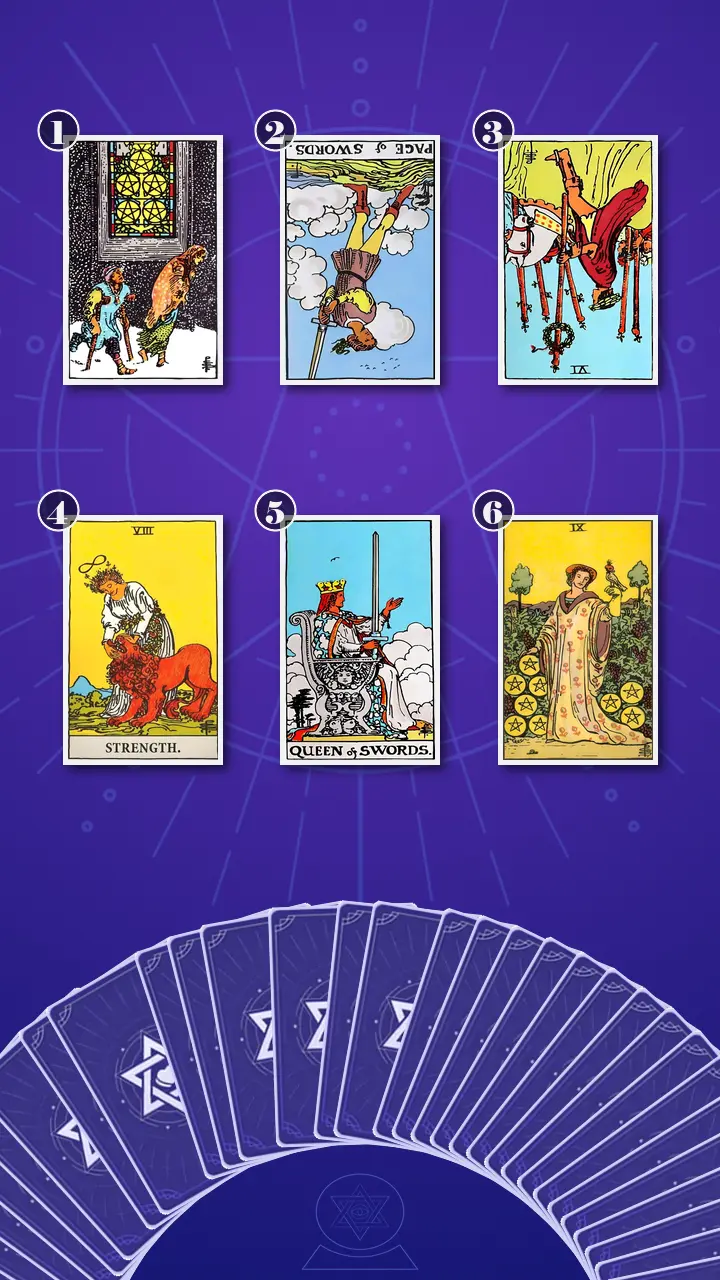
“Today I’m using a spread called the Transformation Path Grid (6) · Context Edition,” I said. “It’s built for loops—trigger, interpretation, collapse, compensation—because Slack recognition can turn into decision fatigue fast. This layout separates the surface moment from the mental habit that keeps it looping, then it gives us a turning point, a clean next step, and what integration can look like.”
For anyone reading this who’s ever typed a ‘quick update’ that turned into a miniature performance review: a six-card grid is the smallest spread that still shows the whole mechanism. Position 1 catches the exact sting. Position 2 shows what keeps you refreshing. Position 3 reveals the root belief—the hidden rule your nervous system thinks it’s living under. Then we drop to Position 4, the hinge: the internal shift that changes the processing in real time. Positions 5 and 6 are the practical outcome—communication and integration.
Reading the Map: Slack as a Window You Can’t Stop Staring Through
Position 1 — The Moment It Hit: Five of Pentacles (upright)
“Now we’re turning over the card that represents the surface trigger and the specific ‘self-worth hit’ moment in the Slack scenario,” I said.
The Five of Pentacles, upright.
I pointed out the traditional image—two figures outside in the snow, shoulders rounded, trudging past a stained-glass window glowing with warmth. “In modern life,” I told her, “this is you in Toronto winter mode—coffee, commute, Slack open—and a public shout-out lands on someone else. Even though nothing was taken from you, your nervous system reacts like you’ve been left outside the team’s warmth. You start scanning the thread for your name the way you’d scan a guest list: ‘Am I in? Do they see me?’”
The energy here isn’t laziness or failure. It’s scarcity—the belief that belonging is a warm room you get invited into, and if you’re not named, the door must be closed.
Jordan let out a small laugh that sounded like it had sharp edges. “That’s… so accurate it’s kind of mean,” she said, and then her mouth pressed into a line, like she was trying not to show how much it landed.
“I’m not interested in being mean,” I said gently. “I’m interested in being precise. This card doesn’t call you petty. It calls you human. It says: this sting is a belonging signal, not a character flaw.”
Position 2 — What Keeps the Loop Alive: Page of Swords (reversed)
“Now we’re turning over the card that represents what keeps the reaction looping: the habitual interpretation or behavior that escalates the sting,” I said.
Page of Swords, reversed.
This is the card of mental alertness, but reversed it becomes hypervigilance—sharpness that turns inward. I watched Jordan’s eyes flicker the way they do when someone recognizes their own micro-habits in a mirror.
“Here’s the modern scenario,” I said. “Slack becomes your status radar. You keep it open on a second monitor, reread the praise line-by-line, check who reacted, and build a whole narrative from minimal context. You draft a ‘casual’ follow-up that subtly proves you mattered too—because certainty feels safer than ambiguity.”
That’s excess Air: too much interpretation, too much tone-checking, too much meaning-making. It can look like productivity, but it functions like self-punishment. The trap is the promise: “If I can decode the tone, I can control the outcome.”
I added, quietly, one of the phrases I’ve seen loosen shame in a room: “If your message is secretly a plea, your nervous system will feel it.”
Jordan winced, then nodded once. “I do the counting,” she admitted. “Emoji reactions. Who saw it. Who didn’t.”
“That’s the Page reversed,” I said. “Information-seeking that isn’t actually about information. It’s about trying to earn safety through monitoring.”
Position 3 — The Root Belief Underneath: Six of Wands (reversed)
“Now we’re turning over the card that represents the deeper root belief about recognition and belonging that makes public praise feel like a verdict,” I said.
Six of Wands, reversed.
Even people who don’t know tarot know this vibe: the laurel wreath, the crowd, the elevated rider. In reverse, the crown never feels like it’s on your head. You can do good work and still feel like you’re one shout-out away from disappearing.
“The modern life scenario here is straightforward,” I told her. “You don’t just want to do good work—you want the work to be witnessed. When someone else gets the public win, it feels like the crown passed you over, even if you contributed. Your brain treats visibility as belonging, so applause going elsewhere reads like you’re slipping down the ladder.”
This is deficiency in internal validation, paired with an over-reliance on the social parade. It doesn’t mean you’re arrogant. It means you learned, somewhere along the line, that being seen equals being safe.
I asked her the question this position demands: “If you weren’t publicly recognized this week, what do you fear would become true about your place on the team—or your value as a person?”
Jordan stared slightly past the camera, as if reading a line of text on a wall behind me. “That I’m… replaceable,” she said. “That I’m just the person who does the boring parts, and nobody notices until I’m gone.”
In the planetarium, when I talk about gravity, I tell people it’s not personal—it’s consistent. What tugged at Jordan wasn’t a teammate’s success. It was the belief that there’s only so much spotlight to go around.
When Strength Held the Lion: Don’t Negotiate Your Worth in a Public Channel
I let the room go quiet on purpose before we turned the next card. Through my office window, the city noise was distant; inside, the only sound was the soft friction of card stock. “We’re opening the hinge of the whole reading now,” I said. “This is the turning point.”
Position 4 — The Internal Shift in Real Time: Strength (upright)
“Now we’re turning over the card that represents the key internal shift that can change how you process public praise and comparison in real time,” I said.
Strength, upright.
It showed the image I’ve always loved: not a battle, but a calm woman closing a lion’s mouth with steady gentleness. “In modern life,” I said, “this is you feeling the sting and the urge to ‘fix it’ immediately with a perfect message or extra work. Strength is the moment you pause with the discomfort—hand on chest, one slow exhale—and choose not to audition for worth in the thread. You don’t deny the feeling; you stop letting it steer.”
I saw Jordan’s shoulders lift like they were preparing to defend themselves, then hover there, waiting.
Setup. She was still living inside that familiar split-screen: one part of her half-awake in bed with Slack open, thumb hovering over #wins; another part already drafting the “quick update” that would turn into twelve bullet points. Her stomach drop had become a command: Earn your place back. Now.
Delivery.
Stop treating the Slack spotlight as the judge of your value; start practicing quiet courage by holding the lion gently and staying loyal to what you know you’ve built.
I let it sit there for a beat, like a planetarium pause before the stars come back on.
Reinforcement. Jordan’s reaction came in layers, the way real truth lands. First, a tiny freeze—her breath stopped halfway in, and her hands went still in her lap as if she’d been caught mid-refresh. Then her gaze unfocused for a second, replaying a memory: the thread, the shout-out, the instinct to type a message that was really a request for reassurance wearing an update’s clothes. And then, quietly, the release—she exhaled in a long line, shoulders dropping a fraction, like she’d been holding a backpack strap too tight and finally noticed.
“I always think I have to respond,” she said, voice thinner than before. “Like… if I don’t do something fast, the story becomes true.”
“That’s the lion,” I said. “Not evil. Not wrong. Just loud.”
And this is where my own lens comes in—the one I’ve built from studying motion and relationships in the sky. “I have a framework I call the Binary Star System,” I told her. “Two stars can become tidally locked—gravity pulls them into a pattern where they always show the same face to each other. In your case, your self-worth and public recognition have become a binary pair. The moment Slack shines on someone else, your nervous system swings to face the spotlight like it’s the only light source.”
“Strength,” I continued, “is the small torque that breaks tidal locking. Not by winning. By regulating. By choosing a pause so your worth doesn’t have to orbit the channel.”
Jordan swallowed, eyes bright in a way that didn’t look like drama—it looked like relief mixed with a little anger. “But if I stop doing that,” she said, “doesn’t it mean I was wrong? Like… I made it all too big?”
I nodded. “That’s a real fear. And it’s also a sign you’re about to gain power. You weren’t ‘wrong’ for having a nervous system that learned visibility equals safety. You’re just ready to update the rule.”
I leaned closer to the camera, as if it could make the moment more reachable. “Right now, with this new frame—can you think of a moment last week when you felt the sting and went straight into proof-of-worth mode? If Strength had been available to you, what would you have done in the first 30 seconds instead?”
Jordan’s eyes dropped. “I would’ve… exhaled. I would’ve not opened the thread again. I would’ve gone back to my actual work instead of trying to win Slack.”
“That’s the shift,” I said. “This isn’t about not caring. It’s about moving from shame-driven comparison and scoreboard vigilance toward grounded self-worth—so you can communicate cleanly instead of performing.”
Position 5 — The Dignified Next Move: Queen of Swords (upright)
“Now we’re turning over the card that represents a concrete relational/career move: how to communicate, set boundaries, or ask for feedback without performing,” I said.
Queen of Swords, upright.
Her sword is not for cutting people down. It’s for cutting through fuzz. “This is the after,” I said. “Instead of posting a long proof-of-work update, you choose one direct sentence in the right place—a 1:1. You ask what visibility looks like, what outcomes you own, and how progress should be shared. It’s not a dramatic confrontation—it’s clarity that protects your self-respect and reduces the need to mind-read.”
I offered Jordan a before/after contrast, because this is where people feel the relief in their jaw.
“Before: three paragraphs that start with ‘Quick update!’ and end with you feeling exposed. After: one Queen-of-Swords sentence. One breath.”
I said it the way I’d write a clean Jira ticket—scoped, specific, no apology tour. “Clear asks beat perfect performances,” I reminded her.
Position 6 — Integration: Nine of Pentacles (upright)
“Now we’re turning over the card that represents what integration looks like when self-worth is less dependent on public validation,” I said.
Nine of Pentacles, upright.
We began with two figures outside a warm window. We end in a contained garden—walled, tended, already fruitful. “The modern scenario,” I said, “is a private impact log you actually read when insecurity spikes. You notice you’re competent even when untagged. Praise becomes a bonus, not oxygen. You still appreciate recognition—but you’re no longer using Slack as the sole mirror that tells you who you are.”
This is Earth in balance: cultivated self-worth. “Private proof turns public praise into a bonus,” I added, because it’s the cleanest summary I know.
From Insight to Action: The Slack Scoreboard Detox
I tied the six cards together for Jordan the way I’d tie constellations together for visitors under an artificial sky—simple lines, so the shape becomes visible.
“Here’s the story the spread tells,” I said. “A public shout-out triggers a Five of Pentacles feeling—like you’re outside the warm room. Then the Page of Swords reversed kicks in: you monitor, reread, count reactions, draft-and-delete, trying to decode your status and control the outcome. Under that is the Six of Wands reversed—the belief that visibility equals belonging, so being unnamed feels like being replaceable. Strength is the hinge: regulate the sting first so it doesn’t drive your behavior. Then Queen of Swords turns regulation into one clean request. And Nine of Pentacles is the longer arc: build private proof so your nervous system doesn’t need the channel to breathe.”
“The blind spot,” I named carefully, “is that your brain treats Slack applause like objective measurement. But it’s not a fair scoreboard—nobody agreed on the rules. That’s why it feels so brutal. The transformation direction here is: stop outsourcing your worth to public validation, choose one internal metric, and make one direct visibility request without performing.”
Then I gave her next steps—small, testable, doable on a real Tuesday, not a fantasy Monday.
- Signal → Soothe (90 seconds)When a Slack shout-out hits and you feel your stomach drop, do one slow exhale for 6 counts before you reread the thread. Then type one line in Notes: “This is shame + comparison. My body thinks I’m being left out.” Set a 2-minute timer: no replying, no drafting, no ‘quick update.’If your brain says “this is cringe,” make it smaller: 30 seconds counts. If you’re in public, skip the hand-on-chest—just exhale and drop your shoulders.
- The Private Proof Practice (7 days)Start a private impact log called “Impact Log (Private).” Each day write three bullets: (1) one outcome you moved, (2) one collaborator you supported, (3) one skill you practiced. Before you open #wins, read yesterday’s three bullets first.Lower the bar: you’re collecting receipts for your own brain, not writing a diary. If it starts sounding like a Slack update, cut it in half.
- One Queen-of-Swords sentence (in the right place)Draft one clean ask for a 1:1 (not the channel). To your manager: “Can we align on what impact you want me to prioritize and how you want me to share progress so it’s visible?” To a friend who posts shout-outs: “I’m genuinely happy for them—and I noticed I felt a little invisible. Could you tag contributors next time if it fits?”Say it once, no over-explaining. You’re not asking for a personality award—you’re aligning on impact and communication.
To make it even more practical, I offered one of my own tools—something I use with teams the way I use star charts with visitors. “I call it a Social Star Map,” I said, “and it’s not mystical. It’s a weekly plan for where you’ll spend your social and visibility energy so you don’t leak it into Slack refreshes.”
We sketched hers in two minutes: one 10-minute window per day to check #wins (not five scattered micro-checks), one midweek 1:1 touchpoint with her manager to align on what “visible impact” means, and one end-of-week review of her private impact log. “You’re giving your nervous system predictable ‘transits,’” I told her. “So it stops trying to predict safety from emoji analytics.”

A Week Later: Ownership, Not Certainty
Seven days later, Jordan messaged me a screenshot—not of #wins, but of her Notes app. Three bullets per day, small and unglamorous. Underneath, one line: “Read this before Slack. It helped.”
She’d also drafted (not yet sent) a single Queen-of-Swords sentence to her manager. “I didn’t send it the same day,” she wrote. “But I wrote it without spiraling. That felt new.”
She wasn’t suddenly immune to recognition culture. But she’d stopped negotiating her worth in public threads. She’d created a private garden of proof she could walk into when the window-glow of someone else’s praise tried to convince her she was outside.
That’s what a Journey to Clarity looks like in real life: not certainty, but ownership—one exhale, one clean sentence, one small record of what you’ve built.
When someone else gets praised in public and your stomach drops, it’s not because you’re petty—it’s because part of you learned that being seen is the same as being safe, and being overlooked feels like disappearing.
If you didn’t have to earn your place back in the thread tonight, what’s one small way you’d choose to recognize your own impact—privately, on purpose—before you ask the room to do it?
This story is adapted from psychological research, written so that those in a similar struggle can see their own pattern in it — and find their next step clearly.These insights are not a substitute for professional psychological, medical, legal, or financial advice.
Learn more about our Journey to Clarity.
How did this insight land for you?
🫂 This Resonates Deeply
🌀 Living This Story
✨ Now I See Clearly
🌱 Seeing New Possibilities
🧰 Useful Framework
🔮 The Confirmation I Needed
💪 Feeling Empowered
🚀 Ready for My Next Step
Author Profile
 AI
AI“After a decade of guiding people through the stars, I’ve come to see life much like the orbits of planets: everything has its inevitable cycles. When you feel lost, please don't blame yourself; you might just be in a natural low tide. I’m here to sit under the night sky with you, offering a gentle cosmic perspective to distinguish temporary pain from the beautiful breakthroughs just around the corner.”
In this Friendship Tarot Reading :
Core Expertise
- Orbital Drift Recognition: Objectively mapping how personal cognitive upgrades naturally lead to mismatched frequencies with old friends, removing the guilt of outgrowing them.
- Gravity De-linking Analysis: Identifying the painful friction that occurs when two friends try to force an alignment despite moving into completely different life phases.
Service Features
- The Constellation Release Protocol: A psychological closure technique to peacefully accept the natural fading of a friendship, leaving them in their orbit while you transition to your next.
Also specializes in :
Explore Related Patterns:
Achievement FusionJordan's self-worth and public recognition have become locked together, so when Slack shines on Alex, her nervous system swings toward the spotlight as if it is the only available source of safety. The story names this directly: the channel starts acting like a judge of value, even though the rules of that scoreboard were never agreed on. The psychological mechanism is a fusion between achievement visibility and personal worth. Professional recognition stops being useful feedback and becomes identity evidence. When that fusion is active, being unnamed does not simply mean a contribution was missed; it can feel like proof that the self is less solid, less valued, or easier to replace. Achievement Fusion fits because the trigger is not only social comparison; it is the collapse of work visibility into selfhood. You are seeing what happens when competence, belonging, and public applause are processed as one single signal. The pattern becomes freeing to name because it shows where the fusion can be loosened: your work can matter without every public thread having to certify your worth.
Assertive CommunicationJordan's next move is not a long proof-of-work post in the public channel; it is one direct sentence in the right place, such as a 1:1 with her manager about impact, priorities, and visibility. The story draws a clean line between performing for the room and asking for clarity from the person who can actually provide it. The mechanism is boundary-based communication. Instead of trying to get reassurance indirectly through a polished update, Jordan can move the need into a clear relational container: one ask, one context, no overexplaining. That reduces the mind-reading loop because the question is no longer being outsourced to emoji reactions and silence. Assertive Communication fits because the healthier pattern is not emotional suppression; it is clean expression without performance. You still get to want visibility, feedback, and fair contribution tracking. The shift is that you ask directly instead of turning the public thread into a stage where your self-respect has to be defended.
Compulsive CheckingJordan keeps Slack open on a second monitor, rereads the praise line-by-line, checks who reacted, and counts emoji responses. Those actions look like information gathering on the surface, but the story makes clear that the information does not settle her; it keeps the loop alive. The defensive function is certainty seeking through monitoring. When the public praise creates ambiguity about her status, Jordan tries to reduce the discomfort by scanning for signals that might prove she still matters. The problem is that each check creates more material to interpret, so the nervous system receives a fresh prompt to measure, compare, and reread. Compulsive Checking fits because the behavior repeats even when it does not provide real clarity. You are watching a feedback loop where the mind promises, "one more look will make me feel safe," but the checking turns Slack into a status radar. The more the thread is monitored, the more authority it gains over her self-worth.
External ValidationJordan sees a Slack shout-out for Alex, not herself or her part, and her body reacts as if a public scoreboard has just lowered her value. The stomach drop, chest tightening, and urge to produce something undeniable show that the message does not stay in the realm of workplace information; it becomes a mirror she uses to read her worth. The mechanism is externalizing self-assessment. Instead of using her own record of contribution as the primary reference point, Jordan's nervous system treats public recognition as the data source that decides whether she belongs, matters, or is replaceable. That makes the praise of someone else feel less like a teammate's win and more like an unspoken verdict on her place in the group. This is why External Validation fits the story so tightly. You are not seeing simple jealousy or bad friendship here; you are seeing a self-worth system that has become overdependent on public signals. The pattern becomes painful because every Slack reaction, tag, or omission can start functioning like evidence in a private trial about whether you are enough.
Mind ReadingJordan sees one Slack message praising Alex and quickly experiences the absence of her own name as a signal that she has been demoted, overlooked, or pushed outside the team's warmth. The story does not show anyone saying she matters less; it shows her mind filling the silence with a status narrative. The mechanism is inference under threat. When self-worth is already activated, neutral or incomplete data starts feeling loaded, and the mind tries to read hidden intent from what was posted, who reacted, and who was not named. That can create a convincing internal story from very limited external evidence. Mind Reading fits because Jordan's pain intensifies when she treats the Slack thread as if it reveals what other people secretly think about her. You can feel how quickly the missing tag becomes a verdict. The pattern matters because the work is not to deny the sting; it is to separate observable facts from the meanings your nervous system adds under pressure.
Explore Related Struggles:
Approval-Safety FusionJordan's stomach drops before any actual feedback arrives. Nothing in the Slack message says she is failing, but her body receives the absence of her name like a sudden loss of safety. You can see the fusion in the rule the story names directly: being seen equals being safe. When approval becomes the signal that you are still protected, still included, and still valued, a public shout-out for someone else can feel less like celebration and more like exposure. The struggle lives in that instant where your system tries to make safety measurable through praise. The clearer move is not to shame the wish to be seen, but to separate recognition from survival so one channel cannot decide whether you are secure.
Metric-Compass FusionThe reading names the blind spot plainly: Jordan's brain treats Slack applause like objective measurement, even though nobody agreed on the rules. A shout-out, a tag, and a cluster of emoji reactions become a scoreboard that feels official because it is public. You lose internal direction when a loose workplace signal becomes the compass for value. Actual impact, manager expectations, private evidence, and team recognition all start competing in the same mental dashboard, so the loudest metric begins to feel like the truest one. The struggle is not that metrics exist; it is that the wrong metric starts telling you where to stand. The reset is to choose a cleaner measure of impact before the channel supplies one on your behalf.
Status-Belonging FusionJordan can feel genuinely happy for Alex and still feel demoted when the shout-out does not name her. The reaction is not caused by Alex winning; it starts when the channel makes belonging look like a ranked list, and her body reads being unnamed as standing outside the warm room. You can see the fusion in the word demoted. A message meant to celebrate someone else becomes evidence about her own place, so team status and belonging stop being separate categories. When public visibility is treated as the entrance pass to connection, someone else's praise can feel like your own disappearance. The struggle is not wanting recognition; it is having your sense of team safety tied to a public scoreboard that was never built to measure your value. Clarity begins when the shout-out becomes information about a moment, not a verdict on whether you belong.
Performance-Worth FusionJordan's hands are restless and ready to type after the shout-out lands. The urge is not simply to communicate; it is to ship something undeniable, post the perfect update, or produce enough proof that the cold drop in her stomach will reverse. You can feel the shift when a quick update becomes an audition. Work stops being only work and starts carrying the job of repairing visibility, status, and worth at the same time. That makes every message heavier than it needs to be, because performance is being asked to answer a belonging question. The struggle is not ambition or care about quality. It is the collapse of contribution into self-rescue, where doing more becomes the fastest available way to feel real again. The way out begins when impact can be named directly without turning every visible action into a plea for validation.
Monitoring-Safety FusionJordan keeps Slack open, rereads the praise line by line, checks who reacted, and counts the small signals around the message. The behavior looks like information gathering, but the story makes clear that the information never settles the question she is really asking. You are watching monitoring become a substitute for safety. Each refresh promises certainty, yet each new detail creates more material to interpret. The channel turns into a status radar, and the more closely she watches it, the less able she becomes to return to her actual work with a stable sense of place. The struggle is the belief that enough tracking will make ambiguity stop hurting. Clearer footing comes from noticing when observation has stopped serving reality and started feeding the fear that only constant vigilance can keep you secure.
Explore Related Emotions:
Grounded AgencyJordan’s shift begins in the first pause: one slow exhale, no immediate reread, no proof-of-worth message disguised as an update. She does not erase the sting; she creates just enough room to choose what happens next. You regain agency when the Slack thread stops being the place where your worth gets negotiated in real time. The private impact log, the single direct 1:1 question, and the decision to stop performing in the channel all move self-worth back into your own hands. Grounded Agency fits because the relief here is practical and embodied. It is the feeling of having a next move that comes from clarity rather than panic.
Hypervigilant AnxietyJordan keeps Slack open like a status radar, rereads the praise line by line, counts emoji reactions, and tracks who saw it and who did not. The channel stops being a communication tool and becomes a moving scoreboard she feels compelled to interpret. You are not looking for information anymore when every reaction starts carrying emotional weight. You are trying to make ambiguity feel safer by decoding tone, timing, names, and silence, but the monitoring only gives the thread more power over your body. Hypervigilant Anxiety fits because the loop is alert, restless, and self-protective. It keeps scanning for proof of where you stand, while quietly exhausting the very sense of stability it is trying to secure.
Rejection ChillThe Slack message hits before Jordan has even left bed: blinds barely open, phone warm in her palm, #wins loading, and then the shout-out names Alex. Her stomach goes cold and her chest tightens, which makes the emotional impact feel less like a thought and more like a social temperature drop. You can know intellectually that nobody rejected you and still feel your body register the moment as exclusion. The thread becomes a glowing window, and being unnamed feels like standing outside the team’s warmth with your face pressed to the glass. Rejection Chill captures that first bodily shock. It is the cold, immediate sting of feeling unchosen before your rational mind has time to explain the situation back to you.
Replaceability DreadJordan names the fear directly when she says she might be “replaceable,” the person who does the boring parts and only becomes noticeable through absence. That line turns the Slack praise from a simple workplace moment into a self-worth alarm: public recognition starts acting like evidence of whether she has a secure place at all. Your body can treat visibility as proof of safety when the team scoreboard feels scarce. When someone else receives the shout-out, the old rule activates quickly: if the room is looking there, maybe there is no room for you here. Replaceability Dread fits because the deepest sting is not that Alex was praised. It is the dread that your own contribution could be real, useful, and still vanish unless someone names it out loud.
Shame SpiralJordan tries to sound bright and reasonable because she does not want to seem dramatic about one Slack message, even though it has already rearranged her whole day. Then she says she hates that a single post can ruin her afternoon, turning the pain back on herself. The first wound is feeling unseen. The second wound is judging yourself for caring about being seen. That second layer traps the reaction in a tighter loop, because now the emotional system is not only processing comparison; it is defending against the embarrassment of having needs at all. Shame Spiral fits because the story keeps folding inward. The Slack praise hurts, then the fact that it hurts becomes another reason to feel small.
Unseen Effort GriefJordan’s fear is specific: she might be the person doing the boring parts, the work that holds things together but rarely becomes the headline. That is why the urge to post a proof-of-work update arrives so quickly; it is trying to make invisible labor visible before the ache settles in. You are not only reacting to someone else being praised. You are touching the grief of contribution without witness, the quiet hurt of wondering whether your effort counts if it is not publicly named. Unseen Effort Grief fits because the story carries a mournful undercurrent beneath the comparison. The pain is about wanting your real work to have a place in the record, not about needing applause for its own sake.
Quiet Self-TrustA week later, Jordan sends a screenshot of her Notes app instead of a screenshot of #wins. Three small bullets per day become a private record she can read before Slack, which gives her own evidence a chance to speak first. You are not forcing yourself to stop wanting recognition. You are building a steadier mirror, one that lets public praise become a bonus instead of oxygen. Quiet Self-Trust fits because the integration is subtle. It is not loud confidence; it is the small, repeatable ability to believe your own record before the room confirms it.
Explore Related Contexts:
Access as Proof PressureJordan opens #wins before the room is fully awake and sees the Alex shout-out without her part named. The channel does not take anything concrete from her, but it turns access to public recognition into a test of whether she still counts inside the team. For you, the pressure point is that proof of belonging has been outsourced to a public access signal. When the signal goes to someone else, the problem is not that Alex was praised; the problem is that the team's visible doorway starts looking like the only place where your value can be verified.
Conditional Belonging PressureThe shout-out lands like a warm room with someone else's name on the door, and Jordan starts scanning for proof that she is still inside the team. Her own words make the social structure visible: she feels demoted, replaceable, and unseen when the public praise does not include her. For you, the painful part is the condition attached to belonging. When being named becomes the visible ticket into the group, silence can feel like exclusion even when no one intended to exclude you, and that is why the Slack moment carries more weight than a single compliment should.
Evaluation Pressure LoopJordan does not just read the shout-out once; she rereads it, checks reactions, keeps Slack open, and starts building meaning from who clicked what. A recognition channel has become an informal performance dashboard, even though nobody agreed on what it measures. For you, the loop hits self-worth because the external system keeps offering fragments that look measurable but are not actually fair data. Emoji counts and public mentions can pull your attention into constant evaluation, so the practical reclaiming point is to stop treating the channel like a reliable verdict on your standing.
Collaboration Credit ImbalanceA teammate gets the public #wins shout-out while Jordan's contribution remains offscreen, and the phrase not me, not my part carries the whole structural sting. The channel makes one person's work visible while the surrounding support work stays harder to locate. For you, that uneven visibility can feel like a quiet demotion because workplace credit is not just politeness; it shapes who is remembered, trusted, and invited into the next layer of responsibility. The useful read is not that praise is dangerous, but that credit needs clearer distribution so your role is not left to be inferred from silence.
Performance Criteria Black BoxJordan eventually lands on the clean 1:1 question about what impact she should prioritize and how progress should be shared so it is visible. That question matters because the #wins thread has been filling a criteria gap with public signals, reactions, and implied ranking. For you, the self-worth wobble gets sharper when the rules of recognition are unclear. If visibility criteria are not named, every public shout-out can start acting like a hidden rubric, and the way back to agency is to move the criteria into an explicit conversation rather than decoding them from a thread.
Personal Brand PerformanceAfter the stomach-drop, Jordan's hands are ready to type, and the quick update starts turning into twelve bullet points that prove she mattered too. The work channel invites a performance of competence when what she actually needs is clear recognition and clean feedback. For you, this pressure turns ordinary communication into a personal brand audition. The thread becomes a stage where every update is asked to defend your relevance, so the healthier move is not to perform harder but to choose the right container for visibility.