Returned Again, Still Unfinished

Explore the resubmission cycle, related tarot cards, and reading examples from others facing repeated feedback and unclear completion gates.

Resubmission Loop
What is this situation?

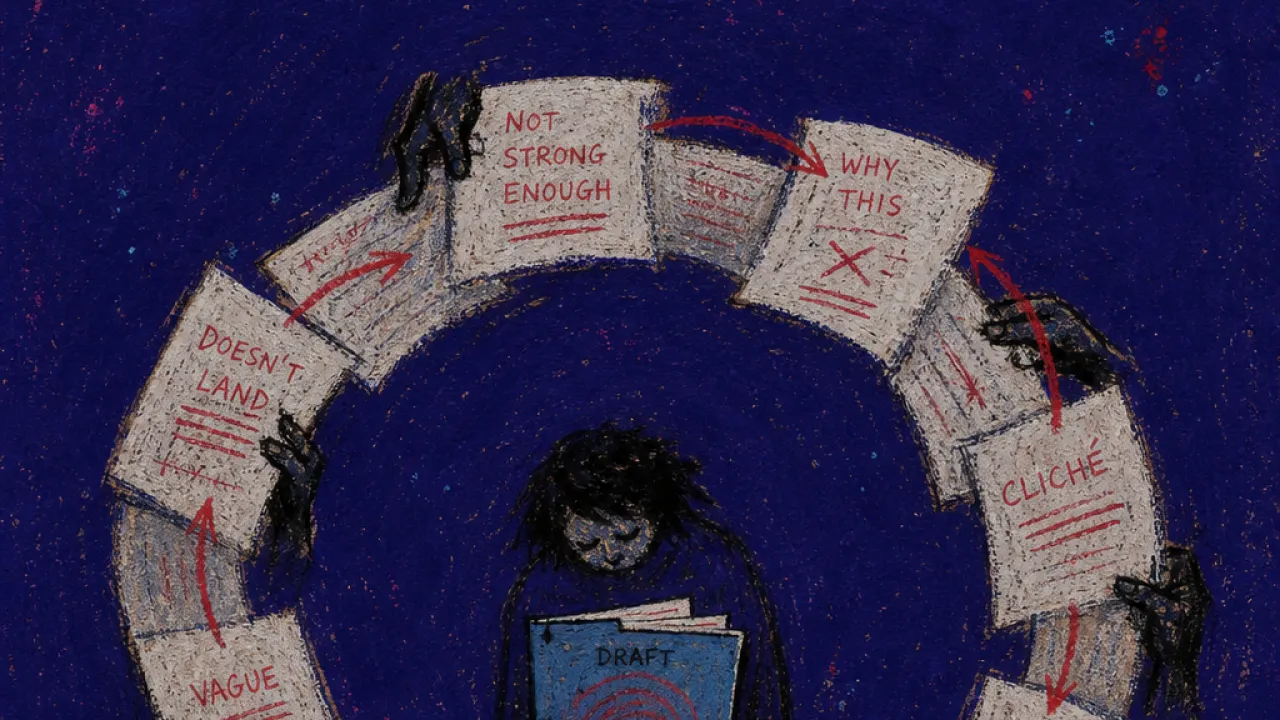
Resubmission Loop — you send the essay, thesis chapter, portfolio, lab report, module, or application back through the portal and wait for the word that means it can finally stand. Instead, the reply arrives with another set of comments, another "almost there," another request to revise the same section, adjust the same evidence, explain the same method, reformat the same piece of work. It starts with one returned draft that seems manageable; then the file name grows into version after version, meetings become a calendar of small corrections, and the criteria for acceptance stay just blurry enough that every fix creates a new place to be questioned. The person or panel holding the approval gate may be polite, busy, or even trying to help, but the power stays on their side: they decide when the work is enough, while you keep proving that you have listened. Your days get organized around the next upload, the next email, the next annotated PDF; your shoulders tighten when the portal notification lands, your stomach drops when the status changes back to returned, and the same document follows you from library desk to kitchen table to late-night laptop glow. Peers move on to new modules, jobs, placements, or graduation photos while you are still circling the same threshold, editing not because the work is clearly growing but because the gate keeps reopening. What wears you down is not effort itself; it is effort that keeps being sent back into the same container, much like the figures on Judgement reversed, rising again from open boxes while no next ground is shown.

Why it's not you?

The issue isn't that you can't finish; it's that the gate keeps reopening without stable landing criteria. Returned drafts, partial comments, moving standards, and unclear pass conditions are features of the setup, not proof that your work lacks value. A loop like this makes progress look unfinished because every handoff sends you back to the same threshold.

Resubmission Loop in Tarot Cards

In a Resubmission Loop, the returned status, annotated PDF, and shifting approval gate are the shape of the situation, not a private failure. That stomach drop when the portal sends the work back again is a physical trace of an environmental, structural dynamic that keeps motion inside the same threshold. The cards below do not tell you what to do next; they reflect the pressure pattern already in the room. These Tarot Cards map the contours of work that keeps moving without closing.

Judgement Reversed
The figures rise again and again in the same open boxes, but the image shows no path away from the containers. Movement is present, yet release is missing; the call produces another emergence without showing the next ground. That is the structure of a resubmission loop: an essay, thesis chapter, portfolio, or application keeps reopening for revision without crossing into acceptance. The work is never simply abandoned, but it is also never allowed to stand. You regain agency by distinguishing refinement from containment. Some revision improves the work; repeated return to the same threshold signals a system that may need a changed scope, clearer criteria, or a different evaluative route.
The World Reversed
The wreath can become a closed loop when the dancer's movement keeps circulating inside the same frame. The ribbon, crown, and outer ring echo one another so completely that motion risks becoming repetition rather than progress. In school, that loop appears when a draft, thesis chapter, module, or assessment keeps returning for revision without a clear path to completion. You are not simply working hard; you are inside a feedback structure where effort cycles back into the same gate, and the real pressure is the absence of a visible exit condition.
Five of Cups Reversed
The figure remains physically stationed over the same spilled cups, as if the whole scene has narrowed to one damaged set of objects. The bridge is still present, but it does not function while the body keeps returning to the spill site. In academic work, this fits the draining cycle of revising the same essay, thesis chapter, portfolio, lab report, or exam attempt without converting feedback into a new route. Effort is being poured back into the failed container, while the structural crossing toward completion remains underused. The card identifies the loop as an external academic setup, not a personal defect. A resubmission system can trap the user when feedback is unclear, standards feel moving, or every new draft is treated as another replay of the original loss.
Two of Pentacles Reversed
The cord between the pentacles forms a loop, and the figure's hands keep returning each object back into circulation. In the reversed state, that loop becomes less like rhythm and more like academic re-entry, where the same task keeps coming back before it can be completed. A resubmission cycle often looks productive from the outside because there is visible movement: drafts, comments, corrections, meetings, and revised files. The structural problem is that movement does not equal closure when the criteria for landing the work remain unstable. This card gives you a way to see the loop instead of only judging the latest draft. The useful question is where the handoff is failing: the brief, the feedback, the interpretation, the support system, or the point at which revision should become submission.
Seven of Pentacles Reversed
The pentacles hang in a repeated cluster on the same vine, and the figure stays positioned over that one object. Nothing in the field suggests a clean transfer into a new task; the scene is held around unfinished material that keeps demanding more attention. In academic work, that structure becomes the resubmission loop: drafts returned again, corrections added again, checkpoints missed again, or the same assignment repeatedly revised without becoming final. The labor is not imaginary, but it keeps cycling through the same container. The card makes the repetition visible without turning it into a personal flaw. It shows the point where feedback, standards, timing, and project design have to be audited because continuing to stand over the same vine is no longer the same as moving the work forward.
Eight of Pentacles Reversed
The chisel keeps returning to the same circular surface, and the coin on the bench has not yet joined the completed row. The tools are precise, but their precision also creates a loop of correction, measurement, and reworking. In an academic resubmission cycle, the issue is not simply that work is unfinished; it is that the same essay, lab report, portfolio piece, or problem set keeps being pulled back to the bench. You are caught inside a standard that can improve the work but can also shrink the whole learning process into repeated compliance with feedback.

Resubmission Loop in Tarot Card Reading Insights

When a Resubmission Loop keeps sending the same essay, chapter, portfolio, lab report, or application back to the threshold, others bring that cycle into readings too. The readings below sit with returned drafts, unclear criteria, and work that keeps moving without closing. Tarot Reading Insights for this situation.

Psychological contexts related to Resubmission Loop