The 8:43 p.m. Delete-and-Resend
When someone can brief a client in five minutes but freeze at a simple Friday-night question because she does not want to sound high-maintenance, I know I am not looking at a mere logistics problem. I am looking at people-pleasing in dating, the kind that hides inside phrases like 'whatever works for you' and then quietly turns into one-sided date planning.
Jordan, a twenty-eight-year-old content strategist in Toronto, sat across from me with the polished calm of someone who can run a room for a living. Then she showed me the thread. Thursday, 8:43 p.m. Downtown condo. Laptop finally shut. Hinge open. Three restaurant tabs glowing on her phone. The HVAC hummed through a dark room while the screen light cut across her face. She had typed, I'd love tapas at 7, stared at it, deleted it, and sent, I'm easy, whatever works for you instead.
She gave me a half-smile that did not reach her throat. “Every date plan ends with ‘you choose.’ Why does that make me feel so bad? I do not want to be the difficult one this early. But if I keep being chill, I end up doing the whole thing.”
I could see the contradiction immediately: she wanted mutual effort and shared initiative, but she feared that stating a clear preference would make her seem difficult, needy, or simply less easy to date. The frustration sat in her like a swallowed paperclip—sharp at the throat, then a small drop lower down in the stomach, as if her body had already read the situation before her mind was willing to.
“That makes perfect sense,” I told her. “And it is far more common than people admit. Easygoing is not the same as mutual. So let us make a map of this fog. We are not here to guess anyone’s destiny. We are here to see the pattern clearly enough that you get your agency back.”

Choosing the Compass: A Relationship Spread for the ‘You Choose’ Loop
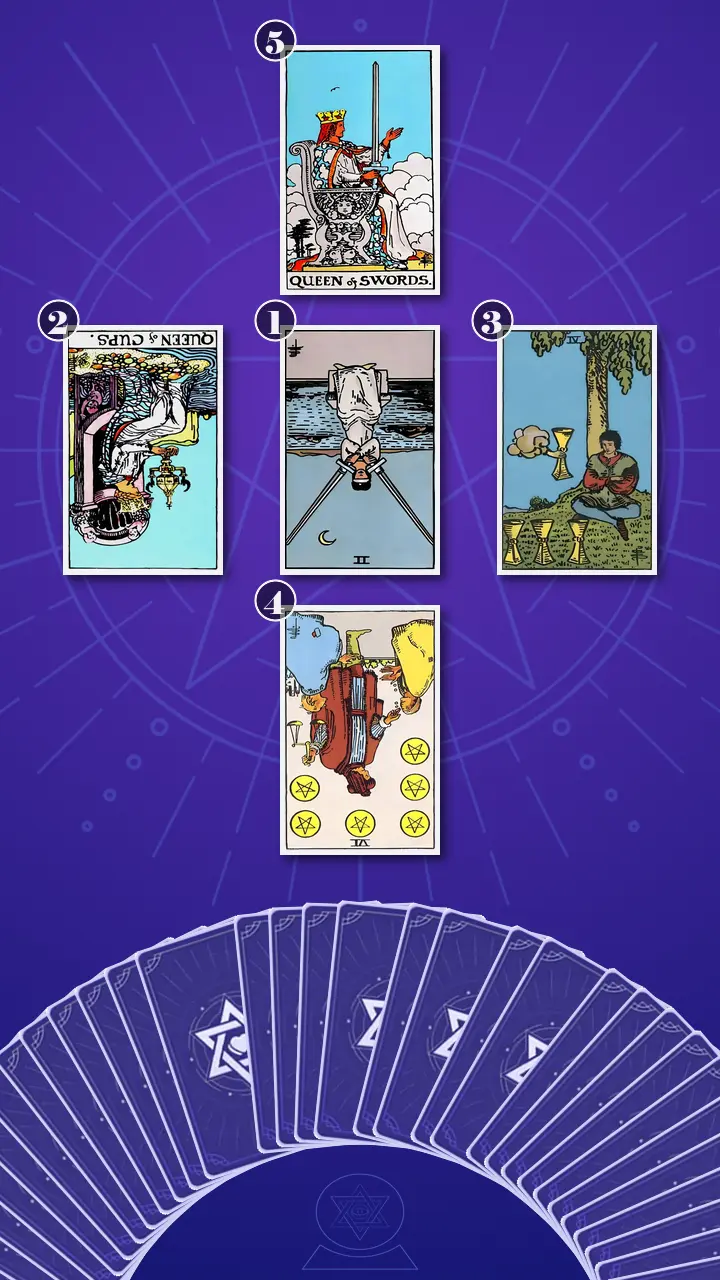
I asked Jordan to take one slow breath and hold in mind that exact moment before she deletes the real text. Then I shuffled slowly and laid out five cards in a small cross. I use that beginning not as theatre, but as a way to move the nervous system out of spiraling and into focus.
For recurring dating patterns like this, I chose the Relationship Spread · Context Edition. It is one of the best tarot spreads for recurring dating patterns because it does not try to predict where the connection will go. Instead, it examines the interaction itself: the visible loop, each person’s contribution, the imbalance underneath it, and the communication shift that could change the whole atmosphere.
In plain language, I wanted three things from this spread. The center card would show the actual pattern on the phone screen—the stalled date-planning loop. The card beneath it would reveal the shared blind spot: where flexibility had quietly turned into unequal emotional labor. And the final card above it would point to the healthiest next move, not in theory, but in the form of practical dating communication.
I told Jordan what I tell many clients: tarot works best when we let the cards become a structured mirror. Not a verdict. A mirror. And mirrors are useful precisely because they return the power of choice to the person looking in.
Reading the Loop Hidden in Maybe-Mode
Position 1: The Loop That Calls Itself Flexibility
I turned over the first card. “This position shows the visible date-planning loop: how repeated ‘you choose’ turns connection into a stalemate instead of a shared decision.” The card was the Two of Swords, reversed.
In modern life, this is the thread that keeps cycling through ‘whatever works’ and ‘you choose’ until the reservation window closes, the vibe goes strangely flat, and the eventual plan gets made by urgency rather than desire. The energy here is blocked Air leaking sideways: too much self-protection, too little actual statement. It is like a Slack thread where everyone says they are happy either way and the deadline becomes the decision.
I pointed to the blindfold and crossed swords. “This is polite non-movement. Two people holding the door open for each other until nobody actually walks through. It looks harmless on the surface, but it drains chemistry because nobody is willing to let wanting become visible.”
Jordan let out a short laugh, dry and a little bitter. “That is painfully accurate,” she said. Her fingertips tightened around her mug, then loosened. I took that as a good sign. Recognition had arrived before defensiveness could.
Position 2: The Emotional Autocorrect
I turned to the second card. “This position reveals how you manage preference, harmony, and the fear of seeming difficult during planning.” The card was the Queen of Cups, reversed.
Here the pattern became personal. This is the moment Jordan notices one slightly shorter reply, rereads the message three times, and changes I’d love drinks at 7 into anything works :) so she can stay likable without risking a direct ask. The energy is not a lack of feeling. Quite the opposite. It is feeling turned inward so fast that it edits the self before anyone else has to. Like emotional autocorrect changing the sentence before the other person has even read it.
“The Queen of Cups reversed is warmth without enough boundary,” I said. “Sensitivity is a gift. But in this position, you are using that sensitivity to manage the atmosphere before your own preference even gets air. There is a real difference between being warm and being self-erasing.”
I asked her what the last real preference was that she almost sent before softening it. She stared at the card for a moment. “Wine bars,” she said. “I wanted to say I’d rather do wine bars than dinner. But then I heard this voice in my head going, ‘Don’t make this weird. Don’t be too much.’”
She looked down at her phone on the table and rubbed her thumb across the case as though she were smoothing out an invisible draft. That, too, was recognition. Not shame. Just the precise discomfort of seeing the mechanism in daylight.
Position 3: Agreeable, Available, and Still Adding No Momentum
I turned over the third card. “This position reflects what the other person’s ‘you choose’ stance adds to the loop, without claiming certainty about their inner world.” The card was the Four of Cups, upright.
This is not proof that the other person does not care. I am always careful about that. Tarot can show observable energy; it should not be used to fabricate motives. What this card does show is low-initiation ease: happy enough to say yes, slow to suggest anything, leaving the interaction in receive mode unless someone else creates the momentum.
“It is like liking the playlist but never pressing play,” I said. “There is an opening here, but no real reach. A plan cannot become mutual if one person contributes approval and the other contributes movement.”
Jordan nodded slowly. “That is exactly it. Nothing is technically wrong. Nobody is rude. It just... goes nowhere.” Her shoulders made that small, involuntary drop I often see when someone finally hears the subtle part named correctly.
Position 4: The Tilted Scales Beneath the Chat
I turned over the fourth card. “This position exposes the shared blind spot that turns flexibility into unequal emotional labor and weak reciprocity.” The card was the Six of Pentacles, reversed.
Now we had arrived at the real blockage. In modern life, this is Jordan doing the invisible half of the date before the date even exists: comparing spots, checking transit, scanning menus, testing vibe, keeping the tone light, and quietly noticing that the effort is not being matched. The energy here is imbalanced Earth. Not abstract emotion now, but measurable exchange. Who suggests. Who follows through. Who carries the producer work.
At that point my old fieldwork mind stirred. In archaeology, one shard of pottery tells me very little. But a repeated layer of ash, coins, and broken vessels tells me how a household actually functioned over time. I use the same lens in relationships; I call it Emotional Historiography. I do not judge a connection by one vague text. I ask what repeated small behaviors are depositing over time. And here, the record was clear: one person was doing the planning, the tone management, and the emotional labor while the other mostly approved from the sidelines.
“This,” I said, “is like carrying the whole group project while someone else says they are happy to help. It is not only about who picked the place. It is about who keeps the whole machine moving. Stop doing producer work for a two-person date.”
Jordan went very still. First her breath caught. Then her gaze lost focus, as if she were replaying Saturdays at her kitchen counter with cold coffee, OpenTable, Google Maps, and one final ‘sounds good’ from the other side. Only after that did her jaw release. “Yes,” she said quietly. “That is exactly what has been bothering me. If I stop moving it forward, does anything happen at all?”
“That is the useful question,” I replied. “Not who is wrong. Not whether you are overreacting. Simply: what level of mutual effort is actually being shown? Vagueness is still data. And you do not need to fill every silence to know where the effort lives.”
When the Queen of Swords Cut Through the Fog
Position 5: The Warm-Direct Voice That Tests Reciprocity
When I reached the final card, the room altered in that subtle way good readings sometimes do. Outside, a streetcar bell rang once and vanished into the wet Toronto dark. Inside, even the HVAC seemed to recede. I turned over the card. “This position points to the most useful communication posture for breaking the loop and testing mutual effort.” It was the Queen of Swords, upright.
This card is the antidote. In modern life, it is the clean message Jordan had already drafted and deleted: I’d like drinks at 7 at this place. Does that work for you? The energy is balanced Air at last—clear language, direct preference, and enough steadiness to let reality answer back. The raised sword matters. So does the open hand. This is not harshness. It is truth with room.
I brought her back to the Thursday-night sofa scene: laptop closed, three tabs open, thumb hovering over the honest text she never sent. “Right there,” I said, “you were still treating choice as a likability test. But this card asks a better question: what do you actually want, and can the other person meet you there?”
You do not need to stay blindfolded by endless options; raise the Queen of Swords' blade, name one honest preference, and let reciprocity show itself.
The breakthrough is not choosing the perfect date. It is letting one clear preference replace the performance of being endlessly easy to choose.
Jordan’s body reacted before her words did. First there was a small freeze in her chest, as though her breathing had missed one beat. Then her thumb hovered over the edge of her phone and her eyes unfocused, replaying deleted texts, softened drafts, and all those Apple Calendar placeholders called ‘Friday maybe?’ Finally she shook her head, and instead of relief, a flash of resistance came first. “But if I do that,” she said, voice thin and sharp at once, “doesn’t that mean I’ve been helping create the whole problem?”
“It means you were protecting belonging with the tools you had,” I told her. “And now you have a better tool. That is not failure. That is maturity.”
That landed. Her eyes brightened a little, not with tears exactly, but with that tender heat that appears when self-blame begins to loosen. Her shoulders dropped. Her neck lengthened. Then came the second feeling that often follows genuine clarity: a slight dizziness. When the fog thins, responsibility comes back with the view.
I asked her, “Using this lens, can you think of a moment last week when one honest sentence would have changed how you felt?”
She breathed out from deeper in the chest. “Yes,” she said. “I would have known sooner whether he was actually meeting me.” That was the shift in plain language: from tight-throated frustration and quiet scorekeeping to steadier self-respect and clearer evidence of mutual effort. A clear preference is not a character flaw.
Before we moved on, I had her write one sentence in her Notes app: I’d like __ at __. Does that work for you? I did not ask her to send it immediately. I asked her to keep it visible. Practicing clarity still counts, even before it is delivered.
From Insight to Action: The One-Preference Test
When I stitched the whole spread together, the story was remarkably clean. The Two of Swords reversed showed the polite stalemate in dating texts. The Queen of Cups reversed showed how Jordan was softening herself before any real response occurred. The Four of Cups showed the other person contributing too little momentum to build an actual plan. And the Six of Pentacles reversed revealed the deeper truth: flexibility had become a cover for unequal initiative and hidden emotional labor around choosing.
The blind spot was not that Jordan wanted too much. It was that she kept hiding what enough would look like, hoping reciprocity would appear without being tested. Left alone, small vague exchanges harden into a script. In archaeology, we would call that a pattern layer. In dating, it often becomes resentment dressed as being chill. The transformation direction was therefore simple and demanding in equal measure: stop using flexibility to secure likability, name one concrete preference, and let the other person show whether mutual effort is actually present.
I wanted her next steps to be practical, not dramatic. No manifesto. No over-explaining. Just cleaner information. Here I used one of my own frameworks, which I call Amphora Balance. An ancient amphora travels safely when the weight is shared through both handles. If one person grips both sides, the vessel still moves—but all you have learned is who is compensating. Dating works much the same way.
- Save the Warm Clarity Text Tonight, in your Notes app, save one sentence you can use in your next date-planning chat: ‘I’d like drinks at 7 at this place. Does that work for you?’ Use it before you open Resy, Google Maps, or Beli and start doing background producer work. If your body spikes with ‘this sounds too direct,’ do a ten-second check first: unclench your jaw, drop your shoulders, and send it without adding an apology or a fake escape hatch.
- Use the Pause-After-Offer Rule For one week, make only the first planning move with one person you are dating: suggest the time or the place, then stop. Do not also research backup venues, transit routes, and reservation windows unless they answer with equal effort. Give yourself a boundary in real time: ‘I am not touching this thread again for three hours.’ If effort disappears when you stop over-functioning, that is useful information.
- Answer ‘You Choose’ Once, Clearly If they reply with another vague ‘you choose,’ answer once with structure: ‘I’d go with Bar Raval at 8. If that doesn’t work, send me one option you’d prefer by tonight.’ Use this once per thread so you are creating a decision frame, not running a project. Structure is not pushiness. It is how plans become real. Lowest-bar version: offer two time windows first and leave the venue undecided.
None of these actions is about forcing a connection. They are about replacing guesswork with reciprocity data points. That is how clarity begins in dating communication: not by mind-reading better, but by saying one true thing and observing what happens next.

A Week Later: Ownership, Not Certainty
A week later, Jordan sent me a short message. She had used the Notes app template almost verbatim: ‘I’d like drinks at 7 at this place. Does that work for you?’ The reply came back an hour later: 7 was tricky, 8 worked better, and he suggested a spot near Trinity Bellwoods himself. It was a small exchange, but for the first time the plan did not float in vague maybe-mode. It had shape. It had shared movement.
She told me she slept properly that night, then woke with the old thought—what if that was too much?—and laughed before making coffee. Clearer, still a little tender. That is usually what real change looks like.
I have always liked readings that do this. The Relationship Spread · Context Edition did not tell Jordan what to feel or whom to date. It simply helped her stop confusing smoothness with reciprocity. Clarity did not arrive as certainty. It arrived as ownership.
Sometimes the loneliest part is not the vague plan itself but the exact moment your throat tightens over the keyboard and you decide being easy to date matters more than saying you wanted the tapas place at 7.
If you let one honest preference do the sorting this week, what would be the easiest true sentence you could send—your own small Queen of Swords text?
This story is adapted from psychological research, written so that those in a similar struggle can see their own pattern in it — and find their next step clearly.These insights are not a substitute for professional psychological, medical, legal, or financial advice.
Learn more about our Journey to Clarity.
How did this insight land for you?
🫂 This Resonates Deeply
🌀 Living This Story
✨ Now I See Clearly
🌱 Seeing New Possibilities
🧰 Useful Framework
🔮 The Confirmation I Needed
💪 Feeling Empowered
🚀 Ready for My Next Step
Author Profile
 AI
AI“Having spent a lifetime at Cambridge and on archaeological digs, I’ve witnessed the rise and fall of countless civilizations. Please know that your current struggles are not a permanent fate, but merely a necessary fracture before rebuilding. I won't lecture you; instead, I invite you to sit with me in the ruins, using a patient, historical perspective to gently dust off the true, enduring value hidden beneath your temporary doubts.”
In this Love Tarot Reading :
Core Expertise
Service Features
Also specializes in :
Explore Related Patterns:
Assertive CommunicationJordan's clean sentence, 'I'd like drinks at 7 at this place. Does that work for you?' changes the entire structure of the exchange. It does not demand, overexplain, or perform indifference. It names one real preference and leaves space for the other person to answer. Assertive Communication fits as the adaptive version of the same psychological material. The desire for harmony is still there, but it is no longer managed through self-erasure. You can be warm and direct at the same time, which means the message becomes a reality test rather than a performance of being easy. The power of this pattern is that it gives You cleaner data. A direct preference lets the other person show whether they can meet, negotiate, or contribute. Instead of trying to mind-read reciprocity from vague texts, You create a small, respectful structure where mutual effort can actually appear.
Boundary DiffusionJordan wants mutual effort, but the boundary around that need keeps dissolving at the exact moment it should become language. 'I'd love tapas at 7' would create a clean edge: this is what I want, does it work for you? 'Whatever works for you' removes that edge and hands the interaction back to the other person's convenience. Boundary Diffusion fits because the issue is not a dramatic boundary violation; it is a subtle loss of self-definition inside a polite dating exchange. You remain warm and available, but the difference between flexibility and self-erasure becomes harder to feel. The boundary does not collapse loudly. It fades through tiny edits. The result is a relationship field where You cannot easily tell whether the plan reflects shared desire or Your own accommodation. Naming one preference restores the you/me distinction: You can want something, they can respond, and the connection can show whether it has enough reciprocity to hold both realities.
Emotional Self-CensorshipJordan's phone screen shows the mechanism in real time: 'I'd love tapas at 7' exists for a moment, then disappears before the other person can even respond. The censorship happens internally first. The other person has not rejected the preference; the preference is removed because it might create an image of being high-maintenance. That is why Emotional Self-Censorship is central here. The story is not about lacking desire or not knowing what to say. It is about editing the self at the point where desire would become legible. You keep the atmosphere safe by making the message less specific, less demanding, and less revealing. The cost is that the relationship never receives accurate data about You. When every direct sentence is softened before it leaves Your phone, the other person is not meeting the real preference; they are meeting the version of You designed to avoid friction. The pattern protects belonging in the short term while making mutuality harder to measure.
People-PleasingJordan's deleted tapas text is the clearest behavioral anchor: she knows what she wants, but the moment a preference could become visible, she edits it into 'I'm easy, whatever works for you.' That tiny change is doing a lot of psychological work. It turns a normal dating preference into a likability test, as if being direct might make You seem difficult before the connection has had a chance to prove otherwise. The protective function is understandable: agreeability lowers the immediate risk of friction. But in this story, that defense starts producing the exact pain it is trying to prevent. By staying endlessly flexible, You become the one carrying the hidden planning load, scanning options, managing tone, and waiting for mutual effort to appear without actually testing for it. People-Pleasing fits because the pattern is not just being nice. It is the repeated use of self-editing and over-accommodation to preserve approval, even when it costs You clarity, reciprocity, and self-respect. The pattern keeps the interaction smooth on the surface while quietly making Your own wanting feel unsafe.
Decision DeferralThe repeated 'you choose' exchange turns the date plan into a loop where everyone appears flexible, but nobody creates a real decision. The plan does not fail because there are no options. It stalls because choosing has become emotionally loaded, so the chat stays in vague maybe-mode until urgency makes the decision for both people. Decision Deferral fits because the pattern delays agency while preserving the appearance of politeness. You are not refusing the date, and neither is the other person. But by keeping the choice suspended, the interaction avoids the vulnerability of saying, 'This is what I want,' and seeing whether the other person can meet it. The psychological trap is that deferral feels safer than desire. It avoids the immediate discomfort of preference, but it also drains momentum, chemistry, and reciprocity. The question 'what pattern are we stuck in?' is answered by the loop itself: choice is being postponed so no one has to risk being visible first.
Explore Related Struggles:
Low-Maintenance Worth LockYou can hear the lock in the deleted sentence. 'I'd love tapas at 7' turns into 'I'm easy, whatever works for you' because sounding clear starts to feel like sounding high-maintenance, and high-maintenance feels risky. The story keeps returning to that bargain. You would rather shrink your preference than risk being read as difficult, so desirability gets tied to how little space you take up and every plan becomes a test of how much self-erasure you can disguise as being easy.
Reciprocity DeficitYou can see the imbalance before it becomes an argument. You open three restaurant tabs, draft a real suggestion, and still end up carrying the plan while the other person keeps the thread in approval-only mode. What looks like flexibility is actually a one-way exchange. The date only becomes real when one person supplies choice, follow-through, and emotional labor, so the connection keeps depending on your effort to become a plan at all.
Clarity-Exposure SplitThe split shows up the moment the honest line gets drafted, deleted, and softened. The preference is already there; what stops it is not a lack of clarity but the sense that being clear would make you too visible. That is why the plan keeps dissolving into vague mode. The thread can stay polite as long as the honest sentence never lands, but the cost shows up later as uncertainty, extra labor, and that small sharp feeling when nothing concrete has actually been decided.
Explore Related Emotions:
Desire AnxietyThe clean sentence keeps appearing before it gets softened: 'I'd love drinks at 7' becomes 'anything works :)' before the other person has even answered. You are not just choosing wording; you are deciding whether your want is allowed to enter the room without being disguised as flexibility. Desire Anxiety names the charge around making wanting visible. A restaurant, a time, or a wine bar becomes more than a preference; it becomes a test of whether someone can meet you when you stop dissolving into whatever is easiest for them.
Grounded AgencyThe week-later exchange gives you concrete data: 7 is tricky, 8 works better, and the other person suggests a spot near Trinity Bellwoods. You are no longer trying to manufacture certainty from a vague thread; you are letting one clear sentence create a visible response. Grounded Agency is the felt shift from mind-reading to observing. You still wake with the old thought that maybe it was too much, but now you can laugh before making coffee because the plan has shape, your preference survived contact, and the next move no longer has to be guessed in the dark.
Low-Maintenance ShameAt 8:43 p.m., the tapas text is already written, then disappears into 'I'm easy, whatever works for you.' You are not simply changing a plan; you are shrinking the visible shape of your desire so it will not be read as too demanding, too specific, or too much this early. Low-Maintenance Shame lives in that tiny edit. The body keeps the receipt through the tight throat, the half-smile, and the stomach drop, because the message that gets sent is smoother than the truth underneath it. You trade visibility for acceptability, then feel smaller inside the plan you helped flatten.
Mutuality HungerThe question 'if I stop moving it forward, does anything happen at all?' is not a demand for a flawless date. It is the clearest signal that you want the plan to have two handles, with effort traveling from both sides instead of one person producing the whole exchange. Mutuality Hunger sits underneath the frustration and the edits. You are looking for more than someone who says yes; you are looking for a moment where your preference is met by another person's initiative, so the connection can feel like a shared build rather than a solo performance.
Relational FogThe plan floats in maybe-mode until urgency makes the decision for everyone. Nothing is openly rude, nothing is clearly wrong, and yet the thread stays low-visibility because politeness keeps replacing preference. Relational Fog is the feeling of not knowing whether you are being met or just keeping the interaction alive. The confusion is not about which restaurant to pick; it is about whether the connection has enough shared initiative to become real without you filling every blank space.
Unseen Effort GriefBefore the date even exists, you are already doing the invisible half of it: scanning menus, checking transit, testing the vibe, keeping the tone light, and making sure the thread does not collapse. The other person may be agreeable, but agreement is not the same as movement. Unseen Effort Grief settles in when the final response is just 'sounds good' after you have quietly built the whole container. What hurts is not only the work itself; it is that the work disappears into the background, leaving you with a plan that exists but no clear witness to what it cost to make it real.
Quiet Self-RespectThe sentence in the Notes app holds its shape: 'I'd like drinks at 7 at this place. Does that work for you?' You are not adding an apology, a fake escape hatch, or a paragraph of cushioning around a normal preference. Quiet Self-Respect arrives as a compact stance rather than a dramatic declaration. The shoulders drop because the message gives your want a clean place to stand, and the other person is allowed to answer from reality instead of from the version of you that never asks for anything.
Resentful WaitingThe thread keeps circling through 'whatever works' and 'you choose' while the reservation window gets smaller. You are waiting to see whether they will create momentum, but the silence is uncomfortable enough that you keep stepping in before the test can finish. Resentful Waiting is the barbed stillness under the chill surface. You want evidence that effort can come from the other side, yet part of you keeps rescuing the plan before the lack of effort becomes undeniable, which turns patience into quiet scorekeeping.
Self-Betrayal AcheThe loneliest beat is the one before send, when the throat tightens over the keyboard and the honest sentence is still possible. You know the tapas place, the wine bar, the clearer time, and then the message leaves as something vaguer than what you actually meant. Self-Betrayal Ache is the inner bruise left by that split. The public text says anything works while the private draft knows what you wanted, and the ache comes from watching yourself abandon the clearest part of the message to preserve a smoother surface.
Explore Related Contexts:
Emotional Labor ImbalanceJordan is not only picking a place. She is comparing venues, checking transit, scanning menus, testing the vibe, keeping the tone light, and tracking whether the other person is matching the effort. By the time the date exists, she has already done a layer of work that remains mostly invisible inside the chat. The imbalance becomes clearer because the other person is not described as openly hostile or rude. They approve, agree, and stay available enough to keep the thread alive, while Jordan supplies the momentum that turns vague interest into an actual plan. That is what makes the situation so hard to name: the problem is not a single bad text, but an uneven distribution of initiative. Emotional labor imbalance fits because the recurring 'you choose' loop makes Jordan carry both logistics and atmosphere. You are looking at a dating dynamic where one side manages the social smoothness and the practical setup while the other side benefits from the plan once it has been produced.
Low-Maintenance Dating PressureJordan has the honest text already written: 'I'd love tapas at 7.' Then she deletes it and sends 'I'm easy, whatever works for you' because a clear preference feels like it might make her seem high-maintenance too early. The pressure is not coming from a complicated reservation problem; it is coming from a dating script where being chosen appears to depend on staying frictionless. That script turns ordinary preference into social risk. You can brief a client in five minutes, but the dating thread makes one simple want feel like a character test: are you chill enough, easy enough, low-demand enough to keep the connection smooth? The result is an external dating environment where likability is quietly negotiated through self-erasure. The pattern matters because 'you choose' keeps placing Jordan in a double bind. If she states what she wants, she risks feeling too direct; if she stays flexible, she becomes responsible for moving the plan forward anyway. Low-maintenance pressure names the outside script that makes agency feel expensive before the date even exists.
Measured Reciprocity TrialJordan's later message is small but structurally different: 'I'd like drinks at 7 at this place. Does that work for you?' She offers one real preference without apologizing, over-explaining, or doing the entire plan in the background. That one sentence changes the exchange from guesswork into observable data. The reply does not need to be perfect; what matters is that the other person adjusts the time and suggests a spot near Trinity Bellwoods, creating shared movement instead of leaving Jordan alone with the logistics. Measured reciprocity trial fits because the story's healthiest move is not about forcing certainty. It is about giving the connection a clear, low-drama test: state one concrete want, pause, and see whether the other person can meet you with comparable effort.
Strategic Dating BoundaryJordan's action plan is deliberately modest: make one planning move, then stop. She is not told to run a confrontation or demand proof; she is told to stop doing backup venues, transit routes, and reservation windows unless the other person answers with comparable effort. That pause creates a boundary inside the dating logistics. The plan can still move, but it no longer moves only because Jordan keeps compensating for vagueness. If the effort disappears when she stops over-functioning, that becomes useful information rather than another reason to work harder. Strategic dating boundary captures the practical edge of the story. You are setting a limit around invisible labor so mutual effort has room to show itself, and so the thread can reveal whether the connection has two participants or one quiet project manager.
Direct Communication TrialJordan already had the direct message in her hand before she deleted it. The final shift is that she practices and then uses a clean version of it: a place, a time, and a simple question about whether it works. This matters because directness gives the dating interaction a structure that politeness alone could not provide. Instead of leaving the plan to endless options, the message creates a real point of contact: the other person can meet it, modify it, or fail to respond with effort. Direct communication trial names the external test inside the story. You are not being asked to become harsher or more demanding; you are testing whether a warm, specific sentence can replace the performance of being endlessly easy to choose.
Situationship AmbiguityThe plan keeps floating in maybe-mode: 'whatever works,' 'you choose,' open tabs, delayed decisions, and calendar placeholders that never fully become a shared commitment. Nobody has to do anything dramatic for the connection to lose shape; the ambiguity is carried by small, repeatable acts of non-decision. That makes the dating context feel harder to read than a clean yes or no. You have enough contact to keep wondering, but not enough mutual initiative to know where the effort actually lives. The other person can seem agreeable while still leaving the interaction without a clear direction. Situationship ambiguity names the external fog around this connection. It is not simply uncertainty inside Jordan; the structure of the exchange keeps producing unclear evidence, weak follow-through, and a plan that only becomes real when she turns vagueness into movement.