When Joy Becomes a Job

Explore Joy Performance Fatigue through lived signs, related tarot cards, and tarot card reading insights from similar emotional patterns.

Joy Performance Fatigue
What does this feel like?

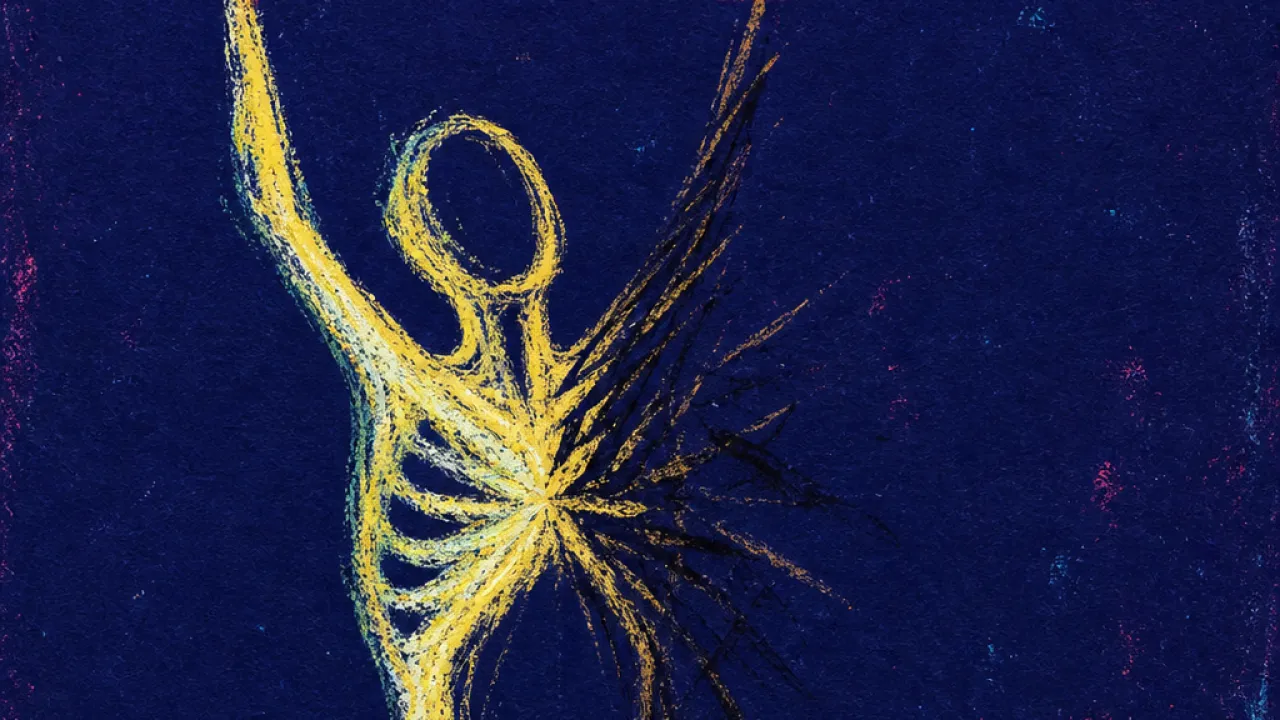
Joy Performance Fatigue is what it feels like when being the bright one stops feeling like a gift and starts feeling like a shift you cannot clock out of. You notice it in the tiny pause before you reply to a group chat, the half-second where your actual mood appears and then gets covered by the funny line, the warm emoji, the “lol I’m good” that keeps everything moving. Your face knows what to do before you do; it lifts, smooths, arranges itself into ease, even when your body is asking for a quieter room, slower timing, or no audience at all. You may still love your friends, your family, your work, your plans, the life you have built, and that is part of what makes it so hard to explain. Nothing has to be fake for it to be tiring. The joy can be real, and the performance can still drain you. You become careful with your dimmer moments because people are used to your light; they come to you for warmth, for the joke, for the mood repair, for the evidence that everything is fine. So you learn to keep the red flag raised, to make gratitude sound effortless, to turn achievement into celebration before you have had time to feel what it cost. Underneath, your jaw tightens, your chest feels a little crowded, and your inner voice starts asking a question you keep postponing: who am I allowed to be when I am not making the room easier to be in? The cost is not that you lose joy; it is that joy stops being a place you can enter and leave freely, becoming a lit-up posture you have to hold, much like the child on The Sun, exposed in full light with open arms while the horse keeps moving underneath, bright to everyone watching and almost nowhere to rest inside the brightness.

What's pulling at you?

You are not exhausted because you dislike joy, connection, or celebration. You are stuck between two real needs: wanting to stay warm, easy, and available for the people and spaces you care about, while also needing your lower-energy, less polished self to enter the room without becoming a problem.

How It Shows Up?

  • You are alone on a Sunday afternoon with no plans, and instead of relief, you feel the weird drop that comes when no one is asking you to be fun. Your face softens before you notice it, your shoulders fall, and there is a faint ache behind your eyes from holding a brighter version of yourself all week. The quiet feels unfamiliar, almost suspicious, like a raised cup finally being allowed to come down. You can let the room stay plain without turning the moment into proof of anything.
  • A friend texts, “miss your energy,” and your thumb hovers over the keyboard while you try to find the version of yourself they are reaching for. You type something funny, delete it, type it again, and feel your throat tighten because the reply has to sound light enough not to change the mood. Your chest feels slightly compressed, as if the red banner is already in your hand before you have agreed to carry it. It is allowed to answer from your actual capacity, even if the message is less sparkling than usual.
  • At work or school, someone announces a win, a launch, a grade, an acceptance, a team moment, and the room turns toward celebration before your body has caught up. You smile on cue, add the enthusiastic comment, maybe drop the right emoji in Slack or the group chat, while your jaw locks and your stomach feels flat instead of lifted. The applause lands like another task, a public height your arm has to keep holding after the cup is already heavy. You can register the moment without forcing your whole system to match the room immediately.
  • You are at a party, dinner, class hangout, or after-work drinks, and everyone knows you as the person who keeps things easy. You laugh a little louder than you feel, ask questions to keep the rhythm moving, rescue awkward pauses, and watch yourself maintain the weather of the group from somewhere slightly behind your own eyes. Your cheeks start to ache, your breathing stays high in your chest, and the room feels like a dance that cannot stop without everyone noticing. It is fine to step outside, go to the bathroom, or become quieter without making a formal announcement.
  • Your body starts sending the same signal before you can name it: a tight smile that stays too long, a tongue pressed to the roof of your mouth, shoulders lifted as if you are bracing for another request to be bright. Even when nothing is wrong, your face prepares itself for being seen, and your ribs feel like they are holding a small private dimness behind a well-lit window. The sunflower is still upright, but the stem in your hand feels thin. You can treat that tension as information, not an instruction to perform harder.

Joy Performance Fatigue in Tarot Cards

Joy Performance Fatigue lives in the gap between the warmth people recognize in you and the private capacity they do not always see. It can show up as a tight smile, a locked jaw, or a chest that feels slightly compressed while you keep the room feeling light. From an existential angle, the structural framework is about what happens when visible aliveness becomes the role that keeps connection stable. The Tarot Cards below make that held-up brightness easier to see without explaining it away.

The Sun Reversed
The Sun's symbols repeat brightness across the whole image: sun, flowers, wreath, feather, flag, horse, and sky all participate in the same radiant field. In the reversed texture, that field can harden into a demand that everything stay visibly alive, positive, and well-lit. Joy Performance Fatigue forms when growth has to keep looking healed. The red flag stops being only celebration and becomes a signal that must stay raised, while the open sky leaves little room for private dimness, uncertainty, or recovery. In personal growth, this is the exhaustion of having to prove that the work is working. The card names a quieter truth: vitality becomes distorted when it is required to perform constant brightness instead of moving through natural cycles of light, rest, and return.
The World Upright
The central figure dances with apparent ease, yet the pose is held inside a wreath like an emblem that must continue to signify completion. The wands do not act on an external object; they become part of the display, turning power into choreography. In social settings, that image maps onto the exhaustion of looking effortless. You may be the funny one, the polished one, the upbeat one, or the person who keeps the vibe intact, while the cost of sustaining that visible ease has nowhere to go. The fatigue comes from the gap between genuine aliveness and the demand to keep performing aliveness for the group. The card does not accuse the dance of being fake; it shows how a living movement can become tiring when it must keep proving that the circle is whole.
Three of Cups Reversed
Raised chalices hold the figures in a lifted, outward-facing posture. The bodies are organized around the visible signal of celebration, and the cups remain high even though the image gives no evidence that anything is being received or metabolized. In the reversed texture, that celebratory posture can become a locked output system. You keep producing the correct emotional signal because the scene recognizes joy more easily than it recognizes depletion, ambiguity, or inner lag. Joy Performance Fatigue is the cost of maintaining the toast after the body has stopped moving with it. The card gives that cost a visible shape: a cup still lifted, a smile still legible, and a private system quietly running out of room behind the signal.
Nine of Cups Upright
The seated man faces outward with crossed arms while nine cups rise behind him like a finished display. His satisfaction is visible before any exchange happens; the body presents completion while the chest remains closed. For inner work, that arrangement turns happiness into something you may feel forced to keep legible. You may have enough proof that you should be fine, yet the posture shows a different friction: the more convincing the display becomes, the less room there is for unpolished internal truth. Joy Performance Fatigue names the strain of maintaining contentment as a surface condition. The Nine of Cups holds the moment where pleasure, pride, and relief are real, but they harden into a pose that stops the inner world from breathing.
Reversed
The raised cups continue to present a finished feast while the seated body stays locked in front of them. The display can remain bright even when the person maintaining it has no active participation in the pleasure it advertises. In family settings, that reversal appears when happiness becomes a job: smiling through celebrations, sounding grateful, staying agreeable, keeping the family image untouched. You are not simply tired of people; the card shows fatigue forming where your body must keep proving that the room is joyful while your inner experience has no permitted place at the table.
Ten of Cups Reversed
The card's joy is visible everywhere: raised arms, dancing children, bright cups, flowing river, and a settled home. When reversed, that visibility can become a demand for emotional consistency, as if the only acceptable response to a good-looking option is delight. A decision can become exhausting when doubt has nowhere legitimate to stand. You may keep checking whether you should feel happy, relieved, or certain, while the actual choice signal gets buried under the labor of matching the scene. Joy Performance Fatigue names the cost of treating visible harmony as proof that the decision must be right. The card gives that fatigue a boundary: it is not ingratitude, but the strain of being asked to perform happiness before the choice has been honestly examined.
Four of Wands Reversed
Flowers and fruit hang overhead as signs of plenty, but they are not being eaten, held, or metabolized by the bodies below. The open space remains visible from the front, and the raised celebratory posture keeps the scene activated rather than allowing it to become a place of rest. Joy Performance Fatigue forms when positive affect becomes another object that has to stay on display. You may feel pressure to be grateful, healed, excited, social, or light because the visible conditions suggest that joy should be available, yet the inner system still needs quiet, privacy, and unperformed recovery. The reversed Four of Wands gives this fatigue a precise image: abundance suspended above the body while the body keeps performing the correct response to abundance. In introspection, it marks the difference between joy that nourishes and joy that becomes one more role the psyche has to keep holding up.
Six of Wands Reversed
The crowned rider is already victorious, yet his body must keep presenting victory while the horse carries him through the crowd. The raised wand stays lifted, the posture stays composed, and the celebration continues as a moving demand rather than a finished moment. In family dynamics, that image becomes the fatigue of having to look grateful after meeting an expectation. You may have achieved the thing, survived the visit, accepted the praise, or played the successful adult child, but the family system still requires the correct expression on your face. The struggle lives in the gap between what the ceremony displays and what the body has to keep holding. Recognition does not end the performance; it can become the next form of emotional labor.
Page of Wands Reversed
The bright yellow-orange clothing, salamander pattern, and upright wand make fire visible from a distance. In the empty desert, that fire has no immediate source of return; the body is occupied with keeping the sign upright. That image mirrors the friend-group role of being the spark, the hype, the one who keeps the emotional temperature alive. You can keep animating plans, chats, and morale while your private capacity thins, because the bond rewards visible warmth and leaves little room for a low flame.
Queen of Wands Reversed
The Queen holds the living signs of vitality in her hands: a sprouting wand and a sunflower. Around her, the desert remains dry and the throne keeps her energy arranged into a formal display rather than letting it move freely through the landscape. When this structure turns inward, joy becomes something held up for visibility instead of something that circulates. The body stays poised, the symbols stay bright, but renewal is concentrated into small managed points while the wider inner field receives very little moisture. For introspection, the card identifies the fatigue that comes from keeping brightness available on command. You may still look inspired, social, attractive, or creatively alive, but the struggle lives in the mismatch between performed radiance and actual replenishment.

Joy Performance Fatigue in Tarot Card Reading Insights

When joy starts feeling like a role, other people bring that same tension into readings: the bright reply, the raised cup, the cheerful face that stays on after the body is done. These readings shift from the cards themselves into how that performed brightness appears in a session. Tarot Reading Insights from related readings.
Psychological struggles related to Joy Performance Fatigue