Why Is Everything Due Now?

Explore the deadline dynamic, related tarot cards, and reading insights from others who brought the same pressure into a session.

Arbitrary Deadline Pressure
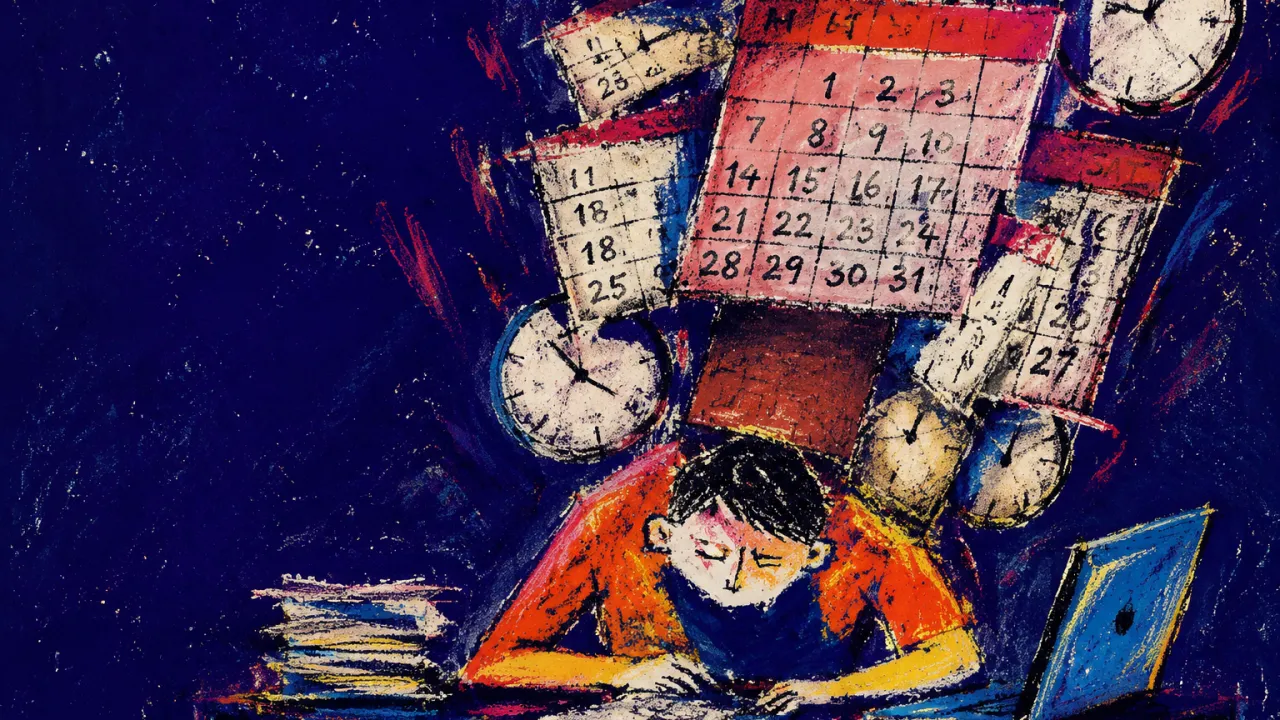
A solitary figure with lowered shoulders at a desk as calendar blocks settle overhead and clocks crowd the narrowing room.

What is this situation?

Arbitrary Deadline Pressure: you open a morning message and find that a piece of work expected next week is now due by the end of the day, with no new event, dependency, or customer commitment explaining the change. The date was chosen in a meeting you were not in, by people who will not be doing the work, and it arrives already framed as non-negotiable. You reshuffle the calendar, delay planned tasks, and start moving between documents, calls, and chat threads while new requests continue to land. Every few hours, someone asks for an ETA, but the scope stays the same or quietly grows; approvals still take time, colleagues still have other priorities, and the person enforcing the deadline treats each practical constraint as resistance. If you ask what the date is tied to, the answer circles back to urgency: leadership wants it, the client may ask, or it would simply be better to have it sooner. By late afternoon, your shoulders are held high over the keyboard, lunch has gone cold, and the work that was important yesterday has become tomorrow's problem. Even when you meet the deadline, the compressed turnaround becomes evidence that the next one can be shorter, so the exception hardens into the normal pace. The evening remains provisional because a late message can turn tomorrow's work into tonight's emergency. You finish one rush only to face the untouched queue, much like the figure in the Ten of Wands, bent beneath a bundle so large that the path ahead is partly blocked from view.

Why it's not you?

The problem is not your pace; it is a deadline set without regard for scope, dependencies, or available hours, then enforced as if it were fixed. When decision-makers keep the date rigid while changing the work, the pressure is built into the setup, not created by the person completing the task.

Arbitrary Deadline Pressure in Tarot Cards

Arbitrary deadline pressure is the repeated demand to treat unexplained or shifting due dates as fixed emergencies. Your shoulders stay held high over the keyboard while hours disappear into documents, calls, and chat threads. It is an environmental and structural dynamic: the people setting the date control the clock, while the people completing the work absorb every scope change. The Tarot Cards below reflect the visible contours of this pressure without deciding what you should do.

The Emperor
Reversed
The ruler sits rigidly on a stone throne, armoured beneath formal robes and separated from the workable landscape by barren mountains. Reversed, authority remains able to issue commands but loses contact with the operational knowledge that would make those commands legitimate and executable. The date reaches you already fixed because leadership has retained decision power while leaving delivery exposure elsewhere. When scope, dependencies, and available hours are treated as resistance, your practical knowledge is blocked from influencing the plan, and hierarchy substitutes for evidence in the construction of urgency.
Justice
Reversed
The seated figure holds balanced scales in one hand and an upright sword in the other between two formal pillars. Reversed, measurement and enforcement stop functioning as one accountable process: the sword still imposes the decision, but the scale no longer incorporates scope, dependencies, available hours, or the delivery worker's evidence. You are expected to treat the resulting date as objective even though it was selected in a room you did not enter and cannot be tied to a changed commitment. The blocked career pathway is procedural voice; without it, the organisation can label a one-sided allocation of time as a neutral deadline.
The Devil
Upright
Two workers stand chained to a raised pedestal beneath a controlling figure, yet the collars are visibly loose enough to expose the arrangement rather than make it invisible. The scene mirrors a workplace where access to approval, status, or security appears tied to accepting each artificial emergency without contest. The chain tightens through repetition: you meet one compressed deadline, and that delivery is used as proof that future turnarounds can be shorter. Because the links are visible, the structure can still be named as a performance contract built on manufactured urgency, separating real business necessity from compliance that the culture has learned to extract.
Two of Pentacles
Reversed
The two pentacles are joined by a continuous loop as the figure shifts his weight and ships pitch on the water behind him. Reversed, the balancing mechanism loses usable rhythm, mirroring a job where each new deadline instruction forces another priority out of place without reducing the total workload. You are evaluated on your ability to keep everything moving even though leadership controls what enters the loop and can change its order at any moment. The career bottleneck is therefore not a lack of adaptability; it is responsibility for simultaneous outcomes without matching authority to stabilise sequence, scope, or capacity.
Three of Pentacles
Reversed
The craftsperson stands on a bench while two other figures hold the plan inside a shared building project. Reversed, proximity does not produce coordination: the people discussing the work and the person executing it no longer operate from a genuinely shared understanding of sequence, effort, or dependency. The deadline is then chosen outside your delivery context and handed down as though planning has already occurred. You remain accountable for assembling the result while approvals and collaborator priorities stay unchanged, so the blocked resource is not skill but a common production plan with binding commitments from every participant.
Seven of Pentacles
Reversed
The cultivated vine carries visible pentacles while the worker pauses with his weight on the tool, acknowledging that completed labour and harvestable output are not the same moment. Reversed, access to that production interval is denied: the organisation demands the result sooner without changing what the work needs in order to mature. You may be held professionally accountable for approvals you cannot issue, colleagues whose queues you do not control, and review stages that still take time. The deadline turns those structural dependencies into apparent personal delay, allowing impatience above you to masquerade as a performance standard below.
Four of Swords
Reversed
The recumbent figure lies in a protected chamber, yet three swords remain suspended directly overhead and a fourth stays within reach. Reversed, the sanctuary cannot perform its basic function: work pressure follows the body into the period that was supposed to contain rest. A late message can therefore convert tomorrow's task into tonight's emergency before your attention has fully left the previous rush. You may be physically away from the desk, but the possibility of another compressed deadline keeps the evening operationally open, blocking reliable access to recovery rather than merely reducing leisure.
Eight of Swords
Upright
The blindfolded figure stands loosely bound inside a partial fence of swords, with open ground and a distant structure still present beyond the enclosure. The scene captures how a deadline framed as non-negotiable can narrow the perceived option field before scope, sequencing, or capacity questions are even allowed into the conversation. The bindings do not erase the organisation's real power, but their looseness reveals a distinction between an enforced date and the total absence of alternatives. You can recognise that urgency language has occupied the internal decision space, making every practical constraint sound like personal resistance even when the constraint belongs to the work system.
Knight of Swords
Reversed
The knight's sword points forward as the horse surges through wind, bent trees, and unsettled clouds. Reversed, professional drive is stripped of directional discipline, leaving a forceful rush that treats anything in its path, including scope evidence and approval constraints, as an obstacle to be overridden. The manager or stakeholder enforcing the deadline may equate this intensity with decisive leadership. You experience its downstream form as repeated escalation, same-day demands, and pressure to move work through systems that have not been cleared, making another person's urgency the governing pace of your role.
Eight of Wands
Upright
Eight staffs move together through clear air toward the ground, creating a visual field dominated by rapid incoming motion. In the workplace, that converging movement resembles a sudden deadline change followed by chat messages, calls, ETA requests, and additional instructions arriving before the delivery system can absorb the first demand. The clear sky makes rapid action possible, so you may genuinely produce a fast result. Yet when career value becomes tied to matching every incoming object's speed, responsiveness is converted into an open-ended performance contract and the absence of a real business trigger disappears behind visible momentum.
Nine of Wands
Upright
The bandaged figure grips one staff while eight more form a guarded line behind him, his attention fixed on whatever demand may arrive next. The open ground shows that work can continue, but previous strain has changed the role into a permanent readiness posture rather than a sequence with reliable closure. After enough sudden deadlines, you may begin protecting every calendar block provisionally because any message can reopen the queue. This vigilance is professionally adaptive to an unstable system, yet it also reveals the accumulated cost of being repeatedly required to defend capacity after decisions have already been made elsewhere.
Ten of Wands
Upright
The carrier's arms are full, his back is bent, and the ten staffs block much of his view even though the destination remains ahead. The image directly reproduces a delivery role carrying the full weight of scope while receiving little visibility or control over the route used to set the date. You may still complete the work because the town is reachable, but successful arrival can hide the amount of schedule debt and displaced labour used to get there. When that exceptional effort is recorded only as on-time delivery, the workplace converts overload into evidence that the next deadline can be shorter.

Arbitrary Deadline Pressure in Tarot Card Reading Insights

Other people have brought arbitrary deadline pressure into readings after days shaped by moving dates, unchanged scope, and repeated ETA checks. The Tarot Reading Insights below show how this same pressure entered their sessions.


Psychological Contexts Related to Arbitrary Deadline Pressure