Researching Instead of Writing: Let One Bounded Task Shape Direction
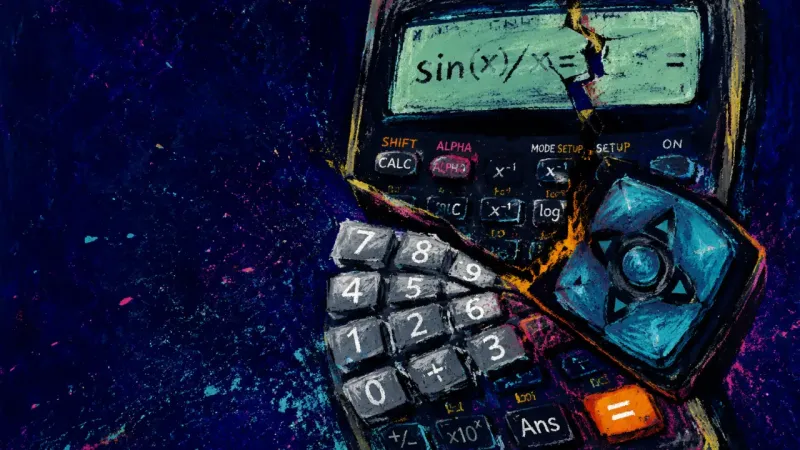
The Academic Sentence That Survived Twelve Tabs
I knew the pattern as soon as Alex sat opposite me in a bookable study room near Russell Square and woke their laptop. They were a 28-year-old part-time postgraduate in London, trying to build an interdisciplinary academic route without the usual sequence of seminars, supervisory deadlines, and recognised milestones. At 10:15 that Wednesday morning, the same unfinished introduction glowed beside a cold coffee. The fluorescent lights hummed overhead, a nearby printer clicked at irregular intervals, and their fingers hovered above a sentence that had not changed since the previous week.
“I told myself I was checking one source,” Alex said. “Then forty minutes disappeared. I had twelve tabs open, new Zotero tags, two programme pages, and the exact same sentence. I can explain the project for an hour, but I still can’t start today’s paragraph.”
Their shoulders had sunk as though someone had draped a rain-soaked academic gown across them. Aimlessness was not an empty feeling here. It had weight: the warm laptop under their wrists, the restless pull to check another screen, and the private sting of knowing that a respectable research history could still conceal an untouched draft.
Alex wanted to advance an off-script academic path, yet every work session that could make the path more concrete also raised the question of what it meant, where it led, and whether it counted. Planning offered temporary control. Writing threatened to turn one possibility into a visible choice.
“This doesn’t look like laziness to me,” I said. “It looks like productive procrastination doing a useful job: protecting you from a commitment that currently feels much larger than one paragraph. I’m not going to ask the cards to decide your academic future. I want us to make the loop visible, find where it can be interrupted, and draw a workable route through the fog.”
Choosing a Map at the Edge of the Academic Script
I invited Alex to place both feet on the floor and take one unforced breath while holding a narrower question: not “What should my whole career become?” but “What happens between opening the draft and leaving the central work untouched?” I shuffled slowly. The small ritual was simply a transition from rehearsing the problem to examining it.
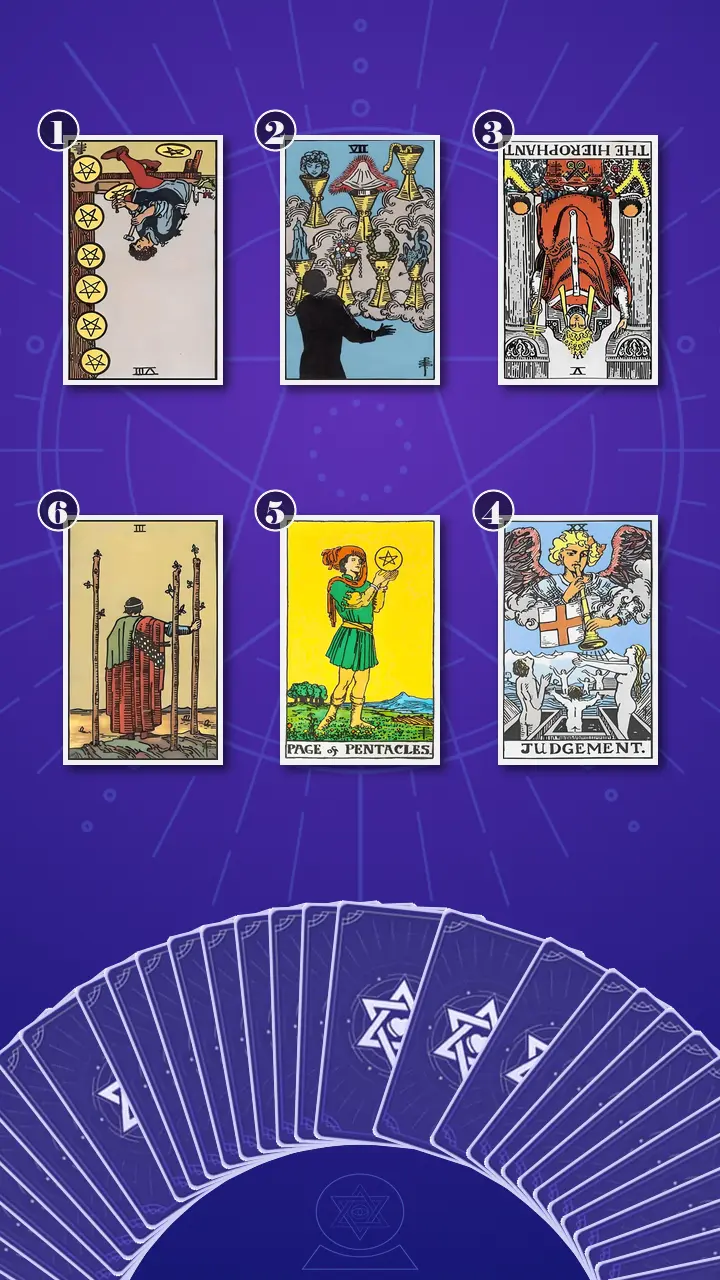
I chose the Transformation Path Grid · Context Edition, a six-card tarot spread suited to academic procrastination on an off-script path. This is how tarot works in my practice: the cards do not issue a supernatural verdict. Their images externalise a pattern so that its parts can be inspected, questioned, and changed by the person living it.
I chose six cards because Alex did not need a broad life audit or a prediction about success. They needed the smallest map capable of separating the visible delay from the machinery beneath it. The upper row would show the observable procrastination pattern, the immediate blockage, and the unresolved relationship with conventional academic structure. The lower row would reveal a catalyst, translate it into one bounded experiment, and show the perspective that could emerge from repeated evidence.
I arranged the cards in two rows of three. The reading path moved across the diagnostic row, dropped at the right edge, and returned through the transformation row. It resembled a route reaching the boundary of an inherited map, turning, and coming back with directions that could actually be walked.
The Workbench Beneath the Browser History
Position 1: The Perfectly Arranged Workbench
“The card I’m turning now represents the observable procrastination pattern,” I said. “It shows what happens on your screen and in your calendar before we try to explain why.”
I revealed the Eight of Pentacles, reversed. In the traditional image, a craftsperson stays with one pentacle long enough to shape it, while completed pieces form an orderly row behind the bench. Reversed, that rhythm was interrupted. Alex had the academic equivalent of a perfectly arranged workbench: a full Zotero library, colour-coded Notion tags, a revised calendar, and several open introductions. Yet the single piece under construction, the paragraph that could develop the actual project, remained untouched.
I described the card as blocked Earth energy. The capacity for diligence was present, but it had been displaced into file names, citation systems, formatting, and repeated preparation. Those tasks created visible academic activity while preventing sustained contact with the work that could be evaluated. Even the distant town in the card felt relevant: Alex could see an imagined future route, but each craft session was being replaced by preparations for travelling there.
“I use a lens called Research Bottleneck Analysis for this,” I explained. “A bottleneck is not proof that the researcher lacks discipline or ability. It tells us where the process is asking for information that the current behaviour cannot produce. Your system keeps requesting certainty about meaning, but reorganising the system cannot supply that evidence. Only contact with the central material can.”
Alex did not nod. They gave a short, bitter laugh and pressed a thumb into the cardboard sleeve around their coffee. “That’s so accurate it feels a bit brutal.”
“Then let’s remove the brutality,” I said. “The card is describing a work pattern, not your character. Planning can feel like progress while keeping the central sentence untouched. We only need to notice which task maintains the appearance of movement and which task develops the craft.”
Position 2: Seven Futures in a London Library
“The card I’m turning now represents the immediate blockage,” I said. “It asks why direct engagement becomes difficult at the exact moment you intend to begin.”
I revealed the Seven of Cups, upright. A shadowed figure faced seven cups suspended on a cloud bank, each holding a different promise, danger, or identity. In Alex’s life, those cups looked like browser windows: a research question, a department, a method, a qualification, a funding page, a possible career, and the article that might finally explain everything.
Alex moved between these possibilities as though each one contained a complete future. The attraction was not simple distraction. Keeping every cup in the air preserved every meaningful life they might otherwise lose. The darker side was the fear that reaching for one would expose how little control anyone can have over what follows.
This was Water energy in excess. Imagination and emotional possibility had spread beyond any practical boundary. The card did not say Alex had too many interests or needed to become less interdisciplinary. It showed that every option remained equally vivid because none had been tested through sustained work. An unclear path does not become clearer while its central work stays untouched.
I asked, “Which possibility do you keep alive by researching it instead of testing it?”
Alex looked from the seven cups to the tabs on their laptop. Their jaw tightened before they answered. “The version where this becomes a serious research career. I don’t choose because every option still feels like a life I could lose.”
I let the sentence settle. I could hear both parts of it: the genuine desire for freedom and the pressure to rank every future before gathering evidence from one. The Seven of Cups was not asking Alex to choose a permanent identity. It was asking which single question needed real evidence this week rather than another imagined answer.
Position 3: The Ruler Alex Claimed Not to Use
“The card I’m turning now represents the structural root,” I said. “It points to the inherited standard that keeps the visible pattern in place.”
I revealed The Hierophant, reversed. The crossed keys, formal pillars, and two acolytes usually evoke sanctioned knowledge, institutional access, and established teaching. Reversed, those structures were neither simply rejected nor fully trusted. Alex had stepped away from the standard academic ladder while continuing to use its funded placements, departmental labels, conventional methods, and doctoral sequences as the private measure of whether their own route was legitimate.
They had seen a peer’s funded doctoral announcement on LinkedIn two nights earlier while travelling home on the Northern line. The brakes had squealed, the phone had felt hot in their palm, and their chest had dropped before they could name why. Alex did not want someone else’s destination, but the visibility of that destination made their own unfinished route look unreal.
The reversal showed blocked institutional energy and an overcorrection risk. To prove their independence, Alex sometimes treated every borrowed syllabus, deadline, or mentor-style conversation as a surrender of authorship. Yet without useful checkpoints, freedom became shapeless. Rejecting restrictive convention did not require inventing every working practice alone.
My years among Cambridge archives and archaeological sites have taught me that leaving a ruined structure behind does not make every surviving foundation useless. I can question who built a wall, what power it represented, and whether it should still determine the route, while also recognising that part of it may support something new. An off-script route still needs checkpoints, not someone else’s destination.
I mentioned the Wizard of Oz only briefly: an impressive authority cannot hand a traveller final proof of worth, but practical capacities become visible when they are used. The useful question was not whether Alex should obey the institutional map or burn it. It was which structures they could borrow without surrendering authorship.
Their thumb stopped rubbing the coffee sleeve. Their gaze shifted beyond the card as if replaying the LinkedIn post, then a long breath left their chest. “I thought I was resisting the standard route,” they said. “I didn’t realise I was still letting it grade me.”
When Judgement’s Trumpet Broke Through Do Not Disturb
Position 4: A Present Signal, Not a Permanent Verdict
The printer outside the room fell silent as I reached for the lower-right card. A single notification sounded from somewhere beyond the glass, clear against the sudden quiet. The environment seemed to offer its own small echo of the image I was about to reveal.
“The card I’m turning now is the catalyst,” I said. “It shows the energy capable of interrupting the cycle by replacing the demand for permanent certainty with an honest statement of present purpose.”
I revealed Judgement, upright. An angel’s trumpet carried one unmistakable signal across the scene, and the figures below rose in response. I told Alex that Judgement was not an external verdict on whether the project deserved to exist. Its upright energy was honest self-appraisal, accountable self-authorship, and the willingness to answer a present call without pretending it was a lifelong contract.
I brought Alex back to 10:15 a.m.: the weak transition, the first source, the twelve tabs, the fresh Zotero tags, and the draft still waiting. Their shoulders were heavy because they believed the gap had to reveal the entire route before they could write through it. Certainty still had no arrival time.
I then used the framework I call Academic Stratigraphy. I treated the spread as a set of layers rather than a collection of labels. At the surface sat the browser-tab spiral. Beneath it lay the cloud bank of untested futures. Deeper still was the inherited academic ruler Alex claimed not to use. Judgement marked a change in the deposit: the point where Alex could stop excavating for a final theory and identify one living layer of purpose.
On an archaeological dig, I do not reconstruct an entire civilisation before recording the first secure context. I work carefully with what the present layer can support. In the same way, Alex did not need a complete defence of their career. They needed to state what question they were willing to answer for now, then let one piece of work test that statement.
Your delay is not evidence that the path lacks legitimacy; give one present-tense reason a voice, and let Judgement's trumpet turn private drift into a commitment you can test.
For one beat, Alex’s breath stopped. Their fingers remained suspended above the table, and their pupils widened as though the unfinished library morning had begun replaying behind their eyes. Then their mouth tightened. “But doesn’t that mean I’ve been doing it wrong this whole time?” they asked, with more anger than relief. “I’ve spent months trying to make it coherent.” I told them the months were not evidence for a prosecution. The research had shown them the range of the field; it had simply reached the point where more range could no longer answer the next question. Their fist loosened one finger at a time. Their shoulders dropped, but the release left them briefly unsteady, almost blank in the face. Clarity had removed an excuse and exposed a responsibility: they could choose one test now. Their eyes reddened slightly, and the next breath came out with a tremor. “That feels smaller,” they said, “but also more real.”
I asked, “Now, using this new perspective, think back to last week. Was there a moment when this insight could have made you feel different?”
Alex returned to Sunday evening in the flatshare kitchen: the kettle clicking off, the washing machine thudding through the wall, and Google Calendar filling with possible study blocks while Monday’s first task remained unnamed. “I could have written why the question mattered this week,” they said. “I didn’t have to defend the whole route. I could have responded to this part of it.”
That was the key crossing in the reading. Alex had not moved from uncertainty to perfect confidence. They had moved from aimless, certainty-dependent delay toward the discomfort of a provisional focus. Judgement replaced “I need to know what this becomes” with “I can say what I am testing this week.” That shift created the first opening for curiosity, because commitment no longer had to function as a permanent verdict.
One Pentacle, Then the Horizon
Position 5: The Assignment Small Enough to Teach Something
“The card I’m turning now represents the practical action,” I said. “It translates the present-tense signal into a bounded academic experiment with a defined output and review point.”
I revealed the Page of Pentacles, upright. The Page held one pentacle at eye level while cultivated fields and distant mountains remained in the background. The horizon was not denied; it was temporarily placed behind the object that could be studied now.
This was Earth energy restored to balance. Where the reversed Eight had scattered practical effort across a polished workbench, the Page gave complete attention to one material output: 150 rough words, one page of analysis, an annotated source set, or a comparison of two methods. The task would create evidence without demanding expert certainty at the beginning.
I was careful to distinguish a small experiment from a smaller version of perfectionism. The Page did not ask Alex to design an intricate productivity regime or produce flawless prose every day. It asked for one visible result with a clear definition of done. Work was not the final verdict on the path; it was evidence about the path.
Alex drew the card slightly closer. The movement was modest, but it was the first time they had reached toward a card without looking back at the laptop. “I could compare the two sources I keep using to avoid making my own claim,” they said. “Then write 150 ugly words about the difference.”
Position 6: A Horizon Earned Through Work
“The card I’m turning now represents integration,” I said. “It shows the sustainable perspective that could emerge if you repeat the experiment and review what it actually teaches you.”
I revealed the Three of Wands, upright. A figure stood beside three planted wands and watched ships move through a wide channel. I contrasted it with the Seven of Cups. Both cards contained possibility, but the cups floated without ground. The Three of Wands offered a vantage point supported by work already initiated.
Its Fire energy was purposeful rather than frantic. After several completed memos or draft sections, Alex could compare what genuinely held their attention, what proved useful, and what created friction. Possible next steps would still exist, but they would no longer arrive with the equal emotional force of seven complete imagined lives. Some routes would become more credible because actual work had supplied information; others could be released or revised without being treated as failures.
I made no prediction that one week of writing would reveal the correct career. The card described a mode Alex could build: make, review, and adjust. The open water preserved freedom, while the planted wands kept that freedom from dissolving into shape. The destination could remain provisional because the next viewpoint would be earned from completed work.
Alex looked at the progression from the reversed Eight to the Page and finally the Three. “So I don’t get the horizon by staring harder at it,” they said. “I get a better view after I’ve planted something.”
“Exactly,” I replied. “The cards have not selected a future for you. They have shown how your own evidence can begin ranking possibilities that imagination alone keeps equally vivid.”
The Route Hidden Beneath the Planning
Viewed together, the spread told a coherent story. Alex’s current work rhythm had been disrupted because academic preparation was replacing direct craft. The Seven of Cups showed why: several untested futures remained emotionally active, and postponement offered temporary relief from losing any of them. The Hierophant reversed revealed the deeper structure, an off-script identity still being measured by inherited academic milestones. Judgement shifted authority toward an honest statement of present purpose. The Page of Pentacles grounded that statement in a small experiment, and the Three of Wands allowed completed work to support a longer view.
I described the core pattern as repeatedly redrawing a route across a campus without entering any building. Alex believed that a coherent map had to come before meaningful work. Yet each untouched building withheld the very evidence needed to improve the map. The spread contained no Swords card, which reinforced my sense that another layer of abstract analysis was not the missing ingredient. Water needed a boundary, Earth needed a repeatable task, and Fire needed something already begun.
The cognitive blind spot was precise: Alex had treated clarity as a prerequisite for work when, in this situation, work was one of the methods capable of producing clarity. The transformation direction was not from uncertainty to certainty. It was from future simulation to accountable self-authorship, then from aimless heaviness to grounded confidence built through provisional academic experiments.
The Thesis Stratigraphy Framework for the Next Study Block
I adapted my Thesis Stratigraphy Framework into two deliberately thin layers. I did not want Alex to rebuild the entire essay outline, because elaborate reconstruction could become another respectable form of avoidance. The first layer would expose the present purpose. The second would place one piece of evidence against it. A horizon review could happen only after something existed to review.
Alex raised a practical objection. “After an admin shift, even twenty-five minutes can feel impossible.”
I did not argue with their calendar. I reduced the minimum while preserving the experiment. Five minutes and 50 rough words could still create more evidence than an hour of route comparison. The boundary mattered more than heroics.
- Write the Present-Purpose Bedrock. On Monday, before opening Google Scholar, Zotero, or a programme page, use a plain document for five minutes. Write two sentences: what question matters to you now, and what responsibility you are willing to take on this week. Read them once, underline the main action verb, and let that verb select one bounded task. Keep the wording rough, personal, and provisional. If discomfort rises, pause and describe the task neutrally instead of rewriting the declaration for an imaginary department.
- Build One Evidence Layer. In one library, café, or post-shift study block, set a 25-minute timer before opening any new source. Use the first 20 minutes to produce 150 rough words, one analysis page, or a short comparison of two sources. Put tempting searches into a parking-lot note. Use the final five minutes to record one fact about what held your attention, what helped, or what created friction. On a depleted day, use a five-minute minimum or 50 rough words. Stop when the agreed boundary ends; the aim is a repeatable experiment, not a heroic session.
“These are not obedience exercises,” I told Alex. “They are instruments for collecting evidence. You remain free to revise the question, change the method, or leave the route. The difference is that your next decision will have something more substantial beneath it than comparison and prediction.”
A Week Later: One Paragraph, Not a Final Verdict
Six days later, I received a message from Alex with a screenshot of 173 rough words. They had written the two-sentence declaration before opening Google Scholar, compared the two sources, and left three tempting searches in the parking-lot note. “It didn’t reveal my career,” they wrote. “But I now know the second method gives me something I actually want to argue with.”
They had also slept through the night. Their first waking thought was still, “What if this is wrong?” This time, they told me, they smiled, opened the draft, and treated the question as information rather than a verdict.
I regarded that as the quiet proof of our Journey to Clarity. The tarot had not rescued Alex, legitimised the project, or chosen a destiny. It had made the loop visible and given language to a capacity Alex already possessed: the ability to make a provisional commitment, test it honestly, and remain the author of what happened next.
When an off-script future matters, the pressure to choose the perfect route can leave the shoulders heavy over the same unfinished sentence. I have come to think of clarity here not as a complete campus map, but as the moment the browser quiets, one pentacle stays in the hands, and the first real mark appears on the work.
If one small piece of work could give you information without deciding your whole future, what might you be curious to notice while you stayed with that one pentacle long enough to shape it?