Participation: 20% and the Performance-Based Shame Spiral
If you’re a discussion-heavy program student in a big city (Toronto, London, NYC) and “Participation: 20%” makes your throat tighten like you’re about to be graded as a person, not a learner—yeah.
Alex showed up at my café in Toronto with that exact look: the kind of careful, neutral face people wear when they’re trying not to take up space. I slid them a small cappuccino—warm ceramic, cinnamon on top—and watched their hands hover near the cup without quite relaxing.
They described a Wednesday seminar at U of T: 9:17 a.m., fixed desks, the HVAC hum louder than it has any right to be. They sit near the aisle with their notebook open and their laptop angled like a shield. They write down a genuinely good point—then their thumb rubs the pen grip until it squeaks. Their throat tightens. Their breathing goes shallow. The discussion speeds up and their brain starts doing that “wait for the perfect opening” math while they’re also praying nobody looks at them.
“I’m not trying to be quiet,” they said, eyes on the table like it might give them instructions. “It just… happens. And then after class I replay it like a clip on loop. I’m mad at myself, but also relieved I wasn’t corrected in public. Which is… gross.”
I nodded, because I’ve seen this exact loop more times than I can count—bright students with a mind that moves fast, and a nervous system that treats visibility like a threat. “We’re not here to force you into some ‘confident speaker’ personality,” I told them. “We’re here to find clarity about what’s actually making you go mute—what old shame is running the show—and what your next small, doable move is.”
Alex’s self-consciousness wasn’t an abstract feeling. It sat in their body like a tight knot pulled through the throat—like their voice was a scarf someone yanked mid-sentence, not enough to choke, just enough to make every breath feel supervised.
Choosing the Compass: The Transformation Path Grid (6) Spread
I don’t treat tarot like a crystal ball in here. I treat it like a structured conversation—a way to map a pattern when your mind is too flooded to see the system you’re living inside.
I asked Alex to take one slow breath with me—not to “calm down,” but to land in the body for a second. Then I shuffled while they held the question in plain language: “Participation is 20%… what old shame makes me mute? What’s next?”
“Today I’m going to use a spread I designed for exactly this kind of freeze response,” I said. “It’s called the Transformation Path Grid (6) · Context Edition.”
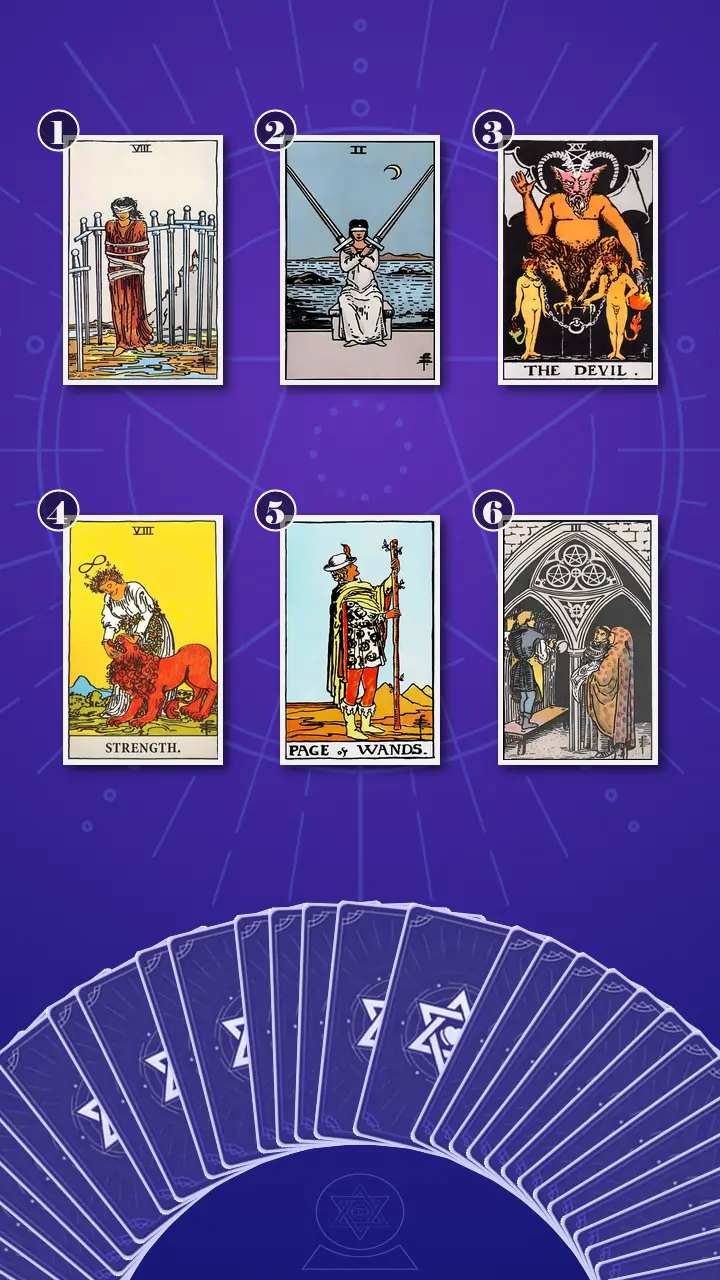
For anyone reading along: this spread works well for participation grade anxiety and shame-based self-silencing because the surface issue usually isn’t ‘having nothing to say.’ It’s a patterned shutdown tied to fear of judgment. The grid tracks a clean arc: what’s happening in class (present) → what clamps the voice in the moment (block) → what older shame script fuels it (root) → the turning point that changes your relationship to fear (key trigger) → a one-week experiment (action) → and how it integrates into identity (integration). No predictions, no fate—just a map from stuck to next steps.
I pointed to the empty 2x3 layout on the table. “Top row is the trap forming: what you do, what blocks you, where it comes from. Then we drop to the bottom row: the pivot, the experiment, the integration.”
Alex gave a quick, tense laugh. “That’s… weirdly comforting. Like at least there’s a shape to it.”
Reading the Top Row: Where the Freeze Forms in a Fast Seminar
Position 1 — The observable participation pattern
“Now flipped over, the card that represents the observable participation pattern—what you do in class when you want to speak but don’t, and what the silence is protecting.”
Eight of Swords, upright.
This one always lands in the body first. In modern life, it’s exactly this: mid-seminar, you’ve got a valid point—maybe even one your prof would like—but you’re stuck behind an invisible “can’t” screen. You rehearse it internally, your eyes stay on the page, and your body behaves like speaking is physically risky (tight throat, shallow breath). The trap isn’t that you’re actually forbidden to speak; it’s that the room feels like a cage built out of imagined consequences and self-censorship.
In terms of energy, this is Air in excess—thinking as containment. Not thinking to learn. Thinking to prevent exposure. The blindfold on the card says, “I can’t see options,” and the loose ropes say, “The cage is real… but it’s not as sealed as it feels.”
Alex let out a small, bitter little laugh—more breath than sound. “That’s… too accurate,” they said. “Like, ‘brutal’ accurate.” Their shoulders rose a fraction, like bracing for me to scold them.
“I’m not here to scold you,” I said gently. “Going mute isn’t laziness—it's protection that got a little too good at its job.”
Position 2 — The in-the-moment block
“Now flipped over, the card that represents the in-the-moment block—the specific thought or inner rule that clamps down the voice during participation moments.”
Two of Swords, upright.
The modern-life scene is almost cinematic: the moment you could jump in, a protective rule kicks on—stay neutral, stay quiet, don’t give anyone a chance to correct you. You hold your face steady, you hold your breath, and you wait for someone else to take the risk. Silence becomes a form of control—because if you don’t speak, you can’t be “wrong on record,” even though you pay for that control with regret later.
Energetically, this is Air in blockage: crossed swords over the chest, a full-body “Do Not Disturb.” It’s not “I don’t know.” It’s “I refuse to be on record.”
I mirrored it back the way it happens in real time. “Option A: speak and risk correction. Option B: stay silent and keep control.” I tapped the edge of the card. “And your body picks control—jaw clench, eyes down to the notes—because control feels like safety.”
Alex’s reaction was immediate and specific: their lips pressed together, their nostrils flared like they were trying not to inhale too sharply, and then they gave me a tiny nod that looked almost annoyed. “That’s the rule,” they said. “It’s like… if I don’t speak, I can’t be wrong. And if I’m not wrong, I can’t be embarrassed.”
Position 3 — The old shame engine
“Now flipped over, the card that represents the old shame engine—the earlier internalized message about being seen or heard that makes speaking feel unsafe.”
The Devil, upright.
Under the freeze is a shame contract: visibility equals evaluation, and evaluation equals belonging. So your brain treats participation like a public-worth test—if your comment isn’t impressive, it becomes ‘evidence’ you don’t deserve to be in the room. That’s why your body obeys the silence rule so fast; it thinks it’s preventing exposure, not just avoiding awkwardness.
Energetically, The Devil is attachment + fear—a grip that feels permanent. And here’s the detail I always point out: the chains are loose. Not because it’s easy, but because it’s questionable. It means the shame is loud, not omnipotent.
I pulled in the sensory callback Alex had mentioned. “This is the Quercus screen glare moment,” I said. “You see ‘Participation: 20%’ and your stomach drops before you even have a thought. The fear isn’t ‘I won’t have ideas.’ The fear is ‘If I speak and it’s not impressive, everyone will know I don’t belong.’”
Alex went still for a beat—breath caught, eyes unfocused like they were replaying a memory—then their shoulders sank. “Oh,” they said, voice quieter. “It’s not that I’m bad at talking. It’s that I’m terrified of what talking means.”
When Strength Spoke: The Practice-Not-Proof Pivot
I told Alex, “We’re turning to the bottom row now. This next card is the leverage point—the thing that changes the dynamic.” The café around us softened into background noise: the steam wand hissed once, then stopped; someone’s spoon clinked against a glass; rain ticked the front window like quiet punctuation.
Position 4 — The turning point (key trigger)
“Now flipped over, the card that represents the most direct leverage point for transformation—the inner capacity that can loosen shame’s grip and restore self-trust in speaking.”
Strength, upright.
In modern life, this isn’t a personality makeover into “bold.” It’s you staying kind to yourself in the exact second your fear spikes. Heart racing, hands a little cold, you take one slow breath and speak one sentence anyway—without trying to punish your nerves out of existence. You’re not forcing the lion to shut up; you’re holding it steady so your voice can move.
Energetically, Strength is balance: courage without violence. Regulation before performance. It’s the opposite of the Two of Swords block. Instead of “I’ll be safe if I control everything,” it’s “I can be safe while I feel discomfort.”
And this is where my café brain always kicks in. I’ve spent twenty years watching people treat coffee like a moral test—too much, too little, the “right” way, the “wrong” way. But coffee doesn’t ask you to be perfect; it asks you to be in relationship with it. The same with your nervous system. In my own toolbox I call it Knowledge Filtration: if your filter is too tight, nothing flows. If you grind your thoughts too fine—trying to remove every possible “stupid” particle—you end up with bitterness and blockage. Strength is the moment you loosen the filter just enough for one clean sentence to pass through.
Here’s the pivot sentence that matters most:
Not “I must be fearless before I speak,” but “I can hold my fear gently and still offer my voice”—like Strength taming the lion without violence.
Setup: Alex was living inside that aisle-seat moment: notebook open, point written down, waiting for the perfect opening—while their throat tightened and their breathing got shallow. The moment would pass, and the regret would hit on the walk home like a loop they couldn’t close.
Reinforcement: I watched the words land in Alex in three visible steps. First, the freeze: their breath paused, and their fingers stopped fidgeting with the cup sleeve mid-rub. Then the cognitive seep: their eyes drifted off the card, unfocused, like their brain was testing a new equation—What if I don’t need to win against fear first? Finally, the release: a slow exhale from deeper in the chest, shoulders lowering as if someone had unclipped a hidden backpack strap.
“That… sounds survivable,” they said, and there was a flicker of irritation in it too—grief, almost, for how hard they’d been forcing themselves. “But I hate that it’s true. Like… I’ve been waiting to be fearless.”
“Of course you have,” I said. “That’s what shame teaches: ‘Earn safety by being flawless.’ Strength says: ‘Start while you’re shaking.’ Participation isn’t a public IQ test. It’s learning out loud.”
I offered them the concrete anchor: “Try a one-breath rule. Inhale, exhale, then speak one sentence before your mind starts negotiating.”
Then I asked, exactly when the room was quiet enough to hear the truth: “Now, with this new lens, look back at last week—was there a moment you almost spoke where this would have changed how you felt, even 5%?”
Alex blinked hard once, then nodded. “Tuesday,” they said. “I had a question. It wasn’t even a hot take. I just… didn’t want to be seen asking something ‘basic.’”
That’s the shift right there: from performance-based shame and freeze-driven silence to practice-based confidence and collaborative presence. Not overnight. But in one breath, one sentence, one rep.
Reps, Not a Referendum: Turning the Cards into a One-Week Plan
Position 5 — The one-week participation experiment
“Now flipped over, the card that represents a one-week participation experiment—a small, concrete way to contribute without needing to be perfect or brilliant.”
Page of Wands, upright.
This card is the opposite of “I must deliver a flawless thought.” In modern life, it’s: for one week, you act like a beginner on purpose. You don’t aim for the smartest comment; you aim for a repeatable move—one clarifying question, one summary, or one “building on what you said…” line. You treat it like a trial balloon—small, curious, and allowed to be a little awkward—so your body learns that speaking is survivable and not a referendum.
Energetically, this is Fire in healthy dosage: initiation without self-immolation. I said it the way I’d say it to a barista learning latte art: “We’re not judging the first pour. We’re building muscle memory.”
Alex’s mouth twitched—almost a smile, almost disbelief. “So… I’m allowed to be awkward,” they said.
“You’re allowed to be a student,” I answered. “One sentence counts. Not because it’s brilliant—because it’s repeatable.”
Position 6 — Integration: how it stabilizes
“Now flipped over, the card that represents how participation becomes part of identity—what ‘showing up’ feels like when it’s shared, supported, and sustainable.”
Three of Pentacles, upright.
Over time, participation starts feeling less like a solo performance and more like a shared build. You’re in the room as an apprentice, not a contestant: you offer a piece, someone adds to it, the idea gets refined. Feedback becomes information, not shame. Your identity shifts from ‘quiet observer trying to be perfect’ to ‘someone who shows their work and learns with others.’
Energetically, this is Earth: tangible skill, built slowly. It’s the first time in the spread that the room stops being a courtroom and becomes a workshop.
Alex looked up at me more directly than they had all session. “I think I’ve been acting like… every comment is my permanent record,” they said.
“Exactly,” I replied. “Three of Pentacles says: it’s a shared Google Doc, not a performance review.”
The One-Page “Participation Menu” for Finding Clarity (Without Forcing Confidence)
I leaned back and let the whole grid speak as one story.
“Here’s what the cards are describing,” I said. “In class, you get a real idea (Eight of Swords), but the moment the opening appears, a rule snaps on—stay neutral, stay quiet, don’t get corrected (Two of Swords). Underneath that rule is an older shame script that says visibility is a verdict about belonging (The Devil). The turning point isn’t pushing harder—it’s nervous-system steadiness and self-compassionate courage: one breath, one sentence, while the fear is still present (Strength). Then you run reps like a beginner on purpose (Page of Wands), until participation becomes ‘showing your work’ with other humans instead of proving you’re worthy (Three of Pentacles).”
The cognitive blind spot was clear: Alex thought they needed confidence before speaking. But the spread showed the opposite—confidence is the byproduct of practice, and practice requires permission to be imperfect.
“The transformation direction,” I told them, “is from treating participation as proof of intelligence to treating it as practice in public learning.”
Then I gave them a plan that could survive a real week—midterms, TTC delays, and all.
- The 10-Word Script (Before Class)At the top of your notes, write one 10-word line you can reuse: “Can you say more about ___?” or “I’m hearing ___—is that right?” Bring it up like a cheat sheet when discussion starts.If your brain says it’s “too basic,” that’s The Devil + Two of Swords talking. Basic is good. Basic is repeatable.
- The One-Breath Pivot (In the Moment)Pick one low-stakes moment to speak—ideally in the first 10 minutes or right after someone else talks. Exhale once fully, then say exactly one sentence. You do not owe a second sentence.If caffeine makes you shaky, go half-caf before seminar. I call this Focus Period Diagnosis—your nervous system learns faster when it isn’t vibrating.
- The 60-Second Debrief (After Class)In Notes, write one line only: “I almost spoke when ___; what I was protecting was ___.” Stop there. Close the app. No spiraling essay, no self-trial.If you missed your moment, save the exact sentence you wanted. That becomes next class’s script—reps, not a referendum.
Because I’m me, I added one café-specific anchor Alex could actually enjoy: “If you want a sensory cue, order the same drink before that seminar—same aroma, same warmth in your hands. Let it be your ‘Strength signal.’ Not magic. Just a consistent body reminder: I can hold fear gently and still speak.”
And for anyone who’s Googling their way through this: yes—this is exactly how I use the Transformation Path Grid (6) tarot spread for participation anxiety and shame-based self-silencing. Not to predict your grade. To give your nervous system a plan.
A Week Later: The Quiet Proof
Six days later, Alex messaged me: “I did it once.” No essay. Just that. Then: “I asked a clarifying question in the first ten minutes. My voice shook. Nobody cared. I was weirdly… proud. And then later that night I still had the ‘what if I sounded stupid’ thought, but it didn’t swallow me.”
That’s what clarity looks like in real life: not certainty, not a new personality—just a small looseness where the cage used to be. A throat that still tightens, but doesn’t fully close. A body that learns, one rep at a time, that being seen isn’t the same thing as being unsafe.
When the discussion opens and your throat tightens, it can feel like you’re choosing between being seen and being safe—like one imperfect sentence could “prove” you don’t belong.
If participation didn’t have to be proof you belong—just practice you’re allowed to do imperfectly—what’s one single sentence you’d be willing to try saying this week, even with the nerves still in the room?
This story is adapted from psychological research, written so that those in a similar struggle can see their own pattern in it — and find their next step clearly.These insights are not a substitute for professional psychological, medical, legal, or financial advice.
Learn more about our Journey to Clarity.
How did this insight land for you?
🫂 This Resonates Deeply
🌀 Living This Story
✨ Now I See Clearly
🌱 Seeing New Possibilities
🧰 Useful Framework
🔮 The Confirmation I Needed
💪 Feeling Empowered
🚀 Ready for My Next Step
Author Profile
 AI
AI“For twenty years, I’ve listened to stories unfold over the warm aroma of coffee. I don’t believe life’s complexities always require grand theories to be solved; often, we just need a safe place to tidy up our reality. I don’t offer high-minded preaching—just grounded, heartfelt insights to help you regain your sense of control amidst the clutter of daily life.”
In this Study Tarot Reading :
Core Expertise
- Syllabus Deconstruction: Stripping the paralyzing dread from massive deadlines by reducing them to mechanical, emotionless daily tasks.
- Study Environment Auditing: Identifying physical clutter and disorganized systems that quietly drain your limited psychological bandwidth.
Service Features
- The Desktop Reset Ritual: A pragmatic 15-minute physical clearing exercise to instantly restore visual order and mental clarity before opening a textbook.
Also specializes in :
Explore Related Patterns:
Freeze ResponseAlex's throat tightening, shallow breathing, eyes dropping to the notes, and laptop angled like a shield show a body-level shutdown that happens before any rational plan can take over. They have a real point written down, but the nervous system reads the room as a threat environment, so silence becomes the quickest route to safety. The mechanism here is not laziness or lack of intelligence; it is a freeze response organized around visibility. When speaking equals possible public correction, the body chooses stillness, breath-holding, and minimal exposure because those moves reduce immediate risk, even while they create regret later. You can see the pattern loosening when Alex later asks one clarifying question with a shaking voice and discovers that nobody cares in the catastrophic way they feared. That does not erase the fear, but it gives the nervous system new evidence: being seen can feel uncomfortable without actually being unsafe.
Imposter SyndromeAlex names the core fear clearly: if they speak and it is not impressive, everyone will know they do not belong. A basic question starts to feel like exposure, and an imperfect comment starts to feel like evidence that their place in the seminar is somehow fraudulent. Imposter Syndrome appears here as a cognitive schema that turns normal learning behavior into a legitimacy test. Instead of treating feedback as information, the mind treats possible correction as proof that the self has been overestimated. The repair in the story is collaborative rather than performative: participation becomes showing your work with other humans. You do not need every sentence to prove intelligence; You need enough contact with the room to learn that belonging can include uncertainty, questions, and an unfinished thought.
Self-SilencingAlex writes down a genuinely good point and still keeps it inside, then later says, “If I don’t speak, I can’t be wrong. And if I’m not wrong, I can’t be embarrassed.” That sentence gives the silence a clear function: it protects against exposure by removing the voice from the room. Self-silencing shows up when your own perspective is treated as too risky to place in public, even when it is relevant. The defense works in the short term because it prevents correction, but it also teaches the mind that safety requires disappearance. The next move in the story is not to force a louder personality; it is to make the voice small enough to survive its first reps. One clarifying question, one sentence, one public learning moment gives You a way to interrupt the old rule without demanding instant confidence.
Visibility Shame LoopAlex sees “Participation: 20%” and the fear jumps straight from speaking to being judged as a person. In the seminar, a comment is not experienced as a contribution to discussion; it becomes a possible verdict on whether they deserve to be in the room. That is the Visibility Shame Loop: being seen activates evaluation, evaluation activates shame, shame triggers silence, and silence later becomes more evidence for self-judgment. The loop is powerful because it gives immediate relief from exposure while quietly strengthening the belief that visibility is dangerous. The story's pivot comes when participation is reframed as practice instead of proof. You are not trying to win a public-worth test with a flawless comment; You are training the nervous system to tolerate being seen in one small, imperfect, repeatable way.
Perfectionism-Driven AvoidanceAlex has a valid point, but the mind starts calculating the perfect opening while the discussion moves on. Later, they remember a simple question they avoided because it might have sounded “basic,” which shows that the block is not lack of content; it is the demand that the content be impressive enough to be safe. Perfectionism-driven avoidance uses high standards as a shield. If the sentence is not perfectly timed, smart enough, or protected from correction, the safest option becomes not speaking at all, even when silence costs participation marks and reinforces shame. The one-week experiment directly targets this mechanism by making the contribution deliberately small: a clarifying question, a summary, or one “building on that” sentence. You are training the system to learn through reps, not waiting for a flawless self to appear before You begin.
Explore Related Struggles:
Academic Shame SpiralAlex sees Participation: 20% and the body reacts before a thought can finish forming: the throat tightens, the laptop angles like a shield, and a valid point stays trapped in the notebook. The grade stops behaving like a learning metric and starts acting like a public test of whether a person can be exposed without being judged out of place. The spiral forms because silence gives short-term protection from correction, then turns into replay after class. You get the brief relief of not being wrong on record, but the cost arrives later as the missed moment loops again and the room becomes a private trial that keeps running after everyone else has left. The pressure point is not a lack of ideas. It is the old equation that makes academic visibility feel like a verdict, so the next move has to be small enough to survive that equation: one breath, one sentence, one repeatable rep.
Grade-Identity FusionParticipation: 20% hits Alex like more than a syllabus line. It makes the classroom feel as though every comment could measure the person behind it, not just the quality of a thought offered in a learning space. The old rule is stated plainly in the reading: visibility equals evaluation, and evaluation equals belonging. You are not just deciding whether to add to a discussion; you are bracing against the possibility that one imperfect sentence could be used as evidence that you do not deserve the room. Grade-Identity Fusion explains why the reaction is so fast and so physical. When a grade becomes fused with identity, the body does not treat participation as practice. It treats it as a referendum, and silence becomes a way to avoid submitting the self for judgment.
Voice-Safety FusionAlex has the point before the freeze arrives. It is already written down, already coherent enough to offer, but the body tightens around the voice as if a sentence could create danger in the room. The silence is not empty; it is a protective gate closing over something that is ready to move. You can feel the bind in the choice Alex names: speak and risk correction, or stay quiet and keep control. Voice-Safety Fusion is the moment the act of speaking stops being a communication channel and becomes a threat signal, so the body chooses muteness as a way to stay intact. The week-later message matters because the voice shakes and nothing catastrophic happens. That small rep does not erase the old alarm, but it gives the body new evidence: being heard can be uncomfortable without being unsafe.
Perfect Readiness TrapAlex waits for the perfect opening while the seminar keeps moving. The point is there, the desire to contribute is there, but the mind starts negotiating for a safer, cleaner, more impressive moment until the window closes. Perfect Readiness Trap shows up when readiness becomes an impossible precondition. You do not just want to speak; you want to feel fearless, certain, and uncorrectable before speaking, which makes participation depend on a state the story never shows as available in real time. The next step works because it lowers the threshold without lowering your agency. One breath and one sentence turn speaking into a rep instead of a verdict, letting confidence become something built after action rather than something demanded before action.
Inner Tribunal LockAfter class, Alex replays the silence like a clip on loop. The moment has already passed, but the body is still paying for it: relief for not being corrected sits beside anger for not speaking, and neither one fully resolves the missed chance. Inner Tribunal Lock is the private courtroom that forms after a public risk is avoided. You leave the seminar physically, but the verdict keeps getting drafted inside: why did I not speak, what would they have thought, did I sound basic, did I fail again. The 60-second debrief is important because it refuses to let reflection become a self-trial. It keeps one useful line from the experience and closes the app, giving you a way to learn from the moment without handing the whole night to the judge in your head.
Explore Related Emotions:
Belonging ShameThe syllabus line, Participation: 20%, lands in Alex's body like a test of personhood rather than a course requirement. A single comment starts to carry too much symbolic weight, as if being basic, corrected, or unimpressive would prove they should not be in the seminar at all. You are dealing with a collapsed boundary between contribution and belonging. The room does not just ask for a thought; it seems to ask for evidence that you deserve your seat. Belonging Shame names the old emotional contract running underneath the silence. It is the feeling that visibility must be earned through flawlessness, and that any ordinary student moment could expose you as someone who does not quite belong.
Exposure DreadAlex prays nobody looks at them while the discussion speeds up, even though they have something to say. The fixed desks, the aisle seat, the HVAC hum, and the eyes they imagine on them make the seminar feel less like a learning space and more like a place where visibility has consequences. You are not afraid of speaking in the abstract; you are bracing for what being seen might cost. The inner rule is simple and brutal: if you stay silent, you cannot be corrected in public, and if you cannot be corrected, you can keep embarrassment out of the room for one more minute. Exposure Dread captures that charge around being witnessed before you feel ready. It is the emotional pressure behind the mute response, the sense that one sentence could put too much of you on display.
Performance FreezeAlex has a real point written down, their notebook is open, and the seminar is moving fast around them, but the body interrupts before the voice can arrive. The pen grip squeaks under their thumb, the throat tightens, and the laptop turns into a small shield between their thought and the room. You are not looking at a lack of intelligence or preparation here. The inner system treats participation like a high-stakes exposure event, so the body chooses stillness before the mind can choose speech. Performance Freeze names the moment when your capacity is present but temporarily inaccessible under evaluation pressure. It explains why the silence feels automatic, why the regret arrives afterward, and why the next move has to be small enough for the body to survive, not impressive enough to prove anything.
Verdict DreadAlex says it plainly near the end: they have been acting like every comment is their permanent record. Before the shift, the seminar room feels like a courtroom, and feedback arrives in the imagination as a judgment rather than information. You are not just preparing to contribute; you are bracing for a verdict. That makes every sentence feel too final, too documented, too capable of defining you beyond the moment. Verdict Dread names the pressure that turns participation into a referendum on worth. It explains why waiting for the perfect opening feels rational inside the body, because if every comment can count against you, silence starts to look like the only controllable option.
Regulated CourageThe pivot is small and physical: inhale, exhale, then speak one sentence before the mind starts negotiating. Alex is not asked to become fearless, louder, or more charismatic; they are asked to stay with the body for one breath and let the voice move anyway. You get a different kind of agency here. The fear can still be in the room, the hands can still be cold, the voice can still shake, and the sentence can still count. Regulated Courage names the emotional shift from forcing performance to carrying discomfort with steadiness. It is courage scaled to the nervous system, which is why it fits the story's actual next move better than any fantasy of instant confidence.
Shame SpiralAfter class, Alex does not simply move on. They replay the missed moment like a clip on loop, feel angry at themselves for staying quiet, then feel relieved they were not corrected in public, then judge that relief as gross. You can hear the loop tightening around itself. The silence creates regret, the regret creates self-blame, and the relief creates a second layer of judgment because even protection starts to feel like a personal failure. Shame Spiral fits because the emotional pain keeps feeding on its own aftermath. The seminar ends, but the inner trial keeps running, turning one missed sentence into a much larger story about who you are allowed to be in public.
Grounded BelongingThe room changes shape when Alex stops imagining participation as a solo performance. It becomes a workshop, a shared build, a place where a comment can be added to, refined, or clarified without becoming a public measurement of the whole self. You are no longer trying to win your seat in the room every time you speak. You are allowed to be an apprentice among other people who are also building the idea in real time. Grounded Belonging names the steadier atmosphere that comes from this reframing. It is belonging through participation, not belonging as a prize for sounding flawless.
Visibility ReliefAt the end, the throat still tightens, but it does not fully close. The old body signal remains, yet there is a small looseness where the cage used to be, enough space for one imperfect sentence to pass through. You are not being asked to love visibility or perform ease. The relief comes from learning that being seen can be uncomfortable without being unsafe, and that discomfort does not have to control the entire outcome. Visibility Relief captures that quiet opening. It is not a victory lap; it is the first felt difference between exposure as danger and visibility as something your body can gradually tolerate.
Explore Related Contexts:
Academic Legitimacy ScrutinyAlex sees 'Participation: 20%' and the seminar stops being just a place to learn out loud. A valid point in their notebook becomes a public test of whether they sound smart enough, quick enough, and legitimate enough to belong in the room. The external structure matters here: the grade, the professor, the peers, and the possibility of public correction all make visibility feel like an academic status check. You are not simply dealing with a speaking habit; you are moving through a classroom environment where one imperfect sentence has been loaded with proof-of-belonging pressure. That is why the next move cannot be reduced to becoming more confident. The useful map is to separate academic legitimacy from performance in a single moment, so your voice can become part of learning instead of evidence in a private trial about whether you deserve your seat.
Academic Performance PersonaAlex names the pressure clearly when they realize they have been treating every comment like a permanent record. In that classroom, participation is not landing as a learner's contribution; it is being filtered through the demand to sound impressive, complete, and safe from correction. This is the academic version of having to perform a finished self before being allowed to learn. The persona demands polish before entry, while the actual seminar task is supposed to involve unfinished questions, partial thoughts, and ideas refined with other people. The practical shift is not to destroy the persona by force. It is to stop letting that persona decide the entry fee for speaking, so a basic clarifying question can count as legitimate participation rather than a threat to the image of being a capable student.
Academic Spotlight MomentAlex's aisle seat, angled laptop, lowered eyes, and careful neutral face show how the room turns into a spotlight before anyone has even called on them. The physical seminar setup matters: fixed desks, visible peers, a professor, and a fast discussion all concentrate attention on the moment a voice enters. One sentence carries more social charge than its academic size because it is witnessed. The risk is not only being wrong; it is being wrong on record, in a setting where attention and grading are already attached to participation. Naming the spotlight helps return scale to the moment. You are not trying to become someone who enjoys exposure overnight; you are learning how to step into one small visible action without letting the room define your whole academic identity.
Evaluation Pressure LoopIn the Wednesday seminar, Alex writes down a good point, waits for the perfect opening, says nothing, and then replays the missed moment after class. The silence is not random; it sits inside a recurring assessment format where the same kind of opening keeps returning. A 20% participation grade turns ordinary discussion into repeated performance checkpoints. Each class produces the same social sequence: prepare, scan the room, measure the risk, stay silent, then pay for that control with post-class review. For you, the key is seeing the loop as a system rather than a personal failure. Once the assessed pattern is visible, the next step can be designed as a smaller intervention inside the loop: one breath, one sentence, one bounded contribution before the evaluation spiral has time to take over.
Safe Visibility TrialThe one-breath rule is deliberately small: Alex does not have to deliver a brilliant point, hold the floor, or become a new personality. They exhale once and offer one sentence before the internal negotiation expands. Six days later, they ask a clarifying question in the first ten minutes. Their voice shakes, but the room does not turn the moment into punishment, and that matters because the trial tests visibility under controlled conditions. This context is the practical answer to the 'next' part of the question. You are not submitting your whole self for judgment; you are running a safe visibility rep that lets the body gather new evidence about being seen and still remaining intact.
Hidden Curriculum GapAlex knows the official rule: participation is 20%. What they do not have in the moment is a usable map for when to enter, how polished a comment needs to be, or whether a basic question will be treated as acceptable. That gap between the written syllabus and the lived rules of seminar discussion is a classic hidden curriculum problem. The task is not only intellectual; it is social timing, tone, entry points, and knowing that a clarifying question is allowed to count. The scripts in the story work because they translate the hidden curriculum into visible moves. A 10-word question, a first-ten-minutes target, and a one-sentence limit give you handles on a classroom system that previously operated as if everyone already knew the rules.