Finding Clarity in the 10:47 p.m. Workday Tab
You’re a mid-level city professional filling out a self-review portal at 11 p.m., and you’re stuck on the first paragraph because every sentence feels like it could be used against you (classic impostor syndrome).
Alex sat down across from me on Zoom from their Toronto kitchen table, the kind that becomes an office after dark. The overhead light was too bright—clean, clinical—and the laptop glow made their eyes look a little overexposed. I could hear a fridge hum in the background, and every few seconds: the tiny click of keys, then a pause like they were bracing for impact.
“It’s due tonight,” they said, staring past the camera at a screen I couldn’t see. “I have notes. I have, like… actual proof. Dashboards. Decks. Slack kudos. But the moment I type anything that sounds confident, my chest clamps down. And then I delete it.”
I watched their shoulders inch upward without them noticing, as if their body was trying to shrink their name right off the page. Their phone sat warm in their hand from scrolling—LinkedIn on one tab, the self-review portal on another, and a messy notes doc beside it. They told me they had typed a perfectly true metric…and then erased it like it was contraband.
There’s a particular flavor of self-doubt that doesn’t feel like sadness. It feels like trying to drive with the parking brake on—your foot is on the gas, the engine is willing, but every movement costs twice as much.
“You want to be accurate,” I said gently, “but the moment you sound sure of yourself, you feel exposed. That’s not laziness. That’s a self-protection ritual that’s gotten too good at its job.”
And because what they needed wasn’t a pep talk but a path, I added, “Let’s try to give this a map. Our whole journey tonight is about finding clarity—enough clarity to submit something fair and real, even if your nervous system doesn’t feel ‘safe’ about it yet.”

Choosing the Compass: The Transformation Path Grid (6)
I asked Alex to take one slow breath with me—not as a mystical moment, just a nervous-system handoff. “In through the nose,” I said, “and let your shoulders drop on the exhale.” While they did that, I shuffled, the soft snap of cards steadying the pace of the room.
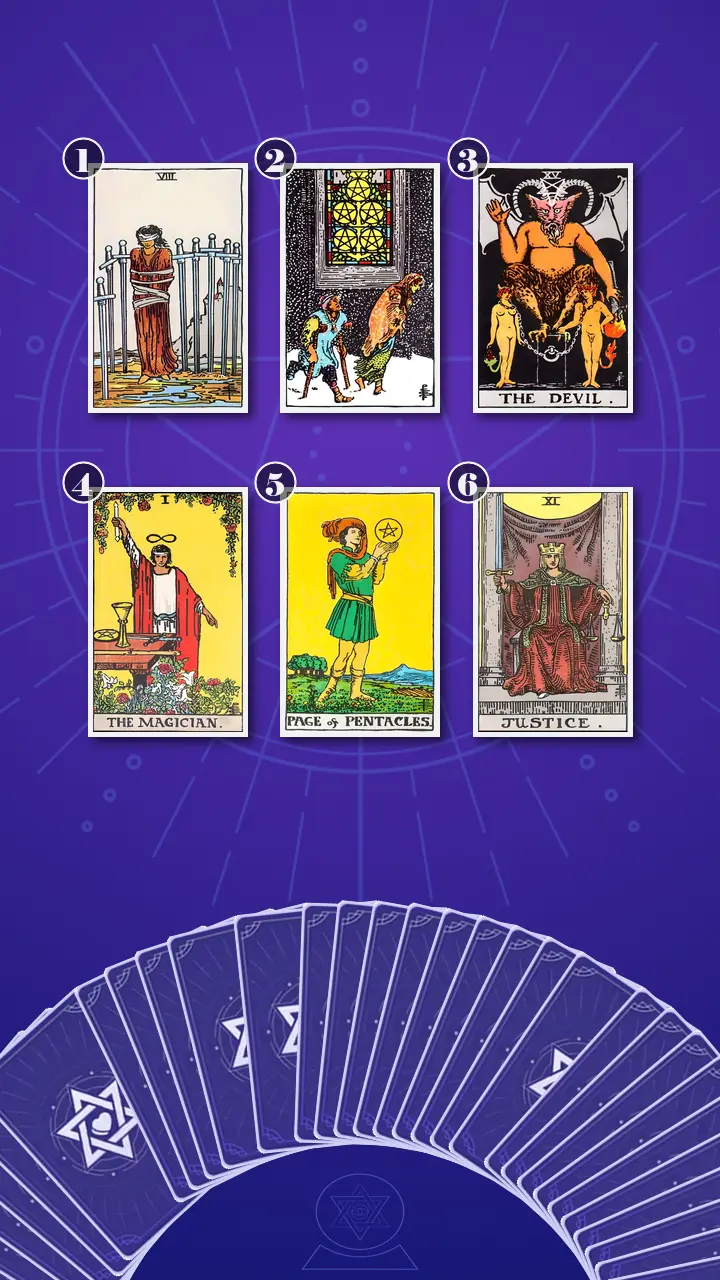
“Tonight we’ll use a spread I designed for exactly this kind of career crossroads pressure,” I told them. “It’s called the Transformation Path Grid (6) · Context Edition.”
And for you reading this: this is why a six-card grid matters. A full Celtic Cross can overcomplicate a time-sensitive problem—especially when the deadline is literally tonight. But a three-card pull can miss the deeper mechanism that makes you shrink. This 2x3 grid links the symptom to the root, then turns insight into actionable advice and next steps.
I pointed to the invisible layout on my desk. “The first card shows the surface snapshot—how you’re shrinking in real time. The second shows what’s blocking you tonight: the specific impostor story constricting your wording. The third goes underneath that—what’s actually driving the whole loop. Then we drop to the turning point: the energy that breaks the pattern. After that, we name one step you can take in the next hour. And finally, we lock in integration: how to do a fairness pass so you don’t erase yourself on the last edit.”
The Cursor-Hover Loop: Card Meanings in Context
Position 1: Surface snapshot — the exact way you’re shrinking right now
“Now we’re turning over the card that represents the surface snapshot: the exact way you’re shrinking right now while trying to write the self-review,” I said.
Eight of Swords, upright.
“This is 10:47 p.m. in your Toronto apartment,” I told them, “the self-review portal open, and you’re trapped on the first paragraph like it’s a courtroom statement. You reread one sentence ten times, imagining how it could be misread, and your fingers start deleting the only specific claim you made. The work isn’t missing—the sense of ‘danger’ is.”
In the Eight of Swords, the energy isn’t broken—it’s blocked. The blindfold, the loose bindings, the ring of swords: it’s a body that believes movement equals risk. In modern life, it’s the cursor blinking like a metronome. If I write it plainly → they’ll think I’m arrogant. If I soften it → I vanish. So you choose safety by shrinking, and you call it “editing.”
Alex gave a quick, almost disbelieving laugh—dry, a little bitter. “That’s… rude,” they said. Then quieter: “Also true.” Their fingers rubbed the base of their thumb like they were trying to sand down a nerve.
“You’re not failing the review—you’re running the shrink script,” I said. “And the Eight of Swords always asks a practical question: what single fact would you write if you weren’t trying to predict anyone’s reaction?”
Position 2: What’s blocking you tonight — the impostor story constricting your wording
“Now we’re turning over the card that represents what’s blocking you tonight: the specific impostor story or mindset that constricts your wording,” I said.
Five of Pentacles, upright.
“This is the moment you compare yourself to coworkers and suddenly feel like you don’t fully belong,” I told them. “In the review, that becomes scarcity language: you delete metrics, soften leadership into ‘supported,’ and write as if you’re asking permission to take up space. You act like recognition is a warm room you’re not allowed into—despite proof of support being right there.”
The Five of Pentacles is Earth energy in deficiency. It’s not that you don’t have value; it’s that your system is convinced value is rationed, like belonging is a premium feature and you’re on the free tier. The cold outside, the lit window—this card always shows that the story says “no shelter,” while the picture says, “There’s warmth. It’s closer than you think.”
Alex exhaled heavier than before, the kind of breath that comes from the bottom of the ribs. Their eyes didn’t look watery, exactly—more like something behind the eyes softened. “I screenshot kudos,” they admitted. “And then I tell myself they were just being nice.”
“That’s the belonging math,” I said, keeping my voice level. “If praise is always a fluke, then you never have to risk letting it count. But it also means your self-review becomes a letter from the cold.”
Position 3: The deeper root — the attachment keeping the impostor script in place
“Now we’re turning over the card that represents the deeper root: the attachment, fear, or psychological mechanism that keeps the impostor story in place,” I said.
The Devil, upright.
“This is when the self-review stops being a document and turns into a shame contract,” I said. “The rule reads: ‘If I sound confident, I’ll be exposed.’ So you over-explain, add disclaimers, and keep polishing like the right phrasing will prevent judgment. You’re chained to approval-seeking even while you know you have receipts.”
The Devil is a Major Arcana root for a reason. This isn’t a minor mood swing; it’s a learned system. The energy here is excess—too much vigilance, too much imagined surveillance. It’s like an invisible terms-and-conditions agreement you never signed but keep obeying: Stay small and you won’t be targeted.
Alex’s jaw tightened, then released. I saw their leg bounce under the table. “It’s so stupid,” they said, and there was a sharpness in their tone—anger, not at me, but at the whole arrangement.
“Not stupid,” I corrected softly. “Protective. The Devil doesn’t show up to shame you. It shows you where shame has been doing the driving.”
I paused, letting the room hold that. “If you spoke plainly about your impact… what do you think would happen? And whose standard are you still trying to satisfy when you try to sound ‘safe’?”
When The Magician Spoke: Evidence First, Confidence Later
Position 4: The turning point — the energy that breaks the loop and restores authorship
I let my hand rest on the deck for a beat longer than usual. “We’re about to turn over the card that represents the turning point: the most effective energy to invoke to break the loop and regain authorship of your narrative,” I said. “This is the hinge.”
The Magician, upright.
“This is the moment you stop trying to sound ‘worthy’ and switch to tool-mode,” I told Alex. “You pull up project notes, campaign results, decks, and a couple of Slack/email compliments. You write three plain bullets with outcomes, like you’re documenting a case file—direct sentences, no apology language. Confidence becomes optional; evidence becomes the driver.”
As a Jungian psychologist, I watch the body when the mind gets loud. The Magician is a mind-body card in disguise: wand raised, one hand to the table, one to the sky—a circuit completing. Alex’s circuit, right now, was stuck in their shoulders and neck, the place my work always finds the bottleneck first. Their shoulders were nearly touching their ears.
“Can I try something with you?” I asked. “Non-medical, just energy and attention. Put one hand on your chest for ten seconds.”
They did. Their breathing caught at first—just a small freeze.
“Now say out loud, ‘I led,’” I said, “and notice what your shoulders do.”
Their shoulders jumped. Their face pinched as if the word had a sting. That was my Energy Flow Diagnosis in real time: the psyche tightening the body to keep the self small.
Setup: It was late, the portal was still open, and Alex was toggling between notes and someone else’s shiny LinkedIn win—shoulders inching up as they deleted the only concrete number they had. They were trapped in the idea that they had to feel confident first, or else every clear sentence would become evidence against them.
Stop waiting to feel “qualified” before you speak; start working with what’s already on your table, like The Magician, and let the evidence do the talking.
Reinforcement: The sentence landed like a dropped pebble in still water. Alex’s breath stalled for half a second. Their fingers hovered above the keyboard, frozen—then their gaze went unfocused, as if their brain replayed a week of edits, a month of disclaimers, a year of “supported” and “assisted.” Then, slowly, their shoulders sank a fraction, like a backpack sliding off one strap. They blinked hard once. “But… if I do that,” they said, and the edge came back, defensive and raw, “doesn’t that mean I was wrong this whole time? Like I’ve been lying to myself?”
I nodded, because that question is honest. “It doesn’t mean you were wrong,” I said. “It means you were surviving. The Devil wrote a contract. The Magician renegotiates it.”
I offered them a quick reset I used to teach on transoceanic voyages—three minutes between meetings, between storms, between versions of yourself. “Drop your shoulders. Unclench your jaw. Exhale longer than you inhale, three times. Picture Venice for a second: water doesn’t force the canal. It circulates. Venetian Aqua Wisdom is simple—energy moves when it has a channel. Tonight your channel is structure: facts first.”
Then I asked the question that makes insight usable. “Now, with this new lens, think back to last week. Was there a moment when you deleted a metric or swapped ‘led’ for ‘supported’—and this sentence could have let you feel different?”
Alex stared at the ceiling, then nodded once, sharply. “Tuesday,” they said. “I wrote ‘increased CTR by 18%,’ and I deleted it. I told myself it sounded like I was trying too hard.” Their voice got quieter. “It was true, though.”
“That’s the shift,” I said. “Not from fear to zero fear—just from mood-based gatekeeping to evidence-based authorship. Evidence first. Confidence can catch up later.”
That was the first real step from tight, self-monitoring panic toward steadier self-respect.
Position 5: One-step action — the smallest grounded move within the next hour
“Now we’re turning over the card that represents one-step action: a small, grounded move you can take within the next hour to complete the review,” I said.
Page of Pentacles, upright.
“This is apprentice energy,” I told them. “You treat the self-review like building a simple artifact. One project at a time, you write a three-part bullet: what you did → what changed → what it enabled. You save it and move on without polishing. It’s steady, concrete, repeatable.”
The Page of Pentacles is Earth energy in balance. Not flashy. Not performative. And it’s exactly what performance review anxiety needs: a boring, solid method that doesn’t require you to feel brave—only willing.
Alex frowned a little, practical brain kicking in. “But I don’t have time,” they said. “I’ve already burned like two hours on one paragraph. I literally can’t do a whole rewrite.”
“Good,” I said, and I meant it. “We’re not doing a whole rewrite. We’re doing one bullet. Finished and specific beats polished and invisible.”
Position 6: Integration — how to keep it accurate and balanced after drafting
“Now we’re turning over the card that represents integration: how to keep the review accurate and balanced after the draft is written—neither shrinking nor inflating,” I said.
Justice, upright.
“This is your closing move,” I told Alex. “Before submitting, you do a fairness pass instead of an anxiety pass. You ask: ‘Is this accurate, specific, and proportionate to what happened?’ You keep numbers that are true, remove unnecessary disclaimers, and avoid hype. Your language becomes balanced: neither shrinking nor boasting.”
Justice is Air and Earth shaking hands: scales (measure) and sword (state). The energy here is balance—a calibration pass like QA. Not a self-worth check. Not a lie detector test. Just accuracy.
Alex’s face shifted—less pinched, more neutral. “That sounds… doable,” they said, surprised by their own tone. “Like I can check fairness without trying to become a different person overnight.”
The One-Hour Plan: Actionable Advice for an Evidence-Based Self Review
I leaned back and let the whole spread click into one story I could say in plain language.
“Here’s what I see,” I said. “Your current loop (Eight of Swords) isn’t a lack of accomplishments—it’s mental restriction. The blockage (Five of Pentacles) is the belonging wound: you write as if you’re outside the warm room, even when you have keys. The root (The Devil) is the shame contract that says staying small equals staying safe. The turning point (The Magician) is switching from vibes to receipts—tools on the table, facts in order. The Page of Pentacles makes it concrete: one boring bullet at a time. And Justice keeps you honest: not inflated, not erased. Fair.”
The cognitive blind spot I named for Alex was simple: they were treating emotional safety as the entry fee for accuracy. If they didn’t feel confident, they assumed they weren’t allowed to sound clear. But the transformation direction was the opposite: document evidence first, then let confidence lag behind without veto power.
“If it’s true,” I told them, “it’s allowed to sound true.”
Then I gave them a short plan—small steps, no heroics—built from what the cards recommended.
- Evidence First Sprint (10 minutes)Set a 10-minute timer. In your review, write only factual bullets—no editing. Aim for three receipts: one metric (even a placeholder like “[18% CTR]”), one deliverable (a deck, a launch, a campaign), and one piece of feedback (Slack kudos / email quote). When the timer ends, stop.If your chest tightens or you start wordsmithing, name it out loud: “This is the shrink story.” Then lower the bar: fragments are allowed.
- The “Disclaimer Ban” Pass (2 minutes)Put a sticky note next to your screen: just / a bit / kind of / helped. After you draft, do one single pass removing those words wherever they weaken a true statement.One pass only. If you notice yourself trying to make the draft “immune,” pause and return to the list—don’t negotiate with imaginary critics.
- Justice Check Before Submit (3 questions)Right before you hit Submit, ask: (1) Is this accurate? (2) Is it specific? (3) Is it proportionate to what happened? Replace one vague verb (supported/assisted/contributed) with a clearer one (led/owned/shipped/launched) only where it’s true.If the fairness check turns into another spiral, cap it: one pass, then submit. Do a fairness pass, not an anxiety pass.
Finally, I added one body-based support, because Alex’s shoulders had told the truth before their words could. “Between passes,” I said, “do a three-minute reset: shoulders down, jaw unclenched, exhale longer than inhale. Screen-induced exhaustion makes the mind more moralistic—like every word is a verdict. We’re interrupting that.”

A Week Later: Ownership, Not Certainty
Six days later, Alex messaged me: “Submitted on time. Kept the 18% CTR line. Didn’t die.”
They added, almost as an afterthought: “I hit Submit and then just… sat on my couch for a minute. No celebration. Just quiet.”
I could picture it—laptop closed, the room finally dim, their shoulders a notch lower. Clear, but still a little tender. That’s how real change often looks: not fireworks, just a small loosening and a finished document where there used to be a trial.
This is what tarot can do when you use it as a practical tool: it turns a blurry, shame-heavy career moment into a clear sequence—diagnosis, turning point, actionable advice, and next steps you can actually complete.
When you’re trying to be accurate but your body tightens the second you sound sure, it’s easy to start erasing yourself just to avoid the risk of being seen wrong.
If you didn’t need to feel confident tonight—only fair—what’s one piece of evidence you’d let stay on the page exactly as it is?
This story is adapted from psychological research, written so that those in a similar struggle can see their own pattern in it — and find their next step clearly.These insights are not a substitute for professional psychological, medical, legal, or financial advice.
Learn more about our Journey to Clarity.
How did this insight land for you?
🫂 This Resonates Deeply
🌀 Living This Story
✨ Now I See Clearly
🌱 Seeing New Possibilities
🧰 Useful Framework
🔮 The Confirmation I Needed
💪 Feeling Empowered
🚀 Ready for My Next Step
Author Profile
 AI
AI“Having traveled across cultures... I've learned that what we often lack isn't a simple answer, but a moment of being truly understood. I use a Jungian psychological lens to help you deconstruct your subconscious patterns—not to prove anything, but to be the gentle companion who helps you unravel your knots, free of judgment, so you can reconnect with your inner wisdom.”
In this Introspection Tarot Reading :
Core Expertise
- Shadow Integration Audit: Objectively mapping suppressed emotions (anger, shame, grief) that are covertly draining your psychological bandwidth.
- Inner-Critic Neutralization: Deconstructing the harsh, subconscious self-judgment loop that masquerades as 'self-discipline'.
Service Features
- The Active Imagination Protocol: A structured psychological journaling technique to safely dialogue with your 'Shadow', turning internal friction into deep self-compassion.
Also specializes in :
Explore Related Patterns:
Imposter SyndromeAlex has concrete proof in front of them: dashboards, decks, Slack kudos, and a true metric they can name. The block begins when that evidence has to become a clear sentence in the self-review. Their body tightens, the sentence starts to feel dangerous, and the true claim gets deleted as if accuracy itself could expose them. That is the core logic of Imposter Syndrome in this story. The mind treats competence as something that must be hidden until it feels completely safe, while the body reacts to self-advocacy as if it were overreach. You are not watching a lack of skill; you are watching a protective cognitive schema turn evidence into a threat cue. The pattern becomes especially visible in the rule, "If I sound confident, I'll be exposed." That rule makes confidence feel like a liability and turns the self-review into a test of whether you are allowed to take up professional space. The shift is not to force confidence overnight, but to separate factual authorship from the impostor story that keeps vetoing it.
Perfectionism-Driven AvoidanceAlex has enough material to write, but the first paragraph becomes a holding pattern. They spend hours cycling through wording, deleting true claims, and waiting for a version of the sentence that feels completely safe before they move on. Perfectionism-Driven Avoidance fits because the avoidance hides inside refinement. The goal is not excellence in a healthy sense; it is emotional risk reduction. You keep polishing because finishing would require letting a visible, imperfectly safe version of yourself stand on the page. The mechanism connects directly to the self-review deadline. The more Alex tries to make the draft immune to judgment, the less able they are to submit something accurate and done. The interruption is deliberately modest: one evidence-based bullet, saved and left alone, so completion is no longer held hostage by a perfect feeling.
Self-SilencingAlex's self-review shows self-erasure in concrete language choices. A true metric disappears, "led" becomes something softer, and the sentence is adjusted until the person who did the work is less visible than the work itself. Self-Silencing captures the defensive function of that edit. The goal is not honesty, because the stronger wording is still accurate. The goal is to reduce exposure by lowering the volume of the self. You stay safer by making your own contribution harder to see. The pattern matters because the review is supposed to document impact, not perform disappearance. When staying small becomes the safety strategy, fairness starts to feel like arrogance. The repair is to let accurate language remain on the page even when it feels louder than your nervous system prefers.
Visibility Shame LoopAlex does not simply struggle to write the self-review; they shrink at the exact point where the review asks them to be visible. A true metric becomes too exposed, a stronger verb gets softened, and a fair sentence starts to feel like something that could be held against them. Visibility Shame Loop captures the repeating mechanism here: being seen clearly activates shame, and shame pushes the person to reduce their own outline. The behavior looks like editing, but the function is self-protection. You make the language smaller so the self on the page feels less targetable. The loop is reinforced each time a truthful claim is deleted or diluted. Short term, the nervous system gets relief because the sentence feels safer. Long term, the review becomes less accurate, and the story that visibility equals danger gets stronger. The interruption begins when evidence is allowed to stay visible without requiring the body to feel fully comfortable first.
Approval SeekingAlex has supportive signals available, including Slack kudos and evidence of real impact, but those signals do not land as permission to claim the work. Praise gets reinterpreted as people "just being nice," and recognition feels like a room they are not fully allowed to enter. Approval Seeking appears here as a gatekeeping mechanism. Instead of asking whether a statement is accurate, the psyche asks whether it will be socially accepted, unimpeachable, and safe from negative interpretation. You begin outsourcing the right to name your own work to an imagined audience. That does not mean wanting feedback is the problem. The pattern is the moment approval becomes the condition for self-recognition. In the self-review, that turns fair documentation into permission-seeking, and the cleanest correction is to let evidence carry more authority than the imagined need to be approved first.
Defensive OverexplainingAlex keeps working the sentence as if the perfect wording could make it immune to judgment. The self-review starts to feel less like a normal performance document and more like a courtroom statement, where every phrase has to be pre-defended before it is allowed to exist. Defensive Overexplaining fits because the extra language is not there to clarify the work; it is there to manage anticipated criticism. The mind rehearses possible objections, then tries to neutralize them through disclaimers, softer verbs, and excessive polishing. You are using explanation as armor. The cost is that the review becomes harder to finish and less direct. Instead of stating what happened, the writing starts negotiating with imaginary critics. The useful move is not to become careless, but to distinguish fair context from defensive padding, so accuracy does not get buried under protection.
Mind ReadingAlex repeatedly edits against reactions that have not happened yet. A plain sentence becomes risky because someone might read it as arrogant, a true metric gets deleted because it might sound like trying too hard, and the portal starts to feel watched even before anyone has reviewed the draft. Mind Reading is the cognitive distortion underneath that move. The mind treats imagined feedback as if it were available data, then changes behavior to prevent a reaction it has already assumed. You are not responding to evidence from another person; you are responding to a projected audience inside your own head. The pattern is powerful because it feels responsible. It says, "I'm just being careful." But in the story, that carefulness keeps Alex trapped in prediction instead of documentation. The practical correction is to move from imagined reaction to verifiable criteria: accurate, specific, and proportionate.
Explore Related Struggles:
Approval-Safety FusionThe review asks Alex to describe what happened at work, but the draft keeps becoming a shield. Direct verbs get softened, numbers disappear, and the page fills with language designed to reduce the chance of being judged. You are watching approval turn into a safety requirement. The sentence is not allowed to be merely accurate; it has to feel immune to criticism before it can stay. That turns a performance review into a negotiation with imagined disapproval. Approval-Safety Fusion fits because the need to be accepted and the need to feel protected have been welded together. One step forward means separating them just enough to write a sentence that is true, specific, and not engineered to please every possible reader.
Clarity-Exposure SplitAlex keeps returning to the self-review portal with real proof on the table: dashboards, decks, Slack kudos, and a true metric. The block appears at the exact point where evidence has to become a clear sentence with their name attached to it. You can see the split in the body before it becomes a writing problem. Their shoulders climb, their chest tightens, and the sentence gets deleted as soon as it sounds sure of itself. Accuracy is available, but clarity feels like stepping into view without enough cover. Clarity-Exposure Split names that pressure point: the part of you that wants to be fair and specific is moving in one direction, while the part trying to stay unreadable is pulling hard in the other. The next step is not becoming fearless; it is letting one true, proportionate fact remain visible even while exposure still feels loud.
Inner Tribunal LockThe 18% CTR line is true, and Alex knows it is true. Still, once it appears in the self-review, it starts to feel like contraband, as if the number must defend itself against a judge who has not actually entered the room. You are not seeing a lack of proof; you are seeing proof forced through an internal trial. Dashboards, kudos, and project notes are present, but an imagined standard keeps cross-examining them until even clear evidence feels unsafe to claim. Inner Tribunal Lock names that closed courtroom inside the writing process. The way out begins when the review becomes a record again: not a verdict on your worth, not a performance of humility, just a fair account of what changed because you did the work.
Vigilance-Execution SplitAlex is not short on material; they are stuck in surveillance mode. The portal, the notes document, the LinkedIn tab, and the imagined reader all compete for attention while the actual review remains unfinished. You can feel the execution problem hiding inside the vigilance. Every pass is meant to make the sentence safer, but the result is less specific, less complete, and further from submission. The monitoring system keeps running long after it has stopped helping. Vigilance-Execution Split captures the way protection interrupts action. The first practical move is small but structural: stop asking whether the sentence feels safe, and ask whether it is accurate enough to move to the next bullet.
All-or-Nothing BelongingAlex saves positive feedback, then strips it of authority by deciding people were just being nice. The praise exists, the metrics exist, and the work exists, but none of it feels fully admissible once belonging comes into question. You can see how the self-review becomes a threshold. Either the recognition feels completely secure, or it feels too risky to claim at all. That all-or-nothing math makes partial proof unusable, even when partial proof is exactly how professional evidence usually arrives. All-or-Nothing Belonging points to the deeper shrink story: taking up space feels allowed only when belonging is already guaranteed. The next step is letting evidence count before the room feels fully warm.
Explore Related Emotions:
Belonging ShameAlex compares themself to coworkers, screenshots kudos, then immediately tells themself people were just being nice. In the review, that turns into scarcity language: metrics disappear, leadership becomes 'supported,' and recognition feels like a warm room they are not allowed to enter. Belonging Shame sits underneath the impostor story because the question is not only 'Did I do enough?' It becomes 'Am I allowed to be counted among the people who did enough?' You shrink one step when praise cannot register as evidence, only as a temporary exception that might be revoked.
Exposure DreadThe self-review portal becomes a courtroom at 10:47 p.m., with the cursor blinking while Alex rereads one sentence ten times and imagines how it could be misread. Even the phrase 'I led' makes their shoulders jump, as if visibility itself carries a sting. This is not ordinary editing; the page is being scanned for future punishment before any manager has responded. Exposure Dread names the specific charge in the room: the worry that sounding accurate will make you more targetable, so you preemptively soften, disclaim, and disappear before anyone else can judge.
Impostor AnxietyAlex has dashboards, decks, Slack kudos, and a true metric in reach, yet the moment a sentence sounds confident their chest clamps and the line gets deleted. The conflict is not a lack of evidence; it is the body treating evidence as something that requires permission. That creates an inner weather where proof and self-trust do not arrive at the same time. You can know the facts and still feel your wording shrinking around them, as if clear language might expose a version of you that is not allowed to take up space. Impostor Anxiety fits because the story keeps returning to the same loop: receipts on the table, authorship in the body, and deletion as temporary safety.
Capability ShameAlex can point to the 18% CTR line, dashboards, decks, and compliments, but the word 'led' still stings when said out loud. The evidence is concrete; the self-permission to own it is where the body tightens. Capability Shame is the inner weather of having proof of impact while feeling that claiming it would reveal something fraudulent. You shrink by translating capability into smaller verbs, as if accuracy has to be made less visible before it becomes acceptable. The story shows that the work was real even when the sentence about it felt dangerous.
Grounded AgencyGrounded Agency enters when Alex stops trying to feel worthy and starts using what is already on the table: project notes, results, decks, and concrete feedback. The one-hour plan keeps the move deliberately small, asking for one true bullet instead of a total personality overhaul. This emotion is not swagger; it is the steadier sensation of having a handle on the task. You regain authorship by letting evidence drive the next sentence while confidence catches up later. The agency comes from structure, not from forcing yourself into a mood you do not have yet.
Performance FreezeAlex has already burned two hours on one paragraph, toggling between the portal, LinkedIn, and a messy notes doc while the draft keeps stalling. The keys click, then pause; fingers hover; the body seems to wait for impact before the sentence can land. Performance Freeze is the subjective stuckness created when action is technically possible but every movement feels loaded. You are not blocked because there is nothing to say; you are blocked because each clear sentence has to pass through a threat filter first, so the smallest edit starts to cost more than the task itself.
Clarity ReliefThe room changes when the review becomes a sequence: evidence first, one bullet at a time, then a fairness check for accuracy, specificity, and proportion. Alex's face shifts from pinched to more neutral because the task finally has a shape that can be followed. Clarity Relief fits the moment when the pressure does not vanish but the blur breaks. You can submit something fair without solving every old self-doubt before midnight. The relief is clean and practical: the question becomes 'Is this true?' rather than 'Am I safe enough to say it?'
Verdict DreadThe self-review is framed like a statement that could be used against Alex, and later the advice has to distinguish a fairness pass from an anxiety pass. That distinction matters because the draft has stopped feeling like a work document and started feeling like a verdict machine. Verdict Dread names the pressure of writing while already imagining the sentence in someone else's harshest voice. You keep trying to make the paragraph immune to judgment, but the attempt to protect it turns the page into the judge. The way back is not hype; it is proportion, specificity, and the right to let true facts remain true.
Quiet Self-RespectSix days later, Alex says they submitted on time and kept the 18% CTR line, then sat on the couch without a big celebration. The scene is small: laptop closed, room dim, shoulders a notch lower, the document finished where a trial used to be. Quiet Self-Respect is the understated emotional afterimage of not erasing yourself at the final edit. You do not need fireworks for this to matter. The respect is in letting one accurate line stay, neither inflated nor apologized for, and noticing that the world did not collapse when your work remained visible.
Explore Related Contexts:
Career Visibility ParalysisAlex has dashboards, decks, Slack kudos, and a true 18% CTR result, but the moment a sentence sounds clear, they delete it or downgrade it into safer wording. The external task is not asking them to invent value; it is asking them to make existing value visible inside a formal review portal. That is where the pressure tightens. Visibility becomes a workplace risk rather than a neutral record, so accurate verbs like led or concrete metrics feel too exposed to leave on the page. You can see the structure in the repeated edits: proof exists, language narrows, and the final version threatens to make the work look smaller than it was. Career Visibility Paralysis names the external bind around the document. You are not just choosing words; you are being asked to occupy a visible professional position while an evaluation system, peer comparison, and recognition rules make visibility feel conditional. The useful move is to separate evidence from self-promotion and let true claims stay visible because they are accurate.
Evaluation Pressure LoopThe self-review is due that night, the portal is still open at 11 p.m., and Alex is stuck on the first paragraph as if every sentence might become evidence against them. The deadline turns a routine career admin task into an active evaluation chamber. The loop is built from external pressure, not just hesitation. A performance system asks for confident self-assessment, but the same system is experienced as a place where confidence can be penalized, misread, or used as proof of arrogance. That makes each revision feed the next one: reread, soften, delete, start again. Evaluation Pressure Loop fits because the story keeps returning to the same structural trap. You need to submit something fair, but the review environment rewards clarity only after forcing you through scrutiny. The way out is not a bigger pep talk; it is a bounded process that limits the number of passes and anchors the wording in facts.
Performance Defense ModeAlex reads the self-review like a courtroom statement, not a record of completed work. A true metric gets treated like contraband, verbs are softened, and disclaimers appear as if the right phrasing could prevent anyone from judging the claim. That defensive posture is shaped by the evaluation setting. The portal creates a public work document that may be read by people with authority over recognition, ratings, or future opportunities. In that environment, the draft stops being a simple summary and becomes a case file built to avoid criticism. Performance Defense Mode names the stance the story shows in real time. You are not only writing; you are pre-answering imagined objections before anyone has made them. The practical shift is to stop drafting for every possible critic and run a fairness check instead: accurate, specific, proportionate.
Workplace Recognition PressureAlex screenshots kudos, keeps notes, and has measurable outcomes, yet recognition still feels like a warm room they are not fully allowed to enter. The review asks them to convert proof into formal credit, but the wording keeps shrinking before the credit can land. This is a workplace recognition problem because appreciation only matters if it can travel through the system. Slack praise, dashboards, and project outcomes have to become review language before they can influence how the work is seen. When that conversion feels unsafe, recognition stays scattered across screenshots instead of becoming part of the official record. Workplace Recognition Pressure names the external demand to claim space without overclaiming. You are being asked to translate real contributions into institutional language under time pressure. The grounded response is not hype; it is documentation that lets recognition attach to specific work.
Safe Visibility TrialAlex eventually keeps the 18% CTR line and submits on time. Before that, the plan narrows the task to three receipts, a disclaimer pass, and a fairness check so the review can be visible without becoming exaggerated. This is a constructive trial because the support is procedural. The story does not require instant confidence; it builds a small container where accurate visibility can happen anyway. Metrics, deliverables, and feedback become the channel, while one-pass editing keeps the draft from being swallowed by imagined reactions. Safe Visibility Trial fits the one-step part of the question. You are practicing being seen through evidence rather than performance. The point is not to become louder overnight; it is to let one true, proportionate statement remain on the page and submit it inside a structure you can repeat.