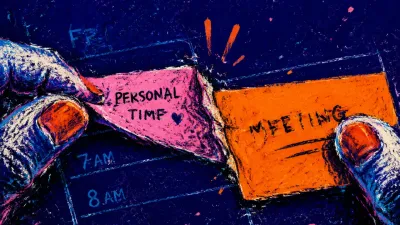
Finding Clarity in the 11:47 p.m. WhatsApp Glow
I can usually hear group trip chat anxiety in the first minute. If you live in London, your rent already has attitude, and one burst of ‘book it now’ energy in the WhatsApp chat can wreck your budget, sleep, and focus, you are not imagining the FOMO spending loop.
When Jess sat across from me, she did not bring a dramatic love story or some mystical riddle. She brought Tuesday night. ‘11:47 p.m.,’ she said, rubbing at one shoulder. ‘Laptop half-open on the duvet. Skyscanner on one tab, Monzo on another, tomorrow’s meeting notes on a third, and the group chat still going. I typed, “I’m easy,” and immediately felt sick.’ As she spoke, I could almost see the cold blue phone light on the wall of her rented East London flat, hear the radiator click, feel the duvet turning too warm while her eyes went sandy with tiredness.
She looked at me and asked, ‘Why does one group chat make me feel like I’m failing three parts of my life at once?’ I told her what I tell many people in this exact corner of modern life: you want to stay in the plan, but every fast reply seems to cost you something real. Her anxiety was not abstract; it sat in her body like a phone left charging under a pillow—hot, humming, and a little dangerous. ‘This isn’t bad planning,’ I said gently. ‘It’s belonging anxiety wearing a practical outfit. Let’s make a map through the fog and find the kind of clarity that doesn’t ask your budget, your sleep, or your work brain to pay the cover charge.’

Choosing the Compass: The Five-Card Cross
I asked Jess to put both feet on the floor and take one slow breath before we started. I shuffled slowly, not to create theatre, but to give her nervous system a bridge between panic and reflection. Ritual, at its best, is simply a way of helping the mind stop doom-scrolling long enough to notice what is actually true.
For this reading, I chose a Five-Card Cross tarot spread for group trip chat anxiety and boundary clarity. When people ask me how tarot works in a situation like this, I explain that I am not using the cards to predict whether a holiday will happen or who will book first. I am using them to diagnose a pattern with clean edges: what is visibly draining her, what pressure is accelerating it, what deeper fear is underneath it, what corrective perspective is needed, and what sustainable next stage becomes possible if that guidance is lived. It is the sort of compact diagnostic tarot spread I reach for when the real question is not only ‘Should I go?’ but ‘How do I say no in a group travel chat without sounding difficult?’
I showed her the compact cross on the table. The center card would hold the present strain. The crossing card would show what was pressing against her in real time. The card beneath would touch the deeper root. Above, I wanted the clearest lesson—the mindset shift that could replace reflexive compliance with honest boundaries. To the right, I wanted to see whether connection could survive a slower pace. That is why this classic five-card cross works so well for people-pleasing around group plans: it follows the whole chain without making the story more complicated than it already is.

Reading the Pace Gap
Position 1: The Tabs That Call Themselves Flexibility
Now I turned the card representing the visible symptom: the concrete ways keeping up with the group trip chat was disrupting budget, rest, and work. It was the Two of Pentacles, reversed.
I pointed to the image of unstable juggling and translated it into the life Jess had just described to me. ‘This is the version of you with Monzo, Google Flights, tomorrow’s calendar, and WhatsApp all open at once,’ I said. ‘You send the yes before the numbers, timing, or energy have actually been checked. That is not balance. That is overload dressed up as being easygoing.’ Reversed, the card showed stable Earth in deficiency: too many moving parts, not enough grounded sequencing. Like a phone running three heavy apps in the background, her whole system was overheating.
I told her the real problem was not the trip itself. It was resource management under social pressure. The rough sea in the card mirrored the way life kept moving—rent, work, sleep—while she tried to keep every ball in the air. Jess did not nod right away. First her fingers stopped on the rim of her tea. Then her mouth tightened. Then she gave a small, bitter laugh. ‘That’s a bit rude, actually,’ she said. ‘The multiple tabs part is exactly it.’ I smiled and said, ‘Accuracy can feel rude when you’ve been carrying the pattern alone.’
Position 2: The Likability Scoreboard in the Chat
I turned the card representing what was actively fueling the cycle in the moment, especially the approval-seeking and comparison pressure behind keeping up. It was the Six of Wands, reversed.
‘Here,’ I said, ‘the group chat stops being a logistics thread and becomes a tiny stage.’ I described the office-kitchen version of the pattern back to her: Outlook open, leftover pasta waiting by the microwave, somebody dropping an Airbnb link, three instant heart-eye emojis, and her stomach falling even as she types an enthusiastic yes. In reversed form, this is Fire turned distorted—energy spent performing ease instead of expressing preference. It has the emotional logic of social media metrics creeping into friendship. Reaction speed starts to feel like a score.
‘A lot of people aren’t scared of the trip,’ I told her. ‘They’re scared of being the difficult one in the chat.’ Her gaze dropped to the card. The fluorescent lunch-break scene she had described earlier seemed to pass across her face again: jaw set, shoulders high, work brain and social-performance brain split on the same screen like an episode of Severance. I asked, ‘When the messages speed up, what feels more urgent—the actual plan, or being seen as easy, fun, and fully in?’ She exhaled through her nose and said, very quietly, ‘Being seen.’
Position 3: The Fear of Standing Outside the Warmth
I turned the card representing the deeper root: the fear that slowing down or saying no might threaten belonging. It was the Five of Pentacles, upright.
The moment I saw it, I felt the temperature of the reading drop. I have spent much of my life listening for the place where a practical problem turns into an older ache, and this card is almost always that doorway. ‘This,’ I said, ‘is not only about money. It is about the story your body tells when money, timing, or tiredness force you to slow down.’ I pointed to the cold street and the lit window in the card. ‘Part of you believes the warmth is inside the group, and the person who asks for the cheaper option is left outside in the rain.’
Jess pressed her lips together. Rain moved against my window just then in a thin, steady line, as if the city had agreed to underline the image for me. ‘That’s exactly how it feels,’ she said after a long pause. ‘It’s not even the price first. It’s that I don’t want to be the one outside the plan.’ In that card, the energy was compressed Earth again—scarcity, exposure, the fear that resources and connection belong to people who can keep pace more easily. I asked her whether the hardest part was the cost itself, or the meaning her nervous system attached to a boundary. Her shoulders softened by a fraction. ‘The meaning,’ she said. ‘Definitely the meaning.’
When the Queen Raised Her Sword
Position 4: The Sentence That Ends the Performance
I turned the card representing the most important shift needed for transformation: replacing reflexive compliance with clear, reality-based boundaries. It was the Queen of Swords, upright.
The room went strangely still around us. Even the rain on the window seemed to settle into a cleaner rhythm. The Queen sat there with her upright sword, direct gaze, and open hand, and I felt the familiar little click I always feel when a reading stops circling and starts telling the truth.
In modern life, this card is the moment you delete three apologetic draft messages and send the one line that actually tells the truth: your real budget, your real bandwidth, your real timing. Balanced Air enters here. Not coldness. Not punishment. Clarity. ‘You don’t need a cheerful maybe when a clear sentence will do,’ I told Jess.
Whenever I teach intuition development through natural phenomena, I speak about weather before I speak about tarot. In the Scottish Highlands, a sudden gust can make every branch look urgent. But the rooted tree does not confuse the gust with a command; it feels for what remains steady underneath. That is how I use my Nature Empathy Technique, and that is how I read this Queen. She does not answer the gust. She checks the ground. For Jess, that meant letting budget, sleep, and workload speak before the chat’s momentum did.
You could see why this moment mattered. She was picturing herself in bed after a long day, phone warm in her hand, tomorrow already getting worse before she had even answered. The chat had been feeling like a friendship test when it was actually a pacing test.
This is not a popularity test; it is a boundary practice, and the Queen's raised sword cuts costly performance away from real connection.
I let the sentence hang for a breath.
Jess went very still. First her inhale caught high in her chest and her thumb hovered above the mug as if even that small movement had forgotten what to do. Then her eyes unfocused, not blank exactly, but busy replaying something—late-night messages, instant emojis, a half-typed ‘I’m easy,’ the little shame spiral after. When she looked back at me, there was a flash of anger in it. ‘So what, I’ve been doing this to myself?’ she asked, sharper than before. I shook my head. ‘No,’ I said. ‘You’ve been using speed to buy safety. That’s different. And it worked for a few minutes at a time, until it didn’t.’ Her jaw unclenched. One shoulder dropped, then the other. The release was real, but so was the wobble after it—the slight dizziness that comes when you stop gripping a heavy bag you forgot you were carrying. I asked softly, ‘Now, with this new perspective, was there a moment last week when this insight would have made you feel different?’ She laughed once, but this time without the bitterness. ‘Tuesday night,’ she said. ‘If I’d thought of it as a boundary practice, I would have slept.’
That was the crossing point of the whole reading: not from selfishness to niceness, not from yes to no, but from FOMO-driven fast agreement to self-trusting, paced participation. Fast agreement is not proof of friendship.
Position 5: Temperance and the Pace That Lets You Stay
I turned the card representing the likely direction if that guidance was applied: a more sustainable way to stay connected without sacrificing money, sleep, or work focus. It was Temperance, upright.
I smiled when I saw it, because it answered the reading’s first card with grace. Where the Two of Pentacles reversed had shown frantic switching, Temperance showed measured pouring. ‘This is not withdrawal,’ I told Jess. ‘This is integration.’ I described what that could look like in real life: staying in the chat, choosing only the parts that fit, saying yes to the train and one dinner while skipping the extras, and arriving at work the next morning with enough sleep to think in full sentences. Here the energy settled into balance—emotion and practicality mixed instead of colliding.
Her whole face changed at that. Not a dramatic movie-scene breakthrough. Just the quiet unclenching of someone realizing she did not have to either vanish or overperform. ‘So I can still be in it,’ she said. ‘Just not at that speed.’ ‘Exactly,’ I said. ‘You can stay connected without making your budget, sleep, and focus pay the cover charge.’
From the Moving Walkway to Honest Participation
When I laid the whole spread out for her, the story became plain. The Two of Pentacles reversed showed the visible spillover: money, rest, and work focus all knocked off balance together. The Six of Wands reversed showed the pressure point: a friendship chat turned into a likability scoreboard. The Five of Pentacles showed the root: slowing down felt emotionally colder than overspending. Then the Queen of Swords interrupted the loop with discernment, self-respect, and clean communication, and Temperance showed the outcome—a paced, blended form of belonging.
The blind spot was not that Jess needed more discipline or better spreadsheets. It was that she had been treating fast agreement as proof of friendship. That is the group-chat pace gap in a nutshell. The transformation direction was simpler and harder at once: clear limits are honest participation. In other words, if your yes has to bypass your bank balance, your sleep, and tomorrow’s workload, it is not really a yes yet.
I gave her actionable advice in small, testable steps, because clarity matters most when it survives contact with Tuesday night.
- The Queen’s Reply TemplateSave a note on your phone called ‘Trip Reply Templates’ with one clean line: ‘I need to check budget and timing first — I’ll confirm tonight by 7.’ Use it the next time the WhatsApp chat speeds up before you have checked Monzo, your calendar, and your actual bandwidth.Draft it in Notes first, then paste. If you feel a cringe spike, that is your nervous system missing short-term relief, not a sign that the boundary is wrong.
- The Money-Energy-Work FilterBefore you send any yes this week, run the decision through three checks in this order: bank balance, calendar, sleep or energy. If it is after 10:30 p.m., make no trip decisions at all; put the chat on Do Not Disturb and answer the next day.Test the cutoff for one night only if a full week feels too big. Anxiety will call this impractical. Usually it is just unused to being outvoted.
- One Core Yes, One Deliberate NoFor the next trip decision, choose one essential yes and one clear no: for example, yes to the accommodation, no to the brunch add-on. Then spend three minutes before bed doing my energy review: listen to the radiator, traffic, or rain, and ask which choice leaves tomorrow’s work brain intact.Start with one boundary category—money, time, or energy—rather than fixing everything at once. Healthy groups can work with specifics far better than with vague hype.
Those were not glamorous steps. They were better than glamorous. They were livable. This is where tarot becomes practical: not by making the decision for you, but by helping you stop outsourcing your pace to the loudest notification.

A Week Later: The Quiet Proof
A week later, I received a message from Jess with a screenshot beneath it. She had written to the chat: ‘Still very into the trip — I need the cheaper train and I’m skipping the extras, but I can do the flight and one dinner.’ Underneath, one friend had replied, ‘Perfect, thanks for saying.’ Another had simply sent a heart. That was all. No exile. No social ice age. Just information landing where performance used to live.
She told me the strangest part was how ordinary it felt afterward. She sent the message, stared at the typing bubble for half a minute, then made tea. She slept through the night. In the morning, the old thought—What if they think I’m difficult?—still arrived, but this time she smiled at it before opening WhatsApp.
I have learned, after many decades with cards and people, that finding clarity rarely arrives as thunder. More often it arrives as clean language, a steadier jaw, one hour more of sleep, one less guilty little shuffle between savings pots. In a Five-Card Cross tarot spread for group trip chat anxiety and boundary clarity, that is often the true win: not a perfect itinerary, but a nervous system that no longer mistakes urgency for love.
When every ping feels like a tiny test you have to pass, even checking your bank balance or admitting you need sleep can feel colder than the actual cost. If tonight the chat lights up again and the old moving walkway starts under your feet, what might your next honest pause sound like—one clear Queen-of-Swords sentence that lets money, energy, and work speak before performance?
This story is adapted from psychological research, written so that those in a similar struggle can see their own pattern in it — and find their next step clearly.These insights are not a substitute for professional psychological, medical, legal, or financial advice.
Learn more about our Journey to Clarity.
How did this insight land for you?
🫂 This Resonates Deeply
🌀 Living This Story
✨ Now I See Clearly
🌱 Seeing New Possibilities
🧰 Useful Framework
🔮 The Confirmation I Needed
💪 Feeling Empowered
🚀 Ready for My Next Step
Author Profile
 AI
AI“As the seventh generation of a Highland healing family, I see modern anxieties as a simple, temporary disconnection from nature's rhythm. I bring 67 years of lived seasons not to instruct you, but to hold space for you. Using tarot as a mirror, I want to gently guide you out of the chaos, helping you breathe deeply and rediscover the organic, steady heartbeat of your own life.”
In this Personal Growth Tarot Reading :
Core Expertise
Service Features
Also specializes in :
Explore Related Patterns:
FOMOJess saying the hardest part was not the price first but 'not wanting to be the one outside the plan' gives the spending loop its emotional engine. The trip is not only an itinerary; it becomes a visible doorway into warmth, closeness, and shared momentum. FOMO fits when missing one add-on starts to feel like missing the relationship itself. You may know logically that a cheaper train or skipped brunch is reasonable, but the body reads the pause as distance from the group. That gap between practical knowledge and social threat is where the budget gets pulled into the belonging system. In this story, the fear of missing out is not shallow excitement. It is a protective reflex that tries to keep you near the warmth by keeping pace, even when keeping pace spends sleep, focus, and money you needed elsewhere.
People-PleasingJess typing 'I'm easy' at 11:47 p.m. while Monzo, Skyscanner, meeting notes, and WhatsApp were all open is the behavioral hinge of this pattern. The agreeable line lands before her budget, sleep, or workload have been checked, so the reply is doing social repair before it is doing honest decision making. The short-term payoff is safety. You get to avoid being the difficult one in the chat, stay inside the group rhythm, and feel momentarily protected from awkwardness. The cost is that your real limits get edited out, and the body registers the conflict as nausea, tension, and restless mental switching. People-Pleasing fits because the story is not about generosity or spontaneity. It is about using quick agreeableness to manage the fear of losing approval, then paying for that approval with money, rest, and work focus.
Urgency BiasThe 11:47 p.m. trip chat turns a holiday decision into an artificial deadline. Airbnb links, heart-eye emojis, typing bubbles, and 'book it now' energy make speed feel like evidence of commitment, even though nothing in Jess's real life becomes more workable because she answers faster. Urgency Bias shows up when the nervous system treats momentum as authority. You stop asking what is affordable, rested, or sustainable and start asking what will make the pressure stop quickest. That is why the same chat can wreck budget, sleep, and work at once; the fastest answer bypasses the very checks that would protect all three. The pattern is especially powerful because it delivers immediate relief. Sending the yes quiets the chat pressure for a few minutes, but the delayed bill arrives as a tighter bank balance, a worse morning, and a work brain already running behind.
Boundary DiscernmentJess's later message, 'Still very into the trip - I need the cheaper train and I'm skipping the extras, but I can do the flight and one dinner,' shows the shift from performance to clean differentiation. She does not disappear from the group, and she does not pretend the whole plan fits. Boundary Discernment fits because the key move is not a dramatic no. It is the ability to separate real connection from the cost of keeping up. You can name what is possible, what is not, and when you will confirm without turning every limit into an apology. The psychological shift is subtle but decisive. Once budget, sleep, and workload are allowed to speak before the chat's momentum, the boundary becomes information rather than rejection. That is why the friend can answer 'Perfect, thanks for saying' and the connection still holds.
Exclusion SpiralJess's image of being left outside the plan, followed by the later thought 'What if they think I'm difficult?', shows how quickly a practical limit can become a predicted social consequence. A cheaper option stops being a travel detail and starts feeling like evidence that she might be pushed out. Exclusion Spiral fits because the mind keeps extending the boundary into a bigger rejection story. You are no longer just asking for time to check Monzo or choosing one dinner instead of every extra; you are mentally rehearsing exile, awkwardness, and a social ice age that has not actually happened. The screenshot a week later interrupts that spiral. Friends respond with 'Perfect, thanks for saying' and a heart, which proves the feared rejection was a forecast, not a fact. The pattern loses power when reality testing is allowed to arrive before the catastrophe finishes writing itself.
Resource AlignmentThe Money-Energy-Work filter, the cheaper train, the skipped extras, and the full night's sleep all point to the same corrective pattern. Jess is no longer letting the group chat spend four resources at once while calling it flexibility. Resource Alignment fits when participation is built around what the whole system can actually carry. You still get to belong, but the yes has to pass through bank balance, calendar, sleep, and tomorrow's work brain before it becomes real. That order turns a vague social reflex into a grounded choice. The outcome matters because it is ordinary. She sends the clearer message, makes tea, sleeps, and wakes with the old thought still present but less convincing. The pattern is not withdrawal from friendship; it is a paced form of involvement that does not make your future self pay the cover charge.
Resource BlindnessMonzo, Google Flights, tomorrow's calendar, meeting notes, and WhatsApp being open at the same time shows that Jess is not lacking information. The issue is that the available resource data cannot lead the decision while the chat's momentum is louder than her own sequencing. Resource Blindness fits when visible constraints get treated as background noise. You can technically see the bank balance, the early meeting, and the tired body, but the nervous system prioritizes social pace over resource reality. The result is a yes that looks flexible in the chat and becomes expensive in the rest of life. The pattern is not bad planning. It is a decision-order problem under social pressure. The resources are present, but they need to be given first place before the reply, not consulted afterward as evidence of damage.
Explore Related Struggles:
Agreement-Agency SplitJess types "I'm easy" before her money, timing, sleep, or workload have been checked, and that tiny sentence carries more weight than it looks like it should. The yes is not just a travel reply; it becomes a shortcut around her own decision process, letting the group momentum speak before her actual capacity can answer. You can feel the split in the way the scene is staged: Monzo, Skyscanner, meeting notes, and WhatsApp all competing for authority on the same bed at 11:47 p.m. Part of her is trying to remain included, while another part is already registering the cost in tomorrow's focus, tonight's rest, and the money she has not fully counted. Agreement-Agency Split fits because the story's pressure point is not whether Jess wants the trip. It is that agreement arrives faster than agency. Her recovery begins when a slower sentence gives choice back to the part of her life that had been quietly paying for the performance.
All-or-Nothing BelongingWhen Jess imagines asking for the cheaper option, the issue is not only the fare. The image that lands is colder and more social: the group inside the warmth, and the person with a boundary standing outside the plan. You can see how the choice narrows into an all-or-nothing frame. Either she keeps pace and stays included, or she slows down and risks being cast as the difficult one. That frame makes partial participation feel impossible until she tests it with a clearer message and discovers that connection can survive specifics. All-or-Nothing Belonging fits because the story turns a flexible travel decision into a binary belonging threat. Jess's shift is powerful precisely because she learns that "I can do this part, not that part" is still participation, not exile.
Approval-Safety FusionThe group chat stops being a neutral logistics thread when every fast reply starts to feel like evidence that Jess is easy, fun, and fully in. A few heart-eye emojis and an Airbnb link become a scoreboard, and the fear underneath is not the trip itself but what a slower answer might seem to say about her place in the group. You can see how approval turns into a safety signal. The cheaper train, the skipped extras, or the pause to check Monzo are practical decisions, yet her body reads them as possible social exposure. Being seen well starts to feel more urgent than being honest. Approval-Safety Fusion fits because the story ties social recognition to emotional security. Jess is not simply chasing approval for its own sake; she is using it as proof that she still belongs, which is why a practical boundary can feel colder than the actual cost.
Resource Integration StrainJess's yes does not fail in one place; it pulls from three accounts at once. The bank balance is bypassed, sleep is negotiated away, and tomorrow's work brain is already losing capacity before the trip is even booked. You can track the strain by watching what finally improves when she changes the reply. She names the cheaper train, skips the extras, keeps one dinner, sleeps through the night, and wakes up with enough clarity to face WhatsApp without the same collapse. Money, energy, and work begin to return to the same decision table. Resource Integration Strain fits because the central question is exactly why keeping up wrecks budget, rest, and work together. The story shows those resources becoming fragmented under social speed, then slowly reintegrated through paced, honest participation.
Short-Term Maintenance TrapJess keeps reaching for the fastest agreeable answer because it quiets the immediate threat of seeming difficult. For a few minutes, the chat feels smoother, the social risk drops, and she gets the relief of still being inside the plan. The cost arrives later and spreads everywhere. Budget stress, lost sleep, and a scattered work brain become the delayed invoice for a reply that was meant to create safety in the moment. The loop is especially sticky because the short-term relief is real, even when the long-term impact keeps proving unsustainable. Short-Term Maintenance Trap fits because Jess is not making random bad choices. She is maintaining social ease through a strategy that only works at close range, then collapses when her actual life has to absorb the consequences.
Social Acceleration StrainThe WhatsApp thread looks casual from the outside, but inside Jess's body it moves like a fast lane she has to merge into immediately. Links drop, emojis land, plans accelerate, and the room for checking budget, calendar, and energy gets squeezed into whatever seconds remain before she feels late to the social moment. You are looking at a social space that is technically open but functionally pressurized. Jess can participate, but participation seems to demand instant responsiveness, and instant responsiveness is exactly what wrecks the resources she needs for the next day. Social Acceleration Strain fits because the story is built around speed as the hidden force. The damage comes from the pace of belonging, not just the content of the plan; clarity begins when she stops outsourcing her tempo to the loudest notification.
Mental Bandwidth DepletionJess's 11:47 p.m. scene is crowded with tabs, apps, obligations, and social signals all asking to be processed at once. Monzo has one truth, Skyscanner has another, tomorrow's meeting notes have another, and WhatsApp keeps adding urgency before any of those systems can settle. You can see the depletion in the switching itself. Her attention is not merely busy; it is forced to carry financial calculation, travel planning, work preparation, and likability monitoring in the same overheated mental space. No single part gets enough room to finish its job. Mental Bandwidth Depletion fits because the story shows a decision environment that drains the capacity needed to make a grounded decision. The clearer path is not more effort; it is sequencing, so her brain no longer has to run every demand in the background at once.
Explore Related Emotions:
Approval AnxietyThe chat turns into a tiny stage when an Airbnb link drops, three heart-eye emojis appear, and Jess feels her stomach fall while typing an enthusiastic yes. The plan itself becomes secondary to the imagined read on her character: easy, fun, fully in, not the difficult one. Approval Anxiety sits in that split between what you can afford and how quickly you think you need to look agreeable. You are not only choosing a trip detail; you are trying to manage the moment-by-moment impression other people might have of you, and that makes every notification feel like a public score.
Boundary GuiltJess types “I'm easy” while her body immediately feels wrong, then later learns to say she needs the cheaper train and is skipping the extras. Between those two sentences sits the cringe spike: the bodily recoil that shows up when a clean limit replaces automatic agreeability. Boundary Guilt fits because the honest pause feels socially expensive before it feels protective. You know the limit is real, but part of you still treats budget, rest, and bandwidth as inconveniences you should hide so no one else has to adjust.
Conditional Belonging FearJess names the deeper image herself: the warmth is inside the group, and the person who asks for the cheaper option is left outside the plan. The cheaper train is not just a cheaper train; it carries the imagined temperature drop of being less included. Conditional Belonging Fear is the feeling that connection depends on matching the group's speed, budget, and enthusiasm. You are not simply weighing a travel cost; you are testing whether your place in the group can survive a real limit.
Grounded BelongingOne friend replies, “Perfect, thanks for saying,” and another sends a heart. No exile follows the cheaper train, no social ice age follows the skipped extras, and connection remains in the room after the performance leaves. Grounded Belonging fits because the group becomes survivable at a human pace. You can stay part of the plan without overpaying in money, sleep, or focus, and that makes belonging feel less like a speed test and more like a place with room for real limits.
Quiet Self-TrustJess eventually writes, “Still very into the trip — I need the cheaper train and I'm skipping the extras, but I can do the flight and one dinner.” The sentence is specific, calm, and not padded with three apologies. Quiet Self-Trust fits because the power here is not a huge act of rebellion; it is believing your own bandwidth enough to state it plainly. You still hear the old thought about being difficult, but it no longer gets to drive the decision.
Social FOMOOne burst of “book it now” energy in the WhatsApp chat is enough to pull Jess toward a yes before money, sleep, or work have been checked. The moving walkway starts under her feet, and slowing down feels like losing the group's pace. Social FOMO fits because the urgency is social before it is logistical. You are pulled by the fear that the plan will keep moving without you, so participation starts to feel less like desire and more like a race to stay visible inside the group.
Micro-Performance ShameJess sends or drafts the version of herself that sounds easygoing, then replays the late-night messages, instant emojis, and half-typed “I'm easy” in a little shame spiral. The performance is small enough to fit in one message, but the aftertaste lingers in her body. Micro-Performance Shame fits because the cost is not just pretending; it is noticing afterward that you abandoned your real preference for a smoother social moment. You can see the tiny act of self-editing, and that visibility stings.
Scattered OverwhelmAt 11:47 p.m., Jess has Skyscanner, Monzo, tomorrow's meeting notes, and WhatsApp open across one exhausted bed. The problem is not one big crisis; it is four different demand streams asking her body to answer as if it has unlimited bandwidth. Scattered Overwhelm fits because You are trying to make a social choice, a money choice, a sleep choice, and a work choice in the same tiny blue-lit moment. The reply “I'm easy” lands before any part of you has had space to check what is actually sustainable, so the whole system starts to buzz instead of decide.
Clarity ReliefAfter the sentence “this is a boundary practice” lands, Jess's jaw unclenches and one shoulder drops, then the other. The release is not dramatic; it is the body recognizing that fast agreement was never the only way to stay connected. Clarity Relief fits because the fog lifts around the actual problem. You can separate the chat's speed from your own pace, and that separation gives the mind a clean edge to hold: money, sleep, and work get to speak before performance does.
Scarcity AnxietyMonzo is open beside flight searches and meeting notes, while London rent, tomorrow's workload, and the trip chat all press into the same late-night decision. The story keeps linking resources with belonging, as if money and connection are both things that might run out if Jess cannot keep pace. Scarcity Anxiety fits the way a simple budget check becomes charged with social meaning. You are not only asking whether the trip works financially; you are bracing against the feeling that limited money, limited sleep, or limited energy could make you less safely included.
Guilt-Free RestAfter Jess sends the clearer message, she makes tea and sleeps through the night. The next morning, the old worry still appears, but it no longer steals the whole room before she opens WhatsApp. Guilt-Free Rest fits because sleep stops being something she has to earn by keeping everyone else comfortable first. You get to let the phone wait, let the body power down, and trust that a delayed reply is not the same as disappearing.
Performance FreezeHer thumb hovers above the mug, her inhale catches high in her chest, and her eyes go unfocused while she replays late-night messages and instant emojis. Even before the clear sentence arrives, her body is already pausing at the edge of being seen. Performance Freeze fits the moment when the social reply becomes too loaded to move through cleanly. You are not doing nothing because nothing matters; you are stuck because one small message has started to carry budget, belonging, and reputation all at once.
Regulated CourageJess does not vanish from the trip chat; she stays in it with a cheaper train, one dinner, and skipped extras. The brave part is measured rather than loud: one clean sentence that keeps connection intact while refusing the pace that drains her. Regulated Courage fits because the move requires steadiness inside discomfort. You act before the cringe has fully left, but you act from checked reality rather than from the fastest notification.
Explore Related Contexts:
Conditional Belonging PressureJess says the hard part is not only the price; it is not wanting to be the one outside the plan. The cheaper train, the skipped extras, and the slower reply all carry a social meaning that is heavier than the logistics themselves. The structure around her is a friendship setting where belonging appears tied to pace: quick agreement, visible enthusiasm, and the ability to absorb the group's default spend. That makes a normal boundary feel like a membership risk. You are not just deciding whether a trip works; you are negotiating whether limits will be read as lack of loyalty. Conditional Belonging Pressure fits because the story repeatedly frames participation as something Jess feels she has to purchase through speed and flexibility. The external pain point is the implied social contract that staying warm inside the group requires acting as if budget, rest, and work are secondary.
Group Chat MomentumThe WhatsApp thread is still moving while Jess is in bed with her laptop half-open, travel tabs open, bank balance nearby, and tomorrow's meeting already pressing on the edge of the screen. The chat has stopped being a neutral place to organize a trip and has become the fastest force in the room. That acceleration matters because it changes the order of decision-making. Instead of checking budget, calendar, sleep, and workload first, Jess is pushed into keeping pace with links, emojis, and implied urgency. The external structure is a notification-driven planning environment where speed starts to outrank accuracy. Group Chat Momentum fits because the damage comes from the chat's pace as much as from the trip itself. You can see how the thread turns a practical choice into a moving walkway: once it starts, pausing feels like falling behind, even when the pause is exactly what would protect money, rest, and focus.
Social Performance LoopJess types 'I'm easy' while the practical facts have not yet been checked. In the office-kitchen version of the same pattern, an Airbnb link drops, heart-eye emojis arrive, and her body is already moving toward an enthusiastic yes before the plan has become workable. The group chat is functioning like a small public stage. Ease, speed, and cheerfulness become visible signals, so the pressure is not just to answer but to answer in a way that preserves the image of being fun, flexible, and fully in. That is why the logistics thread starts behaving like a likability scoreboard. Social Performance Loop fits because the repeated action is performative agreement under social observation. You can trace the wreckage across three areas: budget gets bypassed, rest gets invaded, and work focus gets split because the immediate task has become looking socially acceptable inside the chat.
Clean Boundary PracticeJess eventually writes that she is still into the trip, needs the cheaper train, is skipping the extras, and can do the flight plus one dinner. The sentence is plain, specific, and usable; it gives the group real information instead of a performance of flexibility. That boundary changes the external structure of the chat. The decision no longer has to be made inside the fastest emotional moment, and the group receives her limits without the social punishment she had been bracing for. The friendship thread becomes a place where information can land rather than a stage where she has to prove ease. Clean Boundary Practice fits because this is not withdrawal from connection. It is a live negotiation of budget, rest, and work capacity inside a friendship plan, with clear language replacing reflexive compliance. You can see the agency returning through one practical sentence that lets participation become honest rather than costly.
Minimum Viable GetawayJess does not have to disappear from the trip, and she does not have to accept every add-on to prove she belongs. The workable version is smaller and more exact: the flight, one dinner, the cheaper train, and a clean no to the extras. That structure turns the plan from an all-or-nothing social demand into a flexible participation model. The external pressure loosens because connection is no longer tied to matching the group's maximum spend or fastest pace. You can stay present without letting every optional choice become a compulsory cost. Minimum Viable Getaway fits because the story's practical resolution is a scaled version of belonging. It protects the parts of the trip that matter while refusing to make budget, sleep, and work focus subsidize the parts that do not fit.
Work Life Boundary CreepJess is in bed with tomorrow's meeting notes sitting beside travel search, bank balance, and WhatsApp. The scene matters because the practical tools of different life domains are all competing on the same screen at the same hour. The group trip chat is crossing into the space where recovery and work preparation should be protected. A leisure plan is no longer contained inside leisure time; it is using the late-night bedroom and the next workday's attention as overflow storage. Work Life Boundary Creep fits because the story shows social planning leaking into professional functioning. You can see why keeping up wrecks focus: the chat does not only ask for an answer, it pulls tomorrow's work brain into a decision environment designed around urgency, comparison, and spending.