After Going Viral, Four Follow-Ups Became One Post in Casey's Voice
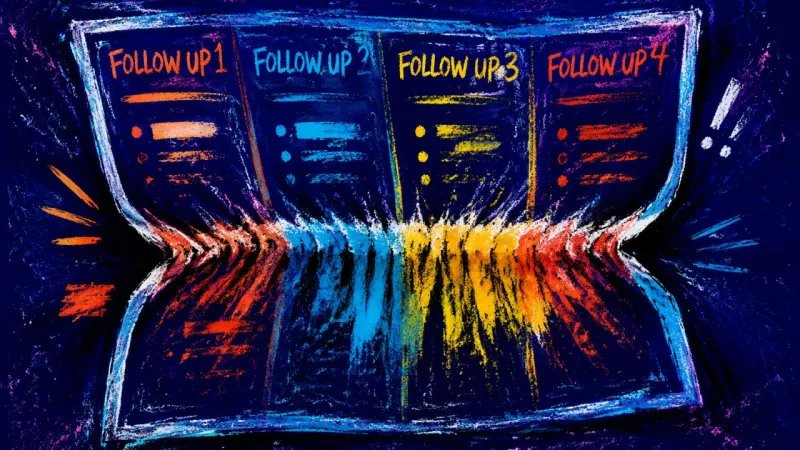
The 11:40 p.m. Spiral of Audience-Chasing Burnout
If your phone stays face-up through dinner after a post spikes, and every comment feels like a door you are supposed to walk through, you may be dealing with viral visibility exhaustion rather than a simple time-management problem.
Casey (name changed for privacy) came to me from a small Toronto apartment where, at 11:40 on a Tuesday night, their laptop held four unfinished follow-up posts for four unfamiliar audiences. The radiator clicked beneath a stream of notification sounds. A cold mug of tea had left a damp ring beside the trackpad, while the phone in Casey's palm had grown warm from being checked and checked again.
“I cannot tell which audience is actually mine anymore,” they said. “The post reached marketers, students, founders, and people debating the politics of it. I keep rewriting the next thing for all of them. This could be the moment that changes everything, so I cannot waste it.”
They rubbed the space between their eyebrows. Their shoulders remained lifted as if another alert might physically strike them. Their exhaustion was not simple sleepiness; it felt like wearing a coat soaked in static, the upper body still buzzing while the arms and legs became too waterlogged to move.
“Every comment feels like a door I am supposed to walk through,” Casey told me. “I wanted reach, but now I feel reachable by everyone.”
“You wanted reach, not unlimited access to your attention,” I said. “Wanting the opportunity is not the problem. We are going to look at the point where opportunity became obligation, and then find a boundary that protects your ambition instead of asking you to shrink it. Let us draw a map through this fog.”

Choosing the Switchback Map
I asked Casey to put both feet on the floor, take one slower breath, and hold the question without trying to solve it. I shuffled while they named the question plainly: “Why do I chase every audience when a post goes viral and feel wiped afterward?” The pause was a focusing tool, not a mystical test. It marked the moment when reacting stopped and observing began.
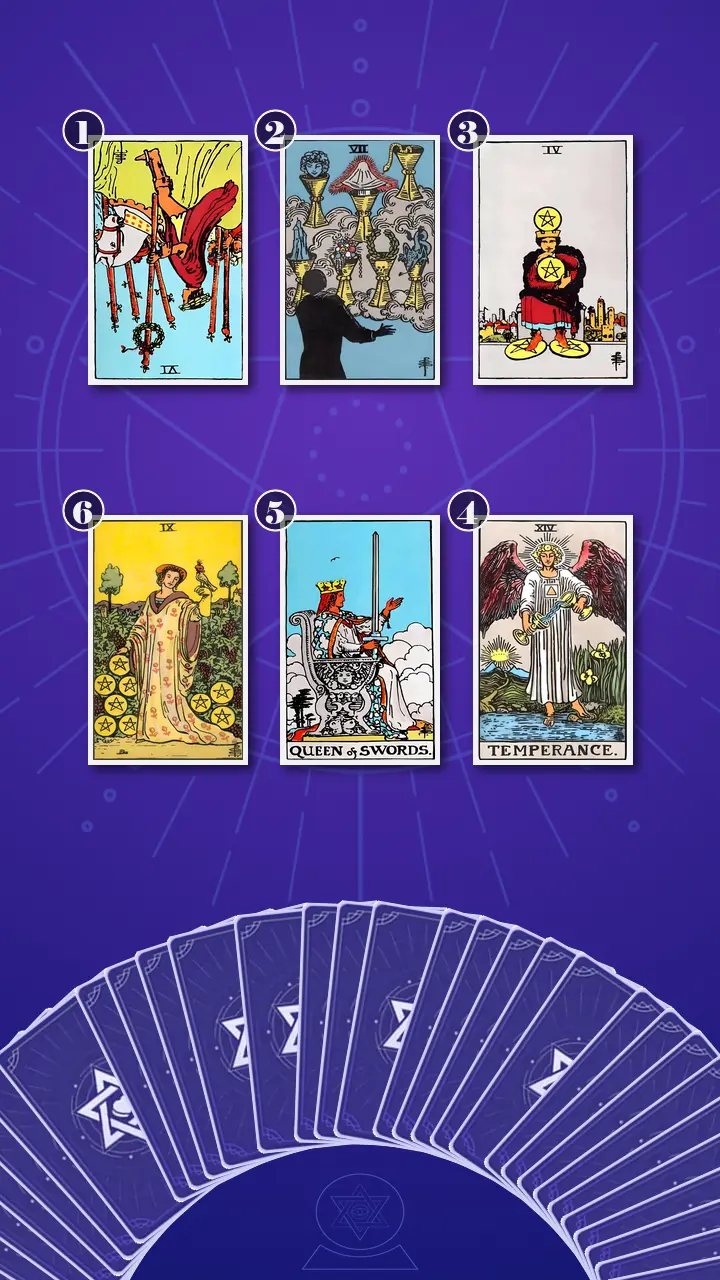
I chose the Transformation Path Grid · Context Edition, a six-card tarot spread for creator burnout and viral audience pressure. For readers wondering how tarot works in a consultation like this, I do not use the cards to predict whether a post will succeed or tell someone which audience fate has assigned them. I use card meanings in context to separate the visible behaviour, the blockage beneath it, the belief sustaining it, and the next testable response.
This spread was more useful than a broad Celtic Cross because Casey's problem had a precise operating loop. Viral recognition multiplied possible audiences. Audience-choice overload scattered their attention. Gripping the moment produced temporary control, followed by depletion, disappearance, and renewed pressure to work even faster during the next spike.
I laid the first three cards across the top as the diagnostic row. The first would reveal where visibility was becoming pressure. The second would show the immediate source of Energy Diffusion. The third would uncover what Casey feared losing if they stopped trying to retain everyone. Beneath them, the fourth card would introduce the regulating principle, the fifth would turn that principle into a boundary, and the sixth would show sustainable visibility in practice. The path moved right and then back left, like a switchback trail: across the exposed face of the problem, then home through regulation, discernment, and cultivated work.
When Applause Becomes a Performance Contract
Position 1: Six of Wands Reversed and the Success That Would Not End
“Now I am turning over the card that reveals the observable symptom: the way viral recognition becomes monitoring, replying, and constant adaptation until visibility feels like pressure.” I revealed the Six of Wands, reversed.
The victory in this card was real. Casey's post had connected. The problem was an excess of maintenance around that victory and a deficiency of permission to let the completed work stand. The laureled rider had become a creator at the centre of a comment field, treating every witness as the beginning of a continuing contract.
I brought Casey back to their Wednesday commute on Line 2. They had refreshed the rising graph between stations before opening the client brief for the meeting ahead. While the carriage brakes squealed and a stranger's wet coat brushed their sleeve, they had started drafting another follow-up in Notes.
“Complete this sentence,” I said. “This should feel like success, but now I have to prove...”
“That it was not luck,” Casey replied immediately. Then they gave one short, bitter laugh. “That is painfully accurate. Almost rude, honestly.”
I let the laugh have room. “I am not asking you to pretend the spike does not matter. I am showing you the exact moment celebration turns into performance maintenance. Recognition can be received without becoming a renewable contract. What did you do first when the post stopped feeling good?”
Casey looked away from the card and pressed their thumb against the cold rim of the mug. “I changed the next post. I had already planned something else, but suddenly it did not seem relevant enough.”
That was the first visible hinge in the loop. A real success had become a public performance review that refreshed every minute. The reversed Six of Wands showed an excess of external checking and an underdeveloped capacity to register, privately, “This worked. I can learn from it later.”
“Visibility is not the drain,” I said as I reached for the next card. “Unbudgeted availability is.”
Position 2: Seven of Cups and Seven Possible Careers Before Midnight
“Now I am turning over the card that identifies Energy Diffusion: too many audiences, content directions, and response demands competing for one limited pool of attention.” The card was the Seven of Cups, upright.
The blockage here was not a lack of options. It was an excess of unranked possibility. Casey had demographic data, trend suggestions, direct messages, collaboration offers, criticism, advice, and four audience-specific drafts open at once. Every option looked potentially career-changing, so none was allowed to remain merely possible.
“This is the recommendation algorithm generating seven versions of your career,” I said, “and your body trying to beta-test all of them tonight.”
Casey smiled without much amusement. Their fingers moved over the edge of the card but did not touch it.
I pictured the four unfinished drafts from their apartment: one for freelancers, one for brand strategists, one for students, and one for the people debating the post. In the traditional image, seven cloud-borne cups hold treasures, projections, and threats. In Casey's life, the cups were browser tabs, audience segments, content angles, inbound leads, and arguments that all entered the same priority queue.
“If I choose one group,” Casey said, “I might lose the others. If I wait, I might lose all of them.”
“And while you try not to lose any path, what happens to the path you had already chosen?” I asked.
Their eyes settled on the table. Their jaw tightened, then released slightly. “It does not move.”
The Seven of Cups explained why Casey could appear intensely active while their deeper creative direction remained motionless. The blockage was Energy Diffusion: possibility had exceeded capacity, and urgency had erased selection. Every audience had been promoted to “primary” before Casey had decided whether the relationship fit their work.
“Imagine that the analytics dashboard is hidden for seven days,” I said. “Which audience and message would still matter to you?”
Casey took longer this time. “Freelancers building creative businesses. That is who the original channel was for.”
I nodded. The answer did not solve the whole strategy, but it restored a centre. That mattered more than producing four rushed answers to four imagined futures.
Position 3: Four of Pentacles and the Proof Held Against the Heart
“Now I am turning over the card that reveals the deeper fear sustaining the blockage: the belief that releasing any audience would waste the viral moment and expose a lack of worth or control.” I revealed the Four of Pentacles, upright.
The card showed an excess of holding. A figure pressed one pentacle to the chest while two more pinned both feet in place. Casey's modern version involved screenshots of peak numbers, exported follower data, over-replied comment threads, and collaboration requests treated as assets that had to be secured immediately.
“You are not only trying to keep the audience,” I said. “You are trying to keep what their attention seemed to prove.”
The room became quieter. Rain touched the window in a fine, irregular rhythm, and the phone on the table lit once without being picked up.
I kept my voice measured. Creator income can be unpredictable. Reach can lead to real clients, newsletter sign-ups, and paid opportunities. I was not going to shame Casey's ambition or pretend that attention had no practical value. The Four of Pentacles asked a more exact question: when had a useful resource been recruited to defend personal worth?
“Finish another sentence for me,” I said. “If I let part of this audience pass, what I am really afraid of losing is...”
Casey's breathing paused. Their gaze lost focus as if a familiar analytics screen had appeared between us. Then their fingers, which had been folded tightly together, loosened.
“Proof that I can do this,” they said. “If the next post underperforms, everyone will know the viral one was a fluke. Maybe I will know it too.”
I had spent fifteen years constructing perfumes, and I knew the temptation to preserve a beautiful first impression by adding more of whatever had created it. But excess can flatten a formula. A striking top note cannot be forced to last forever without distorting the composition beneath it. Casey had been treating a volatile burst of attention as if it had to become the whole fragrance of their career.
“The card is not asking you to throw away the opportunity,” I said. “It is showing how gripping the evidence is immobilising the ability it supposedly proves. Your creative worth cannot move while both feet are pinning the metrics to the floor.”
When Temperance Poured Between Only Two Cups
Position 4: The Antidote to Total Responsiveness
“Now I am turning over the card that introduces the key transformation: the principle that can replace total responsiveness with measured circulation of attention.” The card was Temperance, upright.
The atmosphere shifted before either of us spoke. A thin line of late-afternoon light crossed the table and stopped at the card's two cups. In the image, water moved in a controlled stream. One foot rested on land and one in water. The figure did not dam the current or pour it everywhere; the flow had a chosen amount, direction, and destination.
In Casey's life, Temperance looked like deciding before opening analytics that one successful post would receive two fifteen-minute engagement windows and one follow-up for the audience closest to their existing creative promise. Other viewers could pass through without Casey redesigning the whole channel for them. The remaining attention could return to planned work and an offline evening.
I could see the old argument gathering behind Casey's eyes: the graph was still climbing, four drafts were open, and every new audience looked like a future that might disappear by morning. Their shoulders had begun to rise again, as if the opportunity were issuing instructions.
You do not have to pour yourself into every audience; choose a measured flow, as Temperance pours between only two cups.
I left the sentence alone for a moment.
Then I used what I call my Aura Permeability Diagnosis. I do not use “aura” here as a prediction or a claim that strangers possess supernatural power over someone. I use it as practical shorthand for the boundary around attention: what enters awareness, how far it travels into the body, and whether it is allowed to alter the entire internal atmosphere.
As a perfumer, I can walk into a room and notice how quickly smoke, detergent, food, or another person's fragrance changes the air I am working in. Casey's online environment had become similarly porous. A marketer's request changed their professional tone. A student's question changed the next topic. A critical thread entered dinner. A slowing graph followed them into bed. Every incoming note was being allowed to reformulate the whole composition.
“Viral audiences are often like top notes,” I said. “They can be vivid, valuable, and real without all becoming the lasting base of your work. Your primary audience promise is the accord that gives the formula coherence. If you add every exciting material simply because it arrived, the fragrance stops smelling like anything you chose.”
Casey's chin lifted. For the first time, their expression sharpened into resistance rather than fatigue.
“But does that not mean I handled the whole thing wrong?” they asked. “I spent days on this. I ignored client work. I cancelled dinner. If the answer was just ‘choose less,’ then what was all that for?”
“It means the strategy cost more than it returned,” I said. “That is information, not a verdict on you. You were trying to protect a real opportunity with the tools that felt available in the moment. Temperance is not here to prosecute the past. It is here to give the next spike a different structure.”
For one beat, Casey's breathing stopped. Their fingers hovered over the warm phone as though muscle memory had told them to check it, then slowly returned to the table. Their eyes moved away from me and fixed on the stream between the two cups. I watched the idea travel inward: first the stillness of replaying late-night drafts, then a faint reddening around their eyes, then a long breath that seemed to leave from somewhere below the ribs. Their shoulders dropped, but relief did not immediately replace the tension. A brief blankness crossed their face, the fragile look that can appear when a familiar burden is set down and the responsibility for choosing becomes visible. Their hands opened. “So I am allowed to let some of it go,” they said, their voice quieter and slightly unsteady. “But then I have to decide what I actually want.”
“Yes,” I said. “Attention is a resource to direct, not a demand to obey. A viral post can matter without receiving every remaining part of you.”
I leaned forward. “Now, with this new perspective, think back to last week. Was there a moment when this insight might have made you feel different?”
Casey looked down at the card again. “The first collaboration request,” they said. “It was from a company I would never normally work with. I knew that immediately, but I said yes to a call because the request came through the viral post. If I had thought of attention as a budget, I would not have treated their excitement as my obligation.”
That was the crossing point in the reading: not from ambition to retreat, but from urgency-driven total responsiveness to the first clear experience of selective, sustainable visibility. Temperance did not promise that leaving comments unanswered would feel instantly comfortable. It offered measured attention as a capacity Casey could practise while discomfort was still present.
The Sword, the Falcon, and a Door with Hours
Position 5: Queen of Swords and the Boundary That Can Be Used
“Now I am turning over the card that translates Temperance into a concrete practice: audience criteria, response windows, and decisions about what will deliberately remain unanswered.” I revealed the Queen of Swords, upright.
The Queen held her sword vertically while extending an open hand. I read that combination as balanced discernment: receptive without being indiscriminately accessible. Casey could acknowledge that a comment, request, or collaboration was real without agreeing that it belonged in their schedule.
I returned to the downtown food court Casey had described, where cutlery clattered, fryer oil hung in the air, and their phone vibrated against the table beside lukewarm noodles. A friend's message about dinner had remained unopened while strangers received immediate replies. Public attention had felt less intimate but more urgent, so it repeatedly outranked relationships and commitments Casey had already chosen.
“A broad audience does not require a broad promise,” I said. “Openness and access are not the same thing.”
The Queen of Swords supplied the missing air in the spread: clear language, explicit criteria, and decisions that did not have to be renegotiated under every notification. The energy was neither excessive nor blocked. It was a clean dividing line.
“What would have to be true for an opportunity to deserve your response time?” I asked.
Casey opened Notes, then paused with their thumbs above the screen. “It needs to fit my core topic, lead toward work I actually want more of, and not require me to drop something I already promised.”
“There is your filter,” I said. “And for something misaligned, you can write: ‘Thanks for thinking of me. This is outside my current focus, so I am going to pass.’ No apology essay. No alternate strategy session offered for free.”
Casey typed the sentence. Their mouth tightened for a second at the word “pass,” then softened. “I can acknowledge that it is an opportunity without agreeing that it is mine,” they said.
Position 6: Nine of Pentacles and the Return to a Chosen Field
“Now I am turning over the card that shows the integrated state: independent creative value, trained attention, and a sustainable relationship with visibility.” The final card was the Nine of Pentacles, upright.
I pointed to the cultivated vineyard and the hooded falcon resting on a gloved hand. The falcon still possessed speed, focus, and power, but it was not released toward every movement in the landscape. Its attention had been trained and placed in service of a chosen environment.
For Casey, this meant building a focused catalogue for one primary audience, protecting regular sessions for original work, and tracking completed pieces beside reach. A viral spike could bring new people into the space without rewriting the entire content calendar or erasing private time.
“The work can remain yours even while more people see it,” I said. “The viral post is weather passing over the vineyard. It can help, but it does not decide what you plant.”
This card held the balanced earth that the Four of Pentacles had lacked. Security no longer came from clutching every visible metric. It came from a body of work Casey could cultivate, complete, and direct. I asked them to name one durable-work measure that would still matter after the graph flattened.
“Completing the original piece I abandoned,” they said. “Then tracking planned pieces completed for the next month, not just reach.”
I watched their focus settle. The cards had not chosen Casey's audience or guaranteed a career outcome. They had made the operating system visible: applause becoming obligation, possibility becoming diffusion, attention becoming proof, measured flow becoming choice, and boundaries becoming a field where creative value could keep growing.
The Temperance Engagement Budget
I gathered the six cards into one story. The reversed Six of Wands showed a real success being converted into continuous public maintenance. The Seven of Cups revealed why Casey's work fragmented: every audience was treated as a separate future that had to be pursued immediately. The Four of Pentacles exposed the grip beneath the activity, where retaining attention had become a way to retain proof of ability. Temperance restored proportion. The Queen of Swords provided criteria and language. The Nine of Pentacles returned attention to a durable creative practice.
The cognitive blind spot was simple but costly: Casey had mistaken visible interest for an obligation to build an ongoing relationship with every person who expressed it. That assumption made total responsiveness look like conversion, even when it left them unable to create. The transformation was not from visibility to invisibility. It was from being governed by public attention to governing their own attention.
I gave Casey three small experiments. I framed them as tests, not rules, because a useful boundary must work inside real client deadlines, financial needs, and creative rhythms.
- Write the One-Audience Promise Before publishing the next follow-up, open Notes and write: “This post is primarily for ___, and it helps them ___.” Keep the sentence beside the draft and use it to decide which comments, examples, and follow-up ideas belong. This takes two minutes and should happen before analytics are opened. Start with the audience Casey named in the reading: freelancers building creative businesses. The sentence can be revised later; its job is to create a temporary centre while urgency is high.
- Use the Scent Bubble Protocol for Two Response Windows Choose two fifteen-minute engagement windows for one post, such as 12:30 p.m. and 6:00 p.m. Before each window, place both feet on the floor, lower the shoulders, and take one slower breath. Imagine a clean, breathable perimeter at arm's length: comments can enter awareness during the timer, but they do not receive access to the whole day. Close the app when the timer ends. I use this visualisation as a somatic cue, not a magical shield. Decide the windows before checking the graph. If two windows feel too restrictive, begin with three ten-minute windows; the minimum version is ten notification-free minutes.
- Apply the Queen of Swords Audience Filter Pin three criteria in Notion or Notes: relevance to the core topic, fit with the work Casey wants more of, and capacity to respond without dropping an existing commitment. Apply the filter to comments, collaborations, and follow-up ideas. Save one standard decline reply for requests that deserve direct closure. Test the filter on one request rather than trying to clear the entire inbox. A response is optional unless a prior commitment or professional obligation exists; silence can also be a complete boundary.
Casey raised the practical objection I expected. “But what if the post is moving during the hours when I am not checking?”
“Then the post moves without being supervised,” I said. “The boundary does not deny that timing matters. It prevents urgency from setting an unlimited budget. You can revise the windows after the experiment, but let evidence revise them, not the first spike of tension behind your eyes.”
I asked Casey to take ten minutes before leaving and complete one sentence: “This post is primarily for freelancers building creative businesses, and I will engage with it at 12:30 and 6:00.” They placed the note beside the analytics app. The action was deliberately small. Clarity did not require a complete audience strategy that afternoon; it required one decision that incoming attention could not automatically overrule.

A Week Later, the Quiet Proof
Six days later, I received a message from Casey. They had returned to the neighbourhood cafe where, the previous weekend, opening the drafting app had produced immediate irritation. This time they put the phone in their bag, worked for twenty-five minutes on the original project, and opened analytics only after the timer ended.
“The graph was fine,” they wrote. “Some comments were unanswered. I still wanted to check. But I finished the section I had been avoiding, and the four follow-up drafts are now one post in my normal voice.”
That night, Casey slept through without checking notifications. In the morning, their first thought was still, “What if I missed the moment?” They noticed it, smiled once, and made coffee before opening the app.
I did not read that as a solved life or a permanent cure for creator burnout. I read it as the first reliable evidence of movement: discomfort remained, but it no longer made every decision. Casey had begun moving from urgency-driven total responsiveness toward clear, selective, and sustainable visibility.
The six-card Transformation Path Grid had offered a map, but Casey made the change by choosing what crossed the boundary, what received a response, and what returned to the protected centre of their work. Tarot did not become the authority over their career. It helped them see the authority they had been handing to the dashboard.
When every notification feels like a door that might close forever, your eyes can stay tense, your shoulders can stay wired, and the reach you wanted can begin to feel like proof you must keep earning. But noticing that pressure is already a change in the atmosphere. You can let the viral moment have a vivid top note without allowing it to rewrite the entire composition.
If this attention did not have to be converted all at once, what small part of your original creative plan would you place inside Temperance's protected cup this week?