From Career Approval Anxiety to Steadier Self-Trust: One Small Test

The Northern Line Between Applause and Growth
I recognised the ordinary form of career pivot anxiety the moment Jordan, a 28-year-old non-binary professional in London, sat across from me and described the choice they kept postponing. At 8:47 PM on the Northern line, they had been scrolling through LinkedIn posts about promotions, rooftop networking events, and excited new chapters while a recorded TfL announcement crackled above the carriage.
Their phone was warm against their palm. The carriage lights buzzed. Jordan reopened an application for a less familiar role that would stretch their skills, imagined explaining it to friends, then closed the document before anyone had actually judged it. The approved option was easier to defend, even though the developmental one was the direction they wanted.
Jordan looked at me and asked, Why do I keep choosing public approval over the growth I want? I could see the contradiction in the way their shoulders lifted and stayed there: the growth they wanted versus the fear of losing public approval. Their anxious approval-scanning felt like having twelve browser tabs open for other people's possible reactions while the actual application sat frozen in the first tab. Under the longing was shame, and beneath the shame was resentment at arriving at the same crossroads again.
I told Jordan, Wanting approval does not make your growth fake; it shows how much belonging has been asked to certify it. I was not there to tell them which career route was destined to work. I was there to help separate an observable fact from an imagined verdict. We would give the fog a map, then let Jordan decide which road deserved a small, honest test.

Choosing a Compass for a Career Crossroads
I invited Jordan to put both feet on the floor, notice the tightness in their chest without arguing with it, and hold the question in one sentence. I shuffled slowly while they breathed, using the movement as a practical transition from scanning the room to observing their own experience. Tarot, as I use it, is a structured way to make patterns visible; the cards do not issue a sentence about the future.
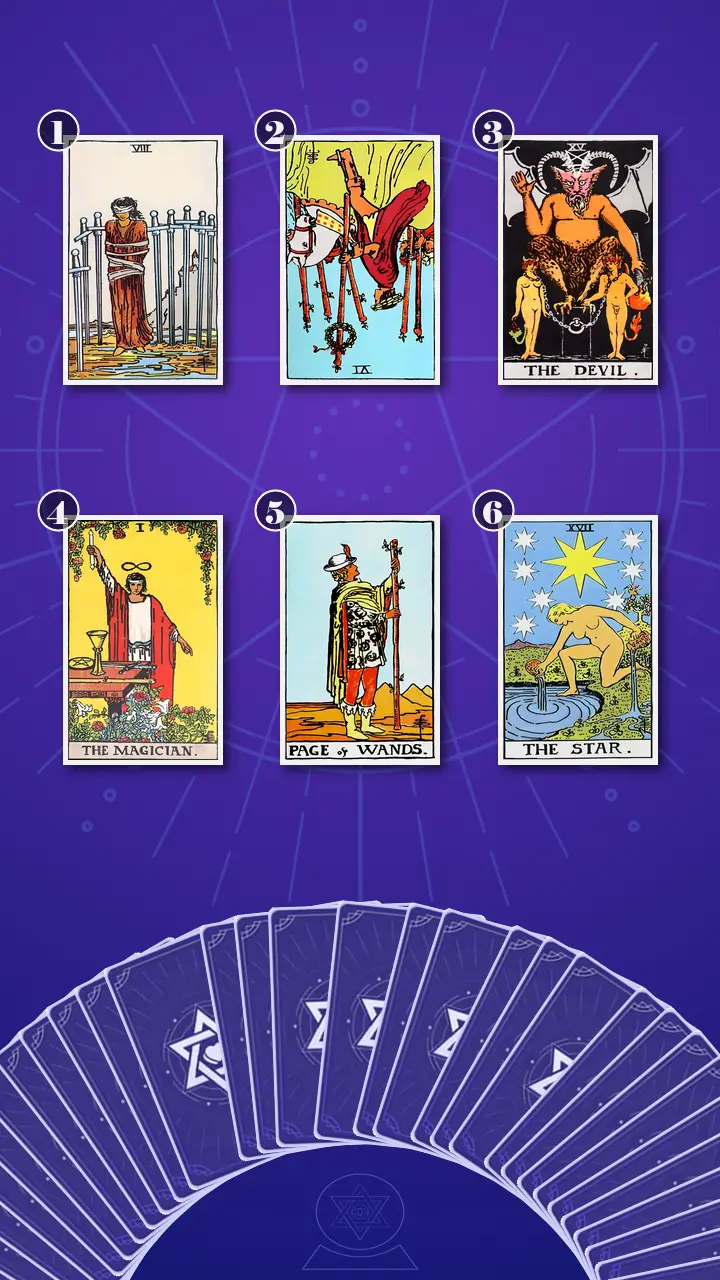
I chose the Transformation Path Grid (6) · Context Edition because Jordan's question was a why-question about a repeating loop, not a simple choice between two external options. A classic decision spread could compare alternatives, but this six-card grid could trace the whole mechanism: the current pattern, the force that reinforces it, the attachment underneath, the interruption point, a small experiment, and the integration that follows. That is how tarot works most usefully here: card meanings in context become a map from behaviour to agency.
The upper row would show how the approval loop had formed. Position 1 would name the present pattern; position 2 would reveal the blocking loop; position 3 would uncover the attachment that made repetition feel safe. The lower row would open the route forward: position 4 as the key interruption, position 5 as a manageable action experiment, and position 6 as the emerging ability to treat public feedback as information rather than a verdict.
The Closed Upper Row
Position 1: The Application Behind the Blindfold
Now I turned over the card representing the present pattern: the observable way Jordan postpones the growth they want and returns to the publicly approved option.
It was the Eight of Swords, in upright position. Its standard meaning is mental restriction and limited perspective, and the image was exact. The blindfold became the imagined audience. The eight swords became competing explanations for why the choice might be unrealistic, premature, or embarrassing. The narrow grey landscape became the shrinking range of options that Jordan felt allowed to choose.
This was the moment Jordan opened a growth-oriented application, imagined friends, colleagues, and LinkedIn contacts asking whether it was sensible, and closed the document before the question had entered the real world. The next practical step remained available on the screen, but anticipated judgment had been treated as a fixed barrier. The energy was constricted air: thought was active, but it could not move into action.
I asked, Which part of this restriction is an observable fact, and which part is an imagined verdict? Jordan did not nod. Their breath paused, their fingers hovered above their phone, and their eyes moved away from me as if replaying a dozen conversations. Then a dry, bitter laugh escaped them, followed by a long exhale that lowered one shoulder.
That is painfully accurate, Jordan said. I keep waiting for permission and calling it preparation.
I did not rush to make the recognition sound inspirational. I told Jordan that the card was not accusing them of weakness; it was showing the precise moment when a possible reaction became more authoritative than the action itself. Naming that moment gave us something practical to work with.
Position 2: The Applause That Became a Requirement
Now I turned over the card representing the blocking loop: how recognition, imagined judgment, and the need for public approval reinforce the repetition compulsion.
The card was the Six of Wands, in reversed position. Upright, the Six of Wands can describe recognition and public confidence. Reversed here, the energy of recognition was blocked and unstable, then redirected into a requirement for action. Jordan checked likes, colleagues' reactions, and repeated reassurance before deciding whether a new ambition deserved effort. A neutral response did not remain neutral for long; it became evidence that the ambition itself was wrong.
I placed the card beside Jordan's phone and described the raised wand as a LinkedIn update, the laurel as visible praise, and the surrounding onlookers as the imagined audience. Jordan showed me a recent draft in a WhatsApp group chat. Three friends had responded carefully but without enthusiasm. Jordan had removed the personal detail that made the goal meaningful and replaced it with safer language about professional development.
Applause is data about a room, not a verdict about your direction.
That distinction did not make the room silent inside Jordan's body. Their thumb pressed into the edge of the phone case. Their jaw tightened, and their gaze flicked toward the window. I watched the familiar loop become visible: a quiet response, a rewritten plan, a safer option, a brief unclenching, and then the hollow feeling on the train home when the desired growth was still untouched.
I said, Public feedback can matter. It can offer practical information about timing, communication, or how an idea is landing. But it cannot be asked to decide whether the experience is meaningful to you before you have had the experience. Jordan's shoulders lowered by a fraction. They were not relieved exactly; they looked as though they had found the name of a rule they had been obeying without remembering who wrote it.
Position 3: The Subscription Jordan Kept Renewing
Now I turned over the card representing the underlying root: the attachment or fear that makes repeating the approved choice feel safer than risking growth.
The card was The Devil, in upright position. I explained that I was not reading it as a supernatural threat or a fixed fate. In this position, it showed an attachment that promised immediate protection from uncertainty. Jordan returned to the same defensible role, course, or project and called the decision practical, even while privately knowing that fear of disapproval was doing much of the choosing.
The loose chains mattered. They were powerful because the pattern offered a quick reward, not because Jordan had no agency. It was a notification loop: ask, receive a little relief, compare again, then need a stronger signal the next time. The approved option worked like a subscription Jordan kept renewing because cancelling felt risky, even though the monthly charge was resentment.
I used my Gravity Well Identification lens at that point. I asked what obsolete habit or environment was exerting the downward pull on Jordan's evolution. The answer was not their ambition, their colleagues, or London work culture by itself. It was the old bargain underneath all of it: belonging would be protected if every choice could be made easy for other people to approve.
What does the approved choice promise in the first ten minutes after you make it? I asked. And what does it quietly cost you by the end of the month?
Jordan stared at the loose chains on the card. Their hand tightened around the mug, then released it. They could name the short-term promise: a calmer conversation, fewer questions, a respectable explanation, the feeling of being sensible. They could also name the cost: the same responsibilities, the same postponed application, and the private thought that someone else was gaining the experience they had wanted.
When The Magician Put the Tools on the Table
Position 4: The Hinge Before Permission
Before I turned the next card, the radiator clicked off. The apartment seemed to widen around the silence, and for the first time that evening Jordan was not looking at their phone.
Now I turned over the card representing the key interruption: the inner agency available before Jordan asks the public to authorise a choice.
It was The Magician, in upright position. This was the bridge in the spread. The Magician represents focused will, resourcefulness, conscious choice, and the ability to use what is already available. The raised wand held intention. The sword held a clear question. The cup held the emotional reason the growth mattered. The pentacle held the practical constraint. The card did not promise certainty; it showed a deliberate action that could begin before consensus.
Jordan's actual resources were already present: a half-finished application, one contact who could answer a narrow question, a relevant skill, and an open calendar slot. I set these beside the image and introduced my other signature lens, Cognitive Spiral Mapping. I use it to validate that feeling stuck can be a necessary orbital slingshot phase before an intellectual breakthrough, while still identifying where thought has started circling instead of gathering useful momentum. The map showed Jordan's mind repeatedly orbiting the imagined audience. The slingshot would not be a dramatic reinvention. It would be one chosen release from the loop.
The Moment Before the Shift
Jordan was trying to forecast every face in the room before taking a first step. The unfinished application, the warm phone, and the promised relief of closing it had become a familiar orbit. They were mistaking the calm after retreat for evidence that the approved route was true.
The repeated approved choice is not proof that it is your true direction. Public approval can tell you how a room is reacting, but it cannot decide what the experience means to you. Use one available resource to run one deliberate growth experiment, and let direct evidence arrive before the audience gets the final vote.
Jordan's breath stopped in the middle of an inhale. For a few seconds, their face went completely still and their fingers remained suspended above the notebook. Then their eyes lost focus; I could see them replaying the last Sunday night, the half-written message, the search results, and the moment they had called delay preparation. Their brow tightened as the idea reached the part of them that had been trying to make one decision carry a lifetime's proof.
Finally, Jordan let out a low, almost disbelieving Ah. Their hands opened on the table. The shoulders that had been held near their ears sank, and a tremor moved through the exhale. Their eyes brightened, but the release carried a brief, dizzying blankness too. A clear next step meant there was no longer a perfect audience to blame for waiting. The room had not granted permission. I had not predicted an outcome. Jordan was simply holding the tools.
I let the silence stay kind and unhurried. Then I said, Now, use this new perspective to revisit last week. Was there a moment when asking what you could initiate with what was already in your hands would have felt different?
Jordan looked at the draft application, then at the calendar. The change was small but real: from anxious approval-scanning and resentment to steadier self-trust through direct experience. I reminded them that a stuck orbit can contain momentum, but only a chosen action can show where that momentum leads.
A Beta Test Before the Applause
Position 5: The Sprouting Wand
Now I turned over the card representing the action experiment: one small, growth-oriented behaviour Jordan could try without requiring consensus.
The card was the Page of Wands, in upright position. The Page approaches possibility with curiosity rather than a demand for public proof. The wand was held at eye level, not raised for spectators. This was beginner energy in balance: enough fire to start, enough humility to learn.
I translated the card into a private beta test. Jordan could make one rough portfolio page, book one exploratory conversation, send one application draft, or attend one session connected to the direction they wanted to test. None of these actions needed to become a new identity statement. The purpose was to gather direct information about what felt engaging, possible, and worth exploring next.
Jordan gave me a practical objection. But I can make twenty minutes sound easy. My commute is long, rent is due, and by the time I get home I am already running on fumes.
I agreed with the constraint. I did not turn a small experiment into another standard Jordan could fail. I asked them to choose the smallest version that could fit before the usual comparison spiral began, perhaps one calendar slot at lunch or one train ride with LinkedIn closed. Jordan wrote, I am gathering information, not submitting a final verdict on myself. Their breathing became slower. The action remained modest enough to belong to them.
The Star After the Notifications Go Quiet
Position 6: Growth That Does Not Need a Launch Campaign
Now I turned over the card representing integration: how Jordan could build self-trust while treating public feedback as information rather than a verdict.
The card was The Star, in upright position. Its hope was quiet rather than performative. The exposed figure could be visible without putting on a show, and the two streams of water suggested a reciprocal relationship between inner meaning and lived evidence. Feedback could move into the decision without owning it.
I told Jordan that integration would not mean never caring what people thought. It would mean noticing what remained meaningful after the notification screen was closed. The Star received the Page's direct experience and completed The Magician's bridge: growth could be seen, discussed, and adjusted while still belonging to the person living it.
Jordan turned their phone face down. They did not look triumphant. They looked less split. The tightness had not vanished, but it no longer filled the whole room. I asked what they would still want to test if nobody applauded it yet. After a pause, they named the role application without editing the answer into respectable language.
From the Approval Loop to Finding Clarity
When I placed the six cards in order, the story was coherent. The Eight of Swords showed thought narrowed by an audience that had not actually spoken. The reversed Six of Wands showed recognition becoming a condition for action. The Devil showed why the loop repeated: the approved route reduced discomfort quickly enough to feel protective, while the long-term cost appeared as stalled growth and resentment. The Magician returned the decision to Jordan's hands. The Page gave that agency a reversible form, and The Star showed self-trust growing through contact with what felt meaningful, not through a perfect public response.
The cognitive blind spot was treating a public-relations problem as a practical decision. Jordan had been trying to create an explanation no one could criticise instead of creating an experience that could teach them something. I named the transformation direction plainly: move from asking whether a growth choice will be approved to running a bounded experiment that tests what matters personally. Public feedback could remain useful, but it would no longer be the authority that decided worth or direction.
The Orbit Expansion Strategy
I used my Orbit Expansion Strategy to turn the insight into next steps. We mapped the current gravity well as approval-seeking, the desired trajectory as a seven-day growth test, the available momentum as one twenty-minute action, and the release point as direct observations recorded before outside reactions. The exercise widened the frame without making the decision grander. Jordan did not need to escape uncertainty forever; they needed to stop asking uncertainty to disappear before beginning.
I gave Jordan three pieces of actionable advice:
- Build the Resource MapWithin the next seven days, Jordan would open a note titled Resource Map and list four resources already available: one person, one piece of knowledge, one practical tool, and one hour. Within twenty minutes, they would use one resource for one observable action, such as sending an exploratory email, booking an informational conversation, or making one rough portfolio page.Set a 20-minute timer and stop at evidence rather than polish. Jordan can change, pause, or close the experiment at any point.
- Create Private-First ProofJordan would keep one growth action private until it was complete: no post, announcement, LinkedIn check, or group-chat poll before the chosen step. Immediately afterward, they would record three direct observations: what I did, what I noticed in my energy, and what I would or would not test next. They would wait at least thirty minutes before checking replies or career-content feeds.The boundary is narrow, not secret forever. If the urge to perform appears, return to the beta-test frame and let the experience speak before the audience gets to vote.
- Separate Facts from VerdictsAfter the experiment, Jordan would divide a page into Facts and Verdicts. Observable details such as I spent 25 minutes drafting or I felt more curious after the call would go under Facts. Labels such as this proves I am unrealistic would go under Verdicts. If feedback was useful, Jordan could ask one person one bounded question: What did you notice about the practical result?Name the stomach drop before interpreting a neutral response. Read the facts once, then choose whether to continue, revise, pause, or close the experiment.

A Quiet Proof on the Other Side of the Crossroads
A week later, I received a message from Jordan: I made the rough page, booked the conversation, and did not post either one. I learned more in twenty minutes than I learned from three nights of searching. The message did not claim that the entire career path was settled. It carried something more reliable: evidence that Jordan could begin without asking the room to certify the beginning.
On Sunday morning, Jordan submitted the draft, then sat alone in a cafe with tea cooling beside them. They slept through the night; at breakfast, the first thought was, What if I am wrong? This time, they smiled and opened the Facts column.
I had not chosen a career for Jordan, and the cards had not chosen one either. The Transformation Path Grid had made the loop visible, located the gravity well, and placed one deliberate experiment between imagined judgment and the next decision. That was the journey to clarity: not certainty, but a steadier relationship with direct experience.
When the group chat goes quiet after you share an ambition, your chest tightens and you start rewriting the plan; part of you wants the life it could open, while another part wants proof that wanting it will not cost belonging.
If public approval could remain undecided for one week, what small version of the growth you want would you be curious to try before asking the room to explain it back to you?