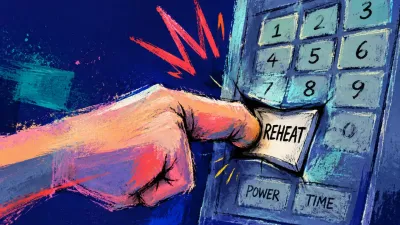
Finding Clarity in the 2:43 p.m. Gray Dot
If you are early-career in a hybrid city job and your chest tightens the second your Slack dot goes gray during a slow 2 PM stretch, you are probably not dealing with laziness — you are dealing with green dot anxiety.
When Jordan sat down across from me, she did not begin with a dramatic career crisis. She began with a Wednesday at 2:43 p.m. in her downtown Toronto condo: reheated coffee in one hand, the kettle just clicked off in the kitchen, the laptop fan was humming, and Slack sat open on her second monitor like a tiny watchtower. The second she saw the status dot turn gray, her breathing went shallow, her thumb hit the trackpad, and she sent a small update nobody had asked for before she had even looked at the actual task.
"It sounds ridiculous when I say it out loud," she told me. "If my dot goes gray at the wrong moment, it feels weirdly career-ending."
It did not sound ridiculous to me. It sounded like productivity visibility anxiety in its purest form: a nervous system living under a tiny green spotlight that never switches off, like trying to drink coffee while a smoke alarm chirps inside your ribs. She wanted to be seen as reliable at work, but any sign of downtime felt, in her body, like evidence against her.
I nodded and kept my voice soft. "A pause in activity is not a confession of laziness," I said. "Let’s make a map of this instead of letting the gray dot tell the whole story. Today, our journey is about finding clarity."

Choosing the Compass: How Tarot Works for Workplace Visibility Anxiety
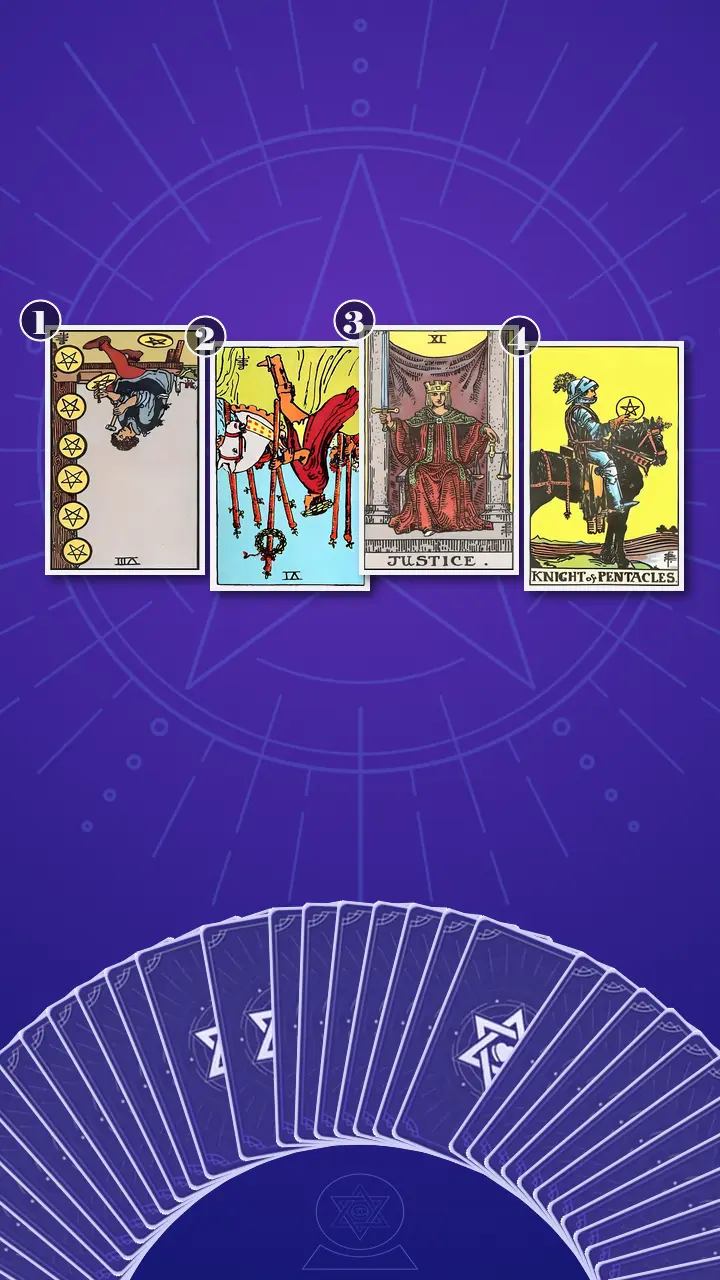
I asked Jordan to take one slow breath and hold the real question in mind, not the polite version. Then I shuffled slowly and laid four cards in a straight horizontal line between us, left to right, like a compact bridge across water.
For this reading, I used the Four-Card Spread · Context Edition. I reach for this spread when the issue is not predictive and not really about choosing between options, but about understanding a pattern from the inside out. It is the smallest structure that can hold symptom, cause, reframe, and embodiment. That is why it works so well for Slack status anxiety, career crossroads around reputation, and the very modern fear of looking lazy when you are actually working.
This is how tarot works best for workplace anxiety: not as fortune-telling, but as pattern recognition with symbols. The first card would show the visible symptom — what her nervous system does when the status flips idle. The second would reveal the deeper challenge — the fear of being seen as lazy and what visibility has come to mean about worth. The third, the turning point, would show the reframe capable of interrupting the panic loop. The fourth would ground the reading in a realistic next step she could actually test in her hybrid workweek.
Reading the Problem Cluster
Position 1: The Bent Worker and the Mouse Jiggle
I turned over the first card. "Now we’re looking at the position that presents the current symptom pattern: the concrete behavior of monitoring Slack visibility and reacting to idle status as if it were a threat."
The card was the Eight of Pentacles, reversed.
When I read card meanings in context, I do not stop at the textbook line. I look for the life scene the card is already acting out. Here, it was immediate: the work is real, but it keeps getting broken apart by the need to look like work is happening. Jordan leaves Slack open on one screen, taps the trackpad before every coffee refill, rewrites tiny updates so they sound industrious, and treats visible activity like part of the assignment. From the outside it looks diligent; from the inside it feels like never getting to sink properly into the task.
Reversed, this is work energy in distortion — effort diverted into proof-of-work instead of craft. It is like optimizing the status light instead of the project itself, or keeping the Notion board perfectly labeled while the actual task keeps getting interrupted. The card is not calling her lazy. It is showing a good work ethic getting trapped in performance, so breaks disappear, focus fragments, and the day starts to look busy in chat history while feeling strangely unfinished in real life.
I asked her, "The last time your status went idle, what did you do in the next thirty seconds?"
Jordan gave a short laugh that landed with a little sting. "Clicked back in. Moved the mouse. Sent a ‘still moving through this’ message. Wow. That sounds... kind of bleak." Her fingers tightened once around the warm mug, then loosened. The smile that followed was half-recognition, half-grief.
"Not bleak," I told her. "Protective. But expensive."
Position 2: The Channel That Became a Stage
I turned the second card. "This position reveals the deeper challenge underneath the symptom: the fear of being seen as lazy and the approval-based meaning attached to visibility."
The card was the Six of Wands, reversed.
This one often lands like a private bruise in workplace readings. The modern scene is painfully familiar: a manager appears online, a coworker replies quickly in a shared channel, and suddenly the day becomes an invisible competition about who looks most engaged. Jordan starts reading public activity like applause, silence like disapproval, and her own gray status like a loss of standing. It is very LinkedIn performance logic leaking directly into Slack.
Reversed, the fire here is overextended toward an audience that may not even be watching. Slack becomes a hidden leaderboard nobody officially said existed. A quiet hour feels like losing points. That is the blockage: not the workload itself, but the way visibility turns into a private referendum on worth. She wants to look competent, yet one slow patch in the afternoon feels like it could erase the whole day.
I asked her, "When someone senior shows up online and you are not actively typing, what is the exact story your mind jumps to?"
"That they’ll think I’m checked out," she said immediately. "Like the whole day gets judged from that one moment."
I watched the reaction arrive in three waves. First, a small freeze: her breath stopped halfway in. Then the cognitive hit: her eyes unfocused, as if replaying every moment a senior coworker’s green dot had changed the emotional weather of the day. Finally, the release: she pressed one hand lightly to her stomach, nodded hard, and whispered, "Yes. It feels irrationally public."
"Exactly," I said. "What you call professionalism is sometimes just fear wearing very polished clothes."
When Justice Replaced the Verdict
Position 3: The Card That Asked for Evidence
When I reached the third card, the room changed. The late Toronto light caught the edge of the card, and Jordan sat a fraction straighter without meaning to. This was the visual turning point of the spread.
"Now we’re in the position that identifies the key reframe that can interrupt the pattern: the shift from imagined judgment to fair, evidence-based standards of professionalism."
The card was Justice, upright.
Justice is what happens when panic stops acting like a judge. In the modern life scene of this reading, Jordan pauses and checks the actual record: what is due, what was agreed, what response window is normal, and whether anyone has asked for something specific. The scales weigh facts against assumptions. The sword makes a clean cut between real responsibility and self-imposed digital surveillance. In plain English, this is checking the receipt instead of arguing with the vibe.
Because I grew up among Venetian bridges, I have a metaphor I return to whenever people confuse communication with speculation. I call it my Bridge-Corridor Theory. A bridge connects two people through something real — a deadline, a request, a shared norm, a deliverable. A corridor only gives you the echo of your own footsteps. One clear message from a manager is a bridge. Ten minutes of mind-reading about what your gray dot might mean is a corridor. Justice asks you to stop building a case in the corridor and walk back onto the bridge.
Jordan was still caught in that familiar microsecond: the task list briefly quiet, the cursor hovering over Slack, her hand ready to move the mouse, her whole body braced to send a proof-of-life message before anything had actually gone wrong.
Stop treating the green dot as a verdict; let Justice replace mind-reading with clear standards, and build your case through consistent delivery rather than constant visibility.
I slid a notepad toward her before the old reflex could reclaim the room. "Define reliable work in your role," I said, "but you are not allowed to use the words active, visible, online, or available." She stared at the page, then wrote: "deadlines met," "people know when to expect me back," and "updates that actually clarify something."
Then her body answered before her voice did. First came the freeze: her fingers hovered above the pen, motionless. Then the recognition: her eyes lost focus for a beat, as if replaying a dozen gray-dot emergencies that had never become actual problems. Then the release: a breath left her in a shaky half-laugh, and her shoulders dropped so suddenly she almost looked surprised by her own spine.
"But if I stop managing it like that," she said, and there was a flash of anger in it now, "doesn’t that mean I’ve been doing this whole job wrong?"
"No," I told her. "It means your nervous system wrote a survival rule in a workplace culture that can feel a little Black Mirror, a little Severance, a little too obsessed with performance signals. The rule made sense as protection. It just isn’t the fairest standard anymore."
Outside, a streetcar bell rang once, clean and metallic. The sound cut through the room the way the sword on the card did. Jordan exhaled again, longer this time, but with that faint dizzy edge that comes when relief arrives hand in hand with responsibility. I asked her, "Using this new standard, can you think of a moment last week when facts and story got mixed together?"
"Wednesday," she said immediately. "Nothing was late. Nobody was asking for me. My manager was just online, and I acted like I’d been caught."
That was the crossing I wanted for her. Not from careless to responsible, but from panic-driven self-surveillance to calm, steady professional self-respect. "Your green dot is not a character reference," I told her. "A gray status dot is not evidence about your character. It is just a status dot."
The Still Horse and the Boring System That Ships
Position 4: Calm Reliability in Real Time
I turned over the final card on the far right. "This position grounds the reading in a realistic next step: how to embody calm reliability without overperforming availability."
The card was the Knight of Pentacles, upright.
If Justice is the principle, this knight is the practice. The modern translation is simple and almost deliberately unglamorous: Jordan blocks focused work, answers within reasonable norms instead of instantly by reflex, and sends concise updates tied to deliverables rather than presence. She lets her status reflect the rhythm of real work instead of trying to keep it green at all costs. Nothing about it is flashy, but over time it reads as calm, clear, and dependable.
Upright, this is balanced Earth. The still horse matters here. It is the opposite of mouse-jiggle energy. It says credibility is built by boring systems that quietly ship on time — the calendar block that actually holds, the clear return time, the response window your team can rely on, the project board updated because it helps, not because panic wants a witness. Reliability is a pattern, not a live performance.
Years ago, during my transoceanic work on cruise decks, I learned that anxious travelers confuse constant motion with stability. Boats do not stay balanced because everyone rushes to one side. They stay balanced because weight is distributed properly. Jordan nodded before I even named the parallel.
"So the goal isn’t to disappear," she said. "It’s to stop acting like my body has to be online the whole time."
"Exactly," I said. "Quiet professionalism. Not hustle-core. Not productivity cosplay. Just steadiness."
From Visibility Theater to Actionable Advice
When I looked across the whole line of cards, the story was clean. The Eight of Pentacles reversed showed a real work ethic bent into compulsive proof-making. The Six of Wands reversed revealed the invisible audience behind it — the part of Jordan that turns Slack into a stage and a gray dot into public failure. Justice cut through the distortion with facts-versus-story thinking. The Knight of Pentacles offered the adult version of competence: steady, clear, sustainable. The issue was never laziness. It was an overloaded threat response around professional visibility.
The blind spot was this: Jordan had been treating anxious interpretation as if it were evidence. She had been letting digital cues carry more authority than real agreements, deadlines, and team norms. The transformation direction was equally clear: shift from treating visibility as proof of value to treating clear priorities and consistent delivery as proof of professionalism. That is how we move from self-surveillance to self-trust, and from performative busyness to steady output.
Then I gave her next steps. I wanted them small, testable, and realistic — not a whole personality rebrand. I also brought in two of my own tools. First, the Gondola Balance Technique: do not load your entire sense of safety onto one side of the boat, meaning instant visibility. Redistribute it across clearer standards, a return time, and actual delivery. Second, the Lace Communication Method: let your updates be precise enough to help the work, not ornamental enough to soothe panic.
- Build a Reliable Enough StandardOn Monday morning, open Notes, Notion, or a sticky note and write three observable markers of reliability for your actual role — for example: key deadlines met, non-urgent Slack replies within a reasonable window, and updates sent only when they clarify a deliverable. Keep the list beside Slack for one week, and check it before reacting to a gray dot.Keep it short enough to read in under ten seconds. Your body may still insist the dot matters more; the list is there to give your brain a fairer standard, not to force instant calm.
- Run One Boundary-First Focus BlockChoose one 30- to 45-minute block this week and set a simple status like, "Heads down on vendor notes, back at 2:30." Minimize Slack for that block instead of leaving it visible on a second screen. At the end of the block, note what moved forward in the actual task, not how visible you were while doing it.If that feels too edgy, make it fifteen minutes or even ten. The point is not to disappear; it is to practice that calm output can be more trustworthy than constant motion.
- Use the Lace Communication MethodBefore sending any non-urgent update this week, ask one quick filter question: does this unblock, clarify, or document — or is it just proving I am here? If it only proves existence, save it as a draft and fold the useful part into your next real update instead of sending it right away.Test this on two low-stakes messages first. If the update only proves you exist, it probably is not helping the work.
These were not magical fixes. They were fair experiments. Evidence check before reacting. A ten-minute offline break or focus block with a clear return time. One concrete way to stop performing busyness and focus on real output without pretending your job has no real demands.

A Week Later: The Quiet Proof
A week later, Jordan sent me a message I could picture instantly. She had kept the three-item checklist on a sticky note beside her monitor. On Thursday afternoon, when her Slack status went gray, she felt the same first jolt in her chest — but this time she read the list before touching the trackpad. Then she set a fifteen-minute focus status, finished the vendor sheet, and came back to exactly zero disasters.
Her message ended with: "I still felt weird for the first two minutes. Then I got more done than I usually do in an hour." That was enough. Clarity is often not fireworks. It is the first small proof that the old rule is no longer the only rule.
The next morning, she told me, her first thought was still, "What if I miss something?" But this time she smiled, took her coffee to the window, and started with the actual task instead of the dot.
That is what this Four-Card Spread · Context Edition gave her: not permission to care less, but permission to measure herself more fairly. From panic when Slack goes idle to a calmer kind of professional self-respect. From imagined judgment to fair standards. From green dot anxiety to a quieter trust in delivery over visibility.
There is a very particular loneliness in feeling your chest spike at a gray dot while trying to prove you are dependable, as if one ordinary pause could expose you as not enough. If that loneliness lives anywhere in your workday too, I hope you let this land gently: you do not have to turn your nervous system into your time-tracking app.
If you let one small part of your workday be measured by delivery instead of visibility this week, which bridge will you build first — one clear boundary, one kept agreement, or one calmer focus block?
This story is adapted from psychological research, written so that those in a similar struggle can see their own pattern in it — and find their next step clearly.These insights are not a substitute for professional psychological, medical, legal, or financial advice.
Learn more about our Journey to Clarity.
How did this insight land for you?
🫂 This Resonates Deeply
🌀 Living This Story
✨ Now I See Clearly
🌱 Seeing New Possibilities
🧰 Useful Framework
🔮 The Confirmation I Needed
💪 Feeling Empowered
🚀 Ready for My Next Step
Author Profile
 AI
AI“Having traveled across cultures... I've learned that what we often lack isn't a simple answer, but a moment of being truly understood. I use a Jungian psychological lens to help you deconstruct your subconscious patterns—not to prove anything, but to be the gentle companion who helps you unravel your knots, free of judgment, so you can reconnect with your inner wisdom.”
In this Love Tarot Reading :
Core Expertise
- Attachment Loop Diagnosis: Logically decoding whether your relationship friction is driven by an anxious-avoidant trap or deep-seated insecurity.
- Shadow Projection Analysis: Identifying the unacknowledged fears or unmet childhood needs you are unconsciously projecting onto your partner.
Service Features
- The Projection Detachment Exercise: A structured psychological journaling prompt to separate your partner's actual behavior from your triggered internal narrative.
Also specializes in :
Explore Related Patterns:
Authority HypervigilanceJordan's fear sharpens when someone senior appears online. Her breath catches, her attention moves away from the task, and the question becomes whether an authority figure might read her idle status as being checked out. Authority Hypervigilance is the scanning pattern underneath that shift. It treats senior presence as a threat cue and pushes the body into pre-emptive compliance: move the mouse, look active, send the update, remove any possible sign of downtime. The strategy aims to prevent criticism, but it also gives authority cues too much power over the rhythm of the day. You panic about looking lazy because the nervous system is not only monitoring Slack; it is monitoring possible judgment from higher-status people. Clear standards help because they move authority back into reality: actual requests, actual deadlines, actual team norms, not the imagined verdict inside a green dot.
CatastrophizingJordan names the fear directly: if the dot goes gray at the wrong moment, it feels weirdly career-ending. A single idle cue becomes big enough to threaten the meaning of the whole workday, even when nothing is late and nobody has asked for her. Catastrophizing is the cognitive escalation inside that moment. The mind jumps from status change to being seen as lazy, then from being seen as lazy to professional damage, then from one afternoon pause to a total verdict on character. The body reacts before the evidence has been checked, so the imagined consequence feels more urgent than the actual facts. You panic because the gray dot is no longer being processed as a small piece of interface data. It has become a threat metaphor. Bringing the situation back to deadlines, agreements, and response norms shrinks the cue back to its real size.
Competence TheaterJordan's chat history can look busy while the real work feels strangely unfinished. She sends updates nobody asked for, keeps the status light managed, and performs engagement in the same channel where she is also trying to do her job. Competence Theater names the split between doing capable work and staging signs of capability. The defense is understandable: if competence feels socially measured through visibility, then looking responsive can seem as important as being effective. But the performance starts consuming the focus it was meant to protect. You panic when Slack goes idle because the stage suddenly goes quiet. The pattern loosens when competence is measured through completed tasks, clear return times, and useful communication rather than constant evidence that you are visibly working.
Compulsive CheckingJordan's hand goes to the trackpad before she has even checked the actual task, and the gray Slack dot becomes a cue for a familiar ritual: click back in, move the mouse, send a small update, prove that work is happening. The behavior is concrete and repeated, which is why it maps cleanly onto Compulsive Checking rather than a vague feeling of workplace anxiety. The checking is not about curiosity. It functions as a short-term safety behavior that tries to discharge panic by creating visible activity. Each tap and proof-of-work message gives temporary relief, but it also trains the nervous system to treat idle status as a threat signal that must be neutralized immediately. You can see the loop most clearly when no deadline is late and nobody has asked for anything, yet the body still reacts as if something has gone wrong. The pattern keeps attention locked on monitoring instead of delivery, so the workday becomes organized around preventing imagined judgment rather than completing the actual work with steadiness.
Emotional ReasoningJordan feels the jolt in her chest and moves as if the feeling has already proved something: she has been caught, she looks lazy, the moment is dangerous. The body sensation arrives before the evidence review, and the reaction follows the sensation. Emotional Reasoning is the mechanism that turns panic into proof. Because the fear feels intense, the mind treats the feared conclusion as likely. That is why a neutral status change can feel more authoritative than the actual work record, even when deadlines are intact and nobody is asking for her. You panic because your nervous system is presenting an interpretation as evidence. The useful interruption is not to argue with the feeling, but to audit it: what is due, what was agreed, what is the normal response window, and has anyone actually requested something?
Mind ReadingJordan sees a manager come online and immediately hears a story form in her mind: they will think she is checked out. Nothing has been said, no request has appeared, and no deadline has changed, but the gray dot is treated as if it has already communicated a judgment. Mind Reading turns ambiguous workplace cues into imagined social evidence. Public activity becomes applause, silence becomes disapproval, and idle status becomes a loss of standing. The pattern feels convincing because it arrives quickly and bodily, but its logic depends on filling in other people's thoughts without a bridge of actual communication. You panic about looking lazy because the mind is trying to pre-empt a verdict it cannot actually verify. The work is to separate a real signal from a projected one: a manager's green dot is information about their status, not confirmed information about what they think of you.
Productivity as SafetyJordan does not avoid work; she over-invests in proving that work is happening. Slack stays open on the second monitor, tiny updates get rewritten to sound industrious, and the status dot starts to feel like part of the job description even when the real assignment is somewhere else. That is the core logic of Productivity as Safety. Visible output becomes a nervous-system substitute for safety: if you look active, you feel less exposed; if the dot goes gray, your body reads it as evidence against your reliability. The defense makes sense in a hybrid work culture where presence signals can feel overvalued, but it quietly moves the goalpost from doing the work to being seen doing the work. The panic about looking lazy comes from this fused standard. You are not simply asking whether you are completing your tasks; you are asking whether your digital presence can continuously protect your professional worth. Once delivery, response norms, and clear updates become the standard again, productivity stops having to perform the job of emotional safety.
Reality TestingJordan's turning point comes when she checks the actual record: what is due, what was agreed, what response window is normal, and whether anyone has asked for something specific. Instead of letting the gray dot testify against her, she brings in evidence. Reality Testing is the grounded counter-pattern to the panic loop. It does not dismiss the feeling; it compares the feeling with observable facts. That comparison creates a clean separation between real responsibility and self-imposed digital surveillance. You stop being ruled by the gray dot when you can ask what the situation actually proves. A status change may prove that Slack has gone idle, but it does not prove laziness, failure, or professional unreliability without supporting evidence.
Secure VisibilityJordan's new practice is not disappearing from work; it is becoming visible on purpose. She sets a focus status, gives a clear return time, answers within reasonable norms, and sends updates that clarify deliverables rather than soothe panic. Secure Visibility is the mature version of being seen at work. It allows communication to build trust without turning the whole nervous system into a live availability signal. The pattern is steady enough to be reliable and bounded enough to protect actual focus. You can still care about responsiveness without performing constant presence. The shift is from being visibly available at all costs to being predictably reachable, clear in expectations, and consistent in delivery.
Spotlight EffectJordan's Slack channel becomes a stage: a manager appears online, a coworker replies quickly, and suddenly her own gray dot feels irrationally public. The audience may not actually be watching, but her behavior reorganizes around the feeling that they are. The Spotlight Effect makes ordinary visibility cues feel socially magnified. It convinces you that your pauses are more noticeable than they likely are, then pressures you to manage the impression before anyone has even formed one. The result is not laziness; it is self-surveillance under imagined observation. This pattern explains why the panic spikes so fast. You are reacting not only to being idle, but to the belief that idleness is being seen, interpreted, and scored. When you return to the actual evidence of work, the stage becomes smaller and the task becomes more real than the audience.
Explore Related Struggles:
Availability-Worth FusionJordan sees the Slack dot turn gray and reacts before the work itself has changed. Her thumb hits the trackpad, a small update goes out, and a neutral status cue starts carrying the weight of a professional character judgment. That is the core of Availability-Worth Fusion: being reachable and visibly active stops feeling like one part of the job and starts feeling like proof that You are reliable, serious, and safe from being misread. The issue is not that You care about work standards; it is that availability has become the shortcut your body uses to measure whether You still count as competent. The story keeps returning to the same pressure point: nothing is late, nobody has asked for her, yet the gray dot feels career-ending. When worth gets routed through visible availability, even a normal pause can feel like a loss of standing, and You end up managing the signal instead of trusting the record of what You actually deliver.
Evidence DisconnectionJordan's manager appears online, a coworker replies quickly, and her gray dot suddenly feels like a case being built against her. Nothing in the actual record has changed, but the digital cue starts speaking louder than deadlines, agreements, and team norms. Evidence Disconnection is the gap between what can be verified and what the pressure system insists is true. In the story, Justice becomes powerful because it asks for receipts: what is due, what was agreed, what response window is normal, and whether anyone has actually asked for something specific. For You, this struggle can make a vibe feel more authoritative than a fact. The way back is not to care less about your job; it is to stop letting imagined judgment outrank the evidence of consistent delivery, clear communication, and real responsibility.
Panic Productivity TrapJordan's body reacts to the gray dot as if a threat has entered the room. Before there is a missed deadline, a direct message, or a real request, her hand is already moving toward the mouse and her mind is already preparing a proof-of-life update. Panic Productivity Trap is the loop where urgency creates activity, but the activity does not necessarily serve the work. It soothes the fear of being seen as idle while quietly draining the focus needed to finish the task. The system feels protective in the moment and expensive across the day. You can recognize this struggle by the aftertaste: the chat history looks busy, but the real work feels fragmented. Panic keeps asking for one more visible action, and each action buys a few seconds of safety while making steadier concentration harder to access.
Visibility-Execution SplitThe work in Jordan's day is real, but it keeps getting interrupted by the need to make that work visible. Slack stays open on a second monitor, the trackpad gets tapped before a coffee refill, and tiny updates are polished until they sound industrious enough to defend her presence. Visibility-Execution Split names the fracture this creates. One stream of energy is trying to move the actual project forward; another is trying to produce visible proof that the project is being worked on. The more pressure the visible layer carries, the harder it becomes to sink fully into the task. For You, this struggle can feel like being productive and performative at the same time, with both demanding attention. The day may look active from the outside while feeling strangely unfinished from the inside, because execution keeps losing bandwidth to the performance of execution.
Status-Safety FusionSlack becomes a hidden leaderboard in Jordan's workday. A coworker's quick reply feels like applause, silence feels like disapproval, and one gray dot can seem to lower her standing even when nobody has said a word. Status-Safety Fusion captures the way social rank signals start doubling as safety signals. The platform is supposed to coordinate work, but it becomes a stage where presence, speed, and public activity seem to decide whether You are still protected inside the group. This is why the panic feels bigger than the actual status dot. The dot is small, but the system around it has been loaded with reputation, approval, and belonging. Once status cues become safety cues, an ordinary pause can feel like exposure.
Explore Related Emotions:
Approval AnxietyA manager appears online, a coworker replies quickly in a shared channel, and Jordan's quiet afternoon turns into an invisible competition. She starts reading public activity like applause, silence like disapproval, and her own gray status like a drop in standing. The approval signal has moved from explicit feedback into tiny ambient cues. You are watching a workplace tool become an emotional scoreboard, where the absence of visible motion feels less like rest and more like being quietly marked down. Approval Anxiety is the right emotional name because Jordan's panic is organized around imagined evaluation. She is not simply trying to do good work; she is trying to remain visibly acceptable to an audience that may not even be watching.
Hypervigilant AnxietySlack sits open on Jordan's second monitor like a tiny watchtower. During a slow 2 PM stretch, the green spotlight feels as if it never switches off, and ten minutes of mind-reading about the gray dot can replace any real communication from her team. The anxiety is watchful before it is rational. It scans manager presence, coworker speed, public channels, and status changes for threat, even when there is no request, no missed deadline, and no concrete sign that anything is wrong. Hypervigilant Anxiety fits because Jordan's attention has been trained to monitor the interface as if safety depends on catching every signal. You can feel the exhaustion of living under that constant scan, where the body keeps preparing for judgment before the workplace has actually spoken.
Micro-Performance ShameJordan rewrites tiny updates so they sound industrious, moves the mouse before a coffee refill, and sends proof-of-life messages that nobody requested. These gestures are small, but they carry the pressure of proving she is not the wrong kind of worker. The shame is subtle because it hides inside polished professionalism. From the outside, the behavior can look diligent; from the inside, it feels like never being allowed to sink into the task without staging signs of effort. Micro-Performance Shame fits the scale and texture of the story. You can feel the sting in Jordan's half-laugh when she hears her own routine out loud: the painful recognition that she has been performing dependability in tiny bursts because an ordinary pause feels exposed.
Performance FreezeWhen Jordan is asked what she does in the thirty seconds after the status goes idle, the answer is immediate: click back in, move the mouse, send a 'still moving through this' message. Her body does not pause to choose; it snaps into a performance of availability. The freeze is not stillness in the simple sense. It is a locked moment where the task, the cursor, and the imagined viewer all crowd into the same breath, leaving her braced to prove presence before anything has actually gone wrong. Performance Freeze names the sensation of being trapped between doing the work and appearing to do the work. You can see it when her breath stops halfway in as a senior coworker appears online, and the next action becomes less about usefulness than survival inside the visibility loop.
Productivity AnxietyJordan sees the Slack dot turn gray and her body moves before her judgment does: shallow breath, trackpad tap, a small update sent before she has even checked the actual task. The behavior is quick, precise, and defensive, as if visible activity has become the emergency button for proving she is not lazy. That loop turns productivity into something she must constantly display rather than something she can steadily do. You can feel the emotional cost in the way real work gets interrupted by proof-of-work, leaving the day busy on screen but strangely unfinished in the body. Productivity Anxiety fits because the panic is attached to being seen as actively working, not to the work itself. The gray dot becomes a trigger for proving value in real time, and the nervous system starts treating ordinary pauses as professional risk.
Verdict DreadJordan says the whole day feels judged from one moment when someone senior is online and she is not actively typing. The gray dot stops behaving like a neutral status indicator and starts feeling like a verdict on whether she is competent, present, and worth trusting. This is why the panic has such force. The workplace cue is tiny, but the inner courtroom is enormous: public activity becomes applause, silence becomes disapproval, and a quiet hour becomes evidence that can be used against her. Verdict Dread captures the fear of being silently decided upon before the facts are checked. You can feel it in the way Jordan reacts like she has been caught, even when nothing is late, nobody is asking for her, and the task itself is still intact.
Career Catastrophe DreadJordan says the fear out loud with startling clarity: if her dot goes gray at the wrong moment, it feels weirdly career-ending. Nothing has been missed, nobody has asked for her, and yet one slow patch in the afternoon feels capable of erasing the whole day. The emotional structure is catastrophic because the scale of the threat has become distorted. A tiny digital cue is carrying the weight of reputation, competence, and future safety, so the body reacts before the facts have any chance to speak. Career Catastrophe Dread captures that jump from ordinary idleness to imagined professional fallout. You can feel it in the way Jordan acts like she has been caught even when the only evidence is a gray dot on a screen.
Clarity ReliefJordan writes three concrete markers of reliability and something in her body answers: a shaky half-laugh, a longer exhale, shoulders dropping as if she is surprised by her own spine. The relief comes through the facts, not through pretending the fear was never there. The fairer standard gives her a place to stand. When the gray dot triggers the same first jolt a week later, she reads the list before touching the trackpad, sets a fifteen-minute focus status, finishes the vendor sheet, and comes back to zero disasters. Clarity Relief names that exact emotional release: the first small proof that the old rule is not the only rule. You can still feel the weirdness for a minute or two, but the nervous system finally has evidence that delivery can matter more than constant visibility.
Quiet Self-RespectJordan stops defining reliability through the words active, visible, online, and available. In their place, she names deadlines, clear return times, and updates that clarify something, which shifts the center of gravity away from being constantly seen. The feeling is not flashy confidence. It is the steadier self-respect that comes from letting a focus block hold, answering within reasonable norms, and sending messages because they help the work rather than because panic wants a witness. Quiet Self-Respect fits because Jordan's professionalism becomes less performative and more internally coherent. You can feel her reclaiming a work rhythm that does not require her body to be online every second in order to count as dependable.
Quiet Self-TrustThe next morning, Jordan's first thought is still, 'What if I miss something?' The old alarm is present, but she smiles, takes her coffee to the window, and starts with the actual task instead of the dot. That choice matters because trust here is not a grand breakthrough. It is a small internal vote for the evidence she has gathered: the focus status held, the vendor sheet got done, and no disaster followed. Quiet Self-Trust names the careful confidence forming underneath the old jolt. You are not forcing yourself to stop caring; you are learning that one anxious signal does not have to run the whole workday.
Self-Audit AnxietyJordan is asked to define reliable work without using active, visible, online, or available. She writes down deadlines met, people know when to expect her back, and updates that actually clarify something, then begins checking that standard before reacting to the gray dot. The anxiety does not vanish; it becomes organized around evidence. You can feel her mind trying to separate the real record from the imagined accusation, weighing agreements, response norms, and actual requests against the story created by a status light. Self-Audit Anxiety fits because the emotional movement is a tense internal review of what counts as proof. It is more empowered than pure panic, but still charged: You are trying to measure yourself fairly after spending so long letting the interface measure you first.
Guilt-Free RestJordan practices a boundary-first focus block with a clear return time instead of leaving Slack visible on the second screen. Later, she takes her coffee to the window and starts with the actual task instead of organizing herself around the dot. That matters because the story has been treating every pause as suspicious. A coffee refill, a slow stretch, or a short offline window has carried the emotional charge of laziness, even when the work itself is moving. Guilt-Free Rest names the small permission forming inside the new rhythm. You are not disappearing from responsibility; you are letting a pause be a normal part of sustainable work rather than a character flaw that needs immediate proof against it.
Explore Related Contexts:
Always On AvailabilitySlack sits open on Jordan’s second monitor like a watchtower, and even a slow 2 PM coffee moment is monitored through the status dot. Nobody has to explicitly demand instant availability for the tool to make being seen feel mandatory. Always On Availability is an external work condition where downtime, focus, and normal pauses get treated as visibility risks. You are dealing with a system that collapses presence, responsiveness, and professional value into one green signal. The way out begins with replacing constant availability with visible boundaries: response norms, return times, and deliverable-based updates. That keeps the team informed without turning your body into a live work dashboard.
Capacity-First ReliabilityJordan’s new standard is intentionally unglamorous: deadlines met, people know when to expect her back, and updates clarify deliverables. She also tests it in real time by setting a short focus status, finishing the vendor sheet, and returning to no disasters. Capacity-First Reliability describes a work setup where dependable output is built around realistic limits rather than constant visibility. You are still accountable, but accountability is distributed across systems that can hold: calendar blocks, return times, and concrete delivery. This matters because it lets reliability become a pattern instead of a live performance. The external structure supports steady work without requiring you to prove every minute of effort.
Career Visibility ParalysisJordan’s thumb hits the trackpad the moment Slack turns gray, and she sends a small update before she has even looked at the actual task. A single idle signal interrupts action before there is any missed deadline, unanswered request, or concrete work problem. That is the structure of Career Visibility Paralysis: the external status system starts governing what counts as safe professional movement. You are not simply reacting to a dot; you are operating inside a workplace visibility economy where early-career credibility can feel tethered to being seen in real time. The useful map is the gap between live visibility and actual delivery. Once you can separate a platform signal from agreed responsibilities, the next move becomes testable: define what reliability means in your role, then let your actions answer that standard instead of constantly feeding the status light.
Productivity TheaterJordan leaves Slack open on one screen, taps the trackpad before coffee refills, and rewrites tiny updates so they sound industrious. The work is real, but part of the workday is being consumed by making work visible. Productivity Theater shows up when the external record of activity starts competing with the actual task. You can end up with a chat history that looks engaged while focus keeps getting broken into smaller and smaller pieces. The pressure point is not laziness; it is a workplace script that rewards proof signals loudly enough to distort the craft itself. Naming that structure gives you room to move from performative busyness toward output that can stand on clearer evidence.
Professional Legitimacy ScrutinyJordan says the wrong gray dot feels weirdly career-ending, especially when a manager or senior coworker appears online. The issue is not a formal accusation; it is the sense that one visible pause can be used as evidence about her reliability. Professional Legitimacy Scrutiny names that early-career pressure to prove you belong before the work has even been evaluated. You are navigating a field where reputation feels fragile, and ambiguous digital cues can start carrying more authority than deadlines, deliverables, or actual feedback. The practical shift is to move legitimacy back onto traceable standards. When you know what is due, what was agreed, and what response window is normal, a status dot loses the power to act like a performance review.
Hybrid Work Boundary BlurJordan is in her downtown Toronto condo with coffee, a kettle, and Slack glowing on a second monitor. The home setting does not protect the pause, because the office’s visibility rules have travelled into the room with the laptop. Hybrid Work Boundary Blur is the outer stage here: domestic micro-breaks and focused work both become legible through the same workplace platform. You are physically at home, but the performance surface of the office remains open, measurable, and easy to refresh. That blur matters because it makes ordinary transitions feel suspicious. A clear status, a defined focus block, and a normal response window restore a boundary that the hybrid setup has quietly thinned out.