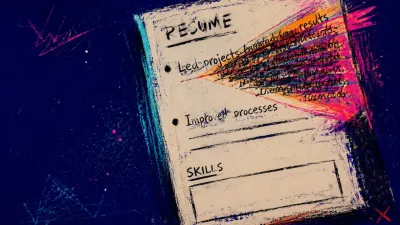
The Too-Loud Pause: Freezing at the Five-Year Plan Question in a 1:1
You’re solid at your job, but the second a manager asks “Where do you see yourself in five years?” your mind blanks like it’s being graded on your identity—classic Sunday Scaries meets career narrative panic.
Jordan showed up to our session the way people arrive after a week of quietly replaying a moment like it’s CCTV footage. They’re 28, based in Toronto, and the story started at 8:52 a.m. on a Monday in a glass-walled meeting room downtown: laptop open to a doc titled “Growth Plan,” HVAC humming like a held note, coffee tasting faintly burnt. Their manager said, “So—five-year plan?” and Jordan’s throat tightened so fast it felt like someone had cinched a drawstring behind their tongue.
They told me, “I can do the work. I just can’t narrate my future without sounding fake.” Then, quieter: “The minute I say a title out loud, it feels like a contract I didn’t mean to sign.”
What I could see was the body-first response: shoulders inching up, breath held, eyes flicking down—like Google Calendar might hand them a personality. The anxiety wasn’t loud; it was compressed. Like trying to swallow a sentence that has too many sharp edges.
I said, “That freeze makes sense. It’s not a character flaw—it’s a nervous system response to an identity pop quiz. Let’s try to map what’s happening, and find a way to answer that question without turning your whole self into a verdict.”

Choosing the Compass: The Situation-Obstacle-Advice-Outcome Spread
I asked Jordan to take one slow breath in through the nose and out through the mouth—not as a mystical ritual, but as a clean transition from “performing” to “observing.” While they focused on the exact moment the question landed, I shuffled and laid out a simple four-card line.
For this kind of workplace pressure—freeze in a 1:1, tight throat, instant self-editing—I like a classic linear spread called Situation-Obstacle-Advice-Outcome. It’s the smallest spread that still captures the full arc: what’s visible on the surface, what’s driving it underneath, what inner stance changes the moment, and what practical next step makes the change real.
It also keeps us grounded. We’re not forecasting your destiny; we’re doing pattern recognition and decision support. In plain terms: this is how tarot works when you’re asking for career clarity—cards as mirrors for your loop, then a map for your next move.
Before we turned the first card, I previewed the structure: “Card 1 will show what your mind and body do in the five seconds after the five-year question lands. Card 2 will name the identity fear underneath. Card 3 is the pivot—the medicine. Card 4 will give us a next step you can actually do within weeks.”

Reading the Map: From Mental Gridlock to the Shadow Story
Position 1 — The exact presenting freeze
“Now we’re looking at the card that represents the exact presenting freeze: what your mind and body do when the ‘5-year plan’ question lands.”
Two of Swords, reversed.
I pointed to the image’s blindfold and crossed swords—self-protection that looks like neutrality. “In your 1:1, the five-year plan question hits like a spotlight. You hold your breath, shoulders rise, and you start running competing scripts in your head. To stay un-judgeable, you default to ‘I’m open to anything’ or you pivot to current tasks.”
This is Air energy—thought, language, narrative—stuck. Reversed, it doesn’t stay quietly undecided; it cracks into overload. The mind tries to edit in real time, and your mouth goes offline.
I tightened the lens into the office close-up I know too well: eyes flick to the calendar, hands still on the laptop trackpad, Slack pings in the background. Inside your head: Option A sounds fake. Option B sounds naive. Option C sounds risky. Day-to-day you’re capable; under “choose an identity,” you go wordless.
Jordan let out a short laugh that was half air, half bruised. “That’s… painfully accurate,” they said. “It’s almost mean.” Their fingers rubbed the edge of their water bottle label until it started to peel.
“I’m not reading this as incompetence,” I told them. “I’m reading it as self-protection. The goal isn’t to force certainty. It’s to restart movement with one real preference.”
Position 2 — The identity fear underneath the freeze
“Now we’re looking at the card that represents the identity fear and unconscious story underneath the freeze—what you’re afraid it will prove about you.”
The Moon, upright.
“This is the part that makes the room feel too bright,” I said, and Jordan’s eyes lifted like they already knew what I meant. “The silence after the question feels louder than it is. You assume your manager is reading your pause as a verdict—even if they’re just curious. Ambiguity becomes a projection screen.”
I gave them the scene that fits Toronto perfectly: walking home in winter dusk, streetlights reflecting on wet pavement—everything looks more dramatic than it is. Inside your head: They didn’t say I’m behind… but what if the pause already proved it? That’s what I call nervous-system fan fiction: the body writes a threat-story to fill in the dark.
Moon energy isn’t “you don’t know what you want.” It’s “you don’t trust what you know until it’s externally approved.” And in a corporate 1:1, where language like “trajectory” and “growth plan” carries weight, that fear can feel like a spotlight on your worth.
Jordan made an involuntary sound—an “ugh” that turned into a slow exhale. Their jaw unclenched a fraction. “I literally do that,” they admitted. “I hear the question and I’m already imagining what they’ll tell their boss about me.”
“That’s the Moon,” I said. “Not reality—projection. We’re going to separate what’s real feedback from what your nervous system is autocompleting.”
When Strength Spoke: Regulated Courage Under Evaluation
Position 3 — The key inner shift that changes performance into self-leadership
I’ll be honest: when we got to the third card, the room felt quieter—not because anything supernatural happened, but because Jordan stopped fidgeting. Their hands went still like they were bracing for the part that would name them too clearly.
“Now we’re looking at the card that represents the key inner shift that changes the conversation from performance to self-leadership.”
Strength, upright.
Setup. In a 1:1, the five-year plan question lands, and suddenly the room feels too bright. Your throat tightens, your brain starts drafting ten versions at once, and the only safe thing left to say is something vague and polished. You try to manufacture a perfect identity story on the spot—then punish yourself when you can’t.
Delivery.
Stop treating the five-year question like a verdict, and start answering it like Strength—calm hands on the lion, one honest sentence at a time.
Reinforcement. Jordan’s reaction came in three small waves. First: a freeze—breath paused, eyes fixed on the card like they were rereading a line they’d missed for years. Second: the mind catching up—focus went soft for a second, like a memory replayed behind their eyes: the meeting room, the cursor, the too-clean silence after “So… five years?” Third: the release—shoulders dropped a millimeter, then another; their throat moved as they swallowed; a long exhale left their chest like they’d been holding it since Monday.
“But if I answer like that,” they said, voice edged with a flash of resistance, “doesn’t it mean I’ve been doing it wrong? Like… I’ve been kind of hiding.”
I nodded, because that anger is protective, too. “It means you’ve been trying to survive evaluation by being un-judgeable. That’s not ‘wrong.’ It’s just expensive.”
My Wall Street brain flashed for a second—trading floors taught me this: we don’t get certainty first; we get signal first. We make a hypothesis, define what ‘good data’ looks like, and adjust. That’s Strength in a business suit: regulated courage that can be measured.
I asked, “Now, using this new lens—can you think of a moment last week when this would’ve changed how you felt? A Slack message, a 1:1 question, a casual ‘what’s next for you?’ moment?”
Jordan blinked, then nodded once. “Thursday,” they said. “My manager asked what I want to grow into. I could’ve said one real thing instead of turning into ‘I’m flexible’ again.”
That was the pivot: not from uncertainty to certainty, but from anxiety-driven self-editing to steady self-trust—enough to speak while still becoming.
Landing in Earth: The Proof-of-Work Plan
Position 4 — A grounded next step within weeks
“Now we’re looking at the card that represents a grounded next step you can take within weeks to build real evidence and reduce future freezing.”
Page of Pentacles, upright.
“This is the antidote to the ‘five-year contract’ feeling,” I said. “You bring it down to Earth: ‘Here’s the experiment I want to run this quarter.’ One measurable deliverable, one skill to build, one ownership area to grow into. Your plan becomes proof-of-work, not a personality claim.”
I described it the way it would actually look in Jordan’s life: a single Notion page titled “90-day experiment,” one course bookmarked, one deliverable added to the calendar. The Page holds the pentacle at eye level like, this is what matters—something tangible you can point to.
“Clarity isn’t the entry fee,” I told them. “Evidence is.”
From Insight to Actionable Advice: Your Next 90 Days
Here’s the story the full spread told me, start to finish: You freeze (Two of Swords reversed) because your mind uses neutrality as armor—if you don’t choose, you can’t be wrong on record. Underneath, the Moon floods the room with projection: a neutral question becomes a verdict, and the pause becomes “proof.” Strength restores the missing ingredient—regulated courage under evaluation—so you can speak one bounded truth without over-explaining. Then the Page of Pentacles turns that truth into proof-of-work: a small, testable experiment that builds a real narrative over time.
The cognitive blind spot was simple and brutal: you’ve been treating “direction” like an identity tattoo. That’s why everything feels high-stakes. The transformation direction is the opposite: from “I must present a perfect 5-year identity” to “I can offer a clear 6–12 month hypothesis and run a small experiment that builds evidence.”
To make it practical, I pulled from my own toolbox—what I call Transition Roadmapping. In finance, you don’t walk into an IPO with vibes; you build a prospectus: a credible story supported by metrics, milestones, and proof. Your career narrative can work the same way—without turning you into a product. You’re not promising a five-year outcome. You’re publishing a one-quarter update.
Here are the next steps I gave Jordan—small enough to start, clear enough to use in a real 1:1:
- Write the “Hypothesis Answer” (7 minutes)Set a timer. In your Notes app, draft two one-sentence 6–12 month hypotheses you could say in a 1:1. Format: “Over the next 6–12 months, I want to build depth in X and measure it by Y.” Pick one.If anxiety spikes, stop at one sentence. You’re not committing to an identity—you’re proposing a test.
- Make it collaborative with one manager questionBring one question into your next 1:1: “If I want to grow toward X, which project or responsibility would give me the best signal in the next 90 days?”This turns “Where do you see yourself?” into “What can we test together?”—less performance, more partnership.
- Run the “Trading Floor Open” for your nervous system (2 minutes)Before the 1:1, do my opening bell simulation: feet flat, shoulders down, one inhale, one slow exhale, then rehearse your sentence once out loud—no apology, no five qualifiers.If you freeze in the meeting, buy time without disappearing: “Let me think for a second—I want to answer this accurately.” Then return to your one sentence.
Jordan paused at the end and said, “This is the first time ‘career planning’ hasn’t felt like trying to publish a finished product while I’m still in the draft doc.” That’s exactly Page of Pentacles energy: draft, ship, learn.

A Week Later: Ownership, Not Certainty
A week later, Jordan messaged me after their next 1:1. They didn’t say they’d discovered their life’s purpose. They said: “I used the 10-second pause on purpose. Then I gave one hypothesis sentence. My manager didn’t flinch. They asked what support I needed.”
They added a screenshot: a plain, almost boring Notion page titled “90-day experiment,” with one deliverable and one calendar block labeled “Proof-of-work.”
Clear but still human: they told me they slept through the night for the first time in weeks—then woke up and immediately thought, “What if I picked wrong?” They paused, took one breath, and said, “It’s a test,” like they were reminding their body it didn’t need to turn into a courtroom.
That’s the real Journey to Clarity I see over and over: not a dramatic reinvention, but a steady shift from anxiety-driven self-editing and freezing under evaluation to grounded self-trust built through testable direction and proof-of-work.
When someone asks for your “five-year plan,” it can feel like your throat locks because you’re not just choosing a job direction—you’re trying to avoid being ‘wrong’ on record about who you are.
If you treated your next direction as a 6–12 month hypothesis instead of a five-year contract, what’s the smallest experiment you’d actually be willing to be seen trying?
This story is adapted from psychological research, written so that those in a similar struggle can see their own pattern in it — and find their next step clearly.These insights are not a substitute for professional psychological, medical, legal, or financial advice.
Learn more about our Journey to Clarity.
How did this insight land for you?
🫂 This Resonates Deeply
🌀 Living This Story
✨ Now I See Clearly
🌱 Seeing New Possibilities
🧰 Useful Framework
🔮 The Confirmation I Needed
💪 Feeling Empowered
🚀 Ready for My Next Step
Author Profile
 AI
AI“I spent years in the intense, high-stakes world of Wall Street. I know exactly how isolating and heavy the weight of uncertainty can feel in the dead of night. I use strategic, commercial logic not to be cold, but to protect you from unnecessary friction. Think of me as a fellow traveler who has walked the same rocky path—offering sharp but deeply supportive wisdom to help you clear the fog and confidently win your narrative back.”
In this Career Tarot Reading :
Core Expertise
- Power Dynamic Deconstruction: Decrypting hidden agendas and leverage points in upward management and cross-departmental negotiations.
- Transferable Asset Pricing: Objectively auditing and pricing your core skills for cross-industry pivots, stripping away corporate gaslighting.
Service Features
- The Leverage Mapping Protocol: A tactical breakdown to identify your true bargaining chips before your next performance review or salary negotiation.
Also specializes in :
Explore Related Patterns:
Freeze ResponseJordan's throat tightening, shoulders rising, breath holding, and mind going blank the moment the manager asks about a five-year plan show a body-first defense, not a lack of competence. You can do the work, but the question turns the room into an identity exam before your language system catches up. The freeze protects you from saying something that could be judged, quoted, or turned into a permanent story about who you are. In the moment, silence feels safer than a visible preference, so your nervous system chooses shutdown over exposure. The pattern becomes costly because it makes a normal career conversation feel like a threat scene. The goal is not to force certainty on command; it is to notice the shutdown early enough to return to one bounded sentence before your whole self gets put on trial.
Visibility AvoidanceJordan defaulting to 'I'm open to anything' keeps the answer socially acceptable while hiding the real preference underneath it. You are not avoiding growth; you are avoiding the exposure that comes with being seen wanting a specific thing. The protection makes sense because being specific feels like being judgeable. If you name a direction, someone can remember it, question it, or measure you against it, so vagueness becomes armor. The cost is that your manager cannot support a signal you never let become visible. A bounded sentence does not have to reveal your whole identity; it only has to reveal the next experiment you are willing to be seen trying.
Certainty SeekingJordan's mind drafting ten versions at once while trying not to sound fake shows a demand for certainty before speech. You are not simply choosing words; you are trying to make the future feel accurate enough to survive scrutiny. The problem is that career direction is being treated like proof, not signal. If the answer must be fully true for five years before it can be spoken, every option becomes dangerous: one sounds fake, one sounds naive, one sounds risky. The 6-12 month hypothesis works because it lowers the psychological stakes without making you careless. It lets you speak from present evidence instead of waiting for a finished identity that no one actually has in a 1:1.
Identity ForeclosureJordan saying that a title feels like a contract they did not mean to sign points to the deeper identity fear under the freeze. You are not just answering a manager's question; you are reacting as if one career sentence could close down every future version of you. That is why the five-year plan lands with so much pressure. A direction stops being a working hypothesis and becomes an identity tattoo, so even a normal title can feel like a premature verdict on who you are allowed to become. The defensive move is to stay flexible, vague, and unpinned. It buys short-term safety, but it also keeps your real preference from getting tested in reality, where it could become more flexible rather than less.
Strategic VisibilityJordan using the 10-second pause and then giving one hypothesis sentence shows visibility becoming deliberate instead of absolute. You are no longer trying to publish a finished identity; you are offering a direction with boundaries around it. The strategy works because it changes the social contract of the 1:1. Instead of asking the manager to approve your entire future, you invite a shared test: one skill, one project, one 90-day signal. That kind of visibility is psychologically safer because it can be revised. You let yourself be seen in motion, which builds real evidence without forcing your identity to become final before it has had room to develop.
Mind ReadingJordan imagining what the manager will tell their boss turns the pause into evidence before any real feedback has arrived. You are reading the room as if it contains a hidden verdict, even though the visible facts are only a question, a silence, and your body's alarm. This is the cognitive distortion that makes ambiguity feel hostile. The manager's curiosity becomes a projection screen, and your nervous system autocompletes the missing information with a threat story about being behind, unserious, or exposed. Separating real feedback from imagined judgment gives you back leverage. You do not have to debate every fear in your head; you only need to ask what was actually said, what was assumed, and what one clear sentence you can offer next.
Explore Related Struggles:
Clarity-Exposure SplitJordan keeps reaching for 'I'm flexible' or pivoting to current tasks when the room asks for direction. The vague answer protects them from being judged, but it also blocks the manager from seeing the one real preference that could become support. Clarity carries exposure here. If you name a direction, someone can ask why that direction, measure progress toward it, or remember that you said it later, so the safer move is to stay open enough that no one can pin anything to you. The split softens when clarity becomes bounded rather than total. One honest sentence about the next 90 days lets you be visible without handing over your entire identity for review.
Identity Verdict LockJordan can do the work, but the moment the manager asks 'Where do you see yourself in five years?' the Growth Plan stops feeling like a planning document. A title sounds like a contract they did not mean to sign, and the silence after the question starts to feel like evidence against them. The lock forms when a flexible career prompt gets converted into a verdict on the whole self. You are not only choosing a work direction in that moment; you are trying to avoid being wrong on record about who you are, so the body chooses stillness before the mouth can risk a sentence. The way out begins when the future answer is allowed to be provisional. A 6-12 month hypothesis gives you room to be seen in motion, without turning one sentence in a 1:1 into a permanent identity claim.
Internal Authority CollapseJordan hears a neutral 1:1 question and immediately imagines what the manager might tell their boss. The actual feedback has not arrived, but the body starts acting as if the verdict is already in. The pressure lands so hard because the inner compass is not being allowed to count until the outside room confirms it. You may know a preference in a quiet way, but under evaluation it feels unsafe to trust that knowledge unless it has been approved, polished, and made defensible. Rebuilding authority does not require instant certainty. It starts with treating your own first signal as data, then bringing it into the conversation as a testable hypothesis rather than waiting for someone else to certify it as the correct self.
Competence-Narrative SplitJordan says, 'I can do the work. I just can't narrate my future without sounding fake.' Day to day, competence is visible; under the five-year question, the ability to perform does not translate into a sentence about becoming. The friction is not a lack of skill. It is a split between the evidence of what you can already carry and the story you feel pressured to present about where it is all going. When the story must sound finished, even real competence can feel unusable. The 90-day experiment bridges that split because it turns narrative into proof-of-work. You do not have to announce a finished career identity; you can point to one deliverable, one skill, and one signal you are willing to build next.
Explore Related Emotions:
Approval AnxietyJordan hears a neutral workplace question and immediately imagines how the manager might interpret the pause, what might be repeated upward, and whether the answer will sound acceptable enough. Their own preference gets delayed because the imagined audience arrives first. Approval Anxiety is the weather that forms when your inner signal has to pass through someone else's reaction before it feels usable. In this story, the fear is not simply that the manager will dislike the answer; it is that your own knowing does not feel trustworthy until an external authority makes it feel safe to stand on.
Performance FreezeIn the glass-walled 1:1, the five-year plan question lands and Jordan's throat tightens before any answer can form. Their shoulders rise, their breath holds, their eyes drop, and the laptop stays open like it should somehow produce a self-description for them. You can see the emotional logic in the sequence: the body treats a career prompt as an identity evaluation, so speech becomes risky before the content of the answer is even clear. Performance Freeze names the moment where you are fully capable of doing the work, but the request to narrate who you are becoming makes your system go still, guarded, and wordless under the spotlight.
Verdict DreadThe silence after 'So, five years?' becomes louder than the question itself. Jordan starts imagining what the pause has already proven, as if the manager is not just waiting for an answer but silently recording a conclusion about their seriousness, ambition, or value. Verdict Dread sits underneath that pressure. You are not only worried about choosing the wrong title; you are bracing for the feeling that one incomplete answer could become a permanent read on who you are. The identity fear is that uncertainty will be treated as evidence against you, even when the room has only asked for a conversation.
Commitment ClaustrophobiaJordan says the minute they name a title out loud, it feels like a contract they did not mean to sign. A possible direction stops being a draft and starts feeling like a locked room, with every future version of the self trapped inside the sentence. Commitment Claustrophobia captures that compressed feeling around career identity. You may want direction, but the five-year framing makes direction feel irreversible, overexposed, and too expensive to test. The fear behind the freeze is that being seen choosing something will take away your right to keep becoming.
False Alignment UneaseJordan can do the work, but they cannot narrate the future without hearing the answer as fake. The available scripts all feel wrong in a different way: too polished, too naive, too risky, or too final for a self that is still in motion. False Alignment Unease names the discomfort of presenting a clean career story that does not match your actual inner state. You are not empty of direction; you are resisting the pressure to package a half-formed preference as a fully finished identity. That mismatch is why the sentence feels sharp in the throat instead of clean on the tongue.
Cautious Self-TrustA week later, Jordan uses the ten-second pause on purpose and gives one hypothesis sentence. The manager does not flinch; they ask what support is needed, and the moment becomes a conversation instead of a trial. Cautious Self-Trust is the quieter turn in the story. You are not suddenly certain about the next five years; you are allowing one honest preference to be spoken while it is still provisional. That is the identity repair: trusting a small signal enough to test it, without forcing it to become a finished self-definition.
Grounded AgencyThe Notion page titled '90-day experiment' matters because it brings the future back into reach. One deliverable, one calendar block, and one support question turn a huge identity prompt into something Jordan can actually run, observe, and adjust. Grounded Agency appears when direction becomes evidence-based instead of performative. You are no longer trying to prove a complete career identity in one answer; you are building a path through small, visible experiments. The emotional shift is from being judged by a hypothetical future to actively gathering data about what fits.
Cognitive OverwhelmInside the pause, Jordan is not blank because nothing is happening. Too much is happening at once: one answer sounds fake, another sounds naive, another sounds risky, and each version gets edited before it can become speech. Cognitive Overwhelm fits the freeze because the mind is trying to solve identity, reputation, ambition, and accuracy in the same five seconds. You are not failing to think; you are thinking in too many directions under evaluation, and the system protects itself by cutting the sentence short before any version can be judged.
Explore Related Contexts:
Career Identity AuditThe 8:52 a.m. 1:1 starts with a Growth Plan document open and a manager asking, "So, five-year plan?" Jordan can do the work, but the moment they have to name a future title, the answer starts to feel like a contract. The external pressure is not just planning; it is manager-facing identity documentation. A vague answer protects you from being pinned down, but it also keeps your real preferences off the table, so the conversation has no clean signal to work with. Career Identity Audit fits because the workplace is asking for a visible professional self before the evidence feels ready. The useful move is not to invent a finished identity, but to separate a bounded career hypothesis from a permanent self-definition.
Career Visibility ParalysisJordan's line, "I can do the work. I just can't narrate my future without sounding fake," is the cleanest anchor. The work is visible enough, but the future-facing version of the self becomes hard to show. That creates a specific workplace bind: staying vague avoids overcommitting, while staying vague also keeps you from being legible as someone with a direction. You are not lacking capacity; the external demand is for visible ambition before the language feels honest. Career Visibility Paralysis applies because the block appears exactly where preference has to become observable to a manager. A 6-12 month hypothesis lowers the stakes from a total identity statement to one visible experiment.
Evaluation Pressure LoopThe meeting room details matter: laptop open, manager present, Growth Plan doc on screen, Slack and office background noise around the conversation. A routine development question becomes a recurring evaluation scene, especially when Jordan later remembers Thursday and the next 1:1. When a normal prompt feels like it will be graded, language starts to narrow. You can be competent at the job and still lose access to speech when the room asks you to produce a clean career narrative on demand. Evaluation Pressure Loop names the repeating external setup: managerial questions, visible pauses, and career language that makes every answer feel consequential. The point of the audit is to see the loop clearly enough to build a response format that protects agency while still giving the manager usable signal.
Five-Year Plan PressureThe phrase "five-year plan" lands in the story like a long-term contract, not a casual question. Jordan hears a title as something they might be held to, and the idea of direction starts to feel like an identity tattoo. That is a structural pressure built into many corporate growth conversations: the format asks for a polished future before the person has built enough evidence to trust it. You are being asked to compress exploration, timing, ambition, and identity into one clean answer. Five-Year Plan Pressure is the outer container around the freeze. The practical relief comes from replacing the five-year declaration with a shorter testable horizon, where the next answer can be specific without becoming a permanent record.