From Living Out of the Clean Laundry Basket to a Room You Can Trust

Finding Clarity in the 7:32 a.m. Basket Beside the Dresser
I knew exactly what Jordan (name changed for privacy) meant the moment she sat down with me and asked the most search-bar version of her problem: how do I stop leaving clean clothes in the basket all week? She was twenty-seven, a hybrid marketing coordinator in Toronto, living in the kind of small apartment where one unfinished task can occupy the whole visual field.
She described a Wednesday morning at 7:32 with painful precision: socks on the rug, the floor cool under her feet, the faint radiator hum, the overhead light a little too aggressive, detergent still lingering in the air. Her phone was already glowing with Slack and email. She pulled a shirt from the top layer of the clean basket beside her dresser while yesterday’s jeans hung off the chair. Her shoulders dropped. Her jaw tightened. She wanted drawers and hangers doing their job, but the basket was still running the morning.
That was the contradiction in plain view. She wanted her clothes fully put away and her room to feel functional and supportive. Instead, she kept slipping back into living out of the clean laundry basket all week because the last few minutes of putting things away always seemed bigger at night than they did in theory.
The overwhelm she described wasn’t dramatic. It was like a browser tab left playing low audio in the back of her mind—quiet enough to ignore for an hour, loud enough to drain her every time she noticed it again.
I told her, gently and plainly, “This isn’t a character flaw. It’s basic life admin burnout with a detergent smell. Let’s make a map. We’re not here to shame the basket; we’re here to understand the loop and find the move that gives it an ending.”

Choosing the Compass: A Situation-Obstacle-Advice-Outcome Spread for Home Routines
I asked Jordan to take one slow breath and hold the real question in mind—not “What’s wrong with me?” but “Why does this tiny last step keep staying open?” While she did that, I shuffled. Nothing theatrical. For me, tarot works best in moments like this as a focusing tool. It helps me separate symptom from system friction without inflating a domestic routine into a fate narrative.
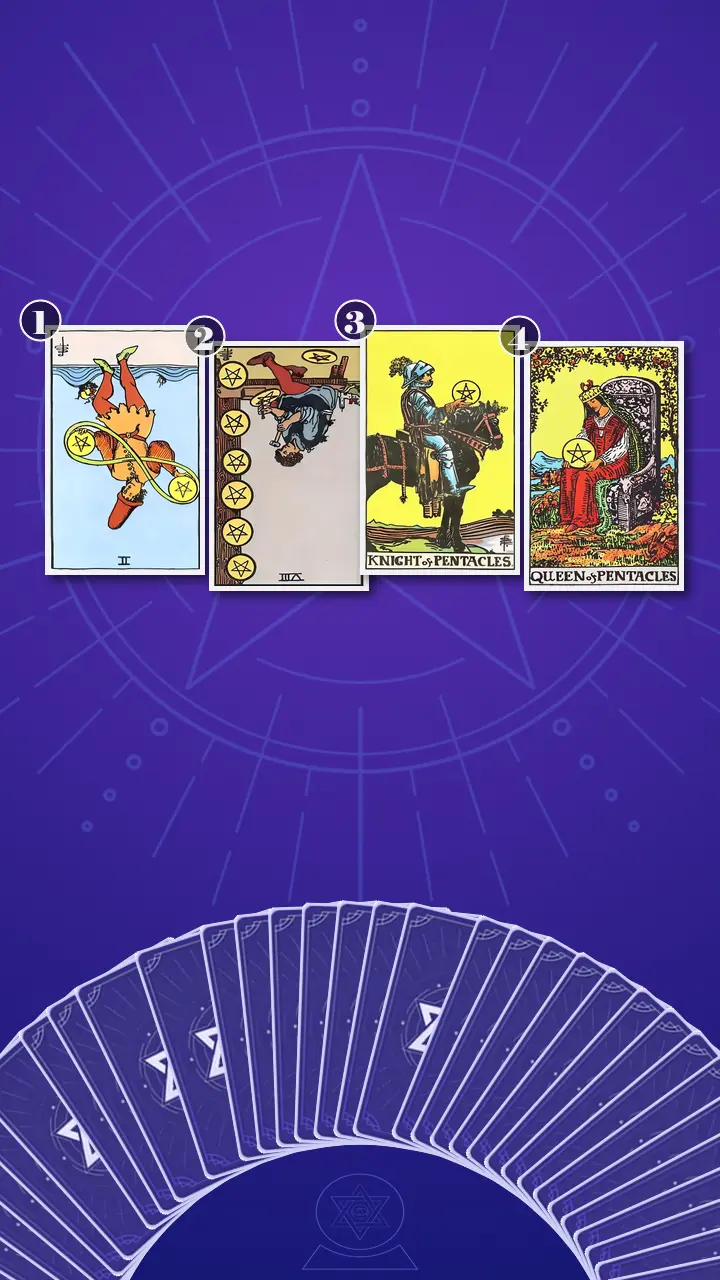
I chose a Situation-Obstacle-Advice-Outcome spread. It’s one of my favorite four-card layouts when a routine keeps almost finishing but never fully lands. The logic is clean: the first card shows the visible symptom, the second reveals the hidden maintenance loop, the third identifies the practical antidote, and the fourth shows the lived result when that antidote becomes embodied.
That structure fit this question perfectly. Jordan did not need a lecture about discipline or a mystical pronouncement. She needed a micro-scale audit of why the basket stayed in motion, why motivation kept failing, and what kind of low-drama follow-through could actually survive a boring Tuesday after work.
As I laid the cards from left to right, I told her what I’d be tracking: the first card would show where the unfinished task was visibly shaping her room and mornings; the second would name the friction underneath it; the third would point to the key shift that interrupts the loop; and the fourth would show how her space and self-perception change once the routine becomes something she can actually live inside.
Reading the Hallway from Clutter to Care
The Loop That Looks Like Progress
I turned the first card. This was the position showing the visible symptom in the diagnosis: the concrete habit of leaving clean clothes in the basket and dressing from it all week. The card was the Two of Pentacles, reversed.
I told her this card is almost painfully exact for a task that keeps moving instead of landing. In her life, it looked like a half-empty clean basket living beside the dresser for four days while she kept building outfits from the top layer each morning. The laundry was technically done, but in practice it had become one more rotating task she stepped around between work clothes, dinner, and sleep. It had the same energy as a TikTok Sunday reset clip that shows the wash and fold, then cuts before the boring final five minutes.
Reversed, the energy here was blocked Earth through imbalance. Not chaos, exactly. More like practical wobble. The infinity loop around the pentacles mapped perfectly onto the basket cycling from bedroom floor to chair to laundry nook and back again without ever becoming finished. She wasn’t failing to do laundry. She was keeping it active so she didn’t have to feel the tiny friction of ending it.
Jordan let out a short laugh, dry and a little bitter. “That’s annoyingly accurate,” she said. “It really does just… travel.” I nodded. “Exactly. The basket isn’t the whole problem. The open loop is.”
When ‘Properly’ Becomes the Block
I turned the second card, the one representing the maintaining mechanism: the friction, belief, or hidden pattern that keeps the task half-finished. It was the Eight of Pentacles, reversed.
This was the deeper hinge. I see this card whenever repetition gets distorted by performance pressure. In modern life, it’s the home-admin version of building a better Notion dashboard instead of repeating the one boring habit that would actually make life easier. Jordan kept telling herself she would put everything away when she had enough time to fold neatly, sort categories, match hangers, and make the drawers feel right. So a repetitive household step that only needed consistency kept getting upgraded into a tiny craftsmanship project, and ordinary weeknights never qualified.
Reversed, the Eight showed blocked repetition. Not laziness. Not a lack of skill. Just an ordinary task that had been quietly promoted into a referendum on competence. She stared at the card, thumb rubbing the edge of her mug, and said the line that usually means the truth has landed: “It’s not even hard, so why does it feel so weirdly loaded?”
I answered, “Because basic care feels heavier when it stays mentally open.” Then I gave her language from my own toolkit. “I call part of this Bandwidth Bankruptcy Prediction. After days full of messages, meetings, Slack pings, commuting, and low-grade comparison fatigue, your system starts acting like it can’t afford one more step—even when the step is objectively small. So you take fake rest now, and pay for the open loop later.”
That landed hard. I watched the reaction travel through her in sequence: first her breath paused; then her eyes unfocused, replaying some after-dinner version of the same scene; then the long exhale came, low and unwilling, like she hated how true it was. “Yes,” she said quietly. “After dinner I look at it and suddenly it’s categories, aesthetics, doing it properly. I keep waiting for a real evening. The real evening never shows up.”
When the Knight Stopped Negotiating
The Still Horse and the Built-In Ending
By the time I reached the third card, the room had gone noticeably still. Even the soft hiss from the radiator cut out, as if the space itself wanted to hear this one clearly. This was the position identifying the key shift in the transformation framework: the practical antidote that interrupts the loop and changes how the task is approached. I turned it over. The Knight of Pentacles, upright.
Before I interpreted it, I let Jordan sit for one more second inside the familiar trap: Wednesday morning, socks on the rug, tee from the basket, promise deferred again; Sunday at 6:05 PM, the dryer chime going off, warm cotton air hitting her face, and the whole story balancing on whether she negotiated with herself or simply moved.
Not the endless juggle of the looping coins, but the still horse that finishes the field: one ordinary repeated step is what turns clutter into care.
I let that hang in the air for a beat. In my old Wall Street life, the difference between a strategy and a fantasy was never how smart it sounded in a meeting. It was whether it could execute under boring conditions. The Knight carries that same truth. This is not makeover energy. It is subway-arrives-on-schedule energy. Autopay energy. Before the basket leaves the room, tops go into the drawer. Before Instagram, tees and underwear get put away. Same order. Same trigger. Same small finish line.
Jordan reacted in three waves. First, she froze—breath held, fingers suspended above the mug handle. Then her eyes lost focus, as if she were replaying last Sunday frame by frame and finally seeing the hinge moment for what it was. Then the emotion broke open as irritation before softening into relief. “But if it’s that ordinary,” she said, a little sharp, “doesn’t that mean I’ve been making this way harder than it had to be?”
“Not on purpose,” I told her. “You’ve been waiting for motivation in a low-Fire system. Those are not the same thing.” I watched the flush in her cheeks ease. The tight line in her mouth loosened. She took one deeper breath, then another, and the second one came from lower in her chest. There was relief in it, but also that slightly blank, weightless feeling that comes right after clarity—when the burden drops and responsibility quietly replaces it.
I asked her, “Using this lens, was there a moment last week when this would have changed how you felt?” She answered immediately. “Sunday. The second the dryer stopped. If I’d just put away the first five things before opening Instagram, it would’ve been over.”
That was the real breakthrough. In my own language, this is Time-Asset Valuation: auditing the hidden sunk costs and true ROI of a routine. On paper, Jordan was saving four or five minutes by not putting the clothes away right away. In reality, she was paying interest every morning—in visual clutter, irritation, decision fatigue, and that private little hit to self-trust. A routine becomes real the moment it stops depending on your mood. This was the move from overwhelm and low-level shame around basic life admin into steady follow-through and calmer ownership of the room. You do not need a reset. You need an ending.
A Room That Stops Quietly Accusing You
I turned the fourth card, the one showing the integrated state: how the space and self-perception change when the loop is consistently closed. The card was the Queen of Pentacles, upright.
I told Jordan this was not about becoming the kind of person with a cinematic clean-girl apartment. It was quieter and better than that. In her actual life, it looked like walking into the bedroom and finding the chair usable, the basket gone back to its home, the dresser actually doing its job, and getting dressed from drawers instead of from a floating reminder. The room would feel cooperative instead of watchful.
Upright, the Queen is grounded Earth in balance. She holds the pentacle close instead of displaying it. That matters. Order here is private self-respect and practical care, not performance. Your room should work with you, not quietly accuse you. In a small apartment, that changes more than the visuals; it changes your breathing, your movement through the space, and the tone of your own inner voice when you walk in.
Jordan leaned back for the first time since we’d started. Her face softened. “That’s what I want,” she said. “Not perfect. Just… supported.” And that one word told me the reading had reached the right layer.
From Open Loop to a Closed-Loop Laundry Ritual
When I looked at the full line of cards, the story was unusually clean. The first two cards showed blocked Earth: a task kept in motion, then a repetitive step inflated into a competence test. The last two cards showed embodied Earth: one steady act of follow-through, repeated until it becomes the kind of care you can actually live inside. The emotional charge in this reading was real, but it sat in the background. That is why waiting for a burst of motivation kept failing. The issue was not drama. It was structure.
The blind spot was simple and human. Jordan had been treating completion like a performance of adulthood—something that required enough time, enough energy, enough neatness, enough mood. But the real cost came from the task staying mentally open. It was like stopping a song five seconds before the end and then carrying the unfinished note around the room for six days.
So I gave her a plan built for real life, not fantasy reset life:
- The 4-Minute Laundry LandingOn the next load, set a four-minute timer on the phone the second the dryer stops or the basket enters the bedroom. In that exact spot, put clothes away in one fixed order: tops first, underwear second, pants third. Keep five empty hangers on the closet handle or dresser knob so starting requires no setup.If four minutes feels annoying, cut it to two or do only the first five items. The win is starting immediately, not finishing beautifully.
- The Basket Exit RuleFor one week, choose one always-close category—tees or underwear work well—and put away that category before changing clothes, opening Instagram, or sitting down to eat. Then make the basket leave the bedroom that same night, even if a few pieces still need attention. Protect one surface, especially the chair, from becoming clothing storage.Measure success by whether tomorrow morning feels easier, not whether the room looks perfect. Good enough tonight beats properly later.
- Energy Portfolio RestructuringFor the next 48 hours, subtract one high-friction habit from the hinge moment when laundry could either drift or close: no food-delivery scroll, no TikTok clean-with-me clip, no one-episode delay until the first five items or one drawer category is done. Reinvest that reclaimed two to four minutes exclusively into the recovery block of closing the load.Treat this like an experiment, not a new identity. No organizers, no labels, no full closet audit. Remove one drag point and let the routine get lighter.
None of this required a total life overhaul. It just required one steady finishing move. That is the antidote the Knight offered: a built-in ending, repeated often enough that the room stops acting like evidence and starts acting like support.

A Week Later, the Chair Was Empty
Five days later, Jordan sent me a message: “Did the four-minute thing twice. The basket still made it into the bedroom once, but it didn’t stay. I put away tees before dinner and the chair is empty.”
What struck me wasn’t the size of the change. It was the tone. No self-accusation. No dramatic reinvention. Just a woman in a small Toronto apartment discovering that boring consistency feels better than one more fantasy of a perfect reset day. Her room wasn’t suddenly TikTok-clean; there was still a return package by the door. But the laundry had stopped being the roommate she resented. The next morning, she said, the old thought—what if I slide right back?—showed up for a second, and then she laughed because now she had an answer.
That is what this Journey to Clarity really was. Not magic. Not a personality upgrade. Just one Situation-Obstacle-Advice-Outcome reading handing the power back to the person who actually lives in the room.
When a clean basket keeps showing up in your line of sight, the shame usually isn’t about the shirts. It’s that small drop in your stomach when one unfinished task starts feeling like proof you don’t fully have a grip on your own life.
If you borrowed just a little of that steady Knight energy tonight, what would your version of a two-minute ‘this load is closed’ move look like?