What If Your Role Gets Smaller?

Explore the hollow dread of shrinking into a role, the tarot cards that mirror it, and tarot card reading insights from related readings.

Role Contraction Dread
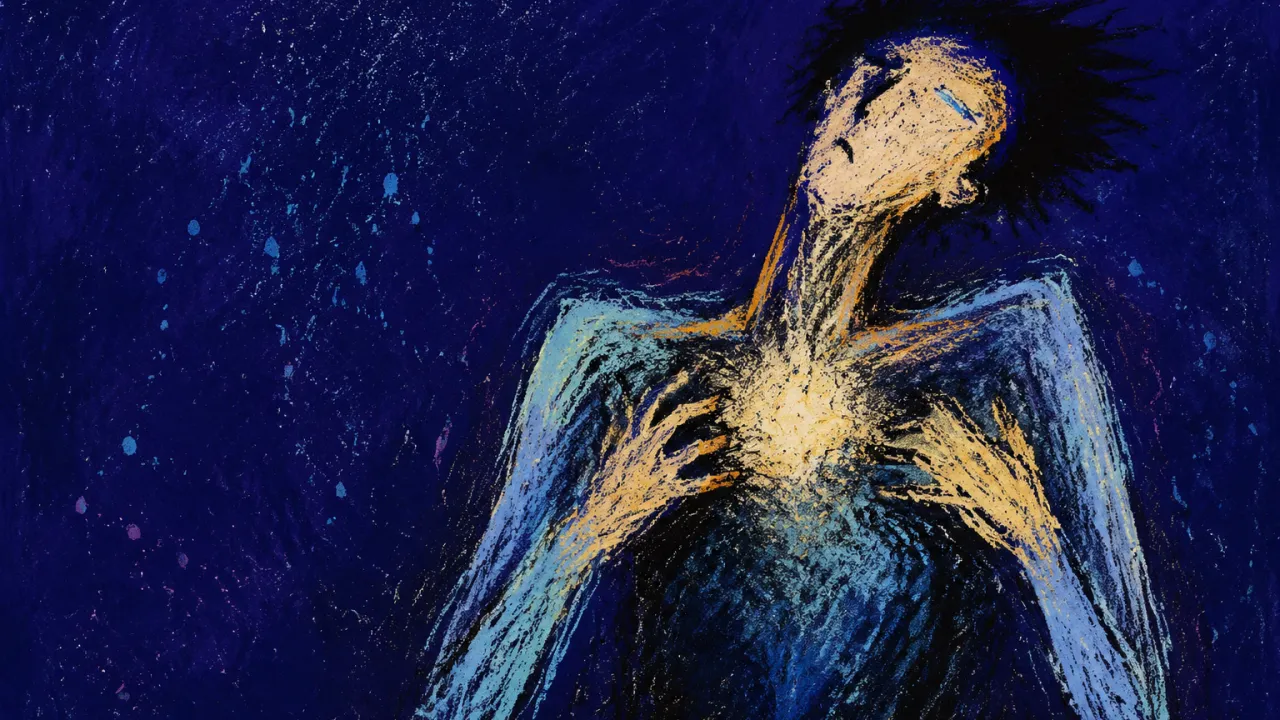
A solitary figure in a narrowing blue room, chest held in shadow, pale amber fading into deep indigo around the shoulders.

What does this feel like?

Role Contraction Dread — you wake with a faint pressure across your chest and the uneasy sense that the room around you has become smaller overnight. Nothing is visibly wrong, yet your body feels braced against an invisible narrowing, shoulders held high, fingertips restless, as if even ordinary choices now have less space to move in. The feeling follows you through messages, meetings, plans, and familiar routines; each role you step into seems to ask for a smaller version of you, and you keep wondering whether there will be anything left outside the part you are expected to play. Your thoughts circle softly but relentlessly: Is this all I am becoming? What happens when this shape no longer fits? You can still laugh, answer, and carry on, but everything feels muted at the edges, like a future seen through fogged glass. The dread is not one sharp moment; it is a slow inward settling, much like the Moon, where the path is visible but its direction keeps dissolving into uncertain blue distance.

Why you're feeling this?

Role Contraction Dread is not a wrong feeling to have. You are allowed to notice the sense of becoming smaller without having to dismiss it, defend it, or turn it into a judgment about yourself.

Role Contraction Dread in Tarot Cards

That narrowing feeling in your chest, with your shoulders held high and your choices seeming to lose space, gives Role Contraction Dread a recognizable shape. It belongs to a universal emotional experience of feeling less room inside yourself, even when the outside world looks unchanged. The cards below mirror that outline without explaining it away; here are the Tarot Cards connected with Role Contraction Dread.

The Emperor
Reversed
The armored ruler sits on a hard stone throne decorated with ram heads, holding the symbols of command against a barren mountain landscape. The visual language is deliberate, controlled, and difficult to soften; it gives professional authority a physical weight that can press the person inside the role toward a single approved shape. In the reversed pattern, structure has stopped organizing work and started defining the worker. You may be rewarded for looking consistent, decisive, and permanently available, while the fear grows that any unpolished interest or changing need will threaten the identity the hierarchy has assigned you. The dread comes from being recognized only as the authority you perform.
The Hierophant
Reversed
The Hierophant sits between two pillars while two acolytes kneel before him, with crossed keys placed at his feet and formal gestures organizing the scene. The image makes belonging look like entry into an established language, where the person who interprets the rules also controls what counts as acceptable participation. In the reversed pattern, the social structure becomes visible as a pressure to conform rather than a source of shared meaning. You can laugh with the group and repeat its cues while feeling your own edges disappear, especially when disagreement threatens your place. The dread is not simple solitude; it is the fear that connection survives only after your identity has been made easier for the circle to approve.
The Lovers
Reversed
An angel rises above two exposed figures, with separate trees behind them, a mountain between their bodies, and a bright landscape opening beyond the garden. The scene makes intimacy a meeting of distinct selves rather than a blank merger, so the physical distance and exposure can hold the question of what each person must give up to remain connected. In the reversed pattern, relational alignment becomes unstable and the shared role begins to outrank the individuals inside it. You may keep adjusting your desires, language, and future plans to preserve the bond, while a muted dread asks whether being a good partner now requires becoming less of yourself. The tension is not a lack of love; it is the cost of love being organized around one acceptable shape.
The Hanged Man
Reversed
The figure hangs by one foot from a living tree, head encircled by a halo while the body remains motionless against an open background. The image makes time tangible: the world has not disappeared, but movement has been narrowed to a single suspended posture while a new perspective waits beneath the surface. In the reversed pattern, that suspension becomes resistant and cramped rather than spacious. You can feel caught between an identity that no longer fits and a future that has not yet taken shape, with deadlines and social milestones making the interval feel like a verdict. The dread grows as waiting seems to convert possibility into a fixed role called behind, late, or not ready.
Death
Reversed
An armored skeleton rides a white horse past a fallen crown, a child, a maiden, and a bishop, while the sun rises between two towers in the distance. The image places multiple identities and social positions in the same field, showing that a role can lose its authority even while the person remains surrounded by recognizable expectations. In the reversed pattern, the old form keeps exerting pressure after its limits have become visible. You may sense that a previous version of yourself is too small, yet resist moving because the next identity has not shown enough space to trust. The dread is the fear of exchanging one constriction for another, with transformation experienced as a narrowing before it can become renewal.
The Moon
Upright
The Moon hangs between two towers over a winding path, while a dog, a wolf, and a crayfish respond from different edges of the same blue landscape. The image gives the dread a specific atmosphere: the route is visible, but its direction keeps dissolving into competing signals and half-recognized instincts. The upright pattern lets uncertainty remain fluid rather than turning it into a fixed conclusion. You can still walk, speak, and perform the expected parts, but the moonlight makes each role look provisional, as if the outline of your future changes whenever you try to name it. The narrowing comes from not knowing which version of yourself is solid enough to follow.
Judgement
Reversed
An angel sounds a trumpet above people rising from open coffins, their arms lifted toward a distant mountain and a new horizon. The image makes identity transition unavoidable: an earlier form is opening, and the figures are being called into a wider life before they can fully describe who they will be there. In the reversed pattern, the call is filtered through internalized evaluation. You may hear every invitation to grow as a demand to perform a more impressive version of yourself, while the old role remains emotionally familiar and the new one feels too narrow in advance. The dread sits between release and replacement, asking whether evolution will leave any room for the unmeasured self.
Two of Swords
Upright
A blindfolded figure sits on a stone bench with two swords crossed over the chest, backed by a dark tide beneath a thin moon. The body is not moving toward either direction; it is physically holding the options apart, creating a compact defensive space in which no preference has to become an identity. The upright pattern gives the dread a controlled and quiet quality rather than an explosive one. You may compare, delay, and keep both possibilities intact because committing feels like surrendering every self that does not match the selected role. The swords protect a temporary inner boundary, but they also keep the wider field of choice outside view.
Eight of Swords
Upright
The blindfolded figure stands inside a ring of swords, loosely bound while a distant castle remains visible beyond the gray ground. The physical scene turns an internal rule system into a cramped perimeter: you can sense that another life exists, but your attention keeps returning to the boundaries around the present self. The upright pattern holds the dread in a suspended, recognizable form. Your body can keep answering messages and completing tasks, yet the mind quietly edits out every possibility that does not belong to the expected role. The swords do not prove that no exit exists; they show how thoroughly the role has narrowed what you can currently perceive.
Ten of Wands
Upright
A lone figure leans forward beneath a bundle of ten wands, with the face and horizon almost completely hidden by what is being carried toward the nearby town. The physical obstruction makes family duty legible as more than effort: the responsibility occupies the visual field so fully that the carrier's identity is reduced to the load. The upright pattern shows a role that remains functional and even purposeful while becoming emotionally constricting. You may be able to keep providing, mediating, or anticipating everyone's needs, but each successful act can reinforce the belief that your place in the family depends on staying burdened. The dread gathers slowly as care leaves less room for unassigned personhood.

Role Contraction Dread in Tarot Card Reading Insights

The hollow pressure of Role Contraction Dread can also enter a reading, carried in the feeling that your place is quietly becoming smaller. From the cards to the way this feeling appears in readings, explore the Tarot Reading Insights below.
Psychological Emtions Related to Role Contraction Dread