When Relief Gets Expensive

Explore the pressure cycle behind stress purchases, related tarot cards, and reading insights from similar money-tension moments.

Stress Spending Loop
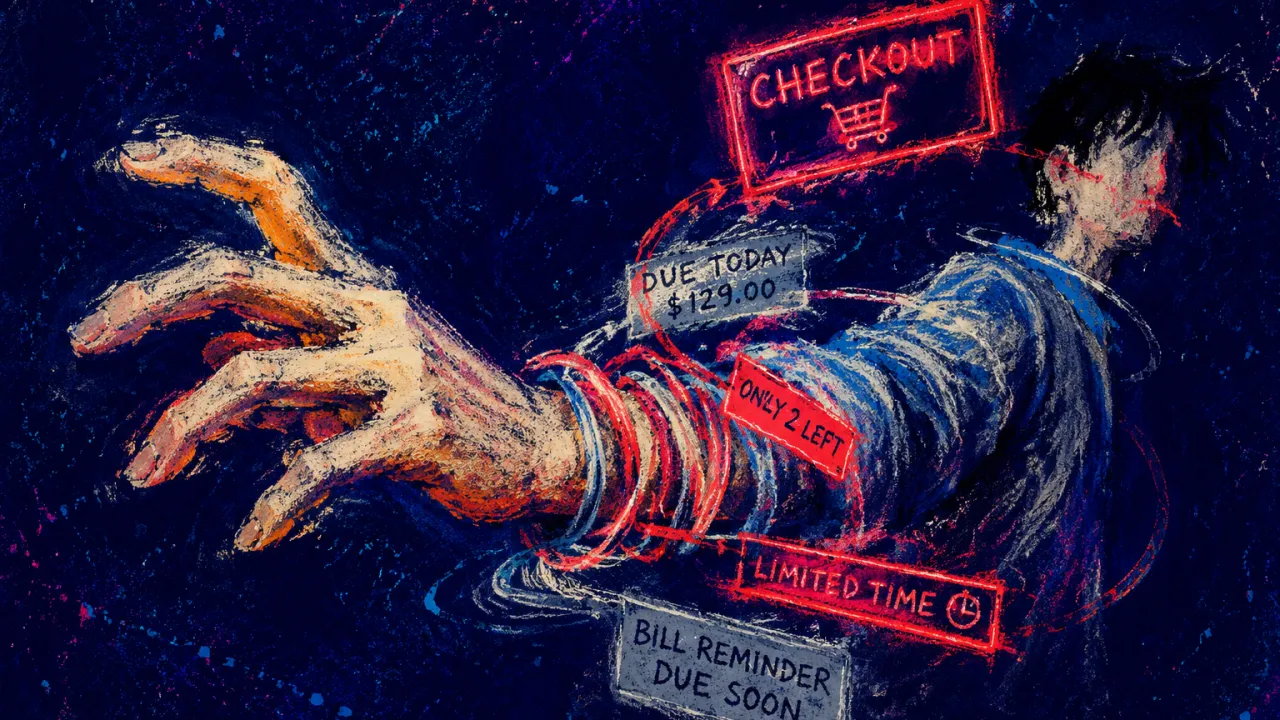
A solitary figure with one hand pulled forward, wrist wrapped by glowing prompts and paper reminders leaving tight marks

What is this situation?

Stress Spending Loop — you come out of a long workday, a tense class, a packed commute, or another round of rent-and-bills math, and your phone is already waiting with discount codes, cart reminders, delivery offers, pay-later buttons, and posts showing people buying the version of ease you wish you had. At first it looks small: coffee you did not plan for, a takeout order because cooking feels like another unpaid task, a hoodie in your cart because the day has taken more from you than it gave back. The purchase gives the evening a clean edge for a minute; your thumb taps checkout, your shoulders drop, and the screen says confirmed. Then the timing catches up. Autopay hits, a subscription renews, groceries cost more than expected, and the banking app turns into a place you keep opening and closing as if the numbers might rearrange themselves. The loop is not one dramatic purchase; it is the way pressure builds, platforms make relief frictionless, and delayed payments move the strain into next week. You start making tiny negotiations with yourself: skip the invite, move the bill, wait until payday, promise you will reset after this one thing. By the time the month repeats, you are not just managing money; you are juggling relief, guilt, needs, and timing in public and private all at once, much like the figure on the Two of Pentacles, keeping two coins in motion while the waves behind him refuse to calm.

Why it's not you?

This is not a character flaw hiding inside your shopping cart. The loop has a shape: pressure rises, platforms offer fast relief, delayed costs arrive later, and the next week gets tighter. Rising prices, one-click checkout, pay-later prompts, and badly timed bills are part of the setup, not proof that you are broken.

Stress Spending Loop in Tarot Cards

The Stress Spending Loop is the cycle where outside pressure, shopping prompts, and bill timing keep feeding each other until relief starts to cost you the next week. That stomach drop when the banking app opens after checkout is not random; it points to an environmental, structural dynamic built from stress, access, and delayed consequences. The cards below do not decide what you should buy, cut, or keep; they reflect the visible shape of the loop. Here are the Tarot Cards that tend to mirror this kind of situation.

Wheel of Fortune
Reversed
The Wheel turns while its spokes, figures, and surrounding emblems keep the cycle in motion, but reversed its rotation reads as a run of badly aligned turns rather than a clean opening. Bills, subscriptions, inflation, and payday keep arriving at different points on the circle, so the relief purchase is absorbed into the next round before it can become stability. You experience the month as repetition: pressure builds, the platform offers a fast exit, the charge lands later, and the next reset starts narrower. The blocked wheel names a system that keeps returning you to the same decision under changed numbers, without turning recurrence into a personal flaw.
The Devil
Upright
The Devil sits above two chained figures, with an inverted pentagram, fire, fruit, and material abundance gathered into one compact scene. You are being offered a version of ease, identity, or success that arrives through purchase, so the cart can begin to stand in for rest, status, or proof that the day was worth enduring. The chains are loose enough to suggest participation but strong enough to organize behavior. That physical contradiction mirrors the gap between understanding the long-term cost and still reaching for the same short-term promise when pressure returns. The card exposes a learned cognitive system rather than assigning blame. You can distinguish the need for recovery from the consumer story attached to it, and see how platforms turn self-worth, relief, and spending into one repeated transaction.
The Moon
Upright
The Moon hangs over a winding path between two towers while a dog, a wolf, and a crustacean face different edges of the same uncertain scene. The image matches a checkout that illuminates immediate ease but leaves fees, renewals, and delayed obligations in partial shadow; the route looks manageable until the next marker appears. You may keep reopening and closing the banking app because the numbers carry more than arithmetic: they expose what the purchase postponed. The card names the inner fog created by an externally obscured payment timeline, keeping the focus on visibility and structure rather than blaming you for not seeing the whole path at checkout.
Seven of Cups
Upright
Seven cups float in front of a figure, each carrying a different promise while the cloud keeps the contents indistinct. The spread mirrors a phone screen full of discounts, delivery shortcuts, pay-later offers, and social proof: the external choice architecture multiplies relief options while hiding how each one will occupy next week's budget. You can feel as though every cup is a small, harmless exception, even when the set of exceptions becomes the real decision. The card makes the bottleneck visible as option design and delayed consequence, so the checkout moment is read as a crowded negotiation rather than a simple test of restraint.
Two of Pentacles
Upright
Two pentacles move through the juggler's hands inside an infinity ribbon while rough water and distant ships occupy the background. You are weighing a purchase against rent, groceries, subscriptions, and tomorrow's energy, so the choice keeps shifting as each obligation enters the frame. The figure is actively managing the objects rather than choosing one and discarding the other. That physical fact matches a spending decision made inside a crowded system: the purchase can be both a real need for relief and a new demand on future cash flow. The card makes the tradeoff visible without treating it as a simple test of willpower. You can inspect which choice is being made under pressure, which cost is deferred, and which options the interface has made easiest to select.
Reversed
The same juggler loses the clean rhythm of the two coins as the rough sea takes over the frame. Reversed, the visual points to a cash-flow schedule that cannot absorb every demand: delayed payments, renewals, and payday do not line up with the moment relief is purchased. You keep negotiating with the calendar - move the bill, skip the invite, wait for payday - because each small decision borrows stability from the next interval. The blocked rhythm makes the loop legible as timing friction, not a failure to possess unlimited flexibility.
Four of Pentacles
Reversed
A seated figure grips four pentacles against the body, with one coin beneath each foot and another above the head; reversed, that closed posture cannot keep the reserve stable. Money leaks through the gap between a carefully watched balance and a small checkout that feels necessary after the day has already consumed your capacity. You open and close the banking app, promise a reset, then discover that autopay or groceries have taken the space you thought was still available. The blocked coins make the physical life system visible: control is being spent on monitoring a shrinking margin while convenience keeps buying back a few minutes of functioning.
Five of Pentacles
Upright
Two figures move through snow beside a lit stained-glass window, one leaning on crutches while pentacles form a cold wall above them. The image holds the material pressure of rent-and-bills math: shelter and warmth are visible, but access to ease is not evenly available. The window is close enough to see and still not functioning as immediate shelter. That distance mirrors a checkout that softens tonight while autopay, subscriptions, and higher grocery prices leave you exposed in the next stretch of the month. The card gives the situation a social and material frame instead of reducing it to poor character. You can look at how limited cash flow and delayed charges shrink your choices before judging the purchase that briefly made the day more bearable.
Six of Pentacles
Reversed
The reversed scales and coins in the wealthy figure's hands interrupt the apparent fairness of the Six of Pentacles. The transaction offers help or ease in the moment, but the terms, timing, and distribution of cost leave you carrying more of the future burden. The kneeling figures make dependence visible, while the giver controls when and how resources move. A delivery offer or pay-later button can reproduce that asymmetry: it grants access now and claims a slice of next week's choices. The card names a resource-flow problem rather than an individual defect. You can map who or what controls timing, fees, and relief in the daily system, including the platforms that turn delayed payment into ordinary convenience.
Seven of Pentacles
Reversed
A farmer pauses beside seven pentacles, measuring a crop that cannot be harvested by tapping it once; reversed, the patient assessment gives way to frustration with slow returns. Your purchase produces a clean edge tonight, while the budget's recovery is pushed into a later cycle. The crop and the pause make the time mismatch physical. The loop grows when the future margin feels too far away to reward restraint and the present screen offers an immediate, visible result. The card names an impatience built into uneven cash flow and fatigue, not a lack of virtue. You can see where delayed payoff, payday distance, and small recurring charges keep resetting the same decision.
Two of Swords
Reversed
A blindfolded figure sits between crossed swords with her back to dark water and a bright moon. The banking app opened and closed, the cart left pending, and the bill moved to later all reproduce that suspended posture: the conflict stays intact because the numbers are hard to face in the moment. Reversed, the blindfold has become an active avoidance pattern rather than a temporary pause. The purchase may be completed, but the underlying decision about capacity is deferred, so the next charge inherits the unresolved tension. The image does not turn avoidance into a diagnosis. It identifies the point where an external payment deadline and an emotionally expensive decision meet, giving the loop a visible bottleneck.
Nine of Swords
Upright
Nine swords hang above the seated figure on a dark bed, turning the night into a wall of repeated thoughts. After checkout, the same image can be the bank balance, the subscription renewal, and the next bill replaying when the day's external pressure has finally gone quiet. The figure is alone with the weight, but the swords are suspended rather than physically cutting her. That distinction keeps the reading grounded: the distress is a mental response to delayed costs and narrowed options, not evidence that you are defective. The card reveals how the loop continues after the purchase leaves the screen. You can name the handoff from relief to rumination and separate the platform's payment design from the shame it leaves you carrying.
Six of Wands
Reversed
A rider raises a wand with a laurel while a crowd follows behind him; reversed, the public signal loses its stability and the gaze turns into comparison. Social posts and targeted lifestyle content can make a purchase look like proof that you are keeping up, recovering well, or living at the right pace. The crowd supplies an audience, while the rider's symbol is temporary and exposed to reversal. You spend to close a social gap or avoid feeling behind, then the private cost arrives after the public image has already moved on. The card exposes status pressure inside an apparently personal transaction. You can distinguish genuine need from the social labor of performing ease, without treating a platform-shaped comparison as a failure of individual character.
Ten of Wands
Upright
A bent figure carries a bundle of ten wands so high that the road and destination are partly hidden. The load gives form to the moment when cooking, shopping, or even deciding what to do next feels like another unpaid task, making a delivery fee or small reward look like the shortest route through the evening. You are not spending in a vacuum; the purchase is attached to accumulated labor and a narrow recovery window. The card shows how the burden changes the available path, while the later bill transfers today's overloaded routine into tomorrow's already crowded budget.

Stress Spending Loop in Tarot Card Reading Insights

When the Stress Spending Loop keeps turning, others have brought the same pattern of pressure, checkout relief, and bill timing into readings. The pieces below move from card lists into session-based reflections: Tarot Reading Insights from similar money-tension moments.
Psychological Contexts Related to Stress Spending Loop