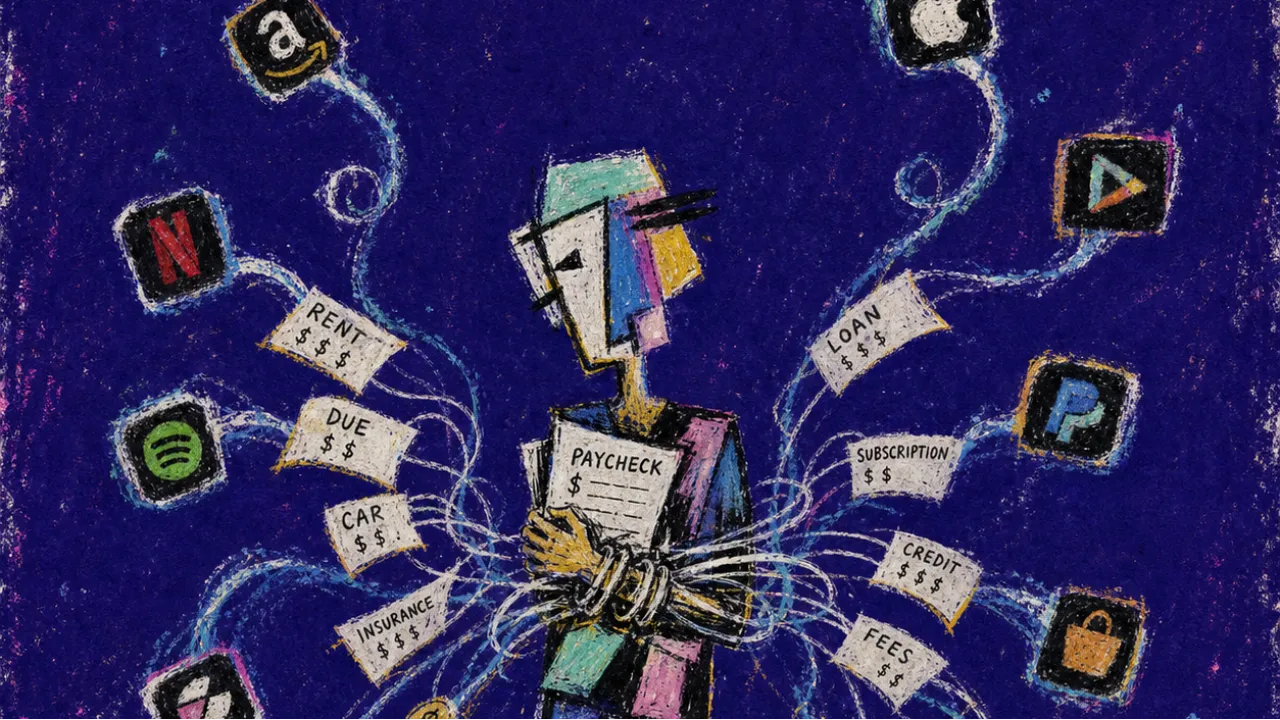
Name the paycheck-to-empty loop, then view related tarot cards and reading insights from sessions shaped by the same cycle.
Payday Spending Spiral
What is this situation?
Payday Spending Spiral — it starts the second your paycheck hits and your banking app flashes a number that finally looks like room to breathe. Maybe you're on the train to work, in bed before your shift, or standing in a grocery aisle when the notification comes through, and for a minute your chest unclenches because the month seems possible again. Then the outside world starts collecting: rent or housing costs, utilities from a housemate, transport, groceries, phone bill, minimum payments, the work shoes you delayed buying, the group chat asking who is in for dinner, the sale email with a timer, the delivery app saving your card details, the buy-now-pay-later button making a bigger purchase look smaller. Nobody has to force you; the setup is already waiting, with every bill, app, invitation, and postponed need reaching for the same deposit at once. You tell yourself you'll be careful this time, but by each refresh the number has shifted, and by Monday the balance looks too thin for the amount of month left. What wears you down is not one purchase; it is the cycle of being briefly replenished and immediately pulled apart, much like the figure on the Two of Pentacles, trying to keep two coins moving inside a loop while the waves behind him keep rising.
Why it's not you?
The issue isn't that you're careless with money; the issue is that your paycheck is entering a system designed to be claimed before you can plan with it. Bills arrive in clusters, prices keep moving, apps remove friction, and social costs show up in the same small window. That creates a loop, not a personal failure.
Payday Spending Spiral in Tarot Cards
The Payday Spending Spiral is the moment your paycheck lands and your chest unclenches, only for bills, app prompts, invitations, and postponed needs to start pulling from the same deposit. This is an environmental, structural dynamic: the pay cycle and the surrounding costs move around you before the month has a chance to settle. The cards below do not turn this into a character flaw; they reflect the shape of the loop. Here are the Tarot Cards that mirror this situation.
The large wheel dominates the image while figures rise and descend around its edge, making recurrence more powerful than any single position on it. Reversed, that rotation resembles a payday cycle that changes the number in your account without changing the underlying sequence of relief, collection, rapid depletion, and waiting. The four corner figures remain outside the wheel with open books, creating a contrast between being carried through a cycle and being able to observe its full pattern. You can experience each payday as a separate reset while the reversed wheel reveals the repeated order of external claims that prevents the reset from becoming durable progress.
The chained figures face outward while remaining attached to the same dark pedestal, showing an obvious external structure alongside a more private experience of restricted movement. The payday notification can produce real relief, but saved checkouts, overdue needs, credit commitments, and scarcity fatigue immediately reactivate pathways that turn that relief into rapid spending. The visible chains give form to the psychological cache left by the cycle: vigilance before payday, release when the deposit lands, and renewed monitoring as the balance falls. You are not reduced to an impulse inside this image; the scene makes it possible to distinguish emotional relief from actual disposable capacity and to see how external systems repeatedly bind the two together.
The three friends lift their cups in a shared circle, making connection and collective participation inseparable from the visible celebration. Reversed, this private support scene can become a recurring expense pattern when close friends default to paid activities precisely when your paycheck has created a brief appearance of affordability. The fruit underfoot suggests that the group is gathering around available resources, but it does not show whether those resources are equally durable for everyone. You can value the friendship and still face a real boundary problem when saying yes to dinner, drinks, or tickets removes the buffer needed for the weeks that follow.
A silhouetted figure faces seven cups suspended in a cloud, each presenting a vivid but radically different offer. The scene resembles a payday screen environment filled with sale timers, delivery choices, upgrade prompts, instalment plans, wish-list items, and postponed purchases, all appearing affordable while the account balance is briefly high. The cloud separates the appeal of each option from its material effect on rent, food, transport, and the time remaining before the next paycheck. You are not merely choosing among products; you are navigating a display system that makes immediate possibilities highly visible while keeping their combined future cost comparatively abstract.
The infinity-shaped band around the two pentacles turns repeated handling into the central visual fact of the card. It closely mirrors the payday cycle: the balance rises, clustered claims pull it down, the remaining weeks tighten, and the next deposit restarts the same movement without producing lasting slack. The ships continue riding separate waves in the background, showing that bills, prices, and social demands do not synchronise themselves with your need for recovery. You are operating inside several overlapping clocks, and the spiral persists when the payday clock repeatedly loses ground to collection dates and immediate demands.
Two figures move through snow beneath a lit window containing five pentacles, placing visible resources beside an equally visible experience of material exclusion. That contrast resembles the post-payday moment when money has entered the account and moved onward, leaving you with a thin balance while groceries, transport, and the remaining calendar continue. The cold street captures the operational cost of having no buffer between ordinary life and the next deposit. This is not evidence that every payment was frivolous; it shows how rapidly allocated income can leave you functionally resource-poor even after a paycheck has technically passed through your hands.
The standing figure holds a scale in one hand while coins pass from the other into several waiting hands. Reversed, the scale remains visible but no longer guarantees that money is distributed according to your full month; urgent billers, creditors, household claims, and delayed needs gain access according to who can collect first. The kneeling arrangement also exposes the power imbalance between a brief deposit and the systems already waiting for it. You may technically receive enough to make several payments, yet the order and terms of those payments leave little control over what remains, turning payday into disbursement without durable financial agency.
Ten staffs crowd the carrier's arms, bend his posture, and block his view of the town ahead. The bundle resembles the clustered load of rent, utilities, groceries, transport, minimum payments, household requests, and overdue replacements all being carried by one payday deposit. No single staff explains the strain; the pressure comes from accumulation and from having to transport the entire bundle at once. Your daily system can therefore feel unmanageable even when every individual expense is defensible, because the timing and concentration of the claims remove the room needed to sequence them calmly.
No cards available for this filter.
Payday Spending Spiral in Tarot Card Reading Insights
For people caught in a Payday Spending Spiral, the shift from cards to readings shows how this paycheck-to-empty loop gets brought into a session. Others have brought the same bills-first, apps-next, month-left-over pattern into readings, sitting with what the spread placed in front of them. Tarot Reading Insights from sessions shaped by this situation.