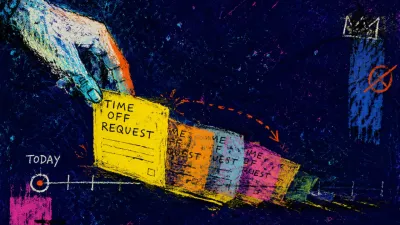
Explore the pressure of interrupted time off, related tarot cards, and reading insights about work crossing protected boundaries.
Pto Boundary Crossroads
What is this situation?
PTO Boundary Crossroads — you finally put the time off on the calendar, get the approval, set the out-of-office reply, and try to step away, but work follows you into the space that was supposed to be yours. It starts with a “quick question” in Slack, a text from your manager that says “only if you have a second,” or a teammate tagging you because “you know this best,” even though everyone can see the little vacation icon beside your name. You hesitate because the request is small on paper, but the pattern is bigger: your time off is treated as negotiable, your rest is framed as an inconvenience, and your availability is quietly measured by how fast you respond when you are officially away. The power dynamic sits in the background, not always spoken out loud: you know who approves your schedule, who controls feedback, who can make you look difficult, and who will remember whether you were “helpful” during your break. So you stand at a daily crossroads between protecting the boundary you already earned and keeping the peace with people who keep reaching across it. The cost shows up in the way your shoulders stay tense even on your day off, the way you check your phone from a coffee shop, an airport gate, a couch, or a family table, the way the boundary stops feeling like a wall and starts feeling like tape someone can peel back. It is not simply about one message; it is the repeated intrusion of work into time that was already claimed, much like the figure on the Seven of Wands, braced on uneven ground while multiple staffs push up toward the space he is trying to hold.
Why it's not you?
The problem is not that you are being difficult for wanting your approved time off to stay intact. The problem is a workplace pattern that treats rest as available for interruption and makes boundary-setting feel like a risk. A calendar approval does not mean much if the environment keeps reaching through it.
Pto Boundary Crossroads in Tarot Cards
PTO Boundary Crossroads is the moment when your approved time off stops being treated as protected time and starts being treated like a soft suggestion. The tightness in your shoulders when the phone lights up is part of an environmental, structural dynamic where availability is assumed unless you actively refuse it. These Tarot Cards reflect the shape of that pressure: the defended edge, the interrupted rest, and the decision point where your time is being tested.
The armored ruler sits on a rigid stone throne decorated with ram heads, with bare mountains behind him and little visible softness in the terrain. In reversal, authority remains present but its capacity to create protective order is blocked; the same management structure that approves PTO reaches back into it whenever access is convenient. You face more than a communication preference when the sender controls scheduling, feedback, or advancement. A manager's supposedly optional text can carry institutional weight because the authority relationship survives outside office hours. The denied resource is consistent governance: a workplace rule exists, but the person with power is not modeling or enforcing the limit that would make it usable.
The seated figure holds a scale in one hand and an upright sword in the other, placing measured policy beside enforceable authority. When the scene is reversed, those tools remain visible but no longer occupy a stable working position. This mirrors PTO that has passed the formal approval process while receiving uneven protection in actual workplace practice. Your calendar entry, approval record, and out-of-office status create a clear employment standard, yet informal expectations keep overriding it. The career friction comes from that policy-practice gap: the organization counts the leave as a benefit while making you absorb the reputational cost of using it fully. The blocked resource is equal application of the rule, not proof that your time off deserves recognition.
A horned authority figure presides over two people chained to the same pedestal, with the collars visibly loose enough to show that control is maintained through more than physical force. In workplace terms, the chain is the mix of approval power, performance evaluation, reputation, and learned availability that keeps an employee responsive even after PTO begins. The image does not assign moral failure to you for checking the message. It exposes how an always-on culture converts formal choice into conditioned compliance: the phone remains reachable, the request sounds small, and the hierarchy supplies the unstated consequence. The resource available through this upright image is visibility, because the chain can be examined as an employment structure rather than mistaken for voluntary flexibility.
A figure keeps two pentacles moving inside a continuous loop while ships rise and fall on rough water behind him. The loop turns separate demands into an ongoing juggling system, which mirrors a vacation day divided between personal activity and work requests that are treated as too small to refuse. Your leave is not operating as a separate mode when every notification places work back into the rotation. The apparent flexibility of answering one quick message conceals the lifestyle cost: rest becomes another task to balance, and the day never settles long enough for either your body or attention to leave work behind.
A blindfolded figure sits with two swords crossed over her chest, creating a defensive gate while a rocky sea and crescent moon sit behind her. The crossed blades hold two responses in suspension, and the blindfold captures the missing information beneath phrases such as only if you have a second: you cannot see how optional the request really is or how silence will be interpreted. Your hesitation is not evidence that the boundary lacks legitimacy. The workplace has obscured the consequences of both options, leaving you to weigh immediate peace against the future credibility of your PTO. The choice stalls because polite wording and unequal authority occupy the same message, making neither response feel fully safe.
The resting figure is physically still, but three swords remain suspended within the same enclosed space and another lies beneath the body. In reversal, the posture of rest and the environment of readiness no longer agree. That split mirrors sitting on a couch, at a cafe, or beside family while part of your attention remains inside Slack and the workplace evaluation system. Your mental cache stays occupied because incoming contact has taught you that approved leave may still require a rapid response. The internal friction is therefore downstream of an external access pattern, not evidence that you are personally bad at switching off. The blocked resource is psychological closure supported by a workplace that actually stops sending work into the pause.
A bound and blindfolded figure stands inside a loose enclosure of swords, with wet ground beneath her and a distant stronghold behind. The enclosure has gaps, but movement is still materially difficult. This mirrors a PTO choice that looks simple from outside while managerial authority, performance feedback, and reputation make the practical route narrower. The scene does not reduce the problem to a personal belief that you have no options. It makes the unequal cost of those options visible: remaining offline may be formally permitted, while responding is informally rewarded as cooperation. Your crossroads is constrained because policy offers an exit that workplace power may make expensive to use.
A person sits upright in bed with their face covered while nine swords line the dark wall behind them. The body is removed from the daytime work setting, yet the swords occupy the private room as a repeated mental backdrop. This closely reflects a short manager message extending into hours of monitoring, replaying, and anticipating what nonresponse might mean. The message may be small in literal content, but its place in the workplace power chain gives it a longer internal life. You can remain braced for the next notification because approval, feedback, and reputation have become attached to response speed. The image makes that carryover visible without treating it as a personal defect: external boundary breaches are consuming internal recovery bandwidth.
The figure occupies high ground while six staffs rise into his space and one staff remains braced in his hands. His position has already been established, just as approved PTO has already been requested, granted, and placed on the calendar. The workplace friction begins when other people continue pressing into that established space as though its boundary still requires negotiation. You may be treated as difficult not because the leave is unclear, but because the culture measures commitment through continued accessibility. Each Slack tag or manager text turns a legitimate employment boundary into another public defense of professionalism. The usable resource in the scene is positional clarity: the intrusion is coming toward an existing limit, rather than exposing a failure to communicate one.
A bandaged figure grips one wand while watching the space ahead, with eight staffs forming a barrier behind him. The wall exists, but his guarded posture shows that maintaining it has required repeated effort. This is the cumulative texture of PTO that must be defended again every time a manager or teammate reaches across it. You are not reacting only to the current notification; prior interruptions have taught you that away status may not end workplace access. The career cost is persistent defensive readiness, including monitoring how quickly you respond and how refusal might be remembered. The available strength is evidence-based awareness of the pattern, while the burden is that the organization has made one employee repeatedly maintain a boundary it should already support.
The worker carries ten staffs in one compressed bundle, bending under their combined weight while the destination remains ahead. No other figure shares the load. The image captures a workplace that approves absence without redistributing ownership, leaving expertise, decisions, and unfinished tasks attached to you during PTO. Messages framed as quick questions keep the bundle intact because answering confirms that you remain the functional owner. The career burden is therefore larger than the minutes spent replying: the organization preserves a dependency on your availability and makes rest feel like neglected responsibility. Your leave cannot become a true handoff while the same role is expected to carry every staff across it.
No cards available for this filter.
Pto Boundary Crossroads in Tarot Card Reading Insights
PTO Boundary Crossroads is a situation many people bring into readings when approved time off is interrupted by work messages, guilt, or quiet expectation. The readings below show how this same workplace pressure can appear when someone sits with the cards. Tarot Reading Insights from sessions involving this kind of boundary strain.