Too Much City At Once
A grounded look at city noise, crowding, and interruption, with related tarot cards and tarot reading insights.

Urban Sensory Overload
What is this situation?
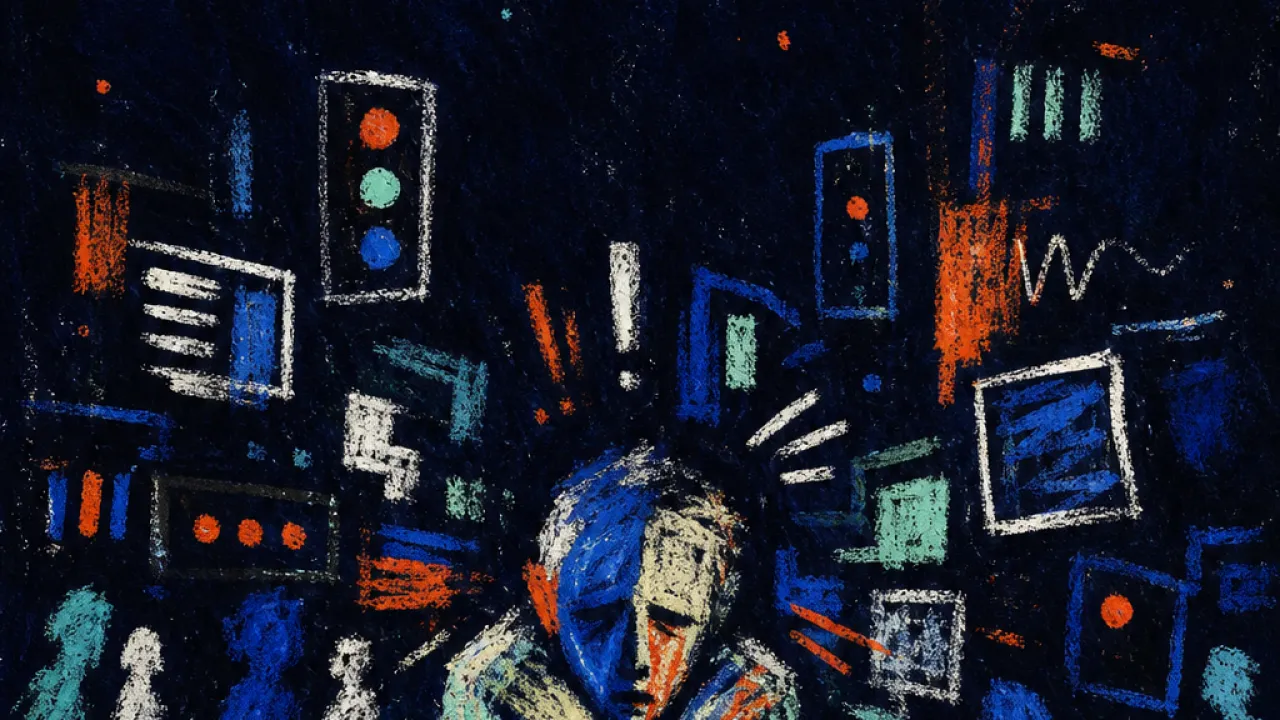
Urban Sensory Overload — you step out of your apartment, off the train, or onto a busy sidewalk, and the city is already coming at you before you've fully arrived. A bus hisses at the curb, traffic pulses through the intersection, construction drills through the block, someone walks too close behind you, a delivery bike cuts across your path, and every storefront, phone screen, crosswalk light, billboard, and notification seems to be asking for your eyes at the same time. You are not just moving through a place; you are being routed, interrupted, scanned, brushed past, and pulled into the rhythm of thousands of other people trying to get somewhere. The street does not pause when your shoulders tighten or your jaw locks; the train doors keep beeping, the crowd keeps compressing, the ads keep flashing, and the noise keeps stacking until even a simple errand starts to feel like a contact sport. By the time you get home, the day may not look dramatic from the outside, but your body has been negotiating noise, proximity, speed, light, and interruption for hours, much like the Five of Wands, where raised staffs cut across the same small space and no single movement has room to land cleanly.
Why it's not you?
The problem is not that you are too sensitive or failing to cope with normal life. The problem is that dense urban spaces are often built to compete for your attention from every direction at once. Constant noise, crowding, flashing signs, traffic pressure, and nonstop interruption are features of the environment, not personal weaknesses.
Urban Sensory Overload in Tarot Cards
Urban Sensory Overload is the city turning into a field of competing signals: traffic, screens, crowds, alerts, and bright surfaces all reaching for you at once. The tight shoulders and locked jaw are not random reactions; they track the way the environment keeps pressing into your body before you can sort one input from the next. This is an environmental, structural dynamic shaped by density, speed, and constant interruption. The Tarot Cards below reflect the outline of that pressure without telling you what to feel about it.
Urban Sensory Overload in Tarot Card Reading Insights
When Urban Sensory Overload becomes part of daily movement through the city, people often bring that crowded, high-input environment into readings. The shift here is from the cards themselves to what appears when others sit with that kind of pressure. Explore the Tarot Reading Insights connected to this situation.

Going Out to Escape, Making Room to Face One Real Thing This Week
Topic:Lifestyle Tarot Reading
Struggle:Social Self-Judgment Lock
Context:Life Admin Backlog

A Laundry Pile Moved from Bed to Chair; One Surface Became a Rest Cue
Topic:Lifestyle Tarot Reading
Struggle:Environment-Agency Split
Context:Always On Availability

Three Roommate Chats, One Easy Yes: Reopening the Comparison Sheet
Topic:Lifestyle Tarot Reading
Struggle:Unspoken Expectation Load
Context:Unspoken Expectations Gap

When Slack, the Sink, and Plans Became One Threat: One-Lane Re-Entry
Topic:Study Tarot Reading
Struggle:System Reset Overload
Context:Life Admin Backlog

The Vitamin Aisle Felt Like a Courtroom, Then the Five-Minute Timer
Topic:Personal Growth Tarot Reading
Struggle:Inner Compass Overload
Context:Wellness Optimization Trap

From Headphones-as-Armor to Skill-Based Safety: Tiny Reps in Public
Topic:Introspection Tarot Reading
Struggle:Masked Self-Division
Context:Public Mask Maintenance