A grounded look at split-payment pressure, linked tarot cards, and tarot reading insights from related sessions.
Bnpl Shame Spiral
What is this situation?
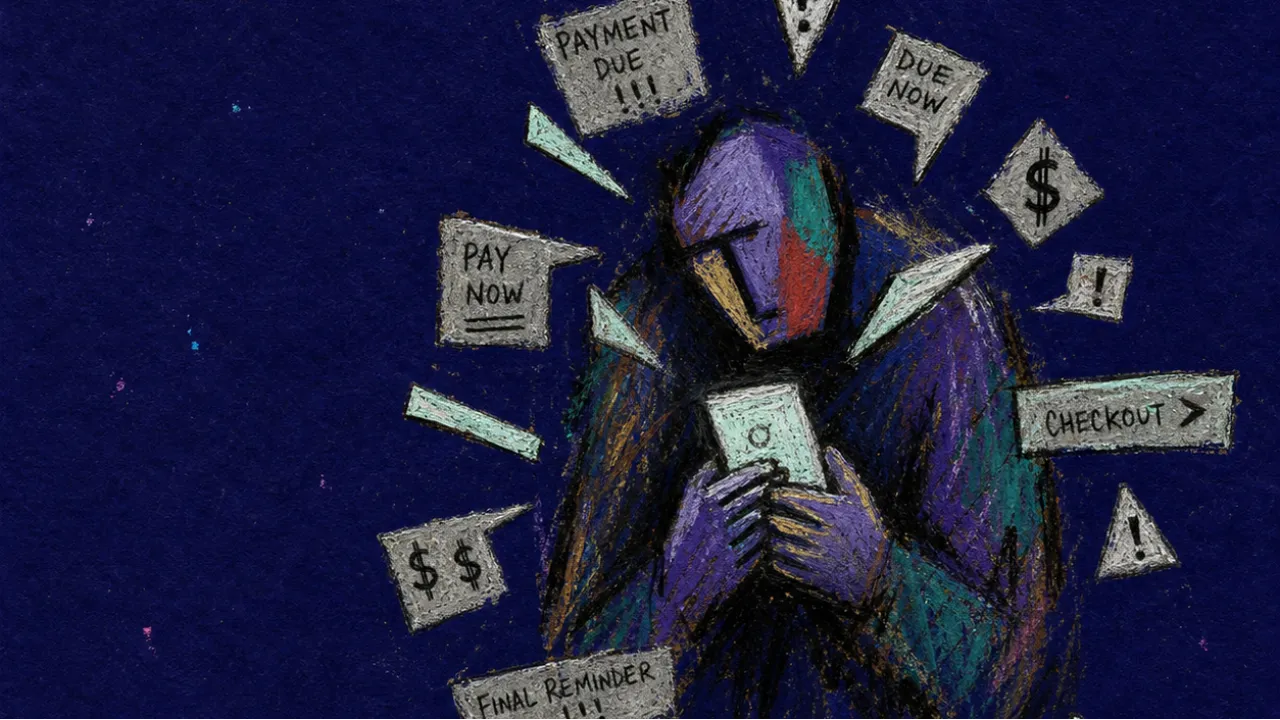
BNPL Shame Spiral — it often starts at checkout, when the full price gets softened into four smaller payments and the screen makes the decision look almost frictionless. You tell yourself it is just a hoodie, a skincare refill, a concert outfit, a replacement for something that broke, and the first payment barely touches your account. Then the dates begin to scatter across your calendar: one withdrawal on payday, another the day before rent, another after a night out you already agreed to, another from a purchase you barely remember making. The apps keep sending reminders, the bank balance keeps changing in small cuts, and every store still offers the same button like nothing is connected. A payment fails, or nearly fails, and suddenly your inbox, your banking app, and your checkout history all seem to be speaking over each other. The pressure is not dramatic enough for other people to see, but it keeps interrupting ordinary moments: tapping your card at the train station, splitting a bill, opening your phone in bed, deciding whether you can say yes to plans. What was sold as flexibility becomes a schedule you have to keep defending against, much like the bound figure on the Eight of Swords, surrounded by narrow blades that turn open ground into a trap.
Why it's not you?
The problem is not that you are careless or uniquely bad with money; the setup is built to make payment feel smaller at the moment of purchase and heavier later. Staggered withdrawals, reminder loops, late-fee pressure, and checkout prompts are part of the structure around you. This spiral has a shape, and it is created by the way those systems split consequences across time.
Bnpl Shame Spiral in Tarot Cards
The BNPL Shame Spiral is not just about one checkout decision; it is the environment of split payments, staggered due dates, and app reminders tightening around your week. The knot in your stomach when another payment notification lands is a physical readout of how the system keeps resurfacing at the wrong moment. This is an environmental, structural dynamic built through design, timing, and fragmented visibility, not a private failure of discipline. These Tarot Cards reflect the pressure lines of that situation.
At the cliff's edge, a lightly packed traveller looks upward while a white dog signals beside his feet and the drop remains immediately ahead. Reversed, the available warning cues fail to create a usable pause, matching a checkout flow that spotlights the small first payment while placing the cumulative cost outside the user's immediate field of attention. The blockage lies between signal and response, not in an allegedly defective personality. You may have seen the payment count and still not experienced it as four future claims on rent-week or payday money, because the interface turns commitment into a nearly weightless next step.
A large wheel turns among figures that rise, descend, and occupy different positions around its rim, while fixed observers remain in the corners. Reversed, the rotation offers no reliable point of control, echoing a BNPL cycle in which payday briefly raises the balance before scheduled installments pull it down again. The image distinguishes repetition from randomness. You may experience each debit as a fresh interruption, but the pattern is generated by known commitments moving through recurring dates; naming the cycle makes its pressure more objective even when the current rotation still blocks a stable launch point.
An angel pours one continuous stream between two cups while standing with one foot on land and one in water, and a path leads toward a distant crown of light. Reversed, that integrating flow is obstructed, closely matching a full price divided into four installments that are perceived separately even though they draw from one future income stream. The blocked resource is whole-cost perception. You may understand each payment amount and still struggle to experience the purchases as one portfolio of commitments, because the system distributes them across dates and apps; the image identifies integration, rather than punishment, as the missing cognitive function.
Loose chains connect two figures to a commercial-looking pedestal beneath a dominant material figure, placing attachment inside a visible system of leverage. The image closely fits a BNPL loop in which immediate access, repeated checkout prompts, and small first payments condition attention toward the present while future income carries the bond. Because the chains can be seen and inspected, the upright card supports cognitive separation between designed persuasion and personal identity. You can understand the recurring checkout pattern without replacing structural analysis with moral blame; the core learning is that convenience, desire, repayment duration, and lost future flexibility belong to one mechanism.
A winding path runs between two towers beneath an ambiguous moon, while a dog, a wolf, and a creature emerging from the water respond to the same uncertain landscape. The scene mirrors a balance assembled from several apps, pending withdrawals, remembered purchases, and dates that are technically disclosed but difficult to experience as one reliable map. The path remains visible through the uncertainty, giving the upright card a navigable rather than fatalistic quality. You may not trust the number currently displayed in your bank account because future installments are still approaching; the image names that uncertainty as incomplete timing visibility, not proof that your financial reality is unknowable.
Three figures raise their cups in a shared celebration while fruit and harvest cover the ground beneath them. Reversed, the social scene consumes resources without preserving a stable route back into ordinary obligations, matching concert outfits, nights out, or group plans financed against money that later weeks still need. The blocked resource is sustainable participation, not enjoyment itself. You may use BNPL to avoid being excluded from one event and then find that its installments restrict several later invitations, turning apparent inclusion now into private withdrawal afterward.
A black-cloaked figure focuses on three spilled cups while two upright cups remain behind, and a bridge still crosses toward buildings in the distance. The spilled vessels mirror purchases now experienced mainly through regret, especially when their payment dates outlast the usefulness or excitement of the items themselves. The upright cups and bridge keep remaining resources and continuity inside the frame. You may be reviewing the checkout history as a chain of failures, but the image distinguishes completed losses, active obligations, and still-available capacity, preventing regret from flattening the entire financial picture into shame.
Seven cups float in a cloud before a silhouetted chooser, each offering a different image of reward, status, beauty, or risk. The display resembles a digital checkout environment in which the desired item, the smaller installment amount, and the promise of immediate access occupy the foreground while the combined repayment calendar remains indistinct. All seven cups are visible within one frame, so the upright card provides the overview the payment interface withholds. You can recognise that the choice is not simply whether the first installment fits today; it also concerns which future options will be displaced when the remaining installments arrive.
Two pentacles move through an infinity-shaped ribbon while separate ships pitch on uneven waves in the background. Reversed, the loop no longer represents responsive timing; it becomes a recurring sequence of withdrawals whose dates move independently of rent, payday, and other fixed obligations. The blocked resource is a stable calendar, not simply money in the abstract. You may have enough across an entire month and still face a failed payment on a specific day, because BNPL divides affordability into timing windows that do not automatically align with income.
Two figures pass an illuminated pentacle window while remaining outside together in the snow. The scene gives material shortage a social geography: resources and participation are visibly nearby, yet current cash-flow conditions place ordinary access on the other side of a boundary. The upright card keeps both people, the path, and the lit window in view, so exclusion is not treated as a permanent identity. You may hesitate over splitting a bill, tapping into transit, or accepting plans because BNPL installments have already claimed the available balance; the resulting distance belongs to a resource constraint even when shame makes it feel personal.
A standing merchant holds scales while distributing coins to kneeling figures, making control over access, measurement, and repayment visibly unequal. Reversed, the scale is present but does not guarantee a balanced exchange, which mirrors BNPL flexibility offered by a provider that controls the terms while the buyer absorbs scattered debits, reminder pressure, and the risk of fees. The scene blocks the idea that all payment options arrive from an equal position. You may be choosing under genuine cash constraints, yet the product converts that need into a continuing obligation whose total effect is harder for you to monitor than it is for the platform to enforce.
A blindfolded, loosely bound figure stands on wet ground inside a partial ring of eight swords, with a distant structure visible beyond the enclosure. The blades resemble scattered installment dates: each claim is narrow, but together they divide apparently open space into a route that feels dangerous to cross. The upright scene makes the constraints visible while preserving gaps between them. You may experience the shame spiral as proof that every option is closed, yet the image distinguishes actual commitments from the blindfolding effect of fragmented information, allowing the situation to be understood as a mapped financial enclosure rather than a verdict on your competence.
A person sits upright in bed with their face covered while nine swords line the dark wall above. The bedroom scene closely matches the private moment when reminder emails, banking notifications, and half-remembered checkout histories become loudest after the day's distractions have ended. The swords are displayed on the wall rather than physically striking the figure, which separates the pressure of anticipated consequences from the installments themselves. You may still face real debits or a failed payment, but the upright image allows each claim to be named instead of letting shame compress the whole situation into one sleepless judgment about who you are.
A bandaged figure grips one wand while eight more stand behind him like a defensive fence. The upright posture captures the repeated vigilance of waiting for the next BNPL reminder, checking whether rent has cleared, and protecting the remaining balance from another scheduled withdrawal. The wands are upright and countable, so the scene preserves a route through observation rather than demanding endless alarm. You may feel that every date requires defence, but the image separates specific remaining obligations from a vague sense that any moment could produce another financial cut.
A bent figure carries ten separate wands in one obstructive bundle, with the town ahead visible but partly blocked by the load. Each wand resembles a purchase that looked manageable alone; gathered together, they occupy the figure's attention, narrow the route, and convert ordinary movement into burden management. The upright scene also makes the burden countable and gives it an endpoint. You may still be functioning across work, errands, rent, and plans, but future income is carrying purchases already made; seeing the full bundle separates the structural weight of accumulated installments from the shame attached to any one checkout decision.
No cards available for this filter.
Bnpl Shame Spiral in Tarot Card Reading Insights
The BNPL Shame Spiral often shows up when people bring payment reminders, checkout pressure, and money visibility into a reading. These readings move from the cards into the specific shape of living under staggered due dates. Tarot Reading Insights from sessions on this situation.