Feedback Felt Like a Verdict, Until One Bounded Edit Kept the Tab Open
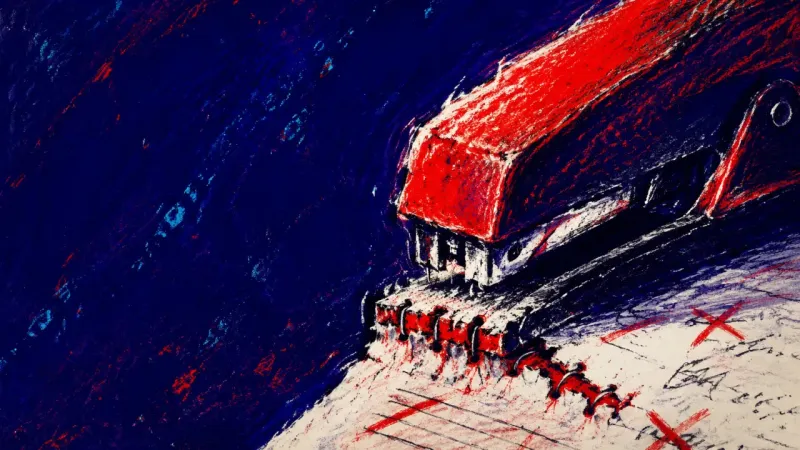
The 7:40 p.m. Feedback Freeze
If you can submit an assignment on time but freeze when the course portal says "Feedback available," the revision procrastination may begin before you have even read the full comment.
I met Jordan, a twenty-one-year-old third-year student, over video from their shared Toronto apartment. The laptop fan hummed beside them, the radiator ticked against the wall, and the trackpad was still warm beneath their restless fingers.
At 7:40 that evening, Jordan had clicked the notification and seen the first yellow-highlighted comment: "Develop this point." Heat climbed into their face. Their chest tightened. They closed the tab before the laptop fan had settled, answered two low-priority emails, and colour-coded the following week's seminars in Notion.
"I know the revision is probably manageable," they told me. "But opening it feels like agreeing that I failed. What makes me postpone revisions whenever an assignment comes back?"
The feeling seemed to sit beneath their ribs like a notification badge that could not be cleared. They wanted to improve the paper, but touching it felt like consenting to a verdict that the original effort had not been good enough.
"You are not avoiding work; you are avoiding the verdict your mind attached to it," I said. "That does not make the delay cost-free, but it does tell us where to look. Let us make a map of the moment between seeing the comment and closing the tab."

Choosing the Compass: The Five-Card Shadow Spread
I asked Jordan to place both feet on the floor, take one ordinary breath, and hold the question without trying to solve it. I shuffled slowly. I use that pause as a change of focus, not as mystical theatre: it gives the nervous system a clear boundary between replaying the problem and examining it.
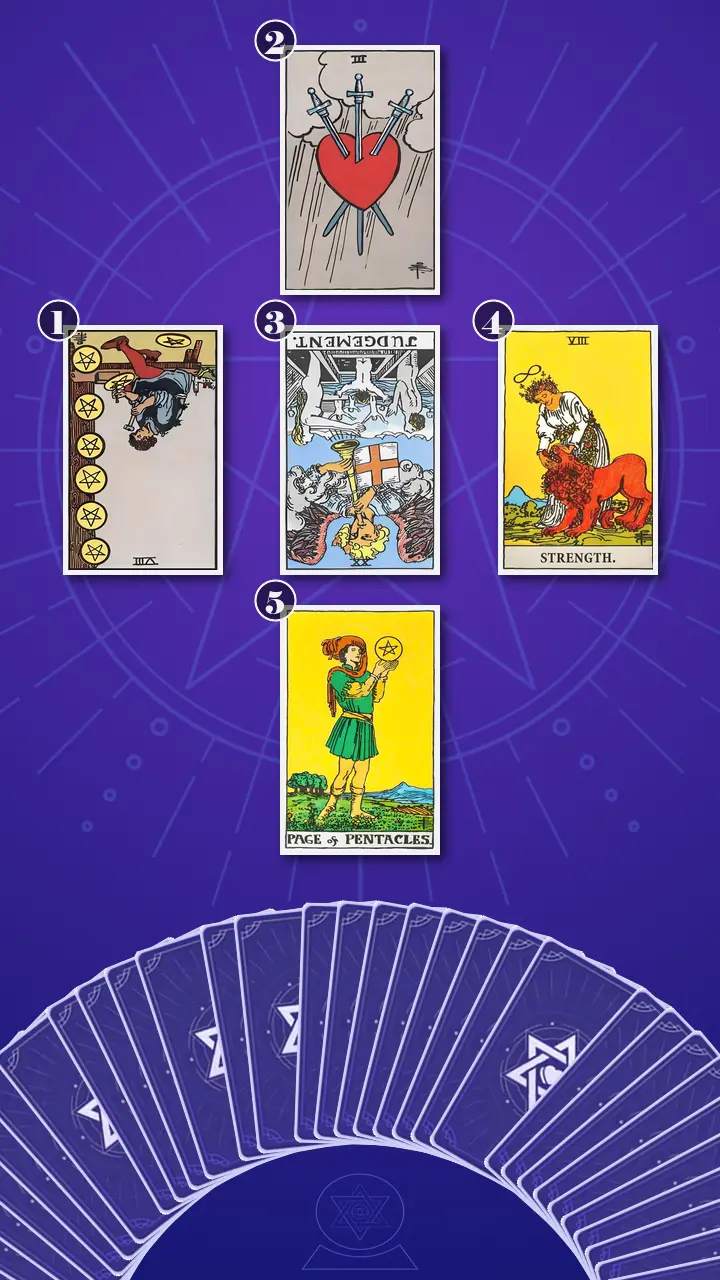
I chose a five-card Shadow Spread. For readers wondering how tarot works in a question like this, the spread is not being used to predict Jordan's grade or diagnose them. It gives us a structured sequence for examining visible behaviour, the trigger beneath it, the hidden belief keeping it active, an integration resource, and one practical next step.
I placed the presenting pattern on the left, the trigger above, and the hidden root at the centre. The card on the right would show the capacity that could meet the pattern differently. The final card below would turn the insight into an ordinary action. The shape looked less like a fortune-telling device than a pressure point becoming a compass.
Reading the Map: The Workbench, the Wound, and the Trial
Position One: The Workbench Without an Edit
I turned over the card representing the observable pattern: closing the returned assignment and substituting preparation or low-stakes productivity for direct revision.
It was the Eight of Pentacles, reversed.
In the familiar image, a craftsperson sits at a workbench, absorbed in a sequence of tangible tasks. Reversed, the Earth energy is not absent; it is blocked and misdirected. Jordan is working, sometimes intensely, but the effort has lost contact with the next act of craft.
I described the scene the card reflected: Jordan reserves Tuesday evening for revision, opens the marked assignment, then spends the hour renaming files, checking citation formatting, comparing the rubric with classmates, and rebuilding the week's Notion board. There is plenty of effort, but none of it reaches the paragraph named in the feedback.
"The risk here is overcorrection," I said. "You imagine that beginning means reserving a whole afternoon and repairing every possible weakness. That makes revision so large that arranging the workbench feels safer than touching the work."
Jordan gave a short, bitter laugh. "That is almost cruelly accurate. I have somehow completed three tiny tasks and still not opened the comments." Their fingers tightened around their mug, then loosened as they looked back at the card.
I asked, "The last time you closed a marked document, what did you open next?"
"My calendar," they said immediately. "Then the rubric. Then the course group chat, which made everything worse."
Position Two: What Was Written, What Landed
I turned over the card representing the trigger: the first emotional impact of the comments, before their practical meaning is assessed.
It was the Three of Swords, upright.
The card showed an exposed heart beneath grey clouds, pierced by three blades. Upright did not mean Jordan was destined to suffer. It named the sharpness already present in the feedback moment, when interpretation moves faster than evidence.
I returned to a Saturday scene Jordan had described. They were sitting in the campus library with the marked document beside the rubric. The air smelled of coffee and printer toner, and the HVAC produced a steady hiss. The marker had written, "Clarify the link to your evidence." Jordan reread it three times as their face heated and their stomach dropped.
"Let us separate what was written from what landed," I said. "What was written was: clarify the link. What landed was: a capable student would already know how to do this."
The Three of Swords showed an excess of cutting mental energy. The practical comment had one edge. Jordan's self-criticism and comparison with classmates added two more, turning a limited instruction about one passage into an injury to their entire sense of competence.
"The marker wrote a comment. Your mind drafted a verdict."
Jordan stopped rubbing the side of their thumb. Their eyes moved away from the screen for several seconds, as if replaying the library scene frame by frame. When they looked back, they said quietly, "The comment did not actually say the paper was bad. I supplied that part."
Position Three: The Internal Hearing
I turned over the card representing the hidden root: the belief that revision is a judgment of personal competence and that imperfect work could threaten self-worth.
It was Judgement, reversed.
The upright card carries a call to rise, review, and answer. Reversed, that reviewing energy becomes blocked by self-doubt. The feedback notification sounds like a summons, but Jordan experiences it as a sentence already passed.
I pictured the Sunday-night scene Jordan had given me: rain tapping the apartment window, cold laptop light on an untouched mug of tea, and "Revise essay" being dragged from Sunday to Monday in Notion. In that private courtroom, the grade became evidence, the rubric became a charge sheet, and opening the editable document felt like taking the stand.
It was as if Jordan's internal algorithm had received one painful click and rebuilt the entire feed around "not competent." One assignment was being reviewed, but the whole person appeared to be on trial.
My mind flashed briefly to Wall Street, where I had watched one red number consume an entire screen and distort how capable people saw themselves. A disciplined analyst separates a position from the person holding it. The same principle applied here: a document can require reassessment without the writer becoming the failed asset.
"Finish this sentence," I said. "If I try seriously to revise and the result is still imperfect, then that would mean I am..."
Jordan's breath caught. Their fingers went still above the mug; their gaze lost focus as the unfinished sentence finally found its ending. "Maybe I am not as smart as I thought. And if I really try, I cannot blame the deadline anymore."
I nodded. "That is the central blockage. Beginning feels dangerous because it removes the protective fantasy that, with perfect conditions, you could have done it perfectly. Judgement reversed confuses reassessment with condemnation. Those are not the same process."
When Strength Left the Tab Open
Position Four: The Hand Beside the Lion
The radiator clicked off, and the room became unusually quiet as I turned over the card representing the capacity Jordan needed to meet feedback without self-condemnation.
It was Strength, upright.
I centred the image of the calm figure placing gentle hands near the lion's jaws. The figure neither attacks the animal nor lets it choose the direction. For Jordan, the lion was the immediate urge to close the tab. Strength was the ability to notice that urge, keep one hand on the desk, soften the shoulders slightly, and remain with one comment.
This was balanced energy: self-compassionate courage, emotional steadiness, and action without the demand that discomfort disappear first.
I brought in a lens from my own practice called Academic ROI Auditing. I do not use it to reduce education to grades or money. I use it to ask which investment of attention creates useful learning without unnecessary friction. Five days of avoidance followed by a frantic total rewrite had a high emotional cost and poor strategic yield. A bounded edit offered immediate information, limited exposure, and a visible result.
I brought Jordan back to 7:40 p.m.: the tab open for less than a minute, one yellow comment on-screen, heat climbing into their face, their hand already moving toward another tab while colour-coding next week's calendar suddenly felt urgent.
The delay is not proof that you need harsher discipline; meet the discomfort gently, make one bounded edit, and guide the lion without fighting it.
I let the sentence remain in the quiet. Then I added, "The delay is not proof that you need harsher discipline. You do not have to feel unhurt by feedback before you can make one careful edit."
Jordan's breathing stopped so completely that I could see the pause in their upper chest. Their fingers hovered above the trackpad without touching it. For a moment, their eyes stayed fixed on the card, pupils slightly widened, as though several old revision nights were being replayed behind the screen.
Then their brow tightened. "But does that mean I have been handling this wrong for years?" The question came out sharper than anything they had said before.
"It means the strategy protected you from pain quickly," I replied, "and then started charging too much in lost time, dread, and rushed work. We can understand why it formed without letting it control the next click."
Their jaw shifted once. Their shoulders dropped by a small but visible degree, and the hand that had been curled against the mug opened flat on the desk. Their eyes reddened without spilling into tears. Relief arrived with a slight blankness, the unsteady feeling of seeing a usable door and realising they would be the one choosing whether to open it.
"I still want to leave," they said after a long exhale. "But I could probably stay for one sentence."
I asked, "Now, using this new perspective, think back to last week. Was there a moment when this insight could have changed how the revision felt?"
Jordan remembered the forty minutes they had rejected in the student-centre cafe because forty minutes did not look like a proper revision afternoon. "I could have done one comment," they said. "I treated anything less than the whole paper as pointless."
We rehearsed a ten-minute version together. Jordan copied one comment into a note, wrote the harsher sentence their mind had added, and translated the original wording into a verb-led instruction. They retained the choice to stop when the timer ended. If the physical response became too intense or the comment remained unclear, they could close the file and place it under "Question" rather than force an answer.
This was the pivotal movement from feedback-as-verdict avoidance to self-compassionate, task-sized revision. Jordan did not suddenly feel fearless. They discovered that discomfort no longer had to decide the next action.
Position Five: The Apprentice Holds One Pentacle
I turned over the final card, representing the practical integration step: one comment, one specific edit, and one lesson drawn from the result.
It was the Page of Pentacles, upright.
The Page holds one pentacle at eye level while standing in a cultivated landscape. After the blocked Earth of the Eight of Pentacles reversed, this card restored Earth energy in a smaller, steadier form. Jordan did not need a motivational surge or proof of mastery. They needed one object of attention.
I translated the image into their screen: hide the grade and all but one comment, keep the relevant paragraph visible, and turn the feedback into a single instruction such as, "Add one sentence linking this evidence to the claim." After making the edit, record what it clarified.
"One comment is a task. The whole document is a threat-shaped abstraction," I said. "The Page is not defending an academic identity. The Page is learning something specific."
Jordan looked at the comment they had copied. "My job is not to prove mastery," they said. "My job is to test this edit." Their hand remained on the desk, and this time the document stayed open.
From Verdict to Edit: The Twelve-Minute Workbench Return
I drew the cards into one coherent line. Jordan's work ethic had never been missing. The Eight of Pentacles reversed showed effort circling the assignment without reaching it. The Three of Swords revealed the sting that interrupted ordinary learning. Judgement reversed showed the category error beneath the delay: one document was being assessed, while Jordan experienced their worth as being decided. Strength created enough emotional room to remain present, and the Page of Pentacles returned revision to one learnable unit.
The blind spot was not merely perfectionism. It was the belief that beginning a revision meant accepting the harshest interpretation of the feedback. The shift was to translate one comment into one bounded edit before evaluating the whole assignment or the person who wrote it. The journey was not from laziness to productivity. It was from performance pressure to apprenticeship.
I gave Jordan two experiments. They were deliberately small because the purpose was to collect evidence about a new process, not to stage another test of character.
- The Twelve-Minute Workbench Return On the next feedback day, wherever you already are, open a duplicate of the returned document and set a twelve-minute phone timer. Type "The marker actually wrote..." and "My mind added..." in a note. Choose the first clearly actionable comment, convert it into one verb-led instruction, and make only the smallest edit that answers it. Save the file with the date, record the completed change in one sentence, and stop when the timer ends. If twelve minutes feels too large, use the two-minute minimum: open the duplicate and highlight one relevant sentence. Stopping after twelve minutes can be part of the method, not evidence that the method failed.
- The Keep-Change-Question Sunk-Cost Audit During one ten-minute session, place no more than three feedback points into columns labelled "Keep," "Change," and "Question." I adapted this from my Research Sunk-Cost Audit: do not preserve a weak passage merely because you worked hard on it, but do not destroy an effective section to punish the first draft. Make the smallest change under "Change." For anything ambiguous, use Institutional Resource Leverage and send the instructor or teaching assistant a neutral message asking whether they mean X or Y. Uncertainty belongs under "Question," not inside an all-night rewrite. Asking for clarification is strategic use of an academic resource, not a confession of incompetence, and you do not have to agree with every suggestion automatically.
I reminded Jordan that these were experiments, not commands. They retained the right to question feedback, adapt it to the assignment requirements, stop at the chosen boundary, or seek support if the reaction became too intense. Tarot had made the pattern visible; Jordan would decide what to do with that visibility.

A Week Later: The Quiet Proof
Five days later, Jordan sent me a message. They had opened a duplicate of the assignment at the kitchen table, set the timer, and changed one sentence linking evidence to a claim. When the timer rang, they saved the file and stopped, even though part of them wanted to turn the exercise into a complete rewrite.
They wrote, "It still stung. But the comment got smaller once it became a sentence I could change." They had also placed an unclear note under "Question" and drafted a two-line email to their teaching assistant instead of spending an hour trying to guess what it meant.
The next morning, their first thought was still, "What if I did it wrong?" They told me they smiled once, opened the saved file, and saw an edit rather than an accusation.
I did not read that as a solved life or a guarantee about the grade. I read it as the first evidence of grounded confidence: Jordan had stayed curious for twelve minutes while the discomfort remained. The cards had not supplied courage from somewhere outside them. They had helped Jordan recognise the courage already present in the hand that chose not to close the tab.
When one yellow comment heats your face and turns a paragraph into a referendum on your worth, the hardest part is often not the edit itself. It is the fear that trying seriously and remaining imperfect might say something final about you. Noticing that added verdict means you are already beginning to separate the person from the document.
In your own five-card Shadow Spread for academic feedback avoidance, which single yellow comment could you place on the Page's workbench first, and what one verb-led edit might let curiosity have the next click?