Vague AI Policies, Outsourced First Steps: Attempt Before AI
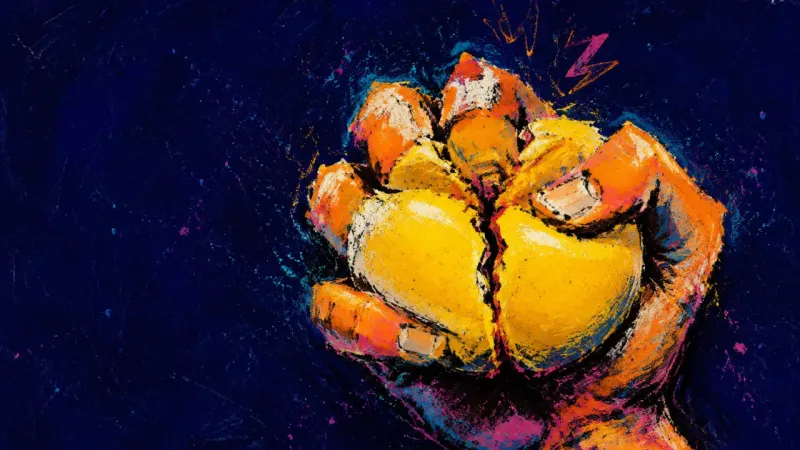
When Vague AI Rules Turn the First Attempt into a Shortcut
If you are a junior analyst taking an evening technical course after work, you may know the exact moment when "use AI responsibly" turns into twenty minutes of policy loophole scanning and zero minutes of actual practice. I recognized that moment as soon as Jordan sat across from me.
It was 9:18 p.m. in Jordan's small Toronto apartment kitchen. A vague workplace AI policy filled the left side of the laptop, a blank SQL exercise waited in the middle, and a chatbot glowed on the right. The radiator ticked behind us; stale coffee left a bitter taste, and the warm laptop keys pressed against Jordan's restless fingers as their shoulders climbed toward their ears.
"I keep using unclear AI rules as a reason to skip practice," Jordan said. "If the rule is vague, the shortcut must be acceptable. I can explain the answer after I have it." I heard the real contradiction underneath: Jordan was torn between using vague AI rules and doing real learning. They wanted speed and control, but the move that delivered both fastest also removed the evidence of what they could actually understand alone.
The impatience in the room felt like a loose electrical current running from the chatbot to the course tab and back again, never settling into one complete circuit. Guilt waited underneath it, along with the apprehension that a rough first attempt might reveal more than Jordan wanted to see.
I did not call the pattern lazy or dishonest. I told Jordan that a vague policy could be genuinely difficult, especially when school, workplace, privacy, and assessment rules did not use precise language. "Let's make the situation observable," I said. "We are not here to let the cards decide your future. We are here to make a map, so you can decide what kind of learning evidence you want before AI enters the room."

Choosing a Compass in the Policy Fog
I asked Jordan to put both feet on the floor, take one slow breath, and hold the question without trying to solve it immediately. Then I shuffled the cards slowly. The preparation was not a supernatural test; it was a short transition from scattered tabs and urgent interpretation into focused observation.
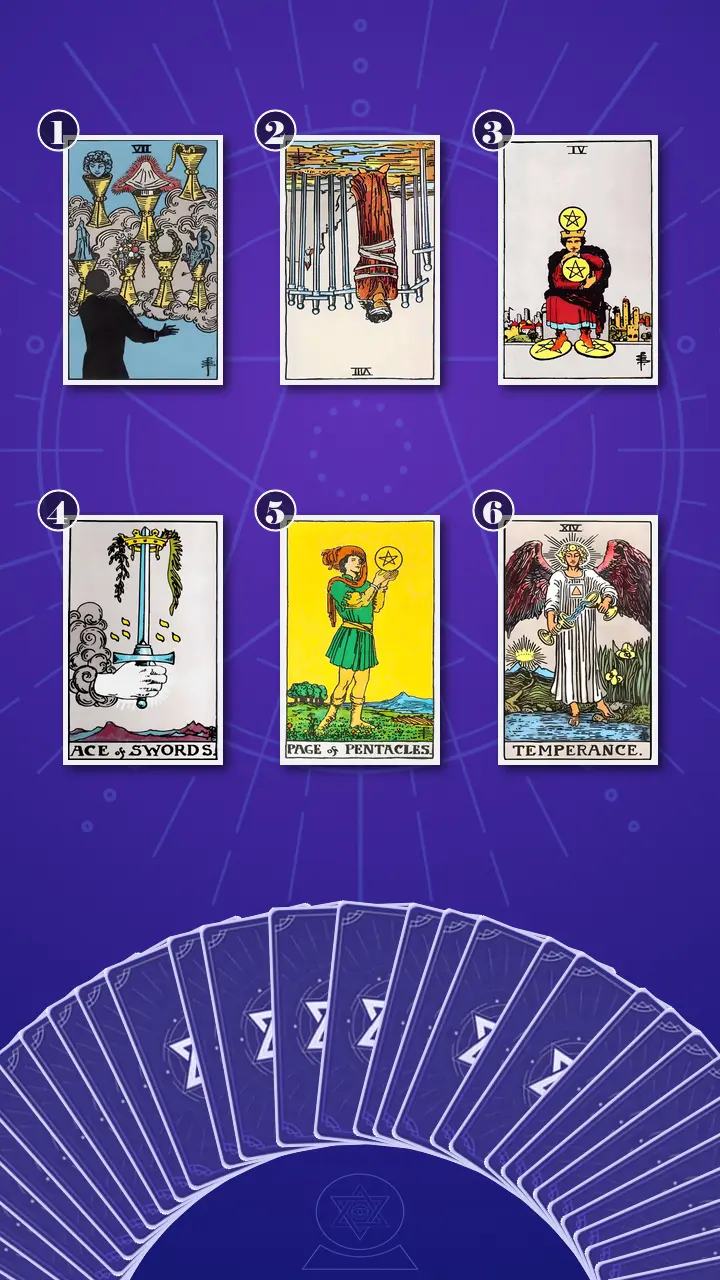
I chose the Transformation Path Grid (6) · Context Edition. For anyone wondering how tarot works in a question like this, the spread functions as a visual thinking tool: it follows a self-reinforcing behaviour loop from the visible shortcut, through its blockage and root, into a defining insight, a practical experiment, and a balanced way forward.
A larger spread would add layers without adding useful precision, while a Past-Present-Future reading would show sequence without exposing the loop. This six-card structure is small enough to stay practical and complete enough to show why vague guidance becomes permission, why the permission feels protective, and what observable action can interrupt it.
I explained that the first card would show the presenting pattern, the second the self-reinforcing blockage, and the third the fear beneath it. The lower row would then offer the key trigger, the action experiment, and the integration of AI support with deliberate practice. I wanted the movement to be visible: from many attractive options to one clear boundary, one real attempt, and a role for AI that Jordan could direct.
Reading the Menu of Polished Answers
Position 1: The Seven of Cups and the Research That Delays Learning
"Now turned over is the card representing the presenting pattern: the observable sequence in which vague AI rules lead you to open a tool before attempting real learning." I showed Jordan the Seven of Cups, upright, whose standard meaning is the current state or presenting condition at the beginning of an inquiry.
The card's cloud held seven separate cups, each offering an attractive possibility, while the small figure below raised both hands toward the menu. In Jordan's evening study routine, the cups became ChatGPT, Claude, YouTube, Reddit, the course tab, and a Notion page filled with saved explanations. Each promised a cleaner or faster way in, so comparing them felt like progress before Jordan had read the lesson or written a first line.
This was Water in excess: possibility expanding faster than discernment. The AI-first learning shortcut loop did not begin with one obviously reckless choice. It began with too many plausible choices and no criterion for telling polished output from actual understanding. I asked Jordan which option would leave them able to explain the work after the chat closed, rather than merely submit it faster.
I described it as the learning version of an algorithmic feed: every polished explanation recommended another attractive option while the exercise Jordan meant to practise slipped below the fold. Jordan gave a short, bitter laugh instead of nodding. "That is too accurate," they said. "It is almost a little cruel."
I let the laugh stand without defending the card. "It is not a verdict on your character," I said. "It is a camera pointed at the first click. More options are not the same as more contact with the lesson." Jordan's hands stopped switching between windows, and their gaze stayed on the seven cups long enough for the apparent productivity to separate from the actual attempt.
Position 2: The Reversed Eight of Swords and the Private Permission Slip
"Now turned over is the card representing the self-reinforcing blockage: the internal permission slip that keeps an ambiguous rule from becoming an unaided first attempt." The card was the Eight of Swords, reversed. Its standard meaning concerns an obstacle, restriction, or energy that prevents movement; reversed, it can show that a mental enclosure is becoming visible and may begin to loosen.
The blindfolded figure and crossed swords mirrored Jordan highlighting phrases such as "responsible use" and "appropriate assistance," then searching forum threads for a permissive interpretation. The water and distant castle in the background mattered too: the enclosure felt total from inside the narrowed view, but it was not the whole available reality.
Air had become constricted. Jordan kept thinking, "I cannot begin until the rule is clear, but if it stays unclear, I can choose the easiest interpretation." That did not mean official rules were irrelevant. Where a course, employer, platform, privacy requirement, or assessment policy was explicit, it still governed the choice. The blockage was the extra step Jordan had added: allowing the absence of perfect precision to decide that the chatbot should make the first move.
"Ambiguity is not a learning plan," I said. "It may be a reason to ask the instructor or policy owner for clarification. It is not, by itself, evidence that outsourcing the first reasoning step serves the learning goal."
Jordan's breath paused. Their finger hovered over the trackpad, then withdrew. They looked back at the highlighted policy sentence with a tighter chest, not because I was blaming them, but because the external fog had started to reveal an internal choice. I asked what personal evidence of understanding they wanted even if the policy page never supplied a perfect answer.
Position 3: The Four of Pentacles and What the Shortcut Protects
"Now turned over is the card representing the underlying root: the fear that real learning without a clear rule will expose what you do not know and threaten your sense of control." I turned the Four of Pentacles, upright. Its standard meaning is the foundation, motive, or cause beneath the visible condition.
The figure on the card held one pentacle tightly against the chest, stood on two more, and balanced another on the head. I connected that tense arrangement to Jordan checking the clock, tomorrow's meeting calendar, and a Toronto rent notification before beginning the assignment. Forty minutes of confusion looked like a resource loss. A finished AI answer felt like saved time, saved competence, and protection from the embarrassment of being a beginner.
This was Earth held too tightly. The shortcut was not only about convenience; it was an attempt to conserve scarce attention and avoid the temporary loss of control that comes with finding a real gap. Yet conserving effort in the moment was quietly reducing the practice that could build durable control later.
I have spent twenty years listening to people sort through complicated lives over the warm aroma of coffee, and I have learned to pay attention when a person calls protection a plan. I had a brief image of a café counter after closing, every object held in place so carefully that no one could move freely. Jordan's AI answer was doing something similar: it was being gripped like proof of competence, even though the process behind it remained out of reach.
Jordan grew quiet. Their eyes moved from the finished-looking chatbot response to the blank SQL prompt. "If I spend forty minutes being confused," they said, "I feel like I have lost something I cannot afford." I agreed that time, money, deadlines, and energy were real constraints. Then I asked whether the shortcut was preserving control or merely postponing the practice that would make control more reliable.
The Sword That Replaced Permission with a Boundary
Position 4: The Ace of Swords and One Clear Default
"Now turned over is the card representing the key trigger: the insight that interrupts the old pattern and gives the next action a clear direction." The card was the Ace of Swords, upright, whose standard meaning is clarity, truth, discernment, and a clean mental breakthrough.
The hand emerging from the cloud gripped one upright sword, crowned with a crown and laurel, while distant mountains formed a sharp horizon behind it. I saw the image as a cut from the blurred policy PDF and six open tabs to one sentence written at the top of Jordan's notebook: "I attempt and explain before AI helps; I verify before I use the result."
The Air here was no longer trapped in interpretation. It had become a precise distinction. Jordan did not need an institution's vague wording to make the first learning decision. The personal boundary did not replace official policy, and it did not grant permission where a rule prohibited assistance. It simply named the evidence Jordan required before inviting support.
I asked Jordan to rewrite the sentence in language that fit their course and workplace. The response was immediate but small: Jordan opened the notes app, typed the boundary, and screenshotted it. Their shoulders released by a fraction.
"The institution may not define my learning boundary for me," Jordan read aloud, "but I can define what evidence of understanding I require." I nodded. Waiting for perfect external permission had been one form of decision fatigue. Choosing a clear personal criterion was another kind of control: less clenched, more usable.
When the Page of Pentacles Asked for One Real Attempt
Position 5: The Page of Pentacles as the Learning Experiment
The room became unusually quiet when I reached the lower middle card. Even the radiator seemed to pause between clicks. "Now turned over is the card representing the action experiment: the practical step that turns the new boundary into movement." I revealed the Page of Pentacles, upright, the key card in this reading.
The Page held one pentacle in a steady gaze, standing in a tilled green field with mountains beyond. The card's standard meaning is the student or apprentice: focused study, patient attention, and practical skill-building through contact with one tangible subject. In Jordan's life, the single pentacle became one SQL query, one statistics problem, or one paragraph in a physical notebook.
I used my Syllabus Deconstruction lens at this point. A large course deadline can arrive carrying so much emotional weight that the task feels like one enormous test of identity. I strip that dread away and reduce the syllabus to mechanical, emotionless units: choose one exercise, close the AI tab for five minutes, make a rough attempt, explain the first step, and record the gap. A massive deadline does not need to be emotionally solved before one small piece of work can begin.
The Page did not ask Jordan to prove they could finish everything alone. It asked for one observable piece of evidence that they had engaged before optimizing. That distinction mattered. A polished answer was evidence of output, not evidence of understanding. A rough attempt could function as information rather than a verdict on capability.
At 9:18 p.m., the course policy still said only "use AI responsibly." Jordan's fingers moved between the chatbot and the blank exercise while their shoulders tightened, because the fastest answer also removed the moment that would show what they could do.
Do not use vague AI rules to bypass the work; make one observable learning attempt first, then let the Page of Pentacles' focused gaze turn the output into something you can explain.
Jordan did not nod. Their breath stopped halfway in, and their fingers froze above the trackpad. For several seconds, their eyes lost focus, as if replaying every clean explanation saved in Notion and every blank moment that followed. Their mouth tightened, and a flush rose along their cheeks. Then their fist, which I had not noticed was closed, opened one finger at a time. A rough breath moved out of their chest, almost a laugh, almost grief. Their shoulders dropped, but the release left them briefly unsteady, like someone stepping off an escalator that had been moving too fast. "So I have been waiting for the rule to make the first move," they said. The realization relieved them and exposed a new responsibility: no policy page could perform the boundary for them. I let the silence stay kind and watched their eyes return to the single pentacle, not as a promise of mastery, but as evidence that one honest attempt was within reach.
"Now, use this new perspective to remember last week," I said. "Was there a moment when knowing that one rough attempt counted might have changed what you clicked first?"
Then I made the insight practical. I asked Jordan to run a ten-minute Attempt-Explain-Verify check: close the AI tab and spend five minutes making a rough attempt at one small course problem; use the next two minutes to write what the first step means in their own words; reopen AI only to ask, "What gap or assumption should I check in this attempt? Do not solve the rest for me." Jordan would compare the feedback with the course material before changing the answer. A partial step counted. If the exercise became overwhelming, Jordan could stop, record the next question, and follow the official policy or ask the relevant instructor rather than relying on a permissive guess. Confidential workplace, client, personal, or prohibited assessment data would never enter the tool.
This was the bridge in the spread: from impatient shortcut-seeking and guilt toward grounded curiosity. The first attempt did not guarantee confidence. It created the conditions for confidence to become honest.
Two Cups, One Deliberate Learning Loop
Position 6: Temperance and the Role AI Can Actually Play
"Now turned over is the card representing integration: the balanced direction available after the boundary and the experiment are applied." The final card was Temperance, upright. Its standard meaning is moderation, patience, integration, and the deliberate combination of different elements without letting either one dominate.
The angel poured liquid between two cups, one foot on land and one in water, while a path led toward distant mountains and a bright horizon. I connected the image to a study workflow: attempt, explain, question, verify, revise. Jordan could use AI as a questioner, critic, or example generator after recall, but not as the automatic author of the first reasoning step.
This was balance rather than purity. The goal was not to ban AI or hand it the whole task. It was to keep Jordan directing the blend. I asked, "Did the tool increase your understanding, or did it only reduce the time you spent engaging with the material?"
Jordan's shoulders lowered another inch. Their hands rested flat on the table instead of hovering over the keyboard. "I can let AI meet my attempt, not replace it," they said. The sentence sounded less like a rule imposed from outside and more like a workflow they could test.
Temperance completed the elemental movement: overflowing Water became discernment, constricted Air became a clear boundary, clenched Earth became practical repetition, and the two cups created a measured exchange. The emerging confidence was balanced because it came from reproducible evidence, not from a polished screen. The goal was not AI purity. It was learning evidence.
From Policy Fog to Actionable Advice
The Pattern Beneath the Shortcut
I laid the six cards out again. The Seven of Cups showed how tool abundance made comparison feel like work. The reversed Eight of Swords showed how vague wording became a private permission slip. The Four of Pentacles explained the protection underneath it: Jordan was trying to hold on to time, competence, and control. The Ace of Swords supplied a self-authored boundary, the Page of Pentacles turned that boundary into one concrete attempt, and Temperance gave AI a defined supporting role.
The blind spot was not simply "I use AI too much." It was the quieter belief that external permission must arrive before internal evidence can be created, and that a clean answer can stand in for the practice of producing and checking one. That belief kept turning the same foggy trailhead into a search for more map apps. Jordan was not lacking information; Jordan was lacking a criterion for what counted as understanding.
The transformation direction was clear: treat vague AI rules as a prompt to define a personal learning boundary. Attempt first. Explain what is understood. Verify the work. Then use AI to question or refine it within the official limits. This moved Jordan from impatient optimization toward patient beginner attention, and from guilt and self-doubt toward grounded curiosity and balanced confidence in AI-supported learning.
I also used my Study Environment Auditing lens. Physical clutter, unrelated browser tabs, a policy page left open beside a blank exercise, and a notes app full of polished summaries were quietly draining Jordan's limited psychological bandwidth. Before asking for more discipline, I wanted the study surface and the default workflow to stop making distraction the easiest option.
The Attempt-Explain-Verify Boundary
I gave Jordan three small next steps. Each one was designed to create learning evidence without demanding a complete study-system overhaul.
- Reset the surface and name the boundary.Before Wednesday's evening course session, I asked Jordan to use my Desktop Reset Ritual: spend fifteen minutes clearing only the physical study surface, closing unrelated tabs, and placing a sticky note above the laptop that says "Attempt, explain, verify, then ask." Jordan would then write three lines: what I will attempt alone, what AI may help explain, and what I must verify in my own words.If fifteen minutes feels too large, clear one square of the desk and write only "One attempt before AI." Where an official school or workplace rule is stricter, follow it or ask the instructor, manager, or policy owner.
- Make contact with one skill.During one course session this week, Jordan would choose a single SQL, statistics, coding, or writing exercise, close the AI chat for five minutes, and predict the first step on paper. Afterward, Jordan would record a sixty-second voice note explaining what they tried and where the reasoning became uncertain.A rough line, one sub-step, or one honest question counts. If energy is low, stop after ten minutes and record the next question instead of forcing a complete solution.
- Invite AI as a gap-checker.After the attempt and voice note, Jordan would reopen AI and send: "Please critique only the attempt below. Identify one gap and ask me one question. Do not complete the task." Jordan would compare the response with course material or official documentation, revise in their own words, and recreate one key step from memory the following day.If the tool starts solving the task, stop the response and restate the limit. Never paste proprietary, confidential, personal, or prohibited assessment content into a tool.
I reminded Jordan that a personal boundary was not a substitute for an official policy. If a rule was materially unclear or the task carried high stakes, the responsible next step was to ask the relevant human authority. The purpose of the boundary was to protect learning, not to manufacture permission.

The Rough Line That Counted
A week later, I received a message from Jordan while I was pouring coffee. "I tried the five-minute version," they wrote. "My first SQL attempt was wrong, but I could finally see exactly where I was guessing. I asked AI for one gap check, compared it with the course notes, and rebuilt the query the next morning without opening the chat first."
At the Toronto Public Library, sunlight caught dust above Jordan's table while a printer chirped nearby. Jordan finished one query, then sat alone with a coffee instead of celebrating. The next morning, they slept well, woke with the thought "What if I am wrong?" and smiled because the question came after an attempt, not before it.
That was the first visible proof of our Journey to Clarity. Nothing about Jordan's course, rent, deadlines, or workplace pressure had vanished. The change was smaller and more useful: Jordan could separate tool use from skill building, tolerate an imperfect beginning, and choose AI's role from a position of evidence rather than panic.
When the policy page stays vague and your fingers reach for the chatbot, the tightness in your shoulders may come from being torn between moving fast and discovering, in real time, what you do not yet control. That tension is not a verdict; it is information, and noticing it is already a small act of agency.
If no perfect rule arrives tonight, what is one tiny SQL query, paragraph, or worked step you might be willing to attempt, explain, and verify before inviting AI in?