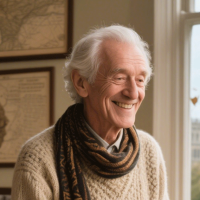
Study-Advice Overload Left Page One Untouched; One Tool Became a Test

When Study-Advice Overload Leaves Page One Untouched
I recognised the pattern immediately: a London undergraduate opens a seminar reading and somehow ends up comparing four note-taking systems, until the fear of wasting effort becomes another night of untouched coursework.
At 9:15 p.m. on a Tuesday, Maya (name changed for privacy) appeared in my video window from the small desk in her shared London flat. Three productivity videos were paused across the top of her laptop screen. A colour-coded weekly planner glowed beside them, while the seminar PDF she had meant to read was still open on page one.
A kettle clicked off in the kitchen behind her. The laptop fan sent warm air across her wrist, and she kept lifting that hand to switch tabs, drag another block across the planner, or straighten a pen she had not used. Her shoulders had crept towards her ears. Her jaw looked as if it were holding a door shut.
She had sat down intending to read six pages. Then one creator recommended handwritten notes, another insisted on questions in Notion, and a classmate posted an immaculate Anki deck. Starting without resolving those contradictions had felt less responsible than rebuilding the study plan. Forty minutes later, the system looked polished and the coursework had not moved.
To me, the strain resembled a browser with eighteen productivity tabs consuming all the memory required to run the original task. Every tab promised clarity. Together, they left the start button frozen.
“I somehow turn every study tip into another thing to organise,” Maya said. “If the methods conflict, how am I supposed to trust any of them? My planner looks productive, but my reading is still untouched.”
“I can see why planning gives you a brief sense of control,” I replied. “I am not going to call that laziness, and I am not going to tell you to ‘just start.’ Let us look at what makes beginning feel so risky, then draw a practical map through it. The aim is clarity, not a verdict on your discipline.”

Choosing a Map for a Loop, Not a Fate
I asked Maya to place both feet on the floor, take three ordinary breaths, and hold one question in mind: “Why does mixed study advice keep me planning instead of studying?” I shuffled slowly while she looked at the untouched PDF. The small ritual was not meant to summon certainty. It marked a transition from reacting to the problem to observing its structure.
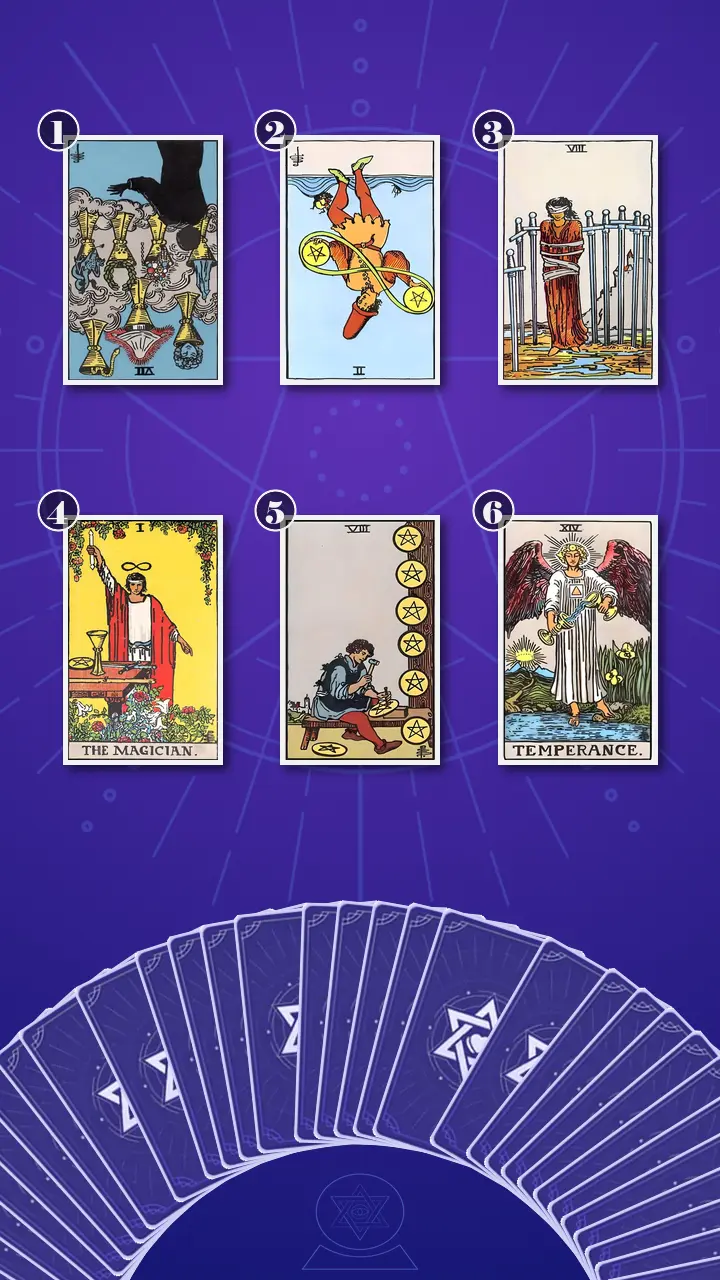
I chose the six-card Transformation Path Grid · Context Edition. I use this tarot spread for study-planning procrastination because the problem is not a simple choice between Anki and handwritten notes. It is a feedback loop: conflicting advice triggers comparison; comparison produces temporary relief; the study block disappears; the lack of completed work leaves no personal evidence; and that absence sends the student back for more advice.
The upper row would show the visible overload, the behaviour keeping it active, and the fear beneath it. The lower row would answer each of those cards with a catalyst, a repeatable practice, and an integrated routine. The fourth position, directly beneath the first, would be the pivot where diagnosis became reconstruction.
This is how tarot works in my practice. I do not use cards to predict grades or announce a fixed future. I use their images as an external cognitive map. Once a pattern is visible on the table, I can question it with the person sitting opposite me. The cards offer perspectives; the querent decides what is true, useful, and worth doing.
The Cloud of Other People’s Certainty
Position 1: When Options Become Orders
I turned over the card representing the observable symptom: Maya absorbs mixed study advice, sorts possibilities, and remains in planning instead of beginning the material. It was the Seven of Cups, reversed.
I pointed to the seven objects floating in a cloud while a still figure faced them without touching any. “At 9:15, these cups are your three paused productivity videos, the Notion template, the active-recall thread, the planner, and the untouched seminar PDF. Each one presents itself as a possible answer. Reversed, the abundance has stopped feeling optional. It has become an urgent demand to settle every contradiction before page one.”
The Water energy of the card was blocked by overaccumulation. Maya was not short of inspiration; she had absorbed so many possibilities that discernment had become another task. Her wish to make informed progress was being redirected into the pressure to identify which confident person online was objectively right.
“It is like staring at a streaming-service home screen for longer than it would take to watch an episode,” I said. “Except here, the cost is contact with your actual course material.”
Maya did not nod politely. She let out a short, bitter laugh and looked away from the cards. “That is so accurate it is almost cruel. I literally think, ‘If all these people sound certain, I need to work out who is right before I risk starting.’”
I let the laugh settle before answering. “The card is not accusing you. It is separating motivation from method overload. You did want to study. Your study session was redirected into an emergency sorting exercise.”
Position 2: The Juggling Loop That Drops the Work
I turned over the card representing the immediate behaviour sustaining the spiral: trying to coordinate several systems at once until the real study priority is dropped. It was the Two of Pentacles, reversed.
The two pentacles were linked by an infinity-shaped loop, while ships pitched on rough water behind the juggler. I described the modern version I had just watched on Maya’s screen: starting a Pomodoro, pausing it to transfer lecture notes into a cleaner format, opening Anki, moving tomorrow’s Google Calendar blocks, and returning to the timer while the practice set remained minimised in the background.
Reversed Earth showed an unstable priority. There was an excess of coordination and a deficiency of grounded completion. Every system demanded maintenance, so the task those systems were supposed to support fell outside the loop.
“I am doing so much, so why is nothing getting finished?” Maya said quietly.
“Because visible busyness and completed work are different forms of evidence,” I replied. “Your planner can look finished while your study evidence stays at zero. The activity is real, but it is not reaching the assignment.”
Her fingers stopped circling the rim of her mug. She glanced from the reversed juggler to the frozen timer app on her phone, then turned the phone face down.
Position 3: The Permission Screen Around an Ordinary Chapter
I turned over the card representing the psychological root beneath the procrastination: the fear that action taken without certainty will waste effort and expose a lack of control over progress. It was the Eight of Swords, upright.
I asked Maya to notice the blindfold and the loose bindings before looking at the surrounding swords. The figure was constrained, but the image did not show an inescapable prison. It showed a perspective narrowed by a rule that had begun to feel compulsory.
“Your version of that rule sounds like this,” I said. “‘I cannot responsibly begin this chapter until I decide whether to annotate, summarise, or turn it into questions. If I choose badly, I will waste the evening, and that will mean I cannot trust myself.’ The task is physically available. The certainty-before-action rule makes the first paragraph feel inaccessible.”
Here, Air energy had hardened into excess. Thought was no longer helping Maya distinguish between options; it was constructing an entry barrier around a task that could only provide useful information through contact.
I call this lens Research Bottleneck Analysis. On an excavation or in a long academic project, a blockage is not proof that the researcher has failed. It is a signal to identify which question actually needs answering. Maya’s bottleneck was not “Which study philosophy should govern my entire degree?” It was “What will help me engage with these next six pages tonight?”
“Certainty has become an entry requirement for a task that can only teach you through doing,” I told her.
Her breathing paused. Her eyes lost focus for a moment, as though she were replaying several evenings at once. Then her shoulders drew even higher before dropping with a slow exhale.
“That is the sentence,” she said. “Starting badly feels like proof I have lost control. Planning lets me postpone finding that out.”
“Yes,” I said. “And recognising that function allows us to respect what planning has been trying to protect without letting it consume every study block.”
When the Magician Put One Tool Within Reach
Position 4: The Antidote Beneath the Cloud
The room seemed to become quieter when I moved to the lower row. Rain traced the dark window behind Maya, and the screen full of floating tabs dimmed when she lowered the laptop lid slightly. I turned over the reading’s catalyst and key card: The Magician, upright.
This position supplied the interruption to planning stasis: selecting one available tool, defining one concrete output, and initiating a bounded experiment. On the Magician’s table, all four suit emblems were already within reach. The figure’s raised and lowered hands joined intention to material action. Directed Fire coordinated the other elements instead of waiting for one of them to become perfect.
In Maya’s life, the image was simple: close the advice tabs, place one reading and one note page in view, write “annotate pages 12-16,” and set a 25-minute timer. She did not have to declare the method correct. She only had to use one available tool long enough to produce a visible result.
At 9:15 p.m., the reading had remained on page one while three paused videos and a freshly colour-coded planner occupied the desk. Maya’s hands kept switching tabs because an imperfect choice felt riskier than losing another block. The Magician challenged that calculation.
I said, “You do not need the right study system before you begin; one bounded block of real work can give you evidence that another hour of comparison cannot.”
More planning is not proof that you are becoming ready; choose one tool already on the table, define one visible output, and follow the Magician's directed hand from intention into practice.
I left the sentence between us for several seconds.
For one beat, Maya’s breath stopped and her fingers remained suspended above the closed laptop, as though she had been caught halfway through opening another tab. Her pupils widened. Then her brow tightened, and the first response was not relief but anger. “But doesn’t that mean I’ve been doing this wrong for months?” she asked, her voice sharper than before. Her hand closed around the sleeve of her jumper, then slowly released it. The anger gave way to a wet brightness around her eyes, followed by a long breath that seemed to empty from somewhere below her ribs. Her shoulders lowered, but she looked briefly unsteady, as though losing the old rule had also removed a railing. I told her, “No. It means planning gave you protection when uncertainty felt unsafe. Now you can keep the useful part of planning and change when evaluation happens. You are responsible for the experiment, not for knowing its result in advance.”
I then asked, “Now, using this new view, can you think of a moment last week when this insight might have made the experience feel different?”
Maya remembered opening the same reading in the library. She had annotated one paragraph, felt unsure whether her notes were detailed enough, and abandoned the chapter to search “best annotation method for uni.”
“One completed page could have answered what ten more tabs could not,” she said.
That was the turn. I did not hear sudden certainty in her voice. I heard the beginning of permission. The method was becoming a tool rather than an authority.
I explained the shift through my Academic Stratigraphy lens. On an archaeological dig, newer material is not automatically truer than the layer beneath it, and I do not bulldoze an entire site every time a fresh object appears. I record the context, choose a bounded square, excavate carefully, and let evidence accumulate before revising the interpretation.
Maya’s lecturers, classmates, StudyTok creators, Reddit threads, and productivity videos were different layers of advice. Mixing every layer at once had destroyed the context she needed to learn from any of them. The Magician did not ask her to excavate the entire site of learning science before Tuesday’s seminar. It asked her to open one test square.
I named the emotional movement I could see beginning: from overloaded confusion and certainty-seeking procrastination towards grounded confidence based on completed study work and personal evidence. It was not confidence as a prerequisite. It was confidence as an outcome of contact.
Position 5: The Eight That Builds Instead of Encloses
I turned over the card representing the practical action that would stabilise the shift: completing one defined unit, repeating it, and recording evidence before changing methods. It was the Eight of Pentacles, upright.
The craftsperson worked on one pentacle while completed pieces remained displayed nearby. I placed this card beside the Eight of Swords. The same number now carried a different form of structure. In the first Eight, thoughts had stood around Maya like an enclosure. In the second, tangible units of work accumulated in front of her.
This was balanced Earth energy: not perfect consistency, but deliberate contact with one piece at a time. In modern study life, the pentacles became pages annotated, questions attempted, flashcards retrieved, or a paragraph drafted. Maya would evaluate a method only after applying it to real material across several bounded blocks.
“Maybe I do not have to rate the method yet,” Maya said. “I only have to see what happens when I use it.”
“Exactly. Review after evidence, not before contact,” I replied. “Repetition is not a demand that you perform flawlessly. It is how you gather information.”
She picked up her pen and wrote “pages 12-16” on a small card. The movement was almost ordinary, which was precisely why it mattered.
Position 6: Two Cups, No Winner Required
I turned over the final card, representing cognitive integration rather than a predicted outcome: building a sustainable personal method by reviewing completed work and selectively blending only what helps. It was Temperance, upright.
Water flowed in a measured stream between two cups. One foot rested on land and the other in water. I read this as balanced integration: practical evidence held alongside felt sustainability, with neither rigid productivity nor immediate comfort allowed to dominate the whole routine.
In Maya’s week, Temperance looked like a 10-minute Friday review with three headings: keep, adjust, and park. She might keep flashcards if they improved recall, adjust a timer that interrupted concentration, and leave an attractive Notion system unused. No creator had to lose. No method had to win.
“I do not need to adopt someone’s whole study identity just because one part of their method helps,” Maya said.
“Correct,” I replied. “Advice can remain available without becoming an order. Temperance is selective calibration, not allegiance. It lets completed work decide what enters your routine.”
Her posture softened. Behind her, the rain continued down the window, but it no longer looked like static on the glass. The separate lines had become visible.
The One-Tool Evidence Block
I drew the cards into one coherent account. Mixed advice had created a cloud of equally urgent possibilities. Maya responded by juggling systems, because maintaining them offered quick relief from the vulnerability of beginning. That activity left no completed work, so the fear beneath it hardened into a rule: certainty must arrive before effort can count. Yet the lower row showed resources already present. Focused agency could start one experiment, repeated practice could generate evidence, and measured review could turn outside advice into optional ingredients.
The cognitive blind spot was subtle: Maya had been treating the relief of reorganising as evidence that she was becoming more prepared. She had also been comparing her unfinished experiments with classmates’ polished results and treating their confidence as proof of authority. Neither feeling could reveal whether a method helped her learn. Only contact with her own coursework could do that.
The transformation direction was therefore specific. She did not need to become less thoughtful or stop seeking guidance. She needed to move evaluation to the other side of action: test one adequate method in a daily 25-minute block, observe completed work, and adjust from evidence.
I adapted my Thesis Stratigraphy Framework, normally used to clear intellectual clutter from an essay, into three small study practices. Each one preserved structure without turning structure into another excavation that never reached the material.
- Open One Study Stratum At the start of the next desk or library session, write one visible output on an index card or at the top of the document, such as “annotate pages 12-16” or “attempt questions 1-3.” Close productivity tabs, place one course item and one existing tool in view, send new tips to an “Advice Parking Lot” note, and work for 25 minutes. Treat the choice as valid for one block, not as a verdict on the term. The minimum version is five minutes, one paragraph, or one attempted question. Adapt or stop for fatigue, disability access needs, health, or an urgent deadline.
- Freeze the Method, Not Your Life Use the same adequate method for one daily 25-minute block across seven days, or for the next three available study days if that is more realistic. After each block, record only four items in a phone note or paper table: task, visible output, what helped, and what obstructed. Keep the log to one or two lines so tracking cannot become another planning project. If a day is missed, continue with the next available block instead of resetting the experiment.
- Run the Keep-Adjust-Park Review On Friday, after at least three real blocks, set a 10-minute timer. Keep one element that supported completed work, adjust one obstacle, and park everything else for another week. If the repeated obstacle concerns the assignment itself, ask a lecturer, tutor, or study-support service one task-specific question. Change only one variable. The minimum review is one sentence: “Keep X; adjust Y.” Saved advice carries no obligation to be used.
“These are experiments, not commandments,” I told Maya. “You own the timer, the method, the stopping point, and the interpretation of the results. The cards have helped us expose the loop. They do not get to run your week.”

A Week Later, Page Sixteen
Six days later, Maya sent me a message. She had completed four evidence blocks with the same basic annotation method. The first had felt awkward. The second produced three useful seminar questions. By the fourth, the PDF had moved from page one to page sixteen, and she had stopped counting attractive templates as unfinished obligations.
A classmate had posted a polished Goodnotes setup halfway through the week. Maya saved it to the Advice Parking Lot and returned to the paragraph in front of her. She had not proved that her method was universally best. She had gathered enough evidence to know that it was adequate for the current reading.
She slept through the night after finishing the seminar notes, then woke with the familiar thought, “What if I chose wrong?” This time she smiled, checked the completed pages, and made tea.
I did not regard that message as proof that tarot had solved her academic life. The quiet proof belonged to Maya: she had chosen a bounded action while uncertainty was still present. The six-card Transformation Path Grid had made the structure visible, but she had redirected the circuit herself.
I thought again of the Magician’s table and of a carefully recorded trench. Clarity had not arrived as one perfect system descending from an external authority. It had emerged through one tool, one defined square of work, and enough direct evidence to make the next adjustment her own.
If tonight your reading is open while your hands keep rebuilding the plan, I hope you notice what your tight jaw may be holding: both the wish to move forward and the fear that one imperfect method could make your effort count for nothing. Noticing that tension already gives you a choice the loop would rather keep invisible. The Magician’s table does not demand certainty; it asks which available tool belongs to the next visible job.
If certainty did not have to arrive first, what tiny piece of real coursework would you feel curious to place on that one-tool table and test with one adequate method today?