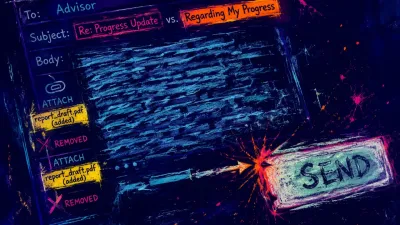
Opening the Portal for Ten Minutes: From Shame to One Next Task
The Shame-to-Avoidance Loop Behind One Missed Deadline
You are a Toronto undergraduate who opens the course portal after dinner, sees one overdue label, and suddenly reorganizes your notes instead of reading the recovery instructions: that is the shame-to-avoidance loop behind academic procrastination.
I am Alison Melody, and I met Jordan (name changed for privacy) at my reading table on a Sunday evening. At 8:12 PM, I watched them open the course portal on a laptop, find the overdue label beside the unfinished assignment, and hold their warm phone just above the trackpad. The fluorescent kitchen light buzzed overhead; cold coffee sat untouched beside the laptop while short videos began playing in the next tab.
'I missed one window and now every task feels like proof that I missed my chance,' Jordan said. I heard the central contradiction clearly: they wanted to return to the coursework and repair what was still possible, but feared that the missed window had made starting pointless. Three other assignments were approaching, yet the late notice had become the only item their attention would replay.
The shame was not an abstract label in that room. It tightened Jordan's chest, lifted their shoulders toward their ears, and sent their restless hands searching for the phone whenever the portal came into view. I told them, 'I believe the pressure is real, and we do not have to turn it into a prediction. Let us map what is known, what is assumed, and what small piece of work can bring you back into contact with the course. That is our Journey to Clarity today.'

Choosing a Map for a Loop
I invited Jordan to take three slow breaths and focus on one plain question: what remains possible after the missed deadline? I shuffled slowly, using the motion as a practical transition from replaying the past to observing the present. The cards were not a verdict, and the shuffle was not a promise of a particular grade; it was a way to give the pattern a visible shape.
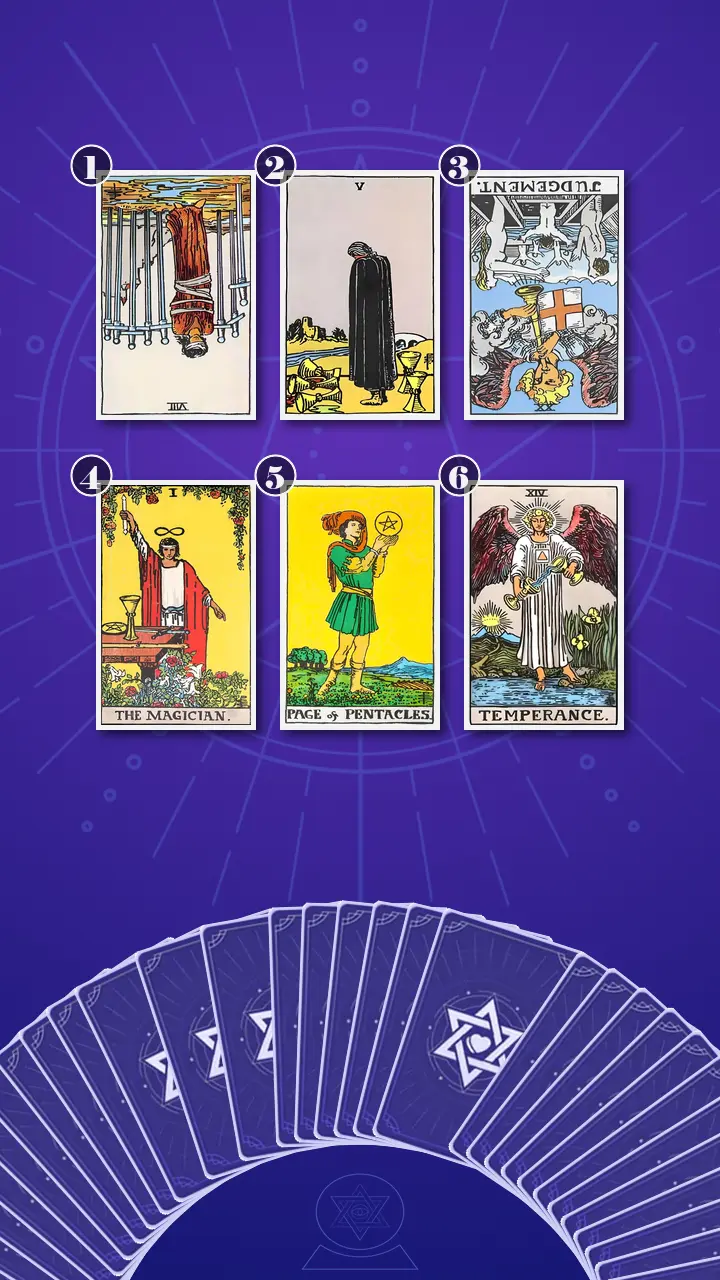
For this reading, I chose the Transformation Path Grid (6) - Context Edition. I explained that this six-position tarot spread is designed for a self-reinforcing cycle rather than a choice between two external options. It follows the chain from observable behaviour, to the emotional and cognitive blockage, to the root pattern, then toward a catalyst, a practical response, and an integrated rhythm. That is why it fits questions about academic procrastination after missing a deadline and about course-portal avoidance without pretending tarot can predict an academic result.
I told Jordan, and anyone reading along, that the first three cards would show how the loop was maintained. The lower-left card would identify the smallest accessible source of agency, the next would turn that agency into a practical coursework action, and the final card would show how accountability, recovery, and study could be held together. In other words, I would read card meanings in context, not as fixed labels detached from real life.
The First Three Notes of the Loop
The Portal and the Bound Hands
I began with the position whose role was Current state: show the observable post-deadline behavior, especially avoiding the course portal and treating the missed window as a closed door. I turned over The Eight of Swords, in reversed position.
In the card, the blindfolded figure and crossed bindings made Jordan's laptop scene almost literal. The Toronto course portal remained open, but they kept the phone in hand and treated the thought that nothing could be done after the deadline as if it were a confirmed course policy. The swords formed a narrow mental enclosure: not an actual locked door, but a story that felt solid because it had not been tested.
Reversed Air showed a blockage beginning to loosen, not a magical escape from consequences. The excess was assumption and mental replay; the deficiency was direct contact with the instructions. I said, 'A missed deadline is a fact; nothing useful can happen now is a conclusion. What is one restriction the course actually states, and what is one consequence your fear is currently filling in?'
Jordan gave a short, bitter laugh instead of nodding. 'Damn, this is exactly what I do. I open the portal, feel my chest tighten, and suddenly reorganizing my notes seems urgent.' I did not treat the laugh as resistance. I heard recognition in it, and I answered, 'Then we have found the first useful fact: the avoidance is doing a job. It gives you a few minutes without the shame, but it also keeps the real information out of reach.'
The Three Spilled Cups, and the Two Still Standing
I moved to the position whose role was Blocking loop: reveal how Missed Window Fixation keeps attention on the lost deadline and makes procrastination feel temporarily protective. I turned over The Five of Cups, in upright position.
This card showed me Jordan at 11:36 PM in a Robarts Library study area, rereading the late-submission notice for the fifth time while the syllabus, calendar, and unfinished readings sat behind the active screen. The three spilled cups were the missed submission and its imagined fallout. The two upright cups were the course materials, possible questions, and remaining actions that regret had pushed outside the frame.
Upright Water was concentrated in loss. Its energy was excessive in one direction and deficient in attention toward usable resources. I said, 'Your brain knows the deadline is gone, but it is treating that fact as if everything else disappeared too. The late notice is at the top of the inbox, so every other option feels like background noise. What two cups are still standing, even if they are not the cups you wanted?'
Jordan's thumb stopped over the phone. Their gaze moved from the card to the closed syllabus tab, then to the calendar. For several seconds, their expression stayed fixed, as though the answer might be another accusation. Then they said, 'The course instructions are still there, and I could ask what the next available piece is.' Their shoulders did not fully relax, but their hand moved away from the short-video app.
The Inner Courtroom Behind the Inbox
I placed the third card in the position whose role was Root pattern: expose the self-judgment and underlying fear that turn one missed deadline into a statement about personal worth and maintain avoidance. The card was Judgement, in reversed position.
Judgement normally calls a person to review what happened, answer honestly, and rise into a new phase. Reversed, the trumpet sounded like an inner courtroom. In Jordan's modern version, the instructor email or portal notice became a final verdict on ability and reliability. They drafted three versions of an apology, deleted each one, and waited for an explanation perfect enough to defend the whole person rather than a short message clear enough to ask for information.
This was a blockage in the call to respond. Accountability was available, but condemnation had become louder than it. I said, 'The missed deadline may need to be acknowledged. It does not need to become a global judgment about your intelligence, your future, or your worth. If you ask what is still possible, what are you afraid the answer will prove?'
Jordan's breath paused, and their thumb hovered over an unsent draft. Their eyes lost focus as if replaying the exact moment the deadline passed and the imagined instructor reply that followed. Then they released a long breath and said, 'If I ask what I can still do, they might confirm the version of me I am afraid is true.' I replied, 'That is the inner courtroom. We can separate a factual account of one event from the sentence you are trying to pass on yourself.'
When The Magician Opened His Hands
The Table with Four Tools
The air changed when I reached for the lower-left card. The fluorescent buzz seemed to recede, and the rain against the window became clearer. We had reached the visual hinge between the compressed diagnostic row and the open path below.
The position was Key trigger: identify the smallest accessible source of agency that can interrupt the loop without requiring every consequence to be resolved first. The card was The Magician, in upright position. Its strategic role was Bridge: the point where attention could cross from regret and self-judgment into deliberate use of what was already available.
The Magician's open receiving hand and raised wand brought the modern scene into focus. I pictured Jordan placing the course page, notes, calendar, and an email draft side by side, then choosing one tool instead of searching for a perfect academic comeback plan. The four suit tools represented thought, communication, effort, and practical course information already within reach. The infinity symbol above the figure did not mean endless success; to me, it suggested a repeatable relationship with the next task.
Here I used my signature diagnostic lens, Cognitive Tempo Calibration. After ten years of studying sound energy, I have learned to ask whether the demand of a task is running at a punishing tempo compared with the person's workable rhythm. Jordan was not simply waiting for motivation. The imagined task was restore the whole missed window, repair every consequence, and prove capability in one burst. That tempo was too loud to enter.
I then ran my Focus Disruption Auditing over the scene. The dissonant chords were specific: the overdue badge, the warm phone, the imagined instructor reply, the class group chat, and the belief that every first attempt had to explain everything. Once named, they became adjustable conditions rather than mysterious evidence of incapability.
Before I turned over the lower-left card, I asked Jordan to picture Tuesday at 8:47 PM on the red-line train home. Their phone was warm, the late notice open, and the assignment tab sat beside short videos. Tomorrow kept promising a proper restart, while the train carried the same untested conclusion forward.
The missed deadline is not a reason to keep your hands off the work; place the tools already on The Magician's table in front of you and begin with the next visible task.
I let the sentence rest between us, then added:
You do not need to restore the missed window before you begin. The next honest step can start with the tools already in reach, even while the shame is still present.
Jordan's thumb froze above the screen and their breath stopped halfway in. Their eyes widened, then their gaze slipped past the card, replaying the overdue label, the unopened instructions, and the drafts that had never left the inbox. Their hands tightened in their lap before slowly opening. A small, shaky 'oh' came from the chest rather than the head. The shoulders lowered, but not into certainty. Jordan placed the phone face down and stared at the four objects I had named: portal, notes, calendar, email draft. For a few seconds, the new path was almost too plain to trust. Their mouth tightened again. 'But does this mean I was wrong to wait this long?' they asked. I answered, 'It means waiting protected you for a few minutes and cost you information. We can name both without turning either into a verdict.' I slid a note across the table: set a 10-minute timer, write one confirmed fact and one unanswered question, choose the smallest visible task, and stop when the timer ends or sooner if it feels too activating. Then I asked, 'Now, use this new perspective to think back to last week: was there a moment when this insight could have made things feel different?'
This was the first clear movement from shame-driven avoidance and self-judgment to grounded agency, clearer course information, and sustainable coursework practice. The change was not confidence arriving on command. It was the recognition that agency could begin before every consequence was resolved.
The Pentacle at Eye Level
Entering Study Mode, Not Comeback Mode
I turned to the position whose role was Action plan: translate the transformation into one practical study behavior that lets Jordan re-enter the coursework through a manageable task. I revealed The Page of Pentacles, in upright position.
The Page held the pentacle at eye level with careful attention. I connected it to Thursday at 3:24 PM in a campus cafe, where Jordan opened one reading section, reached a confusing instruction after six minutes, and immediately started redesigning a Notion dashboard. The laptop fan hummed, milk steamed behind the counter, and their fingers tapped the desk while an imagined all-night catch-up session promised to erase the discomfort.
Earth was steady here. The card did not ask Jordan to feel inspired or to demonstrate that the entire term could be rescued. It asked them to handle one real piece of material like a learner: one reading section, one problem, one paragraph outline, or one citation check. I said, 'A small task is not a smaller version of your ability. It is evidence that you can make contact with the work without requiring the whole story to be fixed first.'
Jordan opened the reading instead of the planner. When the confusing instruction appeared, they did not reach for Notion immediately. Their hand hovered, then moved to write a question in the margin. It was a modest movement, but it had the quiet texture of someone practicing trust rather than performing a comeback.
The Two Cups of a Sustainable Return
Work, Information, and a Real Stopping Point
The final position was Integration: show the mindset and rhythm that can hold accountability, emotional processing, and continued coursework together after the first re-entry step. I turned over Temperance, in upright position.
The angel pouring between two cups gave me the clearest image for Jordan's next rhythm. One cup held honest review of the missed deadline; the other held practical coursework. The path toward the distant light was not a sprint. It was a series of measured pours: a short study block, one confirmed course check, a deliberate break, and another return on a later day.
Temperance brought balance rather than erasure. It softened the all-or-nothing demand to compensate with an all-night session and offered a sustainable study rhythm instead. The missed deadline could remain part of the record while no longer controlling every next choice. I asked, 'What rhythm could hold the difficult fact, the next task, and a stopping point in the same week?'
Jordan wrote down two 15-minute windows and underlined the stopping times. 'I still hate that I missed it,' they said. 'But I do not have to hate myself for the next fifteen minutes.' I watched their shoulders settle into the chair. The feeling was not bright certainty; it was a workable kind of steadiness, with room for doubt and room to continue.
Finding Clarity at a Workable Desk
I read the six cards as a chain, not as a sentence of fate. The reversed Eight of Swords showed how an unverified conclusion became a locked door. The Five of Cups showed regret selecting the lost deadline as the only meaningful fact. Reversed Judgement revealed why a simple instructor message felt like an inner trial. Then The Magician gathered the tools, the Page of Pentacles made the next action tangible, and Temperance gave that action a rhythm it could survive.
The core contradiction was not a lack of care. It was the wish to repair the missed deadline colliding with the fear that beginning late would expose failure. The cognitive blind spot was treating a perfect recovery plan, or a feeling of readiness, as a prerequisite for obtaining basic information. I named the direction of change plainly: replace the rule that the missed deadline must be repaired before work can restart with one 15-minute re-entry action that separates confirmed facts from assumptions.
This is how tarot works in a grounded reading. The cards give me a visual language for attention, avoidance, regret, and available resources. They do not decide whether an instructor grants an extension or what grade appears later. Jordan remains the person who chooses what to ask, what to attempt, what support to use, and when to pause. The spread simply made the next choice easier to see.
Three Small Beats for Re-entry
I translated the lower row into a version of my Syncopated Study Session, a rhythm protocol that breaks an overwhelming academic task into harmonious, frictionless micro-beats. The aim was not to force a dramatic reset. It was to lower the volume of the first action while keeping Jordan in charge of the pace.
- The One-Tool Re-entryAt a chosen time this week, sit at a desk or in the library, open the course portal, and set a 10-minute timer. Write two headings, Confirmed facts and Questions I still have. Copy only what the portal or syllabus explicitly states, then take one visible physical action, such as opening the rubric, downloading the reading, or naming the document.Use the course page plus one action only. Stop when the timer ends, or sooner if the exercise feels too activating; leaving the portal is an allowed choice, not a failure.
- The Two-Sentence Recovery MessageThis week, send the instructor a message through the course email or portal with the subject Coursework options after missed deadline. Write one factual sentence acknowledging the missed coursework and one direct question about the next available assignment or recovery step.Read the message once for clarity, remove any paragraph trying to prove your worth, and add a calendar note for the day you will check for a response instead of refreshing the inbox.
- The Syncopated Study SessionChoose two specific 15-minute windows this week at your desk, in a campus cafe, or in the library. For each window, complete one bounded item, such as one reading section, one problem, one paragraph outline, or one citation check. Record what was completed and the next visible task.Define the stopping point before you start. Take a real break afterward and decide later whether another short beat belongs on the schedule; the routine is an experiment, not a test of character.

A Quiet Proof, Not a Perfect Comeback
Four days later, I received Jordan's message: 'I did the ten-minute version, sent the question, and outlined one paragraph. I still woke up thinking, What if I am wrong? Then I opened the reading anyway.' Morning light filled the room; doubt remained, but it no longer held the laptop shut.
The late submission still needed a response, and I never promised that a spread could change an academic policy. What changed was the relationship to the unknown. Jordan had used the cards as an objective reflection tool, then used their own judgment to check facts, ask a clear question, and complete one manageable piece of coursework. The cards did not take over the decision. The querent reclaimed authorship of the next one.
When one missed deadline leaves your chest tight and your hands reaching for your phone, it can feel safer to protect your worth by never looking closely again, even while another part of you still wants to return to the work. If the missed deadline could remain one difficult fact rather than the whole story, what is the smallest piece of coursework or information you might feel curious enough to place on your own Magician's table next?