On Academic Probation, Closing the Grade Calculator to Draft 172 Words

The 11:40 p.m. Portal: Productive Procrastination on Academic Probation
I have learned to recognize shame-driven productive procrastination before a student names it. If you are a Toronto undergraduate on academic probation who can build an immaculate Notion recovery dashboard but cannot open the overdue essay beside the warning notice, you may be caught in productive procrastination rather than a lack of concern.
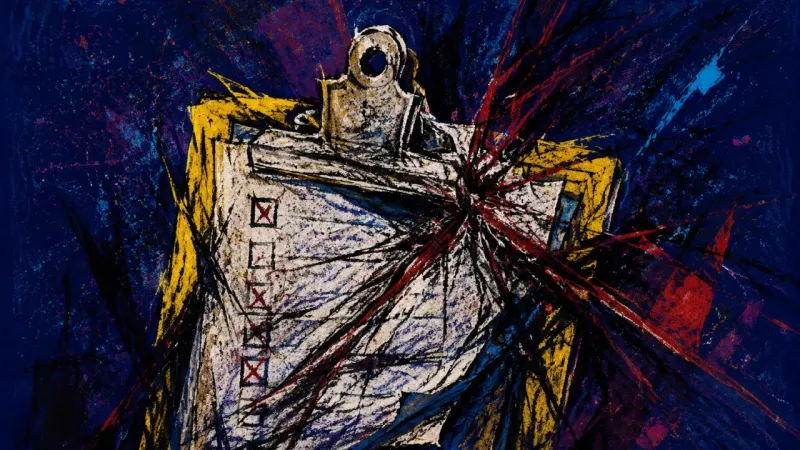
Maya (name changed for privacy) sat across from me at 11:40 p.m. on a Tuesday, her academic-probation email open beside an unfinished essay. I watched blue portal light dry her eyes while the laptop fan hummed; her cold tea waited near the keyboard as her fingers moved from the colour-coded planner to a grade calculator, then to a YouTube study-strategy video. She rewrote the essay title twice without adding a full paragraph.
She looked at the screen and said, 'Why do I keep delaying work while academic probation hangs over me?' Then she gave me the sentence underneath that question: 'I keep making plans for the person I think I should be.' The work needed to improve her standing was directly in front of her, yet beginning felt as if it might expose how far behind she was and confirm that she could not recover.
I saw her dread as an avalanche pressing against her ribs. Her hands kept moving because stillness would bring her face-to-face with the first unfinished task. I did not read that pattern as laziness. I saw care being rerouted into preparation, comparison, and self-protection.
I told her about my years on Wall Street, where uncertainty could make a quiet room feel heavier than a crowded trading floor. 'We will not use the cards to predict whether you pass or fail,' I said. 'We will use them to separate what is documented from what shame is adding, then find one next action you can actually test. Let us draw a map through the fog, one visible piece at a time.'
Choosing a Ladder Instead of a Verdict
I asked Maya to place her phone face down, take one slow breath, and name the question without trying to solve the entire semester. I shuffled slowly while she kept one hand on the edge of the table. The preparation was a change of attention, not a supernatural requirement: a short bridge from threat-scanning to deliberate observation.
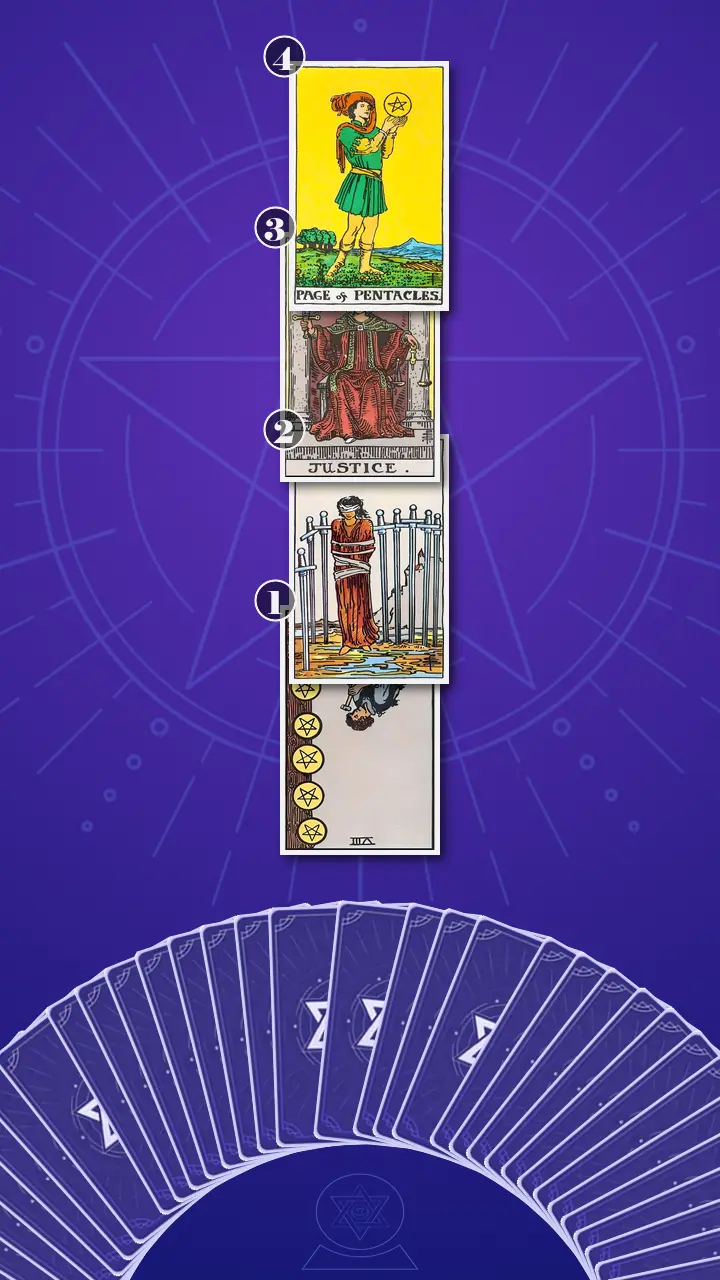
For this reading, I used the Four-Layer Insight Ladder. This is how tarot works in this session: the cards provide a structured way to examine observable behaviour, hidden interpretations, a clarifying principle, and a practical experiment. A Celtic Cross would add more environmental and temporal detail than this focused why-question needs. The ladder keeps the card meanings in context and preserves a direct path from the problem to actionable advice.
The bottom position would show the observable procrastination pattern: the planning, checking, reorganizing, and restarting that replaced assignment completion. Above it, the root position would reveal the belief that beginning might confirm academic failure and diminished worth. The third position would identify the transformation principle, and the top position would turn that principle into a bounded learner action. I told Maya that the cards would not issue a sentence about her identity; they would help us inspect the structure around one difficult task.
Reading the Work Beneath the Work
Position 1: The Workbench That Never Produces a Draft
Now I turn over the card representing the observable procrastination pattern: replacing assignment completion with planning, checking, reorganizing, and restarting while academic probation remains visible.
The card is the Eight of Pentacles, in reversed position.
In its upright form, this is the craftsperson returning to the workbench, repeating a skill until effort becomes competence. Reversed, that earth energy is blocked. The bench stays busy, but the row of finished pentacles stops growing. In Maya's life, the laptop setup, planner, grade calculator, and study video had become a convincing imitation of study while the submission itself remained unfinished.
I connected the card directly to the scene she had described. At 11:40 p.m., she had the essay, probation email, planner, grade calculator, and video open at once. She changed priorities, rewrote the title, and polished the first sentence until it sounded safe, but she never completed the paragraph or moved the document closer to submission. The energy was not absent; it was scattered across preparation and restarting.
'The problem is not that you do not care,' I said. 'Care has been rerouted into preparation. A plan can lower panic without moving the assignment.' I asked her to compare the visible activity with the evidence it produced: no full paragraph, no submitted component, and no clearer answer from the institution.
Maya did not nod. She gave a short, bitter laugh and rubbed the rim of her cold tea with one finger. 'That is a little too accurate,' she said. I invited her to finish the sentence she had been living inside: 'I care so much that I keep preparing, but preparing lets me avoid finding out what this draft can actually become.' Her hands went still for the first time that evening. The recognition was uncomfortable, but it did not require me to call her lazy.
Position 2: The Browser Tabs Around One Unopened Document
Now I turn over the card representing the limiting belief and underlying fear that beginning the work may confirm academic failure and diminished personal worth.
The card is the Eight of Swords, in upright position.
The blindfold, the loose bindings, and the gaps between the swords show a mind whose available movement has become difficult to see. I did not use the card to claim that Maya's academic constraints were imaginary. The academic-probation notice, missed deadlines, and low grades were real. The blockage was the way fearful predictions had made every available move look unsafe.
I brought in the 8:12 a.m. TTC scene she had told me about. She had opened the probation message on a crowded train, then switched to the grade calculator before the assignment finished loading. The carriage had screeched into the next station, damp coats had brushed her sleeve, and her phone had grown hot in her palm. Around one unopened document, I could see the modern swords: browser tabs containing grade calculations, probation policies, peer internship updates, Reddit searches, and catastrophic outcomes.
'If I start and it goes badly, then it means I was never capable of recovering,' she said. I placed the sentence beside the card. 'That is a prediction,' I replied. 'It may feel immediate, but it is not the same thing as a documented requirement. The question is not whether there are consequences. The question is which consequences are written down, which options have not been checked, and what your mind has added before you look.'
I watched her press two fingers against the centre of her chest. Her breath shortened, and her eyes moved from the card to the red overdue badge she had left open on her laptop. She became quiet, as if the feared verdict had suddenly grown larger than the assignment itself. I let the silence stay long enough for the distinction to reach her without turning it into another demand.
When Justice Took the Sword Out of the Fence
Position 3: The Scale Between Fact and Shame
The room changed when I reached the third card. The laptop fan softened, and the red warning badge on the screen seemed less like a flashing alarm and more like one piece of information waiting to be read.
Now I turn over the card representing the key shift from shame-based self-judgment to factual, proportionate accountability about academic standing and available actions.
The card is Justice, in upright position. Its strategic role in this reading is the antidote. Its invoked energy is clear-eyed accountability without self-condemnation.
Justice brings the level scales and upright sword into a situation where Maya had been using every result as evidence for the prosecution. The transformation was not to ignore academic probation, soften its requirements, or pretend that missed work had no cost. It was to separate current standing, consequences, and available actions from the identity sentence shame had attached to them.
I showed her the modern translation of the card: one plain note divided into three headings, documented facts, fear predictions, and next accountable action. Under documented facts, she could write the exact probation condition, nearest deadline, completed credits, and source date. Under fear predictions, she could place I am permanently incapable and everyone will know I do not belong here. Under next accountable action, she could write one question for an academic adviser or instructor.
This is where I use one of my signature lenses, Academic ROI Auditing. I asked Maya to evaluate each behaviour by its strategic yield, not by how busy or reassuring it felt. Recolouring a Notion dashboard might return ten minutes of relief, but no submission evidence. Checking one official standing page for ten minutes and recording the source could return accurate information. Sending one precise adviser question could return a fact capable of changing the plan. I was not reducing education to a spreadsheet. I was protecting scarce attention from actions that only made fear quieter.
At 11:40 p.m., the probation email sat beside the essay while she recoloured the planner, checked the grade calculator, and rewrote the title. Her hands stayed busy, but the paragraph that could become a submission remained untouched.
Academic probation is not a final verdict on who you are; separate evidence from shame, choose one proportionate action, and let Justice's scales measure the situation instead of your worth.
I left the sentence between us for a moment. Then I gave her the line I wanted her to keep visible: Academic standing is a status, not an identity. Let the facts size your next step instead of letting shame size your worth.
For one beat, Maya's fingers hovered above the phone and her breath stopped. Her eyes fixed on the upright sword; her pupils seemed to widen before her gaze slipped past the card, as if she were replaying every late-night calculation and every avoided email. She drew her shoulders up, then let them fall a fraction. 'But does not that mean I was wrong about everything?' she asked, with anger arriving before the tears. I told her no: the missed work had consequences, and the facts still deserved action, but shame had added a sentence the institution had not written. Her mouth tightened; she rubbed her thumb across one knuckle, then released it. A long breath moved out of her chest, rough at first and quieter at the end. The blank note on my desk no longer looked like an accusation to her. It looked usable. I watched her write, 'This part is real. This part is what I am predicting. This is the question I can verify.' Her eyes reddened, but her voice steadied. I asked, 'Now, use this new perspective to think back to last week: was there a moment when this insight might have let you feel differently?'
That was the first credible movement from shame-driven study paralysis toward clear-eyed accountability. It did not promise a particular grade or erase the work ahead. It made the workload smaller without making the stakes unreal, which is often what genuine clarity does first.
One Learner, One Pentacle
Position 4: The First Visible Artifact
Now I turn over the card representing the practical next step: focus on one submission-linked task, complete a workable pass, and ask one specific academic question.
The card is the Page of Pentacles, in upright position.
The Page does not perform mastery. The Page studies one pentacle with both hands, giving one object a sustained gaze while the cultivated field and distant mountain remain in view. The energy here is balanced earth: grounded attention, practical curiosity, and competence built through repeatable effort.
I connected that image to a one-tab study scene. Maya could close the grade calculator and Notion, open one assignment, and choose one concrete academic object: 150 rough words, two attempted problem-set questions, or one annotated reading section. The 25-minute block would not be a complete academic comeback. It would be a visible artifact that could be saved, submitted if appropriate, or used to form one specific instructor question.
'You do not need to feel confident to complete one bounded pass,' I said. 'You only need to act like a learner for this block. Let the next submission be evidence, not a verdict.'
Maya's shoulders lowered. She closed one browser tab, then another, until the assignment was the only document on the screen. 'I can imagine ten minutes more easily than I can imagine recovering everything,' she said. I told her that was enough for a low-energy day. A smaller start was not a smaller life; it was a more honest unit of contact with the work.
From the Grade Calculator to One Visible Next Step
When I placed the four cards together, the answer to Maya's why-question became clear. The reversed Eight of Pentacles showed concrete concern turned into setup, restarting, and withheld work. The Eight of Swords showed the mental fence beneath it: if the first attempt went badly, Maya feared it would reveal something permanent about her worth. Justice did not remove the consequences. It gave her a way to measure them accurately. The Page of Pentacles returned the energy to one paragraph, one problem, one question, and one bounded block.
The paired eights mattered to me. Maya did not lack persistence; much of her persistence had been invested in checking, planning, calculating, and rehearsing failure. Earth had become scattered, then air had become enclosing. Justice redirected thought toward evidence, and the Page gave that clarity somewhere physical to go. There were no Cups or Wands in the spread, so I did not wait for inspiration or assume that emotion would resolve itself. I added compassion consciously and built activation through structure.
The cognitive blind spot was not simply I procrastinate. It was the belief that a perfect recovery plan could keep her from discovering the imperfect state of the current work. Planning offered immediate relief, but it also protected the fear from being tested. The key shift was to stop waiting for a flawless academic comeback and complete one 25-minute, submission-linked work block, followed by an accurate check of the actual requirements with an appropriate campus contact.
I also introduced my Research Sunk-Cost Audit, a decision framework I developed for stalled academic projects. I asked three questions: What has already been spent? What will continuing this exact method probably produce? What small pivot could create better evidence? For Maya, the sunk cost was not a reason to abandon her degree. It was a reason to stop investing more hours in planner redesign, grade calculations, and late-night searches that produced no academic artifact. The pivot was modest: one ten-minute fact check, one clear question, and one bounded work block.
Then I used Institutional Resource Leverage to reframe the adviser conversation. An instructor, academic adviser, office-hours appointment, or designated campus support contact was not a courtroom waiting to confirm her failure. It was existing infrastructure that could provide current policy information. Proactive contact was not an admission of defeat. It was a way to manage the resources already available to her while keeping control over how much personal context she disclosed.
I gave Maya two next steps. I kept them small enough to begin before confidence arrived and concrete enough to produce evidence.
- The Facts-Not-Verdicts CheckOn the next weekday afternoon, at a library desk or quiet kitchen table, open a plain phone note with three headings: documented facts, fear predictions, and next accountable action. Spend ten minutes checking one official academic-standing page or the latest institutional message. Record the exact requirement, nearest deadline, and source date, then send one concise question to an instructor, academic adviser, or designated campus contact.Cap the review at one source and one question so it does not become another research project. The minimum version is one documented fact and one saved message draft. You can ask for clarification without guaranteeing an outcome or disclosing more than you choose.
- The Submission-Linked 25At your usual study spot, close Notion and the grade calculator, keep one assignment document open, and set a 25-minute timer. Work on one real submission-linked component, such as 150 rough words, two attempted problems, or one annotated reading section. When the timer ends, save what exists in the assignment file and write one next visible action.Define success as an artifact, not polished quality. On a low-energy day, use the ten-minute version with one sentence or one problem. You may stop when the timer ends; continuing is optional, and asking one specific instructor question is a valid next step.
I watched Maya copy the two labels into her note. The task was no longer a demand to prove that she belonged at university. It was a small experiment in factual accountability and cautious learner self-trust.

The First Quiet Proof
Four days later, I received a message from Maya while I was walking past a coffee shop on Queen Street. She wrote, 'I did the facts note. The requirement was different from the story in my head, and I emailed my adviser one question. Then I did the 25 minutes and saved 172 rough words. They are not good yet, but they exist in the submission document.'
No grade had magically changed, and her academic standing had not been solved by one evening. But the evidence had changed. She had replaced an hour of preparation with a question that could be answered and a piece of work that could be reviewed.
That night, Maya slept a full night. In the morning, the familiar question still arrived, 'What if I am wrong?' She opened the note anyway, smiled once, and wrote the next accountable action.
I told her that our Journey to Clarity had not produced certainty. It had produced proportion. The portal could show her current standing, the cards could help her examine the pattern, and the next decision still belonged to her. She was no longer asking the tarot to decide whether she deserved to recover. She was using it to notice what was true, choose what was verifiable, and return to the work as a learner.
When the portal opens and your chest tightens, it can feel as though the first imperfect paragraph will answer a much bigger question about whether you deserve to be here.
If the next piece of work only had to be one learner's honest next step, what small part would you be willing to place in front of you first?