When 'More Research' Became Protection: Writing Before Certainty
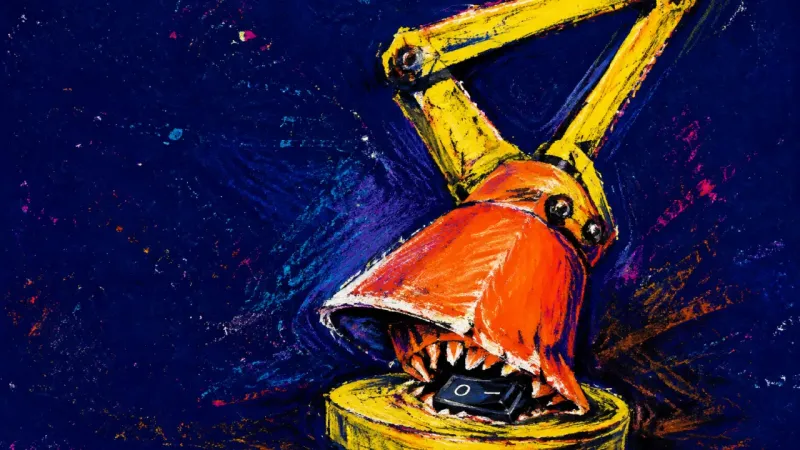
The 8:47 a.m. Thesis Procrastination Loop
You keep waiting for clarity to arrive before creating the evidence that could give you clarity.
At 8:47 a.m. on a Tuesday in a corner seat of Robarts Library, I watched Jordan open the thesis draft beside Zotero and a color-coded outline. They dragged the same heading three times. The fluorescent lights buzzed above us, cold coffee left a bitter film on their tongue, and the laptop fan warmed their wrists while their shoulders climbed toward their ears.
Jordan looked at the blinking cursor and said, "Why do I delay my thesis draft when I cannot see where it leads? How am I supposed to commit to a draft when I cannot defend where it goes?" I heard the central contradiction clearly: they wanted to write in order to discover the thesis direction, but feared that writing before the destination was visible would prove the project led nowhere.
Uncertainty had turned the cursor into a locked library door, even though the handle was one available sentence. I could see the pattern of thesis procrastination in the open tabs, the repeated outline revisions, and the heavy hands hovering over the keyboard. More research felt responsible, but Jordan had begun to wonder whether it was also a way not to be seen trying.
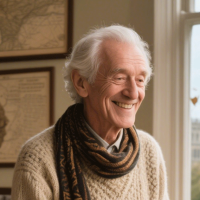
I am Hilary Cromwell. After a lifetime at Cambridge and on archaeological digs, I have learned that a temporary fracture is not the same thing as a permanent ruin. I told Jordan, "I am not here to lecture you or predict an academic outcome. Let us map the loop carefully, find where it is maintained, and look for one beginning small enough to test. Our Journey to Clarity can start with the page exactly as it is."
Choosing the Transformation Path Grid
I asked Jordan to take one slow breath, notice the question rather than force an answer, and let me shuffle the cards. The small ritual was a change of attention: a way to move from the browser tabs and self-evaluation into observation.
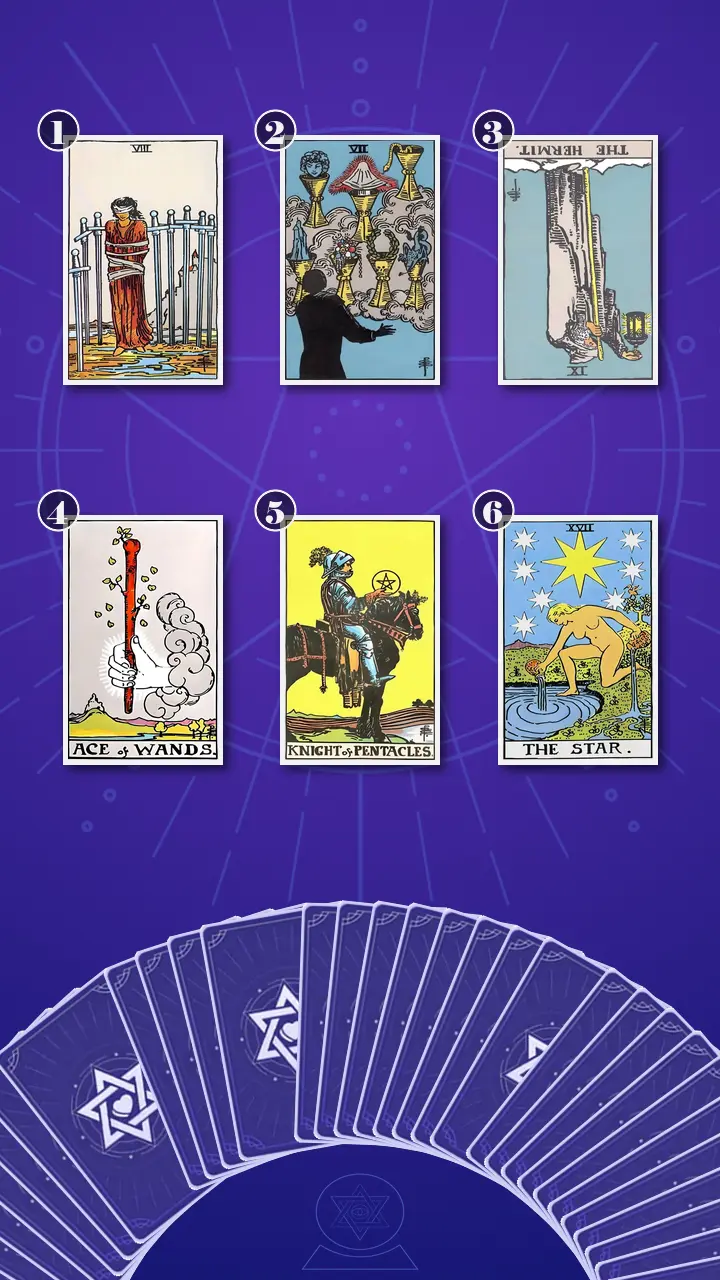
I chose the Transformation Path Grid (6) · Context Edition. For anyone asking how tarot works in a situation like thesis writing paralysis, I use the cards as a structured cognitive mirror, not as a forecast. The images make a self-reinforcing pattern easier to see: an unclear destination leads to more preparation, preparation leaves the argument untested, and the lack of evidence then seems to confirm the original uncertainty.
This six-card tarot spread is not a timeline or a promise about Jordan's degree, career, or publication prospects. It is a compact map of how the loop operates and where it might be interrupted. The upper row diagnoses the present bottleneck, the immediate procrastination loop, and the Existential Drift beneath it. The lower row shows a reorientation trigger, a bounded drafting action, and an emerging working sense of direction.
I explained, "The first card will show what happens in the exact moment the destination feels unclear. The second will reveal how preparation replaces writing. The third will take us underneath the behavior. Then we will look at the catalyst, the small drafting experiment, and the kind of direction that can develop through continued contact with the work."
The Map Beneath the Tabs
Position 1: The Cursor Behind the Swords
Now I turn over the card for the Present bottleneck: the concrete behavior of opening, rereading, reorganizing, and not drafting when the thesis destination is unclear.
The card is the Eight of Swords, in upright position. In context, I saw Jordan's thesis file in the blindfolded figure, the crossed swords in the ring of browser tabs and competing headings, and the loose bindings in the paragraph that was still available to write. The modern scene was precise: Jordan had enough notes for a provisional section, but the missing endpoint felt like a locked room. They reread the same sources, revised headings, and switched tabs until the page looked impossible.
The upright energy is an excess of Air that has become a blockage. Thought is still active, but it has stopped functioning as a tool and started functioning as a perimeter. The belief that the first paragraph must already know the final thesis makes one available move feel forbidden. The loose bindings matter to me: the card does not show an immovable wall. It shows a restriction that may be partly maintained by the demand for certainty.
I asked, "When you open the thesis and spend the first thirty minutes rereading or changing headings, what uncertainty are you treating as proof that you cannot write yet?" I used the sentence frame I often hear inside this bottleneck: "I cannot start until... If I start before..., then..."
Jordan gave a short, bitter laugh. "That is too accurate. It is almost cruel." I watched their eyes move from the Eight of Swords to the browser window, then back to the paragraph marked TODO. I did not call the pattern laziness. I said, "The available action is real even when it does not feel available. Naming that difference gives you a little space before you choose what to do with it."
Position 2: The Seven Futures in Separate Documents
Now I turn over the card for the Procrastination loop: the immediate obstacle that replaces drafting with more preparation, comparison, or possibility-searching.
The card is the Seven of Cups, in upright position. Jordan's separate documents for several research questions appeared to me as the seven floating cups: each possibility looked meaningful from a distance, and none had been placed on the page long enough to be challenged. Jordan could imagine what each direction might become for a publication, a supervisor conversation, or a future job, then treat the abundance of possible futures as a reason to draft none of them.
This is Water in a diffuse, excessive form. Imagination is not the problem; its untested abundance is. The mind keeps generating destinations and quietly turns choosing one workable thread into a permanent loss of all the others. I compared it to an algorithm feed that keeps recommending futures without asking anyone to test one. A one-page experiment would not delete the other cups. It would give one possibility a place to produce evidence.
I asked, "Which single cup could receive one page this week without being promoted to the final thesis?" Jordan looked at the open documents and closed one of them. A moment later, they reopened it, then smiled at the absurdly familiar movement. I said, "You do not need to decide which future is the right one. You only need to learn what one draftable thread can actually do."
Position 3: The Lantern Kept in a Private Folder
Now I turn over the card for the Existential Drift beneath the behavior: the underlying fear that an unclear thesis direction could become a judgment about intellectual worth.
The card is The Hermit, in reversed position. The lantern is turned inward beneath the hood, and the solitary figure stands apart from the lower landscape. In Jordan's life, that became the private notes folder kept hidden until the argument felt wise enough to show. It became the unanswered draft message to a supervisor and the rough paragraph withheld from a trusted peer because Jordan wanted to understand the thesis completely before allowing anyone else to react to it.
The reversed energy is a blockage of inward searching. Reflection has become private and circular: more notes produce more detail, but not necessarily more usable evidence. I brought in my signature Research Bottleneck Analysis here. I treat a creative block as a signal requiring deeper intellectual excavation, not as a personal failure. On an archaeological dig, an empty trench does not insult the person holding the trowel. It tells me to examine the layer, the tools, and the question I brought to the ground.
I said, "I will show it when it makes sense" can sit beside another truth: "It may only make sense after someone can react to it." I was not asking Jordan to hand the whole thesis over for approval. I was asking whether one bounded piece of contact could return information that solitary research could not.
Jordan went still. First, their breath paused and their fingers tightened around the edge of the laptop. Then their eyes lost focus, as if they were replaying every unfinished message and every supervision meeting they had tried to prepare for without sending a paragraph. Finally, their shoulders dropped and a long breath moved out of their chest. "What if the unfinished argument says something final about me?" they asked.
I kept my voice level. "That fear explains why preparation has become so persuasive. It does not make the fear a fact. An unfinished argument tells us that the work is unfinished. It does not establish your intellectual worth." The silence that followed was not empty. It was the first pause in which Jordan did not immediately reach for another article.
When the Ace of Wands Turned Waiting into Evidence
Position 4: The Hand Emerging from the Cloud
I turned to the lower-left card for the Reorientation trigger: the smallest shift that can challenge the belief that a draft must have a visible endpoint before it is worth writing. The room seemed to quiet around the movement, even though the library lights continued their steady hum.
The card is the Ace of Wands, in upright position. I read it as creative initiative in a balanced, available form: not a demand for inspiration, not a magical answer, but enough curiosity to make one live beginning. The hand emerging from the cloud gave me an ordinary image for Jordan's next move. They could highlight the sentence that still carried intellectual energy, open a blank paragraph beneath it, and write for ten minutes without deciding what the whole thesis would become.
This is where I used my signature skill, Academic Stratigraphy. Years on archaeological digs taught me to work with fragments without forcing them to become a monument too soon. I showed Jordan how to sort the thesis into layers: first, what the passage or source actually says; next, what it may establish in the argument; then, what question or piece of evidence the layer opens. Fragmented knowledge can become a durable framework when each layer is identified before it is overinterpreted.
I told Jordan, "The Ace of Wands is not asking you to excavate the final thesis from one perfect sentence. It is offering a living fragment. Let the paragraph tell you whether the direction has substance."
At 8:47 a.m., Jordan had the thesis, Zotero, and a color-coded outline open. The coffee was cold, the shoulders were tight, and the writing block was disappearing into headings. The page felt like a test: begin and risk drifting, or prepare and stay hidden. I asked Jordan to return to that exact scene without judging the person inside it.
Stop treating an unseen destination as a reason to wait, and let the Ace of Wands turn one live question into a rough paragraph that teaches you what the thesis can become.
I let the sentence settle. The missing destination is not a reason to keep the page empty. A provisional paragraph is a test: it gives the thesis something to answer, revise, or leave behind.
For one beat, Jordan's breathing stopped. Their eyes left the card and fixed on the blinking cursor, as if the last month of reorganized headings had suddenly replayed there. Their fingers tightened around the cold cup, released it, and hovered over the keyboard. The jaw that had been clenched loosened by degrees; their gaze dropped to the sentence they had marked earlier. They swallowed. "But does that mean I have been doing it wrong?" The question carried a flash of anger, not at me but at the weeks spent making preparation look like protection. I kept my voice even. "It means those weeks were trying to keep you safe from exposure. They do not get to decide what the next ten minutes mean." Jordan drew in a shaky breath and let it out slowly. Their shoulders sank, bringing relief and a slight, almost dizzy blankness: a clear path can feel vulnerable when no one else is choosing it for you. "So the page is not the courtroom where my worth is decided?" they asked. "No," I said. "It is the lab where the direction gets tested." I then asked, "Using this new angle, can you think back to a moment last week when this insight might have made the next move feel different?"
I named the crossing plainly: this was a first movement from waiting for certainty and treating an unfinished thesis as a verdict on intellectual worth toward generating direction through provisional drafting and steadier self-trust. It was not a completed transformation. It was permission to collect evidence.
Position 5: The Still Horse and the Plowed Field
Now I turn over the card for the Small drafting experiment: the practical advice that translates the reorientation into one bounded, repeatable action without requiring a final thesis decision.
The card is the Knight of Pentacles, in upright position. The horse is still, the pentacle is held level, and the field has already been worked. I read this as Earth bringing a sustainable form to the Ace of Wands. Jordan does not need a dramatic burst of motivation or a complete route. They need one paragraph target, one defined writing block, and a visible stopping point.
I said, "Write one paragraph about one defined tension. At the end, do not grade the future of the thesis. Record what the paragraph revealed." The energy here is balance through repetition. A modest practice can create more direction than another afternoon spent trying to feel certain enough to begin.
Jordan wrote a line in the margin: "This paragraph only defines the tension between my two central concepts." Their hand stopped after the sentence, but it did not move toward Zotero. That pause was small and practical, which was exactly why I trusted it.
Position 6: The Star Over an Open Project Map
Now I turn over the card for the Working sense of direction: the way Jordan can integrate what the draft reveals into a more open relationship with purpose, self-trust, and continued inquiry.
The card is The Star, in upright position. The large star, the two pitchers, and the figure connected to both water and earth gave me a picture of hope without a guaranteed destination. One stream could represent what the writing clarifies internally; the other could represent careful observation or limited feedback from the world. Meaning would not arrive as a final announcement. It could develop through repeated, honest attention.
I told Jordan, "A thesis can be a sequence of testable moves, not one perfect proof that your future is already clear." After each writing block, they could note one live question, one connection that had become clearer, and one next test. The Star did not promise a job, publication, or effortless completion. It offered a gentler definition of direction: noticing what becomes more alive when the work is given a chance to speak.
Jordan looked at the six cards in their two-row grid. The upper row still showed restriction, abundance, and solitude. The lower row did not erase those conditions. It showed a hand beginning, a person returning steadily to the field, and an open sky. I watched Jordan take a photograph of the arrangement, then turn the phone face down.
The Thesis Stratigraphy Framework
What the Layers Show
When I read the six cards as one system, I saw a clear sequence. The Eight of Swords showed thought becoming a cage when the missing conclusion was treated as a hard limit. The Seven of Cups multiplied possible thesis futures until choosing one paragraph felt permanent. The reversed Hermit revealed the deeper layer: Jordan was searching privately because feedback might make the uncertainty visible and might be mistaken for a judgment about intellectual worth.
The Ace of Wands changed the relationship between uncertainty and action. The Knight of Pentacles gave that spark a repeatable shape, and The Star showed how meaning could return through the work itself. I told Jordan, "You may be waiting for clarity before creating the evidence that could give you clarity." The direction was not absent; it had not yet been tested on the page.
The cognitive blind spot was not a lack of intelligence or commitment. It was treating an unfinished destination as evidence that no direction existed, while confusing the short-term relief of preparation with the longer-term evidence produced by drafting. My transformation direction was equally specific: begin with a provisional paragraph, let it generate questions, repeat the experiment at a bounded scale, and allow useful evidence to replace some of the pressure for total certainty.
I then introduced my Thesis Stratigraphy Framework, a structural method for rebuilding an essay outline so the core argument can pierce through intellectual clutter. I asked Jordan to label each rough paragraph with three layers: what the evidence says, what the provisional claim might be doing, and what live question should be tested next. A layer could be revised or removed. Nothing had to pretend to be final before it had earned that status through contact with the work.
The draft is not a verdict; it is a way to collect evidence. I offered three small options, and I reminded Jordan that stopping, shortening, or adapting an experiment was part of staying in charge of the boundary.
- The One-Live-Question StartDuring the next scheduled writing block in the library or apartment, close every tab except the thesis and one source. Choose the passage with the most intellectual energy and write for ten minutes, beginning with "What I can say so far is..." Save the document as "rough test - date" so it remains separate from the final thesis argument.Tip: If ten minutes feels too exposed, write two sentences, stop, and decide later whether the paragraph deserves another layer.
- The 25-Minute Paragraph TargetBook two 25-minute writing blocks in Google Calendar this week and name each block after one concrete paragraph target, not a broad goal such as working on the thesis. Begin with a one-line scope boundary, then write. At the end, record one live question, one clearer connection, and one next test.Tip: Keep the horse still. Do not add a new research question during the block; if the work feels too large, use five minutes of notes followed by five minutes of prose.
- The 150-Word Bounded Feedback RequestBy the end of this week, send one provisional research question and a 150-word paragraph to one trusted supervisor, peer, writing-group member, or academic contact. Ask, "This is an early test, not a finished argument. Could you tell me one thing this paragraph seems to be doing?"Tip: Check for a response only after your next writing block, rather than refreshing the inbox. If sending feels too exposed, read the paragraph aloud into a private voice memo first.
These are not tests of worth and they are not guarantees of a perfect thesis direction. They are small ways to let the work produce information. Jordan remained the author of the argument, the owner of the decision, and the person who could choose which experiment was appropriate.
A Rough Paragraph, Still Pointing Somewhere
Four days later, I received a message from Jordan: "I used the ten minutes on the passage I kept protecting. It is rough, but now I can see one question I actually want to answer." They had closed the extra tabs, written beneath the sentence with the most energy, and saved the page as a rough test.
Jordan told me they slept through the night after the first block, though the morning still began with the thought, "What if I am wrong?" The paragraph was unfinished and the question had not disappeared. This time, Jordan smiled, opened the document, and wrote beneath it instead of reopening Google Scholar.
I did not give Jordan a destination. The six-card Transformation Path Grid helped me make the preparation loop visible, and Jordan chose to create the first piece of evidence that could alter it. That was the beginning of finding clarity: not certainty arriving from outside, but direction becoming more grounded through provisional drafting and steadier self-trust.
If your hands ever hover over a thesis paragraph because you cannot prove its destination, I hope you can recognize the deeper fear without turning it into a verdict. The unfinished route may feel like evidence about your intellectual worth, but it is still a route in progress.
And if a rough paragraph could be a small instrument for finding out rather than a verdict, what question would you let it test for ten quiet minutes, letting one live question give your next paragraph somewhere to go?