The Capstone Beside the Upload Page: Three Criteria Set a Boundary
The Upload Button at 8:47 PM
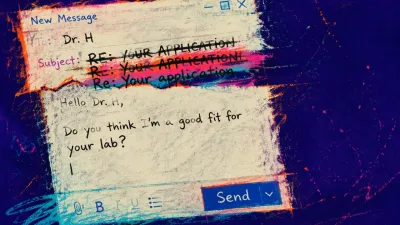
I recognized the pattern before Jordan sat down: a final-year public policy student in Toronto, carrying an unread supervisor reminder and a capstone upload that felt larger than the whole semester.
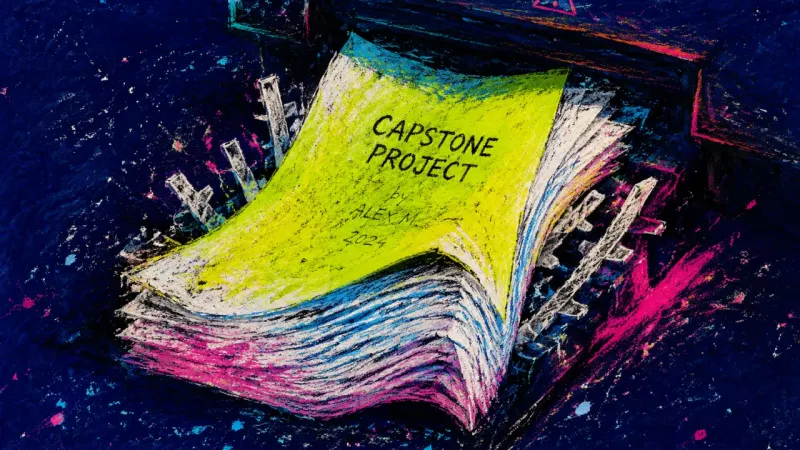
At 8:47 PM on a Tuesday, I watched Jordan keep Google Docs beside the Quercus submission page, with the Upload button visible but untouched. The laptop fan hummed against the kitchen silence, the phone felt warm in their palm, and the cursor blinked after a sentence that had already been clear for weeks.
Jordan changed the sentence anyway, opened Zotero, and searched for one more source. Then they said, almost as if presenting evidence, 'I am still improving it, so this cannot be avoidance.' I heard the real contradiction underneath: Jordan wanted to submit the capstone and move into graduation, entry-level policy work, and the next stage of life, but a finished result could expose a lack of competence and make self-worth feel answerable to someone else's evaluation.
I could see the anxiety as a seatbelt cinched too tightly across the chest: not a lack of effort, but a physical pause that arrived whenever private work had to become visible. Shame sat underneath it, dread sharpened the deadline, and frustration made every new edit feel like both progress and escape. Finishing can feel like exposure when the draft has started carrying your identity.
I told Jordan, 'I believe you have been working hard. Today, I am not here to predict a grade or decide your future. I want to help us separate the capstone from the person who made it, then draw a small map from completion avoidance to a defined next step. That is our Journey to Clarity.'
Choosing a Map for the Fog
I invited Jordan to place both feet on the floor, take one slow exhale, and hold the question without trying to solve it immediately. I shuffled slowly, using the pause as a practical transition from frantic research mode into deliberate observation.
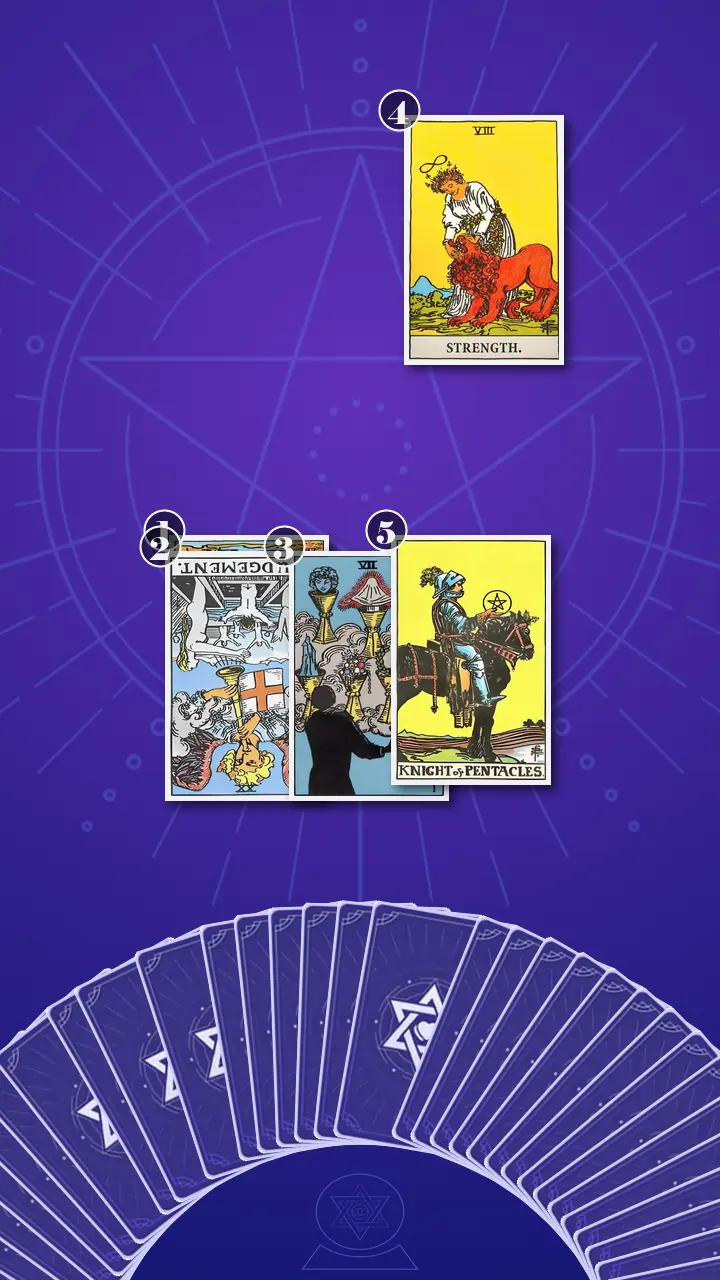
I chose a five-card reading called the Shadow Spread. This is how I use tarot: as a structured reflective tool that can turn a vague loop into visible parts, not as a forecast of a grade, supervisor response, or job outcome. I chose this spread because Jordan's question was about a repeated defense and a fear of self-evaluation, not about predicting the future. Five cards were enough to trace the full arc without adding noise: visible behavior, hidden root, repeating defense, integrating resource, and grounded action.
I explained the path to Jordan and to anyone reading along: the first card would show the visible completion stall, the second would uncover the hidden fear beneath it, and the third would reveal the defense that keeps repeating. The fourth would identify a resource for tolerating visibility, while the fifth would turn that insight into practical guidance. I wanted the line to move from restriction to judgment, from too many options to compassionate courage, and finally onto solid ground.
Reading the Loop Without Blaming It
The Bound Hands and the Unused Exit
I began with the card representing the visible completion stall: Eight of Swords, in reversed position. This position showed the concrete behavior of reopening adequate sections, checking requirements, and delaying the capstone upload whenever the work felt nearly done.
I read the blindfold as the moment Jordan could see only the next possible flaw. The bound hands became the repeated switching between the rubric, Zotero, Google Docs, and the submission page. The ring of swords became optional standards promoted into invisible requirements. The portal was available, the central argument was workable, and the file was nearly complete, but repeated checking had made the final action feel unavailable.
I read the reversed energy as a blockage beginning to loosen while still remaining active. Jordan was starting to notice that the restraint came partly from revision itself, but noticing the trap was not the same as stepping out of it. I asked, 'Which rule are you obeying that is not actually required for this project to be complete?'
Jordan gave a short, bitter laugh instead of nodding. 'That is almost too accurate. It is a little cruel.'
I let the laugh stand without arguing with it. 'It is not a verdict about your character,' I said. 'It is a map of a strategy that gives you short-term relief. A final check protects the work; an endless check protects you from the work being seen.' I watched their mouth tighten, then saw their fingers stop moving over the phone. Recognition had arrived with a sting, but it had not become shame.
The Trumpet Jordan Heard as a Verdict
I turned to the card representing the hidden fear beneath the stall: Judgement, in reversed position. I asked Jordan to remember the Thursday morning when a supervisor reminder appeared during the TTC ride home. The message asked whether the timeline was still workable. In Jordan's mind, it became the angel's trumpet announcing a verdict.
I explained that the figures rising from enclosed spaces mirrored a private draft becoming visible to another person. The actual evaluation could say something limited about the capstone's argument, evidence, or presentation. Judgement reversed showed the blockage created when that bounded review became an imagined answer to a much larger question: whether Jordan was competent enough to deserve respect or a successful next stage.
I asked Jordan to separate two sentences: 'This capstone can be evaluated' and 'This evaluation cannot measure my entire competence or worth.' The first sentence held work evidence. The second marked the identity conclusion that fear had added. I read the reversed energy as an internal verdict that had been postponed through more editing, not as proof that the capstone was inadequate.
Jordan's shoulders locked, and I saw their stomach drop in the small swallow that followed. 'If the feedback is disappointing,' they said, 'then people will know I was never as capable as they thought.'
I answered, 'Feedback can be information about one bounded piece of work without becoming a sentence about who you are. We can respond to a citation issue, a weak transition, or a file-format problem. We do not have to revise your identity through the document.' Jordan looked down at the card, then slowly uncrossed their ankles.
The Browser That Kept Recommending a Better Thesis
I placed the card representing the repeating defense pattern in the center: Seven of Cups, in upright position. This position showed how additional research, alternative thesis angles, and endless possible versions kept the work from reaching an exposed final form.
I brought Jordan to the Sunday afternoon scene in the campus library. One promising public-policy article had become twelve browser tabs, three possible thesis structures, and a revised heading system within fifteen minutes. The air-conditioning clicked on, the desk felt cold beneath Jordan's wrists, and the original research question glowed yellow on the screen. Each cup represented a plausible option: another source, a sharper claim, a safer caveat, a cleaner outline, a new policy comparison, or a more defensible way to say the same thing.
I read the upright energy as an excess of possibility. Curiosity was real, and I did not want to mock it. But the browser had started behaving like an algorithm that kept recommending a better option until choosing the current one felt irresponsible. Jordan could feel focused while staying uncommitted, because no single finished version could yet receive a clear response.
'I am not stuck,' Jordan said. 'I am keeping my options open.'
I nodded. 'That sentence protects something important. It also keeps the finish line moving. Before you open another tab, ask whether the new idea changes a stated requirement, corrects a factual problem, or only makes uncertainty quieter for a few minutes.' I watched Jordan mentally count the tabs, smile with embarrassed recognition, and move one article into a note titled After Submission instead of opening it.
When Strength Held the Lion's Jaw
The Hands That Did Not Fight Fear
The room grew unusually quiet when I reached for the card representing the transformation resource. I turned over Strength, in upright position. This position identified the inner quality that could challenge perfectionism and allow the capstone to be visible without turning it into a verdict on self.
I read the woman meeting the lion gently as a picture of calm contact with a powerful protective impulse. Strength did not ask Jordan to defeat anxiety, force confidence, or prove that every possible criticism had been eliminated. It asked Jordan to notice the urge to reopen the document, name the fear of evaluation, and keep one hand on a defined completion boundary. The upright energy was balanced through compassion and self-command rather than domination.
At this point, I used a lens from my years on Wall Street: Academic ROI Auditing. I do not use it to reduce a person to a number. I use it to ask what a high-investment project is actually designed to yield. What requirement does one more source satisfy? What evidence would genuinely improve the claim? What does another week cost in time, energy, and the ability to begin the next stage? The capstone could produce a degree artifact, a writing sample, and evidence of research judgment. It could not produce a final valuation of Jordan's worth.
I also recognized the value of Institutional Resource Leverage. A supervisor, rubric, university network, or specific clarification email could support the work strategically. None of those resources needed to become a tribunal. Asking one precise question upward was a way to manage the academic system, not a request for someone else to certify Jordan's entire competence.
At 8:47 PM on that Tuesday, Jordan was standing at the finish-line gate with the ribbon in reach, inspecting the track for one more flaw. The upload page remained open, the fan kept humming, and each optional edit offered a brief escape from the moment when the capstone could answer back.
You do not have to perfect the capstone to silence the fear of judgment; you can meet that fear with Strength's steady hand and submit a bounded piece of work while keeping your worth larger than the result.
For a few seconds, I saw Jordan freeze: breath held, fingertips suspended above the trackpad, eyes fixed on the word Upload. Then their gaze slipped out of focus, as if the supervisor reminder, the unread message, and every version called final_v2 were replaying in a quick silent loop. Their jaw tightened; a hand closed around the warm phone and released it. The thought arrived defensively: 'But if I stop revising, how will I know I have done enough?' I let the question stay. When Jordan looked back at Strength, their shoulders lowered by a fraction. Their eyes shone, not with a dramatic answer but with the sting of recognizing how long a private draft had been asked to carry a public identity. A breath left them in a shaky, almost embarrassed laugh. The hands that had kept searching finally rested flat on the table. Relief came with a thin edge of vertigo: a clear boundary meant there would be no more hiding behind preparation. I asked, 'Now, use this new perspective to remember whether there was a moment last week when this insight could have made you feel different.'
Outside, a streetcar bell travelled faintly through the apartment wall. I watched Jordan exhale and place the new article in the After Submission note. This was the emotional shift I wanted to name: from anxious, shame-tinged over-revision and fear of being judged toward compassionate self-trust and grounded, bounded completion. The fear had not disappeared. It had stopped issuing automatic instructions.
The Single Pentacle After the Roar
The Patient Craftsperson's Upload
I turned to the card representing actionable integration: Knight of Pentacles, in upright position. This position translated the key shift into a small, observable completion practice Jordan could try within a week.
I read the still horse as a deliberate upload window rather than a last-minute rush. The single pentacle became one bounded capstone, held carefully but not worshipped. The cultivated field became a repeatable sequence: check the rubric, export the PDF, confirm the file name, upload, save the confirmation, and close the portal.
The upright energy was steady and grounded. It did not promise that the grade would be perfect or that the next stage would be free of uncertainty. It offered something more practical: done could become a behavior Jordan repeated before confidence arrived. I said, 'You do not need a zero-doubt feeling to take a one-step action. Let the process carry you while the feeling catches up.'
The Bounded Finish Line
I gathered the five cards into one sequence. I saw Eight of Swords reversed showing how optional checks had become invisible restraints. Judgement reversed revealed the older fear underneath: submission could make the capstone observable, and Jordan had begun treating that evaluation as a verdict on competence. Seven of Cups showed how research multiplied the exits whenever one final version came into view. Strength supplied compassionate courage, and Knight of Pentacles gave that courage a reliable form.
I could now answer the original question directly. Jordan stalled because submission changed the capstone from a private possibility into evidence that another person could respond to. Another source or cosmetic edit then provided a few minutes of relief because judgment could not arrive yet. The unfinished state made the deadline louder, which seemed to justify even more preparation. The pattern was protective, but it was also keeping Jordan at the gate.
The blind spot was treating the fear of criticism as evidence of a missing revision. The transformation direction was different: define completion before anxiety gets a vote, make one final pass against actual requirements, and treat submission as an act of self-trust rather than an identity verdict. I framed the next steps through what I call the Research Sunk-Cost Audit: distinguish a revision that changes the project's required yield from an addition that only postpones exposure.
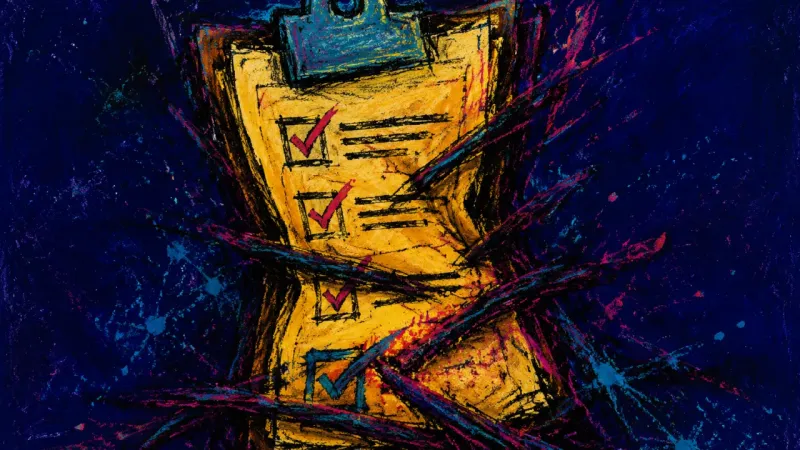
- Run the Research Sunk-Cost AuditWithin the next 48 hours, open the official capstone rubric at a specific time and place, then write exactly three observable completion criteria. Set a 25-minute timer and check only those criteria. For every tempting source or new thesis angle, ask whether it fixes a stated requirement, corrects a factual problem, or materially changes the claim. If it does not, record the title and reason in the After Submission note.If 25 minutes feels too large, begin with 10 minutes and one criterion. Recording an article is enough; do not read it during the final pass.
- Separate the work from the verdictWhen a supervisor reminder or submission notification tightens your chest, take one slow exhale and write: 'This capstone can be evaluated' and 'This evaluation cannot measure my entire competence or worth.' Underline the factual work issue, then choose one response such as checking a citation, confirming a file format, or replying with a timeline.A specific clarification email is Institutional Resource Leverage, not a request for total reassurance. Keep the identity conclusion outside the revision plan.
- Use the check-export-upload-stop ritualChoose a real 15-minute upload window this week, such as Thursday from 7:30 to 7:45 PM at the kitchen table or library. Follow the same five steps: check the three criteria, export the PDF, confirm the file name, upload the file, and save the confirmation screen or email. Then close the portal and write one ordinary next action for the following day.Check the institution's file requirements before the window begins and keep a backup copy. If the portal fails, save the error message and contact support; a technical problem is not evidence that the capstone is inadequate.
I reminded Jordan that these were experiments, not tests of moral discipline. Jordan could pause, step away, or reschedule when circumstances genuinely required it. The point was to make the decision intentional instead of allowing the old loop to make it automatically.

A Week Later, the Quiet Proof
Six days later, I received a text: 'Three criteria. One pass. PDF uploaded.' Jordan had slept a full night, then woke with the old thought, 'What if it is not enough?' The thought still arrived; they answered it by closing the laptop and taking the TTC without reopening the file.
I did not call that a cure, and I did not need to. The five-card Shadow Spread had not submitted the capstone for Jordan. Strength had offered the courage to remain present, and Knight of Pentacles had turned that courage into a check-export-upload-stop routine. Jordan had made the work visible while keeping the self larger than the result.
A lot of us know the strange moment when a nearly finished capstone makes the chest tighten and the hands keep editing, because moving forward is what we want while being evaluated is what we fear might decide our worth. If the capstone could be visible without carrying your whole identity, which small, ordinary finishing step would you feel willing to imagine taking first: checking one criterion, exporting the PDF, or letting the extra tab remain closed?