When a New Aesthetic Feels Like Identity: Find What Remains Yours
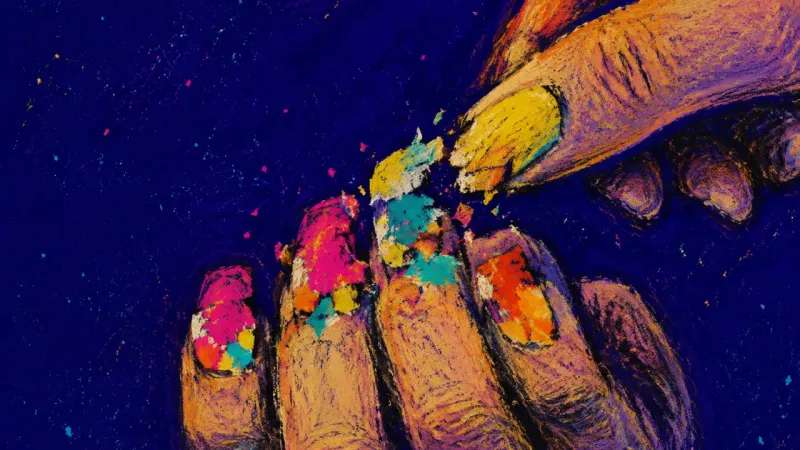
The Moodboard That Promised a Self
'You are a 25-year-old junior content designer in Toronto who can build a perfect reference board before you can say what you personally want, then feel your jaw lock when a Monday brief asks for your point of view: that is an aesthetic identity crisis, not a lack of visual skill,' I told Riley.
I had barely finished when I watched Riley eat half a sandwich in the shared studio kitchen near Queen Street West, one hand moving across a warm phone screen. It was 12:18 on a Tuesday. The fluorescent light buzzed overhead, cold coffee tasted metallic, and three style-coded objects waited in an online cart while Riley changed a profile image and kept rubbing their thumb against the edge of the phone.
'I keep thinking the next version will finally feel like me,' Riley said, 'but the relief lasts only until the look starts asking me to perform a personality. I can explain the vibe better than I can explain what I value.'
I could see the question underneath the Pinterest folders, Instagram saves, Spotify playlists, and carefully revised bios: wanting to know who they actually were while feeling pulled to mistake an aesthetic for that answer. Their identity confusion moved through the body as restless hands, a tight jaw, and a sudden urge to reorganize the phone, closet, room, or profile. It was like a social-media recommendation feed serving seven complete versions of adulthood, each one briefly promising to be the answer before the next swipe replaced it.
'I do not think you are failing to find yourself,' I said. 'I think one visual language has been asked to carry a much larger question. After a decade of guiding people through their own inner cycles, I have learned to see these moments as low tides, not verdicts. Let us draw a map together and begin this Journey to Clarity without forcing you into a permanent persona.'
A Six-Card Map for the Identity Reset Loop
I asked Riley to place both feet on the floor, take one slow breath, and name the question without improving its wording. Then I shuffled slowly, letting the simple sequence mark a transition from scrolling and reacting to noticing. The cards were not a supernatural test or a prediction; they were a structured way to make an invisible pattern easier to examine.
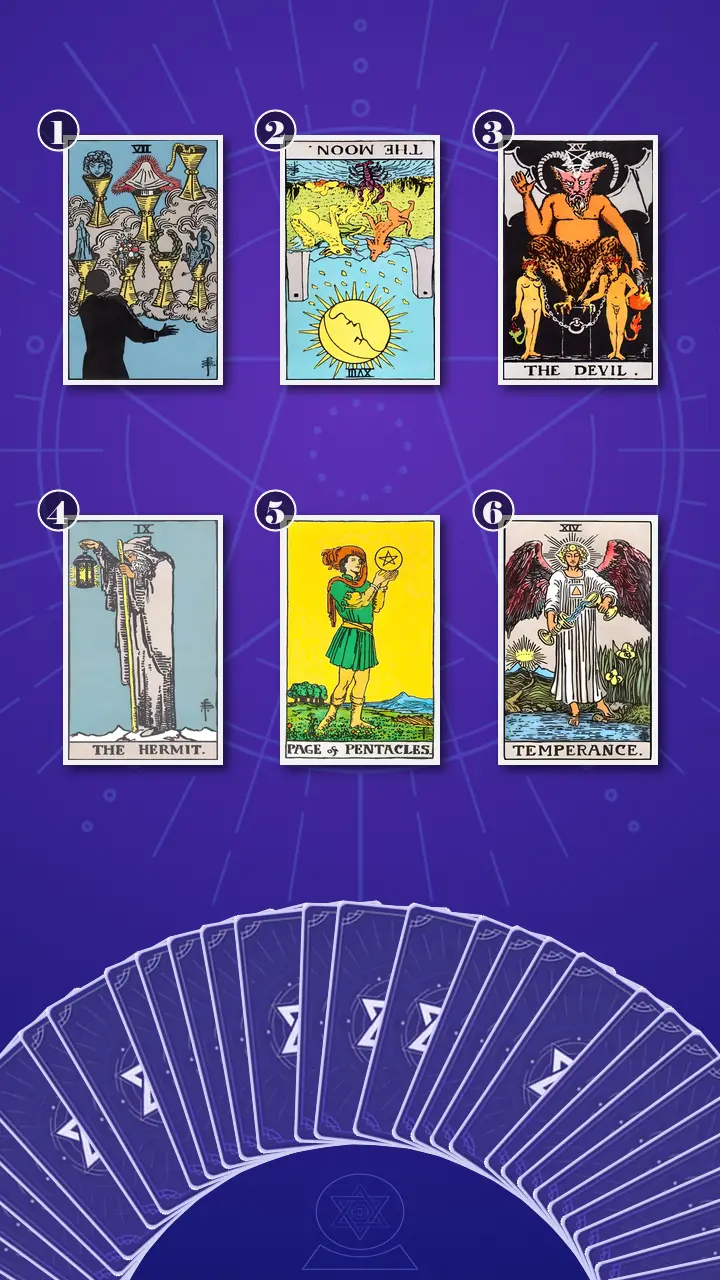
For readers wondering how tarot works in a question like this, I chose the six-card Transformation Path Grid, Context Edition. This spread suits a self-reinforcing pattern rather than a binary decision. A conventional decision spread might imply that Riley only needed to choose between two aesthetics, while a timeline spread might turn a living identity question into a forecast. This grid instead traces the visible trigger, the immediate blockage, the underlying root, the catalyst, an actionable experiment, and a possible integration. It lets card meanings in context meet ordinary evidence.
I explained that the first three cards would form the upper row: the visible identity-reset loop, the confusion beneath its images, and the bargain that keeps it repeating. The lower row would offer a path out: the inner resource, one grounded experiment, and a way for style and self-knowledge to coexist. Nothing in the final position would decide Riley's future. It would simply show what becomes available when the earlier insight is practiced.
Reading the Crowded Sky of Possible Selves
Position 1: The Present Situation, The Visible Pattern, Seven of Cups Upright
Now turning over is the card representing the present situation: the observable pattern of repeatedly adopting, displaying, and replacing aesthetics whenever identity feels uncertain.
The card is the Seven of Cups, in upright position. In the Rider-Waite-Smith image, a cloaked figure faces seven separate cups floating in a cloud, each holding a charged possibility: a snake, a castle, jewels, a veiled figure, and other symbols that seem to offer completely different lives. I connected it to Riley's lunch break. The quiet design-studio life, thrifted indie look, minimalist apartment, music-led social world, and carefully curated creator feed were not just references. For a few minutes, each moodboard let Riley feel as if they had become someone.
The energy here is excess paired with deficiency: an excess of imagination, projection, and image-based possibility, with too little lived testing. The abundance creates decision fatigue because every aesthetic arrives with its own vocabulary, wardrobe, playlist, and imagined community. Before Riley has worn one look through an ordinary week, made a difficult design call in it, or enjoyed a quiet evening without documenting it, the next visual set begins to feel more convincing. A preference is being treated as a possible identity answer instead of something that can be explored.
Riley gave a short laugh with a bitter edge. 'That is too accurate. Almost rude.'
I did not defend the card or turn the reaction into a mystical confirmation. 'The sting makes sense,' I said. 'This is not saying your taste is fake. It is showing what happens when every attractive image is invited to testify about who you are. Which choice would still matter if nobody could see it?'
Riley's smile faded into concentration. Their fingers stopped rearranging the phone, and they looked at the seven cups as if each one had been open in a separate browser tab for months.
Position 2: The Immediate Blockage, The Moon Reversed
Now turning over is the card representing the immediate blockage: the way emotionally charged images make a mood or visual preference feel like a complete identity verdict.
The card is The Moon, in reversed position. I pointed to the narrow path between the two towers, with the dog and wolf responding to the moon while the crayfish rises from the water. The scene is not a clear instruction. It is a moment of interpretation, where instinct, memory, desire, and projection can all cast similar shadows.
I brought the image back to a late night in Riley's Toronto apartment. A photograph of a dimly lit room or a creator's carefully framed routine could feel intensely personal. Then the feeling split into several possible sources: genuine interest, envy, nostalgia, or the wish to be perceived as more assured. The reversed energy is a blockage in reading the feeling, not a lack of feeling. Riley was treating the atmosphere as proof of a stable self, and when the charge faded, treating that change as proof that the self had been false.
I asked Riley to look at one saved image without deciding whether to keep or delete it. Together, we used the narrow path as a pause between attraction and conclusion. I invited them to complete three lines in a private note: This image makes me feel ___. I want it to give me ___. I am assuming it proves ___.
Riley's thumb hovered over the archive button. Their eyes lost focus for a second, as though an old Instagram image had become an ambiguous text message they had been refreshing for certainty. 'It makes me feel recognized,' they said slowly. 'I want it to give me confidence. I am assuming it proves I have a real point of view.'
I reminded them that discernment did not require purging every visual influence or rejecting clothing, music, design, or gender expression that brought pleasure. The point was to separate a feeling from the story attached to it. Riley placed the phone face down, shoulders still raised but no longer moving toward another search.
Position 3: The Underlying Root, The Devil Upright
Now turning over is the card representing the underlying root: the belief that repeating a recognizable look can secure a stable self and protect worth when the inner identity feels unclear.
The card is The Devil, in upright position. I described the loose chains around the two figures, not as a warning of doom but as a precise picture of a bargain that feels compulsory because it has been renewed so often. Riley's Tuesday evening returned to the room. They had returned a jacket that looked perfect in the fitting-room mirror, opened Depop, saved five pieces from another style category, and felt the radiator click while the phone grew hot in their palm.
The energy is attachment. An object is not the problem, and wanting to look good is not a moral failure. The blockage begins when the jacket, lamp, profile grid, or playlist is asked to secure confidence, independence, belonging, and a recognizable point of view all at once. I named the contract as plainly as I could: I will buy, post, explain, and maintain this look, and in return it will make me legible.
'If this disappears,' Riley said, 'people may see there is nothing solid underneath.'
'Do not ask one outfit to testify for your entire worth,' I replied. 'A look can be a language without becoming your legal identity.' I then used my Gravity Well Identification lens, the diagnostic tool I bring in when an obsolete habit or environment is exerting a downward pull on someone's personal evolution. The gravity well was not the jacket. It was the old rule that public coherence equals inner worth, and that changing presentation means becoming difficult to know.
The RWS chains are visibly loose, which mattered. I told Riley that the card was naming the authority granted to the aesthetic, not declaring that authority permanent. The Devil does not predict entrapment. It helps locate the moment when a choice began to feel like an obligation, so another choice can become visible.
Riley's hand tightened around the pen, then released it. Their jaw worked once. They glanced toward the shopping cart and closed the tab without deleting it, a small act of recognition rather than a dramatic purge.
When the Hermit's Lantern Replaced the Moodboard
As I reached for the next card, a streetcar bell sounded beyond the kitchen window. The fluorescent hum seemed to recede, and the room held the kind of quiet that arrives when a familiar explanation has stopped working.
Position 4: The Key Catalyst, The Hermit Upright
Now turning over is the card representing the key catalyst: the inner resource that can interrupt the borrowed-image loop by separating private values from the aesthetic carrying them.
The card is The Hermit, in upright position. Its lantern does not flood the whole mountain with light. It illuminates enough ground for the next honest step. That difference matters because Riley had been demanding one image that would reveal a finished identity all at once. The Hermit offered focused attention instead: one quiet hour without saved images, shopping tabs, or profile editing, followed by careful observation of what remained meaningful.
I told Riley that the practical question was changing from Which look is me? to What do I keep choosing when no look is being performed? Maybe the answer would appear in a walk home from work, a conversation handled with care, a clear design decision, or an hour spent making something without posting it. The lantern was not another aesthetic project. It was a smaller field of attention.
This is where I used my signature Cognitive Spiral Mapping. When someone says they are stuck, I map the repeated movement rather than treating the stuckness as evidence of failure. Riley had been circling the same question through different visual systems, using each new style as an orbital slingshot: the image created enough temporary momentum to approach self-knowledge, but the orbit kept bending outward before contact with the deeper question. The repetition was information. It showed where the mind was trying to go and which gravity well kept pulling it back toward public proof.
At 12:18 PM on a Toronto lunch break, Riley opens a saved folder, changes their profile image, adds three items to an online cart, and drafts a bio that sounds right. The phone glows; the jaw tightens. For a moment, uncertainty looks organized.
I let the silence make room for the old inner operating system: If I stop collecting references, I might have to hear what I actually want. Then I offered a possible replacement, not a command: Maybe the next step only needs to be visible to me.
You do not need to find a perfect aesthetic before you can know yourself; let the Hermit's lantern guide you toward the values you practice across changing styles.
A more convincing aesthetic cannot answer who you are. The useful question is what you keep choosing when the look changes, the audience disappears, and no image gets to speak for your worth.
Riley's fingers froze above the phone, thumb suspended between the saved folder and the profile editor. Their breath caught; the jaw that had been clenched since lunch held for one more second. Then their eyes lost focus, not looking at the card now but replaying the familiar sequence: a creator's post, a new bio, the bright lift, the private recoil. Their expression tightened. 'But does that mean I have been doing it wrong?' The question carried a flash of anger, then something more tender. I answered, 'No. It means the look has been asked to do a job it cannot do.' A long breath moved through their chest. Their shoulders lowered; one hand opened from a fist, then closed loosely around the pen. They blinked hard, eyes slightly red, and gave a small, almost embarrassed laugh. Relief arrived beside a blank space, the light dizziness of no longer having a costume ready to fill every silence. I asked, 'Now, use this new lens: was there a moment last week when you chose curiosity, care, honesty, or steadiness without needing it to look like anything?'
Riley did not answer immediately. That pause was part of the answer. I was watching the first movement from externally curated identity and aesthetic-driven uncertainty toward flexible self-knowledge grounded in personal values, repeated choices, and lived experience. The cards had not revealed a hidden final self. They had helped Riley notice where their own attention could begin.
Position 5: The Actionable Experiment, Page of Pentacles Upright
Now turning over is the card representing the actionable experiment: the practical next step that can turn identity from a visual declaration into a small piece of lived evidence.
The card is the Page of Pentacles, in upright position. I drew Riley's attention to the single pentacle held carefully at eye level, with a cultivated field behind the figure and mountains in the distance. The Page is not trying to embody an entire aesthetic at once. The Page is studying one tangible thing closely enough to learn from it.
The energy is a grounded beginning, with concentration replacing the excess that filled the Seven of Cups. I suggested choosing one value, such as curiosity or care, and testing it once through ordinary behavior: twenty minutes exploring a design question, one specific check-in with a friend, or one protected hour for making something without posting it. The evidence would come from what happened, not from how convincingly the experiment could be branded.
I used a practical comparison Riley understood immediately. One observed choice is like one saved project note that records what actually worked; a total reinvention is an untested rebrand. I asked the inner operating system, What can I learn from one repeatable action before I name myself?
Riley opened a blank note and typed the word curiosity. Their hand moved more slowly than it had over the shopping tab, but it did not stop. There was no new profile, no special notebook spread, and no promise to become a different person by Monday. Just one word that could be tested.
Position 6: The Possible Integration, Temperance Upright
Now turning over is the card representing the possible integration: how visual expression, values, relationships, and change might coexist without any one aesthetic being responsible for defining the whole self.
The card is Temperance, in upright position. The angel joins two cups, with one foot on land and one in water, blending rather than forcing one element to defeat the other. I connected that image to Riley keeping a playlist, outfit, or room detail simply because it was enjoyable while allowing their interests and relationships to develop in directions the aesthetic could not predict.
The energy is balance through integration. Riley did not need to reject aesthetics, social media, fashion, design history, or the pleasure of a coherent visual world. They needed an Expression-Not-Proof Boundary: style could express a mood, create context, or offer play, while values and repeated choices provided a wider basis for identity. A softer style could sit beside a sharper work preference. A changing wardrobe could coexist with steady care, curiosity, honesty, or patience.
I explained that Temperance was a possible lesson, not a guaranteed outcome. The winding path toward distant light suggested a process that would keep adjusting. 'What if consistency is not looking the same in every context,' I asked, 'but recognizing the values behind several different choices?'
Riley leaned back. Their shoulders did not fully relax, and their first expression was not certainty. It was a wary kind of permission, as if they could enjoy the look without handing it the keys. They turned the Hermit toward the Page and then toward Temperance, seeing a sequence from attention to practice to integration.
Finding Clarity in the Value That Survives the Rebrand
When I placed the six cards together, the spread told a coherent story. The Seven of Cups showed why a polished visual world brought quick relief: many possible selves were available at once. The reversed Moon showed why the relief faded: Riley could feel the charge in an image but could not yet distinguish genuine interest from envy, nostalgia, longing, or the wish to be perceived differently. The Devil revealed the deeper bargain, where recognizability had become a substitute for worth. The Hermit offered the bridge inward, the Page of Pentacles turned that inward attention into one testable action, and Temperance allowed the self to remain larger than the style.
I described Riley as someone repeatedly redecorating a room in the hope that the right set of objects would reveal who lived there. The blind spot was assuming that a changing room meant there was no real person inside it. Aesthetic coherence is not the same thing as self-knowledge. The more useful shift was to separate the aesthetic that attracts Riley from the values and repeated choices that remain theirs when the visual style changes.
I then used my Orbit Expansion Strategy, a macro-perspective exercise for mapping the trajectory and momentum needed to move out of a cognitive gravity well. I drew three simple circles on a sheet of paper. In the centre, Riley wrote the values that had appeared in ordinary choices. In the next orbit, they wrote one small behavior that could express one of those values this week. In the outer orbit, they listed the visual inputs to pause for twenty-four hours before saving, buying, posting, deleting, or declaring that an image was who they were. The goal was not to escape style. It was to give identity more room to move.
'These are actionable advice and next steps,' I said, 'not a new persona to perform. Start small enough that no audience is required.'
- Take the 10-Minute Lantern PauseOnce this week after work, reserve a twenty-minute block and put Pinterest, TikTok, Instagram, shopping tabs, and saved-image folders out of reach. Set a ten-minute timer in the Notes app and record three ordinary moments that felt meaningful without being photographed or posted, then underline the quality in each one, such as curiosity, care, honesty, play, or steadiness.Use the lowest-friction version: sit on the edge of the bed, walk one block, or ride the TTC with Do Not Disturb on. Stop after ten minutes if needed, and keep the note private.
- Use the Feeling-Need-Action NoteFor one week, whenever a saved image feels like an answer to who I am, open a private note before saving, buying, posting, or archiving it. Complete three lines: This image makes me feel..., I want it to give me..., and One nonvisual action connected to that need could be... Leave the image alone for twenty-four hours before deciding what it means.Allow several answers to remain possible. You do not need to buy, delete, post, or explain anything afterward; the pause itself is the experiment.
- Make a One-Value Field NoteChoose one value from the lantern notes and test it once in a concrete setting this week: spend twenty minutes exploring a design question, send one specific check-in to a friend, or protect one hour for making something without posting it. Afterwards, write two lines: This felt nourishing when... and This felt like performance when...Treat small as the point. Do not buy a new outfit, redesign your room, rebuild your feed, or announce an identity label before you gather this one piece of lived evidence.
The 24-Hour Aesthetic Pause and the One-Value Field Note create room for the same question to be answered by life instead of by another image: what remains meaningful when the look changes?
A Different Kind of Consistency
Six days later, I received a message from Riley: 'I walked home with visual input muted, wrote down curiosity, care, and steadiness, and spent twenty minutes on a design question without posting it. It felt more like my decision than my brand.'
That night, Riley slept a full night, but woke with the familiar thought, What if I am wrong? This time, they smiled at it, opened the note, and made breakfast before touching the profile editor.
I saw the first evidence of change, not a solved identity. Riley had moved from chaotic image-hunting toward a quieter practice of observing values beneath the image. The cards had offered a structure, but Riley had made the choice. That is the point of a tarot reading: the querent, not the cards, remains the author and master of their direction.
When an outfit, profile, or playlist stops feeling like you, the tight jaw and restless hands can reveal the strain of asking one visible style to carry your whole worth while you are still learning yourself. Noticing that strain is already a small movement toward self-trust.
If an aesthetic could remain something you enjoy rather than evidence you must provide, what small choice might the Hermit's lantern help you notice in yourself when the look changes?