Seen But No Reply on the Northern Line
If you work in a Slack-fast job in London and still spiral when someone texts “no rush,” because “Seen” plus silence feels like a slow-motion rejection.
Jordan said it like they were confessing to a crime they hadn’t actually committed. Twenty-seven, a product designer at a scrappy startup near Old Street, the kind of person who can run a Figma review and a feelings check-in with equal fluency—until the waiting starts.
They’d come to me with a very specific question: After they say no rush, what past belief turns waiting into panic?
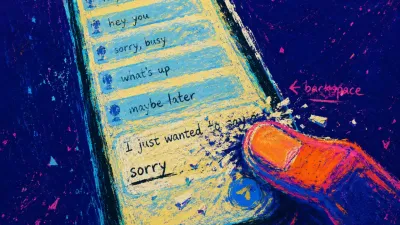
Jordan described Tuesday, 8:47 PM on the Northern line heading home: the carriage warm and slightly stale, fluorescent lights buzzing like they were inside the ceiling, their phone screen hot in their palm. They opened the same WhatsApp thread again—Seen—and their jaw clamped so hard it made their molars ache.
“I want to be chill,” they said, thumb hovering like it had a mind of its own. “I want to be respectful of their pace. But my body treats the pause like… a verdict.”
Panic isn’t abstract in moments like that. It’s a restless fizz under the sternum, like a tiny slot machine in your ribcage: refresh, hope, spike, crash. And then the shame layer on top—why am I like this?
I nodded, gentle but steady. “We’re not here to diagnose you as ‘too much.’ We’re here to map the pattern. Let’s find clarity in the in-between—so your next move doesn’t come from a timestamp.”

Choosing the Compass: The Transformation Path Grid (6)
I asked Jordan to take one slow breath with me—just enough to mark a transition from spiraling to observing. While I shuffled, I framed the cards the way I always do: not as a way to read the other person’s mind, but as a practical tool to read your nervous system in context.
“Today we’ll use a spread called the Transformation Path Grid (6) · Context Edition,” I said.
For readers: I chose this spread because the problem isn’t “What will they do?”—it’s the direct chain reaction: waiting → panic → old belief → regulation → practical pacing → integration. It keeps the focus on agency and actionable advice, not prediction.
I also told Jordan what to expect: “The first card shows your present reaction in the gap. The next reveals the immediate blocker—the habit that turns uncertainty into urgency. The third goes to the root: the past belief underneath. Then we find the key shift, a real turning point energy, and we finish with a grounded plan and what it changes in you.”
When Temperance Poured Between Two Cups
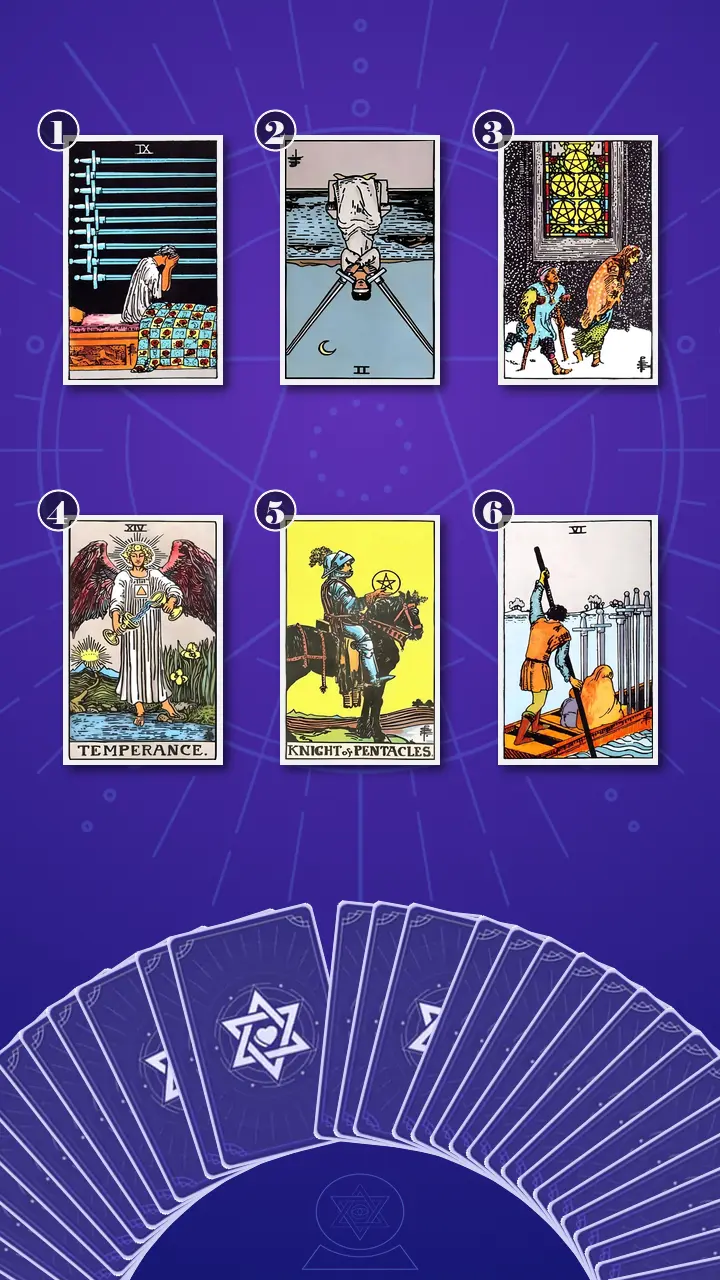
I laid the cards in a 2x3 grid—top row like weather, bottom row like repair. The Tube inside Jordan’s story felt far away for a second, replaced by the quiet click of cardstock and the soft drag of paper against my table.
Position 1: Present reaction—what your mind and body do in the waiting gap
Now flipped open is the card representing Present reaction: what your mind and body do during the waiting gap after “no rush.”
Nine of Swords, upright.
I didn’t have to reach for anything mystical. The translation landed immediately: It’s 1:26 AM and the room is lit by your phone glow. You’re rereading the last two messages like they’re evidence, zooming in on punctuation and time stamps, and you can feel that chest-and-stomach buzz that says, “Fix it. Do something.”
“This card is your brain as a prosecutor in a dark room,” I told them. “It presents ‘evidence’ like read receipts and timing—things that feel objective—but the verdict is always about your worth.”
The energy here isn’t balance; it’s excess Air: thought loops with no new data. “And I want you to hear this clearly,” I added. “You’re not needy—you’re negotiating with a timestamp. That’s different.”
Jordan gave a grim little laugh that was half recognition, half insulted relief. “That’s… painfully accurate. Like, almost rude,” they said, but their shoulders loosened by a millimeter—as if being named was, in itself, a kind of permission.
Position 2: Immediate blocker—the habit that turns uncertainty into urgency
Now flipped open is the card representing Immediate blocker: the mental habit that turns uncertainty into urgency and pushes you toward reactive texting.
Two of Swords, reversed.
I pointed to the blindfold and the crossed swords. “Reversed, this is what happens when you can’t hold ‘I don’t know’ without trying to end it.”
The modern-life scene was practically Jordan’s Notes app: thumb hovering over a follow-up, three drafts—funny, casual, ‘emotionally mature.’
“The blocker isn’t confusion,” I said. “It’s that not knowing feels like free-fall. So your mind tries to force a landing—double texting, overexplaining, ‘just checking you saw this :)’—anything that creates a hit of certainty.”
Jordan’s eyes flicked down to their phone on the table like it had just vibrated, even though it hadn’t. They did a half-smile—self-recognition—then their face sobered. “I’m not confused,” they admitted quietly. “I’m avoiding the feeling of not knowing.”
Position 3: Past belief—the older story that makes waiting feel like being left out
Now flipped open is the card representing Past belief: the older story about worth and belonging that makes waiting feel like being left out.
Five of Pentacles, upright.
“Here’s the part that hurts,” I said, softer. “This card isn’t about a bad texter. It’s about the old imprint that decides what silence means.”
I offered the scene analogy that lives in this card’s bones: standing outside a lit pub window in winter, watching laughter inside and deciding you’re not invited—before anyone even spoke to you. “Your internal OS goes: Warmth exists… just not for me.”
Jordan swallowed hard. The lump-in-throat response came fast, like their body recognized the category before their mind could edit it. “There was someone,” they said, eyes fixed on the card instead of me, “who said ‘no rush’ and then… just slowly disappeared. I kept acting low-maintenance. I kept ‘being cool.’ And it still happened.”
I let that land. The Five of Pentacles energy is scarcity: the belief that being chosen is fragile, and you must manage it. “So when someone says ‘no rush’ now,” I said, “your nervous system doesn’t hear kindness. It hears the old possibility of being excluded without warning.”
I paused and said the bridge out loud, because Jordan needed it as much as the reader does: Warmth doesn’t only come from the notification bar.
Position 4: Key shift—the regulating energy that changes everything
Now flipped open is the card representing Key shift: the regulating energy that helps you reinterpret “no rush” without self-abandoning.
Temperance, upright.
The room went a little still—not dramatic, just that hush you get when a truth arrives without raising its voice.
Jordan was right back on the Tube in their own head: jaw tight, thread open again, “no rush” starting to sound like a trap instead of kindness.
I tapped the image of the angel pouring water between two cups. “Temperance is pacing. Not suppression. Not flooding someone with reassurance-chasing. It’s titration—making your feelings workable.”
And because I’m a Paris-trained perfumer, I couldn’t not translate it through scent. “In my world, panic is like the top notes of a fragrance—citrus, pepper, alcohol lift. It hits fast, burns bright, evaporates quickly. Self-respect is the base note—cedar, musk, vetiver. It doesn’t scream, but it lasts.”
I looked at Jordan. “Quick question—what do you reach for when you’re stressed? A sharp minty thing? A bright body spray? Something that ‘wakes you up’?”
Jordan blinked, surprised, then nodded. “Yeah. Peppermint oil. Always.”
“That’s my Attraction Analysis lens,” I said, “not in a woo way—in a pattern way. You’re drawn to ‘instant shift’ sensations. In dating, the equivalent is instant reply. Temperance teaches a different intimacy: steady warmth, not a jolt.”
Then I guided them into the modern pacing script: “Two cups. One cup is truth: ‘I want connection.’ One cup is calm: ‘I don’t have to chase it for proof.’ We mix them before we touch the thread.”
Jordan’s brows pulled together, and for a beat the reaction wasn’t relief—it was resistance. “But if I do that,” they said, voice sharp with a sudden anger, “doesn’t it mean I’ve been doing it wrong? Like I made myself small for nothing?”
I held their gaze. “It means you were trying to survive a feeling with the tools you had. Temperance isn’t an accusation. It’s an upgrade.”
Stop treating the pause like a verdict; start mixing calm and truth like Temperance’s two cups, and let time become an ally instead of a threat.
Jordan’s body did a three-step reaction chain I’ve seen in a hundred different forms: first, a brief freeze—breath caught, fingers hovering above their phone as if mid-scroll. Second, the cognitive seep—eyes unfocused, like a memory replayed without permission: the last slow fade, the last “no rush” that wasn’t gentle at all. Third, the release—an exhale that sounded almost annoyed, shoulders dropping as if they’d been wearing a backpack they forgot was there.
“Okay,” they whispered. “That… actually feels possible.” Then, more vulnerable: “I can do something without texting.”
I gave them the 10-minute Temperance Reset, exactly because it’s small enough to use in real life:
“Phone face-down. Ten-minute timer. One regulating action with a clear end—drink a full glass of water, quick shower, or walk to the corner shop and back. Then write two sentences: ‘The story my panic is telling is ___.’ ‘The facts I actually have are ___.’ And you’re allowed to stop early. This is practice, not punishment.”
I leaned in. “Now—with this new lens—think back: was there a moment last week where you could feel your thumb about to send a follow-up? What might have changed if you’d mixed calm and truth for ten minutes first?”
They nodded slowly. “Sunday. I wrote a whole tone-defense paragraph in Notes. If I’d done this, I think I’d have… slept. Or at least stopped auditioning to be ‘low-maintenance.’”
That was the shift in real time: from panic-driven rumination about response time to a first taste of paced self-trust—worth no longer negotiated through response speed.
Position 5: Action plan—the grounded behavior that protects your self-respect
Now flipped open is the card representing Action plan: one grounded behavior pattern that keeps your communication aligned with self-respect.
Knight of Pentacles, upright.
“This is the opposite of adrenaline texting,” I said. “The Knight doesn’t sprint toward reassurance. They build rhythm.”
I made it plain, because Jordan’s brain loves systems: “Think of this as a calendar habit, not a vibe. Reliability over adrenaline.”
Jordan’s face did something I love to see—calmer, slightly stubborn, in a good way. “I can do stubborn,” they said. “I just… forget when my chest starts buzzing.”
“Then we’ll make the plan so simple it survives the buzz,” I replied. “One clean message. One steady pace.”
Position 6: Integration—what changes when you practice the pace
Now flipped open is the card representing Integration: what changes internally when you practice the new pacing consistently.
Six of Swords, upright.
“This is you crossing,” I said. “Not to certainty—just to calmer water.”
The Six of Swords doesn’t promise that waiting becomes fun. It promises transition: you still notice the first flicker of anxiety, but it doesn’t hijack the night. You travel through the interval with structure.
Jordan stared at the boat for a long moment. “I want that,” they said. “Not perfect. Just… less punishment.”
One Clean Message, One Steady Pace
I pulled the whole map together for Jordan, like connecting dots they’d been staring at separately for months.
“Here’s the storyline,” I said. “Your present reaction is Nine of Swords: a mental courtroom where silence becomes evidence. The immediate blocker is Two of Swords reversed: you can’t tolerate not knowing, so you try to force clarity. Under that is Five of Pentacles: an old belonging alarm—‘Warmth exists, but not for me’—which makes ‘no rush’ sound like abandonment. Temperance is the bridge: regulate first, interpret second. The Knight gives you the container: a repeatable communication rhythm. And the Six of Swords is the payoff: calmer water in your body.”
The cognitive blind spot was clean once it was named: Jordan had been treating timing as a measure of worth, imported from Slack culture and past slow-fade pain. “The transformation direction,” I said, “is from controlling timing for reassurance to choosing a paced response plan that protects your self-respect even while you don’t know the outcome.”
Jordan frowned. “But I literally can’t do hours of willpower,” they said. “I’m in meetings. My phone’s right there. And the second I see ‘Seen,’ my body goes feral.”
“Perfect,” I said, not sarcastic—relieved. “Then we don’t do willpower. We do containers.”
- The Message Window RulePick one daily window for this thread (e.g., 7:30–8:00 PM). Outside it, mute that chat or turn off banner notifications for the evening—so your nervous system isn’t doing read-receipt surveillance on the Tube.Start with one 20-minute notification-off block if a whole evening feels impossible. Expect the “I’m losing momentum” argument—label it as the Nine of Swords voice, not a command.
- The Temperance Reset (10 Minutes)Before you open the thread: phone face-down, set a 10-minute timer, drink a full glass of water and take 6 slow breaths. Then write two lines: “The story my panic is telling is ___.” “The facts I actually have are ___.”If scent helps you regulate, choose a “base-note anchor” (cedar/vetiver/musk or any warm, steady fragrance you already own). One spray becomes your cue: regulate first, interpret second.
- The One Clean Message ProtocolSend one thoughtful reply—no extra commentary to manage how it lands. If you need to follow up, do it once after 24 hours (or one business day), and keep it simple. Draft in Notes if you must, then cut the final version by 30%.Boundary: no “tone-defense paragraphs” unless there’s a real misunderstanding to repair. Clean is kind to you, too.

Consistency Is a Boundary You Can Feel
A week later, I got a message from Jordan that wasn’t a screenshot essay—just one line: “Did the message window. Muted the thread. I still felt the spike, but I didn’t double text. I went to the corner shop, came back, and the world hadn’t ended.”
They added, almost begrudgingly: “Also… I slept.”
In my mind I saw it with the bittersweet honesty of real change: they’d finally slept a full night, but in the morning the first thought still arrived—What if I’m wrong?—and this time they just exhaled, reached for their grounding scent, and let the question exist without answering it with a follow-up text.
This is what a Journey to Clarity looks like in practice: not a perfect detachment, but a steadier relationship with the in-between—where “no rush” can be taken literally, and self-respect isn’t negotiated through response time.
When someone says “no rush,” you want to be the cool, emotionally intelligent person who can wait—but your chest still tightens like silence is you being quietly left outside the warm window again.
If you didn’t have to earn warmth through urgency, what would one small, self-respecting pace choice look like the next time you’re waiting?
This story is adapted from psychological research, written so that those in a similar struggle can see their own pattern in it — and find their next step clearly.These insights are not a substitute for professional psychological, medical, legal, or financial advice.
Learn more about our Journey to Clarity.
How did this insight land for you?
🫂 This Resonates Deeply
🌀 Living This Story
✨ Now I See Clearly
🌱 Seeing New Possibilities
🧰 Useful Framework
🔮 The Confirmation I Needed
💪 Feeling Empowered
🚀 Ready for My Next Step
Author Profile
 AI
AI“As a perfumer for fifteen years, I’ve learned to perceive human boundaries through the delicate metaphor of scent. Relationships need the right amount of space to breathe, and I've seen too many kind souls exhaust themselves trying to please everyone. I’m here with warmth and understanding—not to teach you to be guarded, but to help you gently clear the air and rediscover the comforting, safe boundaries that are rightfully yours.”
In this Love Tarot Reading :
Core Expertise
- Intimacy Distance Calibration: Using the metaphor of scent diffusion to diagnose whether your relationship suffers from emotional suffocation or detached coldness.
- Boundary Permeability Assessment: Objectively evaluating where your personal identity ends and your partner's begins, identifying unhealthy enmeshment.
Service Features
- The Blank Space Protocol: A behavioral challenge to intentionally create comfortable emotional or physical distance, allowing the 'oxygen' needed to reignite mutual attraction.
Also specializes in :
Explore Related Patterns:
Anxious AttachmentJordan wants to be respectful of the other person’s pace, but the moment the thread says Seen, the waiting gap stops feeling neutral. Their body treats the pause like a verdict, and the urge to double text or overexplain becomes a way to pull the relationship back into felt safety. Anxious Attachment fits because the core issue is not the message itself; it is the attachment alarm underneath it. A previous slow fade after “no rush” taught Jordan’s system that calm wording can precede disappearance, so present silence gets interpreted through an abandonment template. You can feel the pattern in the conflict between “I want to be chill” and “I can’t tolerate not knowing.” The attachment system is trying to secure closeness through urgency, but the cost is that your self-worth becomes negotiated through response speed instead of grounded in your own steadier sense of connection.
Certainty SeekingJordan’s thumb hovering over a follow-up is the cleanest behavioral anchor in the story. The follow-up is not carrying new information; it is trying to end the body state of uncertainty. “Just checking you saw this” becomes less like communication and more like a pressure valve. Certainty Seeking fits because the blocker is explicitly named: not knowing feels like free-fall. Jordan’s mind tries to force a landing through double texting, overexplaining, rereading, and drafting different versions of the same message. The behavior is an attempt to convert ambiguity into something controllable. The pattern becomes costly because it mistakes relief for clarity. You may get a short-term drop in panic after acting, but the deeper belief stays untouched: that uncertainty itself is unsafe. The shift is learning to tolerate the gap long enough to separate actual facts from the urgency to make the feeling stop.
Rejection SensitivityJordan’s jaw clamping around a Seen receipt is not just a reaction to delayed texting; it is the nervous system assigning meaning to a gap. The story shows a specific older imprint: someone once said “no rush” and then slowly disappeared, while Jordan tried to stay low-maintenance. That past experience gives the present pause a loaded emotional shortcut. Rejection Sensitivity fits because Jordan’s mind turns ambiguous timing into a verdict about belonging before there is enough evidence. You can see the mechanism in the way silence becomes “slow-motion rejection,” the way read receipts become courtroom evidence, and the way the body reacts before the rational mind can separate facts from fear. The pattern is not that You care too much. It is that your threat system has learned to treat delayed response as early proof of exclusion. Naming that mechanism creates room to ask a cleaner question: is this actual rejection, or is an old belief using a timestamp to recreate a familiar pain?
Emotional ReasoningJordan says their body treats the pause like a verdict, and that line carries the whole mechanism. The facts are limited: a Seen receipt, silence, and “no rush.” But the feeling is intense enough that the mind starts treating the feeling as proof. Emotional Reasoning fits because Jordan’s panic becomes the main evidence source. The chest buzz says “Fix it,” the jaw clamps, and the mind builds a case around timestamps and punctuation. The emotional signal is real, but the conclusion it pushes toward is not automatically accurate. This pattern matters because it makes the body’s alarm feel identical to relational truth. You are not being asked to dismiss the feeling; You are being asked to audit the leap from “I feel left out” to “I am being left out.” That gap is where regulation can return reality testing to the conversation.
Self-SilencingJordan remembers acting low-maintenance while someone slowly disappeared, and later catches themselves auditioning for that same role again. The story is not just about sending too many messages; it is also about shrinking the directness of need so the connection feels less likely to break. Self-Silencing fits because Jordan’s “I want to be chill” becomes a defensive posture when it disconnects them from what they actually want. Drafting tone-defense paragraphs and trying to sound funny, casual, or emotionally mature are ways of managing how their need lands before they have even expressed it. The pattern creates a painful double bind: if You speak, You fear being too much; if You stay quiet, You abandon your own clarity. The one clean message protocol matters because it offers a third option: honest communication without performance, apology, or panic-driven overcorrection.
Emotional RegulationJordan’s ten-minute reset begins with a concrete interruption: phone face-down, water, breath, and two written lines separating the panic story from the facts. That sequence matters because it changes the waiting gap from an emergency into something observable. Emotional Regulation fits because the shift is not suppression and it is not pretending the pause feels fine. The story calls it titration: making the feeling workable before acting on it. Jordan still feels the spike, but the spike no longer gets automatic control of the message thread. You can see the new pattern when Jordan mutes the chat, walks to the corner shop, and does not double text. The emotion is still present, but it has a container. That is the psychological upgrade: regulate first, interpret second, and let your next move come from self-respect rather than a timestamp.
Compulsive CheckingJordan keeps reopening the same WhatsApp thread on the Northern line, watching Seen as if the screen might produce a new truth. The phone is hot in their palm, the thumb hovers, and the loop repeats: refresh, hope, spike, crash. Compulsive Checking fits because the checking behavior continues even when it cannot provide the answer Jordan is actually seeking. Punctuation, timestamps, and read receipts become substitute evidence for a deeper question about whether they are wanted, but those signals are too thin to carry that much psychological weight. The mechanism is a short-term regulation attempt that keeps the nervous system activated. You check to feel safer, but each check trains the brain to treat the thread as the place where safety must be found. The message window works because it moves safety back into a container You control, rather than leaving it inside the notification bar.
Explore Related Struggles:
Certainty-Safety FusionJordan's thumb hovers above the follow-up while three possible drafts compete to sound funny, casual, and emotionally mature. The message is not only a message; it becomes a rope thrown toward certainty, something to stop the free-fall of not knowing. You are trying to turn uncertainty into safety before the other person has actually answered. That is the fusion: certainty starts to feel like the only form of safety your body will accept, so any pause becomes a problem to solve instead of an interval to move through with structure.
Read Receipt Worth LockJordan keeps opening the WhatsApp thread on the Northern line: 'Seen,' no reply, screen hot in their palm, jaw clenched around a pause that has not actually said anything. The timestamp starts behaving like testimony, and the silence gets pulled into a private courtroom where the verdict is about whether they matter. You are not only waiting for a message here. You are trying to locate your worth inside a metric that can never hold it: response speed. When the phone stays quiet, the self begins negotiating with an interface state, and every minute of waiting feels like another vote on whether you are wanted.
Scarcity-Timing BindJordan's body recognizes the old scene before their mind can edit it: someone once said 'no rush' and then slowly disappeared. The new pause is not entering an empty room; it is entering a remembered winter window, where warmth is visible inside but feels unavailable from the pavement. You are not panicking because waiting is inherently dangerous. You are waiting inside an older equation where delay means exclusion, and exclusion means you should have managed yourself better. The past belief is scarcity with a clock attached: warmth exists, but if it does not arrive quickly, it was probably never meant for you.
Low-Maintenance Worth LockJordan says they kept 'being cool' while someone slowly disappeared, then recognizes the Sunday draft as another audition to seem low-maintenance. The performance looks calm from the outside, but it asks the need for reassurance to hide in the body and pay rent there. You have been trying to become easier to choose by requiring less visible care. The lock forms when self-respect gets mistaken for needing nothing, so waiting becomes terrifying not just because the other person is silent, but because you fear that even making yourself smaller may not be enough to keep warmth nearby.
Relational Pacing StrainJordan wants to respect the other person's pace, but their body treats the pause like a verdict. The conflict is visible in the smallest movements: the phone face-up, the thumb hovering, the wish to be measured against the immediate need to do something. You are trying to build connection without flooding the space that connection needs to breathe. The strain sits in the middle distance between chasing and disappearing, where a clean message and a steady pace become more than communication tactics; they become a boundary your body can actually feel.
Monitoring-Safety FusionJordan does read-receipt surveillance on the Tube, then again in the phone-lit room, because the thread is always close enough to check. Each refresh promises orientation, but it keeps returning the same empty fact: the interface has changed nothing. You are using monitoring as a safety rail, even though the rail keeps you pressed against the edge. Muting the chat or creating a message window is not emotional detachment; it is a way of taking your attention back from a timestamp that has been allowed to act like the only available proof of connection.
Explore Related Emotions:
Cautious Self-TrustJordan's turning point is quiet and practical: phone face-down, ten minutes, one regulating action, then two sentences separating the panic story from the facts. Later, they still feel the spike, but they do not double text, and the night does not collapse around the thread. Cautious Self-Trust fits because the new steadiness is not total confidence. You are still aware of the old alarm, but you begin to trust that you can survive the first wave without obeying it. The body learns through repetition that waiting can be uncomfortable without becoming a command. This emotion is the repair side of the story. It does not require perfect detachment or pretending not to care. It simply gives you enough faith in your own pacing to choose one self-respecting action before the timestamp writes the next move for you.
Conditional Belonging FearJordan names the older story with painful precision: someone once said no rush and then slowly disappeared, while Jordan kept trying to stay easy to keep. The image of standing outside a warm window captures the belief that connection exists nearby, but somehow not for them. Conditional Belonging Fear is the emotional weather underneath the current panic. You are not only afraid of a late reply; you are afraid that belonging is temporary, revocable, and dependent on how little you ask for. Silence then becomes loaded with the old possibility of being excluded without anyone clearly saying it out loud. The past belief turning waiting into panic is this: warmth has to be earned through restraint, timing, and not needing too much. Seeing that belief clearly does not erase the ache, but it stops the delay from masquerading as objective proof that you are already outside.
Low-Maintenance ShameJordan says they want to be chill and respectful of the other person's pace, even while their thumb hovers over a follow-up and three possible tones compete in their head. Later, the older memory sharpens the pressure: they kept acting low-maintenance, kept being cool, and the person still slowly disappeared. Low-Maintenance Shame lives in that contradiction. You want connection, but you also feel the need to make that wanting look effortless, tidy, and undemanding. The result is a painful split where the honest need for reassurance gets treated like something that must be edited before it can be allowed into the room. This label matters because the shame is not evidence that you are too much. It shows how strongly you have learned to associate visible need with relational risk. Once that is visible, self-respect can become more than silence, performance, or a perfectly casual message.
Timing Dependence AnxietyJordan opens the same WhatsApp thread again on the Northern line, phone hot in their palm, while Seen sits there without the relief of a reply. The whole evening narrows around timing: how long it has been, what the delay might mean, whether another check will finally change the feeling in the body. Timing Dependence Anxiety names the way emotional steadiness gets outsourced to response speed. You may intellectually know that no rush can mean exactly what it says, but the body has started using reply time as a live measurement of safety, interest, and value. Every minute without new data becomes another place for the mind to project loss. The point is not that wanting a reply is wrong. The sharper issue is that the notification bar has become too powerful as an emotional authority. Once you can see that dependence, the waiting gap becomes something you can contain rather than something that automatically owns your nervous pace.
Verdict DreadJordan sees the message marked Seen, feels their jaw clamp, and describes the pause as a verdict before the other person has actually said anything new. The body responds to a timestamp as if it has already received a ruling, which makes the waiting gap feel less like time passing and more like a private trial of worth. That is why Verdict Dread fits the emotional logic of this story. You are not simply waiting for a reply; you are bracing for the meaning your mind has learned to attach to silence. The delay becomes evidence, the read receipt becomes testimony, and your sense of being wanted starts to depend on a screen that cannot give you the full context. The useful clarity here is that the panic is not proof that rejection is happening. It is proof that your system has learned to treat uncertainty as judgment. Naming that distinction gives you a small but real point of agency before the next message, draft, or refresh decides the mood for you.
Certainty HungerJordan describes the waiting gap as refresh, hope, spike, crash, with the body pushing toward anything that might end the uncertainty. The drafts in Notes, the hovering thumb, and the urge to send one more clean-sounding follow-up all circle the same need: make the not knowing stop. Certainty Hunger names that craving for a signal strong enough to settle the body. You are not chasing drama; you are trying to land somewhere solid when ambiguity feels like free-fall. A reply, even a small one, starts to feel like oxygen because it gives the mind a temporary answer. The deeper audit is that certainty and connection have become fused. When you separate them, even slightly, you can want connection without forcing the next moment to resolve the entire relationship. That separation is where a paced response becomes possible.
Grounded AgencyJordan says the line that marks the shift: I can do something without texting. The action plan then gives that realization a body: one clean message, one steady pace, a message window, and a boundary around notifications. Grounded Agency names the return of choice when the other person's timing is no longer the only lever available. You cannot control when they reply, but you can control the container around your attention, the quality of your message, and the moment you decide whether to engage. The emotional difference is subtle but important. Instead of making self-respect wait for reassurance, you practice it inside the uncertainty. That makes the pause less powerful because your agency is no longer trapped inside the other person's response time.
Pattern Recognition CalmJordan starts by spiraling around Seen and no reply, then shifts when the pattern is mapped rather than moralized. The two-line reset asks for the story panic is telling and the facts actually available, which turns the waiting gap into something observable. Pattern Recognition Calm is the relief that comes from understanding the mechanism while it is happening. You do not have to feel instantly peaceful for the pattern to lose some power. Once the chain is visible, waiting, panic, old belief, and reactive texting are no longer one fused event. That calm is useful because it returns you to sequence. Regulate first, interpret second, message third if a message is still aligned. The feeling is grounded in clarity, not denial, and it gives your next move a cleaner origin.
Relational UrgencyJordan's body says Fix it. Do something before the situation has actually changed. The thumb hovers, the follow-up drafts multiply, and even a message framed as casual starts carrying the hidden job of securing the connection. Relational Urgency names the pressure to act because waiting feels unsafe. You may know that another message is not always needed, but the gap creates a demand for movement, as if restraint itself could cost you closeness. The urgency is relational because it is not about productivity; it is about trying to keep contact from slipping away. Seeing this pressure clearly lets you ask a cleaner question before acting: is this message communicating truth, or is it trying to buy relief from uncertainty? That pause restores some choice to a moment that previously felt automatic.
Shame SpiralJordan feels the panic first, then the shame layer lands on top: why am I like this? Even the moment of recognition has a sting, because seeing the pattern clearly can feel like being caught rather than being understood. Shame Spiral fits because the distress starts feeding on itself. You are anxious about the silence, then ashamed of the anxiety, then more urgent because the shame makes your need feel unacceptable. The original waiting gap becomes harder to tolerate because now it seems to be saying something about your character. This is where naming becomes useful. The problem is not that you have a feeling; the problem is that the feeling is being cross-examined as a flaw. When that second layer is separated out, the next move can come from observation rather than self-punishment.
Explore Related Contexts:
Low-Maintenance Dating PressureJordan says they kept acting low-maintenance, kept being cool, and the person disappeared anyway. Later they name the same script again when they say they were auditioning to be low-maintenance. Low-Maintenance Dating Pressure captures the social role Jordan was pushed into: needing connection while performing as if they need almost nothing. In that role, asking for clarity can feel like breaking the terms of being desirable, so silence gets managed through polish, restraint, and tone-defense drafts. The reading gives that script a boundary. You can respect another person's pace without making yourself smaller for the sake of appearing easy to date, and a clean message can be self-respecting without becoming a demand for instant reassurance.
Read Receipt PressureJordan keeps reopening the same WhatsApp thread on the Northern line, and the screen gives them one hard piece of social data: Seen. That small status marker turns the absence of a reply into something trackable, repeatable, and difficult to leave alone. Read Receipt Pressure fits because the external system is doing part of the work. The platform confirms visibility without providing context, so you are left trying to interpret silence through a binary signal that was never designed to carry relational nuance. The useful audit point is that the read receipt is not proof of rejection; it is a design-shaped social cue being overloaded with meaning. Once you separate the read receipt from the relationship itself, the next move can come from pacing rather than surveillance.
Response Time PressureJordan says they want to be chill and respectful of the other person's pace, but the delay after no rush becomes the thing their whole communication plan starts orbiting. The story keeps returning to time: 8:47 PM, 1:26 AM, timestamps, a 24-hour follow-up, and a chosen message window. Response Time Pressure is the outer stage because speed becomes a social scoreboard. A slow reply is treated as a live test of value, and the lack of a clear response rhythm pushes you toward double texting, overexplaining, or drafting a cleaner version of yourself. The structural shift in the reading is to stop letting the other person's timing run the whole room. A defined window and one clean message give you a pacing container, so waiting can become an interval you move through rather than a verdict you have to overturn.
Mixed Signal LimboThe phrase no rush should lower pressure, but in Jordan's story it sits next to Seen, silence, and the memory of a previous slow fade. The words say there is time; the digital behavior gives no stable cue about whether connection is still active. Mixed Signal Limbo fits because Jordan is left in a relational in-between where the message is neither a clear rejection nor a reliable invitation. You cannot solve that kind of ambiguity by analysing punctuation, because the external information itself is incomplete. A paced plan does not pretend the signal is clearer than it is. It gives you a way to stay present with uncertainty, send one clean message if needed, and avoid turning ambiguity into a full-time monitoring job.
Timing Signal OverloadJordan's story is crowded with timing cues: Slack-fast work norms, read receipts, timestamps, punctuation, 8:47 PM on the Tube, and 1:26 AM in phone glow. The relationship becomes filtered through a dashboard of tiny signals. Timing Signal Overload names the external environment where micro-data starts carrying macro-meaning. A delay, a seen status, or a missing banner notification becomes treated like a status update on belonging, even though those signals cannot explain the other person's capacity, intent, or context. The audit move is to downgrade the signal back to its real size. When you stop asking every timestamp to answer the whole relationship, you can use rules like mute, wait, reset, and reply once to keep digital noise from becoming relational evidence.