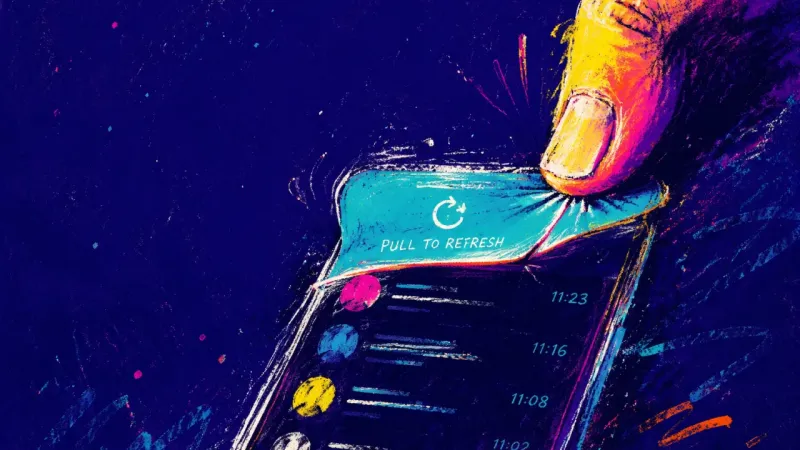
The 45-Minute WhatsApp “Last Seen” Spiral
“You open WhatsApp ‘just once’ to check their status, then somehow it’s been 45 minutes and you’ve built a full narrative out of a green dot and a timestamp.”
Taylor said it like she was confessing to a crime that technically doesn’t exist. She was 28, in London, early-career marketing—one of those jobs where Slack pings train your body to believe response time equals respect. And now her nervous system was importing that rule straight into dating.
She described Tuesday nights on the Northern line: the slight flicker of carriage lights, damp coats pressed too close, her phone screen glowing too bright in her palm. She’d send a normal text—How was your day?—then lock her phone like a promise. Five minutes later, she’d unlock it. “Last seen 12 minutes ago.” Her chest would clamp like a seatbelt yanked too hard. Her thumb would hover, refresh, hover again. Not dramatic, not cinematic—just that small, private panic that feels louder than the whole carriage.
“I hate that a timestamp can ruin my mood,” she told me. “I don’t even want to text them, I just want to know where I stand. If I ask for clarity, I’m scared it’ll make me look desperate.”
What I heard underneath was the core contradiction: she wanted reassurance and closeness—and she also feared that if she stopped monitoring, she’d finally discover she didn’t matter to them.
In her body, it sounded like restless hands and a tight chest that eased for a moment after checking… then returned the second uncertainty showed up again. Like using “last active” as a relationship FitBit—counting steps instead of asking how your body feels.
“Okay,” I said gently. “Let’s not try to force you into being ‘chill.’ Let’s try to understand what the checking is protecting—and what it’s asking for. We’re going to map the fog until you can feel a little more clarity.”

Choosing the Compass: The Four-Layer Insight Ladder
I invited Taylor to take one slow breath—nothing mystical, just a nervous system handoff. Then I shuffled while she held her question in mind: After I check their last active, what’s my anxious attachment saying?
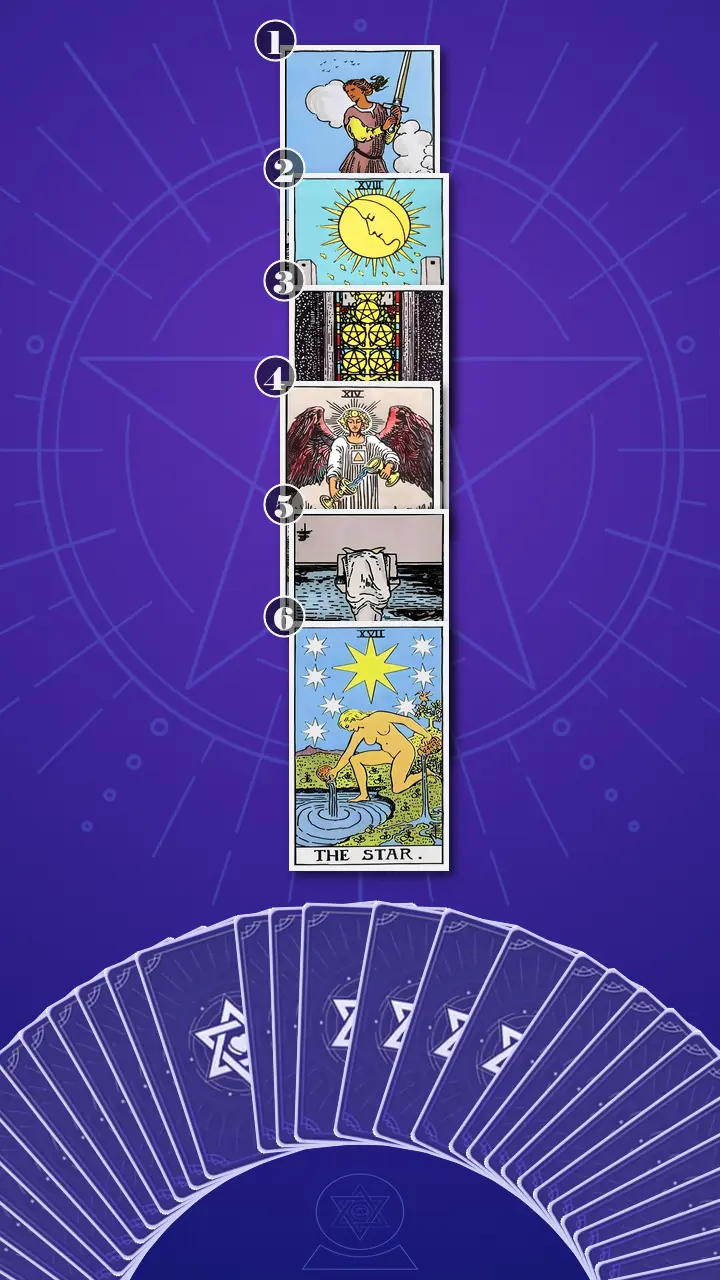
Today, I chose a spread I use when the question isn’t really “What will they do?” but “What is this pattern trying to solve?” It’s called the Four-Layer Insight Ladder · Context Edition, a linear six-card tarot spread designed for anxious attachment texting loops, read receipt anxiety, and that specific modern ache of watching someone be online while you feel emotionally locked out.
Here’s why it works, especially if you’ve ever googled “why does checking last seen make me feel worse” at 11 p.m.: this ladder separates the layers your mind keeps mixing together.
Position 1 shows the observable moment (the checking). Position 2 shows the emotional weather in the gap (what your body and imagination do). Position 3 reveals the deeper wound that turns a timestamp into a threat. Position 4 is the stabilizer—the medicine. Then Position 5 and 6 translate that steadiness into a choice and a one-week integration, because insight without a next step is just another kind of doomscroll.
Reading the Map: What the Cards Say “Out Loud”
Position 1: The Observable Moment — Page of Swords (upright)
“Now we turn over the card that represents the observable moment: what the checking behavior is trying to accomplish right now.”
The Page of Swords, upright.
This card always makes me think of a person bracing into wind—eyes scanning, blade raised, ready to interpret. In Taylor’s life, it’s painfully literal: she’s just sent a text while walking from the office to the station, and she keeps reopening WhatsApp to refresh “last seen” like she’s checking the weather. Her brain calls it “information,” but her body is on patrol—thumb hovering, shoulders tense—because the real goal is to prevent surprise rejection.
The Page’s energy here is excess: too much alertness for too little actual data. The mind starts doing what Taylor called “being rational,” but it’s really hyper-vigilant pattern-scanning—tiny data points, courtroom logic, closing arguments in her head.
I said, “If it costs your whole evening, it’s not a ‘quick check.’ It’s your nervous system trying to buy certainty the way you might buy snacks at a petrol station—expensive, unsatisfying, and somehow you still leave hungry.”
Taylor let out a small laugh that had a bitter edge. “That’s… rude. But accurate.” Her fingers tightened around her mug, then loosened, like she’d been caught mid-reflex.
Position 2: The Emotional Weather — The Moon (upright)
“Now we turn over the card that represents the emotional weather in the gap after checking—what uncertainty triggers in your body and imagination.”
The Moon, upright.
In classic tarot imagery, there’s a dim path between two towers. It’s not a horror-movie threat; it’s low visibility. And low visibility is exactly where the mind starts inventing certainty.
This is Taylor late at night: the flat is quiet, radiator ticking, faint traffic hum outside, and her screen is bright enough to tint her face blue. She sees “active 10 minutes ago” and her mind writes a whole plot in ten seconds: They’re choosing someone else. I said something wrong. I’m embarrassing myself. Nothing new happened—except the fog got thicker because her nervous system is tired.
The Moon’s energy here is blockage—not a lack of intelligence, a lack of light. So the brain starts doing what it’s trained to do at work: present evidence, cross-examine, deliver a verdict. Then mistrust the verdict. Two-track inner monologue: Maybe they’re busy versus No, they’re ignoring me.
I told her, “You’re not ‘too much’—you’re under-informed.”
Her mouth twitched into a recognition-smile. She looked away from the camera for a second like she was watching her own Sunday-night behavior play back on a screen.
Position 3: The Root Wound — Five of Pentacles (upright)
“Now we turn over the card that represents the deeper attachment wound or limiting belief that turns a timestamp into a threat.”
Five of Pentacles, upright.
The image is two figures moving through cold beneath a stained-glass window glowing with warmth. It’s the sensation of belonging being visible—but not available to you.
And this is exactly what Taylor had been saying, even when she thought she was talking about WhatsApp. She didn’t truly want to text them—she wanted to know where she stood. But when they were online and not replying, it didn’t land like, they’re busy. It landed like, I’m not chosen. So she tried to earn safety by being perfectly composed. And the more composed she acted, the more alone she felt.
This card’s energy is deficiency: a shortage of felt belonging. Not in her life overall—Taylor had friends, a job, a city—yet in the exact moment of the gap, her body behaved like love was a warm room and she was outside on a wet street looking in.
Here, I used one of my Jungian tools—what I call Stained Glass Decoding. I told her, “The window in this card is an archetype. It’s the part of you that projects a whole identity onto a small signal. You see ‘active 10 minutes ago’ and the stained glass lights up a story: ‘I’m the Outsider. I’m the one who doesn’t get picked.’”
Then I gave her the inner-monologue structure I’ve heard in thousands of sessions, from London flats to midnight ship decks:
“If they don’t answer fast, it means ______; and if that’s true, I’m ______.”
Taylor swallowed. Her eyes went glassy for a second—not tears, more like pressure behind the eyes. “If they don’t answer fast, it means I’m not important,” she said quietly. “And if that’s true, I’m… replaceable.”
That was the warm-window moment: the realization that the monitoring wasn’t really about them. It was about protecting her from that sentence.
When Temperance Spoke: Balance Before Meaning
Position 4: The Balancing Lever — Temperance (upright)
I paused before turning the next card. The room—even through a video call—felt quieter, like we’d both stepped out of the noisy street and into the doorway.
“Now we turn over the card that represents the balancing lever: the inner skill or resource that reduces compulsive monitoring.”
Temperance, upright.
Temperance is an angel pouring liquid between two cups: measured, patient, un-rushed. In modern terms, it’s a mixing desk—turn down panic, turn up reality, find a usable level before you hit send.
Taylor’s checking loop had been asking for clarity by collecting micro-data. Temperance answers, clarity comes from steadiness first. Not because you “shouldn’t care,” but because you can’t reality-test while your body thinks it’s in danger.
In my work—back when I trained intuition on international cruises, watching people fall in love and fall apart between ports—I learned something simple: in rough seas, you don’t steer by panic. You distribute weight, lower the wobble, then you choose direction.
That’s why I brought in my Gondola Balance Technique here. “Imagine your relationship anxiety like a gondola,” I said. “When all the emotional load is stacked on one side—on the chat window, on the green dot—the whole boat tilts. Temperance is you moving some of that weight back into you: your breath, your values, your boundaries. Same water. Different balance.”
The Aha Moment (Setup)
Taylor nodded, but I could see the familiar trap still waiting for her: she sends a text, puts her phone down, then picks it back up like it’s a relationship pulse oximeter. She sees “active 10 minutes ago,” her chest tightens, and suddenly she’s collecting micro-evidence instead of living her evening.
The Aha Moment (Delivery)
Stop treating a timestamp like a verdict, start mixing emotion and reason like Temperance pours between two cups, and let balance choose the next move.
I let that sentence sit for a beat, like a bell tone fading.
The Aha Moment (Reinforcement)
Taylor’s reaction came in layers—a three-step chain I’ve seen so many times when the right truth lands.
First, a tiny physiological freeze: her breath paused, and her hand stilled mid-gesture, fingers hovering near her collarbone.
Second, cognitive seep-in: her eyes unfocused, like she was replaying every night she’d stared at “last seen” and called it research.
Third, emotional release: she exhaled from low in her chest—one of those long, involuntary exhales that sounds like giving something back. “I hate that it feels like a verdict,” she admitted, voice a little rough. Then, unexpectedly, her brows pulled together and she frowned. “But… if I stop treating it like a verdict, doesn’t that mean I’ve been doing this wrong the whole time?”
I didn’t rush to reassure her. “It means you’ve been trying to protect yourself with the only tools that worked fast,” I said. “And you’re allowed to upgrade your tools without shaming the old ones.”
Then I offered the core reframe exactly as she needed it: “A timestamp isn’t clarity—it’s a trigger.”
I continued, “Now, with this new lens—regulation first—think back to last week. Was there a moment where your thumb hovered over the app, and this could have changed what you did next?”
Taylor’s shoulders dropped a fraction, like she’d been holding them up by habit. “Sunday,” she said. “11-ish. I was about to double-text, then I didn’t, but I monitored for an hour anyway. If I’d steadied first… I might’ve just gone to bed.”
This was the shift happening in real time: from hyper-vigilant reassurance-seeking through “last active” monitoring to grounded self-regulation and self-respecting clarity. Not perfect security—just a first rung down from the ledge.
Position 5: The Choice Point — Two of Swords (reversed)
“Now we turn over the card that represents the boundary or communication choice: how to move from indirect monitoring to direct clarity.”
Two of Swords, reversed.
This is the card of stalemate—blindfold on, arms crossed, protecting the heart by refusing the decision. Reversed, the freeze leaks out sideways: draft, delete, rewrite to sound ‘chill,’ then send nothing… and keep monitoring.
In Taylor’s real life, this was twelve drafts in Notes titled something like What I should say (but won’t). Two opposite scripts rehearsed on repeat: one where she acted completely indifferent, one where she confessed everything. Then she did neither and stayed in limbo.
Here, the energy is blockage that pretends to be safety. I said it plainly: “Limbo feels safer than an answer. But limbo costs you your whole evening.”
Taylor winced—just a quick tightening around the eyes. “Monitoring is not communication,” she murmured, almost like she was trying the words on.
“Exactly,” I said. “And asking clearly isn’t chasing. It’s you choosing reality.”
Position 6: Next-Week Integration — The Star (upright)
“Now we turn over the card that represents integration for the next week: what secure attachment practice looks like in daily life.”
The Star, upright.
The Star is what comes after the fog—open sky, steady light, the body remembering it can breathe. If The Moon was low-light mode, The Star is turning on a lamp and realizing the room is just… a room. Not a courtroom. Not a verdict.
This card asks for an inner reference point: a standard that doesn’t rise and fall with someone’s online status. It’s Taylor deciding, slowly and repeatedly, that her worth is not up for negotiation in a chat window.
She stared at the card on my screen, then said softly, “I want that. I want the quiet.”
I nodded. “We build it the same way you build trust with anyone—through small, consistent experiences.”
From Insight to Action: A Small, Real Plan for the Next 48 Hours
I stitched the spread together for her, like threading lace—one clean line at a time.
The story the cards told was simple and painfully human: Taylor’s mind (Page of Swords) tried to create safety through information. But the information was low-visibility data (The Moon), so it triggered projection and courtroom logic. Underneath, the real wound wasn’t “slow replies”—it was the Five of Pentacles fear of being outside the warm room, unchosen. Temperance didn’t promise an answer from the other person; it offered a stabilizer inside Taylor. From that steadiness, Two of Swords reversed asked for a pivot: choose clarity over limbo. And The Star promised something both modest and powerful—an inner baseline that makes you less available to the app’s emotional analytics.
The cognitive blind spot was clear: Taylor had been treating monitoring as a form of intimacy, as if collecting micro-signals could replace being known. But monitoring doesn’t create closeness; it creates surveillance. And surveillance creates more fog.
The transformation direction was the one her whole body needed: move from interpreting signals to naming needs. Regulate first, reality-test second, then choose one direct, time-bounded action.
I offered her a small plan—nothing heroic. Just something she could do even on a tired Tuesday when her thumb was already hovering.
- The 90-Second Temperance PourBefore you open WhatsApp/Instagram, set a timer for 90 seconds. Put one hand on your chest. Inhale for 4, exhale for 6. Name it out loud: “This is insecurity + urgency.” Then open Notes and write two mini-columns: “Facts I actually have” vs “Stories my brain is writing” (3 bullets each).Expect resistance like “this is silly” or “I just want to know.” Lower the bar: do 30 seconds if 90 feels impossible. Your job is to interrupt the loop, not fix your whole attachment style tonight.
- One Bounded Clarity Text (Lace Method)Send one sentence that’s clear and time-bounded—no apology, no over-explaining: “Hey—would love to make a plan this week. Free to chat tonight or tomorrow?” Then stop. That’s it. Let the sentence be simple the way Burano lace is precise: clean edges, no extra threads.If you feel the urge to send three messages, that’s your cue to send one or send none. Asking clearly is not the same as chasing.
- A 60-Minute No-Status-Check WindowAfter you send the message, commit to 60 minutes with no “last seen/online” checking. Use Focus mode, or move the app into a folder. If anxiety spikes, do one grounding task for 10 minutes—wash one mug, change into comfy clothes, or take a quick walk to the corner shop.If you slip and check, don’t restart with punishment. Just say, “A timestamp isn’t clarity—it’s a trigger,” and do a shorter reset once.
Before we ended, I asked her one question that brought it all back to self-respect: “What would it look like this week to treat your worth as a fixed point—what’s one standard you’ll keep even when the app is loud?”
Taylor thought, then said, “I don’t interpret online status as evidence. I only use direct communication and observed behaviour.”
“That,” I told her, “is Star energy. Quiet, steady, yours.”
A Week Later: Ownership, Not Certainty
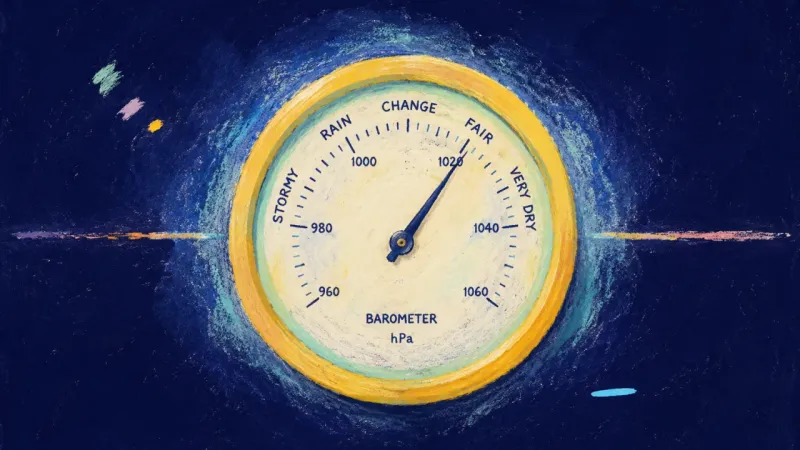
A week later, Taylor sent me a message. Not a paragraph—just a screenshot of her Notes app with two columns: Facts and Stories. Underneath, she wrote: “Did the 60 minutes. Felt like my hands were looking for something to grab, but I didn’t die. Also sent the one sentence. No spiral.”
She didn’t claim she was magically secure. She added, almost as an afterthought: “Slept through the night. Woke up and my first thought was still ‘what if I’m embarrassing myself?’—but this time I actually laughed. Like… okay, nervous system, I see you.”
That’s the real Journey to Clarity: not certainty about the other person, but ownership of your own baseline—enough steadiness to choose your next move instead of being dragged by the green dot.
And if you’re staring at “last active” with a tight chest and restless hands, it’s not really about the timestamp—it’s about the fear that if you stop monitoring, you’ll finally confirm you don’t matter.
If you gave yourself just one minute of steadiness before you look for a sign, what would you want to ask for—plainly, gently, and without apologising for needing it?
This story is adapted from psychological research, written so that those in a similar struggle can see their own pattern in it — and find their next step clearly.These insights are not a substitute for professional psychological, medical, legal, or financial advice.
Learn more about our Journey to Clarity.
How did this insight land for you?
🫂 This Resonates Deeply
🌀 Living This Story
✨ Now I See Clearly
🌱 Seeing New Possibilities
🧰 Useful Framework
🔮 The Confirmation I Needed
💪 Feeling Empowered
🚀 Ready for My Next Step
Author Profile
 AI
AI“Having traveled across cultures... I've learned that what we often lack isn't a simple answer, but a moment of being truly understood. I use a Jungian psychological lens to help you deconstruct your subconscious patterns—not to prove anything, but to be the gentle companion who helps you unravel your knots, free of judgment, so you can reconnect with your inner wisdom.”
In this Love Tarot Reading :
Core Expertise
- Attachment Loop Diagnosis: Logically decoding whether your relationship friction is driven by an anxious-avoidant trap or deep-seated insecurity.
- Shadow Projection Analysis: Identifying the unacknowledged fears or unmet childhood needs you are unconsciously projecting onto your partner.
Service Features
- The Projection Detachment Exercise: A structured psychological journaling prompt to separate your partner's actual behavior from your triggered internal narrative.
Also specializes in :
Explore Related Patterns:
Anxiety SpiralTaylor's spiral starts with a normal text and a small piece of digital information, then expands into a courtroom of imagined evidence. The phone check briefly lowers the pressure, but the next gap gives her mind another opening to build a more threatening story. The mechanism is recursive: body alarm creates checking, checking creates more data, more data creates more interpretation, and interpretation sends the body back into alarm. The loop keeps moving because each attempt to feel better also feeds the next round. Anxiety Spiral fits because the story shows escalation rather than a single anxious thought. You can see the pattern gaining momentum across body sensations, interpretations, and behavior until a timestamp has enough force to take over an entire evening.
Anxious AttachmentTaylor says she does not really want to text them; she wants to know where she stands. When they are online but not replying, the gap does not land as neutral busyness. It lands as a possible verdict that she is not important, not chosen, or replaceable. That is the attachment alarm underneath the checking. The mind reaches for the timestamp because closeness feels uncertain, and the body treats ambiguity like evidence of emotional danger. Monitoring becomes a substitute for felt security, even though it cannot actually answer the deeper question. Anxious Attachment is the central pattern because the story is not only about a phone habit. It is about how delayed response, online status, and silence get translated into belonging or exclusion. You are watching the nervous system ask, 'Do I still matter here?' through a tool that can only give partial data.
Certainty SeekingTaylor keeps returning to 'last seen' because the unknown feels harder to tolerate than the checking itself. A green dot, a timestamp, and a delayed reply become data points she hopes will finally tell her where she stands. The cognitive trap is that certainty is being built from low-visibility evidence. Her mind cross-examines tiny signals as if one more refresh will settle the case, but each new fragment only creates another possible interpretation. Certainty Seeking belongs here because the behavior is organized around eliminating ambiguity. You can see how the need for a definite answer becomes more powerful than the quality of the evidence, leaving Taylor with more surveillance and less actual clarity.
Compulsive CheckingTaylor's 'just once' WhatsApp check becomes 45 minutes of reopening, refreshing, and reading a timestamp like live emotional evidence. The behavior is concrete and repetitive: the tight chest eases after checking, then uncertainty returns, and the hand reaches for the app again. The checking is not random nosiness; it functions as a short-term defense against not knowing where she stands. Each refresh gives a burst of control, but it also trains the nervous system to treat the next gap as another threat that must be scanned. That is why Compulsive Checking fits the story so tightly. You can see the loop doing two jobs at once: trying to buy certainty and accidentally making the uncertainty louder. The app becomes less like communication and more like a private monitoring ritual that keeps the attachment alarm switched on.
Mind ReadingTaylor sees 'active 10 minutes ago' and her mind writes the plot before the other person has said anything: they are choosing someone else, she said something wrong, she is embarrassing herself. The timestamp becomes a screen for motive, intention, and relational status. This is a projection-and-interpretation loop rather than a confirmed reading of reality. Because the gap has low visibility, the brain fills it with a story that feels protective: if she can decode the hidden meaning, maybe she can brace for rejection before it arrives. Mind Reading fits because Taylor is treating indirect digital behavior as if it reveals the other person's inner state. You can feel how quickly incomplete data becomes certainty, even though the story has not actually been checked through direct communication.
Reassurance SeekingTaylor's line, 'I don't even want to text them, I just want to know where I stand,' gives the pattern its clearest anchor. The checking is not mainly about conversation; it is an indirect attempt to feel reassured without having to ask for reassurance out loud. The defense makes sense: asking clearly feels like it could expose need, while checking stays private and controllable. But the private route cannot provide the thing she is actually seeking, so the body gets only a temporary drop in urgency before the same question comes back. Reassurance Seeking fits because the app becomes a proxy for relational safety. You are not seeing a simple desire for attention; you are seeing a nervous system trying to confirm connection through signals that were never designed to hold that much emotional weight.
Assertive CommunicationTaylor's final standard is specific: she does not interpret online status as evidence, and she uses direct communication and observed behavior. That turns the whole reading away from hidden monitoring and toward a clear relational practice. The psychological move is boundary-based expression. Instead of apologizing for needing clarity or padding the message with over-explanation, she sends one clean sentence and lets reality answer. Assertive Communication fits because the healthier path is not more data; it is a more direct channel. You can still care, still feel activated, and still choose a sentence that respects your need without turning it into a chase.
Emotional RegulationTaylor's shift begins when she stops treating the app as the first place to go for relief. The 90-second pause, the breath, and the Facts versus Stories columns create a small gap between the trigger and the checking reflex. That gap matters because reality-testing is almost impossible while the body is reading uncertainty as danger. By steadying first, she can separate observable facts from imagined verdicts, then choose a bounded clarity text instead of another round of surveillance. Emotional Regulation fits the integration arc because it names the skill that changes the pattern from the inside. You are not being asked to become detached or 'chill'; you are building enough nervous system steadiness to let direct communication replace panic-driven interpretation.
Self-SilencingTaylor has the sentence she wants to ask for, but she keeps editing herself into silence. She drafts, deletes, rewrites to sound 'chill,' and then does nothing while the monitoring continues in the background. The defense is self-protection through emotional concealment. If direct need could make her look desperate, then composure becomes a performance of safety; the problem is that the more perfectly contained she appears, the less known she feels. Self-Silencing fits because the unmet need does not disappear. It gets displaced into surveillance. You can see how not saying the clear thing preserves short-term dignity while quietly increasing the very loneliness she is trying to avoid.
Reflective DistanceTaylor's Notes screenshot matters because it shows a different relationship to the thought. She can still wake up with 'what if I am embarrassing myself?' but this time she recognizes it as her nervous system speaking rather than as a final verdict. The mechanism is cognitive distance. By naming 'insecurity plus urgency' and separating Facts from Stories, she stops merging with the first interpretation her anxiety produces. Reflective Distance fits because the outcome is not perfect security; it is a cleaner angle of observation. You can notice the alarm, respect that it is trying to protect you, and still decide that a timestamp is not enough evidence to run your evening.
Explore Related Struggles:
Clarity-Exposure SplitTaylor has the question in her mouth before she ever types it: she wants to know where she stands. Then the exposure cost arrives, and asking directly starts to feel like handing the other person evidence that she needs too much. You can see the freeze in the drafts, deletions, rewritten sentences, and the decision to send nothing while still watching the app. The need for clarity does not disappear; it gets pushed into a quieter, less risky channel that cannot actually respond. Clarity-Exposure Split names the locked position where directness feels necessary and dangerous at the same time. The result is a limbo that protects You from immediate vulnerability while charging You in hours of private uncertainty.
Monitoring-Safety FusionTaylor keeps reopening WhatsApp after sending a simple message, trying to turn a green dot and a timestamp into something solid enough to hold. The check gives her body a short drop in pressure, but the relief expires as soon as uncertainty returns. You can feel the struggle in the way monitoring becomes a safety ritual rather than a communication choice. The app offers data, but Taylor is asking for reassurance, position, and proof that she still matters. Monitoring-Safety Fusion names the moment when the nervous system starts treating observation as protection. The more You look for safety through indirect signals, the more safety gets outsourced to a screen that was never built to answer the real question.
Read Receipt Worth LockTaylor sees active 10 minutes ago and the cue does not stay small. It expands into the sentence she finally says out loud: if they do not answer fast, she is not important, and if she is not important, she is replaceable. You are watching worth get routed through a messaging interface. A delay becomes more than a delay because it carries the old fear of being outside the warm room while belonging is visible somewhere else. Read Receipt Worth Lock captures that bind between response data and self-value. The struggle is not that You care about a text; it is that a tiny digital signal starts acting like a ruling on whether You are chosen.
Certainty-Safety FusionTaylor's chest loosens for a moment after she checks, then tightens again as soon as the next gap opens. The body learns the rhythm quickly: get proof, feel steadier, lose proof, return to the screen. You can hear the bind in the way certainty becomes the condition for calm. Because no timestamp can stay current for long, the safety it provides keeps expiring and demanding another check. Certainty-Safety Fusion captures the deeper lock beneath the app behavior. The struggle is not simply wanting answers; it is needing immediate certainty before the body will allow the relationship to feel survivable for another hour.
Projection-Connection SplitTaylor calls the refresh a search for information, but the information is too thin to carry the meaning she puts on it. Active 10 minutes ago becomes a whole courtroom case about being ignored, rejected, or embarrassing herself. You are not seeing connection form; You are seeing interpretation take the place where contact should be. The more the mind fills in the blank, the less room there is for the other person's actual words, behavior, or clarity. Projection-Connection Split points to that substitution. The struggle is the painful attempt to feel closer by decoding signals, while the decoding itself keeps You alone with a story the relationship has not confirmed.
Explore Related Emotions:
Ambiguity DreadTaylor has two scripts rehearsing in her head: one where she acts completely indifferent, and one where she confesses everything. She chooses neither, then keeps watching the app as if limbo is less risky than a direct answer. Ambiguity Dread is the fear that lives inside that suspended space. The unknown feels safer than exposure for a few minutes, but over a whole evening it becomes draining. The absence of an answer starts to feel like its own answer. You can see why the dread sticks: asking clearly might bring reality, and reality could disappoint. So the mind stays with uncertainty, even while the body pays for it.
Certainty HungerTaylor says she does not even want to text them; she just wants to know where she stands. That distinction matters. The checking is not driven by ordinary curiosity but by a craving for a signal solid enough to quiet the emotional gap after she has made herself visible. Certainty Hunger shows up as the short-lived relief after each check. For a moment, the body believes it has found something to hold. Then the uncertainty returns, the timestamp stops satisfying the need, and the loop asks for another hit of information. The deeper ache is that no amount of micro-data can answer the question she is really carrying. The app can show activity, but it cannot give her felt security, mutuality, or a clean sense of where she stands.
Performative CalmTaylor tries to earn safety by staying perfectly composed. She drafts, deletes, rewrites to sound chill, and then says nothing, while the need for clarity keeps pressing underneath the surface. Performative Calm is the split between what she presents and what her body is carrying. On the outside, she is trying not to seem intense. On the inside, her hands are restless, her chest is tight, and the evening is being organized around a signal she is pretending not to need. This emotion matters because the calm is not peace. It is self-protection with a polished face. The more she performs not caring, the more alone she feels with the care that is still there.
Relational FogTaylor sits in the quiet flat with the radiator ticking and the screen tinting her face blue, and nothing concrete has changed except the visibility has dropped. The timestamp is small, but the mind rushes to fill the dark with plot: they are choosing someone else, she said something wrong, she is embarrassing herself. Relational Fog names that low-light state where uncertainty becomes emotionally immersive. The problem is not a lack of intelligence. It is that the available data is too thin, so the body starts treating imagination as evidence. You can feel the fog in the two-track monologue: maybe they are busy, no, they are ignoring me. Neither thought can fully settle, so the mind keeps circling, trying to make a clean answer out of a blurry signal.
Relational UrgencyTaylor is on the Northern line with damp coats pressed too close and her screen glowing too bright in her palm. The scene is ordinary, but her body is already responding as if the relationship has become urgent and time-sensitive. Relational Urgency is the pressure spike that makes waiting feel unsafe. The five-minute gap after a text does not register as neutral space; it becomes a countdown, a demand, a small emergency asking to be relieved by another check. The urgency is not proof that she is doing anything wrong. It shows how quickly her body converts uncertainty into action, and how little room she has to breathe before the app pulls her back in.
Replaceability DreadTaylor eventually completes the sentence she has been trying not to hear: if they do not answer fast, it means she is not important, and if that is true, she is replaceable. The WhatsApp check only looks like a search for information; underneath, it is guarding her from the feeling of being easy to overlook. Replaceability Dread lives in that warm-window image, where belonging is visible but not available. Someone can be online, reachable, present somewhere else, and still not reaching back toward her. The pain comes from watching closeness appear possible while her body translates the delay as exclusion. You are not seeing a simple fear of slow replies here. You are seeing the dread of becoming optional in real time, where every unanswered minute feels like it might reveal your place in someone else's priorities.
Security HungerTaylor keeps returning to the same tiny signal because the signal seems to promise something larger than information. She wants the feeling of a stable place in the connection, the sense that she is not floating outside the bond waiting to be let in. Security Hunger is the need beneath the checking loop. It is not neediness as a flaw; it is the body asking for a relational baseline it can trust. When direct clarity feels too exposing, the app becomes a substitute container for a need it cannot actually hold. You can hear the hunger in the contradiction at the center of the story: she wants reassurance and closeness, yet she fears that asking for either will make her look desperate. So the need remains real, but it travels through surveillance instead of contact.
Verdict DreadTaylor sends a normal text, locks her phone like a promise, and then reopens WhatsApp as if the timestamp has the authority to decide where she stands. Her body reacts before there is any new relational fact: shoulders tense, thumb hovering, chest tightening around a piece of low-quality data. That is the emotional logic of Verdict Dread. The app is not giving her clarity, but her nervous system treats it like a ruling. A green dot becomes a courtroom, a delayed reply becomes evidence, and the gap after sending a message becomes a place where her worth feels temporarily on trial. You can see the dread most clearly when she says she hates that a timestamp can ruin her mood. The panic is not about wanting to send another message; it is about fearing that silence will confirm something unbearable: that she matters less than she hoped.
Guarded LongingTaylor wants closeness, but the wanting cannot come forward directly. It moves sideways through checking, hovering, interpreting, and trying to read whether the door is open before she risks knocking. Guarded Longing is tender and defended at the same time. The longing is not absent; it is protected by distance, by restraint, by the hope that a timestamp will reveal whether it is safe to want more. That is why the no-status-check window feels like her hands are looking for something to grab. Without the app as a handle, the longing has to be felt more plainly, and that plainness is vulnerable.
Grounded AgencyTaylor's shift begins when she stops treating the timestamp as clarity and starts treating it as a trigger. The same app is still there, but she creates a pause before letting it decide the shape of her evening. Grounded Agency appears in small, practical movements: separating facts from stories, sending one bounded sentence, and letting the 60-minute window exist without turning it into punishment. The steadiness is modest, but it changes who is steering. You can feel the agency in her update a week later. She did not become perfectly secure; she stayed present long enough to choose her next move instead of being dragged by the green dot.
Quiet Self-TrustTaylor's new standard is simple: she does not interpret online status as evidence; she uses direct communication and observed behavior. That sentence gives her an inner reference point that does not rise and fall with the app. Quiet Self-Trust is not loud confidence. It is the first felt sense that she can survive the gap, ask plainly, and come back to herself even when the first thought in the morning is still, what if I am embarrassing myself? The trust is quiet because it is still being built through repetition. One no-check window, one clear message, one moment of laughing gently at the nervous system instead of obeying it.
Explore Related Contexts:
Digital Intimacy Boundary ConfusionTaylor has been treating monitoring as a form of intimacy, as if enough micro-signals could stand in for being known. The story names the distortion directly: collecting timestamps creates surveillance, not closeness. The boundary confusion sits in the space between private app metadata and mutual relationship communication. Someone being online is not the same as choosing not to care, but the platform makes those categories easy to collapse. The chat window starts acting like an emotional access point even though it cannot provide consent, context, or commitment. You are confronting a modern intimacy problem where digital visibility gets mistaken for relational truth. Digital Intimacy Boundary Confusion captures the outer structure: the technology offers access to traces of someone's activity, while the relationship still requires actual words, boundaries, and observed behavior.
Digital Snooping SpiralA 'just once' check becomes 45 minutes of reopening WhatsApp, refreshing the status, and constructing a full relationship narrative out of a green dot and a timestamp. Taylor is not receiving new communication from the other person; she is extracting micro-data from the platform because the actual relational exchange is missing. The spiral is visible in the repeated sequence: send a text, lock the phone, unlock it five minutes later, check 'last seen,' hover, refresh, and return to the same uncertainty. Each check briefly reduces the pressure, then creates another reason to check again. You are facing a loop built by digital access without relational clarity. Digital Snooping Spiral fits because the phone offers a small hit of apparent information while keeping the deeper question unresolved: whether this connection can give you direct, mutual, human communication instead of surveillance.
Direct Communication TrialTaylor's practical pivot is one clear, time-bounded sentence: asking whether they are free to make a plan this week, then stopping there. The action is small, but it changes the whole social setup because it replaces indirect monitoring with a direct request. This is still a trial, not a settled outcome. She has to test whether clarity can be asked for without over-explaining, apologising, or turning the request into three follow-up messages. The structure gives her a way to collect real-world information from the person rather than more metadata from the app. You are moving from interpreting signals to naming needs. Direct Communication Trial fits because the story's path forward is not to become detached or perform being unbothered; it is to use one bounded act of communication to find out whether the connection can meet reality.
Read Receipt PressureTaylor sends a normal message and then keeps returning to WhatsApp to inspect 'last seen,' active status, and the timing of the missing reply. The app is no longer just a messaging tool; it becomes the scoreboard where she tries to measure whether she is being respected, chosen, or quietly deprioritized. That pressure has a clear social source in the story. Her marketing job has trained a response-time economy where Slack pings make speed feel like proof of respect, and the same rule gets carried into dating. A timestamp starts functioning like a performance metric inside an undefined connection. You are not dealing with one random check. The external structure is a digital dating environment where visibility data looks objective but cannot actually answer the question of where you stand. Read Receipt Pressure names that exact bind: the platform gives you enough information to keep watching, but not enough clarity to stop needing an answer.
Relationship Hypervigilance LoopTaylor's attention goes on patrol after a text is sent: thumb hovering, phone unlocking, shoulders tense, tiny details getting cross-examined like evidence. The story keeps returning to the same external pattern, where a delayed reply turns the whole dating situation into an informal evaluation period. The problem is not that she lacks intelligence or that the timestamp contains reliable meaning. The problem is that the connection has not supplied enough clear relational structure, so her attention starts doing the work that a direct conversation would normally do. In that gap, every online cue becomes a possible status update. You are trying to locate yourself inside a relationship field that keeps withholding a stable map. Relationship Hypervigilance Loop names the outer stage where dating ambiguity, app visibility, and delayed response all combine into constant scanning rather than grounded contact.
Situationship AmbiguityTaylor says the clearest sentence in the whole story: she does not even want to text them; she wants to know where she stands. That makes the WhatsApp checking less about the app itself and more about trying to locate her position in a connection that has not been defined. The external tension is that clarity has a social cost in this dating setup. Asking directly feels like it might make her look too invested, so she drafts, deletes, rewrites, and returns to monitoring. The relationship stays active enough to keep her engaged but undefined enough to deny her a stable answer. You are in the pressure zone of a connection where closeness is implied but expectations are not stated. Situationship Ambiguity fits because the real pain point is not one slow reply; it is the missing agreement about what this connection is allowed to ask for, expect, and name.