A Stalled Decision Called Balance; One Small Test Lets Evidence In
When Caution Looks Like Balance: Finding Clarity Beyond Decision Paralysis
'You are the thoughtful Toronto junior project coordinator with a decision still sitting in Gmail Drafts after three advice threads, and Sunday Scaries make waiting feel like the mature choice,' I said.
Jordan (name changed for privacy) sat across from me at 8:47 p.m. on a Tuesday, at the kitchen table of a shared apartment. A Notion decision page glowed on the laptop, its neat columns holding the same task in both To Review and In Progress. Three advice tabs waited behind it. The phone felt warm in Jordan's palm, the refrigerator hummed steadily, and their shoulders stayed lifted as if the muscles had forgotten how to come down.
'I keep calling it balance,' Jordan said, looking at the unsent Gmail draft, 'but I cannot tell whether I am protecting myself or just staying still.' They wanted caution to protect their money, time, reputation, and emotional privacy. At the same time, they feared that the caution itself was hiding a risk: the risk of never sending the exploratory email, never asking the direct question, never running the small trial that could turn uncertainty into evidence.
The feeling sat in Jordan's body like a bridge held rigid at its midpoint, while unseen water moved beneath it. Their jaw tightened whenever they imagined pressing Send; their breathing became shallow whenever a choice required exposure. Waiting brought a brief, heavy stillness, but the relief dissolved into another round of checking, comparing, and second-guessing. This was analysis paralysis wearing a practical-looking outfit, and fear-based delay quietly being renamed balance.
'Wanting a safeguard does not make you difficult or incapable,' I told Jordan. 'It tells me that something important is at stake. We do not need to force a final answer tonight. We can look at what your caution is protecting, what it is keeping out of view, and what a small, reversible piece of contact with reality might teach you. Today, our Journey to Clarity is about giving the fog a map without taking the pen out of your hand.'
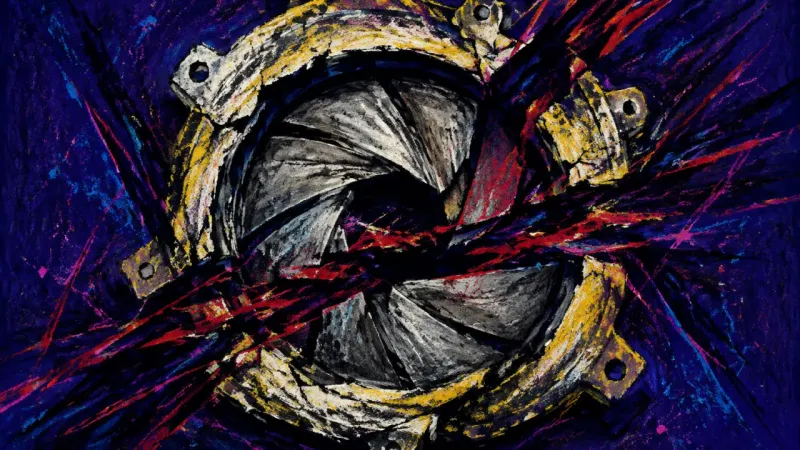
The Bridge With No Safe Middle
I invited Jordan to place both feet on the floor, notice the warmth of the phone, and take one slow breath without trying to make the decision disappear. I shuffled at an even pace. For me, this was not a supernatural performance or a demand to surrender judgment; it was a useful pause that moved attention from the looping screen to the question underneath it.
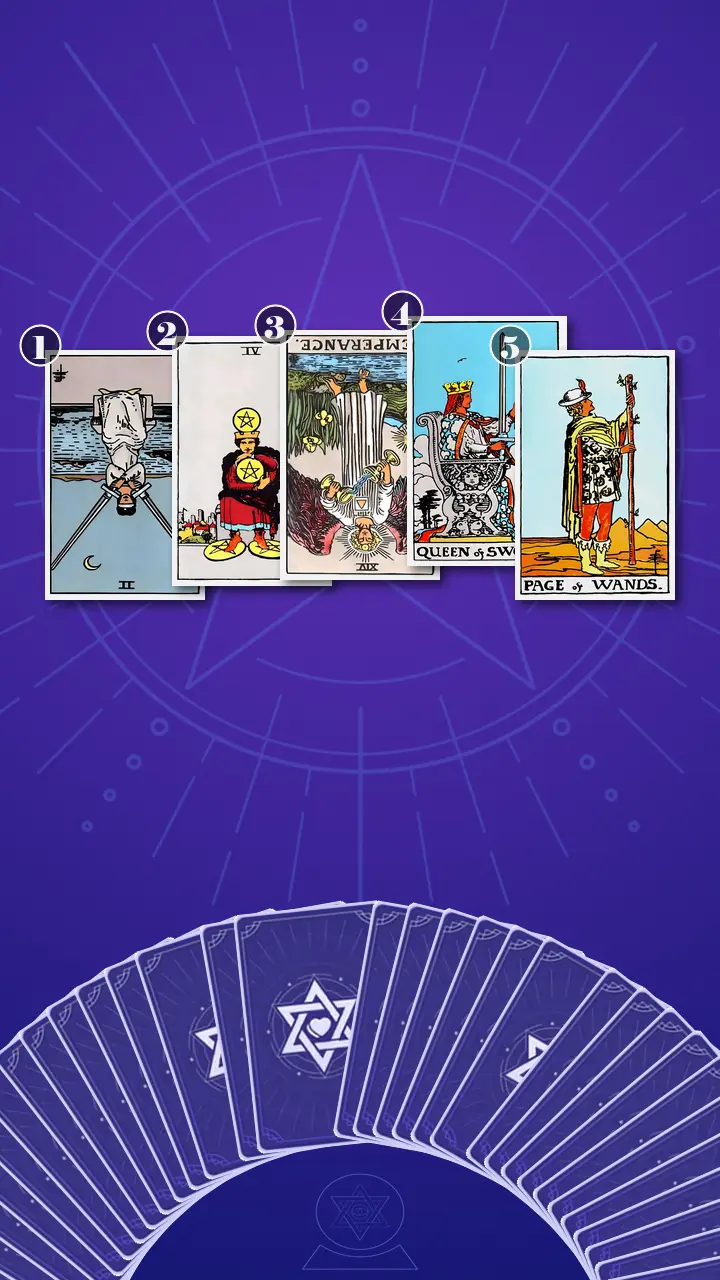
I chose The Shadow Spread, Context Edition, a five-card tarot spread for inner conflict, hidden risk, and stalled decisions. When people ask how tarot works, I explain that I use the images as structured prompts. The cards do not predict an unavoidable future. They make a pattern visible enough to examine, then let the querent compare that pattern with facts, boundaries, and lived experience.
This spread suited Jordan because the issue was not a simple choice between two external options. The deeper task was to excavate why caution felt balanced and what that definition of balance was hiding. The five-card arc moved from the visible stalemate, to the protective root, to the hidden cost, then to integrating discernment and an embodied next step. I told Jordan that the center card would show the blind spot, while the final two cards would help us turn insight into actionable advice and a low-stakes experiment.
I arranged the cards like a shallow bridge across the table. The first card sat at the far left as the surface lock. The second rose slightly as the grip beneath it. The third occupied the center, where stillness could reveal its price. The fourth lifted toward clarity, and the fifth rested at the far right, waiting to become movement.
The Draft That Never Leaves: Two of Swords Reversed
'Now I am turning over the card representing the surface expression of the inner conflict: how caution is being mistaken for balance, including the concrete pattern of delaying a small test,' I said.
The Two of Swords, reversed. In the Rider-Waite-Smith image, the gray blindfold and crossed swords describe blocked Air, a mind that has turned protection into a way of withholding perception. Reversed here, the energy is excessive analysis and insufficient contact with direct evidence. The problem is not a lack of intelligence. It is the belief that commitment must wait until every variable has been contained.
The scene on the table was unmistakable. Jordan had two options open in a notes app, a colour-coded pros-and-cons sheet beside them, and an exploratory email polished through several drafts. Both choices remained technically available, so the pause felt balanced. Yet the next useful fact could only arrive through a small test, not through another saved post or another round of comparison. The blindfold was not ignorance; it was one more tab placed between Jordan and the answer experience could provide.
'What fact do you already know?' I asked. 'And what ten-minute action could reveal the next fact without deciding the whole future?'
Jordan gave a short, bitter laugh. 'That is a little rude. It is exactly what I do.' Their thumb rubbed the edge of the phone case, then stopped. I did not rush to make the card sound gentler than it was. 'The Two of Swords is describing a pattern, not issuing a character judgment,' I said. 'A small decision has become a high-stakes verdict in your mind. We can reduce the scale without pretending the uncertainty is fake.' Jordan looked back at the blindfold, recognition and embarrassment moving across their face at once.
The Grip That Calls Itself Security: Four of Pentacles Upright
'Now I am turning over the card representing the protective root: what control or security the caution is trying to preserve, and what risk blind spot develops when the current arrangement is protected too tightly.'
The Four of Pentacles, upright. The figure grips one coin against the chest, anchors others beneath the feet, and holds another at the crown of the head. I read this as concentrated Earth energy: security is valuable, but the grip has become so strong that it blocks exchange. Jordan was trying to protect a modest savings cushion, a reliable-work identity, a manageable schedule, and the privacy of not yet having to explain an imperfect choice.
I asked Jordan to picture the first of the month, when the automatic rent transfer left the account and the bank balance was checked twice. A refundable course, a different roommate arrangement, or a conversation with a project lead could all be tested within a sensible limit, but each possibility felt like an unnecessary threat to what had already been secured. The current arrangement was genuinely worth protecting. The hidden problem was treating any movement as permanent loss.
'Protect what matters; do not protect the pause from being tested,' I said. 'A budget cap, an exit condition, or a time limit can protect the important thing. It does not have to protect every option from receiving new information.'
Jordan's hand closed briefly around the phone, then loosened. They glanced toward the laptop as if the bank app might still be open somewhere behind the decision page. 'I think I have been treating my emergency cushion like a glass object,' they said. 'Even touching it feels dangerous.' I nodded. 'That is a useful distinction. A proportionate safeguard is a container. A closed system is a room with no door.'
The Two Cups That Never Meet
The Frozen Midpoint: Temperance Reversed
Before I turned the center card, I told Jordan that this was the spread's major blockage, the hidden cost or blind spot shaping the entire situation. The room had not changed, but the refrigerator hum seemed louder for a moment, as though the kitchen itself were waiting to hear whether balance meant movement or merely a place where movement had stopped.
'Now I am turning over the card representing the hidden cost or blind spot: what the moderation trap keeps out of view, especially how a permanent midpoint can prevent new evidence from appearing.'
Temperance, reversed. The angel's two cups normally show an active exchange between different elements. One foot rests on land and one in water; the distant path leads toward the mountains. Reversed, the flow is disrupted. Jordan kept adjusting work hours, budget lines, message wording, and imagined outcomes without letting thought meet a conversation or trial. This was not too much caution in the simple sense. It was balance frozen into a permanent midpoint.
I placed my finger near the two cups. 'Imagine adjusting a recipe in a spreadsheet without tasting it,' I said. 'Or rearranging a shared calendar for the sixth time without asking the person whose availability matters. The plan keeps changing, but nothing new becomes knowable.'
'I am only fine-tuning this,' Jordan murmured, almost as though repeating a line from a familiar script.
'Then why does nothing new become knowable?' I asked. 'What has staying undecided already cost in feedback, time, connection, or choice?'
Jordan's breath stopped halfway in. Their fingers hovered above the keyboard, and their eyes lost focus as if an office scene were replaying behind the wall. Then their jaw worked once, hard, and a long breath came out from somewhere below the chest. 'Time,' they said. 'And maybe the chance to find out that the risk was manageable.' Their shoulders dropped a fraction, followed by a small, uncomfortable stillness. The release was not cheerful. It carried the sting of realizing that waiting had been doing something, too.
An option can stay open so long that the lack of evidence starts looking like evidence. That was the blind spot: Jordan had been counting only the risk of acting, not the risk of never testing. A shrinking window, lost feedback, and a conversation becoming urgent by default were consequences of inaction, not proof that the original choice was unsafe. Balance is something a person can adjust after contact with reality, not a permanent midpoint maintained to avoid the feeling of being seen.
When the Queen of Swords Raised the Question
The Boundary That Lets Evidence In: Queen of Swords Upright
The air in the room seemed to sharpen as I lifted the fourth card. I placed it above the center, where the arc began to rise.
'Now I am turning over the card representing integrating discernment: the mental boundary that can distinguish proportionate caution from fear-driven delay and answer what you are not seeing.'
The Queen of Swords, upright. She holds one sword straight into the open sky, looks directly ahead, and extends an open hand beside the throne. Her Air is clear rather than cold. She does not ask Jordan to ignore risk or become reckless. She asks for precise language: what is known, what is unknown, what can be managed, and what evidence would genuinely change the view.
This was the antidote card. In the Toronto office scene, Jordan had been hovering over Send because one imperfect sentence might invite an uncomfortable follow-up. I asked them to replace the twelve-tab research spiral with two plain lines. The manageable risk might be that the project lead says a limited trial cannot happen this month. The fear story might be that one imperfect email proves Jordan careless and closes every future door. One has a person, a time frame, and a possible response. The other has only a catastrophe waiting offscreen.
This is where I used my signature Internal Monologue Auditing. I listened not only for the content of Jordan's thought, but for the destructive genre directing it. 'I need one more piece of information before I can make a responsible choice' sounded reasonable on the surface, but the subconscious voice had turned the decision into a disaster procedural. Every unknown became a prosecuting witness. Every pause was edited to look like maturity. The Queen's raised sword did not silence that voice; it changed its job from judge to fact-checker.
I could also hear the fatigue of maintaining a social character, the reliable person who always appears measured, prepared, and low-drama. Persona fatigue can make an unsent message feel safer than an honest one because the message might reveal a preference before the character has approved it. Jordan did not need to abandon reliability. They needed to stop making reliability mean permanent withholding.
At 8:47 p.m. on a Tuesday, Jordan was at the shared apartment table, moving the same task between Notion columns while a Gmail draft waited unsent. The fridge hummed, the phone felt warm, and their shoulders stayed raised: waiting felt balanced because no option had been tested.
Caution is not balanced just because it postpones discomfort. Real balance names the risk that can actually be managed, sets a proportionate safeguard, and lets a bounded experiment reveal what waiting cannot.
I let the sentence rest between us. Outside, a car passed over wet pavement. Then I placed the Queen's single sword beside the crossed pair and said:
You do not have to keep every option frozen to be responsible; let the Queen's raised sword separate a real safeguard from a fear-driven pause.
For one beat, Jordan's body froze. Their breath paused, their fingers suspended above the keyboard, and their pupils widened as the line reached the place the spreadsheets had not. Then recognition moved through them. Their gaze shifted from the card to the draft, replaying the Toronto office moment when they had known what question to ask but searched Reddit for another perspective instead. Their mouth tightened. 'But does that mean I got it wrong before?' The question carried a flash of anger, not at me exactly, but at the weeks that had been spent calling the loop responsible.
I kept my voice level. 'It means your strategy made sense when exposure felt dangerous. It also means the strategy has stopped giving you useful information. Updating it is not a confession of failure.' The refrigerator motor clicked off, and the sudden quiet made the Queen's sword feel less like a verdict than a clean line on a page.
Finally, Jordan's fist released one finger at a time. Their shoulders lowered, though not completely. A tremor moved through the exhale that followed. Their eyes grew bright, and they gave a small, almost surprised nod. 'I can protect the project by asking what the limit is,' they said. 'I do not have to protect myself from finding out.' The relief brought a brief blankness with it, the light dizziness of seeing a path after standing on a bridge too long. The clarity was real, and so was the new responsibility of choosing the size of the next step.
'Now, use this new perspective to think back to last week,' I said. 'Was there a moment when this insight could have made things feel different?'
This was the first crossing from contracted self-protection and certainty-seeking toward proportionate discernment, bounded experimentation, and steadier self-trust. The Queen had not promised that Jordan's email would receive the hoped-for reply. She had given them a way to meet the reply, whatever it was, without confusing an outcome with a verdict on their judgment.
The First Small Flame: Page of Wands Upright
'Now I am turning over the card representing the embodied next step: a small, low-stakes experiment that lets you test balance through action, observation, and self-reflection rather than prediction.'
The Page of Wands, upright. The Page looks directly at a flowering wand, bright against an open landscape. The energy is exploratory Fire held by a modest Earth boundary. It does not demand a final commitment, a dramatic career pivot, or a perfectly confident identity. It asks what can begin while curiosity is still small enough to remain honest.
I connected it to Jordan's actual week: one exploratory email to a project lead, one direct question about a limited workflow, or one honest conversation about a boundary. The message could open a door without promising to walk through it. A beta release behind a feature flag can teach more than an immaculate product plan that never reaches a user. A small experiment is information, not a verdict on your judgment.
Jordan opened the Notes app and typed, 'I can handle uncertainty better once I have tested something small.' Their shoulders were still not entirely relaxed, and I was glad to see that. The goal was not to turn uncertainty into a motivational poster. It was to let a little movement create evidence while preserving the freedom to stop, adjust, or choose another route.
The One-Page Boundary Between Risk and Story
When I laid all five cards back into the arc, their logic became simple enough to hold. The reversed Two of Swords showed the visible lock: more comparison, no contact. The Four of Pentacles showed why the lock felt responsible: money, time, reputation, and privacy were being held close. Reversed Temperance revealed the cost of that protection, a plan endlessly fine-tuned without the exchange that could calibrate it. The Queen of Swords restored clear language, and the Page of Wands gave that language somewhere to go.
In Jordan's story, the old equation was: an uncertain choice triggers the need to stay cautious, more research brings temporary relief, the small test is postponed, useful feedback never arrives, and the growing uncertainty becomes proof that more caution is needed. The bridge metaphor held the whole pattern. Jordan had been standing at the midpoint and calling stillness balance, even though a bridge is built to carry measured movement.
The cognitive blind spot was not a hidden catastrophe waiting to punish an imperfect choice. It was the uncounted risk created by never testing anything: lost feedback, shrinking options, delayed boundaries, and the possibility that a manageable question would become an urgent problem by default. The transformation direction was equally practical. Jordan could protect what mattered while defining what safe enough meant for one step.
For the first exercise, I offered my Director's Cut of Self-Compassion. When the inner monologue began spiraling into self-accusation, I asked Jordan to pause the scene and edit the voice-over. The punitive judge could be replaced by an objective, supportive observer: not 'I am being ridiculous for waiting,' but 'I am trying to protect something. What specific safeguard would do that, and what information can only arrive through a bounded test?'
I gave Jordan two next steps. They were intentionally small. No card required them to continue, commit, disclose anything unsafe, or prove that caution had been wrong.
- The Proportionate Safeguard CheckThe next time Jordan reopened a decision document, they would spend ten minutes creating two headings, Manageable Risk and Fear Story. Under the first, they would write one concrete possibility that could be reduced by a limit, question, budget cap, or exit condition. Under the second, they would name the imagined consequence. Then they would write one sentence beginning, The next step is acceptable to me if..., while leaving the rest of the decision open.Keep the boundary private if communication feels premature. One sentence is enough. Separate a fact from a forecast, and let the safeguard remain provisional.
- The Ten-Minute Evidence LoopJordan would choose one option that had remained open for at least a week, identify the smallest reversible action, and set a ten-minute timer. That could mean sending one exploratory email to a project lead, asking one direct question, scheduling one informational conversation, or testing one limited workflow. Afterward, they would record three observations: what happened, what they learned, and whether they wanted another step.Define the stopping point before beginning. If the experiment feels too exposing, pause. The result is not scored for confidence, and no one gets to turn a ten-minute test into a commitment.
'The point is not to become a person who always acts quickly,' I said. 'The point is to let thought meet experience. Healthy caution can still protect your money, time, reputation, and emotional privacy. It just no longer gets to prevent every small piece of evidence from entering the room.'
The First Proof Was Only an Email
Four days later, Jordan texted me: 'I sent the exploratory email.' The reply did not solve the career crossroads, but it narrowed the choice. Jordan slept, woke with 'What if I am wrong?' still waiting, and smiled before opening the notes app to write, 'I have evidence now.'
The experiment showed that the project lead could not offer a full trial that month, but could approve a two-day version with a clear stopping point. That answer was neither a perfect yes nor a disastrous no. It was exactly what more research had been unable to provide: a real boundary, a new fact, and room for another choice.
I watched Jordan leave with the same life, the same rent, the same careful mind, and a little more room inside it. The cards had not chosen a future. They had helped Jordan see the mechanism, name the risk, and make a decision about how much exposure was enough. The authority remained where it belonged, with the person holding the pen.
When you keep your shoulders tight and every option open because one unseen risk might prove you careless, stillness can feel like balance while quietly taking away the evidence you need to trust yourself. Clarity is not the disappearance of uncertainty; it is the moment a real safeguard and a fear story stop sharing the same name.
If you could name one safeguard without demanding a guarantee, what small experiment might you feel curious enough to imagine, with the Queen's raised sword separating the manageable risk from the fear story?