When Calm Became a Career Verdict: Testing Fear Through Action

Finding Clarity at 8:52 PM
I sometimes recognise a whole career crossroads in one sentence: “You’re 29, competent in a stable Toronto tech job, and your version of the Sunday Scaries begins when the meditation timer ends and the same unsent application is still open.” Taylor had lived that sentence almost exactly.
As Taylor settled into the chair opposite me, they described the previous Sunday at 8:52 PM. They had been sitting at the small kitchen table in their Toronto rental with Headspace paused beside three saved course tabs and a notebook open to a page headed Purpose. The radiator clicked against the wall. Ginger and soy from their usual takeout lingered in the air, and the laptop warmed the skin beneath their forearms.
They had written, “None of these feels fully aligned,” closed every tab, and ordered the same dinner. Their shoulders dropped as soon as the decision disappeared. Later, while clearing the container, a dull band of pressure returned across their upper back.
“Maybe staying calm is the same as being aligned,” Taylor told me. Then their fingertips tightened around their mug. “But I can name every reason to stay, and I can’t name what I’m moving toward. I keep calling it discernment, and I still feel stuck.”
I heard the contradiction clearly: the routine made them feel safe enough to stay, but staying made them feel stuck enough to doubt themselves. The unease rested across their shoulders like a damp wool coat carried home from the TTC, heavy even after the warmth of the apartment should have made it unnecessary.
“Wanting more engagement doesn’t make you ungrateful,” I said. “Your salary, benefits, housing, and routines are real supports. We aren’t here to talk you into throwing them away. We’re here to find out whether comfort is supporting your life or quietly making every decision for you.”
I let a moment pass before adding, “Relief from choosing is not the same as alignment. Let’s draw a map of the pattern and see where your own agency is still available.”

Choosing the Compass for a Comfortable Career Crossroads
I invited Taylor to place both feet on the floor, take one slower breath, and hold the question without trying to improve it: Why do I keep calling comfort alignment while feeling stuck? I shuffled slowly. I use this pause as a transition for attention, not as a performance of mystery.
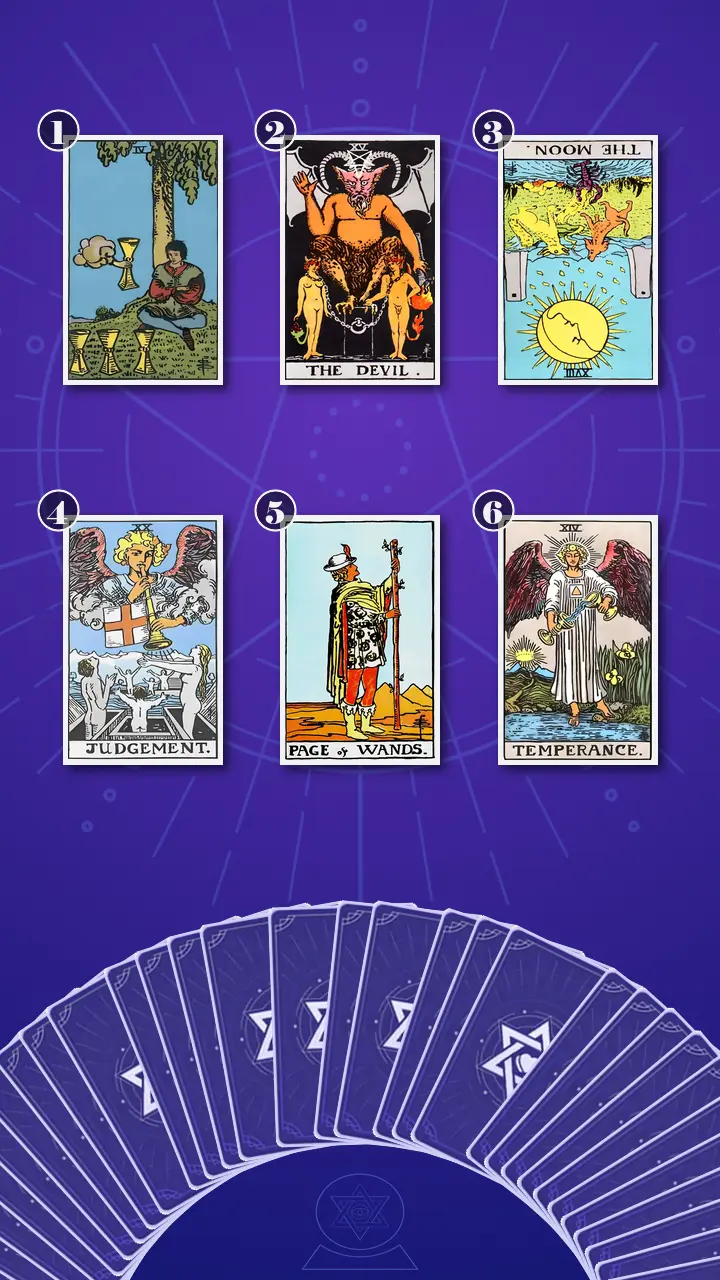
I chose the Transformation Path Grid (6) · Context Edition, a six-card tarot spread for feeling stuck in a comfortable job without reducing the issue to a prediction about whether someone should quit. This is how tarot works in my practice: the cards provide distinct perspectives from which I can examine behaviour, attachment, fear, choice, and available action. They do not overrule financial reality, consent, or the querent’s judgement.
I explained to the reader in me, as much as to Taylor, why this spread fit. Their difficulty was not a simple choice between two named careers. It was a self-renewing loop: discomfort triggered more interpretation, postponement brought relief, and that relief was remembered as evidence that staying must be right. A conventional either-or spread would compare options before examining the mechanism that kept every option untested.
I laid the cards in two rows of three. The top row would show the current pattern, the bargain maintaining it, and the fear beneath it. The fourth position would be the catalyst, where private explanation could become honest observation. The final two positions would translate that recognition into one reversible experiment and a sustainable way of integrating security with movement.
“This isn’t a verdict on your future,” I told Taylor. “It’s a map from closed-loop reflection to lived evidence. You remain the person who decides what to do with it.”
Reading the Closed Loop
Position 1: The Cup That Never Reaches the Table
“Now I’m turning over the card that represents your current pattern: calling comfort alignment, declining experiments, and then wondering why you still feel stuck,” I said. The card was the Four of Cups, upright.
I pointed to the seated figure’s crossed arms and lowered gaze. Three cups waited on the ground while a fourth was offered from outside the figure’s existing field of attention. Upright, the card showed withdrawal in excess and receptivity in deficiency. It did not say Taylor had no options. It suggested they were evaluating every option from a posture that prevented direct contact.
“For you, the three familiar cups look like the meditation app, the purpose journal, and the usual routine,” I said. “The fourth cup is less dramatic: an unsent message, an unbooked intro session, or one hiring-manager question. You consider that cup privately, decide it does not feel aligned, and decline it before discovering what it actually contains.”
I returned to their Sunday kitchen. The internal sentence underneath the scene sounded like this: I have considered it deeply, so not acting must also be a decision. Reflection had genuine value, but the closed tabs meant no person, class, project, or workplace reality was allowed to answer back.
Taylor gave one short laugh, but it landed with no humour. “That’s so accurate it feels a little cruel.” Their thumb stopped circling the mug’s rim.
“Then I want to slow down,” I replied. “Accuracy is useful only if it reduces shame and increases choice. The Four of Cups isn’t accusing you of laziness. It’s showing that a once-supportive way of processing has become overextended.”
I asked, “The last time you closed one of those tabs, what had you done to test the possibility outside your own thoughts?”
“Nothing,” Taylor said after a pause. Their eyes remained on the fourth cup. “I’d researched it for weeks, but I hadn’t spoken to anyone.”
Position 2: The Golden Handcuffs With a Mindfulness Quote
“Now I’m turning over the card that represents the blocking loop: what gives you short-term peace while extending the drift,” I said. The card was The Devil, upright.
I watched Taylor’s jaw set before I said anything else. The image can look severe, so I named my boundary immediately: “I don’t read this as danger, punishment, or a sinister outside force. I read it as attachment, participation, and a bargain that has stopped being reviewed.”
I drew their attention to the loose chains around the two figures. Taylor’s income, healthcare, rent, predictable calendar, and reputation for competence were not imaginary constraints. The distortion appeared when those legitimate supports became proof that even a free informational conversation or private creative prototype would be irresponsible.
“The bargain sounds like this,” I said. “Because I cannot risk everything, I must risk nothing. A dramatic exit would carry real costs, but your mind uses that fact to prohibit actions that would not remove your paycheque, benefits, or apartment.”
I also recognised a form of what I call Persona Fatigue Diagnosis. Taylor had spent years playing the sensible, grateful, highly self-aware employee so convincingly that beginner curiosity now felt like a threat to the character. Maintaining that social role demanded constant editing: grief had to become ingratitude, boredom had to become a failure of mindfulness, and curiosity had to become recklessness before anyone else could see it.
“That role helped you build a secure life,” I said. “We don’t have to insult it. But you’re allowed to ask what it costs to remain in character after the scene has changed.”
The sequence of Taylor’s reaction came quietly. Their breath paused. Their gaze moved away from the card as though replaying a benefits reminder and an annual review in the same private montage. Then their jaw released with a low exhale.
“I always tell myself that other people would love to have my job,” they said. “Then I feel awful for wanting anything else.”
“Gratitude can tell you what deserves protection,” I replied. “It should not be used to make grief inadmissible.”
Position 3: The Moonlight Mistaken for a Stop Sign
“Now I’m turning over the card that represents the root fear and blind spot: what uncertainty seems to prove about your worth and judgement,” I said. The card was The Moon, reversed.
I traced the winding path between the towers. In its reversed position, the Moon’s uncertain energy had turned inward and become blocked clarity. A body sensation was being granted only one possible interpretation, while fear, unfamiliarity, practical concern, and genuine preference remained tangled together.
I asked Taylor about the informational message they had drafted to a former colleague. They told me that their stomach had tightened and their palms had become damp just before sending it. They deleted the draft, opened a meditation called Trust Your Intuition, and concluded that their body was saying no.
“The sensation was real,” I said. “The conclusion was an interpretation. I’d separate the scene into three captions: what I feel, what I know, and what I fear this would prove about me. You felt tightness. You knew you were considering a message. You predicted that being ignored, sounding inexperienced, or later regretting a change would prove you couldn’t trust yourself.”
I did not ask Taylor to discard intuition and replace it with an enormous spreadsheet. That would merely give the avoidance loop a more corporate costume. I asked them to let intuition remain one source of information rather than appointing it the sole authority before experience had contributed anything.
As an artist, I thought of footage shot in low light. A dim frame may contain important information, but I would never pretend one shadow revealed the entire film. The Moon offered enough light for the next careful observation, not enough for a final verdict on the whole route.
“A meaningful first step can feel uncertain because it is new, not because it is wrong,” I said.
Taylor’s fingers froze halfway to the mug. Their eyes lost focus for several seconds. Then their hand lowered to the table, open rather than clenched.
“I’m not just afraid of the new work,” they said quietly. “I’m afraid that if I choose it and regret it, I’ll find out I’m not as discerning as I thought.”
“That is a much more workable truth than not aligned,” I said. “Fear of regret can be named, planned for, and tested around. A cosmic no cannot be questioned without making you feel as though you’re betraying yourself.”
I looked across the first three cards: withdrawal, attachment, and uncertain interpretation. “Reflection becomes a hiding place when no evidence is allowed back in,” I said. Then I moved to the lower row.
When Judgement Made the Edit Audible
Position 4: The Call Beneath the Sunday Quiet
The radiator clicked once and fell silent. Even the muted traffic beyond the window seemed to recede as I reached for the pivotal card.
“Now I’m turning over the card that represents the catalyst: the honest awakening that can interrupt the label without turning into self-punishment,” I said. The card was Judgement, upright.
I held the card without rushing. Sunday night was already inside it: the meditation timer ending, the usual dinner on its way, and the saved course tabs closing again. Taylor’s shoulders dropped when the decision disappeared, but Monday’s heaviness was waiting inside that relief.
I pointed to the angel’s trumpet and the figures rising with open arms. I did not read the trumpet as a supernatural command to leave a job. I heard it in the observable repetition Taylor already knew: the same Sunday pressure, the flat answer at an annual review, and a friend gently saying, “We’ve had this conversation before.”
For Taylor, Judgement meant writing a plain inventory. The current routine provided income, benefits, competence, and predictability. It also cost curiosity, engagement, and the feeling of actively choosing. The awakening was not an instruction to destroy the first list. It was permission to stop editing out the second.
I told Taylor that I call this process Internal Monologue Auditing. I listen for the genre their private narration has assigned to an ordinary decision. Taylor’s subconscious had turned every beginner step into a courtroom thriller: the message became evidence, uncertainty became cross-examination, regret became a guilty verdict, and their entire capacity for judgement sat in the dock.
“Once we can hear the genre, we can change the function of the scene,” I said. “A twenty-minute conversation doesn’t have to be the final act in a tragedy about choosing badly. It can be documentary footage: limited, imperfect evidence about one possibility.”
Comfort is not proof of alignment; let Judgement's trumpet replace private rationalization with an honest inventory and one reversible experiment.
I stopped. The sentence stayed between us.
Taylor’s breath caught first. Their pupils widened, and the skin around their eyes tightened as though they were trying to hold the whole interpretation at a distance. Then a flash of anger crossed their face.
“But doesn’t that mean I’ve been wrong this whole time?” they asked. The words came out sharper than anything they had said before. “That I wasted years hiding?”
“No,” I said. “It means you developed a strategy that protected stability and reduced the pressure of choosing. It worked well enough to keep renewing itself. Judgement is not asking you to prosecute the past. It is asking whether that strategy still deserves final-cut authority over the next scene.”
The anger did not vanish neatly. First Taylor’s shoulders stayed high while their eyes returned to the card, as though they were replaying every closed tab and postponed conversation. Then their fingers uncurled one by one against the tabletop. Their eyes reddened, and a small crease appeared between their brows. Finally, they released a trembling breath that sounded almost like “Oh.” Their shoulders lowered, but the relief left a momentary blankness behind it: the lightheaded vulnerability of realising that clarity restores responsibility as well as freedom.
“So I don’t need to decide whether the whole path is right,” Taylor said, their voice softer. “I need to stop pretending I’ve tested it.”
“Now, with this new perspective, think back to last week,” I said. “Was there a moment when this insight might have made you feel different?”
Taylor looked at the Moon, then Judgement. “The message to my former colleague. I could have said, ‘My stomach is tight because I’m afraid of looking inexperienced.’ I didn’t have to turn that into a sign about my entire future.”
I marked the shift carefully. This was not instant certainty. It was the first movement from spiritually rationalised stagnation and fragile self-trust toward evidence-based alignment, where security, curiosity, and meaningful movement could occupy the same frame. Taylor had moved from demanding a flawless inner answer to permitting one honest question.
The Door Opens Without the Room Disappearing
Position 5: The Page Who Only Needs One Wand
“Now I’m turning over the card that represents the action bridge: one small, reversible experiment that protects your stability while testing curiosity in the real world,” I said. The card was the Page of Wands, upright.
The Page studied a single sprouting wand. They were not surveying every possible career or announcing a finished identity. Upright, this was balanced exploratory fire: enough energy to make contact, not so much that Taylor had to resign, enrol in a two-year programme, relocate, or post a reinvention announcement on LinkedIn.
I brought Taylor back to the Queen West café where they had once hovered over Book intro session while the espresso grinder cracked through the room and a streetcar made the table vibrate. In the Page’s version of that scene, the finger did not have to purchase the whole course. It could click request syllabus. Taylor could send one informational message, attend one introductory session, or make one rough thirty-minute prototype simply to observe the quality of engagement.
“The first response is data, not destiny,” I said. “You do not have to leave the room to test whether the door opens.”
I asked, “What is one action you could complete within seven days without quitting, adopting a new identity, or spending more than you can comfortably lose?”
Taylor glanced toward their phone. “I could send the message to my former colleague. Not ‘How do I change my whole career?’ Just, ‘What surprised you about the work after you started?’”
“That is Page of Wands scale,” I said. “The task is to learn from contact. It is not to prove who you are.”
Their thumb rested on the edge of the phone, no longer gripping it. I saw curiosity arrive without triumph. That mattered: the available step had become smaller, but it had also become real.
Position 6: Temperance Keeps Both Cups
“Now I’m turning over the card that represents integration: how emotional truth, practical boundaries, and observed engagement can become an ongoing way of discerning,” I said. The final card was Temperance, upright.
I focused on the angel pouring between two cups, with one foot on land and one in water. This was balance in its active form. Temperance did not split Taylor’s life into courageous change versus cowardly stability. It held income, housing, healthcare, curiosity, grief, energy, and creative movement in one measured practice.
In Taylor’s daily life, the two cups could become a weekly exchange between experiment and review. They could keep the job and financial baseline while protecting one modest exploration block. Afterward, they could examine engagement during the activity, curiosity after it, and practical cost. They would not have to rate whether the first minute felt perfectly peaceful.
“Alignment here is not a mood you must obtain before beginning,” I said. “It is a living calibration. You try something proportionate, observe what happens, and then keep, adjust, or stop it. Stopping can be discernment. Continuing can be curiosity. Neither result has to become a verdict on your worth.”
I asked what Taylor might review besides their initial tension. They considered the question and named sustained interest, energy afterward, whether they wanted to return, and whether the practical cost remained acceptable.
“Exactly,” I said. “Security can be a base without becoming a verdict.”
Their shoulders softened again. This time the movement was smaller and steadier, less like escape from a decision and more like making room for one.
The Director’s Cut: Evidence Before Destiny
I drew the six cards into one coherent story. During the previous months, Taylor’s private reflection had provided language and immediate relief, but little outside evidence. In the present, the Four of Cups showed a closed posture toward possibilities. The Devil revealed the bargain that maintained it: real security was being used to forbid even harmless exploration. The Moon exposed the fear underneath—that an imperfect choice would invalidate Taylor’s judgement and worth.
Judgement interrupted the loop by replacing spiritual decoration with a non-shaming account of what was repeatedly happening. The Page of Wands offered the underused resource of beginner curiosity, and Temperance showed how that curiosity could coexist with practical stability. The spread’s central image was not a cliff. It was a well-furnished room with an unlocked door.
“Your blind spot is not that you value comfort,” I told Taylor. “It is that the calm arriving after postponement has been treated as evidence about the opportunity. Sometimes that calm only means the pressure to choose has temporarily disappeared.”
I made the transformation direction equally plain: Taylor did not need to replace intuition with impulsiveness or research with reckless action. They needed to replace the demand for peaceful certainty with a reversible experiment that named the fear, protected practical needs, and produced lived evidence.
For the next part, I introduced The Director’s Cut of Self-Compassion. When an internal spiral began shouting, You wasted time, you are cowardly, you cannot trust yourself, I asked Taylor to pause the punitive edit. A director reviewing raw footage does not need to humiliate the actor to identify what the scene contains. The supportive observer can say, The tabs closed. Relief arrived. The heaviness returned. No test was run. Those facts are firm enough to guide action without becoming a character assassination.
- The 10-Minute Director’s Cut Inventory On Monday evening at the kitchen table, Taylor would set a ten-minute phone timer and create two columns in Notes: What this routine protects and What it costs. They would add three observable items to each side without using aligned, meant to be, intuition, or timing. If self-attack entered the scene, they would narrate only what a supportive camera could record. Tip: Stop at six observations. The minimum version is one protection, one cost, and one sentence beginning, I might be afraid that… No resignation or dramatic conclusion is required.
- The Open-Door Career Beta Test Before Friday, Taylor would choose one repeatedly saved possibility and make one bounded contact: send the former colleague a single answerable question, request one course syllabus, or spend thirty private minutes on a rough creative prototype at the local library or café. Before starting, they would label the calendar block Evidence, not destiny. On Sunday, they would spend five minutes rating engagement, later curiosity, and practical cost from zero to five. Tip: State the boundary aloud: This test is for information, not obligation. Keep income, housing, health, and financial limits protected. If the full action feels too large, write the recipient’s name and first sentence, pause, and choose separately whether to send.
I reminded Taylor that these actions were invitations, not commandments from the cards. They could alter, postpone, or stop either exercise if it crossed a practical or emotional boundary. The aim was not obedience to tarot. It was restoring enough contact with reality for their own discernment to become better informed.
A Week Later: The Quiet Proof
Six days later, I received a message from Taylor. They had completed the inventory in nine minutes. Under protection, they had written income, benefits, energy left after work. Under cost, they had written curiosity, creative effort, trust that I can begin badly.
They had also sent the former colleague one question. The reply did not reveal a perfect new career. It described an unexpected amount of collaborative work and offered Taylor a twenty-minute call. Taylor booked it, then added a thirty-minute Saturday block to make a rough project they were allowed to discard.
That night, they slept through until morning. Their first thought was still, What if I’m wrong? They told me they smiled—not because the fear was gone, but because it no longer sounded like prophecy.
I saw that as the quiet proof of our Journey to Clarity. Tarot had not chosen Taylor’s next act or opened the door through magic. The six-card Transformation Path Grid had helped us identify the closed-loop story, while Taylor supplied the honesty, sent the message, and gathered the first piece of evidence. The pen had remained in their hand throughout.
I often think about the particular tenderness of this kind of career crossroads. When a stable life makes your shoulders drop but leaves a dull ache in your chest, it can be difficult to admit that the calm you are protecting may also protect you from the terrifying possibility of choosing and still not knowing whether you chose well. Simply seeing that double truth means the old script is no longer running entirely unseen.
If certainty did not have to arrive first, what tiny, reversible open-door experiment would you be curious to imagine this week while keeping the parts of your life that genuinely support you?