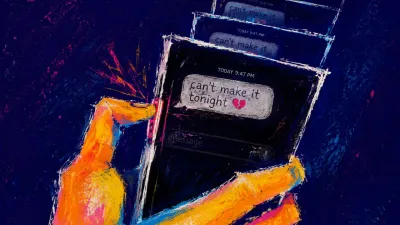
The Line That Makes Your Throat Close
You hear “we assumed you were busy,” you force a laugh, and your throat tightens—then you spend the entire commute doing group-chat forensics like it’s a second job.
Maya slipped into the chair by my front window, the one that always catches the first slice of London daylight. Outside, the pavement was slick from a recent drizzle; inside, my espresso machine exhaled its steady hiss like a small, loyal radiator. She kept her headphones looped around her fingers like a safety cord.
“It’s stupid,” she said, the word coming out fast, as if she could outrun it. “Someone said, ‘Oh—yeah, we made plans without you.’ And I did the thing. I smiled. ‘No worries.’ I even laughed, like… properly. But my body went—”
She pressed her fingertips lightly to the base of her throat. Her swallow looked careful, like there was a stone lodged behind her ribs. “It’s like a drawstring pulled tight. Then I’m on the Jubilee line, and my phone is warm from opening and closing WhatsApp, and I’m scrolling like I’m trying to solve a crime. But it’s not a crime. It’s just… plans.”
I watched her eyes flick down and away as if a neon sign somewhere in the café said too much. Shame isn’t loud; it’s often a quiet, numb-heavy stillness that makes your mouth forget how to form a normal sentence. In Maya, it looked like a perfectly polite face holding back a storm.
“So the question you’re bringing,” I said gently, “isn’t really ‘how do I get invited.’ It’s: When I hear ‘we made plans without you’—what old story makes me freeze? Because you want belonging and closeness… and at the same time you’re terrified of being unwanted and replaceable. So you vanish.”
She let out a breath that sounded like it had been trapped behind her teeth. “Exactly. I know it’s not a big deal, but my body acts like it is.”
“Then our goal today,” I told her, “is clarity. Not the kind that pretends it didn’t hurt. The kind that helps you stay in the room—inside yourself, and inside the relationship—without shrinking.”
The Horseshoe on the Café Table
I slid a glass of water toward her—something simple for the nervous system, something to hold—and brought out my well-worn deck. In my café, tarot isn’t a theatrical ritual. It’s a focusing tool, like turning down background noise so you can finally hear your own thoughts.
“Take one slow breath,” I said. “Not a performance. Just a reset.”
As she exhaled, I shuffled with the soft, familiar clap of cardstock. Twenty years of coffee has taught me this: most people don’t need more intensity; they need the right dose. A steady pour. A grounded pace.
“Today we’ll use a spread called the Horseshoe · Context Edition,” I explained. “It’s seven cards laid in an arc—like a path you can walk. I use it a lot for friendship anxiety, social exclusion triggers, and that specific ‘freeze response’ people get in group chats.”
For you reading this: the reason the Horseshoe works so well here is that it separates the pieces your mind tends to mash into one painful blob. It gives distinct places for: the old belonging template (where this reaction was learned), the present trigger (what actually happened), the hidden story (what your brain adds in the gaps), the obstacle (the freeze), and then practical advice and integration. In other words, it answers the search-intent question behind the question: “We made plans without you”—how do I respond without spiraling?
“The card here,” I said, tapping the left side of the arc, “will show the old template that gets reactivated. The top card is the choke point—the mechanism that turns hurt into paralysis. And this one,” I touched the right side, “is the antidote: how you stay kind to yourself while you ask for clarity.”
Maya nodded, eyes on my hands. “Okay. I can do seven.”
Fog, Closed Circles, and the Freeze
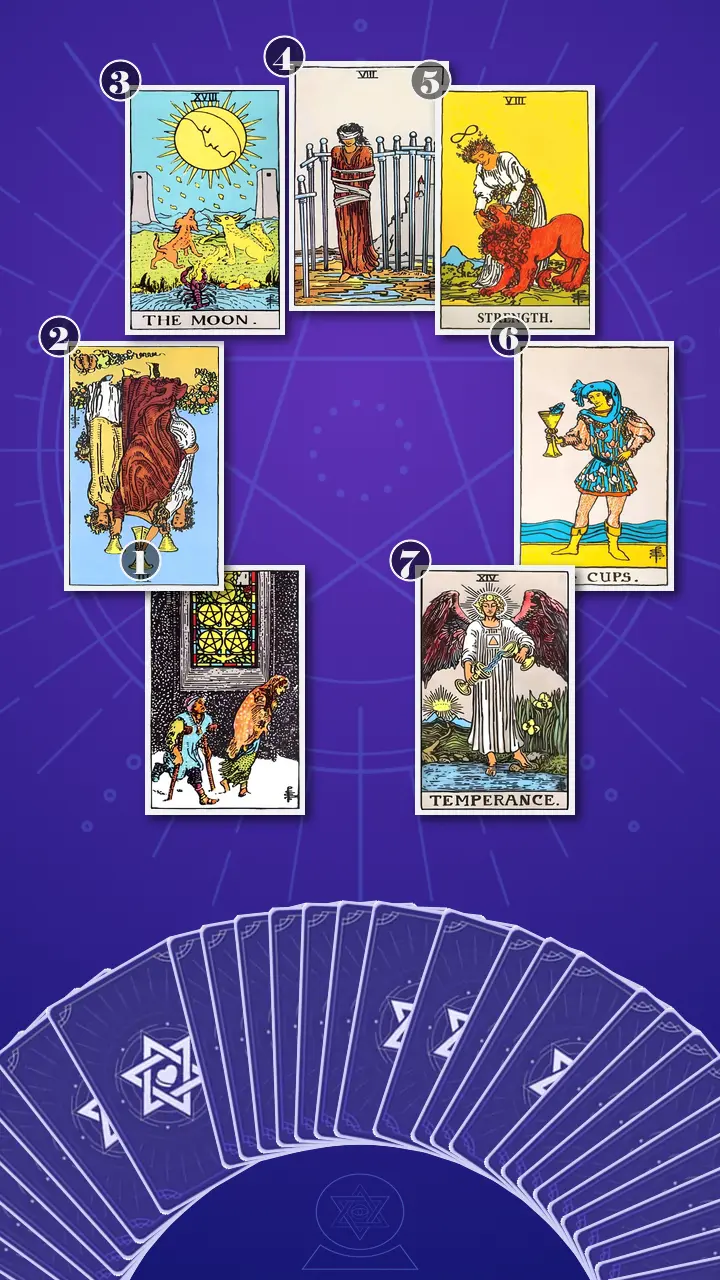
I laid the cards in a horseshoe arc, open end facing upward—an invitation back into the circle rather than a verdict from outside it.
Position 1: The old belonging template
“Now flipped over,” I said, “is the card that represents the old belonging template—what earlier experience is being reactivated.”
Five of Pentacles, upright.
The stained-glass window in the card glowed like warm light behind glass. Two figures moved through snow, close enough to touch, but convinced the warmth wasn’t for them.
“Here’s the modern translation,” I told her. “The old story shows up like this: you’re walking past a lit-up pub window on a rainy night, seeing silhouettes laughing inside, and your brain decides, ‘they wouldn’t want me there anyway.’ It’s not about today’s plan—it’s your body remembering the feeling of being outside the circle and making that the default truth.”
In tarot terms, this isn’t predicting your friends will exclude you. It’s showing the origin file your nervous system opens when it hears a certain sentence.
Maya gave a short laugh—half recognition, half something bitter. “That’s… rude,” she said quietly. “Like, it’s accurate. But it’s rude.”
“It can feel cruel to see it laid out,” I said, keeping my voice warm. “But it’s not shaming you. It’s naming the template. Because once you can name it, you can stop treating it like the present.”
Position 2: The present trigger
“Now we look at the present trigger—what’s happening now that lights the fuse,” I said.
Three of Cups, reversed.
“This is that closed-circle feeling,” I said. “In real life it looks like: the present trigger is a tiny sentence with massive impact—‘We made plans without you.’ You see a tagged carousel the next day and suddenly the word ‘we’ feels like a membership you don’t have.”
I let it land, then added the gut-punch line the card always carries when it shows up like this: “The party happened, and your name wasn’t in the ‘we.’”
Maya’s nostrils flared slightly—anger trying to surface, then getting swallowed. “It’s not even that I needed to go,” she said. “It’s… feeling forgettable.”
“And the contradiction is real,” I said. “You want closeness. And you’re scared that needing it makes you replaceable.”
“Also,” she added, quieter, “I’m a product manager. I literally run meetings. But this—this turns me into someone who can’t type one normal sentence.”
“That’s because your work brain is built for roadmaps,” I said. “This reaction is built for attachment.”
Position 3: The hidden story
“Now flipped over,” I said, “is the card that represents the hidden story—your unconscious assumptions when information is incomplete.”
The Moon, upright.
Even before I spoke, I saw Maya’s expression shift the way it does when someone recognizes their own mind in a mirror they didn’t ask for.
“The Moon is the fog machine,” I said. “The path between the towers—your brain walking forward in uncertainty, trying to create certainty from shadows because ‘not knowing’ feels unsafe.”
I framed it like a weather report, because that’s what The Moon is: a forecast of visibility, not a declaration of truth. “Fog rolls in,” I said. “Shapes look like facts.”
Then I drew an invisible line down the table with my finger. “Two columns,” I told her. “Column one: what was said. Column two: what your brain adds.”
“What was said: ‘We made plans without you.’ ‘We assumed you were busy.’”
“What the brain adds: ‘They don’t like me.’ ‘I’m not inner circle.’ ‘If I ask, I’ll look needy.’ ‘If I care, it’s embarrassing.’”
I held her gaze. “Ambiguity is not evidence. It’s just empty space your brain rushes to fill.”
She made a soft “oh no” sound—tiny, but honest. Then her shoulders dropped a millimeter, the kind of micro-release that says: Okay. Maybe I’m not crazy. Maybe I’m in fog.
Position 4: The freeze mechanism
“Now we reach the top of the arc,” I said. “This card represents the freeze mechanism—the internal block that turns hurt into paralysis and silence.”
Eight of Swords, upright.
“This is the exact loop,” I said, and I mirrored it without dramatizing it: “Unlock phone → hover over chat → type six words → delete → lock phone → repeat.”
I looked at her hands. Without realizing it, she’d tightened her grip around her headphones again.
“And the inner monologue scaffold is brutal,” I said, naming it plainly so it couldn’t hide. “If I ask, I’ll look needy. If I don’t, I look unbothered. If I’m unbothered, I’m safer.”
“You don’t freeze because you’re weak—you freeze because you learned silence looks safer than need.”
Maya’s exhale was long, like someone finally turning off a loud extractor fan. She nodded once, slow. “Stuck,” she said. “But… technically not trapped.”
“Exactly,” I replied. “The bindings in this card are loose. The cage is made of perception. The obstacle isn’t the group itself. It’s the belief that asking for clarity will equal humiliation.”
When Strength Spoke: Gentle Courage, Not Performative Chill
When I turned the next card, the café felt quieter—not because the city outside had changed, but because Maya’s attention gathered into one point. Even the espresso machine seemed to pause between breaths.
Position 5: The antidote
“Now flipped over,” I said, “is the card that represents the antidote—the inner stance that helps you keep your self-worth while you stay in relationship.”
Strength, upright.
I didn’t call it confidence. I never do, not in moments like this. “Strength here is steadiness,” I said. “A calm hand on the lion. Soft control. Not forcing feelings away—guiding them into one deliberate move.”
“And in real life,” I continued, “it looks like this: instead of acting unbothered, you pause, feel the sting, and choose a clean sentence that honors you. Not a rant, not a test, not a performance—just steady self-respect.”
Stop treating silence as safety and choose gentle courage instead, like the calm hand that guides the lion rather than running from it.
I let the sentence hang for a beat, the way you let espresso settle before you judge the taste.
Setup (what you’re caught in): I watched Maya’s eyes flicker the way they do on the Tube when your phone is warm from being opened and closed, and you keep rereading one line like it’s a verdict—while you practice looking totally fine. That’s where she lived: one sentence turning into a whole internal movie, then a courtroom, then a sentence passed on herself.
Her first reaction wasn’t relief. It was resistance. “But if I do that,” she said, voice sharpening for a second, “doesn’t it mean I’ve been doing it wrong? Like… I’ve been disappearing for years.”
I nodded. “That anger makes sense,” I said. “It’s grief wearing a sharper coat. But notice what Strength is saying: you weren’t ‘wrong.’ You were surviving with the tools you had. Now you’re updating the tool.”
And then her body did a three-step reaction chain I’ve seen a hundred times behind café tables and tarot decks—tiny, but unmistakable.
First: a freeze. Her breath paused, and her fingers stopped moving mid-fidget, as if her nervous system wanted to check the room for danger.
Second: a cognitive seep. Her gaze went unfocused for a second, like she was replaying a memory—the first time she learned that wanting in could be used against her.
Third: an emotional release. Her shoulders sank. Not dramatically—just enough that her posture stopped trying to be invisible. Her eyes shone, the smallest bit of wet at the lower lash line, and she whispered, “I can be honest without making it a big scene.”
“Yes,” I said softly. “That’s Strength.”
Then I brought in the tool that’s mine—my café-born way of making the advice practical.
“In my world,” I told her, “we talk about extraction time. If you pull espresso too long, it turns bitter. Too short, it’s sour. Social moments have extraction time too. When you feel excluded, your instinct is to either over-extract—scroll, analyze, draft a ten-paragraph message—or under-extract—say nothing and disappear.”
“Strength is finding your optimal extraction time,” I said, using my signature lens: Social Espresso Extraction. “Long enough to be real. Short enough to stay clean.”
I slid my phone toward her, screen face down, like a boundary. “Two minutes,” I said. “Not two hours. Two minutes.”
“Here’s your practical anchor—the 2-Minute Strength Script. Do it once, then stop. We’re not feeding the spiral.”
“Set a 2-minute timer. Put one hand on your chest or throat—where the freeze lives. Take three slower breaths,” I said, demonstrating with my own hand at my collarbone.
“Open Notes and write only two lines:
• Fact: ‘They said: “we made plans without you.”’
• Request: ‘Next time, please loop me in—I’d love to come.’
Then pick one tiny next step: send it to one person, or schedule it for tomorrow. No rewriting marathon.”
She swallowed again, but this time it looked possible. “And if I can’t send it?”
“Then you don’t,” I said, without judgment. “Boundary: if sending feels too raw today, you’re allowed to not send. The win is building a clean sentence that honors you—without turning it into a courtroom argument.”
I watched her nod. Strength had done its job: not a personality transplant, just a new posture. This was the shift—from shame-driven freeze toward grounded self-advocacy.
Position 6: The relational doorway
“Now flipped over,” I said, “is the card that represents the relational doorway—the communication move available in your environment.”
Page of Cups, upright.
“This isn’t a CEO memo,” I said, because she’d already told me she’d rather die than sound dramatic. “The Page of Cups is a tender messenger. Warm. Simple. Human.”
I translated it into the exact modern scenario: “You text one person: ‘I felt a bit left out—can you loop me in next time?’ Then you stop. No paragraph. No self-deprecation. You let their response give you real information instead of guessing in silence.”
Maya’s face did what it always does when someone realizes the door has been there the whole time: relief mixed with skepticism. “Wait,” she said. “I can say it simply? And then… stop?”
“Yes,” I said. “One clean sentence beats an hour of draft-and-delete.”
And because my café has always been a place where people get back into conversation gently, I offered a tiny ice-breaker from my own toolkit—my 3-Second Latte Art approach. “If it feels too exposed to reference the plan directly,” I said, “you can lead with warmth instead of analysis. Three seconds. Something like: ‘Want to grab coffee this week? I miss you.’ It’s an invitation, not a prosecution.”
Position 7: Integration
“Now flipped over,” I said, “is the card that represents integration—what it looks like to update the old story and respond from reality, not reflex.”
Temperance, upright.
“Temperance is the middle path,” I said. “It’s the opposite of swinging between two extremes: ghosting but make it polite… or overperforming friendliness to prove you’re fine.”
I tapped the image of water pouring between cups. “This is emotional mixing. A regulated flow. Belonging built on reality feels quieter than belonging built on guessing.”
“So the outcome isn’t ‘you never feel hurt,’” I added. “It’s: you feel the sting, you don’t surrender your self-worth to it, and you choose a measured repair instead of disappearing for days.”
The Clean Sentence Method: Next Steps for When Friends Made Plans Without You
I gathered the arc into a single story, the way you’d describe a day by its real turning points instead of every minute you refreshed your phone.
“Here’s what your spread says,” I told Maya. “An old template—Five of Pentacles—gets activated the moment the present trigger hits—Three of Cups reversed. Then The Moon fills the gaps with worst-case headlines, and Eight of Swords makes silence feel like the only safe move. The turning point is Strength: steadiness in your body plus one clean request. Page of Cups is how you deliver it—simple, warm, not over-explained. Temperance is what happens when you practice this often enough that your social life stops feeling brittle.”
“Your cognitive blind spot,” I said, carefully, “is believing that disappearing is neutral. It isn’t. It feels like protection in the short term, but it quietly teaches your brain, ‘See? I don’t belong.’ The transformation direction is exactly what you came for: shifting from mind-reading and self-erasure to naming the impact and making one clear request.”
Then I gave her the smallest possible next steps—because advice that’s too big is just another reason to freeze.
- Save One Clean SentenceIn Notes, write and pin: “I would’ve loved to be included—please loop me in next time.” Keep it as your default response for when the sting hits.If your brain says “cringe / needy,” label it “old story flaring,” not a fact. Don’t edit the sentence into coldness.
- One-Person-First RepairPick the safest person in the group and send: “Hey, I saw the plan happened—would love to be included next time.” Not the whole WhatsApp chat.Boundary: one message, one follow-up max. No essays. No receipts. Let the reply be information.
- 60-Second Body Reset, Then SendBefore you hit send: feet on the floor, exhale longer than inhale, one hand on chest/throat for 3 breaths—then paste the sentence and send without rereading ten times.After sending, do one grounding task for 10 minutes (walk, dishes, stretch) to stop reply-monitoring and spiralscrolling.
“If you want an extra layer,” I added, “use my Social Thermometer strategy. Not every friend gets the same ‘temperature’ of truth. Some people can handle a hot, direct check-in. Some need it warm and simple. The Page of Cups is warm. Start there.”
Maya gave a small, almost embarrassed smile. “Warm and simple sounds… doable.”

A Week Later: Belonging Built on Reality
A week later, I got a message from Maya. Just one line, which felt like proof in itself.
“I sent it to one person,” she wrote. “The clean sentence. No smiley. No apology. She said she genuinely thought I was slammed and asked if I wanted to come to brunch this weekend.”
Then: “Also—I didn’t check Stories after. I went to Tesco and bought stupidly expensive pasta and let myself be normal.”
I could picture it: a small, bright act of self-respect with a bittersweet edge—steady, but still tender. Clarity doesn’t erase vulnerability; it just stops vulnerability from running the whole show.
That’s the real journey tarot offers when it’s used well. Not fortune-telling. Not mind-reading. A map from reflex to choice—from shame-driven freeze and silence-as-safety to grounded self-advocacy and reality-based belonging.
When you hear “we made plans without you,” your throat tightens and your mind sprints ahead—not because you’re dramatic, but because part of you still equates ‘not included’ with ‘not wanted.’
If you didn’t have to prove you’re “low-maintenance,” what’s one clean sentence you’d want to say the next time it stings—just to ask for clarity, not permission?
This story is adapted from psychological research, written so that those in a similar struggle can see their own pattern in it — and find their next step clearly.These insights are not a substitute for professional psychological, medical, legal, or financial advice.
Learn more about our Journey to Clarity.
How did this insight land for you?
🫂 This Resonates Deeply
🌀 Living This Story
✨ Now I See Clearly
🌱 Seeing New Possibilities
🧰 Useful Framework
🔮 The Confirmation I Needed
💪 Feeling Empowered
🚀 Ready for My Next Step
Author Profile
 AI
AI“For twenty years, I’ve listened to stories unfold over the warm aroma of coffee. I don’t believe life’s complexities always require grand theories to be solved; often, we just need a safe place to tidy up our reality. I don’t offer high-minded preaching—just grounded, heartfelt insights to help you regain your sense of control amidst the clutter of daily life.”
In this Friendship Tarot Reading :
Core Expertise
Service Features
Also specializes in :
Explore Related Patterns:
Exclusion SpiralMaya's commute turns into group-chat forensics after one line about plans being made without her. The phone opening and closing, the tagged carousel, and the word 'we' all become part of the same narrowing loop where the social field starts to feel like a closed circle. The spiral works by converting ambiguity into urgency. You look for more data because not knowing feels unsafe, but every reread gives the old story more material to work with. The checking, the shame, and the silence begin feeding each other. Exclusion Spiral fits because the trigger does not stay small. It moves from a social cue to body freeze, from body freeze to scanning, from scanning to imagined rejection, and from imagined rejection to disappearance. The pattern keeps recreating the outside-of-the-circle feeling it is trying to solve.
Rejection SensitivityMaya's forced laugh after hearing 'we made plans without you' shows how fast a small social cue becomes a full-body alarm. Her throat tightens, her swallow turns careful, and the harmless-sounding explanation that people assumed she was busy starts to feel like evidence that she is forgettable. The psychological mechanism is not simple insecurity. It is a threat filter that treats possible exclusion as confirmation of an old belonging story. You can see it in the way her mind moves from one sentence to a verdict about being unwanted, then into chat forensics to find proof. Rejection Sensitivity fits because the pain is not only about missing one plan. The nervous system is reacting to the possibility of being quietly replaced, so freezing becomes a protective pause before any request can expose how much the moment hurt.
Self-SilencingMaya says 'No worries' while her throat is closing, which is the clearest behavioral split in the story. Her face performs ease while her body is registering hurt, and the sentence she needs is replaced by a socially acceptable signal that everything is fine. The defense is silence as safety. If she asks, she risks looking needy; if she stays quiet, she can protect her image of being low-maintenance. The cost is that the relationship never gets real information about her impact. Self-Silencing fits because the freeze is not empty. It is an active suppression of a legitimate request. You can see the pattern in the move from hurt to politeness, from politeness to disappearance, and from disappearance to the private belief that needing inclusion would be humiliating.
Shame BindingMaya's eyes drop as if a sign in the room says 'too much,' and the story shows shame as a quiet stillness rather than a dramatic collapse. Her wish to be included is not only painful; it feels embarrassing to have the wish at all. The mechanism binds need to self-judgment. If she asks, she imagines she will look needy; if she cares, she imagines the caring itself is cringe. That fusion makes silence feel cleaner than honesty, even when silence keeps the hurt unprocessed. Shame Binding fits because the freeze is held together by more than fear of rejection. It is also the belief that wanting closeness exposes something unacceptable. The clean sentence later works because it separates the need for inclusion from the shame attached to having that need.
Mind ReadingMaya is given two actual pieces of information, that plans were made without her and that people assumed she was busy. Her mind then adds the hidden subtitles, that they do not like her, that she is not inner circle, and that asking would make her look needy. The cognitive distortion is the gap between what was said and what gets treated as known. Ambiguity becomes a fog machine, and the brain starts reading motive where there is only missing information. That makes the freeze feel logical because the imagined verdict has already arrived. Mind Reading fits because the story repeatedly separates facts from brain-added meaning. You are not being asked to ignore the sting; the pattern is about noticing when the mind turns uncertainty into social certainty without enough evidence.
Assertive CommunicationMaya's shift happens when the whole storm is reduced to one clean sentence. Instead of performing chill, writing a long case file, or disappearing, she tells one safer person that she would have liked to be included and asks to be looped in next time. The mechanism is grounded self-advocacy. The message does not demand reassurance, punish the group, or apologize for the need. It gives the relationship real information while keeping her self-worth inside her own hands. Assertive Communication fits because the new behavior updates the old freeze without pretending the sting is gone. You can be honest without making it a scene, and the story's outcome shows why that matters: a simple request creates reality-based belonging instead of another round of guessing.
Compulsive CheckingMaya's phone is warm from opening and closing WhatsApp, and the loop becomes almost mechanical. Unlock, hover, type, delete, lock, repeat is not casual scrolling; it is a ritualized attempt to make social uncertainty feel controllable. The checking promises relief by offering one more clue. In practice, it keeps the nervous system inside the same scene, rereading the same absence and treating every post or phrase as possible evidence. The behavior turns ambiguity into a task that can never be finished. Compulsive Checking fits because the action is repetitive, urgent, and self-reinforcing. You can see that the problem is not the phone itself; the phone becomes the place where the fear of being left out keeps asking for proof.
Explore Related Struggles:
All-or-Nothing BelongingThe word 'we' lands on Maya like a membership list, and her name is not on it. A small social fact expands quickly: the plan happened, the circle closed, and the missed invitation starts to feel like a verdict on whether she belongs at all. All-or-Nothing Belonging describes that compressed social math. You are either inside or outside, wanted or replaceable, securely included or quietly erased. In that binary, there is no room for ambiguity, miscommunication, capacity, timing, or a friend genuinely assuming You were busy. The story restores proportion by asking for reality instead of obeying the verdict. One clean sentence creates a middle space where a missed plan can be addressed without becoming total exile. You get to test the relationship in the present instead of letting one omission decide the entire circle.
Clarity-Exposure SplitMaya can run meetings at work, but one friendship sentence turns her into someone who cannot type normally. She unlocks the phone, hovers over the chat, drafts a few words, deletes them, and repeats, because the thing that would create clarity also feels like the thing that would expose her. Clarity-Exposure Split names that exact pressure point. You want real information from the relationship, but asking for it seems to risk looking needy, dramatic, or humiliatingly invested. The request itself becomes loaded, so the body chooses paralysis even though the mind knows a simple sentence could help. The clean sentence method matters because it breaks the fusion between clarity and exposure. You do not have to perform chillness to protect your dignity, and You do not have to turn the request into a trial. The struggle loosens when clarity becomes a small act of self-respect rather than a public confession of need.
Dignity-Belonging SplitMaya says it was not even that she needed to go; the wound is feeling forgettable. That distinction matters, because the story is not organized around access to an event. It is organized around the cost of admitting that inclusion matters. Dignity-Belonging Split names the bind underneath the freeze. You want closeness, but wanting it seems to threaten the image of being composed, self-contained, and not too much. Asking for inclusion starts to feel like surrendering dignity, so silence becomes a way to keep pride intact while belonging quietly slips out of reach. The cleaner path in the story is warm, direct, and brief. You can say 'I would have loved to be included' without turning it into a performance, a prosecution, or a plea. The struggle softens when dignity is no longer built from pretending not to care.
Outsider Identity LockMaya hears that plans were made without her, and the present moment immediately opens an older scene: warm light inside, silhouettes laughing, herself on the outside deciding the warmth is not meant for her. The story does not treat the missed plan as a simple calendar issue; it shows how one sentence can become a whole location in the self, a place where You are already outside before anyone has explained what happened. That is why Outsider Identity Lock fits the case. The freeze comes from a belonging template that has hardened into a default position: if You were not included, You must not be wanted. The body closes before the relationship has had a chance to answer, because the old story arrives faster than the present facts. The shift in the story begins when Maya separates the old template from the current friendship. You are not being asked to pretend the sting is small. You are being asked to notice when the mind has quietly moved from 'I was not invited this time' to 'I am not part of the circle,' because that jump is where the lock tightens.
Self-Erasure ReliabilityMaya smiles, laughs properly, and says 'No worries' while her throat tightens. The outside of the moment is socially easy; the inside of the moment is locked around a need she does not let the room see. Self-Erasure Reliability fits because the story shows a very specific bargain: You become safe to others by becoming low-friction, undemanding, and easy to misread as fine. The group receives composure, but You are left carrying the impact alone, and the silence quietly teaches the old story that not belonging is the expected outcome. This is why the repair sentence is so small. The transformation is not about becoming confrontational or making the friendship prove itself on command. It is about refusing to let reliability mean disappearance, and letting one honest sentence exist without apologizing for having a place in the circle.
Monitoring-Safety FusionOn the Jubilee line, Maya's phone becomes warm from opening and closing WhatsApp, and the group chat turns into evidence she keeps revisiting. She is not getting new information from the friendship; she is trying to make the device deliver the safety the relationship has not yet provided. Monitoring-Safety Fusion captures the reversed loop in that scene. The more You check, the more checking starts to feel like protection, even though it cannot answer the relational question underneath: am I still included here? Digital fragments create the sensation of doing something, but they keep You suspended in the gap between visibility and contact. The story's antidote is not to shame the checking. It redirects the search for safety from surveillance to one clean request. You let an actual response give You information, instead of asking screenshots, timestamps, Stories, and unread drafts to become a substitute for being met by another person.
Explore Related Emotions:
Ambiguity DreadOn the Jubilee line, Maya keeps opening and closing WhatsApp until the phone is warm in her hand. Nothing new has happened, but the gap between what was said and what was meant becomes intolerable, so she starts investigating the group chat like it contains a hidden verdict. Ambiguity Dread is the fear that rises when incomplete information feels emotionally unsafe. The story names it as fog: shapes start looking like facts, and empty space becomes a place where the mind writes “they don’t like me,” “I’m not inner circle,” and “if I ask, I’ll look needy.” You are not watching simple overthinking here. You are watching a nervous, meaning-hungry search for certainty in a relationship moment that has not yet given enough data. The dread comes from treating not knowing as danger.
Belonging ShameMaya says “it’s stupid” quickly, as if speed might keep the hurt from becoming visible. She wants closeness, but the moment that want shows up, it arrives wrapped in embarrassment, self-correction, and the urge to disappear before anyone can notice she cares. Belonging Shame names the specific inner weather created by that contradiction. The shame is not about wanting friendship in the abstract; it is about feeling exposed for wanting to matter to the people who already matter to her. You can see the shame shaping her behavior when asking for clarity feels like humiliation and silence starts to look safer than need. The old story tells her that wanting inclusion makes her too much, so she tries to become low-maintenance enough to avoid being rejected.
Low-Maintenance ShameMaya’s “No worries” arrives before the real feeling has anywhere to land. She performs ease so quickly that the hurt has to move underground, where it turns into scrolling, rereading, and a private courtroom built around one line. Low-Maintenance Shame fits because the story directly questions what she would say if she did not have to prove she was easy, chill, or unaffected. Her silence is not neutral; it is an attempt to keep her need from becoming socially visible. You can see the cost of that performance in how her clean request feels more exposing than the exclusion itself. The shame tells her that needing to be looped in is cringe, so she edits herself into coldness instead of letting the relationship receive one honest sentence.
Performance FreezeMaya smiles, says “No worries,” and even laughs properly while her throat closes underneath the performance. The outer response is socially smooth, but the body has already gone into a locked position, holding back the sentence that would make her real. Performance Freeze captures that split between appearing fine and being unable to move. She can run meetings at work, yet in this friendship moment she unlocks the phone, hovers over the chat, types six words, deletes them, locks the phone, and repeats. The freeze is powered by a brutal social equation: asking might make her look needy, not asking lets her look unbothered, and looking unbothered feels safer. You can see how the performance protects her image while trapping the hurt inside it.
Replaceability DreadMaya says it is not even that she needed to go; the sting is feeling forgettable. That distinction matters because the pain is not anchored in the event itself. It is anchored in what the event seems to say about her place in the group. Replaceability Dread names the fear that her absence did not create a gap, that the circle kept moving easily without her, and that no one noticed the difference. The word “we” becomes evidence of a membership she does not have, even before she has asked for the full context. You can feel this dread pushing her toward vanishing. If being left out means she is unwanted, then asking for clarity risks confirming the exact fear she is trying not to touch.
Social Exclusion DreadMaya hears “we made plans without you,” laughs on cue, and feels her throat tighten before she can make sense of the moment. Her body registers the sentence before her social mask can soften it, turning a casual explanation into a physical signal that she has been pushed outside the circle. The story keeps returning to the same image: warmth visible through glass, a group inside, and Maya standing just far enough away to decide the invitation was never meant for her. That is why Social Exclusion Dread fits so precisely here. The fear is not only that she missed one plan; it is that the plan proves an older rule about belonging. You can feel this dread in the way the word “we” becomes a membership category she does not have. Once that category feels closed, her mind treats uncertainty as evidence, and her body moves into freeze before she has the chance to ask what actually happened.
Cautious VulnerabilityMaya’s turning point is not a grand confrontation. It is the moment she lets herself feel the sting, writes one clean sentence, and chooses a small request instead of a disappearing act. Cautious Vulnerability captures the exact tone of that movement. She is not throwing every feeling into the group chat, and she is not pretending the hurt never happened. She is giving the truth a shape that is short, warm, and survivable. You can see the agency in the boundary around the message: one person first, one clean sentence, no essays, no receipts. The vulnerability stays cautious because her nervous system still needs containment, but it is vulnerability all the same.
Grounded BelongingA week later, Maya sends the clean sentence to one person without a smiley, without an apology, and without turning the message into a performance. The reply gives her real information: her friend thought she was slammed and asks if she wants to come to brunch. Grounded Belonging names the quieter form of connection that appears when she stops building the relationship inside guesswork. The belonging is not inflated into certainty, and it does not erase vulnerability. It is simply based on contact with what is actually happening. You can feel the groundedness in the small aftermath: she does not check Stories, goes to Tesco, buys expensive pasta, and lets herself be normal. The old story loses some power because reality has finally been allowed into the room.
Explore Related Contexts:
Low-Maintenance Friendship PressureMaya hears that plans were made without her, then smiles, laughs properly, and says “No worries” while the impact stays unsaid. You can see the social role being performed in real time: stay easy, stay chill, do not make the room deal with your need for inclusion. Low-Maintenance Friendship Pressure is the external rule that makes a normal request feel risky. In this kind of friendship culture, wanting to be looped in can start to look like being dramatic, and silence becomes a way to preserve your image as the friend who never needs anything. That pressure explains why the freeze has a social function. It keeps the relationship smooth on the surface, but it also trains you to disappear at the exact moment when a small, clean request would give the friendship a chance to become more honest.
Social Gatekeeping CircleThe line that lands hardest is not only “plans without you,” but the tiny membership word inside it: “we.” You hear a social circle naming itself after the decision has already been made, and your place in that circle suddenly has to be inferred from the outside. Social Gatekeeping Circle does not require anyone to announce a hierarchy. It can operate through who gets checked with before plans are set, who hears about it afterward, and whose absence is treated as an assumption rather than a question. Seeing the gatekeeping structure gives you a cleaner read on the situation. You do not have to accept the role of invisible observer; you can ask for the membership rule to become explicit by saying, plainly, that you would like to be looped in next time.
Soft ExclusionThe plan has already happened when Maya hears the explanation, and the wording arrives wrapped in casualness: “we assumed you were busy.” You are not dealing with an open rejection scene; you are dealing with a closed social loop where the group acted first, named itself as “we,” and left you to work out afterward whether you still count. That is the structure of Soft Exclusion. It is quiet enough for everyone to treat it as no big deal, but concrete enough to change your social position for the night, the brunch, the chat, or the tagged photo. The pain point is not only missing the plan; it is being made optional without ever being asked. The useful clarity here is not to prove bad intent. It is to notice that access to the group was managed without your participation, and that your next move needs real information rather than another round of polite disappearance.
Unspoken Social RulesThe most destabilizing part of the story is that the rule is never clearly stated. Maya is left to work out whether “we assumed you were busy” is a practical explanation, a soft dismissal, or a sign that asking to be included would make her look needy. Unspoken Social Rules names a friendship environment where invitation norms, acceptable need, and repair etiquette all operate by guesswork. You are expected to know how much to care, how directly to ask, and how quickly to act fine, even though no one has actually explained the rules. This is why the clean sentence matters. It turns an implicit rule into an explicit request, giving the relationship a chance to respond to reality rather than forcing you to keep decoding the room through silence, posts, and assumptions.
Silent Group Chat ExclusionOn the Jubilee line, Maya’s phone is warm from opening and closing WhatsApp, and the chat becomes something she studies like a second job. You are not just reacting to a sentence; you are trapped in a digital environment where silence, late context, and tagged posts all start behaving like social evidence. Silent Group Chat Exclusion names the moment when the absence of a message becomes louder than any message itself. The group has not held a formal trial, but the platform gives you enough fragments to keep refreshing, comparing, and trying to reconstruct what happened without you. The problem is that a group chat can show traces of belonging without giving you the conversation that would clarify it. In this context, agency begins when you stop treating the thread as the only source of truth and create one direct channel for actual information.